
From 11:00 pm to 12:00 pm EST ( 8:00 pm to 9:00 pm PST ) on January 6th, the website will be under maintenance. We are sorry for the inconvenience. Please arrange your schedule properly.
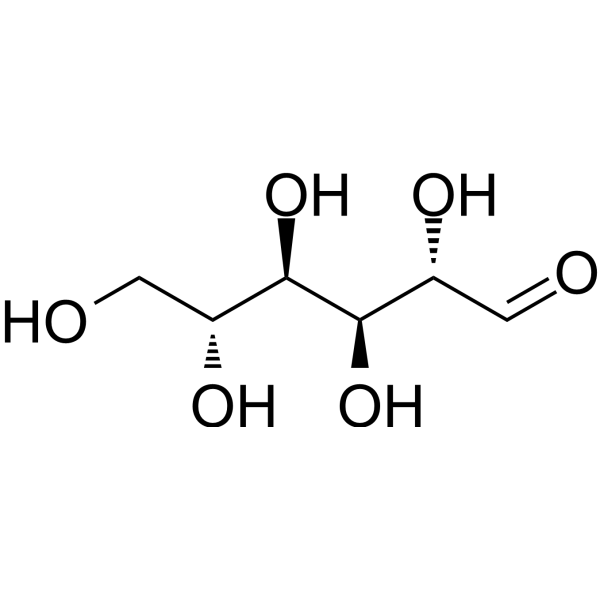
D-Mannose is a C-2 superpolymer of glucose that occurs naturally in many plants and fruits. D-Mannose has anti-inflammatory and antitumor activity. D-Mannose plays an important role in immune regulation .
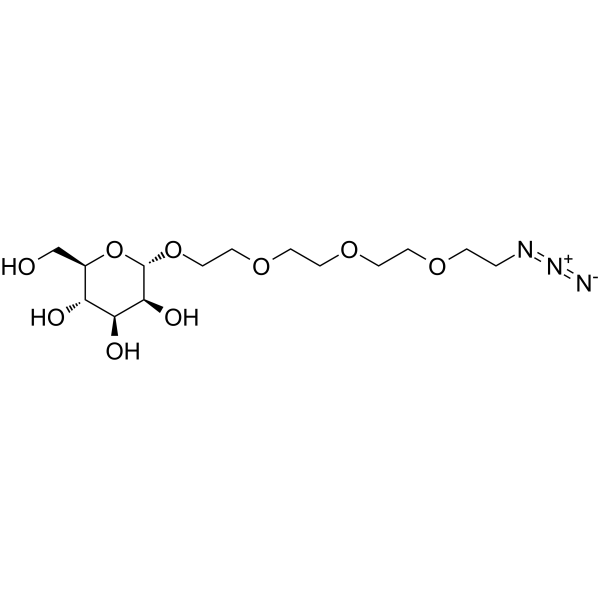
Azido-PEG4-alpha-D-mannose is a PEG linker that combines an azide group with an alpha-D-mannose moiety. Azido-PEG4-alpha-D-mannose is a click chemistry reagent, it contains an Azide group and can undergo copper-catalyzed azide-alkyne cycloaddition reaction (CuAAc) with molecules containing Alkyne groups. It can also undergo strain-promoted alkyne-azide cycloaddition (SPAAC) reactions with molecules containing DBCO or BCN groups. Azido-PEG4-alpha-D-mannose has the targeting property of mannose, which can accurately deliver drugs to specific cells or tissues to improve the therapeutic effect of drugs .
D-Mannose (Standard) is the analytical standard of D-Mannose. This product is intended for research and analytical applications. D-Mannose is a C-2 superpolymer of glucose that occurs naturally in many plants and fruits. D-Mannose has anti-inflammatory and antitumor activity. D-Mannose plays an important role in immune regulation .
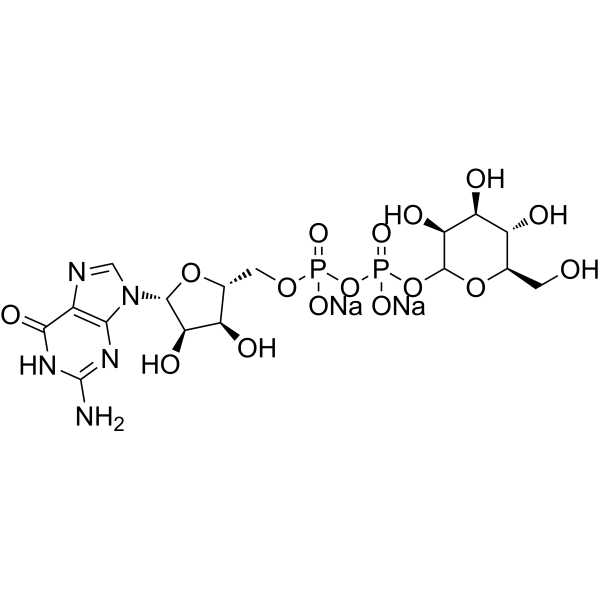
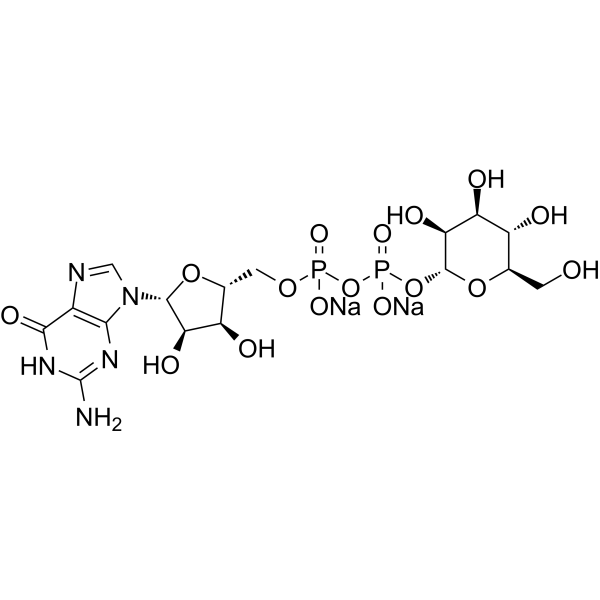
GDP-D-mannose disodium consists of GDP-α-D-mannose (HY-N7389B) and GDP-β-D-mannose. GDP-α-D-mannose serves as a donor substrate for mannosyltransferases and acts as a precursor of GDP-β-L-fucose. GDP-α-D-mannose exerts competitive inhibition on GTP (with a Ki value of 14.7 μM) and non-competitive inhibition on mannose-1-P (with a Ki value of 115 μM). GDP-D-mannose disodium is metabolized to GDP-L-fucose (HY-134433) via GMDS (Gmd) and TSTA3 (WcaG) .
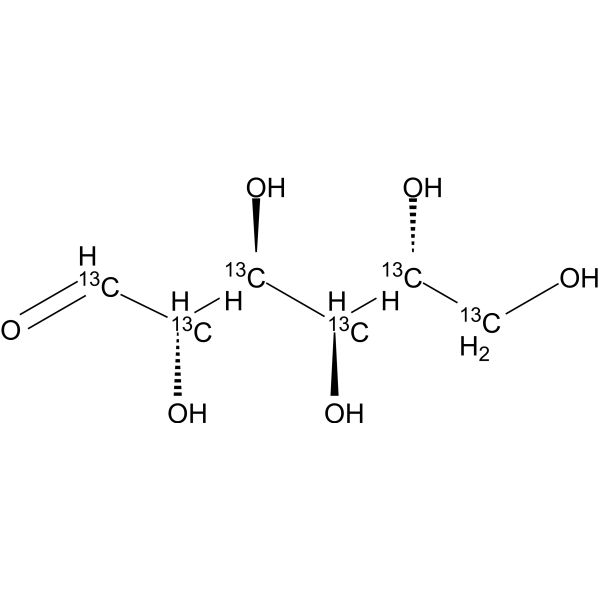
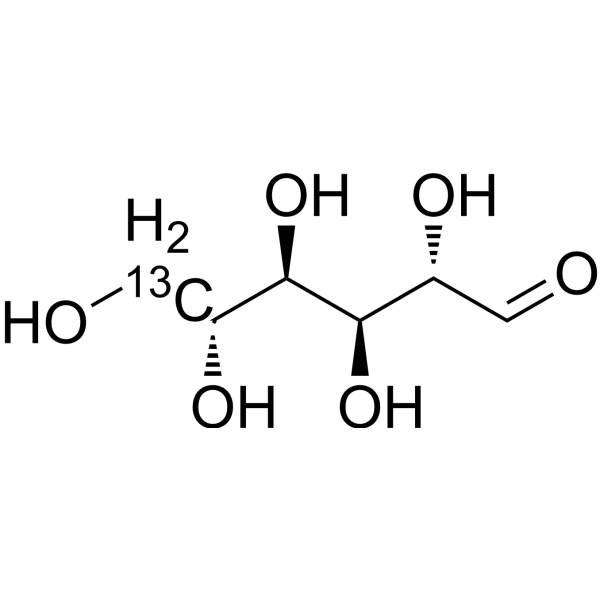
D-Mannose- 13C is the 13C labeled D-Mannose. D-Mannose is a carbohydrate, which plays an important role in human metabolism, especially in the glycosylationof specific prote .
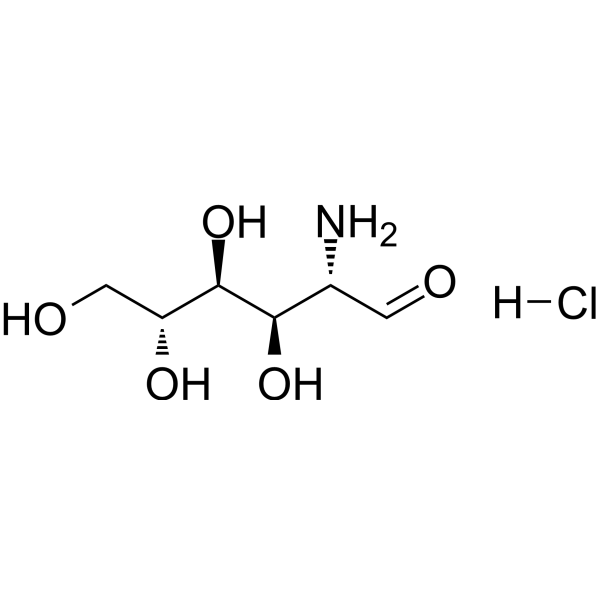
D-Mannosamine ((2S,3R,4S,5R)-2-Amino-3,4,5,6-tetrahydroxyhexanal) hydrochloride is a six-carbon amino sugar and an amino derivative of D-mannose. D-Mannosamine hydrochloride can block mannose receptors .
D-Mannose,6-(dihydrogen phosphate) (sodium) is a class of biochemical reagents used in glycobiology research. Glycobiology studies the structure, synthesis, biology, and evolution of sugars. It involves carbohydrate chemistry, enzymology of glycan formation and degradation, protein-glycan recognition, and the role of glycans in biological systems. This field is closely related to basic research, biomedicine, and biotechnology .
D-Mannose isomerase (PsMaSeAF) is a carbohydrate isomerase catalyzing the reversible isomerization of d-mannose to d-fructose. D-Mannose isomerase (PsMaSeAF) belongs to the N-acylglucosamine 2-epimerase (AGE) superfamily along with AGE, cellobiose 2-epimerase (CE), and aldose-ketose isomerase (AKI) .
NHS-PEG2000-Mannose is an NHS-PEG-Mannose containing PEG2000. NHS-PEG-Mannose is a D-mannose derivative and linker. NHS-PEG-Mannose can bind to phage coat proteins via amino-carboxyl reaction to form mannose-modified phage (Man-phage) .
α-D-Mannose pentaacetate (1,2,3,4,6-Penta-O-acetyl-α-D-mannopyranose) acts as a lactate promoter. It increases lactate production in rat red blood cells .
N-Di(D-mannose)-PEG12-MC-VC-PAB-MMAE is a linker that can be synthesized to antibody-drug conjugate (ADC). N-Di(D-mannose)-PEG12-MC-VC-PAB-MMAE can be used for the study of cancer .
D-Mannose-6-phosphate (disodium) is a class of biochemical reagents used in glycobiology research. Glycobiology studies the structure, synthesis, biology, and evolution of sugars. It involves carbohydrate chemistry, enzymology of glycan formation and degradation, protein-glycan recognition, and the role of glycans in biological systems. This field is closely related to basic research, biomedicine, and biotechnology .
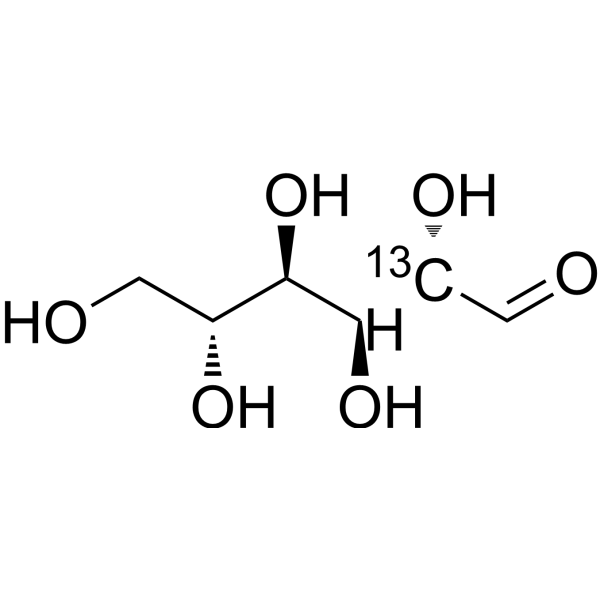
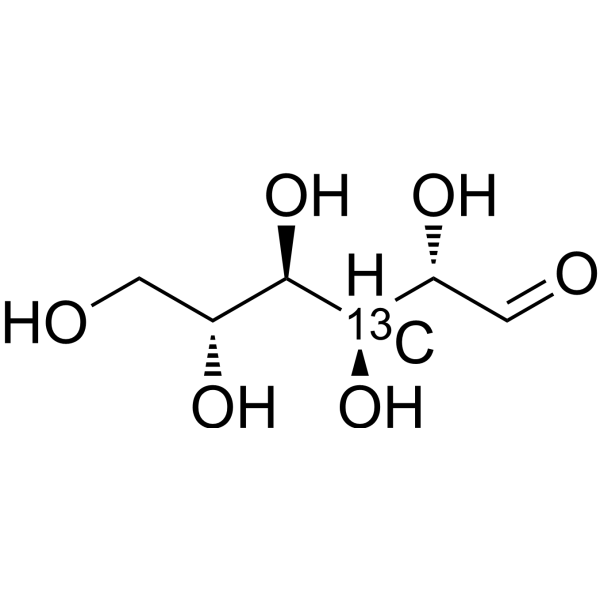
D-Mannose- 13C-2 is the 13C labeled D-Mannose. D-Mannose is a carbohydrate, which plays an important role in human metabolism, especially in the glycosylationof specific prote .
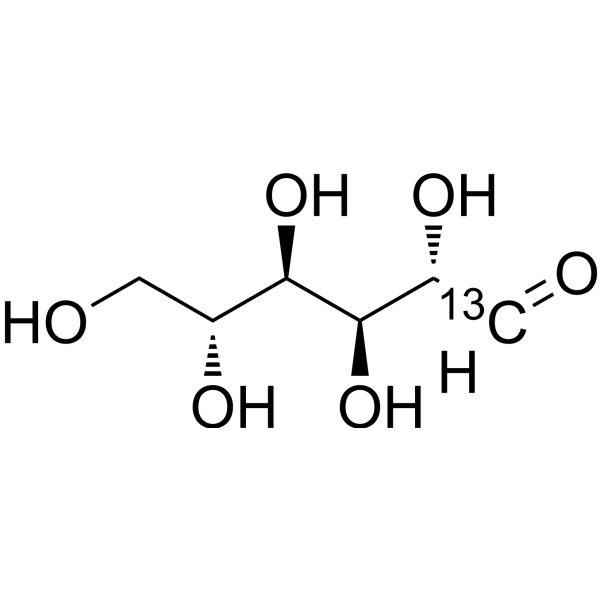
D-Mannose- 13C-1 is the 13C labeled D-Mannose. D-Mannose is a carbohydrate, which plays an important role in human metabolism, especially in the glycosylationof specific prote .
D-Mannose- 13C-5 is the 13C labeled D-Mannose. D-Mannose is a carbohydrate, which plays an important role in human metabolism, especially in the glycosylationof specific prote .
GDP-α-D-mannose disodium is the donor substrate for mannosyltransferases and the precursor of GDP-β-L-fucose. GDP-α-D-mannose disodium gives a competitive inhibition with respect to GTP (Ki 14.7 μM) and an uncompetitive inhibition with respect to mannose-1-P (Ki 115 μM) .
D-Mannose-d is the deuterium labeled D-Mannose. D-Mannose is a carbohydrate, which plays an important role in human metabolism, especially in the glycosylationof specific prote .
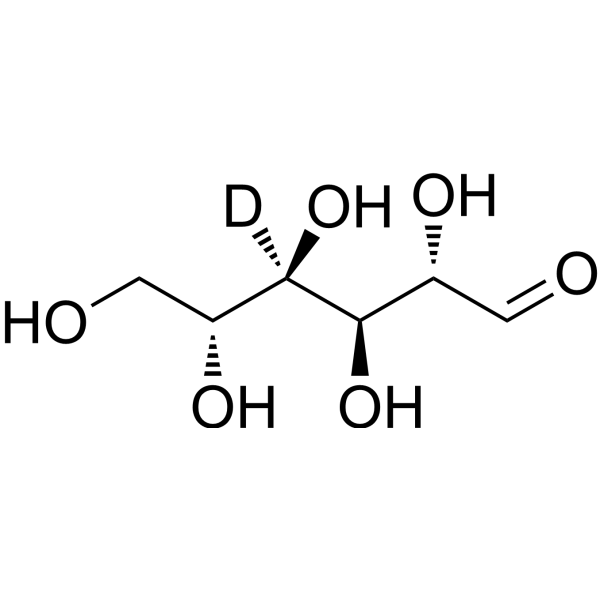
D-Mannose-d-4 is the deuterium labeled D-Mannose. D-Mannose is a carbohydrate, which plays an important role in human metabolism, especially in the glycosylationof specific prote .
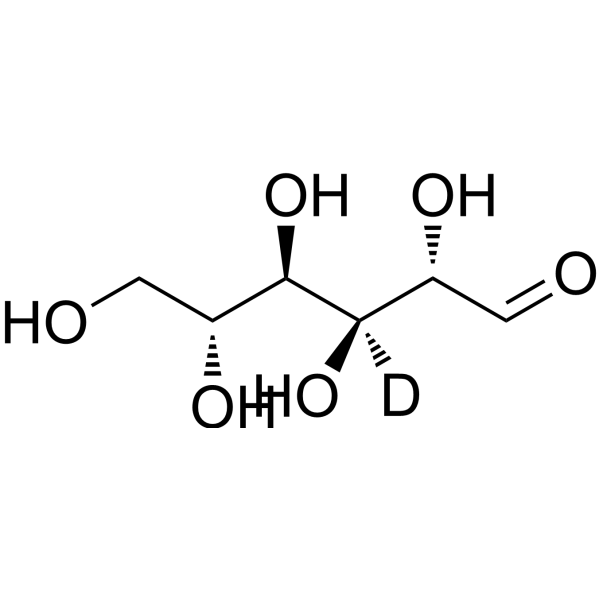
D-Mannose-d-3 is the deuterium labeled D-Mannose. D-Mannose is a carbohydrate, which plays an important role in human metabolism, especially in the glycosylationof specific prote .
D-Mannose-d-1 is the deuterium labeled D-Mannose. D-Mannose is a carbohydrate, which plays an important role in human metabolism, especially in the glycosylationof specific prote .
D-Mannose- 18O is the 18O labeled D-Mannose. D-Mannose is a carbohydrate, which plays an important role in human metabolism, especially in the glycosylationof specific prote .
D-mannose-d7 is the deuterium labeled D-Mannose. D-Mannose is a carbohydrate, which plays an important role in human metabolism, especially in the glycosylationof specific prote .
D-Mannose-d-2 is the deuterium labeled D-Mannose. D-Mannose is a carbohydrate, which plays an important role in human metabolism, especially in the glycosylationof specific prote[1][2].
D-Mannose- 13C-4 is the 13C labeled D-Mannose. D-Mannose is a carbohydrate, which plays an important role in human metabolism, especially in the glycosylationof specific prote .
D-Mannose- 13C-3 is the 13C labeled D-Mannose. D-Mannose is a carbohydrate, which plays an important role in human metabolism, especially in the glycosylationof specific prote .
D-Mannose- 13C,d is the deuterium and 13C labeled D-Mannose. D-Mannose is a carbohydrate, which plays an important role in human metabolism, especially in the glycosylationof specific prote .
D-Mannose- 13C,d-2 is the deuterium and 13C labeled D-Mannose. D-Mannose is a carbohydrate, which plays an important role in human metabolism, especially in the glycosylationof specific prote .
D-mannose- 13C6,d7 is the deuterium and 13C labeled D-Mannose. D-Mannose is a carbohydrate, which plays an important role in human metabolism, especially in the glycosylationof specific prote .
Glycosidase-IN-1 (Compound 9) is a glycosidase inhibitor synthesized from D-mannose. Glycosidase-IN-1 be used to synthesize some immunosuppressive agents and β-glucosidase inhibitors. Glycosidase-IN-1 has hypoglycemic activity .
Acetofluoro-α-D-mannose is a class of biochemical reagents used in glycobiology research. Glycobiology studies the structure, synthesis, biology, and evolution of sugars. It involves carbohydrate chemistry, enzymology of glycan formation and degradation, protein-glycan recognition, and the role of glycans in biological systems. This field is closely related to basic research, biomedicine, and biotechnology .
6-O-α-D-Mannopyranosyl-D-mannose is a class of biochemical reagents used in glycobiology research. Glycobiology studies the structure, synthesis, biology, and evolution of sugars. It involves carbohydrate chemistry, enzymology of glycan formation and degradation, protein-glycan recognition, and the role of glycans in biological systems. This field is closely related to basic research, biomedicine, and biotechnology .
2,3,4,6-Tetra-O-benzoyl-D-mannopyranose is a biochemical reagent that can be used as a biological material or organic compound for life science related research.
D-Mannosamine-d2 (2S,3R,4S,5R)-2-Amino-3,4,5,6-tetrahydroxyhexanal-d2) hydrochloride is a deuterium labeled D-Mannosamine hydrochloride (HY-W021425). D-Mannosamine ((2S,3R,4S,5R)-2-Amino-3,4,5,6-tetrahydroxyhexanal) hydrochloride is a six-carbon amino sugar and an amino derivative of D-mannose. D-Mannosamine hydrochloride can block mannose receptors.
Antifungal agent 26, a Pradimicin A derivative, shows antifungal, antiviral, and antiparasitic activities through binding to d-mannose (Man)-containing glycans of pathogenic species .
D-Mannose,3-amino-3-deoxy (hydrochloride) is a class of biochemical reagents used in glycobiology research. Glycobiology studies the structure, synthesis, biology, and evolution of sugars. It involves carbohydrate chemistry, enzymology of glycan formation and degradation, protein-glycan recognition, and the role of glycans in biological systems. This field is closely related to basic research, biomedicine, and biotechnology .
3-O-(Phenylmethyl)-D-mannose is a class of biochemical reagents used in glycobiology research. Glycobiology studies the structure, synthesis, biology, and evolution of sugars. It involves carbohydrate chemistry, enzymology of glycan formation and degradation, protein-glycan recognition, and the role of glycans in biological systems. This field is closely related to basic research, biomedicine, and biotechnology .
4-Deoxy-4-fluoro-D-mannose is a class of biochemical reagents used in glycobiology research. Glycobiology studies the structure, synthesis, biology, and evolution of sugars. It involves carbohydrate chemistry, enzymology of glycan formation and degradation, protein-glycan recognition, and the role of glycans in biological systems. This field is closely related to basic research, biomedicine, and biotechnology .
3-Deoxy-3-fluoro-D-mannose is a class of biochemical reagents used in glycobiology research. Glycobiology studies the structure, synthesis, biology, and evolution of sugars. It involves carbohydrate chemistry, enzymology of glycan formation and degradation, protein-glycan recognition, and the role of glycans in biological systems. This field is closely related to basic research, biomedicine, and biotechnology .
Anticancer agent 232 (compound 12f) is a glycohybrid designed using 1-azidoglycosides derived from d-glucose, d-galactose, and d-mannose. The IC50 values of anticancer agent 232 against MCF-7 and MDA-MB231 cells are 1.05 μM and 18.03 μM, respectively .
D-Mannosamine (hydrochloride) (Standard) is the analytical standard of D-Mannosamine (hydrochloride) (HY-W021425). This product is intended for research and analytical applications. D-Mannosamine ((2S,3R,4S,5R)-2-Amino-3,4,5,6-tetrahydroxyhexanal) hydrochloride is a six-carbon amino sugar and an amino derivative of D-mannose. D-Mannosamine hydrochloride can block mannose receptors .
β-Mannosidase, Bacteroides thetaiotaomicron (EC 3.2.1.25), is the final exoglycosidase in the N-linked glycoprotein oligosaccharide catabolism pathway. β-Mannosidase catalyzes the following chemical reaction: hydrolysis of the terminal non-reducing β-D-mannose residue in β-D-mannoside.
β-Mannosidase, Cellvibrio mixtus (EC 3.2.1.25), is the final exoglycosidase in the N-linked glycoprotein oligosaccharide catabolism pathway. β-Mannosidase catalyzes the following chemical reaction: hydrolysis of the terminal non-reducing β-D-mannose residue in β-D-mannoside.
β-Mannosidase, Bacteroides fragilis (EC 3.2.1.25), is the final exoglycosidase in the N-linked glycoprotein oligosaccharide catabolism pathway. β-Mannosidase catalyzes the following chemical reaction: hydrolysis of the terminal non-reducing β-D-mannose residue in β-D-mannoside.
β-Mannosidase, Helix pomatia (EC 3.2.1.25), catalyzes the hydrolysis of the terminal non-reducing β-D-mannose residue in β-D-mannoside. β-Mannosidase, Helix pomatia (EC 3.2.1.25) is the final exoglycosidase in the N-linked glycoprotein oligosaccharide catabolism pathway.
β-Mannosidase, Streptomyces coelicolor (EC 3.2.1.25) catalyses the following chemical reaction:Hydrolysis of terminal, non-reducing beta-D-mannose residues in beta-D-mannosides. This gene encodes a member of the glycosyl hydrolase 2 family. The encoded protein localizes to the lysosome where it is the final exoglycosidase in the pathway for N-linked glycoprotein oligosaccharide catabolism. Mutations in this gene are associated with beta-mannosidosis, a lysosomal storage disease that has a wide spectrum of neurological involvement.
D-Mannose,6-(dihydrogen phosphate) (sodium) is a class of biochemical reagents used in glycobiology research. Glycobiology studies the structure, synthesis, biology, and evolution of sugars. It involves carbohydrate chemistry, enzymology of glycan formation and degradation, protein-glycan recognition, and the role of glycans in biological systems. This field is closely related to basic research, biomedicine, and biotechnology .
α-D-Mannose pentaacetate (1,2,3,4,6-Penta-O-acetyl-α-D-mannopyranose) acts as a lactate promoter. It increases lactate production in rat red blood cells .
D-Mannose-6-phosphate (disodium) is a class of biochemical reagents used in glycobiology research. Glycobiology studies the structure, synthesis, biology, and evolution of sugars. It involves carbohydrate chemistry, enzymology of glycan formation and degradation, protein-glycan recognition, and the role of glycans in biological systems. This field is closely related to basic research, biomedicine, and biotechnology .
Acetofluoro-α-D-mannose is a class of biochemical reagents used in glycobiology research. Glycobiology studies the structure, synthesis, biology, and evolution of sugars. It involves carbohydrate chemistry, enzymology of glycan formation and degradation, protein-glycan recognition, and the role of glycans in biological systems. This field is closely related to basic research, biomedicine, and biotechnology .
6-O-α-D-Mannopyranosyl-D-mannose is a class of biochemical reagents used in glycobiology research. Glycobiology studies the structure, synthesis, biology, and evolution of sugars. It involves carbohydrate chemistry, enzymology of glycan formation and degradation, protein-glycan recognition, and the role of glycans in biological systems. This field is closely related to basic research, biomedicine, and biotechnology .
2,3,4,6-Tetra-O-benzoyl-D-mannopyranose is a biochemical reagent that can be used as a biological material or organic compound for life science related research.
D-Mannose,3-amino-3-deoxy (hydrochloride) is a class of biochemical reagents used in glycobiology research. Glycobiology studies the structure, synthesis, biology, and evolution of sugars. It involves carbohydrate chemistry, enzymology of glycan formation and degradation, protein-glycan recognition, and the role of glycans in biological systems. This field is closely related to basic research, biomedicine, and biotechnology .
3-O-(Phenylmethyl)-D-mannose is a class of biochemical reagents used in glycobiology research. Glycobiology studies the structure, synthesis, biology, and evolution of sugars. It involves carbohydrate chemistry, enzymology of glycan formation and degradation, protein-glycan recognition, and the role of glycans in biological systems. This field is closely related to basic research, biomedicine, and biotechnology .
4-Deoxy-4-fluoro-D-mannose is a class of biochemical reagents used in glycobiology research. Glycobiology studies the structure, synthesis, biology, and evolution of sugars. It involves carbohydrate chemistry, enzymology of glycan formation and degradation, protein-glycan recognition, and the role of glycans in biological systems. This field is closely related to basic research, biomedicine, and biotechnology .
3-Deoxy-3-fluoro-D-mannose is a class of biochemical reagents used in glycobiology research. Glycobiology studies the structure, synthesis, biology, and evolution of sugars. It involves carbohydrate chemistry, enzymology of glycan formation and degradation, protein-glycan recognition, and the role of glycans in biological systems. This field is closely related to basic research, biomedicine, and biotechnology .
D-Mannose is a C-2 superpolymer of glucose that occurs naturally in many plants and fruits. D-Mannose has anti-inflammatory and antitumor activity. D-Mannose plays an important role in immune regulation .
D-Mannose (Standard) is the analytical standard of D-Mannose. This product is intended for research and analytical applications. D-Mannose is a C-2 superpolymer of glucose that occurs naturally in many plants and fruits. D-Mannose has anti-inflammatory and antitumor activity. D-Mannose plays an important role in immune regulation .
GDP-D-mannose disodium consists of GDP-α-D-mannose (HY-N7389B) and GDP-β-D-mannose. GDP-α-D-mannose serves as a donor substrate for mannosyltransferases and acts as a precursor of GDP-β-L-fucose. GDP-α-D-mannose exerts competitive inhibition on GTP (with a Ki value of 14.7 μM) and non-competitive inhibition on mannose-1-P (with a Ki value of 115 μM). GDP-D-mannose disodium is metabolized to GDP-L-fucose (HY-134433) via GMDS (Gmd) and TSTA3 (WcaG) .
D-Mannosamine ((2S,3R,4S,5R)-2-Amino-3,4,5,6-tetrahydroxyhexanal) hydrochloride is a six-carbon amino sugar and an amino derivative of D-mannose. D-Mannosamine hydrochloride can block mannose receptors .
GDP-α-D-mannose disodium is the donor substrate for mannosyltransferases and the precursor of GDP-β-L-fucose. GDP-α-D-mannose disodium gives a competitive inhibition with respect to GTP (Ki 14.7 μM) and an uncompetitive inhibition with respect to mannose-1-P (Ki 115 μM) .
D-Mannosamine (hydrochloride) (Standard) is the analytical standard of D-Mannosamine (hydrochloride) (HY-W021425). This product is intended for research and analytical applications. D-Mannosamine ((2S,3R,4S,5R)-2-Amino-3,4,5,6-tetrahydroxyhexanal) hydrochloride is a six-carbon amino sugar and an amino derivative of D-mannose. D-Mannosamine hydrochloride can block mannose receptors .
FimH Protein, pivotal in regulating length, mediates adhesion for type 1 fimbriae without being essential for fimbriae production. Positioned laterally in the fimbriae structure, FimH primarily binds to D-mannose. FimH integration into fimbriae involves collaborative action with FimF and FimG, emphasizing the coordinated molecular interplay essential for type 1 fimbriae assembly and function. FimH Protein, E.coli (P.pastoris, His) is the recombinant Virus-derived FimH protein, expressed by P. pastoris , with N-6*His labeled tag.
GDP-L-Fucose Synthase; GDP-4-Keto-6-Deoxy-D-mannose-3; 5-Epimerase-4-Reductase; Protein FX; Red Cell NADP(H)-Binding Protein; Short-Chain Dehydrogenase/Reductase Family 4E Member 1; TSTA3; SDR4E1
The TSTA3 protein plays a key role in catalyzing the two-step NADP-dependent conversion of GDP-4-dehydro-6-deoxy-D-mannose to GDP-fucose. The process involves successive epimerase and reductase reactions, ultimately leading to the biosynthesis of GDP-fucose. TSTA3 Protein, Human (His) is the recombinant human-derived TSTA3 protein, expressed by E. coli , with C-6*His labeled tag.
D-Mannose- 13C is the 13C labeled D-Mannose. D-Mannose is a carbohydrate, which plays an important role in human metabolism, especially in the glycosylationof specific prote .
D-Mannose- 13C-2 is the 13C labeled D-Mannose. D-Mannose is a carbohydrate, which plays an important role in human metabolism, especially in the glycosylationof specific prote .
D-Mannose- 13C-1 is the 13C labeled D-Mannose. D-Mannose is a carbohydrate, which plays an important role in human metabolism, especially in the glycosylationof specific prote .
D-Mannose- 13C-5 is the 13C labeled D-Mannose. D-Mannose is a carbohydrate, which plays an important role in human metabolism, especially in the glycosylationof specific prote .
D-Mannose-d is the deuterium labeled D-Mannose. D-Mannose is a carbohydrate, which plays an important role in human metabolism, especially in the glycosylationof specific prote .
D-Mannose-d-4 is the deuterium labeled D-Mannose. D-Mannose is a carbohydrate, which plays an important role in human metabolism, especially in the glycosylationof specific prote .
D-Mannose-d-3 is the deuterium labeled D-Mannose. D-Mannose is a carbohydrate, which plays an important role in human metabolism, especially in the glycosylationof specific prote .
D-Mannose-d-1 is the deuterium labeled D-Mannose. D-Mannose is a carbohydrate, which plays an important role in human metabolism, especially in the glycosylationof specific prote .
D-Mannose- 18O is the 18O labeled D-Mannose. D-Mannose is a carbohydrate, which plays an important role in human metabolism, especially in the glycosylationof specific prote .
D-mannose-d7 is the deuterium labeled D-Mannose. D-Mannose is a carbohydrate, which plays an important role in human metabolism, especially in the glycosylationof specific prote .
D-Mannose-d-2 is the deuterium labeled D-Mannose. D-Mannose is a carbohydrate, which plays an important role in human metabolism, especially in the glycosylationof specific prote[1][2].
D-Mannose- 13C-4 is the 13C labeled D-Mannose. D-Mannose is a carbohydrate, which plays an important role in human metabolism, especially in the glycosylationof specific prote .
D-Mannose- 13C-3 is the 13C labeled D-Mannose. D-Mannose is a carbohydrate, which plays an important role in human metabolism, especially in the glycosylationof specific prote .
D-Mannose- 13C,d is the deuterium and 13C labeled D-Mannose. D-Mannose is a carbohydrate, which plays an important role in human metabolism, especially in the glycosylationof specific prote .
D-Mannose- 13C,d-2 is the deuterium and 13C labeled D-Mannose. D-Mannose is a carbohydrate, which plays an important role in human metabolism, especially in the glycosylationof specific prote .
D-mannose- 13C6,d7 is the deuterium and 13C labeled D-Mannose. D-Mannose is a carbohydrate, which plays an important role in human metabolism, especially in the glycosylationof specific prote .
D-Mannosamine-d2 (2S,3R,4S,5R)-2-Amino-3,4,5,6-tetrahydroxyhexanal-d2) hydrochloride is a deuterium labeled D-Mannosamine hydrochloride (HY-W021425). D-Mannosamine ((2S,3R,4S,5R)-2-Amino-3,4,5,6-tetrahydroxyhexanal) hydrochloride is a six-carbon amino sugar and an amino derivative of D-mannose. D-Mannosamine hydrochloride can block mannose receptors.
Azido-PEG4-alpha-D-mannose is a PEG linker that combines an azide group with an alpha-D-mannose moiety. Azido-PEG4-alpha-D-mannose is a click chemistry reagent, it contains an Azide group and can undergo copper-catalyzed azide-alkyne cycloaddition reaction (CuAAc) with molecules containing Alkyne groups. It can also undergo strain-promoted alkyne-azide cycloaddition (SPAAC) reactions with molecules containing DBCO or BCN groups. Azido-PEG4-alpha-D-mannose has the targeting property of mannose, which can accurately deliver drugs to specific cells or tissues to improve the therapeutic effect of drugs .
Inquiry Online
Your information is safe with us. * Required Fields.
Western blot analysis of extracts from THP-1(lane 2(20μg), Jurkat (lane 3(20μg) and NIH3T3(lane 4(20μg) using FOXO1A (HY-P80132) Rabbit mAb. Proteins were transferred
to a PVDF membrane and blocked with 5% non-fat milk in TBST for 2 hour at room temperature. The primary antibody (1/1000) and Loading control antibody (Beta Actin, HY-P80438, 1/10000) was
used in 5% non-fat milk in TBST at 4°C overnight. Goat Anti-Mouse/Rabbit IgG-HRP Secondary Antibody (1/10000) was used for 1 hour at room temperature.
Western blot analysis of extracts from THP-1(lane 2(20μg), Jurkat (lane 3(20μg) and NIH3T3(lane 4(20μg) using FOXO1A (HY-P80132) Rabbit mAb. Proteins were transferred
to a PVDF membrane and blocked with 5% non-fat milk in TBST for 2 hour at room temperature. The primary antibody (1/1000) and Loading control antibody (Beta Actin, HY-P80438, 1/10000) was
used in 5% non-fat milk in TBST at 4°C overnight. Goat Anti-Mouse/Rabbit IgG-HRP Secondary Antibody (1/10000) was used for 1 hour at room temperature.
Western blot analysis of extracts from THP-1(lane 2(20μg), Jurkat (lane 3(20μg) and NIH3T3(lane 4(20μg) using FOXO1A (HY-P80132) Rabbit mAb. Proteins were transferred
to a PVDF membrane and blocked with 5% non-fat milk in TBST for 2 hour at room temperature. The primary antibody (1/1000) and Loading control antibody (Beta Actin, HY-P80438, 1/10000) was
used in 5% non-fat milk in TBST at 4°C overnight. Goat Anti-Mouse/Rabbit IgG-HRP Secondary Antibody (1/10000) was used for 1 hour at room temperature.
Western blot analysis of extracts from THP-1(lane 2(20μg), Jurkat (lane 3(20μg) and NIH3T3(lane 4(20μg) using FOXO1A (HY-P80132) Rabbit mAb. Proteins were transferred
to a PVDF membrane and blocked with 5% non-fat milk in TBST for 2 hour at room temperature. The primary antibody (1/1000) and Loading control antibody (Beta Actin, HY-P80438, 1/10000) was
MedchemExpress Validation 03
Western blot analysis of extracts from THP-1(lane 2(20μg), Jurkat (lane 3(20μg) and NIH3T3(lane 4(20μg) using FOXO1A (HY-P80132) Rabbit mAb. Proteins were transferred
MedchemExpress Validation 04
Western blot analysis of extracts from THP-1(lane 2(20μg), Jurkat (lane 3(20μg) and NIH3T3(lane 4(20μg) using FOXO1A (HY-P80132) Rabbit mAb. Proteins were transferred
to a PVDF membrane and blocked with 5% non-fat milk in TBST for 2 hour at room temperature. The primary antibody (1/1000) and Loading control antibody (Beta Actin, HY-P80438, 1/10000) was
used in 5% non-fat milk in TBST at 4°C overnight. Goat Anti-Mouse/Rabbit IgG-HRP Secondary Antibody (1/10000) was used for 1 hour at room temperature.
MedchemExpress Validation
Western blot analysis of extracts from THP-1(lane 2(20μg), Jurkat (lane 3(20μg) and NIH3T3(lane 4(20μg) using FOXO1A (HY-P80132) Rabbit mAb. Proteins were transferred
to a PVDF membrane and blocked with 5% non-fat milk in TBST for 2 hour at room temperature. The primary antibody (1/1000) and Loading control antibody (Beta Actin, HY-P80438, 1/10000) was
used in 5% non-fat milk in TBST at 4°C overnight. Goat Anti-Mouse/Rabbit IgG-HRP Secondary Antibody (1/10000) was used for 1 hour at room temperature.
Western blot analysis of extracts from THP-1(lane 2(20μg), Jurkat (lane 3(20μg) and NIH3T3(lane 4(20μg) using FOXO1A (HY-P80132) Rabbit mAb. Proteins were transferred
to a PVDF membrane and blocked with 5% non-fat milk in TBST for 2 hour at room temperature. The primary antibody (1/1000) and Loading control antibody (Beta Actin, HY-P80438, 1/10000) was
used in 5% non-fat milk in TBST at 4°C overnight. Goat Anti-Mouse/Rabbit IgG-HRP Secondary Antibody (1/10000) was used for 1 hour at room temperature.
MedchemExpress Validation
Western blot analysis of extracts from THP-1(lane 2(20μg), Jurkat (lane 3(20μg) and NIH3T3(lane 4(20μg) using FOXO1A (HY-P80132) Rabbit mAb. Proteins were transferred
to a PVDF membrane and blocked with 5% non-fat milk in TBST for 2 hour at room temperature. The primary antibody (1/1000) and Loading control antibody (Beta Actin, HY-P80438, 1/10000) was
used in 5% non-fat milk in TBST at 4°C overnight. Goat Anti-Mouse/Rabbit IgG-HRP Secondary Antibody (1/10000) was used for 1 hour at room temperature.
MedchemExpress Validation
Western blot analysis of extracts from THP-1(lane 2(20μg), Jurkat (lane 3(20μg) and NIH3T3(lane 4(20μg) using FOXO1A (HY-P80132) Rabbit mAb. Proteins were transferred
to a PVDF membrane and blocked with 5% non-fat milk in TBST for 2 hour at room temperature. The primary antibody (1/1000) and Loading control antibody (Beta Actin, HY-P80438, 1/10000) was
used in 5% non-fat milk in TBST at 4°C overnight. Goat Anti-Mouse/Rabbit IgG-HRP Secondary Antibody (1/10000) was used for 1 hour at room temperature.
MedchemExpress Validation
Western blot analysis of extracts from THP-1(lane 2(20μg), Jurkat (lane 3(20μg) and NIH3T3(lane 4(20μg) using FOXO1A (HY-P80132) Rabbit mAb. Proteins were transferred
to a PVDF membrane and blocked with 5% non-fat milk in TBST for 2 hour at room temperature. The primary antibody (1/1000) and Loading control antibody (Beta Actin, HY-P80438, 1/10000) was
used in 5% non-fat milk in TBST at 4°C overnight. Goat Anti-Mouse/Rabbit IgG-HRP Secondary Antibody (1/10000) was used for 1 hour at room temperature.
MedchemExpress Validation
Western blot analysis of extracts from THP-1(lane 2(20μg), Jurkat (lane 3(20μg) and NIH3T3(lane 4(20μg) using FOXO1A (HY-P80132) Rabbit mAb. Proteins were transferred
to a PVDF membrane and blocked with 5% non-fat milk in TBST for 2 hour at room temperature. The primary antibody (1/1000) and Loading control antibody (Beta Actin, HY-P80438, 1/10000) was
used in 5% non-fat milk in TBST at 4°C overnight. Goat Anti-Mouse/Rabbit IgG-HRP Secondary Antibody (1/10000) was used for 1 hour at room temperature.
MedchemExpress Validation
Western blot analysis of extracts from THP-1(lane 2(20μg), Jurkat (lane 3(20μg) and NIH3T3(lane 4(20μg) using FOXO1A (HY-P80132) Rabbit mAb. Proteins were transferred
to a PVDF membrane and blocked with 5% non-fat milk in TBST for 2 hour at room temperature. The primary antibody (1/1000) and Loading control antibody (Beta Actin, HY-P80438, 1/10000) was
used in 5% non-fat milk in TBST at 4°C overnight. Goat Anti-Mouse/Rabbit IgG-HRP Secondary Antibody (1/10000) was used for 1 hour at room temperature.
MedchemExpress Validation
Western blot analysis of extracts from THP-1(lane 2(20μg), Jurkat (lane 3(20μg) and NIH3T3(lane 4(20μg) using FOXO1A (HY-P80132) Rabbit mAb. Proteins were transferred
to a PVDF membrane and blocked with 5% non-fat milk in TBST for 2 hour at room temperature. The primary antibody (1/1000) and Loading control antibody (Beta Actin, HY-P80438, 1/10000) was
used in 5% non-fat milk in TBST at 4°C overnight. Goat Anti-Mouse/Rabbit IgG-HRP Secondary Antibody (1/10000) was used for 1 hour at room temperature.
MedChemExpress values your privacy and your trust is important to us. We use cookies to enhance your website experience. Some cookies are necessary to run the website.
Privacy and Cookie Policy

