1. Search Result
Search Result
Results for "

excitatory response

" in MedChemExpress (MCE) Product Catalog:

16

Inhibitors & Agonists

1

Peptides

1

Natural
Products

Targets Recommended:
Cat. No. Product Name Target Research Areas Chemical Structure
  • HY-10932
    Aniracetam
    1 Publications Verification

    Ro 13-5057

    nAChR iGluR Neurological Disease
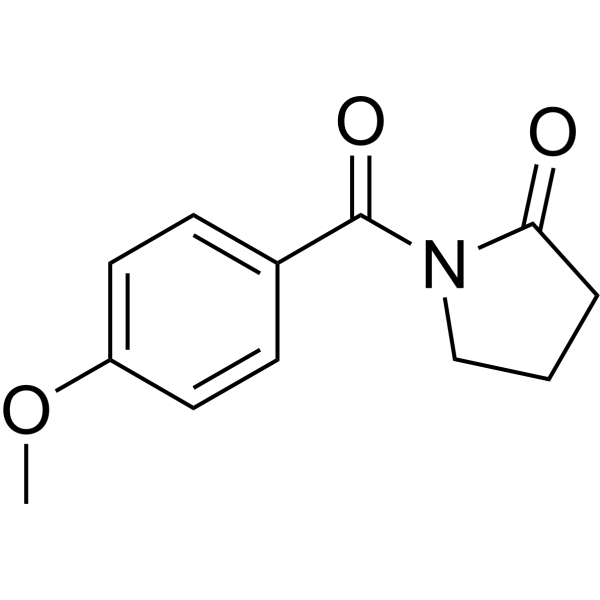
    Aniracetam (Ro 13-5057) is an orally active neuroprotective agent, possessing nootropics effects. Aniracetam potentiates the ionotropic quisqualate (iQA) responses in the CA1 region of rat hippocampal slices. Aniracetam also potentiates the excitatory post synaptic potentials (EPSPs) in Schaffer collateral-commissural synapses. Aniracetam can prevents the CO2-induced impairment of acquisition in hypercapnia model rats. Aniracetam can be used to research cerebral dysfunctional disorders .
    Aniracetam
  • HY-110175
    CX614
    1 Publications Verification

    iGluR Neurological Disease
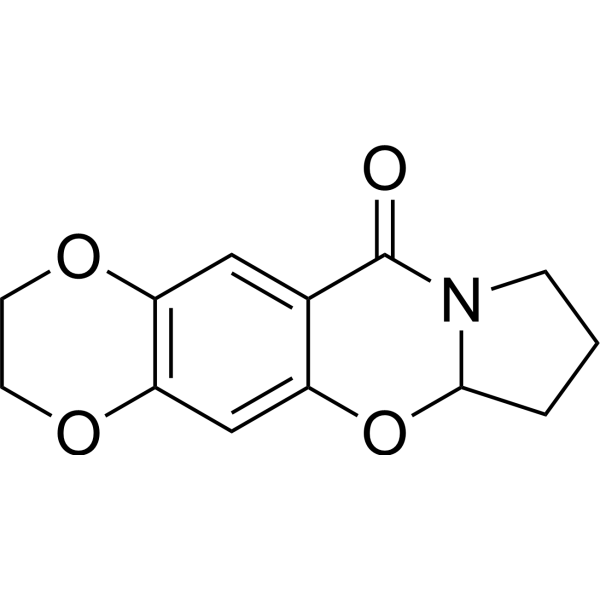
    CX614 is a positive variant modulator of AMPA receptors that enhances excitatory postsynaptic potentials (amplitude and duration) by blocking and slowing the inactivation of responses to glutamate and automatically evokes excitatory postsynaptic currents in neuronal cultures. CX614 can be used in the study of psychiatric disorders such as depression .
    CX614
  • HY-164795

    Neurotensin Receptor Arrestin iGluR ERK Sodium Channel Neurological Disease
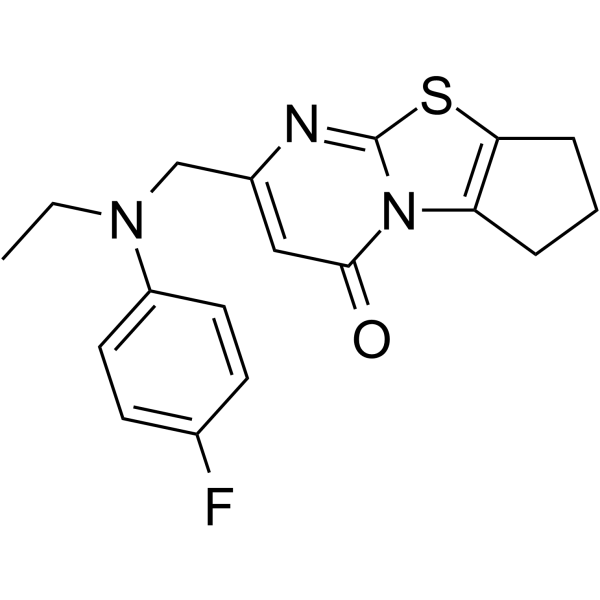
    SBI-810 is a blood-brain barrier-permeable NTSR1 modulator. SBI-810 promotes the recruitment of β-arrestin-2 to NTSR1 and antagonizes NTSR1-mediated Gq activation. SBI-810 inhibits excitatory synaptic transmission, NMDA receptor and extracellular signal-regulated kinase (ERK) signaling in spinal nociceptive neurons, reduces surface expression of Nav1.7 and action potential firing in primary sensory neurons, and attenuates C-fiber responses. SBI-810 effectively alleviates acute and chronic pain in various rodent models through peripheral and central modulation. SBI-810 is applicable to research related to multiple pain disorders .
    SBI-810
  • HY-164795A

    Neurotensin Receptor Arrestin iGluR ERK Sodium Channel Neurological Disease
    SBI-810 hydrochloride is a blood-brain barrier-permeable NTSR1 modulator. SBI-810 hydrochloride promotes the recruitment of β-arrestin-2 to NTSR1 and antagonizes NTSR1-mediated Gq activation. SBI-810 hydrochloride inhibits excitatory synaptic transmission, NMDA receptor and extracellular signal-regulated kinase (ERK) signaling in spinal nociceptive neurons, reduces surface expression of Nav1.7 and action potential firing in primary sensory neurons, and attenuates C-fiber responses. SBI-810 hydrochloride effectively alleviates acute and chronic pain in various rodent models through peripheral and central modulation. SBI-810 hydrochloride is applicable to research related to multiple pain disorders .
    SBI-810 hydrochloride
  • HY-101352

    Cholecystokinin Receptor Neurological Disease
    LY 225910 is a selective antagonist for cholecystokinin receptor (CCK2 receptor), which affects the excitatory response to morphine, and leads to morphine sensitization .
    LY 225910
  • HY-107498

    iGluR Neurological Disease
    GNE-8324 is a selective GluN2A positive allosteric modulator. GNE-8324 selectively enhances NMDA receptor (NMDAR)-mediated synaptic responses in inhibitory but not excitatory neurons .
    GNE-8324
  • HY-136980

    Asp-Glu

    Endogenous Metabolite Neurological Disease
    Aspartylglutamate (Asp-Glu) is a dipeptide that exhibits excitatory activity, as it has been shown to depolarize CA1 pyramidal neurons and increase conductance in response to stimulation. Aspartylglutamate selectively binds to certain glutamate receptors and demonstrates potent effects in specific regions of the hippocampus, particularly in the stratum radiatum where it enhances excitatory neurotransmission.
    Aspartylglutamate
  • HY-100923

    PKA 5-HT Receptor EGFR Neurological Disease
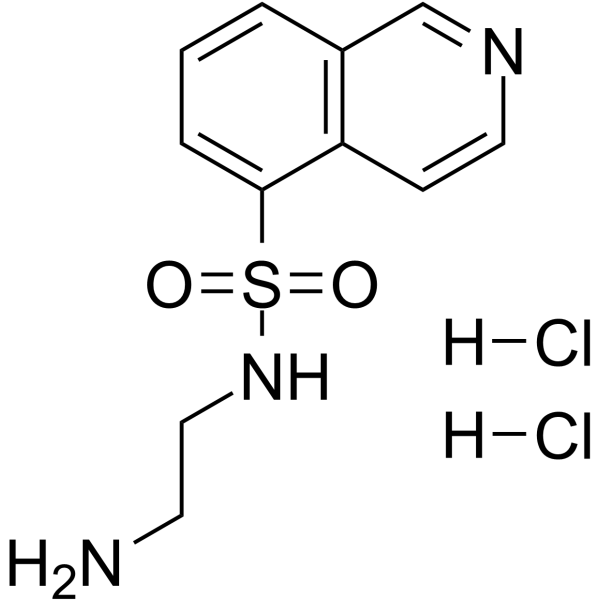
    H-9 Dihydrochloride is a PKA (protein kinase) inhibitor. H-9 Dihydrochloride (10 μM) significantly reduces the excitatory response to 5-HT. H-9 Dihydrochloride also has a direct effect on pharyngeal activity. H-9 Dihydrochloride inhibits signal-transduction and cell growth in EGF (epidermal growth factor)-dependent epithelial cell lines .
    H-9 Dihydrochloride
  • HY-10932R

    Ro 13-5057 (Standard)

    Reference Standards nAChR iGluR Neurological Disease
    Aniracetam (Standard) is the analytical standard of Aniracetam. This product is intended for research and analytical applications. Aniracetam (Ro 13-5057) is an orally active neuroprotective agent, possessing nootropics effects. Aniracetam potentiates the ionotropic quisqualate (iQA) responses in the CA1 region of rat hippocampal slices. Aniracetam also potentiates the excitatory post synaptic potentials (EPSPs) in Schaffer collateral-commissural synapses. Aniracetam can prevents the CO2-induced impairment of acquisition in hypercapnia model rats. Aniracetam can be used to research cerebral dysfunctional disorders .
    Aniracetam (Standard)
  • HY-120989

    Endogenous Metabolite Metabolic Disease
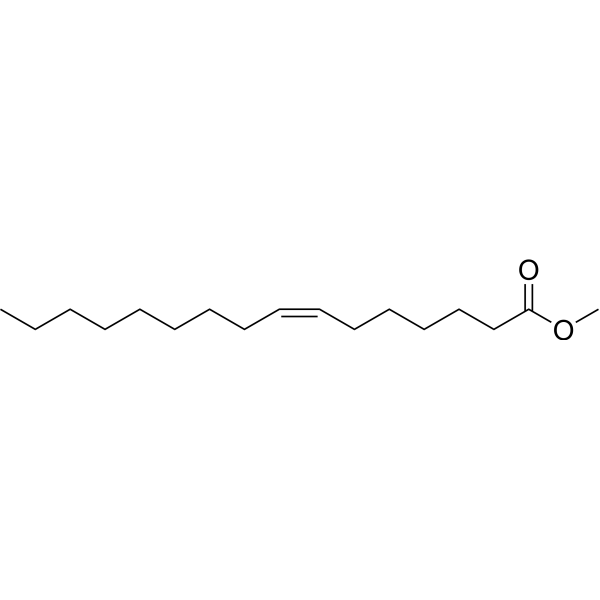
    Methyl 7(Z)-hexadecenoate is a sex pheromone produced by Trogoderma glabrum. Methyl 7(Z)-hexadecenoate can elicit attractive and sexually excitatory responses in Trogoderma glabrum males .
    Methyl 7(Z)-hexadecenoate
  • HY-106323

    KW-5139

    Motilin Receptor Metabolic Disease
    [Leu13]-Motilin (KW-5139) is a motilin analogue. [Leu13]-Motilin stimulates gastrointestinal motility in the rabbit. [Leu13]-Motilin causes concentration-dependent contractions of the gastric antrum, duodenum, jejunum, ileum and the descending colon in vitro .
    [Leu13]-Motilin
  • HY-100815

    iGluR Neurological Disease
    (R)-AMPA is an inactive AMPA receptor ligand that inhibits the release of excitatory amino acids from neurons. (R)-AMPA is inactive in experiments that enhance the release of [3H]D-aspartate induced by electrical stimulation. (R)-AMPA is inhibited by competitive and noncompetitive AMPA receptor selective antagonists in response to AMPA and glutamate .
    (R)-AMPA
  • HY-178153

    iGluR Neurological Disease
    BPAM363 is an orally active, selective positive allosteric modulator (PAM) of AMPARs with blood-brain barrier penetration. BPAM363 selectively potentiates AMPAR activity in human and rat models, with an EC2x value of 0.96 μM in rat embryonic cortex primary neurons. BPAM363 upregulates BDNF protein expression in rat primary cortical neuronal cultures. BPAM363 enhances AMPA-mediated excitatory postsynaptic responses in rat and mice. BPAM363 can be used for the study of cognitive disorders .
    BPAM363
  • HY-156104

    PROTACs CaMK Neurological Disease
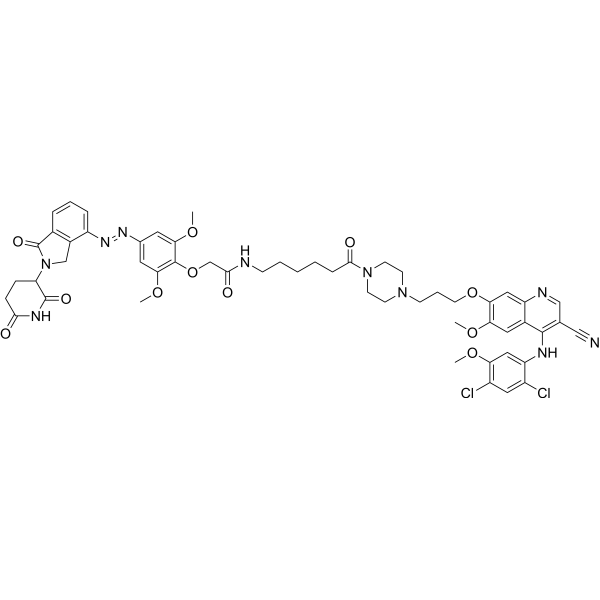
    CaMKIIα-PHOTAC is a photochemically targeted chimera (PHOTAC) targeting Ca2+/calmodulin-dependent protein kinase II α (CaMKIIα). Molecules such as PHOTAC can catalyze the ubiquitination and degradation of target proteins through the endogenous proteasome under specific wavelengths of light. CaMKIIα-PHOTAC reduces synaptic function under light conditions, and it attenuates the intensity of evoked field excitatory postsynaptic potentials in the mouse hippocampus in response to physiological stimuli. CaMKIIα-PHOTAC plays a critical role in maintaining long-term potentiation and memory capacity in subcellular dendritic domains .
    CaMKIIα-PHOTAC
  • HY-171936

    GM1 (d18:1/C18:0) ammonium; C18 Ganglioside GM1 (d18:1/18:0) ammonium

    Endogenous Metabolite Neurological Disease
    Ganglioside GM1 (ammonium) is a monosialylated ganglioside and the prototypic ganglioside for those containing one sialic acid residue. Ganglioside GM1 (ammonium) is one of the most abundant gangliosides in the brain which provides neuroprotection. Ganglioside GM1 (ammonium) exhibits anti-inflammatory property. Ganglioside GM1 (ammonium) has a well-balanced amphiphilic behavior. Ganglioside GM1 (ammonium) can reduce the fluidity of the plasma membrane that implies a retention and enrichment of the ganglioside in specific membrane domains that are called lipid rafts. Ganglioside GM1 (ammonium) can modify the process of differentiation, amplifies responses to neurotrophic factors, protects against excitatory amino acid-related neurotoxicity. Ganglioside GM1 (ammonium) can alleviate acute nerve cell damage through blocking cytotoxicity and potentiating neurotophic factors. Ganglioside GM1 (ammonium) can be studied in neurodegenerative diseases such as Alzheimer’s disease .
    Ganglioside GM1 ammonium
  • HY-107498R

    Reference Standards iGluR Neurological Disease
    GNE-8324 (Standard) is the analytical standard of GNE-8324 (HY-107498). This product is intended for research and analytical applications. GNE-8324 is a selective GluN2A positive allosteric modulator. GNE-8324 selectively enhances NMDA receptor (NMDAR)-mediated synaptic responses in inhibitory but not excitatory neurons .
    GNE-8324 (Standard)

Inquiry Online

Your information is safe with us. * Required Fields.

Salutation


Country or Region *

Applicant Name *


Organization Name *

Department *


Email Address *


Product Name *

Cat. No.


Requested quantity *

Phone Number *


Remarks

Inquiry Online

Inquiry Information

Product Name:
Cat. No.:
Quantity:
MCE Japan Authorized Agent: