10 Results for "

hemolytic potential

" in MedChemExpress (MCE) Product Catalog:
Products (10)

10 Results for "hemolytic potential" in MCE Product Catalog:

5
5 Cited Publications
Cat. No.: HY-117930
CAS No.: 1903768-17-1
Purity:  99.91%
Synonyms: ACH-4471
Target:  

Complement System

Research Areas:  

Inflammation/Immunology

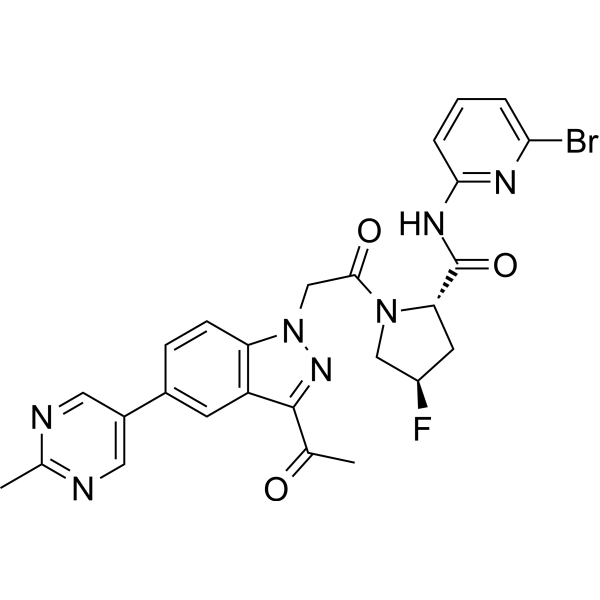
Danicopan (ACH-4471), a selective and orally active small-molecule factor D inhibitor, shows high binding affinity to human Factor D with Kd value of 0.54 nM. Danicopan (ACH-4471) inhibits alternative pathway of complement (APC) activity, has potential to block the alternative pathway of complement in paroxysmal nocturnal hemoglobinuria (PNH) and atypical hemolytic uremic syndrome (aHUS) .
loading...
    loading...
1
1 Cited Publications
Cat. No.: HY-114524
CAS No.: 103560-62-9
Purity:  ≥95.0%
Synonyms: 4-ONE
Target:  

TRP Channel

Research Areas:  

Cardiovascular Disease

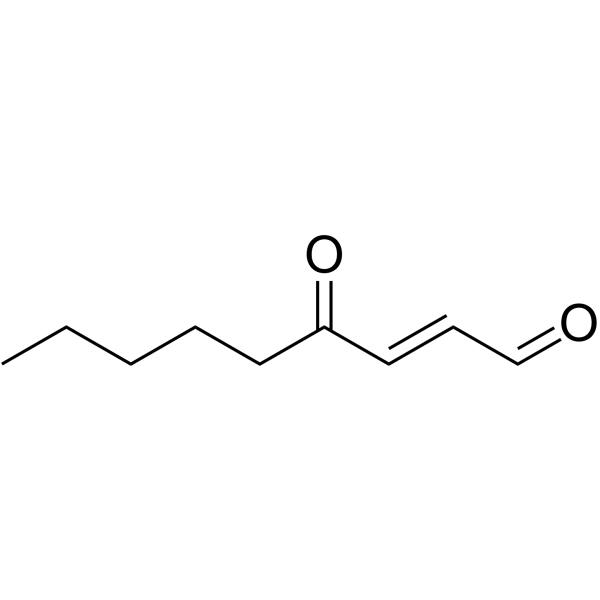
(E)-4-Oxo-2-nonenal (4-ONE) is one of the major hemolytic decomposition products of lipid hydroperoxides. (E)-4-Oxo-2-nonenal is a major product of the FeII-mediated breakdown of lipid hydroperoxides. (E)-4-Oxo-2-nonenal is a potent transient receptor potential ankyrin 1 (TRPA1) agonist .
loading...
    loading...
Cat. No.: HY-P5016A
Research Areas:  

Infection Cancer

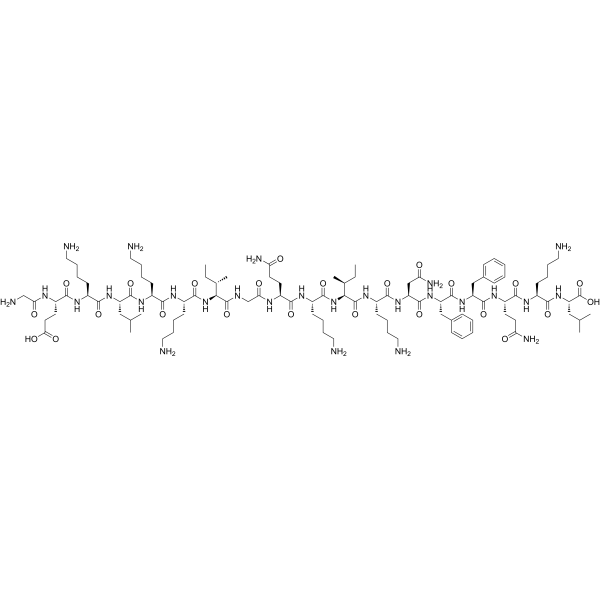
CRAMP-18 (mouse) acetate is an antibiotic peptide without hemolytic activity. CRAMP-18 (mouse) acetate has good inhibitory activity against Gram-negative bacteria, such as S. typhimurium and P. aeruginosa. CRAMP-18 (mouse) acetate has the potential to study antifungal, antibacterial and antitumor .
loading...
    loading...
Cat. No.: HY-178504
Target:  

Bacterial

Research Areas:  

Infection

Lug-15 is a rapid bactericidal agent. Lug-15 exhibits strong antibacterial activity against both Gram-positive and Gram-negative bacteria, including drug-resistant strains. Lug-15 rapidly kills bacteria primarily through membrane disruption and had a very low propensity to induce bacterial resistance. Lug-15 demonstrates low hemolytic toxicity and significant therapeutic potential in various infection models. Lug-15 can be used for research on combating infections caused by multi-drug resistant bacteria .
loading...
    loading...
Cat. No.: HY-114987
CAS No.: 61711-37-3
Target:  

iGluR

Research Areas:  

Neurological Disease

EMD 21657 is a derivative of Piracetam (HY-B0585). EMD 21657 inhibits LOT compound action potential, and enhances the local anesthetic effect of Hexanol (HY-W032022). EMD 21657 exhibits hemolytic effect, and can be used in research about alcoholic encephalopathy syndrome .
loading...
    loading...
Cat. No.: HY-P5016
CAS No.: 256639-17-5
Research Areas:  

Infection Cancer

CRAMP-18 (mouse) is an antibiotic peptide without hemolytic activity. CRAMP-18 (mouse) has good inhibitory activity against Gram-negative bacteria, such as S. typhimurium and P. aeruginosa. CRAMP-18 (mouse) has the potential to study antifungal, antibacterial and antitumor .
loading...
    loading...
Cat. No.: HY-162923
Target:  

Bacterial Antibiotic

Research Areas:  

Infection

Antibacterial agent 244 is an orally active compound with broad-spectrum antibacterial activity, primarily targeting Gram-positive bacteria, with a MIC value of 1–4 μg/mL and low hemolytic toxicity (HC50 of 111.6 μg/mL). Antibacterial agent 244 disrupts bacterial transmembrane potential, increases membrane permeability, leading to leakage of cellular contents such as DNA and proteins, ultimately causing bacterial death. Antibacterial agent 244 can be used in research related to Gram-positive bacterial infections .
loading...
    loading...
Cat. No.: HY-P11940
Target:  

Bacterial

Research Areas:  

Infection

YB18 is an antimicrobial peptide targeting Gram-negative bacteria. YB18 exhibits low hemolytic activity, acceptable cytocompatibility at antibacterial-related concentrations, and membrane-associated bactericidal behavior. YB18 disrupts bacterial membrane permeability and membrane potential. In an in vivo wound model infected with Escherichia coli, topical administration of YB18 reduces bacterial load. YB18 can be used for research on Gram-negative bacterial infections .
loading...
    loading...
Cat. No.: HY-125459
CAS No.: 150220-81-8
Target:  

Fungal

Research Areas:  

Infection

L-705589 is a semi-synthetic penicillin-type antifungal agent. L-705589 exerts its antifungal effect by inhibiting the 1,3-β-D-glucan synthase in the fungal cell wall. L-705589 exhibits potent bactericidal activity against various Candida species (such as Candida albicans, Candida glabrata, Candida krusei, etc.) (MFC: 0.06 - 8 μg/mL), but has relatively weak activity against Cryptococcus neoformans (MFC: 32 - 64 μg/mL). L-705589 remains active against drug-resistant Candida strains and is not prone to inducing drug resistance. L-705589 significantly improves survival rates in the model of minor invasive aspergillosis .
loading...
    loading...
Cat. No.: HY-P11615
Target:  

Bacterial

Research Areas:  

Infection

FuK is a WK2-analog antimicrobial peptide modified with fluorinated unnatural amino acids. FuK has an LD50 of 72.34 mg/kg in mice, shows no hemolytic activity, with high stability against trypsin, chymotrypsin, and saline environments. FuK exerts bactericidal effects by enhancing the permeability of bacterial outer membranes, inducing depolarization of cytoplasmic membranes, and disrupting membrane potential balance against bacterias such as Staphylococcus aureus, Escherichia coli, Klebsiella pneumoniae, and MRSA. FuK exhibits synergistic antimicrobial activity with polymyxin B (HY-149179), vancomycin (HY-B0671), and ciprofloxacin (HY-B0356), and also inhibits Ciprofloxacin-induced bacterial drug resistance. FuK has in vivo safety, effectively reduces bacterial load and inflammatory cell infiltration in a mouse MRSA model, and promotes collagen fiber formation in skin wounds .
loading...
    loading...

