9 Results for "

human intestinal microsomes

" in MedChemExpress (MCE) Product Catalog:
Products (9)

9 Results for "human intestinal microsomes" in MCE Product Catalog:

1
1 Cited Publications
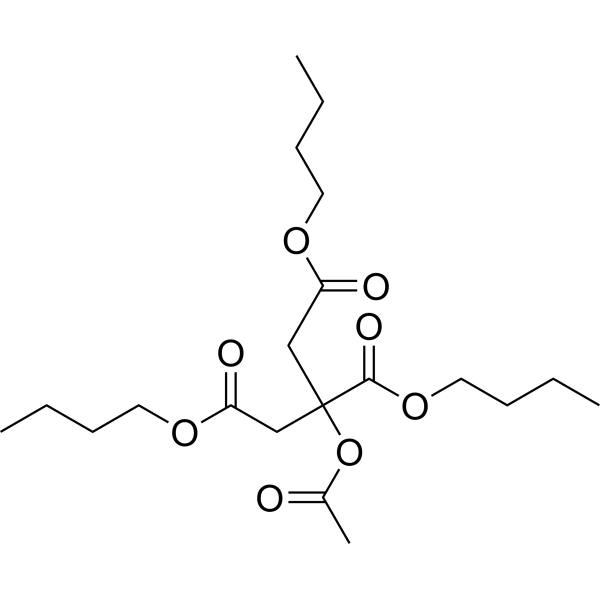
Cat. No.: HY-W010981
CAS No.: 77-90-7
Synonyms: Tributyl O-acetylcitrate; ATBC
Acetyl tributyl citrate (Tributyl O-acetylcitrate) is a pharmaceutical excipient and biodegradable hydrophobic plasticizer. Acetyl tributyl citrate can be used in cosmetics, food packaging, and as a flavoring substance for food .
loading...
    loading...
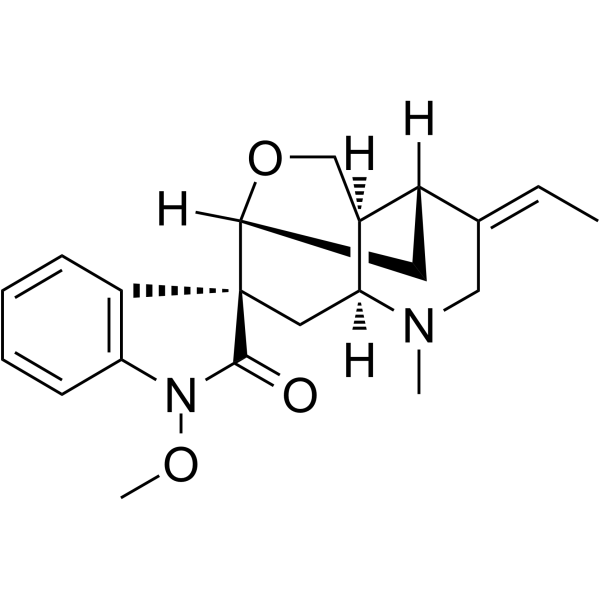
Cat. No.: HY-N4031
CAS No.: 82375-29-9
Humantenine is a highly toxic indole alkaloid from Gelsemium elegans (Gardn. & Champ.) Benth. that binds to RNA m6A modification regulatory proteins (ALKBH5, METTL). Humantenine stably binds via hydrogen bonding and hydrophobic interactions and disrupts the m6A methylation level of target genes, thereby impairing the expression of intestinal epithelial cell tight junction and cytoskeleton-related genes, causing intestinal barrier dysfunction and significant intestinal cytotoxicity. The intraperitoneal injection LD50 values of Humantenine are <1 mg/kg in mice, 1.2 mg/kg in male rats and 1.5 mg/kg in female rats, respectively. Species differences exist in the metabolism of Humantenine in human, porcine, goat and rat liver microsomes, and demethylation, dehydrogenation and oxidation occur in liver microsomes .
loading...
    loading...
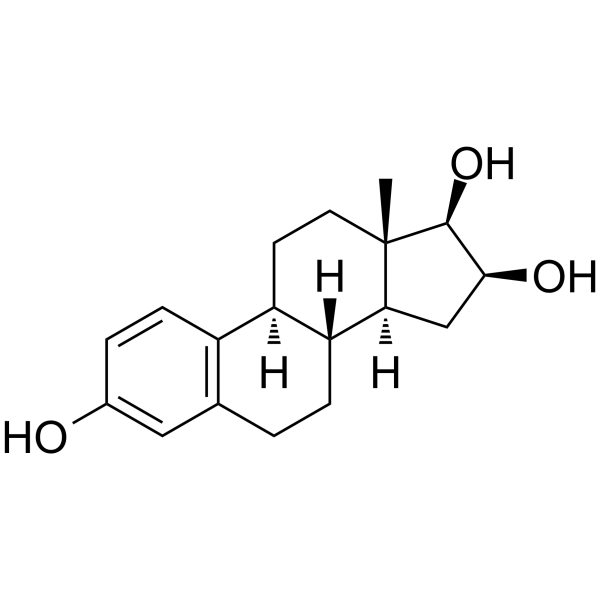
Cat. No.: HY-130046
CAS No.: 547-81-9
Purity:  99.04%
Synonyms: 16-epi-Estriol; 16β,17β-Estriol
Target:  

UGT Bacterial

Research Areas:  

Infection Inflammation/Immunology

16-Epiestriol (16-epi-Estriol; 16β,17β-Estriol) is a natural stereoisomer of estriol and an anti-inflammatory agent that targets UGT. The Ki values of 16-Epiestriol against human UGT1A10 and UGT2B7 are 98.1 μM and 162 μM, respectively. As a glucuronidation substrate, 16-Epiestriol can be modified at the 3-OH, 16-OH and 17-OH sites by various UGT enzymes; in liver microsomes, the modification mainly occurs at the 16-OH and 17-OH sites, while reactions take place at all three sites in intestinal microsomes. 16-Epiestriol acts on the phase II inflammatory process by blocking edema mediated by prostaglandins and leukocyte infiltration. It lacks glycogenic activity or any effect on blood glucose levels, and serves as an important candidate molecule in the research of inflammatory diseases .
loading...
    loading...
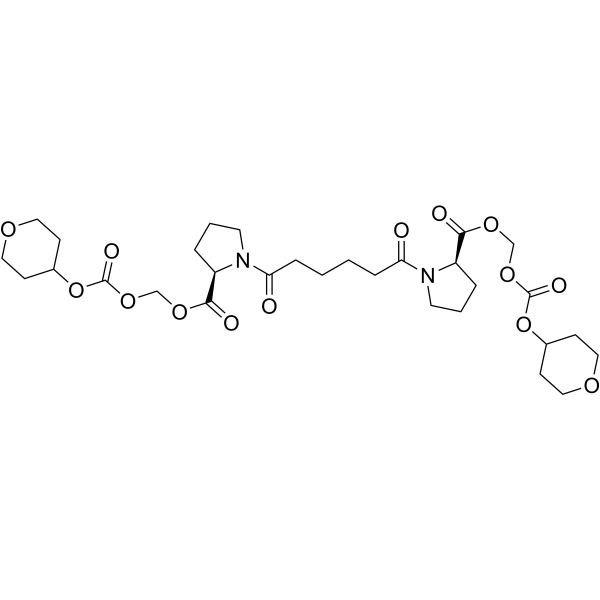
Cat. No.: HY-19771
CAS No.: 1819986-22-5
Synonyms: GSK294; amyloid P-IN-1
Target:  

Amyloid-β

Research Areas:  

Neurological Disease

GSK3039294 is an orally active pro-drug of Miridesap (HY-101861), a circulating serum amyloid P component depleter. GSK3039294 undergoes hydrolysis to form miridesap via a monoester intermediate. GSK3039294 can be used for the research of systemic amyloidosis .
loading...
    loading...
Cat. No.: HY-162109
Target:  

Thrombin

Research Areas:  

Cardiovascular Disease

Thrombin inhibitor 11 is an orally active, competitive and selective α-Thrombin inhibitor, with a Ki value of 65 nM against h-αThrombin and a Ki value of 10.3 nM against rat-derived α-thrombin. Thrombin inhibitor 11 can be used for the research of thrombotic diseases .
loading...
    loading...
Cat. No.: HY-156957
CAS No.: 300718-75-6
Research Areas:  

Others

5-CNAC disodium is an orally active enhancer of absorption, with no pharmacological activity on its own. 5-CNAC disodium can significantly enhance the absorption efficiency of the drug (such as Salmon calcitonin (HY-P0090)) when administered together with it in the gastrointestinal tract. 5-CNAC disodium binds reversibly and non-covalently to peptide drugs, protecting them from degradation by gastrointestinal enzymes, increasing their lipid solubility, promoting passive transcellular absorption, and not damaging the integrity of the intestinal epithelium. 5-CNAC disodium can be used in the research of adjuvants for orally administered peptide agents .
loading...
    loading...
Cat. No.: HY-183982
CAS No.: 2173066-81-2
Target:  

Drug Derivative

Research Areas:  

Cardiovascular Disease

PAR4 antagonist 9-phosphoric acid is a phosphate prodrug of the PAR4 antagonist 9 (HY-183983). PAR4 antagonist 9-phosphoric acid is applicable to research related to arterial thrombosis .
loading...
    loading...
Cat. No.: HY-115499A
CAS No.: 1310540-31-8
Target:  

Drug Intermediate

Research Areas:  

Cancer

MPC-0767 free base is an orally active prodrug of Hsp90 inhibitor. MPC-0767 free base undergoes rapid biotransformation to the parent Hsp90 inhibitor MPC-3100 via enzyme-mediated luminal cleavage. MPC-0767 free base is applicable to the research of refractory and recurrent cancers .
loading...
    loading...
Cat. No.: HY-130046R
CAS No.: 547-81-9
Synonyms: 16-epi-Estriol (Standard); 16β,17β-Estriol (Standard)
16-Epiestriol (Standard) is the analytical standard of 16-Epiestriol (HY-130046). This product is intended for research and analytical applications. 16-Epiestriol (16-epi-Estriol; 16β,17β-Estriol) is a natural stereoisomer of estriol and an anti-inflammatory agent that targets UGT. The Ki values of 16-Epiestriol against human UGT1A10 and UGT2B7 are 98.1 μM and 162 μM, respectively. As a glucuronidation substrate, 16-Epiestriol can be modified at the 3-OH, 16-OH and 17-OH sites by various UGT enzymes; in liver microsomes, the modification mainly occurs at the 16-OH and 17-OH sites, while reactions take place at all three sites in intestinal microsomes. 16-Epiestriol acts on the phase II inflammatory process by blocking edema mediated by prostaglandins and leukocyte infiltration. It lacks glycogenic activity or any effect on blood glucose levels, and serves as an important candidate molecule in the research of inflammatory diseases .
loading...
    loading...

