7 Results for "

intestinal transit

" in MedChemExpress (MCE) Product Catalog:
Products (7)

7 Results for "intestinal transit" in MCE Product Catalog:

Cat. No.: HY-101005
CAS No.: 16503-22-3
Synonyms: Nα-Methylhistamine dihydrochloride
Research Areas:  

Infection

N-Methylhistamine dihydrochloride (Nα-Methylhistamine dihydrochloride) is a non-selective Histamine receptor agonist. N-Methylhistamine dihydrochloride activates histamine H1, H2 and H3 receptors; it stimulates central H1 receptors by activating sympathetic α and β adrenergic receptors to inhibit intestinal transit, exerts dose-dependent inhibition on intestinal transit, reduces histamine turnover in mouse brains, and increases gastric acid secretion without altering plasma gastrin concentrations. N-Methylhistamine dihydrochloride produces a pH-dependent, voltage-independent potentiating effect on acid-sensing ion channel 1a, and shows no significant activity toward homologous ASIC2a channels. N-Methylhistamine dihydrochloride can be used in studies related to Helicobacter pylori infection .
loading...
    loading...
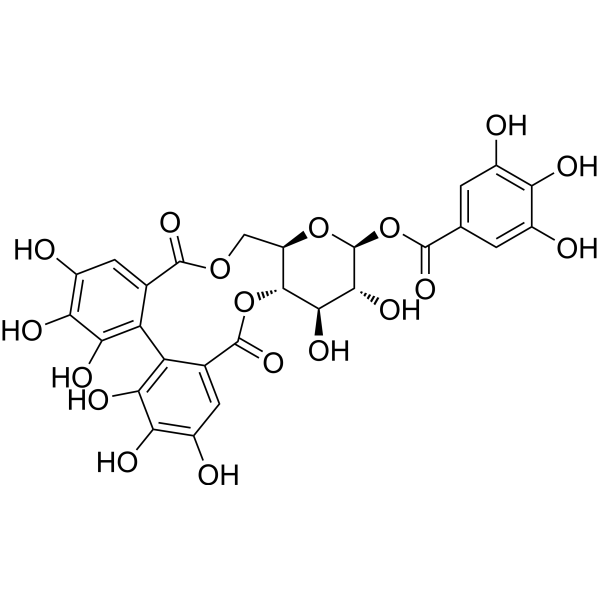
Cat. No.: HY-135319
CAS No.: 517-46-4
Purity:  97.15%
Strictinin is an orally active phenolic compound. Strictinin reduces xanthine oxidase activity, uric acid production, and the activation of ERK1/2, JNK, NF-κB, and NLRP3 inflammasome components in hepatocytes treated with Xanthine (HY-W017389). Strictinin decreases elevated serum uric acid levels and enhanced xanthine oxidase activity in mice treated with potassium oxonate. Strictinin acts as a ROR1 inhibitor and exhibits anticancer activity against highly aggressive non-androgen-dependent prostate cancer. Strictinin induces cancer cell apoptosis (apoptosis), arrests cell cycle, and inhibits cancer cell migration, invasion, and epithelial-mesenchymal transition. Strictinin modulates gut microbiota, inhibits bacterial growth and biofilm formation, accelerates small intestinal transit, and blocks viral entry and replication. Strictinin can be used in research related to hyperuricemia, androgen receptor-negative non-androgen-dependent prostate cancer, triple-negative breast cancer, bacterial infections, constipation, coronavirus infections, dental caries, and infections caused by influenza A, influenza B, and human parainfluenza virus type 1 .
loading...
    loading...
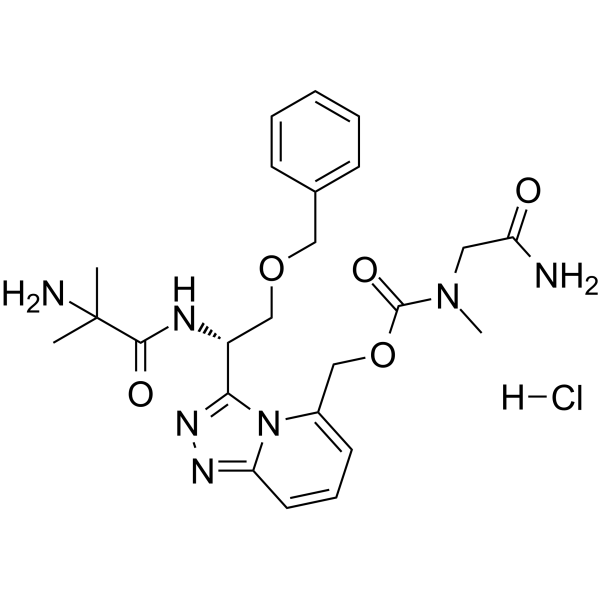
Cat. No.: HY-14495
CAS No.: 674343-47-6
Synonyms: EX-1314
Target:  

GHSR

Research Areas:  

Metabolic Disease

BMS-604992 (EX-1314) is a selective, orally active small-molecule growth hormone secretagogue receptor (GHSR) agonist. BMS-604992 demonstrates high-affinity binding (Ki=2.3 nM) and potent functional activity (EC50=0.4 nM). BMS-604992 can stimulate food intake in rodents .
loading...
    loading...
Cat. No.: HY-U00121A
CAS No.: 268548-31-8
Target:  

5-HT Receptor

Research Areas:  

Metabolic Disease

Lintopride hydrochloride, a benzamide, is a potent 5HT-4 antagonist with moderate 5HT-3 antagonist properties. Lintopride hydrochloride increases gastric emptying, stimulates antral and duodenal motility and accelerates intestinal transit in animal. Lintopride hydrochloride significantly increases the lower oesophageal sphincter (LOS) basal tone .
loading...
    loading...
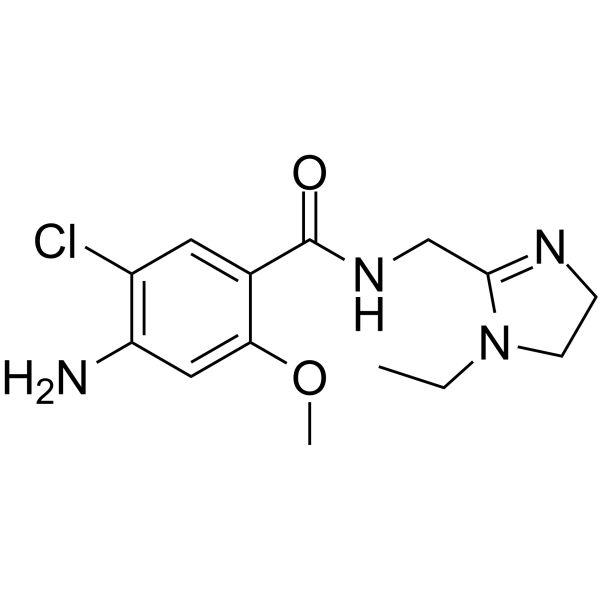
Cat. No.: HY-U00121
CAS No.: 107429-63-0
Target:  

5-HT Receptor

Research Areas:  

Metabolic Disease

Lintopride, a benzamide, is a potent 5HT-4 antagonist with moderate 5HT-3 antagonist properties. Lintopride increases gastric emptying, stimulates antral and duodenal motility and accelerates intestinal transit in animal. Lintopride significantly increases the lower oesophageal sphincter (LOS) basal tone .
loading...
    loading...
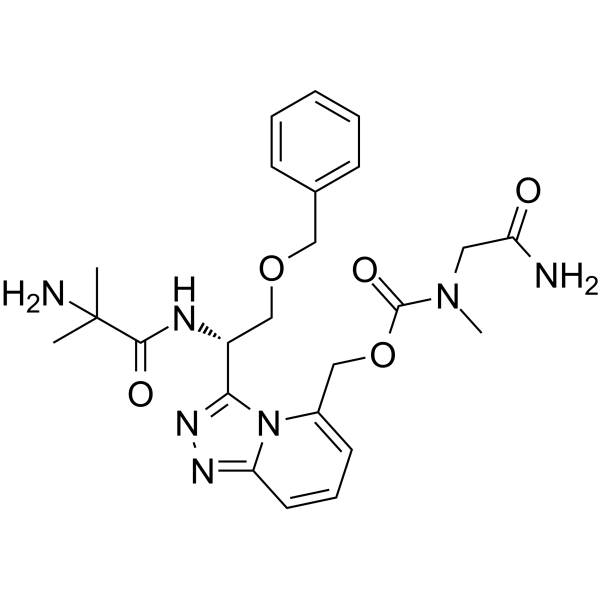
Cat. No.: HY-14495A
CAS No.: 760944-56-7
Synonyms: EX-1314 free base
Target:  

GHSR

Research Areas:  

Metabolic Disease

BMS-604992 (EX-1314) free base is a selective, orally active small-molecule growth hormone secretagogue receptor (GHSR) agonist. BMS-604992 free base demonstrates high-affinity binding (ki=2.3 nM) and potent functional activity (EC50=0.4 nM). BMS-604992 free base can stimulate food intake in rodents .
loading...
    loading...
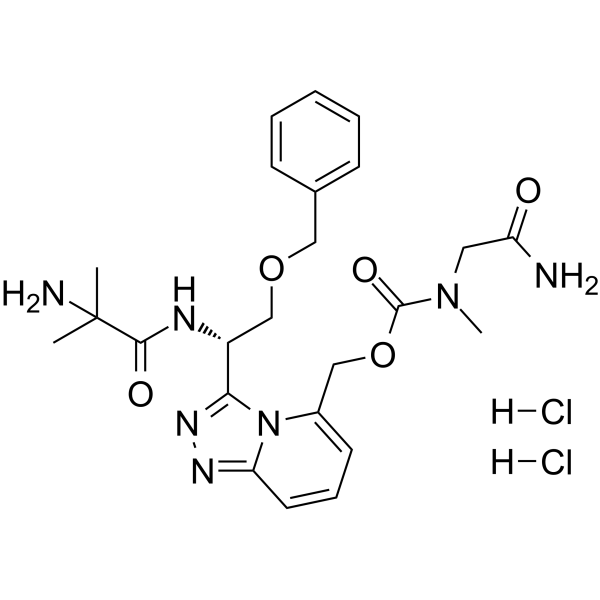
Cat. No.: HY-14495B
CAS No.: 1469750-46-6
Synonyms: EX-1314 dihydrochloride
Target:  

GHSR

Research Areas:  

Metabolic Disease

BMS-604992 (EX-1314) dihydrochloride is a selective, orally active small-molecule growth hormone secretagogue receptor (GHSR) agonist. BMS-604992 dihydrochloride demonstrates high-affinity binding (ki=2.3 nM) and potent functional activity (EC50=0.4 nM). BMS-604992 dihydrochloride can stimulate food intake in rodents .
loading...
    loading...

