




14 Results for "

ligand-dependent

" in MedChemExpress (MCE) Product Catalog:
Products (14)

14 Results for "ligand-dependent" in MCE Product Catalog:

1
1 Cited Publications
Cat. No.: HY-P99364
CAS No.: 1024603-92-6
Synonyms: Anti-VEGFR1/FLT1 Reference Antibody; IMC-18F1

Target:  

VEGFR Apoptosis p38 MAPK Akt

Research Areas:  

Endocrinology Cancer

Icrucumab (Anti-VEGFR1/FLT1 Reference Antibody; IMC-18F1) is an IgG1 antibody inhibitor targeting VEGFR-1/FLT1 with anti-tumor activity. By blocking ligand-dependent phosphorylation and downstream signal transduction, Icrucumab reduces the activities of MAPK and Akt in breast cancer xenograft models, inhibits the proliferation and invasion of VEGFR-1-positive tumor cells, and reverses the conversion of M1 macrophages to the pro-tumor M2-like phenotype. Icrucumab also inhibits tumor cell proliferation, promotes apoptosis, and effectively suppresses tumor growth through direct targeting of tumors and host support mechanisms. In addition, Icrucumab exhibits a synergistic effect when combined with chemotherapeutic agents, and it is used in research related to various cancers including advanced solid malignancies, thyroid cancer, melanoma, and lung cancer .
loading...
    loading...
1
1 Cited Publications
Cat. No.: HY-P99936
CAS No.: 1512559-37-3
Synonyms: LJM716

Target:  

EGFR

Research Areas:  

Cancer

Elgemtumab(LJM716) is a fully human IgG monoclonal antibody. Elgemtumab can specifically bind to HER3, block ligand-dependent and independent HER3 signal transduction and cell proliferation, and has good anti-tumor potential .
loading...
    loading...
1
1 Cited Publications
Cat. No.: HY-P99437
CAS No.: 2367012-88-0
Synonyms: KN-026

Target:  

EGFR

Research Areas:  

Cancer

Anbenitamab (KN-026) is a bispecific antibody simultaneously targeting extracellular domains II and IV of human HER2. Anbenitamab blocks both ligand-dependent and ligand-independent HER2 signaling pathways. Anbenitamab mediates antibody-dependent cellular cytotoxicity (ADCC) via FcγIIIa binding. Ambrinitumab can be used in research for lung cancer, HER2-positive metastatic breast cancer (MBC), gastric cancer, and gastroesophageal junction cancer .
loading...
    loading...
1
1 Cited Publications
Cat. No.: HY-12397
CAS No.: 156965-15-0
Purity:  99.23%
Target:  

VD/VDR

Research Areas:  

Endocrinology

ZK159222, a 25-carboxylic ester analogue of 1α,25-(OH)2D3, is a potent 1α,25-(OH)2D3 receptor (VDR) antagonist. The mechanism of ZK159222 antagonistic action is mediated by a lack of ligand-induced vitamin D receptor interaction with coactivators. ZK159222 has a partial agonistic character .
loading...
    loading...
Cat. No.: HY-153855
CAS No.: 1900754-56-4
Purity:  99.76%
Synonyms: RXC004
Research Areas:  

Cancer

Zamaporvint (RXC004) is an orally active and selective inhibitor of Wnt. Zamaporvint targete membrane-bound o-acyltransferase Porcupine and inhibited Wnt ligand palmitoylation, secretion, and pathway activation. Zamaporvint displays a favorable pharmacokinetic profile and shows potent antiproliferative effects in Wnt ligand-dependent colorectal and pancreatic cell lines. Zamaporvint possesses multiple antitumor mechanisms and can be used in cancer research .
loading...
    loading...
Cat. No.: HY-P99189
CAS No.: 947687-12-9
Synonyms: IMC-A12; NSC742460

Target:  

IGF-1R

Research Areas:  

Cancer

Cixutumumab (IMC-A12) is a human anti-IGF-1R monoclonal antibody with high affinity that inhibits ligand-dependent receptor activation and downstream signaling. Cixutumumab also mediates the internalization and degradation of IGF-IR. Cixutumumab shows broad-spectrum anti-tumour activity and can be used in studies of cancers such as lung cancer, malignancies, leukaemia, non-small cell lung cancer and prostate cancer .
loading...
    loading...
Cat. No.: HY-P10089
Target:  

Peptides

Research Areas:  

Inflammation/Immunology

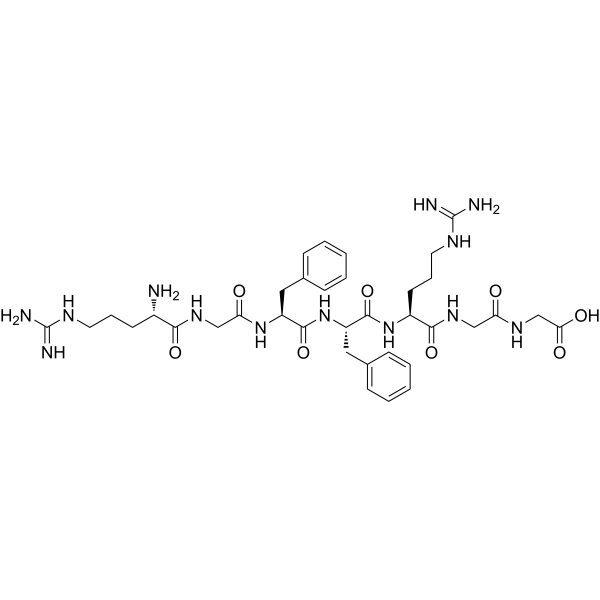
TREM-1 inhibitory peptide M3 is a ligand-dependent TREM-1 antagonist. TREM-1 inhibitory peptide M3 can inhibit systemic and pulmonary pro-inflammatory cytokine and chemokine production and attenuate acute lung injury .
loading...
    loading...
Cat. No.: HY-110026
CAS No.: 34823-86-4
Purity:  99.91%
Target:  

FLT3

Research Areas:  

Cancer

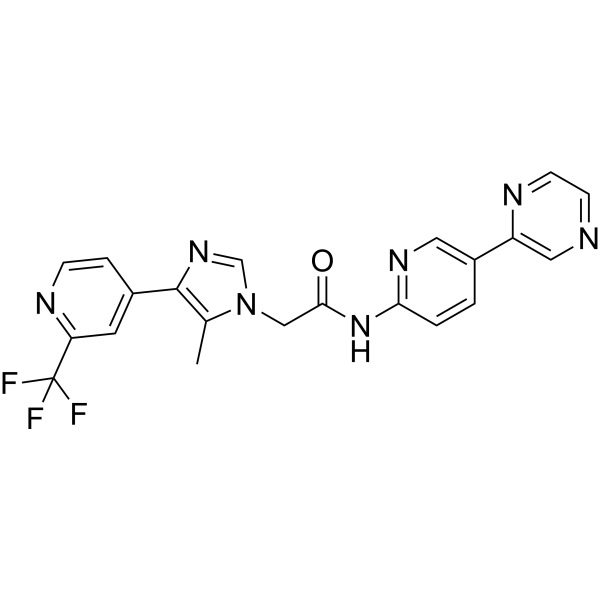
GTP-14564 is a tyrosine kinase inhibitor targeting to internal tandem duplication (ITD) and FLT3. GTP-14564 inhibits FLT3 ligand-dependent growth in Ba/F3 leukemia cells .
loading...
    loading...
Cat. No.: HY-P991243

Target:  

EGFR Akt

Research Areas:  

Cancer

MP-RM-1 is an antibody-based, non-competitive ErbB-3 inhibitor with a Kd value of 32.7 nM. MP-RM-1 inhibits both ligand-dependent and ligand-independent ErbB-3 activation, blocks ErbB-2/ErbB-3 heterodimerization, induces ErbB-3 internalization and degradation, and suppresses the phosphorylation of downstream Akt. MP-RM-1 exerts its antagonistic effect through a non-competitive mechanism. MP-RM-1 inhibits tumor growth in melanoma and prostate cancer xenograft models in nude mice and reduces the proliferative activity of tumor cells .
loading...
    loading...
Cat. No.: HY-P5458
CAS No.: 394658-24-3
Research Areas:  

Others

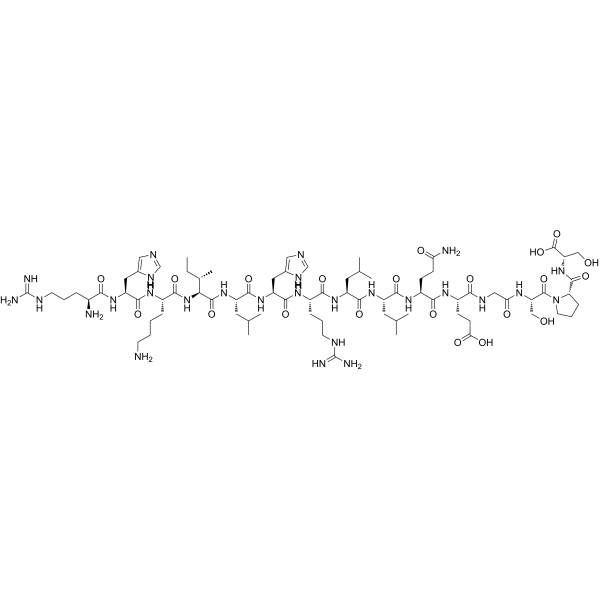
SRC-1 (686-700) is a biological active peptide. (This peptide is amino acids 686 to 700 fragment containing the second LXXLL motif, derived from NR box II of steroid receptor coactivator (SRC1). Coactivator proteins interact with nuclear receptors in a ligand-dependent manner and augment transcription.)
loading...
    loading...
Cat. No.: HY-14863
CAS No.: 250384-82-8
Synonyms: CTA-018
Target:  

VD/VDR Cytochrome P450

Research Areas:  

Others Endocrinology

Lunacalcipol (CTA-018), as a vitamin D analogue, has a dual role in the pathogenesis of Chronic Kidney Disease (CKD), as an agonist of vitamin D receptor and an antagonist of cytochrome P450 enzyme 24-hydroxylase. Lunacalcipol binds to VDR and regulates transcriptional activity of VDR by influencing ligand binding affinity, ligand-dependent coactivator recruitment or inhibitory factor dissociation, efficiency of ligand entry into target cells, tissue specificity and different metabolism of ligand. Lunacalcipol can be used in the study of CKD, especially Secondary Hyperparathyroidism (sHPT) .
loading...
    loading...
Cat. No.: HY-110026R
CAS No.: 34823-86-4
Research Areas:  

Cancer

GTP-14564 (Standard) is the analytical standard of GTP-14564 (HY-110026). This product is intended for research and analytical applications. GTP-14564 is a tyrosine Kinase inhibitor targeting to internal tandem duplication (ITD) and FLT3. GTP-14564 inhibits FLT3 ligand-dependent growth in Ba/F3 leukemia cells .
loading...
    loading...
Cat. No.: HY-179510
Target:  

Estrogen Receptor/ERR

Research Areas:  

Cancer

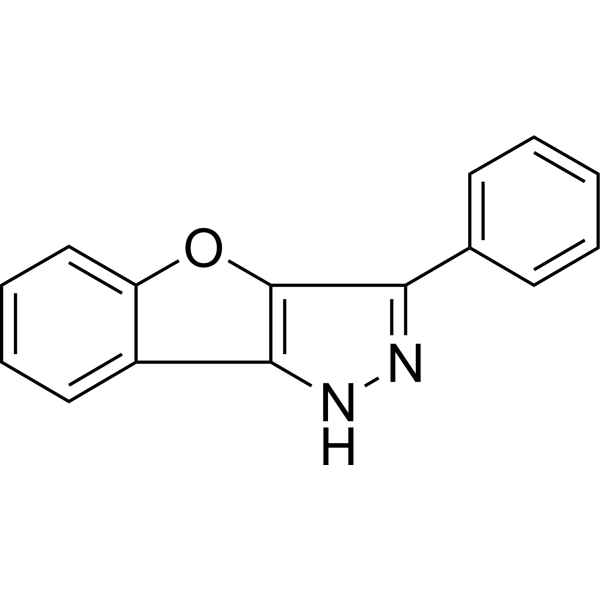
CDD-1274 is an ERα (Estrogen receptor α) variant inhibitor. CDD-1274 induces proteasomal degradation of ERα variants in breast cancer cell lines and causes Y537S ERα degradation. CDD-1274 potently blocks ligand-dependent and ligand-independent ER signaling in endocrine-resistant breast cancer cells. CDD-1274 can be used for the study of breast cancer .
loading...
    loading...
Cat. No.: HY-184605
Metal nanoclusters, containing anywhere from a few to hundreds of atoms, bridge the gap between nanoparticles and molecular compounds, typically exhibiting molecular-like electrical and optical properties. Furthermore, metal nanoclusters possess advantages such as significant Stokes scattering and size- and ligand-dependent fluorescence characteristics, making them an emerging class of materials for constructing fluorescence platforms. Current research primarily focuses on the synthesis and application of noble metal nanoclusters like gold and silver. However, copper, belonging to the same group as gold and silver in the periodic table, is inexpensive, environmentally friendly, readily available, has a simple preparation process, and low toxicity, making it widely applicable in industry. In addition, copper nanoclusters exhibit better photostability than organic dyes and better environmental friendliness than semiconductor quantum dots, making them suitable for trace detection.
loading...
    loading...
  • 1

