7 Results for "

lysosome-dependent

" in MedChemExpress (MCE) Product Catalog:
Products (7)

7 Results for "lysosome-dependent" in MCE Product Catalog:

5
5 Cited Publications
Cat. No.: HY-128892
CAS No.: 1808714-73-9
Purity:  99.42%
Target:  

Autophagy

Research Areas:  

Neurological Disease

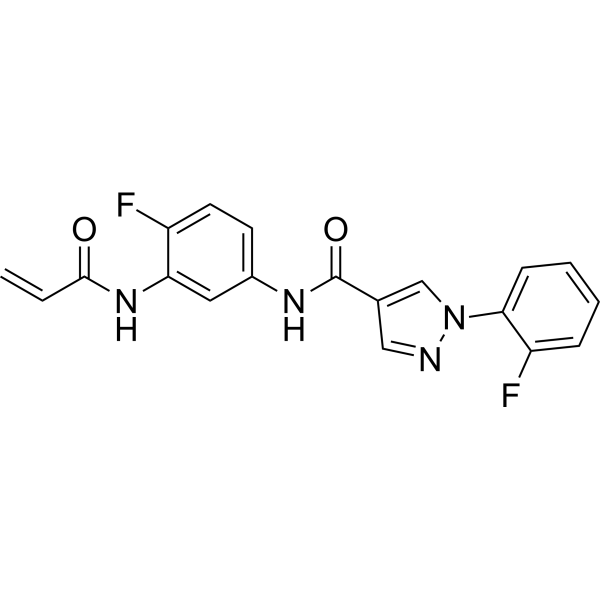
EN6 is a small-molecule in vivo autophagy activator that covalently targets cysteine 277 in the ATP6V1A subunit of the lysosomal v-ATPase. EN6-mediated modification of ATP6V1A uncouples v-ATPase from Rag, leading to inhibition of mTORC1 signalling, increased lysosomal acidification, and activation of autophagy. EN6 also scavenges TDP-43 aggregates (causative agents of frontotemporal dementia) in a lysosome-dependent manner .
loading...
    loading...
Cat. No.: HY-131183
CAS No.: 2447066-37-5
Purity:  99.52%
Target:  

PROTACs PD-1/PD-L1

Research Areas:  

Inflammation/Immunology

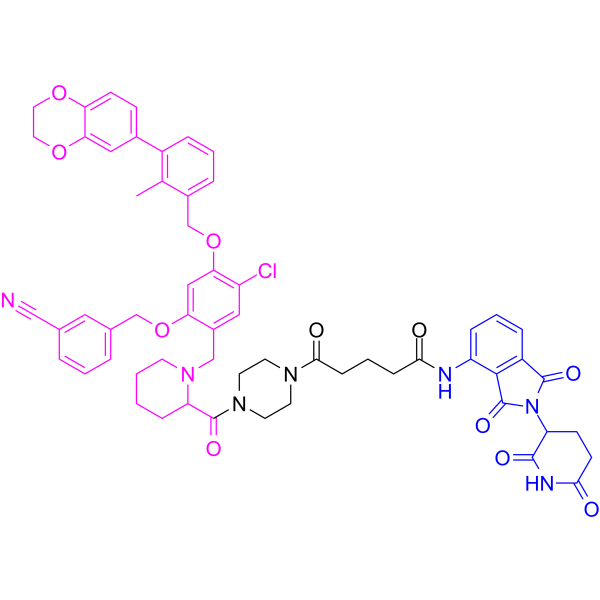
PROTAC PD-1/PD-L1 degrader-1, a PD-1/PD-L1 PROTAC based on Cereblon E3 ligand, inhibits PD-1/PD-L1 interaction with an IC50 of 39.2 nM. PROTAC PD-1/PD-L1 degrader-1 significantly restores the immunity repressed in a co-culture model of Hep3B/OS-8/hPD-L1 and CD3 T cells. PROTAC PD-1/PD-L1 degrader-1 moderately reduces the protein levels of PD-L1 in a lysosome-dependent manner .
loading...
    loading...
Cat. No.: HY-157964
CAS No.: 3115269-32-1
Purity:  99.54%
Target:  

Wnt

Research Areas:  

Cancer

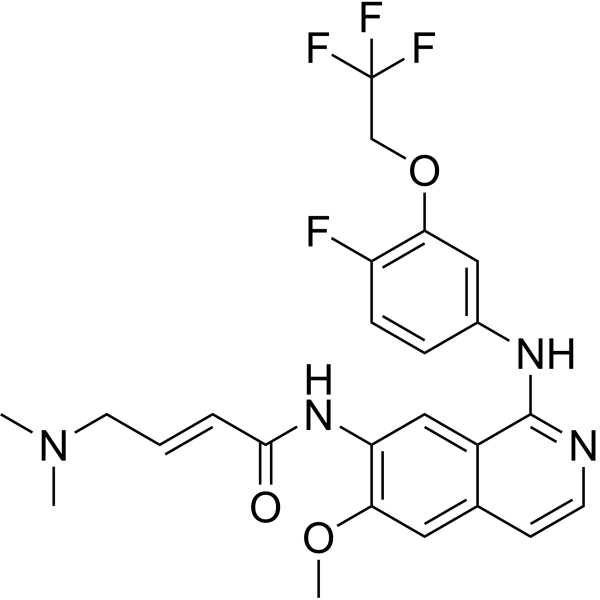
DHC-156 is a selective Brachyury downregulator. DHC-156 induces post-translational downregulation via covalent binding and exerts pre-translational inhibition through autoregulation, independent of proteasome- or lysosome-dependent degradation pathways. DHC-156 can be used in chordoma-related research .
loading...
    loading...
Cat. No.: HY-P11891
Target:  

PD-1/PD-L1

Research Areas:  

Cancer

FM213 is a PD-L1 inhibitor with a human IC50 of 323 nM. FM213 blocks PD-1/PD-L1 protein-protein interactions, and promotes endocytosis and lysosome-dependent degradation of PD-L1 on the surface of cancer cells. FM213 binds to PD-L1 on cancer cells and exosomes, and enhances the recognition and killing of cancer cells by human PBMC. Combination of FM213 with the TIGIT inhibitor DTBP-3 (HY-P11903) enhances anti-tumor immunity. FM213 can be used in research related to non-small cell lung cancer .
loading...
    loading...
Cat. No.: HY-L162
3,812 compounds

Cell death plays a crucial role in the development of the body and the maintenance of internal balance to prevent the development of diseases. According to the regulation of the involved processes, cell death can be defined as programmed and non-programmed death. Programmed cell death (PCD) can be divided into lytic cell death and nonlytic cell death, mainly including apoptosis, necrotic apoptosis and Pyroptosis. Non-Programmed cell death (Non-PCD) generally refers to necrosis. In stark contrast to Accidental Cell Death (ACD), Regulatory Cell Death (RCD) relies on specialized molecular mechanisms. Cell death includes internal apoptosis, external apoptosis, necrotic apoptosis, ferroptosis, pyroptosis, lysosome-dependent cell death, etc.

MCE designs a unique collection of 3,812 cell death compounds, covering multiple targets, such as Apoptosis, Ferroptosis, Pyroptosis, Necroptosis, etc. It is a useful tool for screening cell death drugs.

Cat. No.: HY-184926
PEG9MA10-PAB10-GalMA10 is a CD147 LYTAC degrader. PEG9MA10-PAB10-GalMA10 binds to the asialoglycoprotein receptor (ASGPR) via its galactose methacrylate domain, mediating its uptake by hepatoma cells. PEG9MA10-PAB10-GalMA10 induces lysosome-dependent degradation of CD147, resulting in concurrent loss of associated MCT1 and MCT4. PEG9MA10-PAB10-GalMA10 reduces extracellular lactate levels, increases intracellular lactate accumulation, inhibits glycolytic activity, and enhances mitochondrial respiratory capacity. PEG9MA10-PAB10-GalMA10 decreases the secretion of MMP-2 and MMP-9, and upregulates the expression of E-cadherin. PEG9MA10-PAB10-GalMA10 exhibits anti-tumor efficacy in hepatoma models. PEG9MA10-PAB10-GalMA10 can be used for research on liver cancer (hepatocellular carcinoma) .
loading...
    loading...
Cat. No.: HY-184662
Ferroptosis inducer-17 is a ferroptosis inducer that downregulates GPX4 and activates the CTSB and cGAS-STING pathways. Ferroptosis inducer-17 exhibits cytotoxicity against cancer cells but low toxicity toward normal cells. Ferroptosis inducer-17 accumulates in mitochondria and lysosomes, thereby inducing ROS production, lipid peroxidation, mitochondrial membrane depolarization, lysosomal iron accumulation, increased membrane permeability, and enhanced oxidative stress. Ferroptosis inducer-17 inhibits tumor growth in cisplatin-resistant xenograft models. Ferroptosis inducer-17 can be used for cancer-related research .
loading...
    loading...

