1. Search Result
Search Result
Results for "

mitosis disruption

" in MedChemExpress (MCE) Product Catalog:
Targets Recommended:
Cat. No. Product Name Target Research Areas Chemical Structure
  • HY-13520
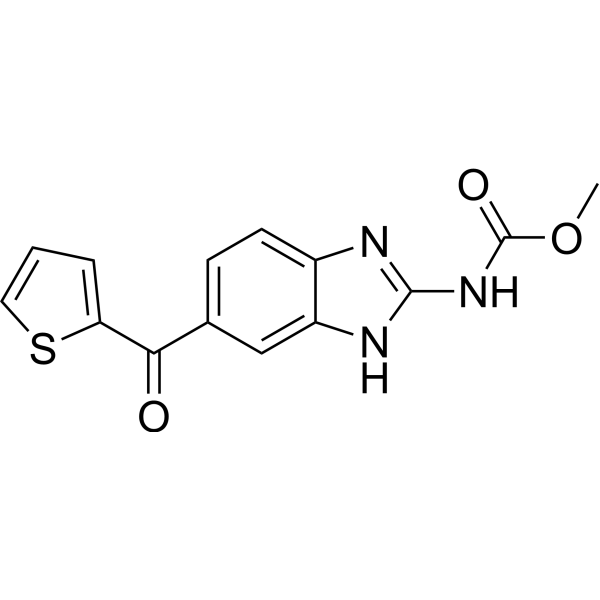
    Nocodazole
    Maximum Cited Publications
    119 Publications Verification

    Oncodazole; R17934

    Bcr-Abl Autophagy Microtubule/Tubulin Apoptosis Mitosis Cancer
    Nocodazole (Oncodazole) is a rapidly-reversible inhibitor of microtubule. Nocodazole binds to β-tubulin and disrupts microtubule assembly/disassembly dynamics, which prevents mitosis and induces apoptosis in tumor cells. Nocodazole inhibits Bcr-Abl.
    Nocodazole
  • HY-151424

    Proteasome Mitosis Cancer
    Vimentin-IN-1 is a FiVe1 derivative, an orally active and selective anticancer agent. FiVe1 binds type III intermediate filament protein vimentin (VIM), to induce hyperphosphorylation of Ser56, resulting selective disruption of mitosis and multinucleation in transformed VIM-expressing mesenchymal cancer cells. Vimentin-IN-1 shows better oral bioavailability and pharmacokinetic profiles than FiVe1 .
    Vimentin-IN-1
  • HY-13032B
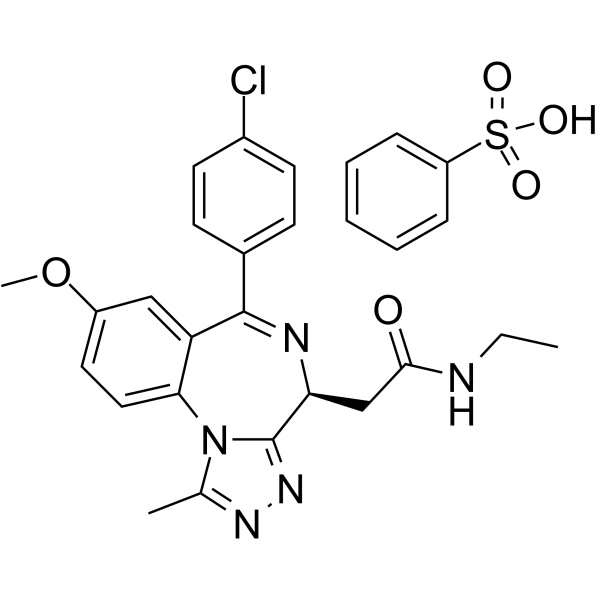
    Molibresib besylate
    20+ Cited Publications

    GSK 525762C; I-BET 762 besylate

    Epigenetic Reader Domain ERK Cancer
    Molibresib besylate (GSK 525762C; I-BET 762 besylate) is an orally active pan-BET inhibitor that targets and binds to BRD2, BRD3, BRD4 and BRDT. By competitively occupying acetylated lysine binding sites, Molibresib besylate disrupts the interaction between BET proteins and chromatin, thereby effectively inhibiting MYC expression and target gene transcription. Molibresib besylate exhibits broad antiproliferative activity, which not only inhibits cancer cell growth and induces growth arrest, but also downregulates mitosis-related genes and upregulates the level of p-ERK1/2. When combined with MEK inhibitors, Molibresib besylate shows a significant synergistic effect, reduces tumor burden in mouse models of leukemia, modulates the immune microenvironment and prolongs survival. Molibresib besylate is widely applicable to research related to acute myeloid leukemia, multiple myeloma, triple-negative breast cancer, small-cell lung cancer and various advanced refractory solid tumors .
    Molibresib besylate
  • HY-125956

    Aurora Kinase Apoptosis Cancer
    Aurkin A is an allosteric inhibitor for the interaction between Aurora A Kinase (also known also Aurka) and TPX2, through targeting the TPX2 binding sites with Kd of 3.77 μM. Aurkin A can disrupt polyploidy induced by Alisertib (HY-10971) and increase apoptosis of tumor cells. Aurkin A can be used in research on mitosis and cancer .
    Aurkin A
  • HY-B2062
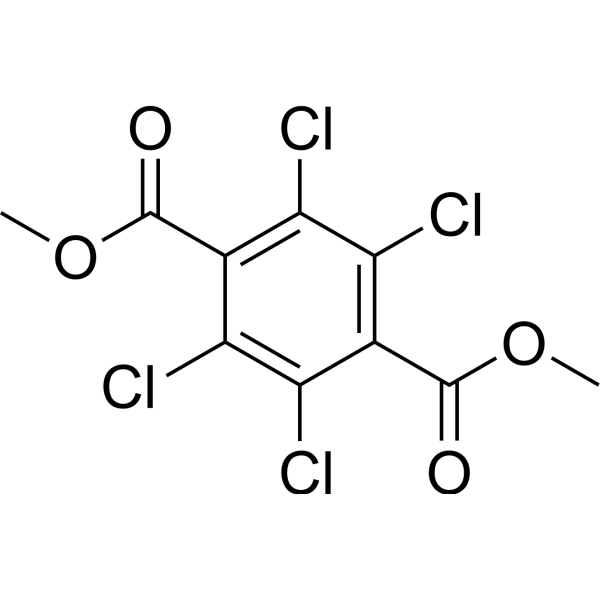
    Chlorthal-dimethyl
    1 Publications Verification

    Dimethyl tetrachloroterephthalate

    Environmental Pollutants Biochemical Assay Reagents Others
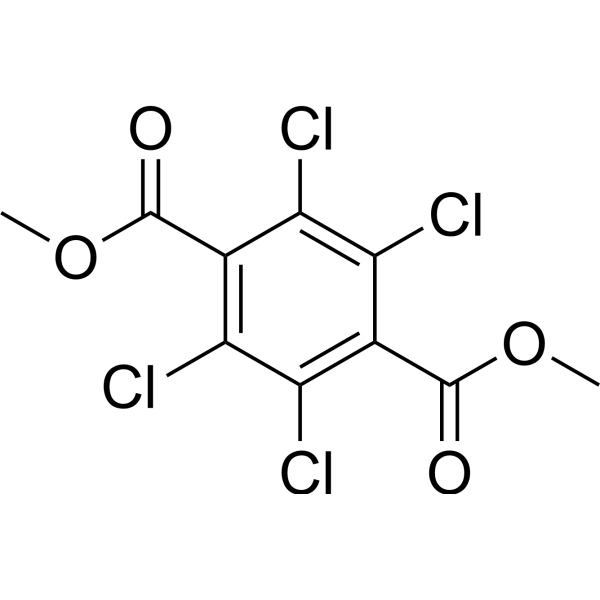
    Chlorthal-dimethyl (Dimethyl tetrachloroterephthalate) is a plant growth regulator. Chlorthal-dimethyl affects cell division and differentiation, interfering with the normal development of vascular tissue. Chlorthal-dimethyl causes localized swelling of tomato hypocotyls and disrupts normal mitosis in germinating millet seedlings .
    Chlorthal-dimethyl
  • HY-153384

    Apoptosis Microtubule/Tubulin Mitosis Cancer
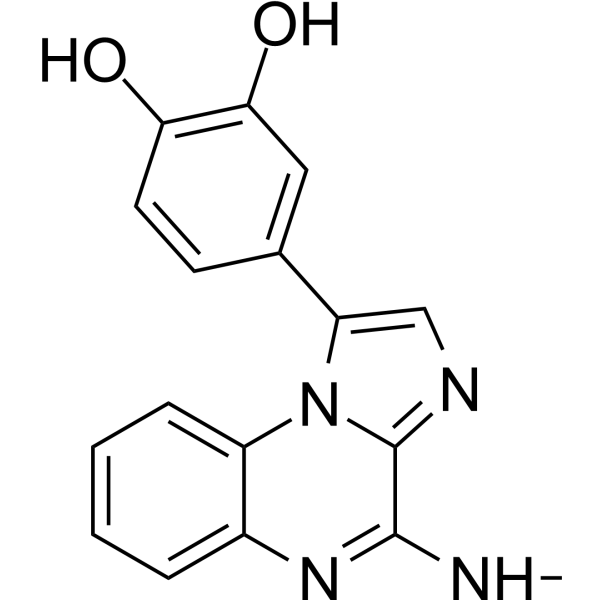
    EAPB 02303 is a microtubule-disrupting agent and inhibitor. EAPB 02303 induces mitosis arrest and impairment of spindle assembly. Thus, EAPB 02303 induces apoptosis and exhibits antitumor activity. EAPB 02303 also exhibits a potent synergy with Paclitaxel (HY-B0015) at lower concentrations .
    EAPB 02303
  • HY-B2062R

    Dimethyl tetrachloroterephthalate (Standard)

    Drug Intermediate Mitosis Reference Standards Others
    Chlorthal-dimethyl (Standard) is the analytical standard of Chlorthal-dimethyl. This product is intended for research and analytical applications. Chlorthal-dimethyl (Dimethyl tetrachloroterephthalate) is a plant growth regulator. Chlorthal-dimethyl affects cell division and differentiation, interfering with the normal development of vascular tissue. Chlorthal-dimethyl causes localized swelling of tomato hypocotyls and disrupts normal mitosis in germinating millet seedlings .
    Chlorthal-dimethyl (Standard)
  • HY-13520R

    Oncodazole (Standard); R17934 (Standard)

    Bcr-Abl Autophagy Microtubule/Tubulin Apoptosis Mitosis Reference Standards Cancer
    Nocodazole (Standard) is the analytical standard of Nocodazole. This product is intended for research and analytical applications. Nocodazole (Oncodazole) is a rapidly-reversible inhibitor of microtubule. Nocodazole binds to β-tubulin and disrupts microtubule assembly/disassembly dynamics, which prevents mitosis and induces apoptosis in tumor cells. Nocodazole inhibits Bcr-Abl.
    Nocodazole (Standard)
  • HY-171184

    PARP Bcr-Abl Apoptosis Mitosis Cancer
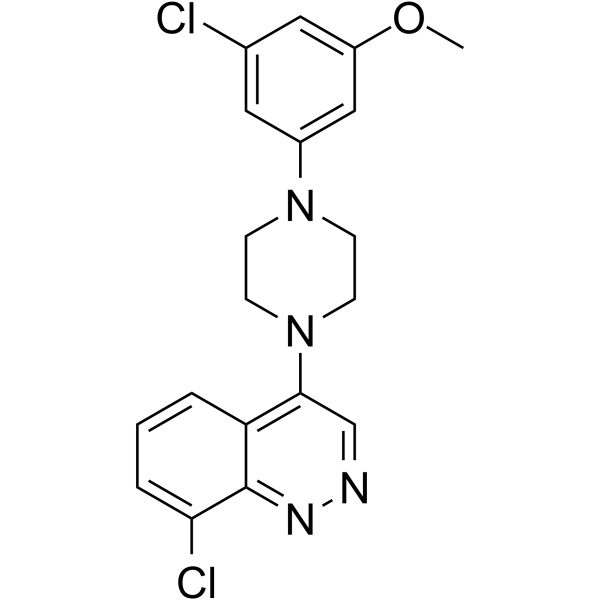
    EAPB0503 is a quinoline compound with anti-tumor activity, showing strong cytotoxicity against melanoma cells in vitro (IC50=200 nM). EAPB0503 can induce specific cell cycle arrest in mitosis of CML cells and directly activate apoptosis, leading to an increase in the G0 cell population, disruption of mitochondrial membrane potential, PARP cleavage, and DNA fragmentation. EAPB0503 also reduces the levels of BCR-ABL protein .
    EAPB0503
  • HY-16036A

    12'-Methylthiovinblastine hydrochloride

    Microtubule/Tubulin Mitosis Cancer
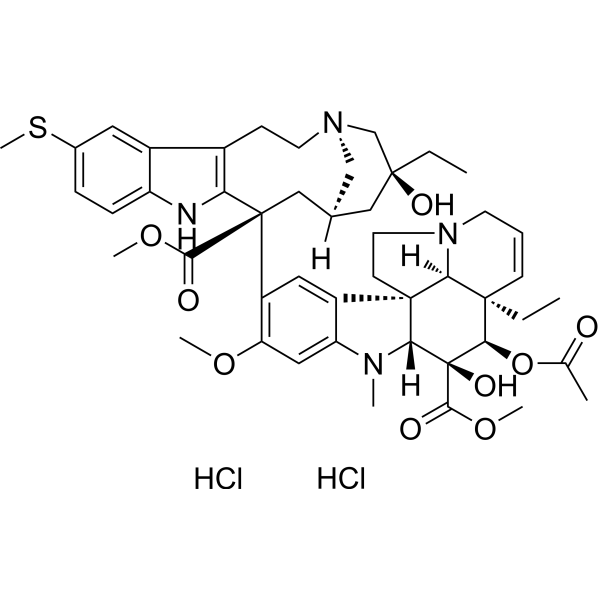
    ALB-109564 (12'-Methylthiovinblastine) hydrochloride, a tubulin inhibitor, is a cytotoxic agent designed to kill cancer cells by disrupting mitosis .
    ALB-109564 hydrochloride
  • HY-119126

    Microtubule/Tubulin Cancer
    PK-3 is a cancer cell growth inhibitor with microtubule-binding activity. PK-3 binds to tubulin, disrupts the intracellular microtubule network required for mitosis, and induces cell death. PK-3 can be used in research related to chronic myeloid leukemia .
    PK-3
  • HY-170924

    Microtubule/Tubulin Apoptosis Mitosis Cancer
    Tubulin polymerization-IN-76 (compound 20b) is a potent and orally active Tubulin polymerization inhibitor. Tubulin polymerization-IN-76 inhibits Tubulin polymerization with an IC50 of 2.505 μM by acting on the colchicine binding site, thereby disrupting intracellular Microtubule networks and interfering with cell mitosis. Tubulin polymerization-IN-76 demonstrates exceptional efficacy against MGC-803 and HGC-27 cells with IC50s of 1.61 and 1.82 nM, respectively. Tubulin polymerization-IN-76 effectively inhibits the colony formation and cell migration activities, and induces G2/M phase cycle arrest and Apoptosis in MGC-803 and HGC-27 cells.Tubulin polymerization-IN-76 shows a broad-spectrum antiproliferative activity .
    Tubulin polymerization-IN-76

Inquiry Online

Your information is safe with us. * Required Fields.

Salutation


Country or Region *

Applicant Name *


Organization Name *

Department *


Email Address *


Product Name *

Cat. No.


Requested quantity *

Phone Number *


Remarks

Inquiry Online

Inquiry Information

Product Name:
Cat. No.:
Quantity:
MCE Japan Authorized Agent:

