1. Search Result
Search Result
Results for "

photosensitive

" in MedChemExpress (MCE) Product Catalog:

42

Inhibitors & Agonists

2

Fluorescent Dyes

10

Biochemical Assay Reagents

4

Isotope-Labeled Compounds

1

Click Chemistry

Cat. No. Product Name Target Research Areas Chemical Structure
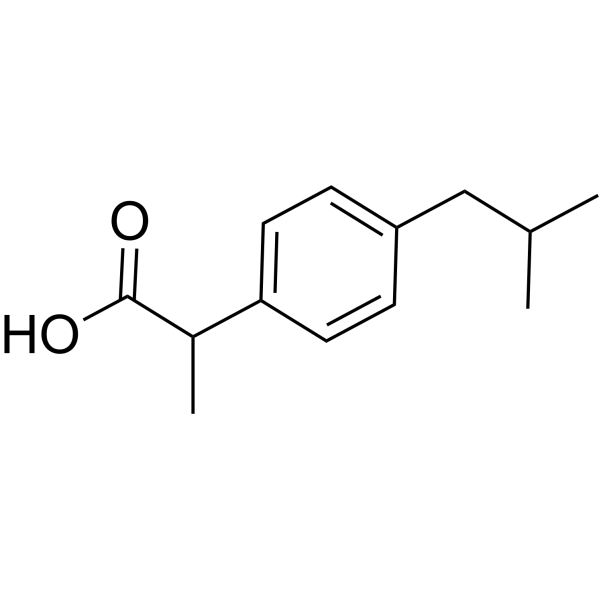
  • HY-78131
    Ibuprofen
    Maximum Cited Publications
    22 Publications Verification

    (±)-Ibuprofen

    COX Apoptosis Parasite Infection Neurological Disease Inflammation/Immunology Cancer
    Ibuprofen ((±)-Ibuprofen) is a potent, orally active, selective COX-1 inhibitor with an IC50 value of 13 μM. Ibuprofen inhibits cell proliferation, angiogenesis, and induces cell apoptosis. Ibuprofen is a nonsteroidal anti-inflammatory agent and a nitric oxide (NO) donor. Ibuprofen ((±)-Ibuprofen) can be used in the research of pain, swelling, inflammation, infection, immunology, cancers .
    Ibuprofen
  • HY-W017289

    Drug Intermediate Others
    4,4′-Dipyridyl is a heterocyclic compound. 4,4′-Dipyridyl is utilized as an electronic and photosensitive building block and bidentate ligand in supramolecular chemistry. 4,4′-Dipyridyl can also be used as a drug intermediate in the synthesis of paraquat, a widely used herbicide .
    4,4′-Dipyridyl
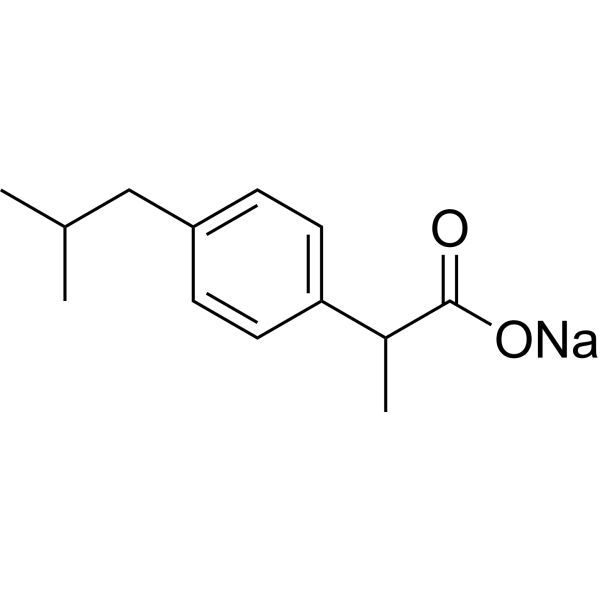
  • HY-78131C
    Ibuprofen sodium
    Maximum Cited Publications
    22 Publications Verification

    (±)-Ibuprofen sodium

    COX Apoptosis Parasite Infection Neurological Disease Inflammation/Immunology Cancer
    Ibuprofen ((±)-Ibuprofen) sodium is an orally active, selective COX-1 inhibitor with an IC50 value of 13 μM. Ibuprofen sodium inhibits cell proliferation, angiogenesis, and induces cell apoptosis. Ibuprofen sodium is a nonsteroidal anti-inflammatory agent and a nitric oxide (NO) donor. Ibuprofen sodium can be used in the research of pain, swelling, inflammation, infection, immunology, cancers .
    Ibuprofen sodium
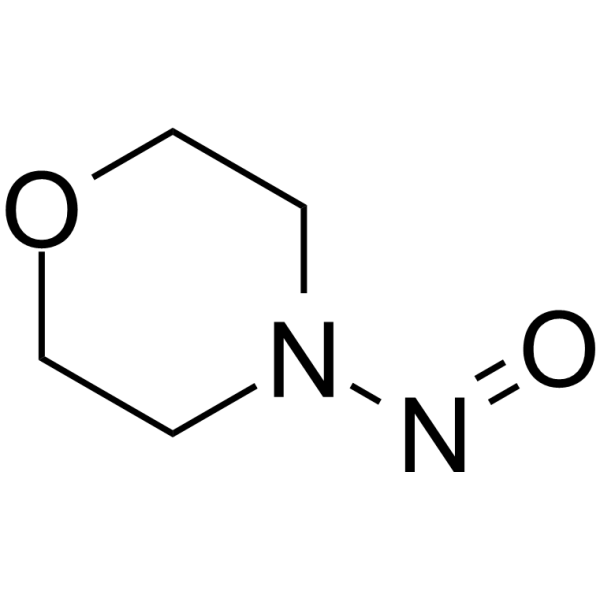
  • HY-131123

    Environmental Pollutants DNA/RNA Synthesis Cancer
    N-Nitrosomorpholine is a photosensitive nitrosamine that is carcinogenic and can be used to construct animal cancer models .
    N-Nitrosomorpholine
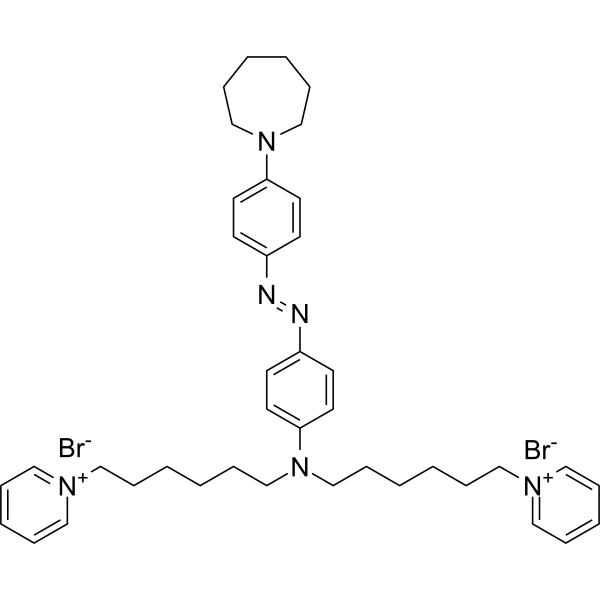
  • HY-156004

    Bacterial Others
    Ziapin 2 is a membrane potential modulator and an intracellular membrane photoactuator. Ziapin 2 binds to the bacterial plasma membrane, and upon embedding into the lipid bilayer, undergoes trans-cis isomerization under 470 nm light irradiation, which triggers membrane potential hyperpolarization and induces the opening of ion channels on bacterial cell membranes. Through interactions with lipids, Ziapin 2 increases the overall flexibility of the lipid bilayer. Ziapin 2 can form photosensitive transmembrane dimers to trigger cellular signal transduction. Ziapin 2 is applicable to the research and regulation of bacterial electrical signal transduction and the regulation of membrane physical properties .
    Ziapin 2
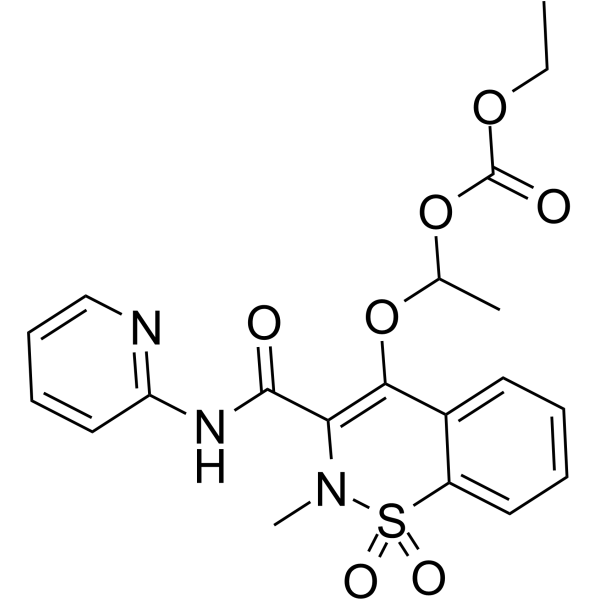
  • HY-17484
    Ampiroxicam
    2 Publications Verification

    CP 65703

    Drug Derivative Inflammation/Immunology
    Ampiroxicam is an orally active prodrug of non-steroidal anti-inflammatory drug (NSAID). Ampiroxicam inhibits paw swelling in adjuvant-induced arthritis and acute inflammation models, and suppresses phenylbenzoquinone-induced stretching responses in mice. Ampiroxicam is rapidly and completely converted to Piroxicam (HY-B0253) via non-specific esterases and first-pass metabolism. Ampiroxicam induces contact hypersensitivity and photosensitivity reactions through photoproducts generated by UVA. Ampiroxicam can be used in research related to photosensitivity, adjuvant-induced arthritis, rheumatism, osteoarthritis and other inflammatory diseases .
    Ampiroxicam
  • HY-173592

    KerMA

    Biochemical Assay Reagents Others
    Keratin methacryloyl (KerMA) is a photosensitive biomaterial that can be used to synthesize hydrogels .
    Keratin methacryloyl
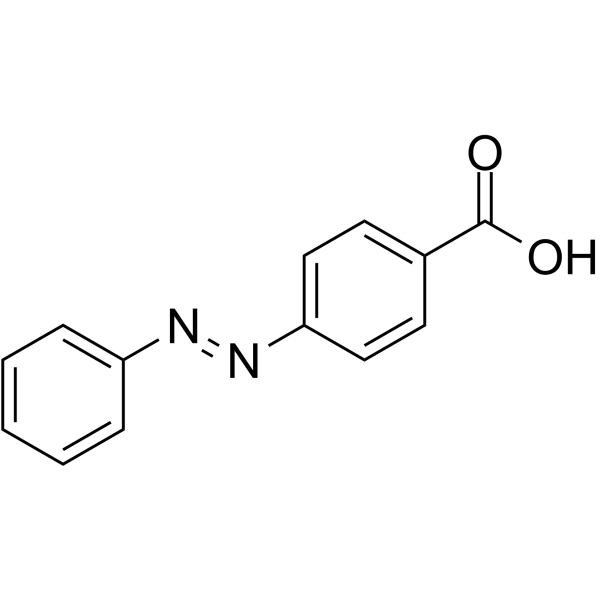
  • HY-W106234

    TRP Channel Others
    4-(Phenyldiazenyl)benzoic acid is a photosensitive and photoswitchable TRPA1 agonist that can be used as pharmacological tools for study of pain signaling.
    4-(Phenyldiazenyl)benzoic acid
  • HY-D2353

    DNA/RNA Synthesis Cancer
    Biotin-PEG3-benzophenone is biotin-labeled Benzophenone (HY-Y0546). Benzophenone is an endogenous metabolite and a photosensitizer that has been implicated in photosensitive damage to DNA. Benzophenone causes nucleobase oxidation, formation of cyclobutane-pyrimidine dimers, single-strand breaks, DNA-protein cross-links or abasic sites, different pathologies that may occur in nucleosides, oligonucleotides or DNA .
    Biotin-PEG3-benzophenone
  • HY-W778240

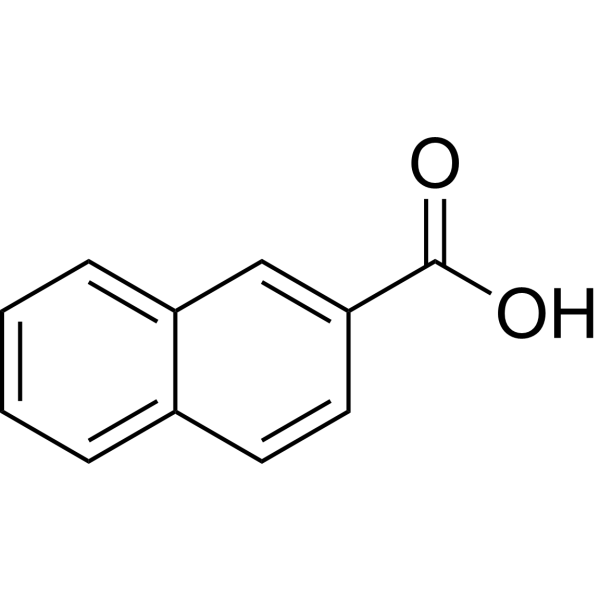
    Naphthalene-2-carboxylic acid-13C6

    Isotope-Labeled Compounds Biochemical Assay Reagents Others
    2-Naphthoic acid- 13C6 (Naphthalene-2-carboxylic acid- 13C6) is the 13C-labeled 2-Naphthoic acid (HY-W007437). 2-Naphthoic acid is an organic compound commonly used as a raw material for dyes and the production of other chemicals. It can form dyes with other organic substances and is widely used in textile, printing and manufacturing fields. In addition, the compound is also used as a photosensitive material and a lubricant.
    2-Naphthoic acid-13C6
  • HY-158220

    HAMA (MW 400 kDa)

    Biochemical Assay Reagents Others
    Hyaluronic acid Methacryloyl (HAMA) is methacrylated hyaluronic acid that is biocompatible. Hyaluronic acid Methacryloyl is also used as a 3D printing hydrogel ink, which has the characteristics of fast photosensitive response, fast gelation speed and stable hydrogel performance. Hyaluronic acid Methacryloyl can quickly induce gelation with lithium phenyl-2,4,6-trimethylbenzoylphosphinate (LAP) under UV irradiation. The combination of Hyaluronic acid Methacryloyl and tissue-specific extracellular matrix (ECM) materials (such as pancreatic extracellular matrix (pECM)) will become an important source material for organoid culture .
    Hyaluronic acid Methacryloyl (MW 400 kDa)
  • HY-158220A

    HAMA (MW 150 kDa)

    Biochemical Assay Reagents Others
    Hyaluronic acid Methacryloyl (HAMA) MW 150 kDa is methacrylated hyaluronic acid that is biocompatible. Hyaluronic acid Methacryloyl is also used as a 3D printing hydrogel ink, which has the characteristics of fast photosensitive response, fast gelation speed and stable hydrogel performance. Hyaluronic acid Methacryloyl can quickly induce gelation with lithium phenyl-2,4,6-trimethylbenzoylphosphinate (LAP) under UV irradiation. The combination of Hyaluronic acid Methacryloyl and tissue-specific extracellular matrix (ECM) materials (such as pancreatic extracellular matrix (pECM)) will become an important source material for organoid culture .
    Hyaluronic acid Methacryloyl (MW 150 kDa)
  • HY-78131R

    (±)-Ibuprofen (Standard)

    MOFs Infection Neurological Disease Inflammation/Immunology Cancer
    Ibuprofen (Standard) is the analytical standard of Ibuprofen. This product is intended for research and analytical applications. Ibuprofen ((±)-Ibuprofen) is a potent, orally active, selective COX-1 inhibitor with an IC50 value of 13 μM. Ibuprofen inhibits cell proliferation, angiogenesis, and induces cell apoptosis. Ibuprofen is a nonsteroidal anti-inflammatory agent and a nitric oxide (NO) donor. Ibuprofen ((±)-Ibuprofen) can be used in the research of pain, swelling, inflammation, infection, immunology, cancers .
    Ibuprofen (Standard)
  • HY-172354

    Biochemical Assay Reagents Others
    Acrylate-PEG2000-NHS is a photosensitive PEG compound that can be cross-linked when exposed to ultraviolet light and is used to synthesize PEG hydrogels .
    Acrylate-PEG2000-NHS
  • HY-W014290

    Biochemical Assay Reagents Drug Intermediate Others
    4,4′-Diaminobenzophenone (Compound 8h) is a building block. 4,4′-Diaminobenzophenone is widely used in the dye industry as an intermediate in dyes, pigments and photosensitive materials .
    4,4′-Diaminobenzophenone
  • HY-W026842

    o-Benzoylbenzoic acid

    Drug Derivative Others
    2-Benzoylbenzoic acid is a Benzophenone (HY-Y0546) analog. 2-Benzoylbenzoic acid is non-phototoxic due to the alteration of the functional groups. 2-Benzoylbenzoic acid can be used to study the mechanism of phototoxicit .
    2-Benzoylbenzoic acid
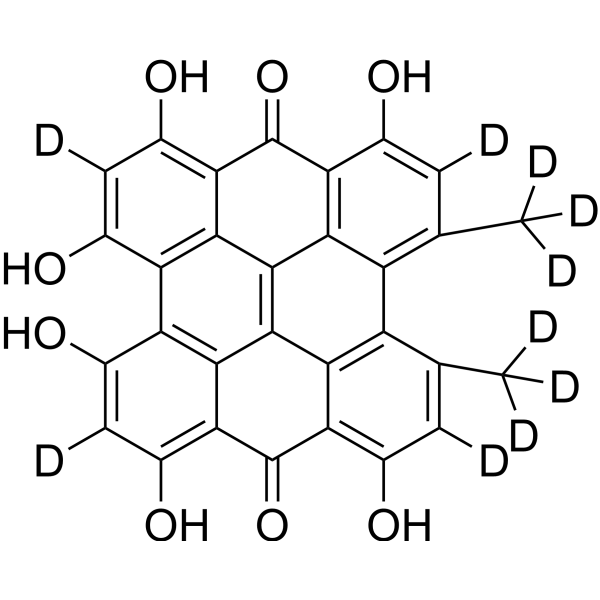
  • HY-N0453S

    Isotope-Labeled Compounds Apoptosis Influenza Virus Cancer
    Hypericin-d10 is the deuterium labeled Hypericin. Hypericin is a photosensitive antiviral with anticancer and antidepressant agent derived from Hypericum perforatum. It can inhibit tyrosine kinases with IC50 of 7.5 μM.
    Hypericin-d10
  • HY-W007437

    Naphthalene-2-carboxylic acid

    Biochemical Assay Reagents Others
    2-Naphthoic acid is an organic compound commonly used as a raw material for dyes and the production of other chemicals. It can form dyes with other organic substances and is widely used in textile, printing and manufacturing fields. In addition, the compound is also used as a photosensitive material and a lubricant.
    2-Naphthoic acid
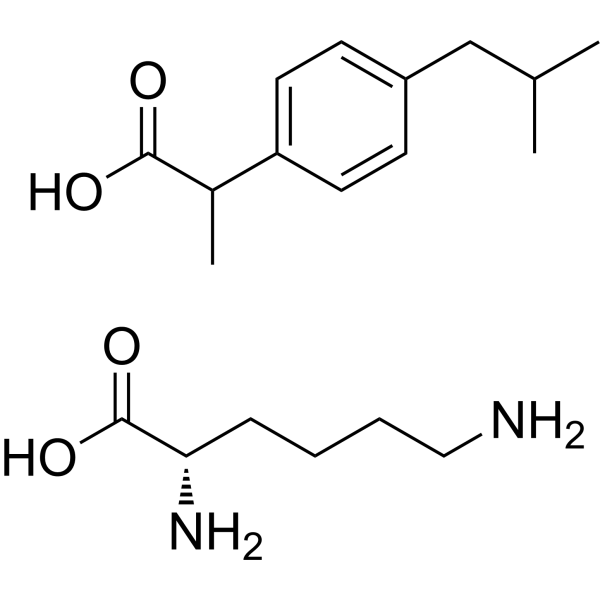
  • HY-100586
    Ibuprofen L-lysine
    Maximum Cited Publications
    22 Publications Verification

    (±)-Ibuprofen L-lysine

    COX Apoptosis Parasite Infection Inflammation/Immunology Cancer
    Ibuprofen ((±)-Ibuprofen) L-lysine is a potent orally active, selective COX-1 inhibitor with an IC50 value of 13 μM. Ibuprofen L-lysine inhibits cell proliferation, angiogenesis, and induces cell apoptosis. Ibuprofen L-lysine is a nonsteroidal anti-inflammatory agent and a nitric oxide (NO) donor. Ibuprofen L-lysine can be used in the research of pain, swelling, inflammation, infection, immunology, cancers .
    Ibuprofen L-lysine
  • HY-78131S3

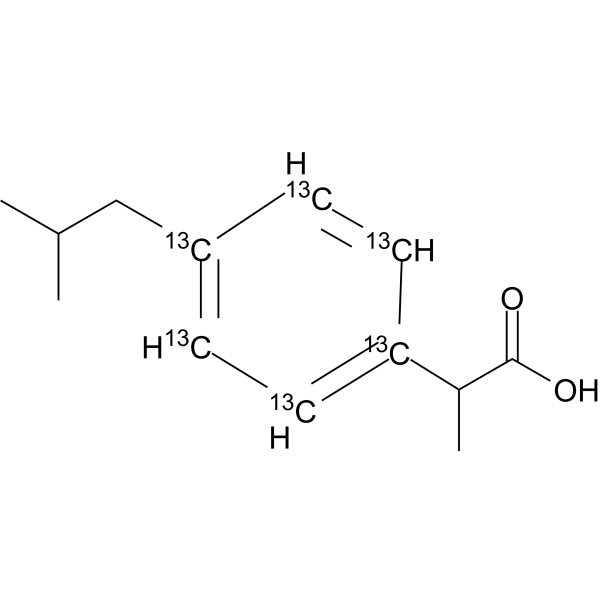
    (±)-Ibuprofen-13C6

    Isotope-Labeled Compounds Apoptosis Parasite COX Cancer
    Ibuprofen- 13C6 ((±)-Ibuprofen- 13C6) is a 13C labeled Ibuprofen (HY-78131). Ibuprofen ((±)-Ibuprofen) is a potent, orally active, selective COX-1 inhibitor with an IC50 value of 13 μM. Ibuprofen inhibits cell proliferation, angiogenesis, and induces cell apoptosis. Ibuprofen is a nonsteroidal anti-inflammatory agent and a nitric oxide (NO) donor. Ibuprofen ((±)-Ibuprofen) can be used in the research of pain, swelling, inflammation, infection, immunology, cancers .
    Ibuprofen-13C6
  • HY-172354A

    Biochemical Assay Reagents Others
    Acrylate-PEG3500-NHS is a photosensitive PEG compound that can be cross-linked when exposed to ultraviolet light and is used to synthesize PEG hydrogels .
    Acrylate-PEG3500-NHS
  • HY-131039

    MDNI-glu

    Amino Acid Derivatives Others
    MDNI-caged-L-glutamate (MDNI-glu) is a biologically inert, photosensitive derivative of the major excitatory amino acid, L-glutamate. MDNI-caged-L-glutamate makes more efficient use of incident light .
    MDNI-caged-L-glutamate
  • HY-W017289S

    Isotope-Labeled Compounds Drug Intermediate Others
    4,4′-Dipyridyl-d8 is the deuterium labeled 4,4'-Dipyridyl (HY-017289). 4,4′-Dipyridyl is a heterocyclic compound. 4,4′-Dipyridyl is utilized as an electronic and photosensitive building block and bidentate ligand in supramolecular chemistry. 4,4′-Dipyridyl can also be used as a drug intermediate in the synthesis of paraquat, a widely used herbicide.
    4,4′-Dipyridyl-d8
  • HY-W145116

    Biochemical Assay Reagents
    [Ru(phen)3]Cl2 is an important photocatalyst with photosensitivity and has the activity of promoting reactions in the fields of organic synthesis and photoelectrochemistry. [Ru(phen)3]Cl2 can drive chemical reactions under light conditions and shows good catalytic performance. [Ru(phen)3]Cl2's applications include photocatalytic water decomposition and synthesis of complex organic molecules.
    [Ru(phen)3]Cl2
  • HY-78131CR

    (±)-Ibuprofen sodium (Standard)

    COX Apoptosis Parasite Reference Standards Infection Neurological Disease Inflammation/Immunology Cancer
    Ibuprofen (sodium) (Standard) is the analytical standard of Ibuprofen (sodium). This product is intended for research and analytical applications. Ibuprofen ((±)-Ibuprofen) sodium is an orally active, selective COX-1 inhibitor with an IC50 value of 13 μM. Ibuprofen sodium inhibits cell proliferation, angiogenesis, and induces cell apoptosis. Ibuprofen sodium is a nonsteroidal anti-inflammatory agent and a nitric oxide (NO) donor. Ibuprofen sodium can be used in the research of pain, swelling, inflammation, infection, immunology, cancers .
    Ibuprofen sodium (Standard)
  • HY-W748297

    Fluorescent Dye Others
    NK 19 diiodide is a photosensitive cyanin dye. NK 19 diiodide is an immunomodulator capable of modifying immunological function of the impaired lymphocytes. NK 19 diiodide can be used for research of wounds and burns .
    NK 19 diiodide
  • HY-155996

    PI3K Apoptosis Cancer
    FD2157 is a photosensitive PI3K inhibitor, with IC50s of 43 nM, 83 nM, 84 nM, 14 nM for PI3Kα, PI3Kβ, PI3Kγ, PI3Kδ respectively. FD2157 potently inhibits cancer cell proliferation and induces cell apoptosis when exposed to 365 nm UV light .
    FD2157
  • HY-103555

    Biochemical Assay Reagents Others
    NPEC-caged-(1S,3R)-ACPD is a specific photosensitive ligand for glutamate receptor subtypes.
    NPEC-caged-(1S,3R)-ACPD
  • HY-172354B

    Biochemical Assay Reagents Others
    Acrylate-PEG5000-NHS is a photosensitive PEG compound that can be cross-linked when exposed to ultraviolet light and is used to synthesize PEG hydrogels .
    Acrylate-PEG5000-NHS
  • HY-W504836

    Photosensitizer Neurological Disease
    Deuteroporphyrin IX (dihydrochloride) is a photosensitizer with high lipophilicity and amphiphilicity, capable of providing photosensitivity for cell membrane systems. Deuteroporphyrin IX (dihydrochloride) can induce irreversible discharge elimination in individual neurons .
    Deuteroporphyrin IX dihydrochloride
  • HY-145538

    5'-Deoxyguanylic acid disodium hydrate

    DNA/RNA Synthesis Others
    2'-Deoxyguanosine 5'-monophosphate (5'-Deoxyguanylic acid; dGMP) disodium hydrate is an oxidizable target of the photosensitizer pterin (PT) and can be used to evaluate the photosensitizing properties of biopterins (such as Bip, Fop and Cap) . Pterin causes a photosensitive reaction of dGMP under UV-A radiation, causing damage to DNA molecules. There are two main mechanisms for the photosensitive oxidation of purine nucleotides by pterin in vitro: one is the hydrogen abstraction reaction of electron transfer from dGMP to the triplet excited state of pterin (type I mechanism), and the other is the interaction between dGMP and pterin. The reaction produces singlet molecular oxygen (1O2) (Type II mechanism) .
    2'-Deoxyguanosine 5'-monophosphate disodium hydrate
  • HY-17484R

    CP 65703 (Standard)

    Reference Standards Inflammation/Immunology
    Ampiroxicam (Standard) is the analytical standard of Ampiroxicam. This product is intended for research and analytical applications. Ampiroxicam is an orally active prodrug of non-steroidal anti-inflammatory drug (NSAID). Ampiroxicam inhibits paw swelling in adjuvant-induced arthritis and acute inflammation models, and suppresses phenylbenzoquinone-induced stretching responses in mice. Ampiroxicam is rapidly and completely converted to Piroxicam (HY-B0253) via non-specific esterases and first-pass metabolism. Ampiroxicam induces contact hypersensitivity and photosensitivity reactions through photoproducts generated by UVA. Ampiroxicam can be used in research related to photosensitivity, adjuvant-induced arthritis, rheumatism, osteoarthritis and other inflammatory diseases.
    Ampiroxicam (Standard)
  • HY-W127721

    Phthalocyanine tetrasulfonic acid

    Biochemical Assay Reagents Others
    Tetrasulfophthalocyanine is an organic compound commonly used as dyes, photosensitive materials and catalysts. It can be used in certain organic batteries, solar cells, and laser printing, and is widely used in chemical analysis, biotechnology, and environmental monitoring. In addition, this compound is also used as a substrate or catalyst in certain biochemical reactions.
    Tetrasulfophthalocyanine
  • HY-161503

    Protoporphyrinogen IX oxidase Others
    PPO-IN-10 (Compound 4) is a 2-phenylpyridine derivative of pyrrolidone. PPO-IN-10 inhibits protoporphyrinogen IX oxidase (PPO). PPO-IN-10 leads to the formation of photosensitive protoporphyrin IX and the death of weed leaves. PPO-IN-10 can be used in the research of developing new PPO herbicides .
    PPO-IN-10
  • HY-W127719

    Biochemical Assay Reagents Others
    Photobiotin (acetate)It is a biological probe used to study biochemical processes such as protein interactions and enzymatic reactions. It is a molecule containing a photosensitive group, which can be combined with specific target molecules (such as proteins, nucleic acids, etc.) through photochemical cross-linking technology, so as to realize the labeling and detection of these molecules. During the photosensitive crosslinking process, Photobiotin (acetate)Can participate in the formation of covalent bonds and form stable compounds. In addition, the compound also has high biocompatibility and biological activity, so it is widely used in the field of biomedical research, such as enzymatic research, proteomics, western blotting and other aspects. Photobiotin (acetate) is a click chemistry reagent, it contains an Azide group and can undergo copper-catalyzed azide-alkyne cycloaddition reaction (CuAAc) with molecules containing Alkyne groups. It can also undergo strain-promoted alkyne-azide cycloaddition (SPAAC) reactions with molecules containing DBCO or BCN groups.
    Photobiotin acetate
  • HY-100586R

    (±)-Ibuprofen L-lysine (Standard)

    Reference Standards COX Apoptosis Parasite Infection Inflammation/Immunology Cancer
    Ibuprofen (L-lysine) (Standard) is the analytical standard of Ibuprofen (L-lysine). This product is intended for research and analytical applications. Ibuprofen ((±)-Ibuprofen) L-lysine is a potent orally active, selective COX-1 inhibitor with an IC50 value of 13 μM. Ibuprofen L-lysine inhibits cell proliferation, angiogenesis, and induces cell apoptosis. Ibuprofen L-lysine is a nonsteroidal anti-inflammatory agent and a nitric oxide (NO) donor. Ibuprofen L-lysine can be used in the research of pain, swelling, inflammation, infection, immunology, cancers .
    Ibuprofen L-lysine (Standard)
  • HY-B1644

    Bacterial Inflammation/Immunology
    Fenticlor is a topical antibacterial agent that can be used for treating acne. Fenticlor can cause photosensitivity reactions and is a known cause of phototoxic dermatitis .
    Fenticlor
  • HY-125055A

    Melanocortin Receptor Metabolic Disease
    CD08108 is a selective MC1R full agonist with an EC50 of 70 nM against hMC1R. CD08108 participates in the melanogenesis process. CD08108 promotes cell proliferation. CD08108 can be used in studies related to vitiligo, subcutaneous diseases and photosensitive diseases .
    CD08108
  • HY-181071

    DNA/RNA Synthesis Drug Intermediate Cancer
    POLRMT-IN-3 is a photosensitive inhibitor of mitochondrial RNA polymerase (POLRMT). POLRMT-IN-3 is biologically inactive in the dark but rapidly releases the active parent compound LJ03 upon illumination with 405 nm light, enabling spatiotemporally precise inhibition of POLRMT. POLRMT-IN-3 exhibits antitumor activity and can be used in research on tumors such as pancreatic cancer and ovarian cancer .
    POLRMT-IN-3
  • HY-W394166

    Biochemical Assay Reagents Others
    6-Bromo-7-hydroxy-4-(hydroxymethyl)coumarin is a photosensitive cage like ceramide. 6-Bromo-7-hydroxy-4-(hydroxymethyl)coumarin can release active ceramides under light exposure. 6-Bromo-7-hydroxy-4-(hydroxymethyl)coumarin can be used for research on drug release with high spatiotemporal precision .
    6-Bromo-7-hydroxy-4-(hydroxymethyl)coumarin
  • HY-180373

    Parasite Infection
    WR 30090 (Compound 37) is a broad-spectrum antimalarial agent that does not rely on the classical antifolate pathway. WR 30090 exhibits strong activity against a variety of chloroquine-sensitive and resistant Plasmodium falciparum strains, especially the highly resistant Vietnamese strain. WR 30090 shows high activity in mouse malaria tests, with a minimum effective dose of 5 mg/kg and a minimum cure dose of 20 mg/kg. WR 30090 can be used for research on acute malaria .
    WR 30090
  • HY-W585442

    Biochemical Assay Reagents Endogenous Metabolite
    5,9,14,18,23,27,32,36-Octabutoxy-2,3-naphthalocyanine is a photosensitive material with excellent light absorption and electron conduction activity. 5,9,14,18,23,27,32,36-Octabutoxy-2,3-naphthalocyanine is widely used in optoelectronic devices and is considered to be an effective photocatalyst. 5,9,14,18,23,27,32,36-Octabutoxy-2,3-naphthalocyanine can be used to improve the performance of solar cells and increase the photoelectric conversion efficiency. 5,9,14,18,23,27,32,36-Octabutoxy-2,3-naphthalocyanine also has potential anti-tumor activity and can inhibit the proliferation of certain cancer cells. 5,9,14,18,23,27,32,36-Octabutoxy-2,3-naphthalocyanine exhibits excellent fluorescence properties in medical imaging, which helps to improve the clarity and accuracy of imaging. 5,9,14,18,23,27,32,36-Octabutoxy-2,3-naphthalocyanine is studied as a component of a novel compound delivery system to improve the targeting and release effect of the compound.
    5,9,14,18,23,27,32,36-Octabutoxy-2,3-naphthalocyanine

Inquiry Online

Your information is safe with us. * Required Fields.

Salutation


Country or Region *

Applicant Name *


Organization Name *

Department *


Email Address *


Product Name *

Cat. No.


Requested quantity *

Phone Number *


Remarks

Inquiry Online

Inquiry Information

Product Name:
Cat. No.:
Quantity:
MCE Japan Authorized Agent:

