



Ibuprofen L-lysine
Based on 23 publication(s) in Google Scholar
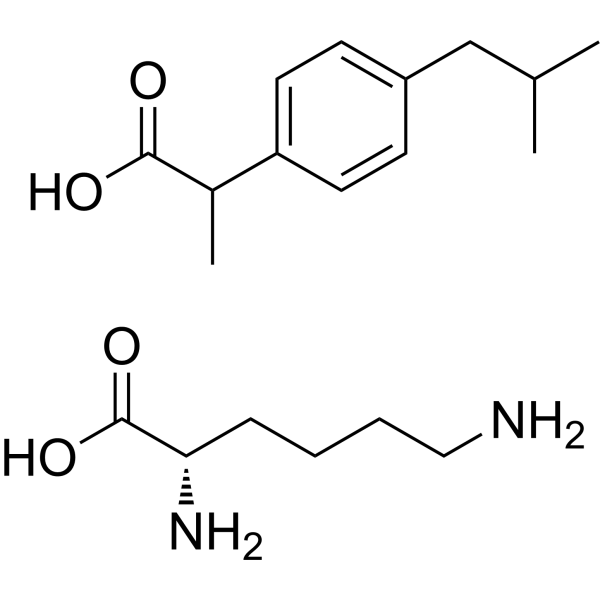
Ibuprofen ((±)-Ibuprofen) L-lysine is a potent orally active, selective COX-1 inhibitor with an IC50 value of 13 μM. Ibuprofen L-lysine inhibits cell proliferation, angiogenesis, and induces cell apoptosis. Ibuprofen L-lysine is a nonsteroidal anti-inflammatory agent and a nitric oxide (NO) donor. Ibuprofen L-lysine can be used in the research of pain, swelling, inflammation, infection, immunology, cancers.
For research use only. We do not sell to patients.
- Purity : 99.91%
- CAS No.: 57469-77-9
- Formula: C19H32N2O4
- Molecular Weight:352.47
-
Storage:
4°C, sealed storage, away from moisture
* In solvent : -80°C, 6 months; -20°C, 1 month (sealed storage, away from moisture)

To place orders, for customer services and technical support, please contact: MedChemExpress USA
Tel: 609-228-6898 E-mail: [email protected] [email protected]


-
 Biological Activity
-
Chemical Information
-
Solvent & Solubility
- Purity & Documentation
- References
-
 Help & FAQs


Publications Citing Use of MedChemExpress (MCE) Ibuprofen L-lysine
More- Biomaterials. 2025 Nov:322:123402. [Abstract]
- Phytomedicine. 2022 Nov:106:154427. [Abstract]
- J Hazard Mater Lett. 2025 Nov.
- Int J Biol Macromol. 2025 Dec 9;337(Pt 2):149613. [Abstract]
- Plant Physiol. 2026 Mar 2;200(3):kiag108. [Abstract]
- Cell Rep. 2025 Apr 2;44(4):115489. [Abstract]
- Cell Rep. 2019 Dec 17;29(12):3847-3858.e5. [Abstract]
- Biochem Pharmacol. 2024 Nov:229:116478. [Abstract]
- Inflammopharmacology. 2024 Feb;32(1):733-745. [Abstract]
- Cells. 2022 Jun 9;11(12):1870. [Abstract]
- EMBO Rep. 2022 Jun 7;23(6):e53932. [Abstract]
- Cell Rep Methods. 2023 Oct 23;3(10):100599. [Abstract]
- Int Immunopharmacol. 2026 Aug 15:183:116873. [Abstract]
- Int J Mol Sci. 2021 Nov 22;22(22):12597. [Abstract]
- Bioresour Technol Rep. 2023 Nov 10, 101696.
- Bioresour Technol Rep. 2023 Dec, 24, 101619.
- Sci Rep. 2020 Oct 2;10(1):16383. [Abstract]
- Neuropharmacology. 2022 Oct 1:217:109191. [Abstract]
- ACS Chem Neurosci. 2025 Sep 3;16(17):3257-3266. [Abstract]
- J Neurosci. 2024 Aug 21;44(34):e0740242024. [Abstract]
- Reprod Toxicol. 2025 May:134:108895. [Abstract]
- J Appl Toxicol. 2024 Oct;44(10):1528-1539. [Abstract]
- Chemosphere. 2019 Jun:225:378-387. [Abstract]
 Customer Validation & Images

-
Cell Proliferation/Viability Assay
-
Cell Migration/Invasion Assay
-
Cell Migration/Invasion Assay
-
Flow Cytometry
-
Bio/Physico-chemical Assay
All Parasite Isoforms
More

Biological Activity
Description
IC50 & Target
IC50: 13 μM (COX-1), 370 μM (COX-2)
In Vitro
Ibuprofen (24 h) L-lysine inhibits COX-1 and COX-2 activity with IC50 values of 13 μM and 370 μM[1].
Ibuprofen (500 μM, 48 h) L-lysine inhibits cell proliferation and angiogenesis, and induces apoptosis in AGS cells (Adenocarcinoma gastric cell line)[2].
Ibuprofen (500 μM, 48 h) L-lysine downregulates transcription of Akt, VEGF-A, PCNA, Bcl2, OCT3/4 and CD44 genes, but upregulates RNA levels of wild type P53 and Bax genes in AGS cell[2].
Ibuprofen (500 μM, 24 h) L-lysine restores microtubule reformation, microtubule-dependent intracellular cholesterol transport, and induces extension of microtubules to the cell periphery in both cystic fibrosis (CF) cell models and primary CF nasal epithelial cells[3].
Ibuprofen (500 μM, 24 h) L-lysine enhances UV-induced cell death in MCF-7 cells and MDA-MB-231 cells by a photosensitization process[4].
MedChemExpress (MCE) has not independently confirmed the accuracy of these methods. They are for reference only.
-
Cell Line:AGS cells
-
Concentration:100-1000 μM
-
Incubation Time:24 h, 48 h
-
Result:Inhibited AGS cell viability with IC50 values of 630 μM (trypan blue staining, 24 h), 456 μM (neutral red assay, 24 h), 549 μM (trypan blue staining, 48 h) and 408 μM (neutral red assay, 48 h).
In Vivo
Ibuprofen (60 mg/kg; i.h.; every second day for 15 days) L-lysine reduces the risk of neuropathy in a rat model of chronic Oxaliplatin induced peripheral neuropathy[6].
Ibuprofen (20 mg/kg; p.o.; every 12 hours, 5 doses total) L-lysine decreases muscle growth (average muscle fiber cross-sectional area) without affecting regulation of supraspinatus tendon adaptions to exercise[7].
Ibuprofen (35 mg/kg; p.o.; twice daily) L-lysine attenuates the Inflammatory response to pseudomonas aeruginosa in a rat model of chronic pulmonary infection[8].
MedChemExpress (MCE) has not independently confirmed the accuracy of these methods. They are for reference only.
-
Animal Model:Syngeneic (D2A1) orthotopic Balb/c mouse model of PPBC (postpartum)[5]
-
Dosage:300 mg/kg, daily for 14 days
-
Administration:Fed in animal feedings (added to pulverized standard chow and mixed dry, then mixed with water, made into chow pellets and dried thoroughly)
-
Result:Suppresed tumor growth, reduced presence of immature monocytes and increased numbers of T cells.
Enhanced Th1 associated cytokines as well as promoted tumor border accumulation of T cells.
-
Animal Model:Oxaliplatin‑induced peripheral neuropathy[6]
-
Dosage:60 mg/kg, every second day for 15 days
-
Administration:Subcutaneous injection
-
Result:Lowered sensory nerve conduction velocity (SNCV).
Clinical Trial
| NCT Number | Sponsor | Condition | Start Date |
Phase

|
|---|---|---|---|---|
| NCT01329991 | Plexxikon| | 2011-05 | PHASE1 |


Chemical Information
-
CAS No. 57469-77-9
-
Appearance Solid
-
Molecular Weight 352.47
-
Formula C19H32N2O4
-
Color White to off-white
-
SMILES
CC(C(O)=O)C1=CC=C(CC(C)C)C=C1.OC([C@@H](N)CCCCN)=O
-
Synonyms
(±)-Ibuprofen L-lysine
-
Shipping
Room temperature in continental US; may vary elsewhere.
-
Storage
4°C, sealed storage, away from moisture
* In solvent : -80°C, 6 months; -20°C, 1 month (sealed storage, away from moisture)


Publications (23)
-
Journal Impact Factor
-
Most Recent
-
Biomaterials
GSH-activable and cytolytic iPep-coupled immune nanoagonist for cancer synergetic therapy. [Abstract]2025 Nov:322:123402. PMID: 40373515 -
Phytomedicine
Prim-O-glucosycimifugin attenuates liver injury in septic mice by inhibiting NLRP3 inflammasome/caspase-1 signaling cascades in macrophages. [Abstract]2022 Nov:106:154427. PMID: 36088791 -
-
Int J Biol Macromol
Molecular interaction of abemaciclib with human serum albumin: Insights from spectroscopy, microscopy, and computational approaches. [Abstract]2025 Dec 9;337(Pt 2):149613. PMID: 41380878 -
Plant Physiol
The MdSP1-MdANK immune module activated by effector SyCD1 enhances Malus domestica resistance to Valsa mali. [Abstract]2026 Mar 2;200(3):kiag108. PMID: 41757702 -
Cell Rep
LAMP2A-mediated neuronal hyperexcitability by enhancing NKAβ1 degradation underlies depression-induced allodynia. [Abstract]2025 Apr 2;44(4):115489. PMID: 40178973 -
Cell Rep
A Central Amygdala Input to the Parafascicular Nucleus Controls Comorbid Pain in Depression. [Abstract]2019 Dec 17;29(12):3847-3858.e5. PMID: 31851918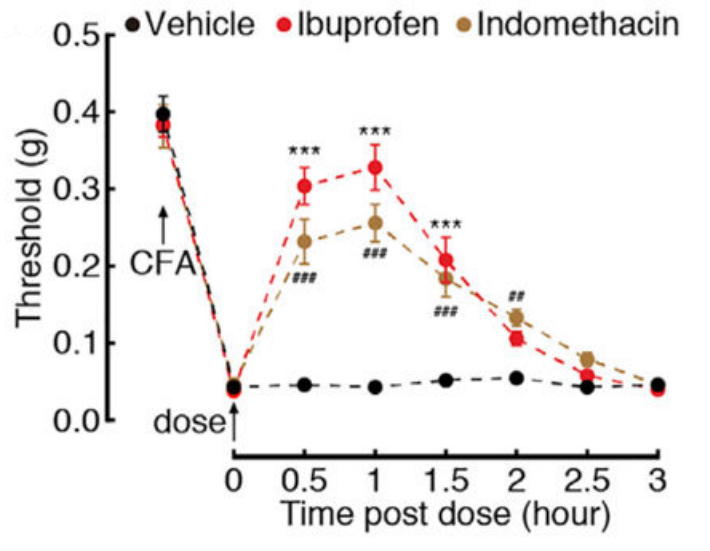
Ibuprofen L-lysine purchased from MedChemExpress. Usage Cited in: Cell Rep. 2019 Dec 17;29(12):3847-3858.e5. [Abstract]
Effects of Ibuprofen (10 mg/kg, i.p.) or indomethacin (10 mg/kg, i.p.) on pain thresholds at day 3 after CFA treatment.
Ibuprofen L-lysine purchased from MedChemExpress. Usage Cited in: Cell Rep. 2019 Dec 17;29(12):3847-3858.e5. [Abstract]
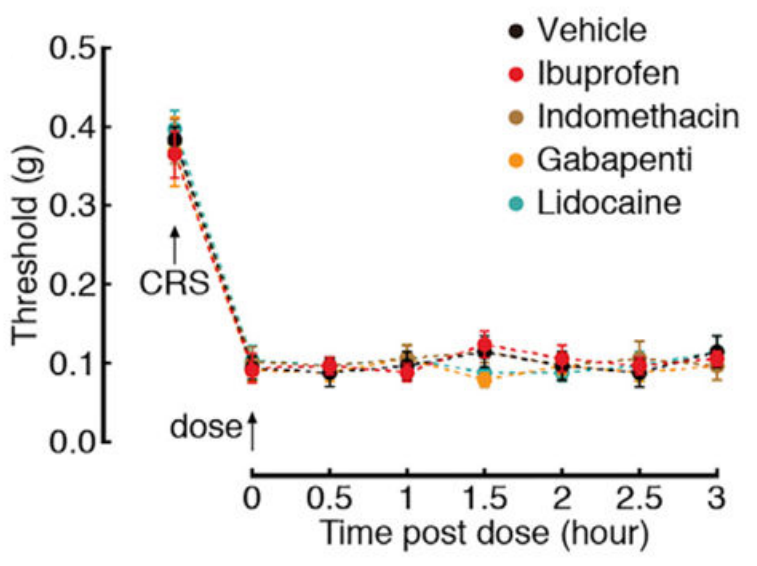
Effects of Ibuprofen (10 mg/kg, i.p.), Indomethacin, Gabapentin, or Lidocaine on pain thresholds of CRS 3W mice.
-
Biochem Pharmacol
The 'ABC' of split-nanoluciferase HIF heterodimerization bioassays: Applications, Benefits & Considerations. [Abstract]2024 Nov:229:116478. PMID: 39128589 -
Inflammopharmacology
Ibuprofen inhibits anaplastic thyroid cells in vivo and in vitro by triggering NLRP3-ASC-GSDMD-dependent pyroptosis. [Abstract]2024 Feb;32(1):733-745. PMID: 37999895
Ibuprofen L-lysine purchased from MedChemExpress. Usage Cited in: Inflammopharmacology. 2024 Feb;32(1):733-745. [Abstract]
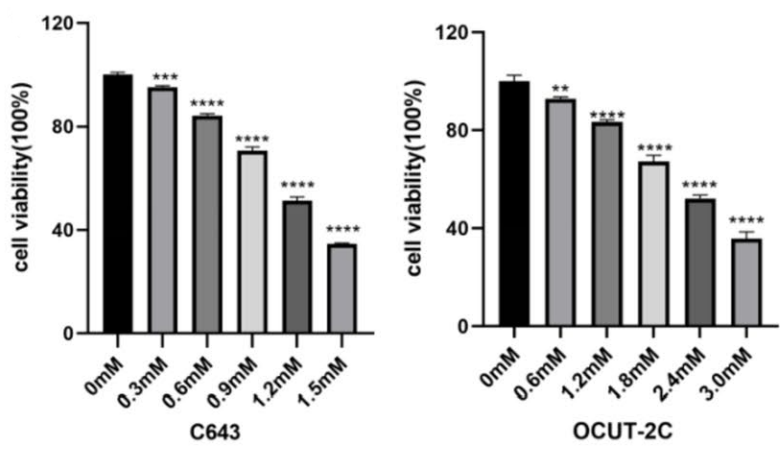
The inhibitory effect of Ibuprofen (0-3 mM, 48 h) on the proliferation of C643 and OCUT-2C cells was detected by CCK8 assay.
Ibuprofen L-lysine purchased from MedChemExpress. Usage Cited in: Inflammopharmacology. 2024 Feb;32(1):733-745. [Abstract]
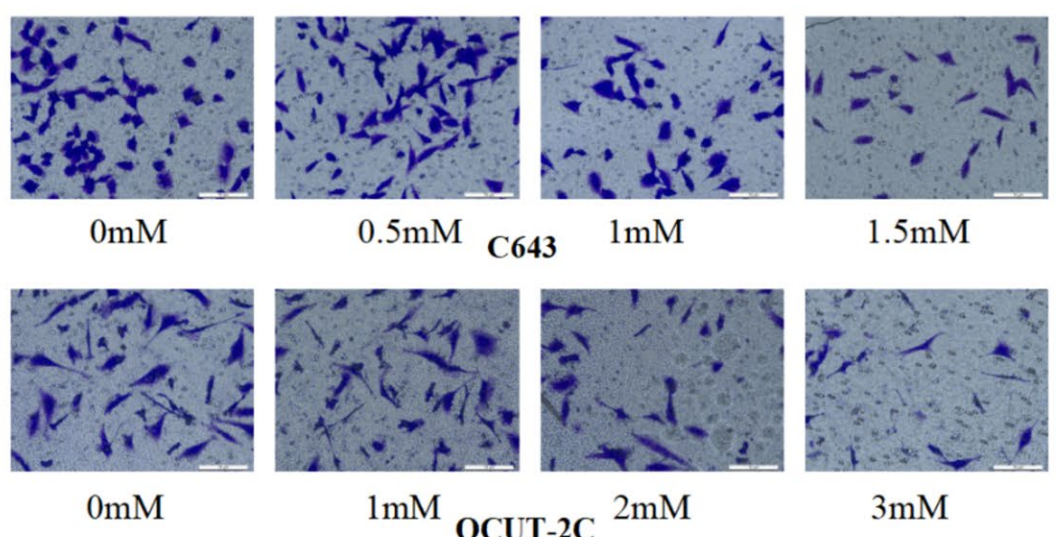
Transwell assay, cells were treated with various concentrations of Ibuprofen (C643 at 0, 0.5, 1, and 1.5 mM; OCUT-2C at 0, 1, 2, and 3 mM) for 48 h view cell invasion abilities.
Ibuprofen L-lysine purchased from MedChemExpress. Usage Cited in: Inflammopharmacology. 2024 Feb;32(1):733-745. [Abstract]
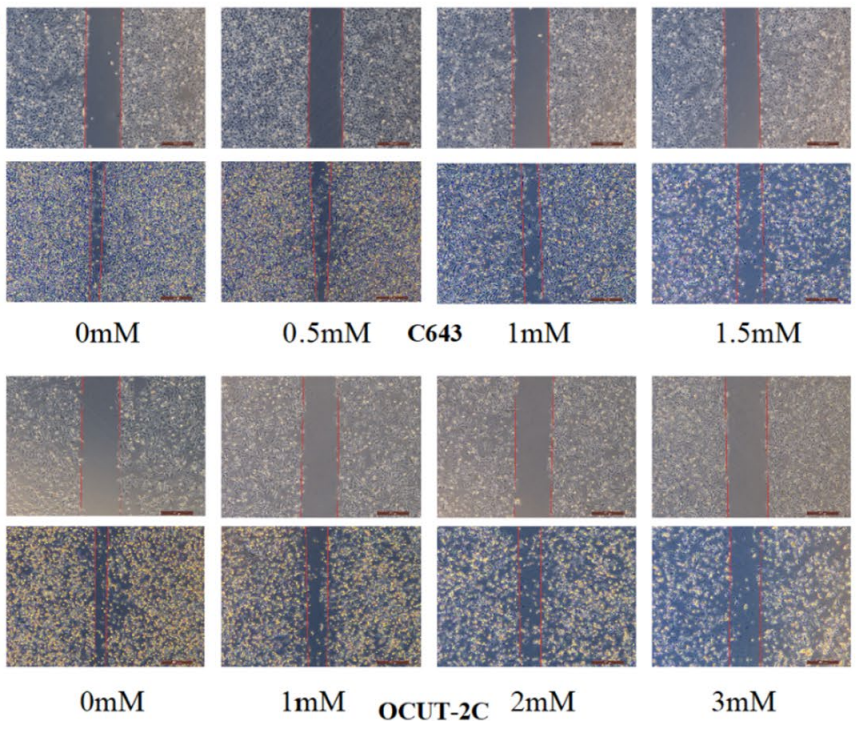
Wound healing assay, cells were treated with different concentrations of Ibuprofen (C643 at 0, 0.5, 1, and 1.5 mM; OCUT-2C at 0, 1, 2, and 3 mM) for 48 h view cell migration abilities.
Ibuprofen L-lysine purchased from MedChemExpress. Usage Cited in: Inflammopharmacology. 2024 Feb;32(1):733-745. [Abstract]
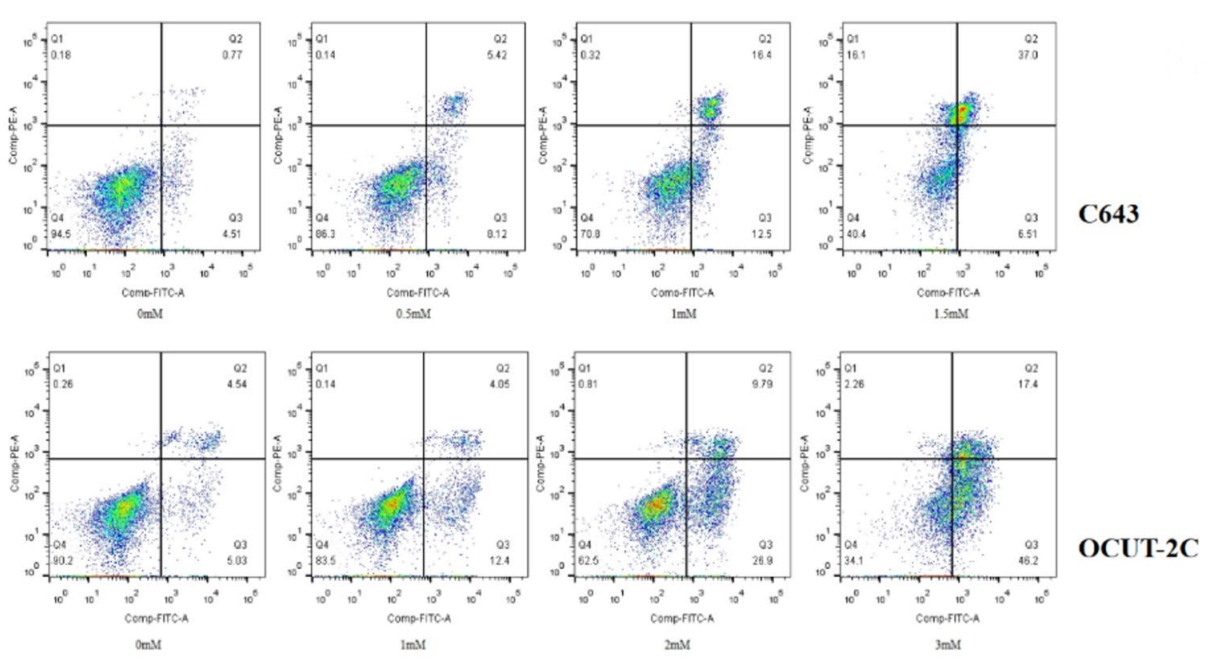
Flow cytometry analysis of ATC cells treated with different Ibuprofen (0-3 mM) concentrations for 48 h stained with Annexin V-FITC and PI.
Ibuprofen L-lysine purchased from MedChemExpress. Usage Cited in: Inflammopharmacology. 2024 Feb;32(1):733-745. [Abstract]
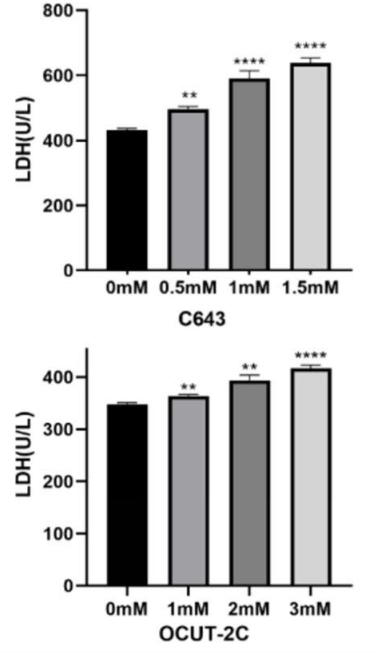
The effect of Ibuprofen (0-1.5 mM) on LDH activity in C643 and OCUT-2C cells.
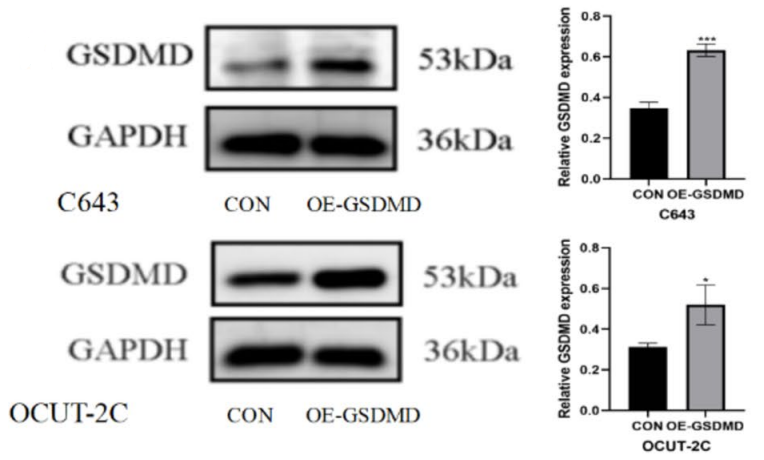
Ibuprofen L-lysine purchased from MedChemExpress. Usage Cited in: Inflammopharmacology. 2024 Feb;32(1):733-745. [Abstract]
Ibuprofen-induced expression of GSDMD protein in C643 and OCUT-2C cells.
-
Cells
Prostaglandin 2α Promotes Autophagy and Mitochondrial Energy Production in Fish Hepatocytes. [Abstract]2022 Jun 9;11(12):1870. PMID: 35740999 -
EMBO Rep
2022 Jun 7;23(6):e53932. PMID: 35403787 -
Cell Rep Methods
RECOVER identifies synergistic drug combinations in vitro through sequential model optimization. [Abstract]2023 Oct 23;3(10):100599. PMID: 37797618 -
Int Immunopharmacol
Oxyphenbutazone suppresses non-canonical inflammasome activation and protects against LPS-induced sepsis. [Abstract]2026 Aug 15:183:116873. PMID: 42150290 -
Int J Mol Sci
Singapore Grouper Iridovirus Disturbed Glycerophospholipids Homeostasis: Cytosolic Phospholipase A2 Was Essential for Virus Replication. [Abstract]2021 Nov 22;22(22):12597. PMID: 34830477 -
-
-
Sci Rep
Characterization of five novel vasopressin V2 receptor mutants causing nephrogenic diabetes insipidus reveals a role of tolvaptan for M272R-V2R mutation. [Abstract]2020 Oct 2;10(1):16383. PMID: 33009446 -
Neuropharmacology
Malfunction of astrocyte and cholinergic input is involved in postoperative impairment of hippocampal synaptic plasticity and cognitive function. [Abstract]2022 Oct 1:217:109191. PMID: 35835213 -
ACS Chem Neurosci
Identification of a Nonelectrophilic and Selective TRPA1 Agonist for Alleviation of Inflammatory Pain through Channel Desensitization. [Abstract]2025 Sep 3;16(17):3257-3266. PMID: 40846466 -
J Neurosci
Acute Ongoing Nociception Delays Recovery of Consciousness from Sevoflurane Anesthesia via a Midbrain Circuit. [Abstract]2024 Aug 21;44(34):e0740242024. PMID: 39019613 -
Reprod Toxicol
2025 May:134:108895. PMID: 40097051 -
J Appl Toxicol
Differential impacts of nonsteroidal anti-inflammatory drugs on lifespan and healthspan in aged Caenorhabditis elegans. [Abstract]2024 Oct;44(10):1528-1539. PMID: 38840409 -
Chemosphere
Mass-balance-model-based evaluation of sewage treatment plant contribution to residual pharmaceuticals in environmental waters. [Abstract]2019 Jun:225:378-387. PMID: 30884299


Solvent & Solubility
In Vitro:
H2O : 100 mg/mL (283.71 mM; Need ultrasonic)
Please refer to the solubility information to select the appropriate solvent. Once prepared, please aliquot and store the solution to prevent product inactivation from repeated freeze-thaw cycles.
Storage method and period of stock solution: -80°C, 6 months; -20°C, 1 month (sealed storage, away from moisture). When stored at -80°C, please use it within 6 months. When stored at -20°C, please use it within 1 month.
* Note: If you choose water as the stock solution, please dilute it to the working solution, then filter and sterilize it with a 0.22 μm filter before use.
Please refer to the solubility information to select the appropriate solvent. Once prepared, please aliquot and store the solution to prevent product inactivation from repeated freeze-thaw cycles.
Storage method and period of stock solution: -80°C, 6 months; -20°C, 1 month (sealed storage, away from moisture). When stored at -80°C, please use it within 6 months. When stored at -20°C, please use it within 1 month.
* Note: If you choose water as the stock solution, please dilute it to the working solution, then filter and sterilize it with a 0.22 μm filter before use.
Concentration (start) × Volume (start) = Concentration (final) × Volume (final)


Purity & Documentation
-
Data Sheet (283 KB)
-
SDS (394 KB)
- English - EN (394 KB)
- Français - FR (394 KB)
- Deutsch - DE (394 KB)
- Norwegian - NO (394 KB)
- Español - ES (394 KB)
- Swedish - SV (394 KB)
- Italian - IT (394 KB)
- Korean - KR (394 KB)
- Portuguese - PT (394 KB)
-
Handling Instructions (2659 KB)
References
[1]. Noreen Y, et al. Development of a radiochemical cyclooxygenase-1 and -2 in vitro assay for identification of natural products as inhibitors of prostaglandin biosynthesis. J Nat Prod. 1998 Jan;61(1):2-7. [Content Brief]
[2]. Hassan Akrami, et al. Inhibitory effect of ibuprofen on tumor survival and angiogenesis in gastric cancer cell. Tumour Biol. 2015 May;36(5):3237-43. [Content Brief]
[3]. Sharon M Rymut, et al. Ibuprofen regulation of microtubule dynamics in cystic fibrosis epithelial cells. Am J Physiol Lung Cell Mol Physiol. 2016 Aug 1;311(2):L317-27. [Content Brief]
[4]. Emmanuelle Bignon, et al. Ibuprofen and ketoprofen potentiate UVA-induced cell death by a photosensitization process. Sci Rep. 2017 Aug 21;7(1):8885. [Content Brief]
[5]. Nathan D Pennock, et al. Ibuprofen supports macrophage differentiation, T cell recruitment, and tumor suppression in a model of postpartum breast cancer. J Immunother Cancer. 2018 Oct 1;6(1):98. [Content Brief]
[6]. Thomas Krøigård, et al. Protective effect of ibuprofen in a rat model of chronic oxaliplatin-induced peripheral neuropathy. Exp Brain Res. 2019 Oct;237(10):2645-2651. [Content Brief]
[7]. Sarah Ilkhanipour Rooney, et al. Ibuprofen Differentially Affects Supraspinatus Muscle and Tendon Adaptations to Exercise in a Rat Model. Am J Sports Med. 2016 Sep;44(9):2237-45. [Content Brief]
[8]. M W Konstan, et al. Ibuprofen attenuates the inflammatory response to Pseudomonas aeruginosa in a rat model of chronic pulmonary infection. Implications for antiinflammatory therapy in cystic fibrosis. Am Rev Respir Dis. 1990 Jan;141(1):186-92. [Content Brief]


Complete Stock Solution Preparation Table
Please refer to the solubility information to select the appropriate solvent. Once prepared, please aliquot and store the solution to prevent product inactivation from repeated freeze-thaw cycles.
Storage method and period of stock solution: -80°C, 6 months; -20°C, 1 month (sealed storage, away from moisture). When stored at -80°C, please use it within 6 months. When stored at -20°C, please use it within 1 month.
| Optional Solvent | Concentration Solvent Mass | 1 mg | 5 mg | 10 mg | 25 mg |
|---|---|---|---|---|---|
| H2O | 1 mM | 2.8371 mL | 14.1856 mL | 28.3712 mL | 70.9280 mL |
| 5 mM | 0.5674 mL | 2.8371 mL | 5.6742 mL | 14.1856 mL | |
| 10 mM | 0.2837 mL | 1.4186 mL | 2.8371 mL | 7.0928 mL | |
| 15 mM | 0.1891 mL | 0.9457 mL | 1.8914 mL | 4.7285 mL | |
| 20 mM | 0.1419 mL | 0.7093 mL | 1.4186 mL | 3.5464 mL | |
| 25 mM | 0.1135 mL | 0.5674 mL | 1.1348 mL | 2.8371 mL | |
| 30 mM | 0.0946 mL | 0.4729 mL | 0.9457 mL | 2.3643 mL | |
| 40 mM | 0.0709 mL | 0.3546 mL | 0.7093 mL | 1.7732 mL | |
| 50 mM | 0.0567 mL | 0.2837 mL | 0.5674 mL | 1.4186 mL | |
| 60 mM | 0.0473 mL | 0.2364 mL | 0.4729 mL | 1.1821 mL | |
| 80 mM | 0.0355 mL | 0.1773 mL | 0.3546 mL | 0.8866 mL | |
| 100 mM | 0.0284 mL | 0.1419 mL | 0.2837 mL | 0.7093 mL |
* Note: If you choose water as the stock solution, please dilute it to the working solution, then filter and sterilize it with a 0.22 μm filter before use.


Ibuprofen L-lysine Related Classifications
HY-100586 Related Classifications
 Powered by Bioz