19 Results for "

polyethyleneimine

" in MedChemExpress (MCE) Product Catalog:
Products (19)

19 Results for "polyethyleneimine" in MCE Product Catalog:

Cat. No.: HY-134124
CAS No.: 92614-59-0
Purity:  95.8%
Research Areas:  

Metabolic Disease

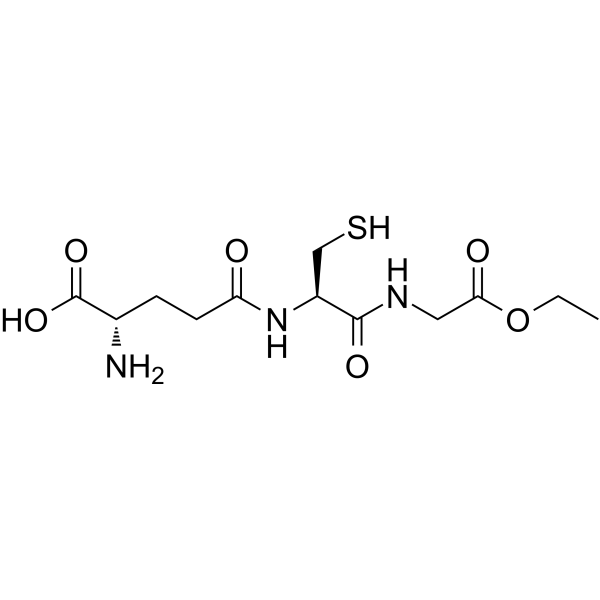
Glutathione ethyl ester is a cell-permeable GSH donor and provides an efficient supply of GSH to the oocyte. Glutathione ethyl ester shows positive effect on the in vitro production of embryos by enhancement of the antioxidative defense .
loading...
    loading...
Cat. No.: HY-140698
CAS No.: 92451-01-9
Purity:  ≥95.0%
Synonyms: mPEG5000-SC; mPEG5000-Succinimidyl ester
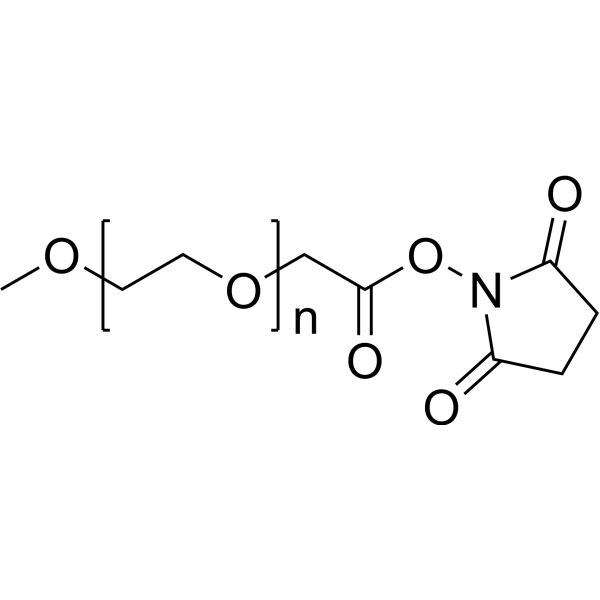
m-PEG5000-NHS ester (mPEG5000-SC) is a pegylation reagent that targets the primary amino groups of branched polyethyleneimine on gold nanoparticles. m-PEG1000-NHS ester covalently links its PEG moiety to target amino groups via amine-mediated coupling chemistry. m-PEG1000-NHS ester helps improve the biocompatibility of modified gold nanoparticles used as CT contrast agents and prolongs their blood circulation time.
loading...
    loading...
Cat. No.: HY-140699
CAS No.: 92451-01-9
Purity:  ≥98.0%
Synonyms: mPEG10000-SC; mPEG10000-Succinimidyl ester
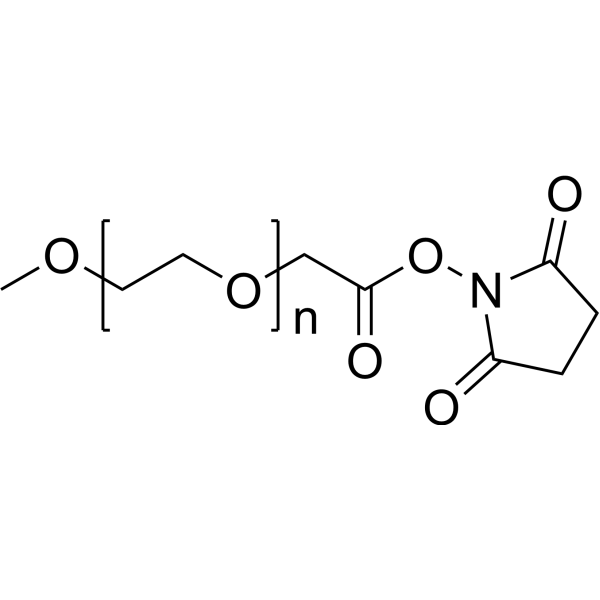
m-PEG10000-NHS ester (mPEG10000-SC) is a pegylation reagent that targets the primary amino groups of branched polyethyleneimine on gold nanoparticles. m-PEG1000-NHS ester covalently links its PEG moiety to target amino groups via amine-mediated coupling chemistry. m-PEG1000-NHS ester helps improve the biocompatibility of modified gold nanoparticles used as CT contrast agents and prolongs their blood circulation time.
loading...
    loading...
Cat. No.: HY-140700
CAS No.: 92451-01-9
Purity:  ≥98.0%
Synonyms: mPEG20000-SC; mPEG20000-Succinimidyl ester
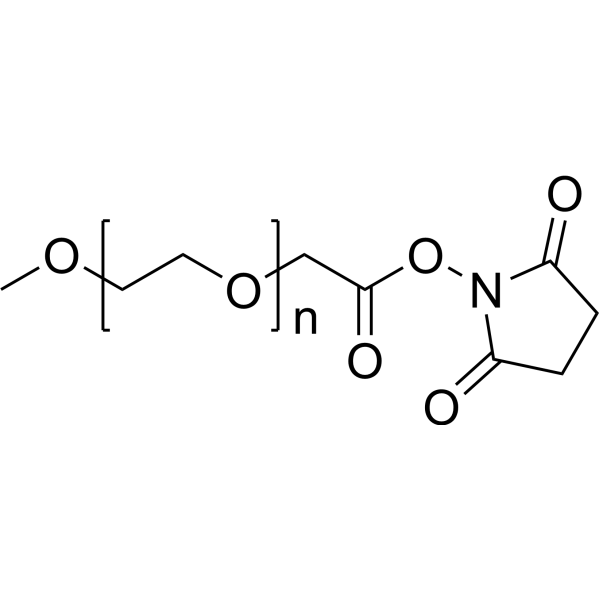
m-PEG20000-NHS ester (mPEG20000-SC) is a pegylation reagent that targets the primary amino groups of branched polyethyleneimine on gold nanoparticles. m-PEG1000-NHS ester covalently links its PEG moiety to target amino groups via amine-mediated coupling chemistry. m-PEG1000-NHS ester helps improve the biocompatibility of modified gold nanoparticles used as CT contrast agents and prolongs their blood circulation time.
loading...
    loading...
Cat. No.: HY-D2839
m-PEG10000-PEI-Cy5 is a fluorescent dye composed of polyethylene glycol (PEG), Cy5 (HY-D0821) and Polyethyleneimine (PEI). m-PEG10000-PEI-Cy5 can be used for fluorescent labeling and imaging .
loading...
    loading...
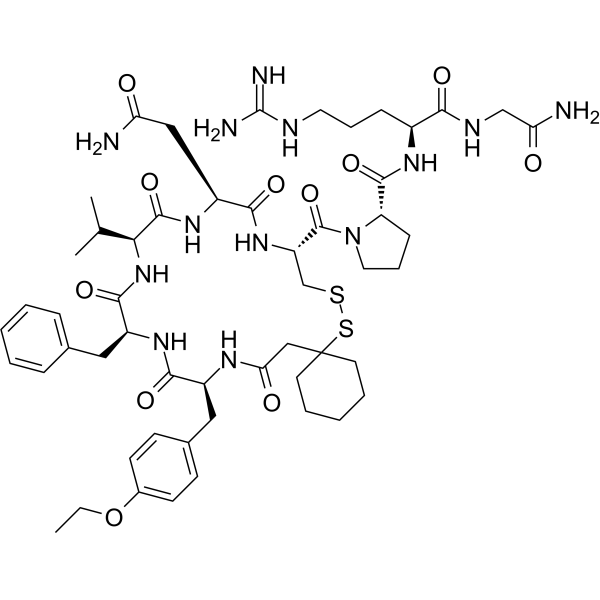
Cat. No.: HY-P3066
CAS No.: 77453-01-1
Synonyms: d(CH2)5Tyr(Et)VAVP
Target:  

Vasopressin Receptor

Research Areas:  

Metabolic Disease

SKF 100398 (d(CH2)5Tyr(Et)VAVP), an arginine vasopressin (AVP) analogue, is a specific antagonist of the antidiuretic effect of exogenous and endogenous AVP .
loading...
    loading...
Cat. No.: HY-P10828
CAS No.: 1260620-30-1
Target:  

Virus Protease

Research Areas:  

Infection Inflammation/Immunology

MAPI is a polypeptide irreversible 3C cysteine protease (SV3CP) inhibitor. MAPI inhibits SV3CP by covalently binding its C-terminal Michael-acceptor extension to the active site thiol of SV3CP Cys 139. MAPI is promising for research of noroviruses infection .
loading...
    loading...
Cat. No.: HY-P10378
Target:  

GnRH Receptor

Research Areas:  

Metabolic Disease

GPR10 agonist 1 (compound 18-S4) is a potent GPR10 agonist with EC50 values of 80, 7.8 nM in the presence (10%) or absence (0%) of FBS, respectively. GPR10 agonist 1 has the potential for the research of chronic obesity .
loading...
    loading...
Cat. No.: HY-D2846
m-PEG-PEI800-Cy5 is a fluorescent dye composed of CY5 (HY-D0821), methoxypolyethylene glycol (mPEG), and polyethyleneimine (PEI). m-PEG-PEI8800-Cy5 is used for gene delivery, nanodrug delivery, cell imaging and biosensing and bioanalysis (Ex/Em = 633/670 nm).
loading...
    loading...
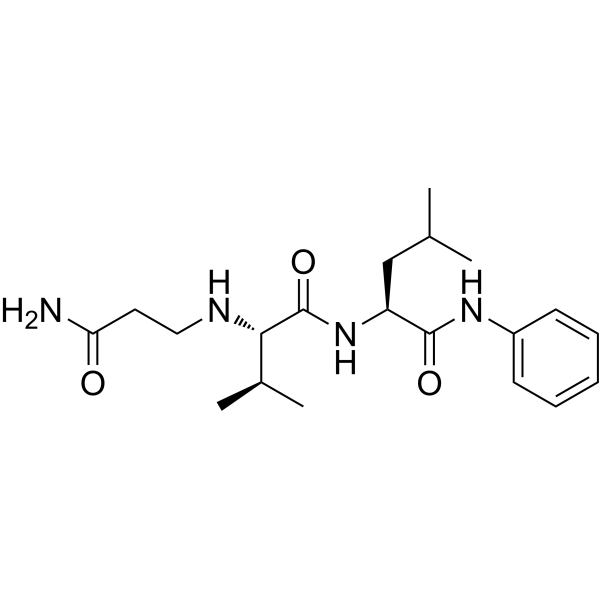
Cat. No.: HY-P4756
CAS No.: 282725-67-1
Target:  

Peptides

Research Areas:  

Others

N-(2-Carbamoyl-ethyl)-Val-Leu-anilide is a polypeptide that can be found by peptide screening. Peptide screening is a research tool that pools active peptides primarily by immunoassay. Peptide screening can be used for protein interaction, functional analysis, epitope screening, especially in the field of agent research and development .
loading...
    loading...
Cat. No.: HY-D2846A
m-PEG2000-PEI2000-Cy5 is a fluorescent dye composed of CY5 (HY-D0821), methoxypolyethylene glycol (mPEG), and polyethyleneimine (PEI). m-PEG2000-PEI2000-Cy5 is used for gene delivery, nanodrug delivery, cell imaging and biosensing and bioanalysis (Ex/Em=633/670 nm).
loading...
    loading...
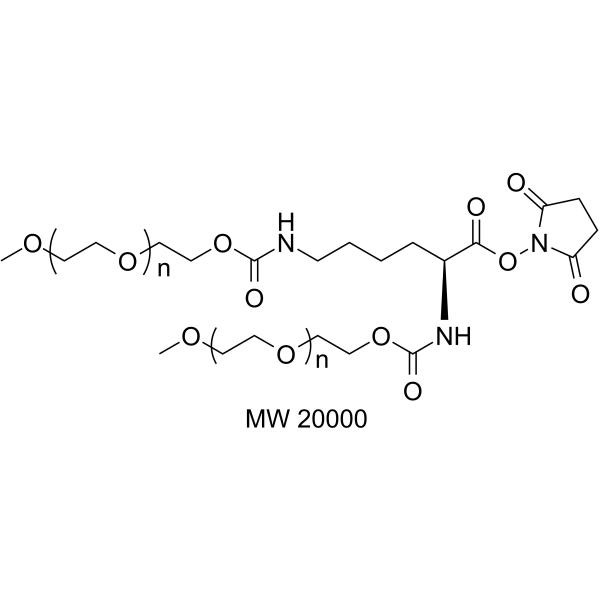
Cat. No.: HY-140680
Research Areas:  

Cancer

m-PEG20000-Lys-NHS ester is a pegylation reagent that targets the primary amino groups of branched polyethyleneimine on gold nanoparticles. m-PEG1000-NHS ester covalently links its PEG moiety to target amino groups via amine-mediated coupling chemistry. m-PEG1000-NHS ester helps improve the biocompatibility of modified gold nanoparticles used as CT contrast agents and prolongs their blood circulation time.
loading...
    loading...
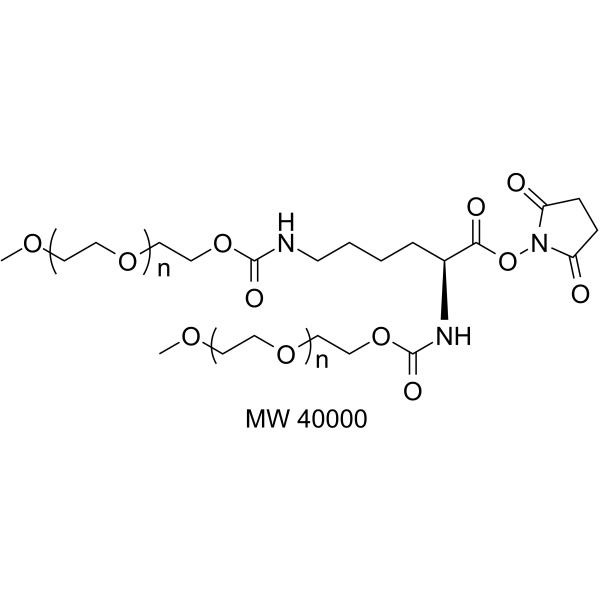
Cat. No.: HY-140681
Research Areas:  

Cancer

m-PEG40000-Lys-NHS ester is a pegylation reagent that targets the primary amino groups of branched polyethyleneimine on gold nanoparticles. m-PEG1000-NHS ester covalently links its PEG moiety to target amino groups via amine-mediated coupling chemistry. m-PEG1000-NHS ester helps improve the biocompatibility of modified gold nanoparticles used as CT contrast agents and prolongs their blood circulation time.
loading...
    loading...
Cat. No.: HY-184625
Polyethyleneimine (PEI)-modified magnetic iron(III) oxide (Fe3O4) nanoparticles are a composite nanomaterial that combines the properties of magnetic nanoparticles and polyethyleneimine. Polyethyleneimine is a highly branched polymer with a high density of amino groups. These amino groups stabilize the Fe3O4 nanoparticles and provide sites for further functionalization. The amino groups of PEI impart a high surface positive charge to the Fe3O4 nanoparticles, which helps enhance their interaction with negatively charged cell membranes.
loading...
    loading...
Cat. No.: HY-184606
PEI stabilized gold nanoclusters (PEI-Au NCs) are nanomaterials combining gold nanoclusters and polyethyleneimine. They consist of a few to dozens of gold atoms forming the core of the gold nanoclusters, while polyethyleneimine (PEI), a positively charged hyperbranched polyamine, is selected as the end-capping agent, encapsulating the surface of the gold nanoclusters. PEI-Au NCs have gained widespread application due to their high luminescence properties and stability over a wide pH range. Furthermore, their good biocompatibility and ease of surface modification or functionalization make them attractive for many biomedical applications.
loading...
    loading...
Cat. No.: HY-D2846B
m-PEG5000-PEI5000-Cy5 is a fluorescent dye composed of CY5 (HY-D0821), methoxypolyethylene glycol (mPEG), and polyethyleneimine (PEI). m-PEG5000-PEI5000-Cy5 is used for gene delivery, nanodrug delivery, cell imaging and biosensing and bioanalysis (Ex/Em=633/670 nm).
loading...
    loading...
Cat. No.: HY-W007656R
CAS No.: 294-90-6
Cyclen (Standard) is the analytical standard substance of Cyclen. This product is used for research and analytical applications. Cyclen is a macrocyclic tetrathiolate chelating agent. Cyclen is a nitrogen-containing analogue of crown ethers and can be used as a precursor for MRI contrast agents, as well as an intermediate for preparing highly efficient macrocyclic chelates. As a structural regulator, Cyclen can be prepared into polyamide nanofiltration membranes with efficient Li +/Mg 2+ separation performance through the interfacial polymerization of polyethyleneimine (PEI) and meta-benzotriazole chloride (TMC). Cyclen has a unique cavity structure and exhibits selective coordination properties for Li + ions .
loading...
    loading...
Cat. No.: HY-184626
Thiol-modified magnetite nanoparticles are prepared via high-temperature pyrolysis and surface-modified with thiol functional groups. Magnetite is widely used in magnetic resonance imaging, magnetic separation, targeted drug delivery, tumor hyperthermia, cell labeling and separation, as a contrast agent, and in retinal detachment repair surgery due to its stable properties, good biocompatibility, high strength, and lack of toxicity. It is also used as a catalyst carrier, microwave absorbing material, and magnetic recording material. Xianfeng has developed numerous derivatives of magnetite, including oleic acid-modified magnetite, magnetite with different PEG ends, DMSA-modified magnetite, polylysine-modified magnetite, carboxylated dextran-modified magnetite nanoparticles, streptavidin-modified magnetite particles, thiol-modified magnetite magnetic nanoparticles, and polyethyleneimine (PEI)-modified magnetic magnetite nanoparticles, among others.
loading...
    loading...
Cat. No.: HY-184620
Ferric oxide (Fe3O4) is widely used in magnetic resonance imaging (MRI), magnetic separation, targeted drug delivery, tumor hyperthermia, cell labeling and separation, and as a contrast agent and enhancement agent in retinal detachment repair surgery due to its stable material properties, good biocompatibility, high strength, and lack of toxic side effects. It is also used as a catalyst carrier, microwave absorbing material, and magnetic recording material. Xianfeng has developed numerous derivatives of ferric oxide, including oleic acid-modified ferric oxide, PEG-terminated ferric oxide, DMSA-modified ferric oxide, polylysine-modified ferric oxide, carboxylated dextran-modified ferric oxide nanoparticles, streptavidin-modified ferric oxide particles, thiol-modified ferric oxide magnetic nanoparticles, and polyethyleneimine (PEI)-modified magnetic ferric oxide nanoparticles, among others. This wide range of modifications provides numerous options for subsequent experiments.
loading...
    loading...
  • 1

