16 Results for "

pressor agent

" in MedChemExpress (MCE) Product Catalog:
Products (16)

16 Results for "pressor agent" in MCE Product Catalog:

8
8 Publications Verification
Cat. No.: HY-17417
CAS No.: 357-08-4
Target:  

Opioid Receptor

Research Areas:  

Neurological Disease

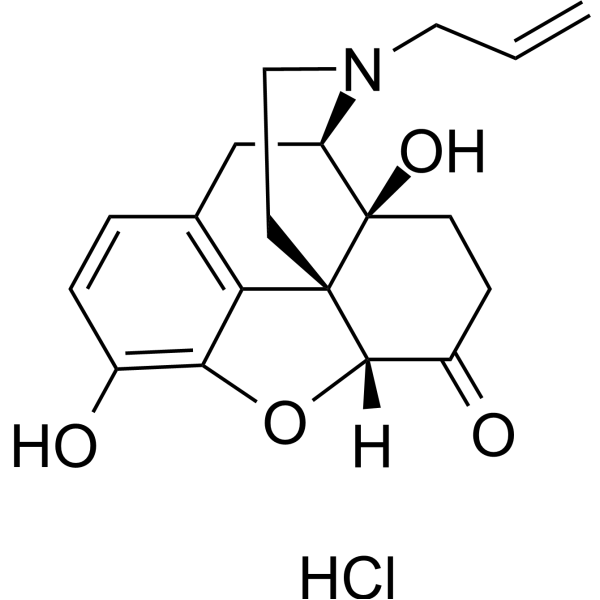
Naloxone hydrochloride is an orally active opioid receptor antagonist. Naloxone hydrochloride attenuates spinal cord stimulation‑associated anti‑hyperalgesic effects, antagonizes physiologic effects of endogenous opioid peptides linked to central nervous system injury sequelae, functions as a pressor agent to induce modest elevations in mean arterial blood pressure, exerts neuroprotective effects to improve post‑traumatic neurologic motor function, blocks opioid receptor‑mediated amnesic pathways, enhances memory consolidation, reverses Adrenocorticotropic hormone (ACTH) (HY-106373)- and epinephrine‑induced amnesia, and potentiates the memory‑facilitatory effects of ACTH and epinephrine .
loading...
    loading...
8
8 Publications Verification
Cat. No.: HY-17417A
CAS No.: 465-65-6
Target:  

Opioid Receptor

Research Areas:  

Neurological Disease

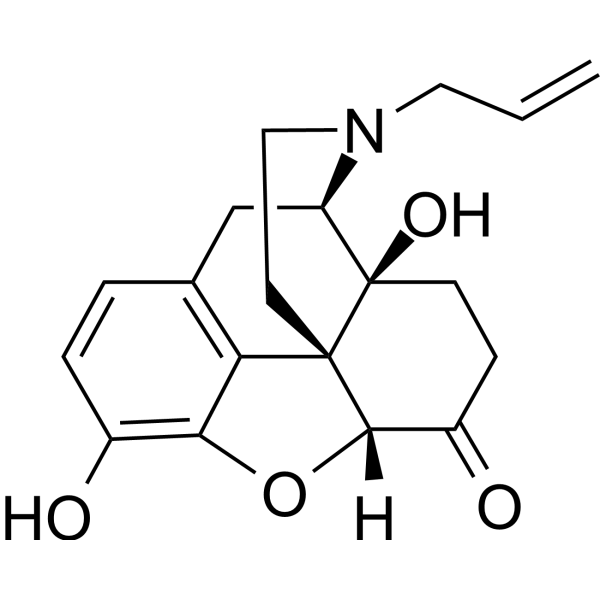
Naloxone hydrochloride is an orally active opioid receptor antagonist. Naloxone hydrochloride attenuates spinal cord stimulation‑associated anti‑hyperalgesic effects, antagonizes physiologic effects of endogenous opioid peptides linked to central nervous system injury sequelae, functions as a pressor agent to induce modest elevations in mean arterial blood pressure, exerts neuroprotective effects to improve post‑traumatic neurologic motor function, blocks opioid receptor‑mediated amnesic pathways, enhances memory consolidation, reverses Adrenocorticotropic hormone (ACTH) (HY-106373)‑ and epinephrine‑induced amnesia, and potentiates the memory‑facilitatory effects of ACTH and epinephrine .
loading...
    loading...
1
1 Cited Publications
Cat. No.: HY-108652
CAS No.: 1343364-54-4
Purity:  99.75%
Target:  

P2X Receptor

Research Areas:  

Inflammation/Immunology

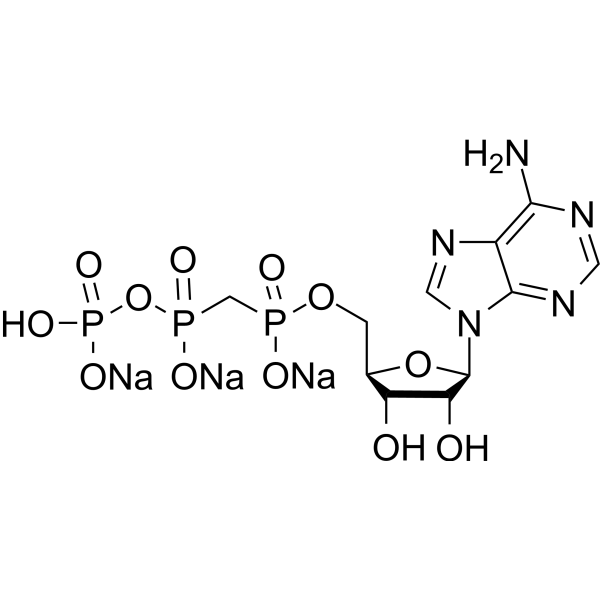
α,β-Methylene-ATP trisodium is an agonist of P2X1 and P2X3 receptors and can cross the blood-brain barrier. α,β-Methylene-ATP trisodium can trigger a reflex pressor response by activating P2X receptors in peripheral muscles and the central locus coeruleus (LC); this effect can be blocked by the P2X antagonist PPADS (HY-108960). α,β-Methylene-ATP trisodium also activates noradrenergic neurons in the central locus coeruleus, mediating antinociceptive effects; this effect can be attenuated by the locus coeruleus damaging agent DSP-4 (HY-103210/HY-121602). α,β-Methylene-ATP trisodium can be used to study the pathological mechanisms of neuropathic pain, cardiovascular reflex regulation, and antinociceptive effects of the central nervous system .
loading...
    loading...
Cat. No.: HY-134440A
CAS No.: 7292-42-4
Target:  

P2X Receptor

Research Areas:  

Inflammation/Immunology

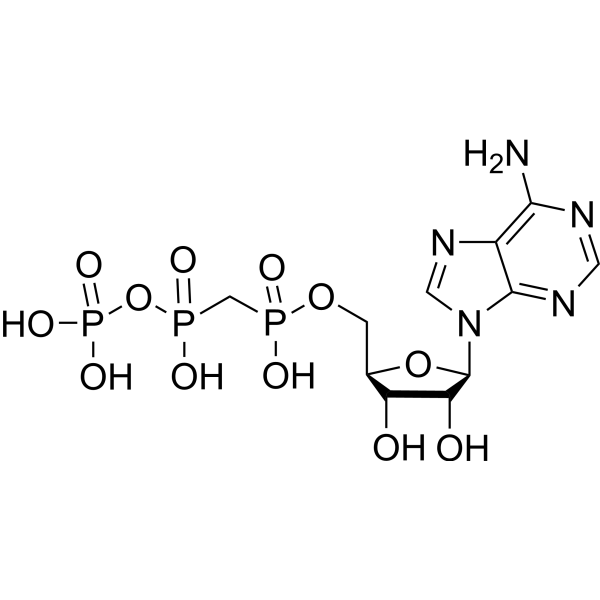
α,β-Methylene-ATP is an agonist of P2X1 and P2X3 receptors and can cross the blood-brain barrier. α,β-Methylene-ATP can trigger a reflex pressor response by activating P2X receptors in peripheral muscles and the central locus coeruleus (LC); this effect can be blocked by the P2X antagonist PPADS (HY-108960). α,β-Methylene-ATP also activates noradrenergic neurons in the central locus coeruleus, mediating antinociceptive effects; this effect can be attenuated by the locus coeruleus damaging agent DSP-4 (HY-103210/HY-121602). α,β-Methylene-ATP can be used to study the pathological mechanisms of neuropathic pain, cardiovascular reflex regulation, and antinociceptive effects of the central nervous system .
loading...
    loading...
Cat. No.: HY-W685943
CAS No.: 372-66-7
Heptaminol is a fatty amine with pressor properties and a potential antihypotension agent. Heptaminol is also a competitive inhibitor of norepinephrine uptake and an inhibitor of nicotine-induced catecholamine release (IC50: 650 μM). Heptaminol does not inhibit norepinephrine release induced by 59 mM K + but rather inhibits high-affinity Na +-dependent norepinephrine uptake .
loading...
    loading...
Cat. No.: HY-17417R
CAS No.: 357-08-4
Research Areas:  

Neurological Disease

Naloxone (hydrochloride) (Standard) is the analytical standard of Naloxone (hydrochloride) (HY-17417). This product is intended for research and analytical applications. Naloxone hydrochloride is an orally active opioid receptor antagonist. Naloxone hydrochloride attenuates spinal cord stimulation‑associated anti‑hyperalgesic effects, antagonizes physiologic effects of endogenous opioid peptides linked to central nervous system injury sequelae, functions as a pressor agent to induce modest elevations in mean arterial blood pressure, exerts neuroprotective effects to improve post‑traumatic neurologic motor function, blocks opioid receptor‑mediated amnesic pathways, enhances memory consolidation, reverses Adrenocorticotropic hormone (ACTH) (HY-106373)‑ and epinephrine‑induced amnesia, and potentiates the memory‑facilitatory effects of ACTH and epinephrine .
loading...
    loading...
Cat. No.: HY-135004
CAS No.: 3194-36-3
Target:  

Adrenergic Receptor

Research Areas:  

Endocrinology

Su-4029 is an agent that interacts with alpha receptors. It negates the blockade of norepinephrine by the reversible adrenergic blocker phentolamine but not by the irreversible blocker Dibenamine, suggesting Su-4029 acts at the same site as these blockers. Su-4029 pretreatment results in three categories of responses to pressor phenylalkylamines: irreversible blockade of amines with no or only p-hydroxylation, reversible blockade of amines with beta-carbon hydroxylation, and no blockade or augmentation of amines with m and p-hydroxylation or m or p plus beta-hydroxylation. Su-4029 may deform the alpha receptor site affected by adrenergic blocking agents .
loading...
    loading...
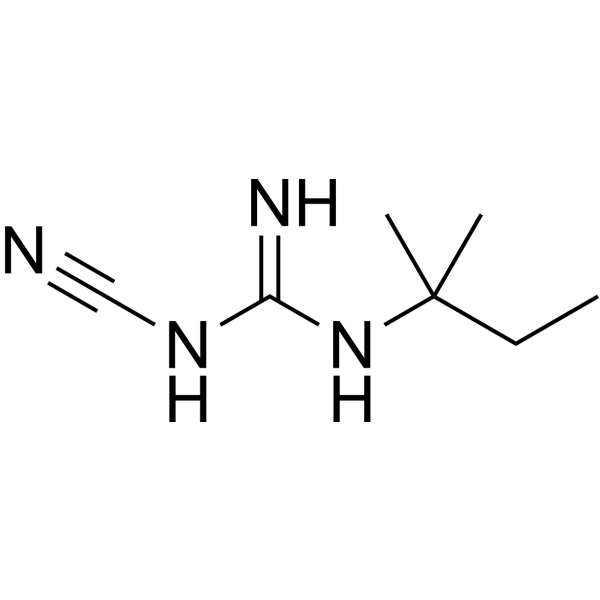
Cat. No.: HY-101554
CAS No.: 1113-10-6
Purity:  ≥98.0%
Synonyms: Guancidine
Target:  

Adrenergic Receptor

Research Areas:  

Cardiovascular Disease

Guancydine (Guancidine) is an orally active antihypertensive agent and vasodilator. Guancydine antagonizes the pressor effects of Angiotensin and Norepinephrine (HY-13715). Guancydine induces vasodilation in renal, mesenteric and cranial vascular beds, reduces peripheral resistance, increases cardiac output and lowers arterial blood pressure. Guancydine increases renal and forearm blood flow, reduces renal and forearm vascular resistance, alters cardiac systolic time, and reverses myocardial hypertrophy in hypertensive rats. Guancydine is applicable for research related to hypertension .
loading...
    loading...
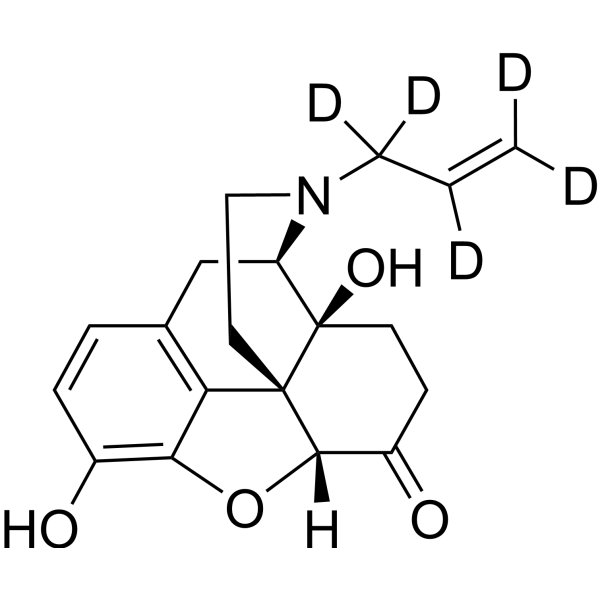
Cat. No.: HY-17417AS
CAS No.: 1261079-38-2
Naloxone-d5 is the deuterated-labeled Naloxone (HY-17417A). Naloxone is an orally active opioid receptor antagonist. Naloxone attenuates spinal cord stimulation‑associated anti‑hyperalgesic effects, antagonizes physiologic effects of endogenous opioid peptides linked to central nervous system injury sequelae, functions as a pressor agent to induce modest elevations in mean arterial blood pressure, exerts neuroprotective effects to improve post‑traumatic neurologic motor function, blocks opioid receptor‑mediated amnesic pathways, enhances memory consolidation, reverses Adrenocorticotropic hormone (ACTH) (HY-106373)‑ and epinephrine‑induced amnesia, and potentiates the memory‑facilitatory effects of ACTH and epinephrine .
loading...
    loading...
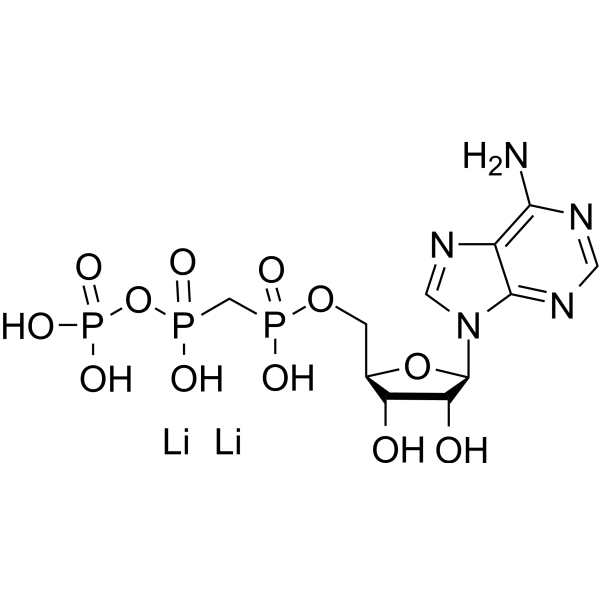
Cat. No.: HY-134440
CAS No.: 104809-20-3
Target:  

P2X Receptor

Research Areas:  

Inflammation/Immunology

α,β-Methylene-ATP dilithium is an agonist of P2X1 and P2X3 receptors and can cross the blood-brain barrier. α,β-Methylene-ATP dilithium can trigger a reflex pressor response by activating P2X receptors in peripheral muscles and the central locus coeruleus (LC); this effect can be blocked by the P2X antagonist PPADS (HY-108960). α,β-Methylene-ATP dilithium also activates noradrenergic neurons in the central locus coeruleus, mediating antinociceptive effects; this effect can be attenuated by the locus coeruleus damaging agent DSP-4 (HY-103210/HY-121602). α,β-Methylene-ATP dilithium can be used to study the pathological mechanisms of neuropathic pain, cardiovascular reflex regulation, and antinociceptive effects of the central nervous system .
loading...
    loading...
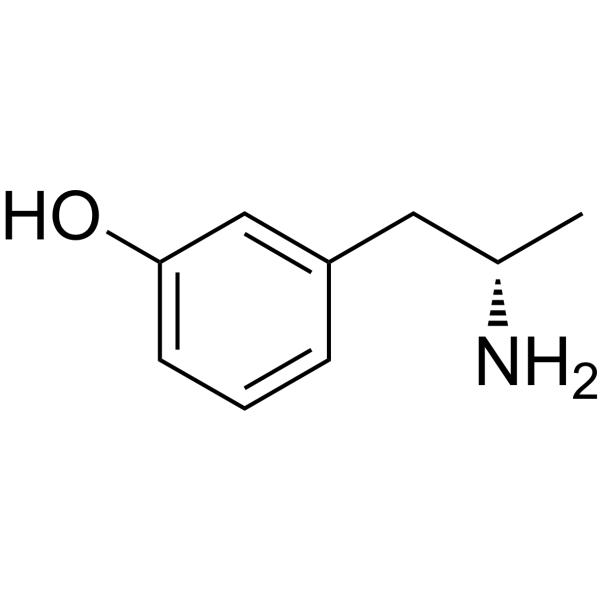
Cat. No.: HY-107354
CAS No.: 18840-47-6
Target:  

Drug Derivative

Research Areas:  

Cardiovascular Disease

Gepefrine is an orally active pressor agent and sympathomimetic agent. Gepefrine improves the early orthostatic disregulation of the arterial pressure .
loading...
    loading...
Cat. No.: HY-139801
CAS No.: 80828-32-6
Synonyms: CI-907
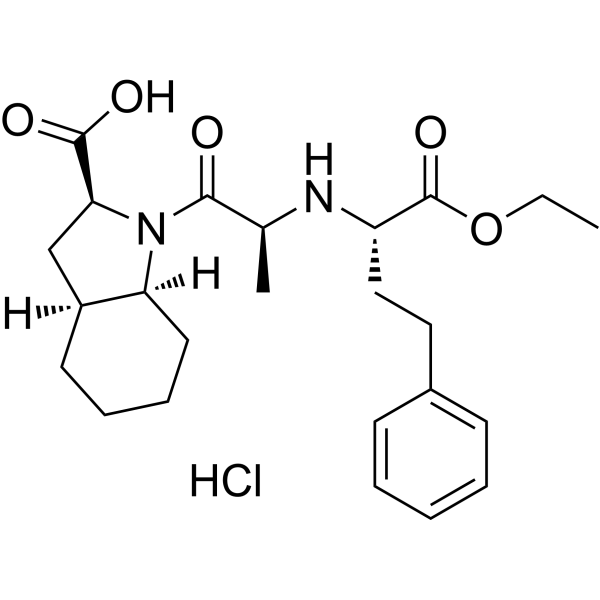
Indolapril hydrochloride (CI-907) is an orally active nonsulfhydryl angiotensin converting enzyme (ACE) inhibitor. Indolapril hydrochloride is highly specific in suppressing the contractile or pressor responses to Angiotensin I. Indolapril hydrochloride is a potent antihypertensive agent .
loading...
    loading...
Cat. No.: HY-121670
CAS No.: 2455-84-7
Target:  

Others

Research Areas:  

Neurological Disease

Ambenoxan is a central nervous system-acting skeletal muscle relaxant that is effective in mice, rats, rabbits, dogs, and monkeys without loss of the righting reflex. It has no peripheral neuromuscular blocking effects and significantly reduces or eliminates decerebrate rigidity in rabbits, but does not antagonize the effects of strychnine, leptazol, or tremorine. Like other central nervous system depressants, ambenoxan prolongs sleep duration with hexobarbitone, but it has no local anesthetic effects. In anesthetized cats, the agent lowers blood pressure and reduces the pressor response to epinephrine, but has no effect on norepinephrine.
loading...
    loading...
Cat. No.: HY-121670A
CAS No.: 1617-99-8
Target:  

Adrenergic Receptor

Research Areas:  

Neurological Disease

Ambenoxan hydrochloride is a central nervous system-acting skeletal muscle relaxant that is effective in mice, rats, rabbits, dogs, and monkeys without loss of the righting reflex. It has no peripheral neuromuscular blocking effects and significantly reduces or eliminates decerebrate rigidity in rabbits, but does not antagonize the effects of strychnine, leptazol, or tremorine. Like other central nervous system depressants, ambenoxan prolongs sleep duration with hexobarbitone, but it has no local anesthetic effects. In anesthetized cats, the agent lowers blood pressure and reduces the pressor response to epinephrine, but has no effect on norepinephrine.
loading...
    loading...
Cat. No.: HY-17417AR
CAS No.: 465-65-6
Naloxone Standard is the analytical standard of Naloxone (HY-17417A). This product is intended for research and analytical applications. Naloxone is an opioid receptor antagonist. Naloxone attenuates spinal cord stimulation‑associated anti‑hyperalgesic effects, antagonizes physiologic effects of endogenous opioid peptides linked to central nervous system injury sequelae, functions as a pressor agent to induce modest elevations in mean arterial blood pressure, exerts neuroprotective effects to improve post‑traumatic neurologic motor function, blocks opioid receptor‑mediated amnesic pathways, enhances memory consolidation, reverses Adrenocorticotropic hormone (ACTH) (HY-106373)‑ and epinephrine‑induced amnesia, and potentiates the memory‑facilitatory effects of ACTH and epinephrine .
loading...
    loading...
Cat. No.: HY-108652R
CAS No.: 1343364-54-4
Research Areas:  

Inflammation/Immunology

α,β-Methylene-ATP trisodium (Standard) is the analytical standard of α,β-Methylene-ATP (trisodium) (HY-108652). This product is intended for research and analytical applications. α,β-Methylene-ATP trisodium is an agonist of P2X1 and P2X3 receptors and can cross the blood-brain barrier. α,β-Methylene-ATP trisodium can trigger a reflex pressor response by activating P2X receptors in peripheral muscles and the central locus coeruleus (LC); this effect can be blocked by the P2X antagonist PPADS (HY-108960). α,β-Methylene-ATP trisodium also activates noradrenergic neurons in the central locus coeruleus, mediating antinociceptive effects; this effect can be attenuated by the locus coeruleus damaging agent DSP-4 (HY-103210/HY-121602). α,β-Methylene-ATP trisodium can be used to study the pathological mechanisms of neuropathic pain, cardiovascular reflex regulation, and antinociceptive effects of the central nervous system .
loading...
    loading...
  • 1

