1. Search Result
Search Result
Results for "

pupil

" in MedChemExpress (MCE) Product Catalog:

16

Inhibitors & Agonists

2

Biochemical Assay Reagents

1

Isotope-Labeled Compounds

Cat. No. Product Name Target Research Areas Chemical Structure
  • HY-B0321
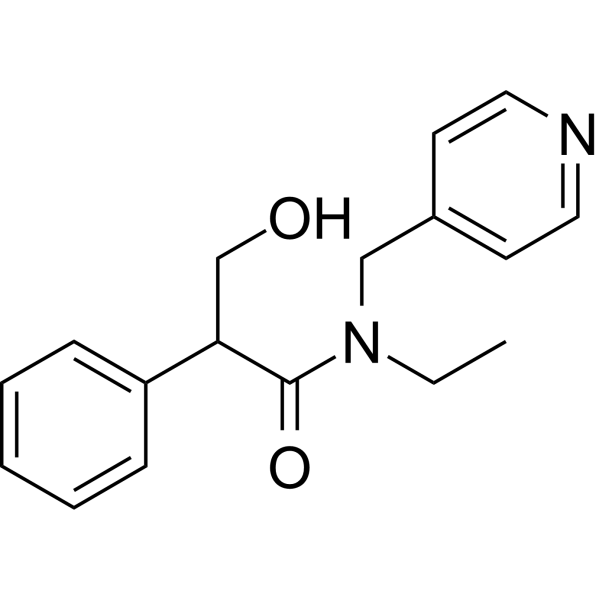
    Tropicamide
    5 Publications Verification

    Ro 1-7683

    mAChR Neurological Disease
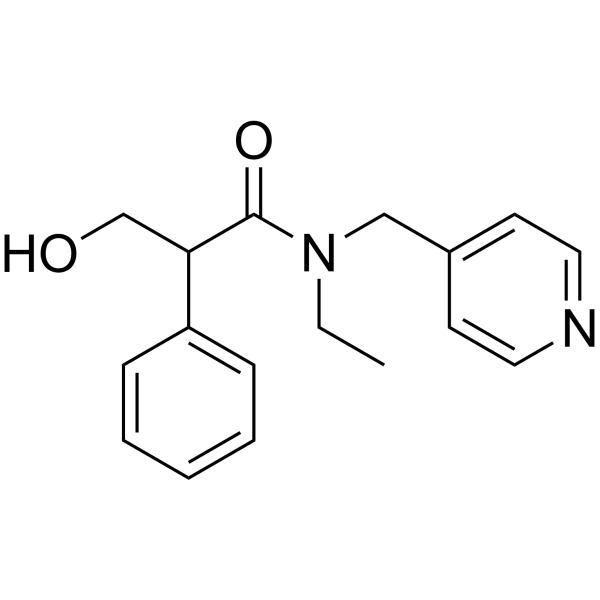
    Tropicamide (Ro 1-7683) is a selective M4 muscarinic acetylcholine receptor antagonist. When used as an eye drop, Tropicamide causes short-term mydriasis (pupil dilation) and cycloplegia. Tropicamide can be used in the research of neurological diseases, such as epilepsy .
    Tropicamide
  • HY-112076

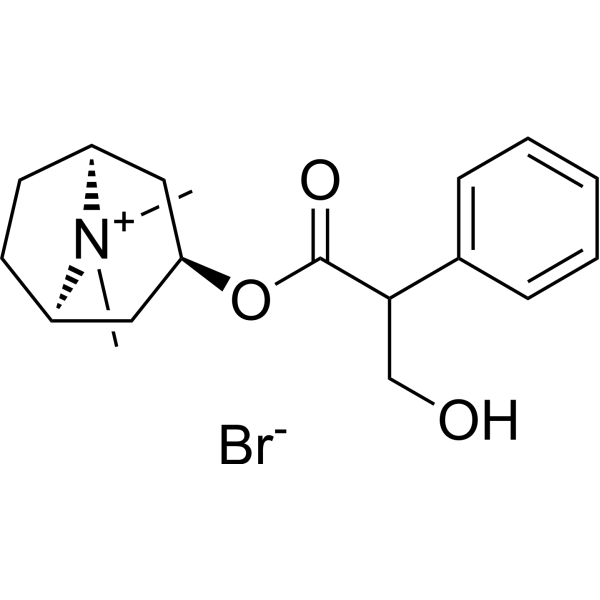
    Methylatropine bromide

    mAChR Neurological Disease
    Atropine methyl bromide, a muscarinic receptor (mAChR) antagonist, is a quaternary ammonium salt of atropine and a mydriatic for dilation of the pupil during ophthalmic examination. It is introduced for relieving pyloric spasm in infants for its highly polar nature. It penetrates less readily into the central nervous system than atropine .
    Atropine methyl bromide
  • HY-112076A

    Methylatropine nitrate; Atropine methyl nitrate

    mAChR Neurological Disease
    Atropine methyl bromide, a muscarinic receptor (mAChR) antagonist, is a quaternary ammonium salt of atropine and a mydriatic for dilation of the pupil during ophthalmic examination. It is introduced for relieving pyloric spasm in infants for its highly polar nature. It penetrates less readily into the central nervous system than atropine .
    Atropine methyl nitrate
  • HY-B0321S

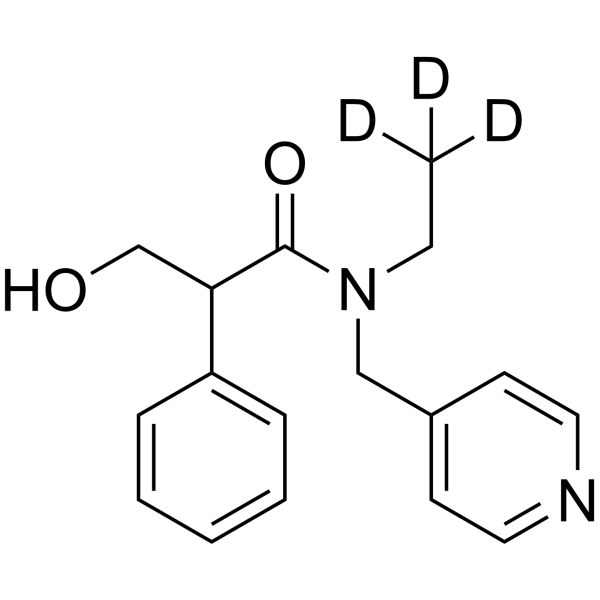
    Ro 1-7683-d3

    mAChR Neurological Disease
    Tropicamide-d3 is the deuterium labeled Tropicamide . Tropicamide (Ro 1-7683) is a selective M4 muscarinic acetylcholine receptor antagonist. Tropicamide produces short acting mydriasis (dilation of the pupil) and cycloplegia when applied as eye drops .
    Tropicamide-d3
  • HY-119468

    Dopamine Transporter Neurological Disease
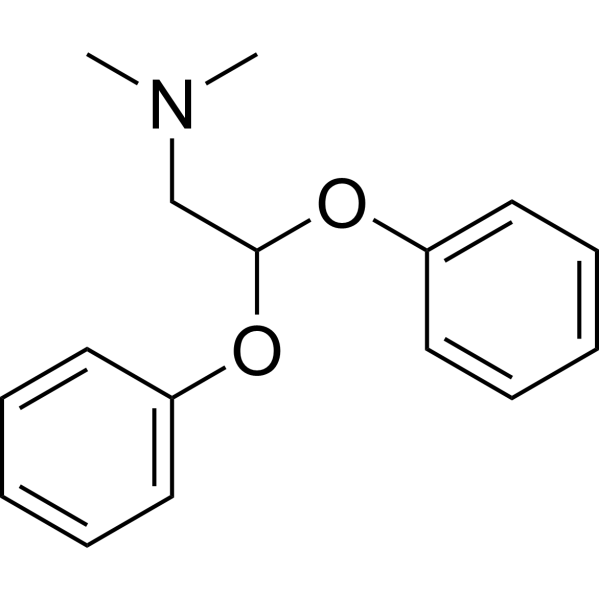
    Medifoxamine is an orally active monoamine reuptake inhibitor and antidepressant. Medifoxamine preferentially inhibits presynaptic dopamine reuptake. Medifoxamine acts as an intraocular pressure-lowering agent to reduce intraocular pressure, and also functions as a miotic agent to decrease pupil diameter. Medifoxamine exhibits characteristic properties of antidepressant compounds, including preventing hypothermia induced by Reserpine (HY-N0480) or Apomorphine (HY-12723), potentiating the toxic effects of Yohimbine (HY-N0127) in mice, and reducing immobility behavior in mice and rats in the "behavioral despair" model. Medifoxamine has no anticholinergic activity. Medifoxamine can be used in research related to depression .
    Medifoxamine
  • HY-116161A

    Prostaglandin Receptor Metabolic Disease
    17-Phenyl trinor PGF2α isopropyl ester is a FP receptor agonist and intraocular pressure-lowering agent. 17-Phenyl trinor PGF2α isopropyl ester induces iris sphincter contraction, reduces intraocular pressure and pupil diameter, causes no ocular irritation, and only leads to mild conjunctival hyperemia. 17-Phenyl trinor PGF2α isopropyl ester is applicable to relevant research on glaucoma .
    17-Phenyl trinor PGF2α isopropyl ester
  • HY-B1098

    4-Hydroxyamphetamine

    Drug Derivative Neurological Disease
    Hydroxyamphetamine (4-Hydroxyamphetamine) is a sympathomimetic agent, stimulates the sympathetic nervous system. Hydroxyamphetamine can be used in eye drops to dilate the pupil .
    Hydroxyamphetamine
  • HY-B1098A

    4-Hydroxyamphetamine hydrobromide

    Adrenergic Receptor Neurological Disease
    Hydroxyamphetamine (4-Hydroxyamphetamine) hydrobromide is a sympathomimetic agent, stimulates the sympathetic nervous system. Hydroxyamphetamine hydrobromide can be used in eye drops to dilate the pupil .
    Hydroxyamphetamine hydrobromide
  • HY-W354753

    mAChR Others
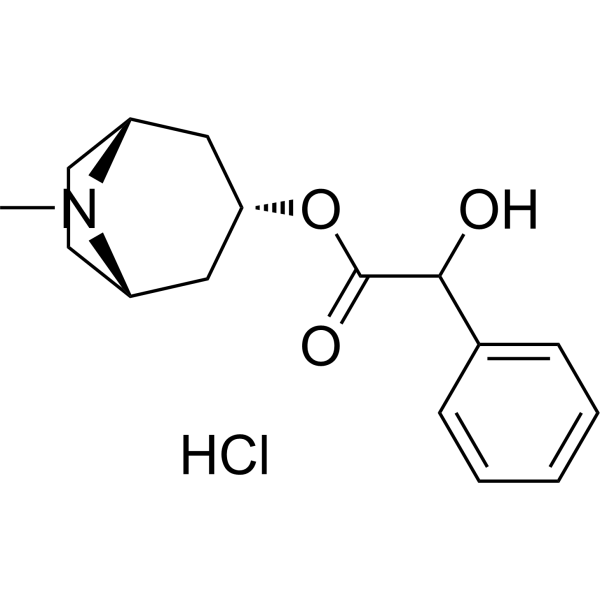
    Homatropine hydrochloride is an orally active anticholinergic agent that rapidly dilates pupils and has cycloplegic effects. Homatropine hydrochloride also has antitussive activity. Homatropine hydrochloride can be used in research on eye diseases and coughs .
    Homatropine hydrochloride
  • HY-B0535R

    Reference Standards Bacterial Antibiotic Infection
    Homatropine (hydrochloride) (Standard) is the analytical standard of Homatropine (hydrochloride). This product is intended for research and analytical applications. Homatropine hydrochloride is an orally active anticholinergic agent that rapidly dilates pupils and has cycloplegic effects. Homatropine hydrochloride also has antitussive activity. Homatropine hydrochloride can be used in research on eye diseases and coughs .
    Ethambutol (Standard)
  • HY-W354753R

    mAChR Reference Standards Others
    Homatropine (hydrochloride) (Standard) is the analytical standard of Homatropine (hydrochloride). This product is intended for research and analytical applications. Homatropine hydrochloride is an orally active anticholinergic agent that rapidly dilates pupils and has cycloplegic effects. Homatropine hydrochloride also has antitussive activity. Homatropine hydrochloride can be used in research on eye diseases and coughs .
    Homatropine hydrochloride (Standard)
  • HY-B0321R

    Ro 1-7683 (Standard)

    Reference Standards mAChR Neurological Disease
    Tropicamide (Standard) is the analytical standard of Tropicamide. This product is intended for research and analytical applications. Tropicamide (Ro 1-7683) is a selective M4 muscarinic acetylcholine receptor antagonist. Tropicamide produces short acting mydriasis (dilation of the pupil) and cycloplegia when applied as eye drops .
    Tropicamide (Standard)
  • HY-100571

    Prostaglandin Receptor Endocrinology
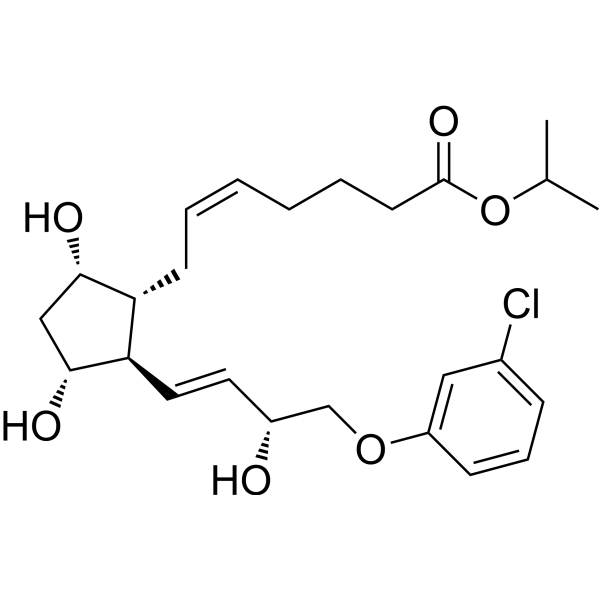
    Cloprostenol isopropyl ester, a prostaglandin F2α analogs, is the intermediate of (+)-Cloprostenol (HY-107381). Cloprostenol isopropyl ester is a FP receptor agonist with a Ki value of 28 nM .
    Cloprostenol isopropyl ester
  • HY-112076R

    Methylatropine bromide (Standard)

    Reference Standards mAChR Neurological Disease
    Atropine methyl (bromide) (Standard) is the analytical standard of Atropine methyl (bromide). This product is intended for research and analytical applications. Atropine methyl bromide, a muscarinic receptor (mAChR) antagonist, is a quaternary ammonium salt of atropine and a mydriatic for dilation of the pupil during ophthalmic examination. It is introduced for relieving pyloric spasm in infants for its highly polar nature. It penetrates less readily into the central nervous system than atropine .
    Atropine methyl bromide (Standard)
  • HY-113778

    15-keto-17-phenyl trinor PGF2α

    Prostaglandin Receptor Endocrinology
    15-keto-17-phenyl trinor Prostaglandin F2α (15-keto-17-phenyl trinor PGF2α) is an F-series prostaglandin (PG) analog. The potential metabolite of 15-keto-17-phenyl trinor Prostaglandin F2α in animals is 15-keto PG. 15-keto PG can slightly reduce the intraocular pressure (1 mm Hg) in normal cynomolgus monkeys when administered at a dose of 1 μg/eye. 15-keto-17-phenyl trinor Prostaglandin F2α is a miotic agent in cats, reducing the pupil diameter by 8 mm at a dose of 5 μg/eye.
    15-keto-17-phenyl trinor Prostaglandin F2α
  • HY-B1098B

    4-Hydroxyamphetamine hydrochloride

    Drug Derivative Neurological Disease
    Hydroxyamphetamine (4-Hydroxyamphetamine) hydrochloride is a sympathomimetic agent, stimulates the sympathetic nervous system. Hydroxyamphetamine hydrochloride can be used in eye drops to dilate the pupil .
    Hydroxyamphetamine hydrochloride

Inquiry Online

Your information is safe with us. * Required Fields.

Salutation


Country or Region *

Applicant Name *


Organization Name *

Department *


Email Address *


Product Name *

Cat. No.


Requested quantity *

Phone Number *


Remarks

Inquiry Online

Inquiry Information

Product Name:
Cat. No.:
Quantity:
MCE Japan Authorized Agent:

