6 Results for "

rat bone tissue

" in MedChemExpress (MCE) Product Catalog:
Products (6)

6 Results for "rat bone tissue" in MCE Product Catalog:

Cat. No.: HY-P5558
CAS No.: 917760-16-8
Target:  

VEGFR

Research Areas:  

Neurological Disease

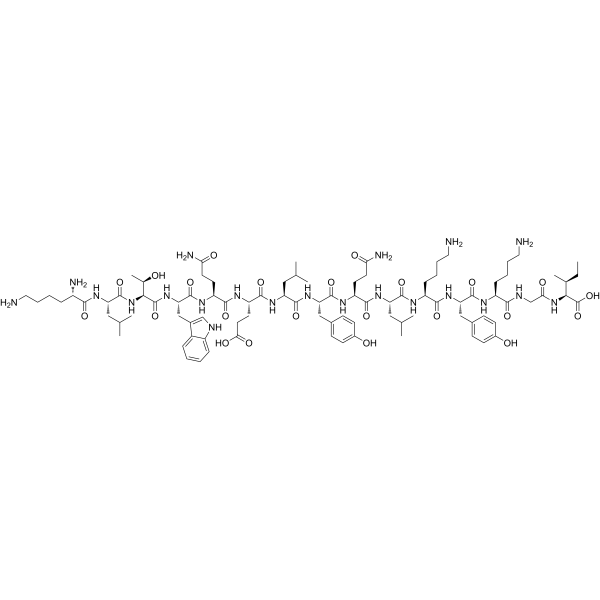
KLTWQELYQLKYKGI is a VEGF mimetic peptide designed based on the VEGF helix sequence 17-25, with the ability to activate VEGF receptors and exert pro-angiogenic biological activity. KLTWQELYQLKYKGI effectively promotes the attachment, spreading and proliferation of human umbilical vein endothelial cells. KLTWQELYQLKYKGI enhances the proliferation, migration and osteogenic differentiation of bone marrow stromal cells (BMSCs). KLTWQELYQLKYKGI synergistically accelerates angiogenesis and bone regeneration in rat cranial defect models. KLTWQELYQLKYKGI can be used for the research of brain tissue engineering and traumatic brain injury repair and biomaterials for bone tissue engineering and bone repair .
loading...
    loading...
Cat. No.: HY-117200
CAS No.: 351062-08-3
Purity:  ≥98.0%
Synonyms: Nec-7
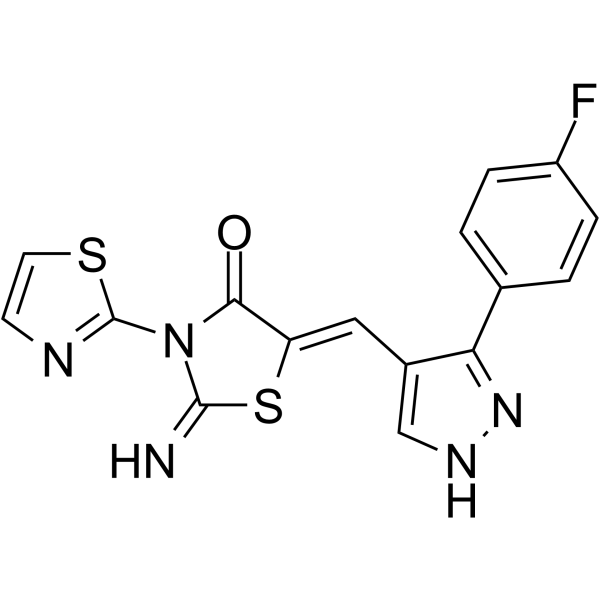
Necrostatin-7 (Nec-7) is a Necroptosis inhibitor with an EC50 of 10.6 μM. Necrostatin-7 inhibits signal transduction from RANK to NFATc1 without affecting the activation of MAPK or NF-κB. Necrostatin-7 suppresses the expression levels of Acp5, Atp6v0d2, Ctsk and Dcstamp. Necrostatin-7 reduces myocardial infarction size, ameliorates adverse left ventricular remodeling, decreases myocardial wall stress, reduces the amount and length of scar tissue, and improves left ventricular function. Necrostatin-7 exerts cardioprotective effects in a rat model of permanent coronary artery occlusion. Necrostatin-7 can be used in research related to osteolytic bone diseases and myocardial infarction .
loading...
    loading...
Cat. No.: HY-158223
Synonyms: CMCSMA
Carboxymethyl chitosan Methacryloyl (CMCSMA) is methacrylated carboxymethyl chitosan with properties as a 3D printing ink. A composite hydrogel made of Carboxymethyl chitosan Methacryloyl can effectively accelerate bone healing in an infectious microenvironment after implantation in a rat model of Staphylococcus aureus-infected femoral defect . Carboxymethyl chitosan Methacryloyl needs to self-assemble into fibrous hydrogel under the action of photoinitiator LAP (HY-44076), and target bioactive adhesion sites, play an inherent supporting role for tissue cells and biodegradable activity.
Application: cell culture, biological 3D printing, tissue engineering, etc.
loading...
    loading...
Cat. No.: HY-12733
CAS No.: 1254318-44-9
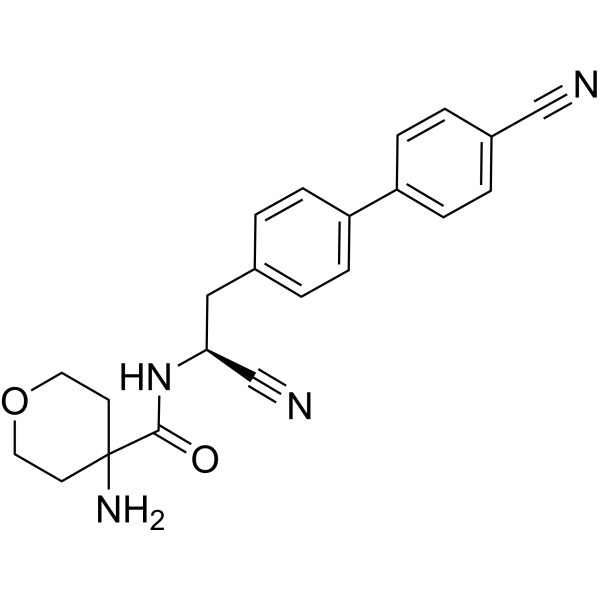
AZD5248 is an orally active, selective dipeptidyl peptidase 1 (cathepsin C) inhibitor, with IC50 values of 1 nM and 17 nM against human CatC, 44 nM against human DPP1, and 67 nM against rat DPP1. It exhibits low clearance and high bioavailability in animal models. AZD5248 forms an irreversible covalent bond with the catalytic Cys234 residue of CatC, exerts reversible inhibition via its nitrile moiety, blocks CatC-dependent amyloid formation, and reduces the activation levels of neutrophil serine proteases in bone marrow and blood. AZD5248 reacts with aortic elastin aldehydes to form stable 4-imidazolinones, induces ultrastructural changes in aortic tissue, and has an α-amino acid-based backbone. AZD5248 reduces the severity of acute pancreatitis in mouse models. AZD5248 can be used in research on chronic obstructive pulmonary disease, acute pancreatitis, neurodegenerative diseases, lysosomal storage disorders, acute lung injury, cystic fibrosis, and neutrophil-mediated inflammatory diseases .
loading...
    loading...
Cat. No.: HY-N7504
CAS No.: 905954-18-9
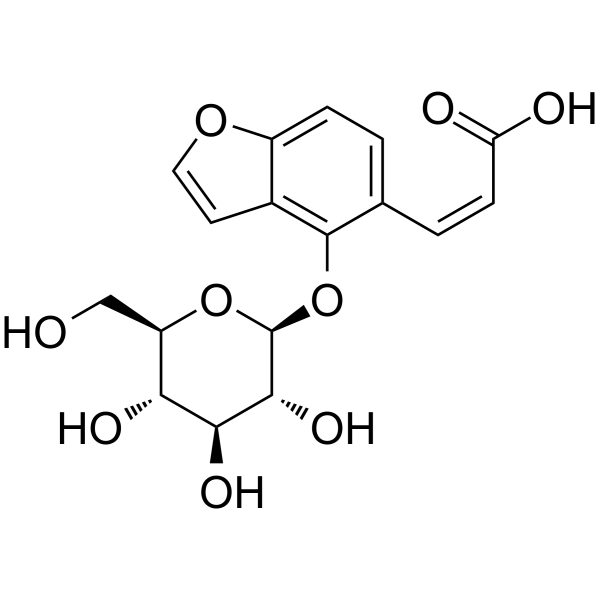
Isopsoralenoside is a benzofuran glycoside and coumarin-derived compound. Isopsoralenoside exists in the dried mature fruits of Psoralea corylifolia L., and acts as a metabolite precursor, toxicant and inducer, with estrogen-like, osteoblast proliferation-promoting, anti-tumor and antibacterial activities. Isopsoralenoside can be deglycosylated by intestinal flora to form isopsoralen. Isopsoralenoside induces oocyte death in zebrafish, activates oxidative stress and cell death-related pathways in zebrafish follicles, and is the main effector substance responsible for the reproductive toxicity induced by Fructus Psoraleae. Isopsoralenoside can be used in studies related to reproductive toxicity (ovarian dysfunction, follicular atresia, impaired fertility) .
loading...
    loading...
Cat. No.: HY-119578
CAS No.: 72963-72-5
Target:  

Cytochrome P450

Research Areas:  

Cancer

Imiprothrin is an inducer that induces CYP1A2 and metallothionein 1a, with significant genotoxicity and cytotoxicity. In rat hepatocytes, Imiprothrin initiates detoxification responses by triggering the overexpression of these two genes. Imiprothrin induces chromosomal aberrations and micronucleus formation in rat bone marrow cells, and causes DNA damage in hepatocytes. Imiprothrin triggers oxidative stress in rats, leading to lipid peroxidation, excessive reactive oxygen species production and redox imbalance, which in turn impairs liver and kidney functions and causes tissue damage. Imiprothrin inhibits weight gain in mice, and even causes high mortality in female mice at high doses. However, it shows no carcinogenicity in rat experiments; among relevant indicators, aspartate aminotransferase and total protein are identified as sensitive toxicity biomarkers .
loading...
    loading...

