4 Results for "

severe burns

" in MedChemExpress (MCE) Product Catalog:
Products (4)

4 Results for "severe burns" in MCE Product Catalog:

1
1 Cited Publications
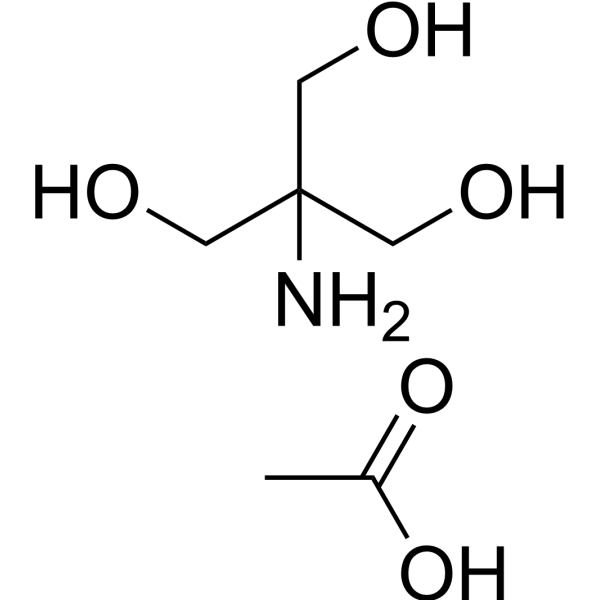
Cat. No.: HY-D0227B
CAS No.: 6850-28-8
Synonyms: Tris acetate; Tris(hydroxymethyl)aminomethane acetate
Research Areas:  

Metabolic Disease

THAM acetate is a low-toxicity amino alcohol buffer, a CO2-consuming proton acceptor that buffers carbon dioxide and acid both in vitro and in vivo. THAM acetate binds protons to form bicarbonate, reduces PaCO2, and induces intracellular alkalization, thereby ameliorating hypercapnia-induced elevation of pulmonary blood vessels and pulmonary arterial pressure. THAM acetate may cause PaCO2 rebound, hypoglycemia, and respiratory depression. THAM acetate removes amniotic epithelium and preserves the basement membrane, but depletes extracellular matrix and reduces the adhesion rate of limbal epithelial cells. THAM acetate can act as a CO2 carrier to enhance the productivity and carbon utilization rate of Scenedesmus obliquus. THAM acetate is a key component of buffer solutions used in various biological, cell culture, biochemical, and molecular biology applications .
loading...
    loading...
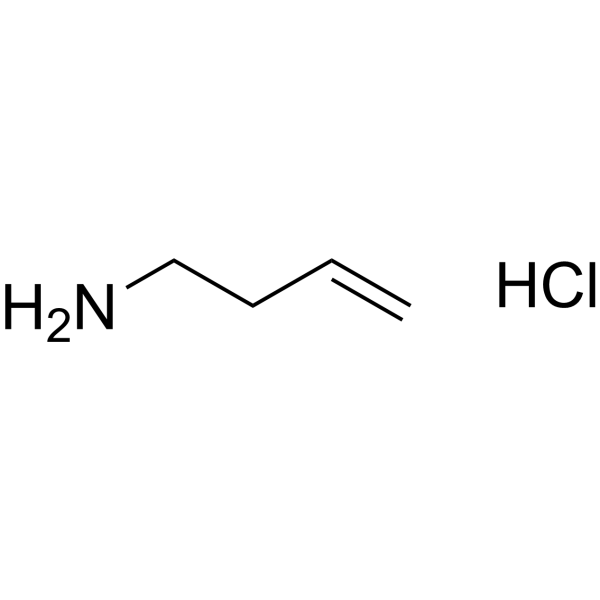
Cat. No.: HY-W019321
CAS No.: 17875-18-2
3-Butenylamine hydrochloride can be used as an intermediate in the production of polymers, adhesives, resins and other chemicals. 3-Butenylamine hydrochloride may cause skin and eye irritation or burns, severe eye damage, and breathing problems .
loading...
    loading...
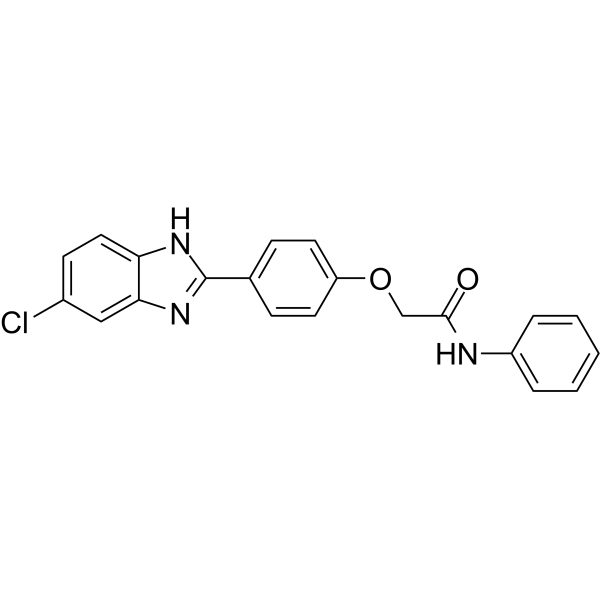
Cat. No.: HY-151164
CAS No.: 3033530-61-6
Target:  

Bacterial

Research Areas:  

Infection

LasR-IN-2 is a LasR inhibitor that forms H-bonding with TRY-56 residue. LasR-IN-2 can be used in the research of bacterial infection, neutropenia, severe burns and chronic lung disease in cystic fibrosis (CF) .
loading...
    loading...
Cat. No.: HY-B0614C
CAS No.: 12001-72-8
Mafenide propionate is a dual inhibitor of dihydropteroate synthase (Dihydropteroate synthase) and carbonic anhydrase (Carbonic anhydrase). Mafenide propionate disrupts nucleotide biosynthesis by inhibiting the de novo base synthesis pathway, thereby exerting broad-spectrum antibacterial and cytotoxic effects without inducing mutations. Mafenide propionate can be used for wound assessment and promotes the formation of healthy granulation tissue, making it suitable for scenarios such as mesh skin grafting. Mafenide propionate has been widely used in studies on diseases associated with burn wound infections, acute and chronic wounds, blast injuries, open fractures, and necrotizing fasciitis .
loading...
    loading...

