Search Result
Results for "
triazole derivative
" in MedChemExpress (MCE) Product Catalog:
| Cat. No. |
Product Name |
Target |
Research Areas |
Chemical Structure |
-
- HY-149618
-
|
|
Fluorescent Dye
|
Others
|
|
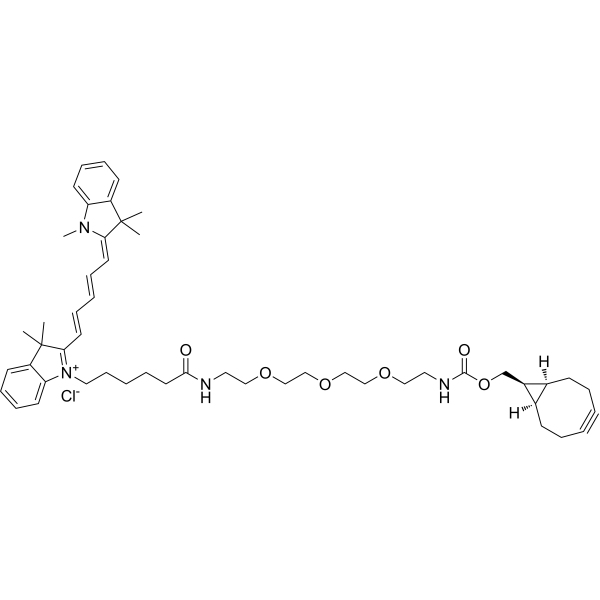
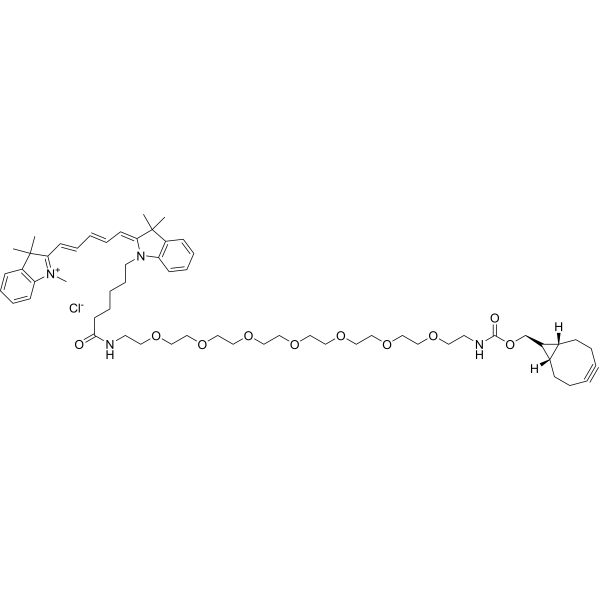
Cy5-PEG3-endo-BCN is a derivative of the Cyanine 5 (Cy5) (HY-D0821) dye bearing 3 PEG units. Cy5-PEG3-endo-BCN contains the lyophilic bidentate macrocyclic ligand endo-BCN, which allows for further synthesis of macrocyclic complexes. In click chemistry, endo-BCN forms stable triazoles with azide-containing molecules under catalyst-free conditions .
|
-
-
- HY-156305
-
|
|
Fluorescent Dye
|
Others
|
|
Coumarin-C2-exoBCN is a dye derivative of Coumarin (HY-N0709). Coumarin-C2-exoBCN contains the lyophilic bidentate macrocyclic ligand exo-BCN, which can further synthesize macrocyclic complexes. In click chemistry, exo-BCN can react with molecules containing azide groups to generate stable triazoles under catalyst-free conditions.
|
-
-
- HY-155327B
-
|
|
Fluorescent Dye
|
Others
|
|
Cy3-PEG2-endo-BCN bromide is the bromide salt form of Cy3-PEG2-endo-BCN (HY-155327). Cy3-PEG2-endo-BCN bromide is a dye derivative of Cyanine 3 (Cy3) (HY-D0822) containing 2 PEG units. Cy3-PEG2-endo-BCN bromide contains the lyophilic bidentate macrocyclic ligand endo-BCN, which can further synthesize macrocyclic complexes. In click chemistry, endo-BCN can react with molecules containing azide groups to form stable triazoles in the absence of catalysts .
|
-
-
- HY-161943
-
|
|
Influenza Virus
|
Neurological Disease
|
|
NEU3-IN-1 (compound 963) is a NEU3 inhibitor (Ki: 0.12 μM; IC50: 0.31 μM) based on the 2-deoxy-2,3-didehydro-N-acetylneuraminic acid (DANA) scaffold and is a C9 biphenylcarbamate derivative. NEU is a human neuraminidase with 4 isozymes; NEU3-IN-1 is an important tool for studying the function of NEU3 isozymes; its amide and triazole linker analogs are selective for NEU1 and NEU4 isozymes, respectively .
|
-
-
- HY-149620
-
|
|
Fluorescent Dye
|
Others
|
|
Cy5-PEG2-exo-BCN is a dye derivative of Cyanine 5 (Cy5) (HY-D0821) containing 2 PEG units. Cy5-PEG2-exo-BCN contains the lyophilic bidentate macrocyclic ligand BCN, which can further synthesize macrocyclic complexes. In click chemistry, BCN reacts with molecules containing azide groups to form stable triazoles in the absence of catalysts.
|
-
-
- HY-155327
-
|
|
Fluorescent Dye
|
Others
|
|
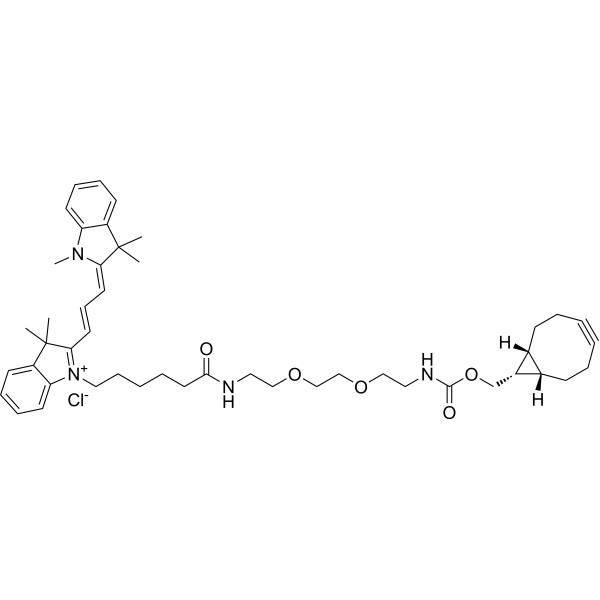
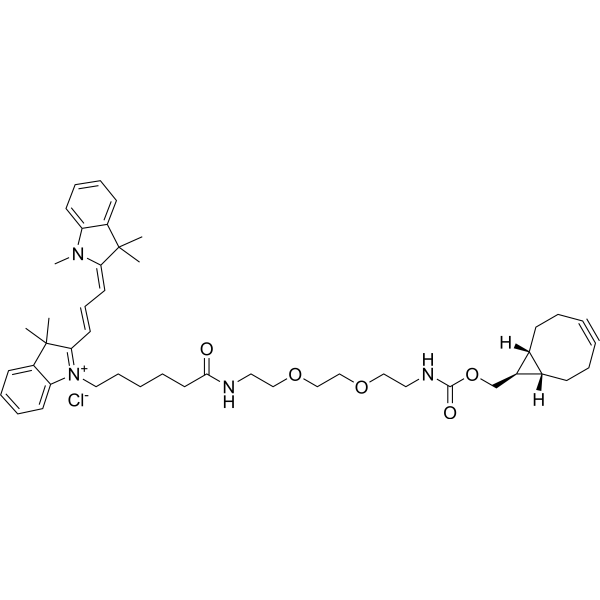
Cy3-PEG2-endo-BCN is a dye derivative of Cyanine 3 (Cy3) (HY-D0822) containing 2 PEG units. Cy3-PEG2-endo-BCN contains the lyophilic bidentate macrocyclic ligand endo-BCN, which can further synthesize macrocyclic complexes. In click chemistry, endo-BCN can react with molecules containing azide groups to form stable triazoles in the absence of catalysts.
|
-
-
- HY-157532
-
-
-
- HY-144426
-
|
|
Influenza Virus
|
Infection
|
|
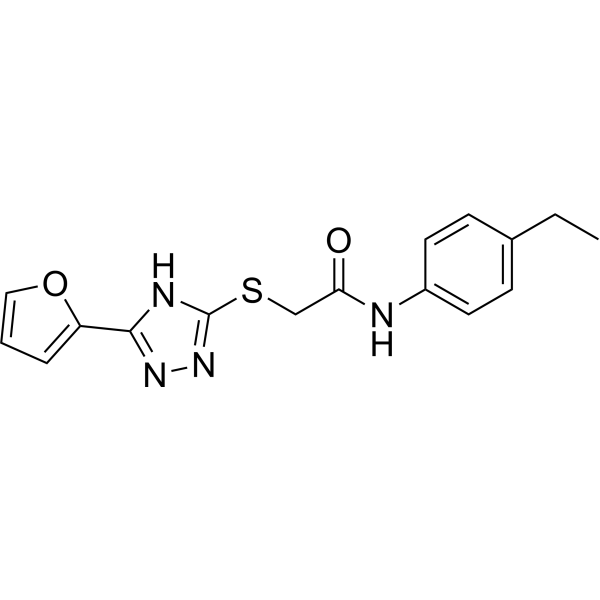
Neuraminidase-IN-6 (Compound 5c) is a potent inhibitor of neuraminidase with an IC50 of 0.11 μM. Neuraminidase-IN-6 is a 1,3,4-triazole-3-acetamide derivative. Neuraminidase (NA) is an ideal target for the development of anti-influenza agents .
|
-
-
- HY-172001
-
|
|
Drug Derivative
|
Cancer
|
|
α-GalCer analog 8 is a triazole derivative of α-Galactosylceramide (HY-102022). α-Galactosylceramide is a synthetic glycolipid with antitumorial and immunostimulatory .
|
-
-
- HY-158968
-
|
|
MDM-2/p53
|
Cancer
|
|
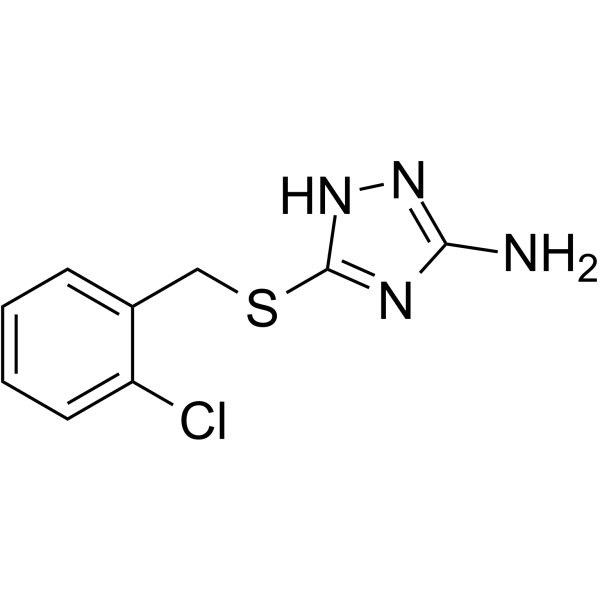
MMs02943764 is a 1,2,4-triazole derivative with anticancer activity. MMs02943764 has significant antiproliferative effects on multiple cancer cell lines. PAC, a structural analog of MMs02943764, has significant cytotoxicity against the leukemia cell line K562 (IC50=35.264 μM), reduces the degradation of p53 by inhibiting Mdm2 and Pirh2, and induces K562 cell cycle arrest .
|
-
-
- HY-W282615
-
|
|
Bacterial
|
Infection
|
|
Antibacterial agent 117, triazole derivative, is an antibacterial agent. Antibacterial agent 117 has against R. prowazekii MetAP1 (RpMetAP1) activity with an IC50 value of 15 μM. Antibacterial agent 117 also inhibits rickettsial growth and can be used for the research of infection .
|
-
-
- HY-W190974
-
|
Perylene, 3-ethynyl-
|
Biochemical Assay Reagents
|
Others
|
|
3-Ethynylperylene (Perylene, 3-ethynyl-) is a polyaromatic hydrocarbon with five fused rings and has a terminal propargyl group. 3-Ethynyl perylene possesses intrinsic fluorescence and pyrene derivatives are known for their ability to intercalate dsDNA. The propargyl group can react with azide-bearing compounds to form stable triazole rings.
|
-
-
- HY-D2204
-
|
|
Phosphatase
SHP1
Fluorescent Dye
|
Cancer
|
|
SHP1-IN-1 (compound 5p) is a fluorescent probe for the protein tyrosine phosphatase SHP1 containing the Src homology 2 domain. SHP1-IN-1 has SHP1 inhibitory activity, selectivity for Fe 3+ ions and good fluorescence properties. SHP1-IN-1 exhibits aggregation post-quenching (ACQ) effect, good interference immunity and low detection limit (5.55 μM) .
|
-
-
- HY-19599
-
|
(+)-Vorozole; R83842
|
Cytochrome P450
|
Cancer
|
|
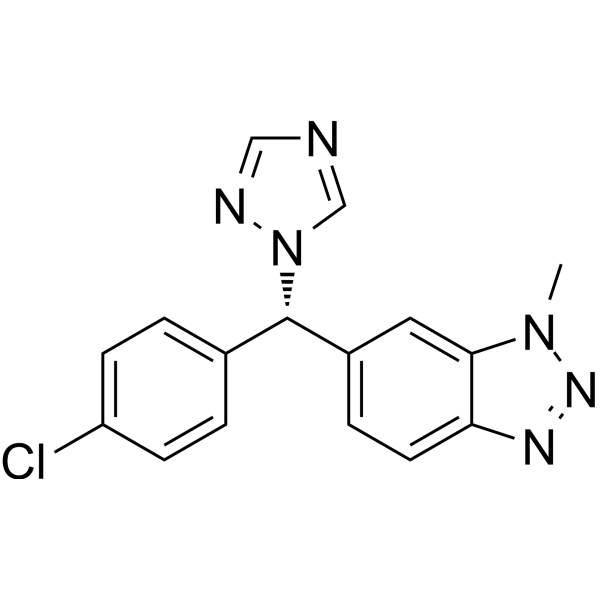
Vorozole is a potent and selective, orally active non-steroidal aromatase inhibitor . Vorozole shows antitumor activity in vivo. Vorozole has the potential for the research of mammary cancer .
|
-
-
- HY-D2120A
-
|
|
Fluorescent Dye
|
Others
|
|
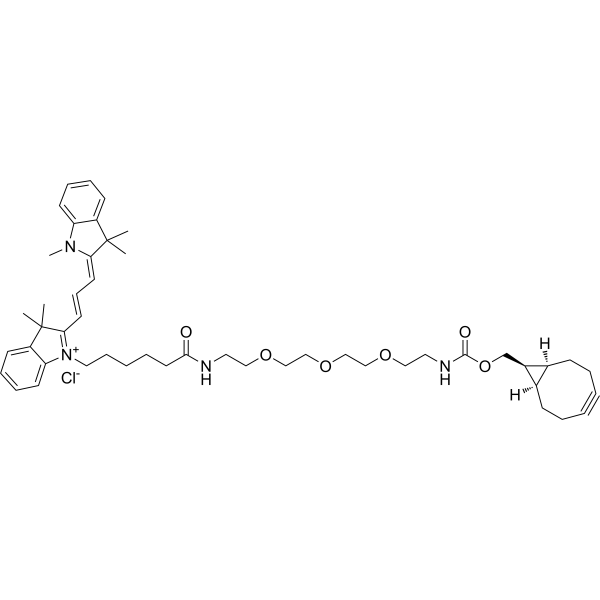
Cy3-PEG3-exo-BCN is a dye derivative of Cyanine 3 (Cy3) (HY-D0822) containing 3 PEG units. Cy3-PEG3-exo-BCN contains the lyophilic bidentate macrocyclic ligand BCN, which can further synthesize macrocyclic complexes. In click chemistry, exo-BCN can react with molecules containing azide groups to form stable triazoles in the absence of catalysts.
|
-
-
- HY-D2149
-
|
|
Fluorescent Dye
|
Others
|
|
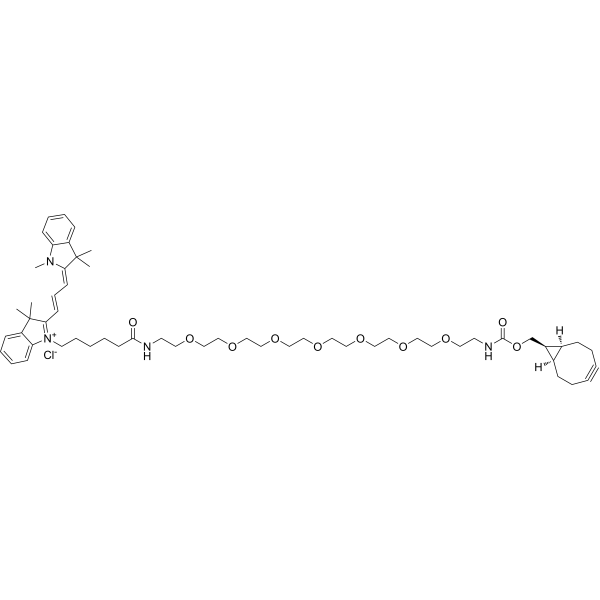
Cy5-PEG7-exo-BCN is a dye derivative of Cyanine 5 (Cy5) (HY-D0821) containing 7 PEG units. Cy5-PEG7-exo-BCN contains the lyophilic bidentate macrocyclic ligand BCN, which can further synthesize macrocyclic complexes. In click chemistry, exo-BCN can react with molecules containing azide groups to form stable triazoles in the absence of catalysts.
|
-
-
- HY-D2121A
-
|
|
Fluorescent Dye
|
Others
|
|
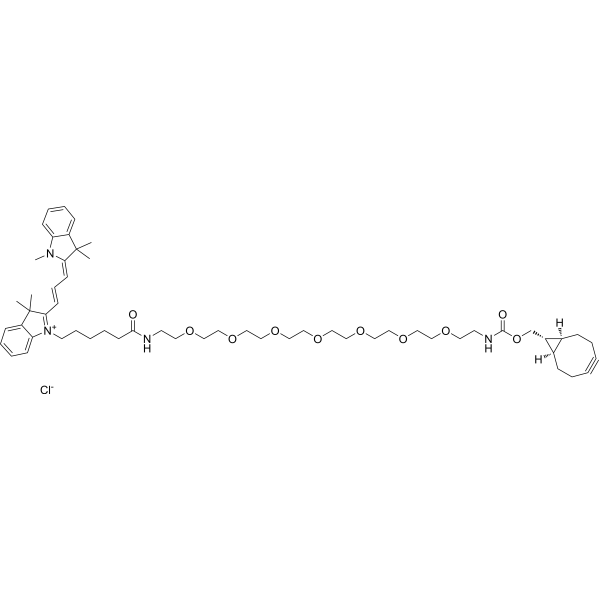
Cy3-PEG7-exo-BCN is a dye derivative of Cyanine 3 (Cy3) (HY-D0822) containing 7 PEG units. Cy3-PEG7-exo-BCN contains the lyophilic bidentate macrocyclic ligand BCN, which can further synthesize macrocyclic complexes. In click chemistry, exo-BCN can react with molecules containing azide groups to form stable triazoles in the absence of catalysts.
|
-
-
- HY-162479
-
|
|
Phosphatase
Amyloid-β
|
Metabolic Disease
|
|
PTP1B-IN-26 (Compound 7a) is a derivative of phenylthiosemicarbazide‐phenoxy‐1,2,3‐triazole‐N‐phenylacetamide. PTP1B-IN-26 is an inhibitor of protein tyrosine phosphatase 1B (PTP-1B). PTP1B-IN-26 is a competitive inhibitor. PTP1B-IN-26 can be used to research in type 2 diabetes .
|
-
-
- HY-D2121
-
|
|
Fluorescent Dye
|
Others
|
|
Cy3-PEG7-endo-BCN is a dye derivative of Cyanine 3 (Cy3) (HY-D0822) containing 7 PEG units. Cy3-PEG7-endo-BCN contains the lyophilic bidentate macrocyclic ligand BCN, which can further synthesize macrocyclic complexes. In click chemistry, endo-BCN can react with molecules containing azide groups to form stable triazoles in the absence of catalysts.
|
-
-
- HY-19377
-
|
|
Fungal
Cytochrome P450
|
Infection
|
|
SS-750 is an orally active Triazole derivative and antifungal agent. SS-750 binds to fungal cytochrome P450. SS-750 shows antifungal activities against Candida species and C. neoformans strains tested. SS750 shows MIC90 values of 0.25, 1, and 2 μg/mL against Candida parapsilosis, C. krusei, and C. glabrata, respectively. SS-750 improves systemic and pulmonary candidiasis caused by C. albicans .
|
-
-
- HY-149619
-
|
|
Fluorescent Dye
|
Others
|
|
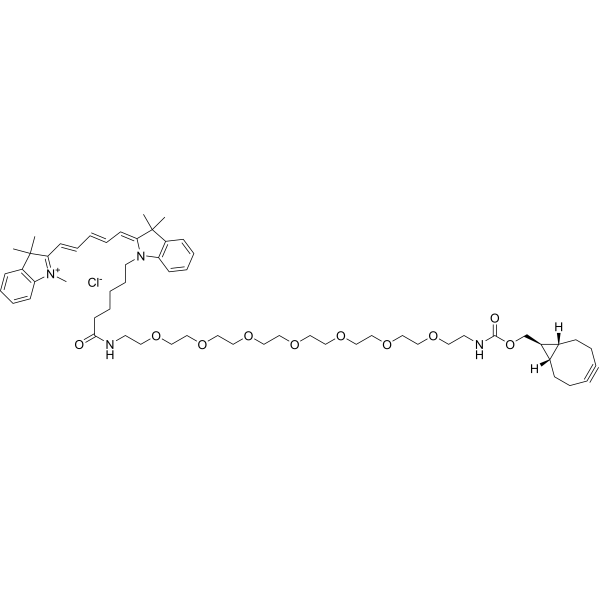
Cy5-PEG7-endo-BCN is a dye derivative of Cyanine 5 (Cy5) (HY-D0821) containing 7 PEG units. Cy5-PEG7-endo-BCN contains the lyophilic bidentate macrocyclic ligand endo-BCN, which can further synthesize macrocyclic complexes. In click chemistry, endo-BCN can react with molecules containing azide groups to form stable triazoles in the absence of catalysts.
|
-
-
- HY-155327A
-
|
|
Fluorescent Dye
|
Others
|
|
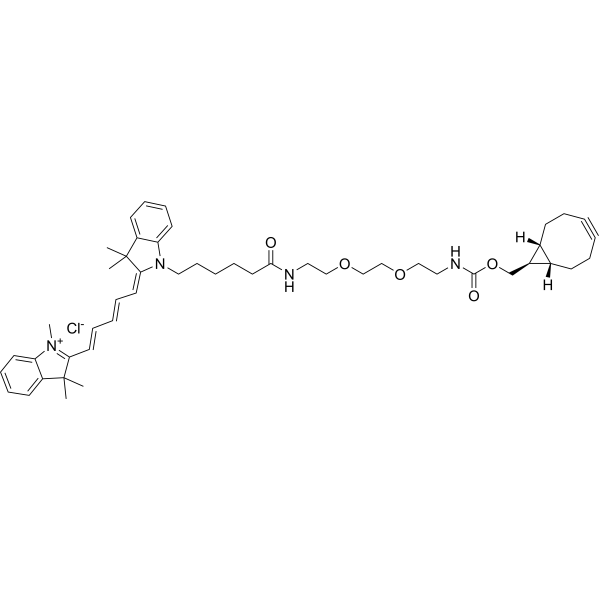
Cy3-PEG2-exo-BCN is a dye derivative of Cyanine 3 (Cy3) (HY-D0822) containing 2 PEG units. Cy3-PEG2-exo-BCN contains the lyophilic bidentate macrocyclic ligand BCN, which can further synthesize macrocyclic complexes. In click chemistry, exo-BCN can react with molecules containing azide groups to form stable triazoles in the absence of catalysts.
|
-
-
- HY-D2120
-
|
|
Fluorescent Dye
|
Others
|
|
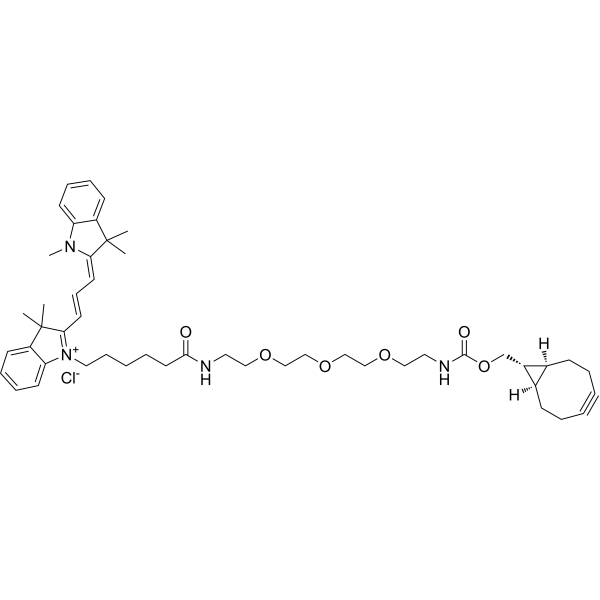
Cy3-PEG3-endo-BCN is a dye derivative of Cyanine 3 (Cy3) (HY-D0822) containing 3 PEG units. Cy3-PEG3-endo-BCN contains the lyophilic bidentate macrocyclic ligand BCN, which can further synthesize macrocyclic complexes. In click chemistry, endo-BCN can react with molecules containing azide groups to form stable triazoles in the absence of catalysts.
|
-
-
- HY-14988
-
|
|
Bacterial
|
Infection
|
|
I-A09 and its derivatives, specifically 1,2,3-triazole-adamantylacetamide hybrids (5a–u), exhibit significant antitubercular activity. These hybrids were synthesized using copper-catalyzed click chemistry, combining bioactive fragments from antitubercular I-A09 and substituted adamantyl urea. The compound N-(1-adamantyl)-2-azido acetamide was reacted with various alkyl/aryl acetylenes to produce new analogues. Among them, N-(1-adamantan-1-yl)-2-(4-(phenanthren-2-yl)-1H-1,2,3-triazol-1-yl)acetamide (5t) showed the most promise with a minimum inhibitory concentration (MIC) of 3.12 μg/mL against Mycobacterium tuberculosis H37Rv, and a selectivity index greater than 15 .
|
-
-
- HY-141652
-
|
|
Drug Intermediate
|
Cancer
|
|
N-2-Azidoethyl betulonamide is the building block, that could generate cytotoxic triazole derivative through click chemistry .
|
-
-
- HY-181177
-
|
|
Bacterial
|
Infection
|
|
Antibacterial agent 320, 1,5-disubstituted 1,2,3-triazole derivative, is an antibacterial agent. Antibacterial agent 320 exerts strong antibacterial activity against Pseudomonas aeruginosa and Staphylococcus aureus. Antibacterial agent 320 can be used for the research of bacterial infection .
|
-
-
- HY-163107
-
|
|
Bacterial
|
Infection
|
|
Antimycobacterial agent-7 (compound 4) is a 1,2,4-triazole anti-tuberculosis agent (MIC: 2 μg/mL). Antimycobacterial agent-7 inhibits Mtb KatG and causes the accumulation of ROS in Mtb cells. ROS produces oxidative damage, leading to the death of Mtb .
|
-
-
- HY-122225
-
|
|
MetAP
|
Cancer
|
|
JNJ-4929821 (Compound 88), a triazole derivative, is a selective Methionine aminopeptidase-2 (MetAP-2) inhibitor with an IC50 of 15 nM over MetAP-1. JNJ-4929821 can be used for cancers like liver cancer, colorectal adenocarcinoma and pancreatic cancer research .
|
-
-
- HY-136755
-
|
|
Cytochrome P450
Fungal
|
Infection
|
|
CYP51-IN-5 is a cytochrome P450 14α-demethylase (CYP51) inhibitor and an antifungal (fungal) agent belonging to the triazole derivative class. CYP51-IN-5 is applicable to the research of Candida albicans, Cryptococcus neoformans, Candida parapsilosis, Candida tropicalis, Trichophyton rubrum, Candida krusei and Microsporum gypseum .
|
-
-
- HY-W1052510
-
|
|
Biochemical Assay Reagents
|
Others
|
|
N3-PEG2-CH2CO2-NHS is a PEG derivative containing an azide group and an NHS ester. The azide group can react with alkyne, BCN, DBCO via Click Chemistry to yield a stable triazole linkage. The NHS ester can be used to label the primary amines (-NH2) of proteins, amine-modified oligonucleotides, and other amine-containing molecules.
|
-
| Cat. No. |
Product Name |
Type |
-
- HY-149618
-
|
|
Fluorescent Dyes
|
|
Cy5-PEG3-endo-BCN is a derivative of the Cyanine 5 (Cy5) (HY-D0821) dye bearing 3 PEG units. Cy5-PEG3-endo-BCN contains the lyophilic bidentate macrocyclic ligand endo-BCN, which allows for further synthesis of macrocyclic complexes. In click chemistry, endo-BCN forms stable triazoles with azide-containing molecules under catalyst-free conditions .
|
-
- HY-156305
-
|
|
Fluorescent Dyes
|
|
Coumarin-C2-exoBCN is a dye derivative of Coumarin (HY-N0709). Coumarin-C2-exoBCN contains the lyophilic bidentate macrocyclic ligand exo-BCN, which can further synthesize macrocyclic complexes. In click chemistry, exo-BCN can react with molecules containing azide groups to generate stable triazoles under catalyst-free conditions.
|
-
- HY-149620
-
|
|
Fluorescent Dyes
|
|
Cy5-PEG2-exo-BCN is a dye derivative of Cyanine 5 (Cy5) (HY-D0821) containing 2 PEG units. Cy5-PEG2-exo-BCN contains the lyophilic bidentate macrocyclic ligand BCN, which can further synthesize macrocyclic complexes. In click chemistry, BCN reacts with molecules containing azide groups to form stable triazoles in the absence of catalysts.
|
-
- HY-155327
-
|
|
Fluorescent Dyes
|
|
Cy3-PEG2-endo-BCN is a dye derivative of Cyanine 3 (Cy3) (HY-D0822) containing 2 PEG units. Cy3-PEG2-endo-BCN contains the lyophilic bidentate macrocyclic ligand endo-BCN, which can further synthesize macrocyclic complexes. In click chemistry, endo-BCN can react with molecules containing azide groups to form stable triazoles in the absence of catalysts.
|
-
- HY-D2204
-
|
|
Fluorescent Dyes
|
|
SHP1-IN-1 (compound 5p) is a fluorescent probe for the protein tyrosine phosphatase SHP1 containing the Src homology 2 domain. SHP1-IN-1 has SHP1 inhibitory activity, selectivity for Fe 3+ ions and good fluorescence properties. SHP1-IN-1 exhibits aggregation post-quenching (ACQ) effect, good interference immunity and low detection limit (5.55 μM) .
|
-
- HY-D2120A
-
|
|
Fluorescent Dyes
|
|
Cy3-PEG3-exo-BCN is a dye derivative of Cyanine 3 (Cy3) (HY-D0822) containing 3 PEG units. Cy3-PEG3-exo-BCN contains the lyophilic bidentate macrocyclic ligand BCN, which can further synthesize macrocyclic complexes. In click chemistry, exo-BCN can react with molecules containing azide groups to form stable triazoles in the absence of catalysts.
|
-
- HY-D2149
-
|
|
Fluorescent Dyes
|
|
Cy5-PEG7-exo-BCN is a dye derivative of Cyanine 5 (Cy5) (HY-D0821) containing 7 PEG units. Cy5-PEG7-exo-BCN contains the lyophilic bidentate macrocyclic ligand BCN, which can further synthesize macrocyclic complexes. In click chemistry, exo-BCN can react with molecules containing azide groups to form stable triazoles in the absence of catalysts.
|
-
- HY-D2121A
-
|
|
Fluorescent Dyes
|
|
Cy3-PEG7-exo-BCN is a dye derivative of Cyanine 3 (Cy3) (HY-D0822) containing 7 PEG units. Cy3-PEG7-exo-BCN contains the lyophilic bidentate macrocyclic ligand BCN, which can further synthesize macrocyclic complexes. In click chemistry, exo-BCN can react with molecules containing azide groups to form stable triazoles in the absence of catalysts.
|
-
- HY-D2121
-
|
|
Fluorescent Dyes
|
|
Cy3-PEG7-endo-BCN is a dye derivative of Cyanine 3 (Cy3) (HY-D0822) containing 7 PEG units. Cy3-PEG7-endo-BCN contains the lyophilic bidentate macrocyclic ligand BCN, which can further synthesize macrocyclic complexes. In click chemistry, endo-BCN can react with molecules containing azide groups to form stable triazoles in the absence of catalysts.
|
-
- HY-149619
-
|
|
Fluorescent Dyes
|
|
Cy5-PEG7-endo-BCN is a dye derivative of Cyanine 5 (Cy5) (HY-D0821) containing 7 PEG units. Cy5-PEG7-endo-BCN contains the lyophilic bidentate macrocyclic ligand endo-BCN, which can further synthesize macrocyclic complexes. In click chemistry, endo-BCN can react with molecules containing azide groups to form stable triazoles in the absence of catalysts.
|
-
- HY-155327A
-
|
|
Fluorescent Dyes
|
|
Cy3-PEG2-exo-BCN is a dye derivative of Cyanine 3 (Cy3) (HY-D0822) containing 2 PEG units. Cy3-PEG2-exo-BCN contains the lyophilic bidentate macrocyclic ligand BCN, which can further synthesize macrocyclic complexes. In click chemistry, exo-BCN can react with molecules containing azide groups to form stable triazoles in the absence of catalysts.
|
-
- HY-D2120
-
|
|
Fluorescent Dyes
|
|
Cy3-PEG3-endo-BCN is a dye derivative of Cyanine 3 (Cy3) (HY-D0822) containing 3 PEG units. Cy3-PEG3-endo-BCN contains the lyophilic bidentate macrocyclic ligand BCN, which can further synthesize macrocyclic complexes. In click chemistry, endo-BCN can react with molecules containing azide groups to form stable triazoles in the absence of catalysts.
|
| Cat. No. |
Product Name |
|
Classification |
-
- HY-149618
-
|
|
|
BCN
Labeling and Fluorescence Imaging
|
|
Cy5-PEG3-endo-BCN is a derivative of the Cyanine 5 (Cy5) (HY-D0821) dye bearing 3 PEG units. Cy5-PEG3-endo-BCN contains the lyophilic bidentate macrocyclic ligand endo-BCN, which allows for further synthesis of macrocyclic complexes. In click chemistry, endo-BCN forms stable triazoles with azide-containing molecules under catalyst-free conditions .
|
-
- HY-156305
-
|
|
|
BCN
Labeling and Fluorescence Imaging
|
|
Coumarin-C2-exoBCN is a dye derivative of Coumarin (HY-N0709). Coumarin-C2-exoBCN contains the lyophilic bidentate macrocyclic ligand exo-BCN, which can further synthesize macrocyclic complexes. In click chemistry, exo-BCN can react with molecules containing azide groups to generate stable triazoles under catalyst-free conditions.
|
-
- HY-149620
-
|
|
|
Labeling and Fluorescence Imaging
BCN
|
|
Cy5-PEG2-exo-BCN is a dye derivative of Cyanine 5 (Cy5) (HY-D0821) containing 2 PEG units. Cy5-PEG2-exo-BCN contains the lyophilic bidentate macrocyclic ligand BCN, which can further synthesize macrocyclic complexes. In click chemistry, BCN reacts with molecules containing azide groups to form stable triazoles in the absence of catalysts.
|
-
- HY-155327
-
|
|
|
Labeling and Fluorescence Imaging
BCN
|
|
Cy3-PEG2-endo-BCN is a dye derivative of Cyanine 3 (Cy3) (HY-D0822) containing 2 PEG units. Cy3-PEG2-endo-BCN contains the lyophilic bidentate macrocyclic ligand endo-BCN, which can further synthesize macrocyclic complexes. In click chemistry, endo-BCN can react with molecules containing azide groups to form stable triazoles in the absence of catalysts.
|
-
- HY-D2120A
-
|
|
|
BCN
Labeling and Fluorescence Imaging
|
|
Cy3-PEG3-exo-BCN is a dye derivative of Cyanine 3 (Cy3) (HY-D0822) containing 3 PEG units. Cy3-PEG3-exo-BCN contains the lyophilic bidentate macrocyclic ligand BCN, which can further synthesize macrocyclic complexes. In click chemistry, exo-BCN can react with molecules containing azide groups to form stable triazoles in the absence of catalysts.
|
-
- HY-D2149
-
|
|
|
BCN
|
|
Cy5-PEG7-exo-BCN is a dye derivative of Cyanine 5 (Cy5) (HY-D0821) containing 7 PEG units. Cy5-PEG7-exo-BCN contains the lyophilic bidentate macrocyclic ligand BCN, which can further synthesize macrocyclic complexes. In click chemistry, exo-BCN can react with molecules containing azide groups to form stable triazoles in the absence of catalysts.
|
-
- HY-D2121A
-
|
|
|
Labeling and Fluorescence Imaging
BCN
|
|
Cy3-PEG7-exo-BCN is a dye derivative of Cyanine 3 (Cy3) (HY-D0822) containing 7 PEG units. Cy3-PEG7-exo-BCN contains the lyophilic bidentate macrocyclic ligand BCN, which can further synthesize macrocyclic complexes. In click chemistry, exo-BCN can react with molecules containing azide groups to form stable triazoles in the absence of catalysts.
|
-
- HY-D2121
-
|
|
|
Labeling and Fluorescence Imaging
BCN
|
|
Cy3-PEG7-endo-BCN is a dye derivative of Cyanine 3 (Cy3) (HY-D0822) containing 7 PEG units. Cy3-PEG7-endo-BCN contains the lyophilic bidentate macrocyclic ligand BCN, which can further synthesize macrocyclic complexes. In click chemistry, endo-BCN can react with molecules containing azide groups to form stable triazoles in the absence of catalysts.
|
-
- HY-149619
-
|
|
|
Labeling and Fluorescence Imaging
BCN
|
|
Cy5-PEG7-endo-BCN is a dye derivative of Cyanine 5 (Cy5) (HY-D0821) containing 7 PEG units. Cy5-PEG7-endo-BCN contains the lyophilic bidentate macrocyclic ligand endo-BCN, which can further synthesize macrocyclic complexes. In click chemistry, endo-BCN can react with molecules containing azide groups to form stable triazoles in the absence of catalysts.
|
-
- HY-155327A
-
|
|
|
Labeling and Fluorescence Imaging
BCN
|
|
Cy3-PEG2-exo-BCN is a dye derivative of Cyanine 3 (Cy3) (HY-D0822) containing 2 PEG units. Cy3-PEG2-exo-BCN contains the lyophilic bidentate macrocyclic ligand BCN, which can further synthesize macrocyclic complexes. In click chemistry, exo-BCN can react with molecules containing azide groups to form stable triazoles in the absence of catalysts.
|
-
- HY-D2120
-
|
|
|
Labeling and Fluorescence Imaging
BCN
|
|
Cy3-PEG3-endo-BCN is a dye derivative of Cyanine 3 (Cy3) (HY-D0822) containing 3 PEG units. Cy3-PEG3-endo-BCN contains the lyophilic bidentate macrocyclic ligand BCN, which can further synthesize macrocyclic complexes. In click chemistry, endo-BCN can react with molecules containing azide groups to form stable triazoles in the absence of catalysts.
|
-
- HY-141652
-
|
|
|
Azide
|
|
N-2-Azidoethyl betulonamide is the building block, that could generate cytotoxic triazole derivative through click chemistry .
|
-
- HY-W1052510
-
|
|
|
Azide
|
|
N3-PEG2-CH2CO2-NHS is a PEG derivative containing an azide group and an NHS ester. The azide group can react with alkyne, BCN, DBCO via Click Chemistry to yield a stable triazole linkage. The NHS ester can be used to label the primary amines (-NH2) of proteins, amine-modified oligonucleotides, and other amine-containing molecules.
|
Your information is safe with us. * Required Fields.
Inquiry Information
- Product Name:
- Cat. No.:
- Quantity:
- MCE Japan Authorized Agent:

