



Tecalcet Hydrochloride
Based on 7 publication(s) in Google Scholar
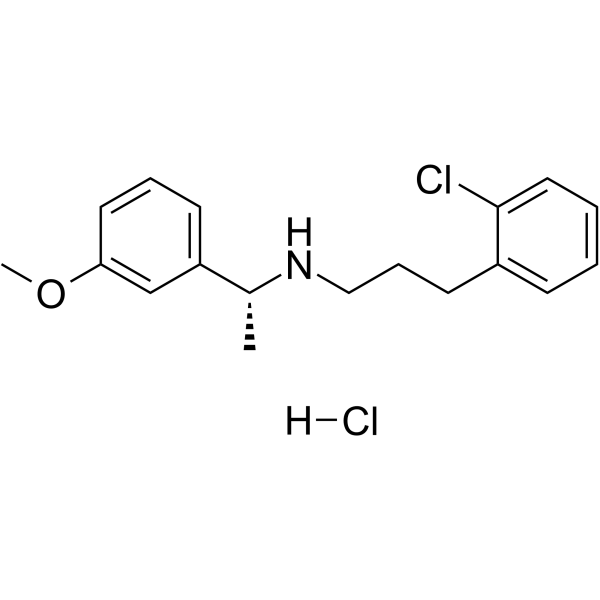
Tecalcet Hydrochloride (R 568 Hydrochloride), an orally active calcimimetic compound, allosterically and positively modulates the calcium-sensing receptor (CaSR). Tecalcet Hydrochloride (R 568 Hydrochloride) increases the sensitivity to activation by extracellular Ca2+.
For research use only. We do not sell to patients.
- Purity : 99.43%
- CAS No.: 177172-49-5
- Formula: C18H23Cl2NO
- Molecular Weight:340.29
-
Storage:
4°C, sealed storage, away from moisture
* In solvent : -80°C, 6 months; -20°C, 1 month (sealed storage, away from moisture)

To place orders, for customer services and technical support, please contact: MedChemExpress USA
Tel: 609-228-6898 E-mail: [email protected] [email protected]


-
 Biological Activity
-
Chemical Information
-
Solvent & Solubility
- Protocols
- Purity & Documentation
- References
-
 Help & FAQs


-
HY-10007
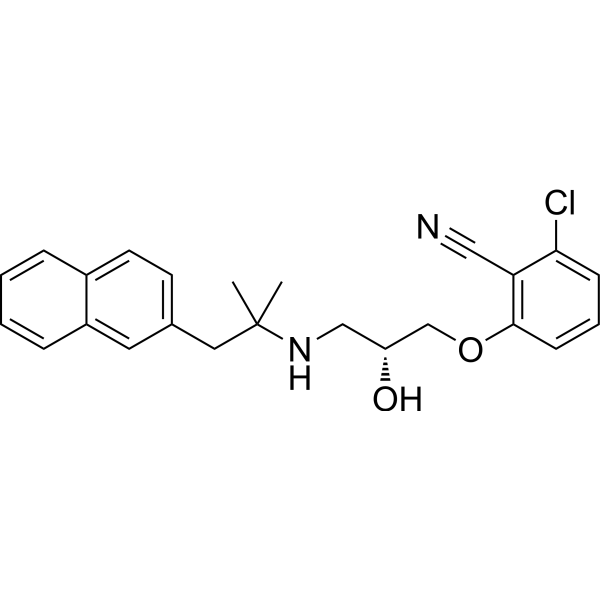
NPS-2143CaSR Antagonist -
HY-10171
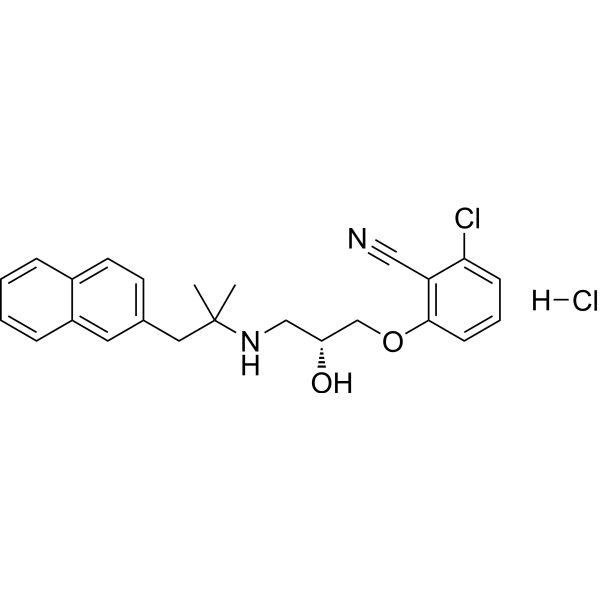
NPS-2143 hydrochlorideCaSR Antagonist -
HY-70037
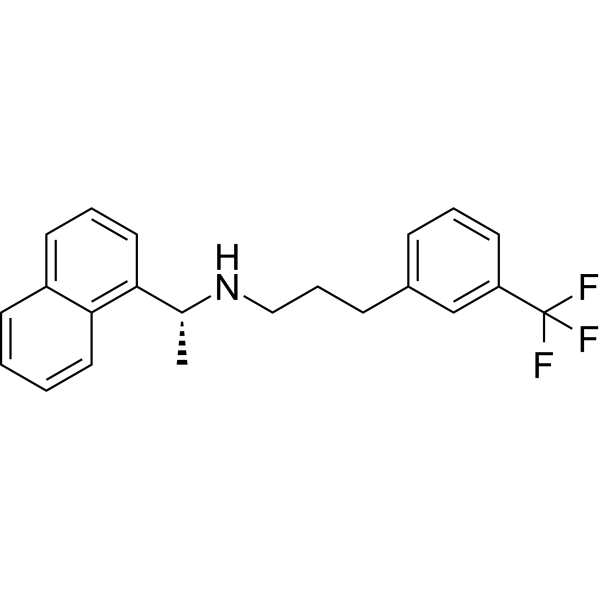
CinacalcetCaSR Agonist -
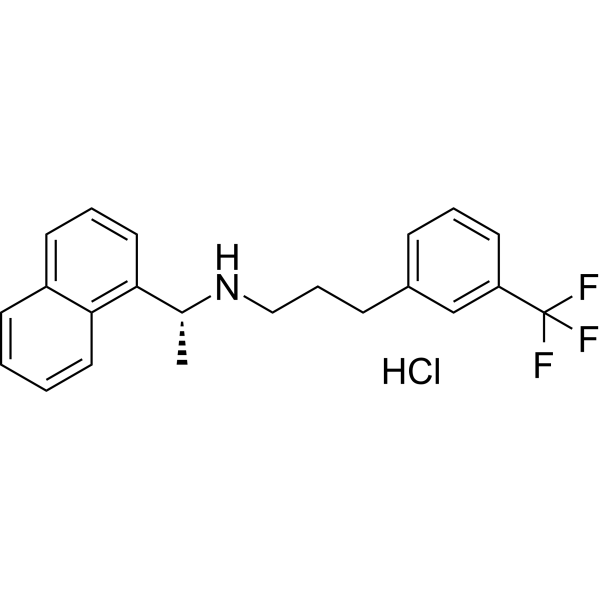
HY-70037A
Cinacalcet hydrochlorideCaSR Agonist -
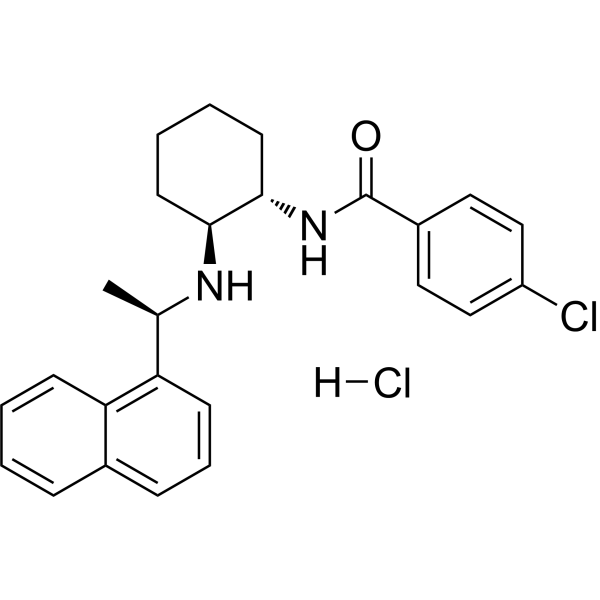
HY-103320A
Calhex 231 hydrochlorideCaSR Inhibitor -

HY-70037AR
Cinacalcet hydrochloride (Standard)CaSR Agonist -

HY-22009A
Strontium chloride,anhydrous grade,99.99% metals basisStrontium Salt -
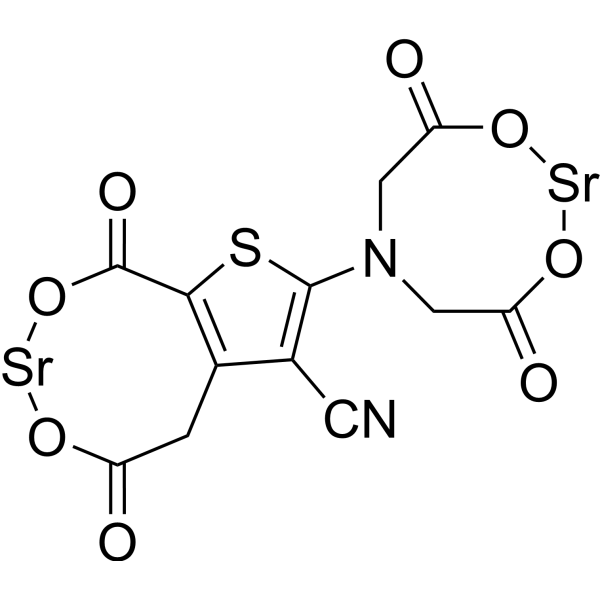
HY-17397
Strontium RanelateAntiosteoporotic Agent -
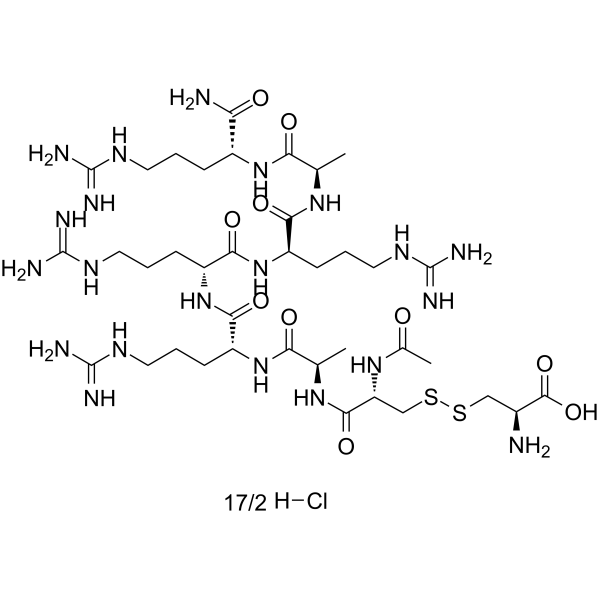
HY-P1955A
Etelcalcetide hydrochlorideCaSR Activator -
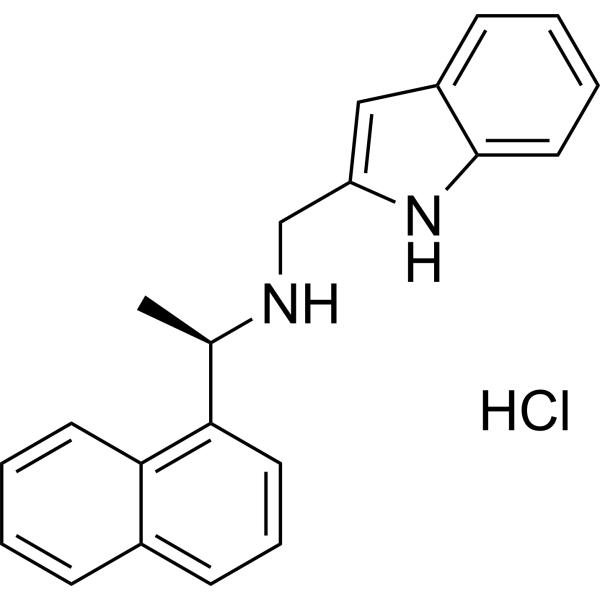
HY-122819
Calindol hydrochlorideCaSR PAM -
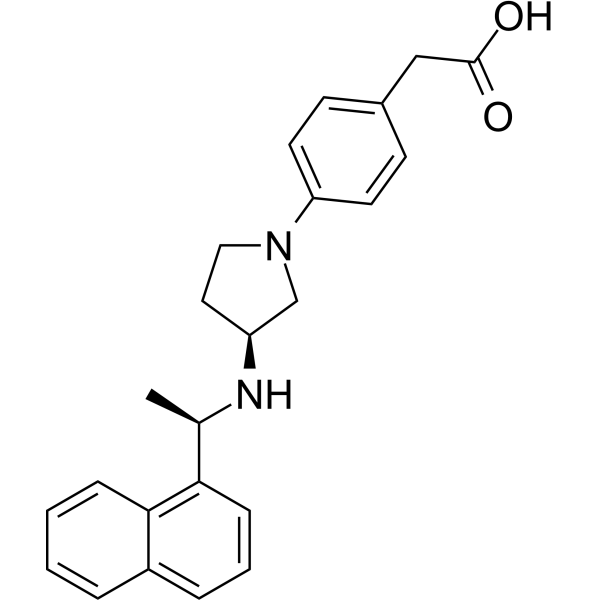
HY-17613
EvocalcetCaSR Activator -
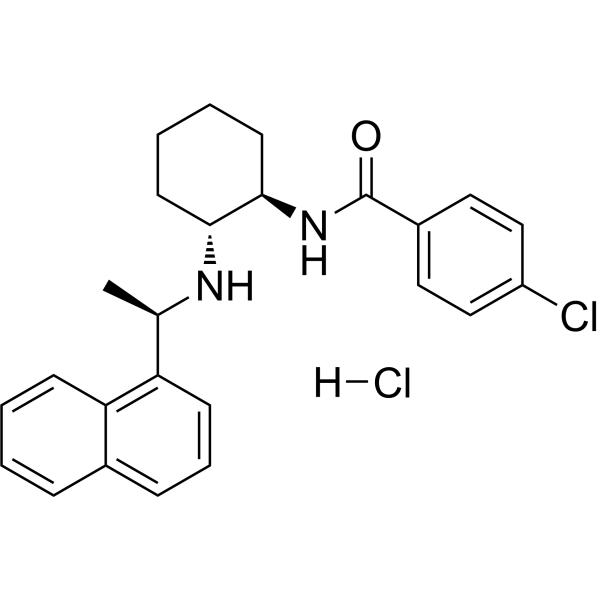
HY-103320B
(1R,2R)-Calhex 231 hydrochlorideIsomer
Publications Citing Use of MedChemExpress (MCE) Tecalcet Hydrochloride
More- Food Chem. 2024 Nov 30:459:140359. [Abstract]
- Biochem Pharmacol. 2025 Jan:231:116619. [Abstract]
- J Clin Endocrinol Metab. 2025 Jun 17;110(7):1865-1880. [Abstract]
- Bioorg Chem. 2026 Feb:169:109418. [Abstract]
- Adv Nanobiomed Res. 14 July 2022.
- Mol Nutr Food Res. 2024 Feb;68(4):e2200726. [Abstract]
- Transl Pediatr. 2023 Dec 26;12(12):2179-2190. [Abstract]


Biological Activity
Description
Cellular Effect
|
Cell Line

|
Type | Value | Description | References |
|---|---|---|---|---|
| CHO | EC50 |
80 nM
Compound: R-568
|
Positive allosteric modulation of human CaSR expressed in CHO cells assessed as increase in intracellular calcium level after 5 hrs by luciferase reporter gene assay
Positive allosteric modulation of human CaSR expressed in CHO cells assessed as increase in intracellular calcium level after 5 hrs by luciferase reporter gene assay
|
[PMID: 23499504] |
In Vitro
Tecalcet (NPS 568, 0.1-100 μM) increase [Ca2+]i in a concentrationdependent and stereoselective manner[3].
Tecalcet (NPS 568, 0.1-100 nM) shiftes the concentration-response curve for extracellular Ca2+ to the left without affecting the maximal response and, thereby, decreases
the EC50 value for extracellular Ca21 to 0.61±0.04 mM[3].
MedChemExpress (MCE) has not independently confirmed the accuracy of these methods. They are for reference only. Further protocols information, click here.
In Vivo
MedChemExpress (MCE) has not independently confirmed the accuracy of these methods. They are for reference only.
-
Animal Model:10-wk-old Male Sprague-Dawley rats weighing 310-350 g[1].
-
Dosage:1.5 and 15 mg/kg.
-
Administration:Orally twice daily for 4 days.
-
Result:Did not significantly change serum 1,25 (OH)2D3 levels. In contrast, serum PTH levels were reduced by in a dose-dependent manner.
Clearly reduced the number of BrdU-positive PT cells by 20% at a low dose (1.5 mg/kg body wt), and by 50% at a high dose (15 mg/kg body wt), indicating an antiproliferative effect on PT cells.
Reduced PT cell volume in a dose-dependent manner.


Chemical Information
-
CAS No. 177172-49-5
-
Appearance Solid
-
Molecular Weight 340.29
-
Formula C18H23Cl2NO
-
Color White to off-white
-
SMILES
C[C@@H](NCCCC1=CC=CC=C1Cl)C2=CC=CC(OC)=C2.[H]Cl
-
Synonyms
R-568 hydrochloride; NPS R-568
-
Shipping
Room temperature in continental US; may vary elsewhere.
-
Storage
4°C, sealed storage, away from moisture
* In solvent : -80°C, 6 months; -20°C, 1 month (sealed storage, away from moisture)


Publications (7)
-
Journal Impact Factor
-
Most Recent
-
Food Chem
Novel osteogenic peptide from bovine bone collagen hydrolysate: Targeted screening, molecular mechanism, and stability analysis. [Abstract]2024 Nov 30:459:140359. PMID: 38996641 -
Biochem Pharmacol
Detailed functional characterization of four nanobodies as positive allosteric modulators of the human calcium-sensing receptor. [Abstract]2025 Jan:231:116619. PMID: 39522703 -
J Clin Endocrinol Metab
Heterogenous Origins of Calcium Homeostasis Disorders Arising from Five Heterozygous Calcium-Sensing Receptor Variants. [Abstract]2025 Jun 17;110(7):1865-1880. PMID: 39413244 -
Bioorg Chem
L-tetrahydropalmatine attenuates methamphetamine-induced pulmonary vascular remodeling via CaSR-BMP2/mTOR signaling. [Abstract]2026 Feb:169:109418. PMID: 41443015 -
-
Mol Nutr Food Res
Novel Calcium-Binding Peptide from Bovine Bone Collagen Hydrolysates and Its Potential Pro-Osteogenic Activity via Calcium-Sensing Receptor (CaSR). [Abstract]2024 Feb;68(4):e2200726. PMID: 38161238 -
Transl Pediatr
Calcium-sensing receptor alleviates gut damage caused by endotoxemia by regulating gut microbiota. [Abstract]2023 Dec 26;12(12):2179-2190. PMID: 38197097


Solvent & Solubility
In Vitro:
DMSO : 50 mg/mL (146.93 mM; Need ultrasonic; Hygroscopic DMSO has a significant impact on the solubility of product, please use newly opened DMSO)
Please refer to the solubility information to select the appropriate solvent. Once prepared, please aliquot and store the solution to prevent product inactivation from repeated freeze-thaw cycles.
Storage method and period of stock solution: -80°C, 6 months; -20°C, 1 month (sealed storage, away from moisture). When stored at -80°C, please use it within 6 months. When stored at -20°C, please use it within 1 month.
Please refer to the solubility information to select the appropriate solvent. Once prepared, please aliquot and store the solution to prevent product inactivation from repeated freeze-thaw cycles.
Storage method and period of stock solution: -80°C, 6 months; -20°C, 1 month (sealed storage, away from moisture). When stored at -80°C, please use it within 6 months. When stored at -20°C, please use it within 1 month.
Concentration (start) × Volume (start) = Concentration (final) × Volume (final)
In Vivo:
Select the appropriate dissolution method based on your experimental animal and administration route.
- For the following dissolution methods, please ensure to first prepare a clear stock solution using an In Vitro approach and then sequentially add co-solvents:
- To ensure reliable experimental results, the clarified stock solution can be appropriately stored based on storage conditions. As for the working solution for In Vivo experiments, it is recommended to prepare freshly and use it on the same day.
- The percentages shown for the solvents indicate their volumetric ratio in the final prepared solution. If precipitation or phase separation occurs during preparation, heat and/or sonication can be used to aid dissolution.
Add each solvent one by one: 10% DMSO 40% PEG300 5% Tween-80 45% Saline
Solubility: ≥ 2.5 mg/mL (7.35 mM); Clear solution
This protocol yields a clear solution of ≥ 2.5 mg/mL (saturation unknown).
Taking 1 mL working solution as an example, add 100 μL DMSO stock solution (25.0 mg/mL) to 400 μL PEG300, and mix evenly; then add 50 μL Tween-80 and mix evenly; then add 450 μL Saline to adjust the volume to 1 mL.
Preparation of Saline: Dissolve 0.9 g sodium chloride in ddH₂O and dilute to 100 mL to obtain a clear Saline solution.
Add each solvent one by one: 10% DMSO 90% (20% SBE-β-CD in Saline)
Solubility: ≥ 2.5 mg/mL (7.35 mM); Clear solution
This protocol yields a clear solution of ≥ 2.5 mg/mL (saturation unknown).
Taking 1 mL working solution as an example, add 100 μL DMSO stock solution (25.0 mg/mL) to 900 μL 20% SBE-β-CD in Saline, and mix evenly.
Preparation of 20% SBE-β-CD in Saline (4°C, storage for one week): 2 g SBE-β-CD powder is dissolved in 10 mL Saline, completely dissolve until clear.
In Vivo Dissolution Calculator
Please enter the basic information of animal experiments:
-
-
-
-
Recommended: Prepare an additional quantity of animals to account for potential losses during experiments.
Please enter your animal formula composition:
-
%DMSO +
Recommended: Keep the proportion of DMSO in working solution below 2% if your animal is weak.
-
%+
-
+%Tween-80 + +
-
%Saline +
The co-solvents required include: DMSO, . All of co-solvents are available by MedChemExpress (MCE). , Tween 80. All of co-solvents are available by MedChemExpress (MCE).
Working solution concentration: 0.22 mg/mL
Method for preparing stock solution: mg drug dissolved in μL DMSO. Stock solution concentration: mg/mL. * In solvent : -80°C, 6 months; -20°C, 1 month (sealed storage, away from moisture)
1. Take μL DMSO stock solution;
2. Add μL .
μL , mix evenly;
3. Then add μL Tween 80, mix evenly;
4. Then add μL
Please ensure that the stock solution in the first step is dissolved to a clear state, and add co-solvents in sequence. You can use ultrasonic heating (ultrasonic cleaner, recommended frequency 20-40 kHz), vortexing, etc. to assist dissolution.

Protocols
-
Ca2+ Staining Technique
Ca2+ staining is an experimental technique that utilizes specific fluorescent probes (such as Fluo-4 AM, Fura-2, etc.) to qualitatively or quantitatively detect dynamic changes in intracellular Ca2+ concentrations; this is achieved by monitoring the changes in fluorescent signals generated when these probes bind to free intracellular calcium ions. The underlying principle relies primarily on the presence of chelating groups within the probe's molecular structure that possess high affinity for calcium ions.


Purity & Documentation
-
Data Sheet (273 KB)
-
SDS (393 KB)
- English - EN (393 KB)
- Français - FR (393 KB)
- Deutsch - DE (393 KB)
- Norwegian - NO (393 KB)
- Español - ES (393 KB)
- Swedish - SV (393 KB)
- Italian - IT (393 KB)
- Korean - KR (393 KB)
- Portuguese - PT (393 KB)
-
Handling Instructions (2659 KB)
References
[1]. Wada, M., et al. The calcimimetic compound NPS R-568 suppresses parathyroid cell proliferation in rats with renal insufficiency. Control of parathyroid cell growth via a calcium receptor. Journal of Clinical Investigation 100(12), 2977-2983 (1997). [Content Brief]
[2]. Nemeth, E.F., et al. The parathyroid calcium receptor: a novel therapeutic target for treating hyperparathyroidism. Pediatr.Nephrol. 10(3), 275-279 (1996). [Content Brief]
[3]. Nemeth, E.F., et al. Calcimimetics with potent and selective activity on the parathyroid calcium receptor. Proceedings of the National Academy of Sciences of the United States of America 95(7), 4040-4045 (1998). [Content Brief]


Complete Stock Solution Preparation Table
Please refer to the solubility information to select the appropriate solvent. Once prepared, please aliquot and store the solution to prevent product inactivation from repeated freeze-thaw cycles.
Storage method and period of stock solution: -80°C, 6 months; -20°C, 1 month (sealed storage, away from moisture). When stored at -80°C, please use it within 6 months. When stored at -20°C, please use it within 1 month.
| Optional Solvent | Concentration Solvent Mass | 1 mg | 5 mg | 10 mg | 25 mg |
|---|---|---|---|---|---|
| DMSO | 1 mM | 2.9387 mL | 14.6933 mL | 29.3867 mL | 73.4667 mL |
| 5 mM | 0.5877 mL | 2.9387 mL | 5.8773 mL | 14.6933 mL | |
| 10 mM | 0.2939 mL | 1.4693 mL | 2.9387 mL | 7.3467 mL | |
| 15 mM | 0.1959 mL | 0.9796 mL | 1.9591 mL | 4.8978 mL | |
| 20 mM | 0.1469 mL | 0.7347 mL | 1.4693 mL | 3.6733 mL | |
| 25 mM | 0.1175 mL | 0.5877 mL | 1.1755 mL | 2.9387 mL | |
| 30 mM | 0.0980 mL | 0.4898 mL | 0.9796 mL | 2.4489 mL | |
| 40 mM | 0.0735 mL | 0.3673 mL | 0.7347 mL | 1.8367 mL | |
| 50 mM | 0.0588 mL | 0.2939 mL | 0.5877 mL | 1.4693 mL | |
| 60 mM | 0.0490 mL | 0.2449 mL | 0.4898 mL | 1.2244 mL | |
| 80 mM | 0.0367 mL | 0.1837 mL | 0.3673 mL | 0.9183 mL | |
| 100 mM | 0.0294 mL | 0.1469 mL | 0.2939 mL | 0.7347 mL |


Tecalcet Hydrochloride Related Classifications
HY-10167A Related Classifications
 Powered by Bioz