



TFEB activator 1
Based on 17 publication(s) in Google Scholar
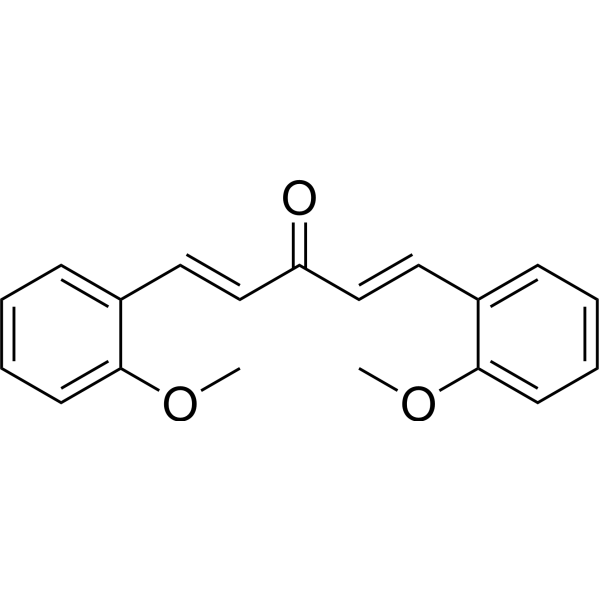
TFEB activator 1 is an orally effective, mTOR-independent activator of TFEB. TFEB activator 1 significantly promotes the nuclear translocation of Flag-TFEB with an EC50 of 2167 nM. TFEB activator 1 enhances autophagy without inhibiting the mTOR pathway and has the potential for neurodegenerative diseases treatment.
For research use only. We do not sell to patients.
- Purity : 99.71%
- CAS No.: 39777-61-2
- Formula: C19H18O3
- Molecular Weight:294.34
-
Storage:Powder -20°C, 3 years , 4°C, 2 years
* The compound is unstable in solutions, freshly prepared is recommended.

To place orders, for customer services and technical support, please contact: MedChemExpress USA
Tel: 609-228-6898 E-mail: [email protected] [email protected]


-
 Biological Activity
-
Chemical Information
-
Solvent & Solubility
- Protocols
- Purity & Documentation
- References
-
 Help & FAQs


-

HY-10219
RapamycinmTOR Inhibitor -
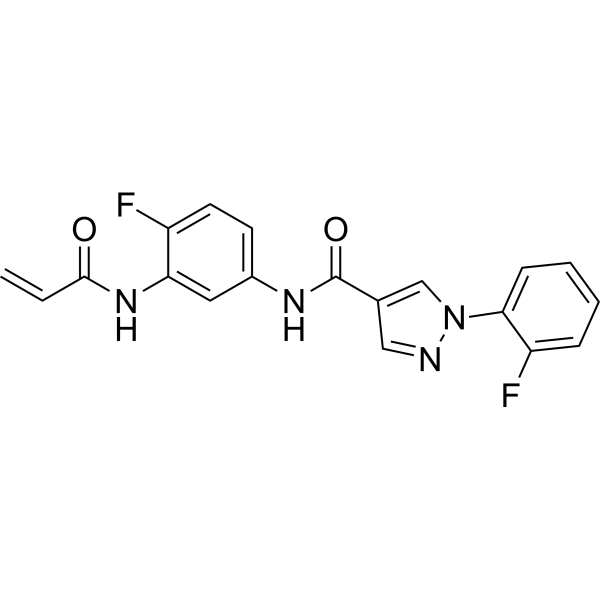
HY-128892
EN6Autophagy Activator -
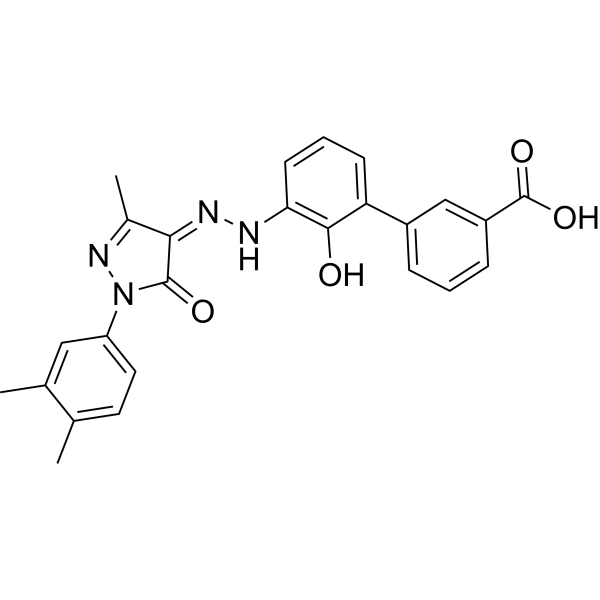
HY-15306
EltrombopagTPO Receptor Agonist -
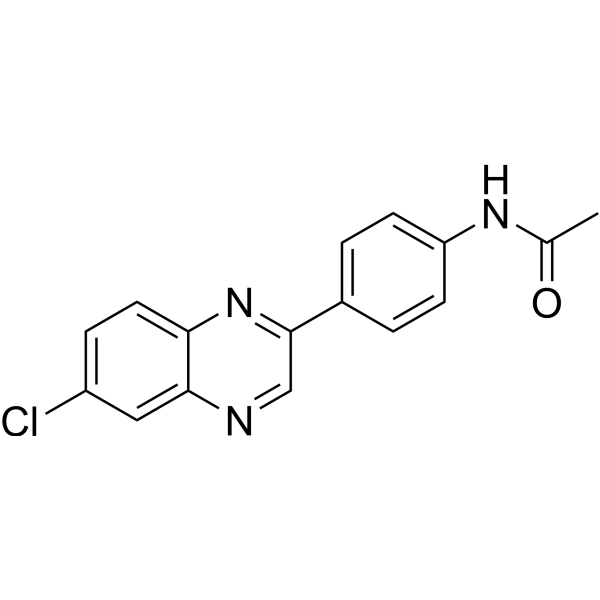
HY-134923
CA77.1CMA Activator -
HY-100558
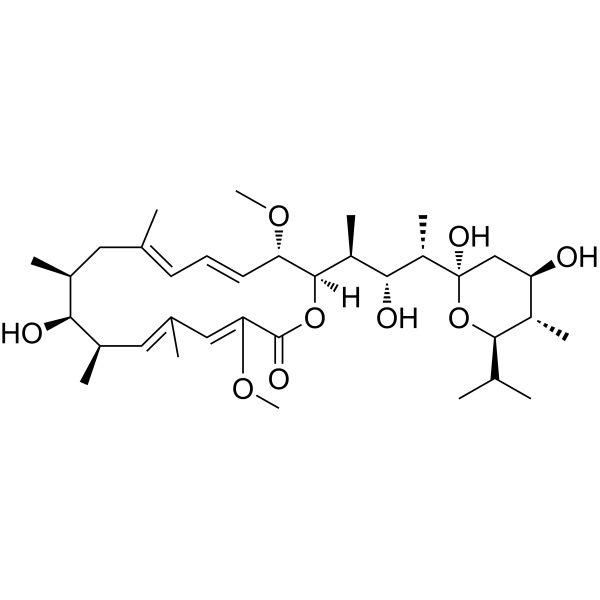
Bafilomycin A1V-ATPase Inhibitor -
HY-17589A
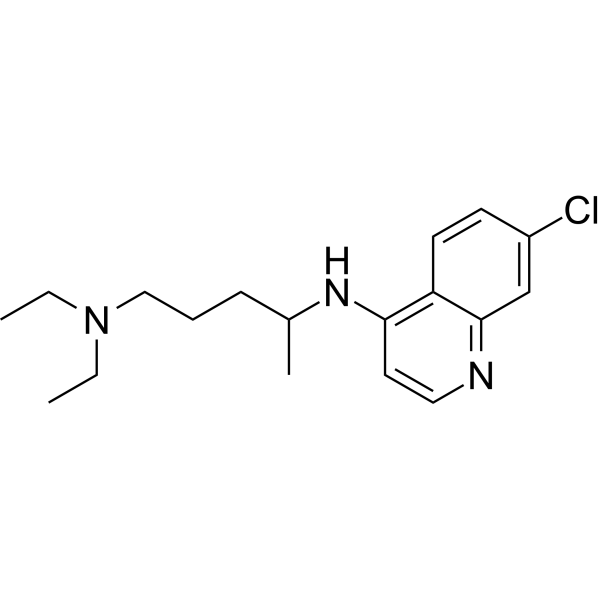
ChloroquineAntimalarial Agent -
HY-12754
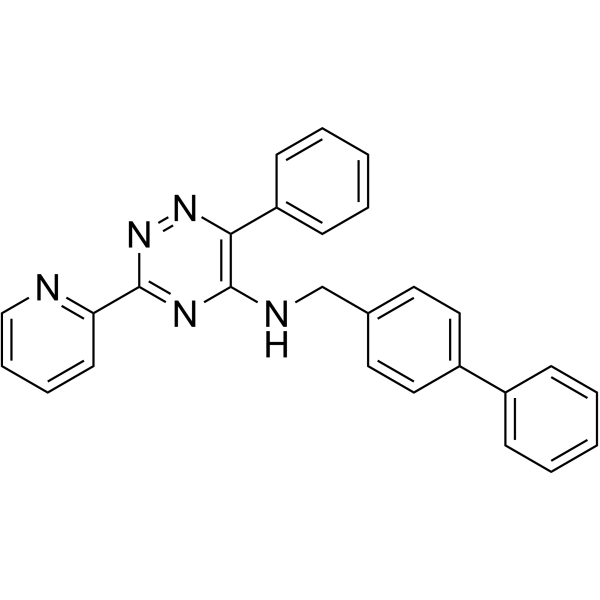
ML228HIF Activator -

HY-161724
TFEB activator 2TFEB Activator -
HY-B0795
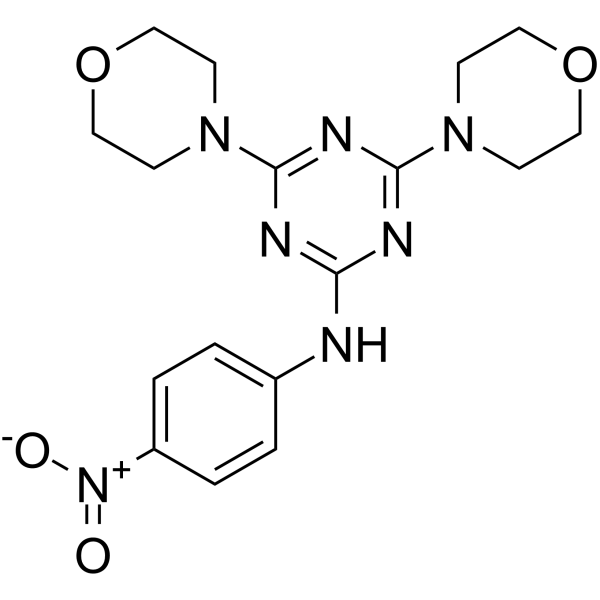
MHY1485mTOR Activator -
HY-13755
SulforaphaneKeap1/Nrf2/ARE Inducer -
HY-10182
LaduviglusibGSK-3 Inhibitor -

HY-P1156
Insulin(cattle)Recombinant Cattle Insulin
Publications Citing Use of MedChemExpress (MCE) TFEB activator 1
More- Autophagy. 2026 May 28:1-24. [Abstract]
- Cell Death Differ. 2026 Jul 16.
- Cell Commun Signal. 2026 Apr 28;24(1):347. [Abstract]
- J Neuroinflammation. 2023 Oct 20;20(1):240. [Abstract]
- Environ Int. 2026 Sep:215:110483.
- Alzheimers Res Ther. 2024 Jun 3;16(1):121. [Abstract]
- Mol Med. 2026 May 21. [Abstract]
- Aging Cell. 2025 Jul;24(7):e70083. [Abstract]
- J Ethnopharmacol. 2023 Jun 12:309:116365. [Abstract]
- J Agric Food Chem. 2025 Oct 22. [Abstract]
- Cell Mol Life Sci. 2025 Apr 17;82(1):160. [Abstract]
- Int Immunopharmacol. 2026 Jul 1:180:116695. [Abstract]
- Biochim Biophys Acta Mol Basis Dis. 2026 Jun 24;1872(7):168331. [Abstract]
- Biochim Biophys Acta Mol Basis Dis. 2025 Mar;1871(3):167668. [Abstract]
- Ren Fail. 2024 Dec;46(1):2338933. [Abstract]
- Mol Immunol. 2025 Mar 25:181:139-147. [Abstract]
- bioRxiv. 2025 Aug 31.
 Customer Validation & Images

-
Histological Imaging/Staining
-
ELISA
-
Histological Imaging/Staining
-
RT-PCR
-
Cell Imaging/Staining


Biological Activity
Description
IC50 & Target
EC50: 2167 nM (Flag-TFEB nuclear translocation)[1]
Cellular Effect
|
Cell Line

|
Type | Value | Description | References |
|---|---|---|---|---|
| HCT-116 | GI50 |
4 μM
Compound: GO-Y019
|
Growth inhibition of human HCT116 cells after 48 hrs by MTS assay
Growth inhibition of human HCT116 cells after 48 hrs by MTS assay
|
[PMID: 20060305] |
| HeLa | IC50 |
161 μM
Compound: B6
|
Cytotoxicity against human HeLa cells after 72 hrs by MTT assay
Cytotoxicity against human HeLa cells after 72 hrs by MTT assay
|
[PMID: 19243951] |
| HL-60 | IC50 |
<12.6 μM
Compound: B6
|
Cytotoxicity against human HL60 cells after 72 hrs by MTT assay
Cytotoxicity against human HL60 cells after 72 hrs by MTT assay
|
[PMID: 19243951] |
| KB | IC50 |
<12.6 μM
Compound: B6
|
Cytotoxicity against human KB cells after 72 hrs by MTT assay
Cytotoxicity against human KB cells after 72 hrs by MTT assay
|
[PMID: 19243951] |
| MDA-MB-231 | GI50 |
1 μM
Compound: 29; GO-Y019
|
Growth inhibition of human MDA-MB-231 cells measured after 72 hrs by microplate reader analysis
Growth inhibition of human MDA-MB-231 cells measured after 72 hrs by microplate reader analysis
|
[PMID: 32172081] |
| RPMI-7951 | GI50 |
2.3 μM
Compound: 29; GO-Y019
|
Growth inhibition of human RPMI-7951 cells measured after 72 hrs by microplate reader analysis
Growth inhibition of human RPMI-7951 cells measured after 72 hrs by microplate reader analysis
|
[PMID: 32172081] |
In Vitro
TFEB activator 1 (Compound C1) activates TFEB (transcription factor EB) by directly binding to TFEB and promotes its entry into the nucleus, without affecting TFEB phosphorylation or inhibiting the activities of MTOR and MAPK1/ERK2-MAPK3/ERK1[1].
?
TFEB activator 1 (1 μM; for 12 h) significantly increases the levels of LC3B-II, the lipidated and phagophore- or autophagosome-associated form of MAP1LC3B/LC3B (microtubule-associated protein 1 light chain 3 β) in N2a cells[1].
?
TFEB activator 1 (0.2-1 μM) dose-dependently increases the levels of LC3-II and SQSTM1/p62 (sequestosome 1) in N2a cells[1].
MedChemExpress (MCE) has not independently confirmed the accuracy of these methods. They are for reference only.
-
Cell Line:N2a cells
-
Concentration:0, 0.2, 0.4, 0.6, 0.8 and 1 μM
-
Incubation Time:12 hours
-
Result:Treatment dose-dependently increased the levels of LC3-II and SQSTM1/p62 (sequestosome 1).
In Vivo
? Short-term oral administration of TFEB activator 1 (low dosage 10 mg/kg and high dosage 25 mg/kg; for 24 h) dose-dependently increases the expression of LC3B-II and TFEB in the liver, frontal cortex and striatum of the brain[1].
? Chronic administration of TFEB activator 1 (10 mg/kg per day; orally administered by gavage) activates TFEB and enhances autophagy in rat brains[1].
MedChemExpress (MCE) has not independently confirmed the accuracy of these methods. They are for reference only.
-
Animal Model:Adult male Sprague-Dawley (SD) rats weighing 350 to 400 g[1]
-
Dosage:10 mg/kg and 25 mg/kg
-
Administration:Short-term oral administration; for 24 hours
-
Result:Activated TFEB and enhanced autophagy and lysosome biogenesis in rat brain.
-
Animal Model:Adult male Sprague-Dawley (SD) rats weighing 350 to 400 g[1]
-
Dosage:10 mg/kg
-
Administration:Chronic oral administration; daily; for 21 days
-
Result:Activated TFEB and enhanced autophagy in rat brains.


Chemical Information
-
CAS No. 39777-61-2
-
Appearance Solid
-
Molecular Weight 294.34
-
Formula C19H18O3
-
Color Light yellow to yellow
-
SMILES
O=C(/C=C/C1=CC=CC=C1OC)/C=C/C2=CC=CC=C2OC
-
Shipping
Room temperature in continental US; may vary elsewhere.
-
Storage
Powder -20°C 3 years 4°C 2 years * The compound is unstable in solutions, freshly prepared is recommended.


Publications (17)
-
Journal Impact Factor
-
Most Recent
-
Autophagy
High-fat diet exacerbates experimental colitis by inhibiting lysosomal function via the STAT3-TFEB Axis. [Abstract]2026 May 28:1-24. PMID: 42165414 -
-
Cell Commun Signal
Cytoplasmic retention of IRF3 binding Vimentin competitively with ERK1/2 mitigates acute myeloid leukemia through TFEB nuclear translocation. [Abstract]2026 Apr 28;24(1):347. PMID: 42045951 -
J Neuroinflammation
Intermittent hypoxia therapy ameliorates beta-amyloid pathology via TFEB-mediated autophagy in murine Alzheimer's disease. [Abstract]2023 Oct 20;20(1):240. PMID: 37864249
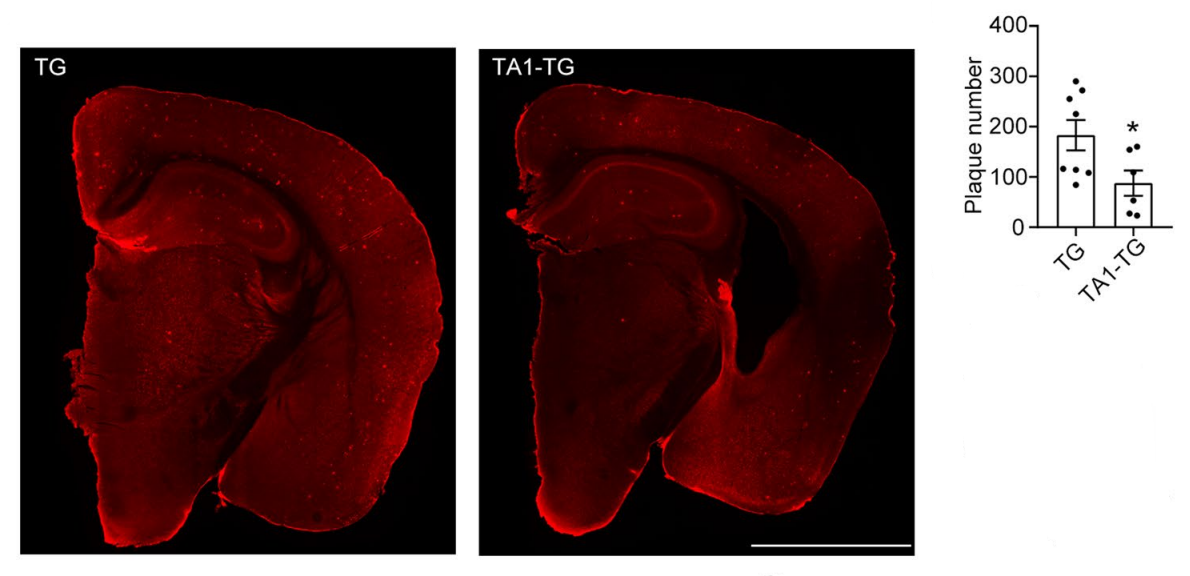
TFEB activator 1 purchased from MedChemExpress. Usage Cited in: J Neuroinflammation. 2023 Oct 20;20(1):240. [Abstract]
TFEB activator 1 (TA1) (10 mg/kg; p.o.; once daily for 3 months) reduced Aβ plaques in the mouse brain.
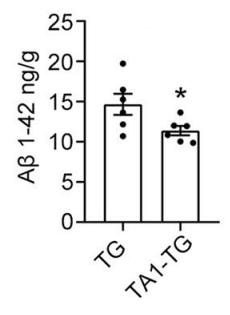
TFEB activator 1 purchased from MedChemExpress. Usage Cited in: J Neuroinflammation. 2023 Oct 20;20(1):240. [Abstract]
TFEB activator 1 (TA1) (10 mg/kg; p.o.; once daily for 3 months) reduced Aβ load in the mouse cortex.
TFEB activator 1 purchased from MedChemExpress. Usage Cited in: J Neuroinflammation. 2023 Oct 20;20(1):240. [Abstract]
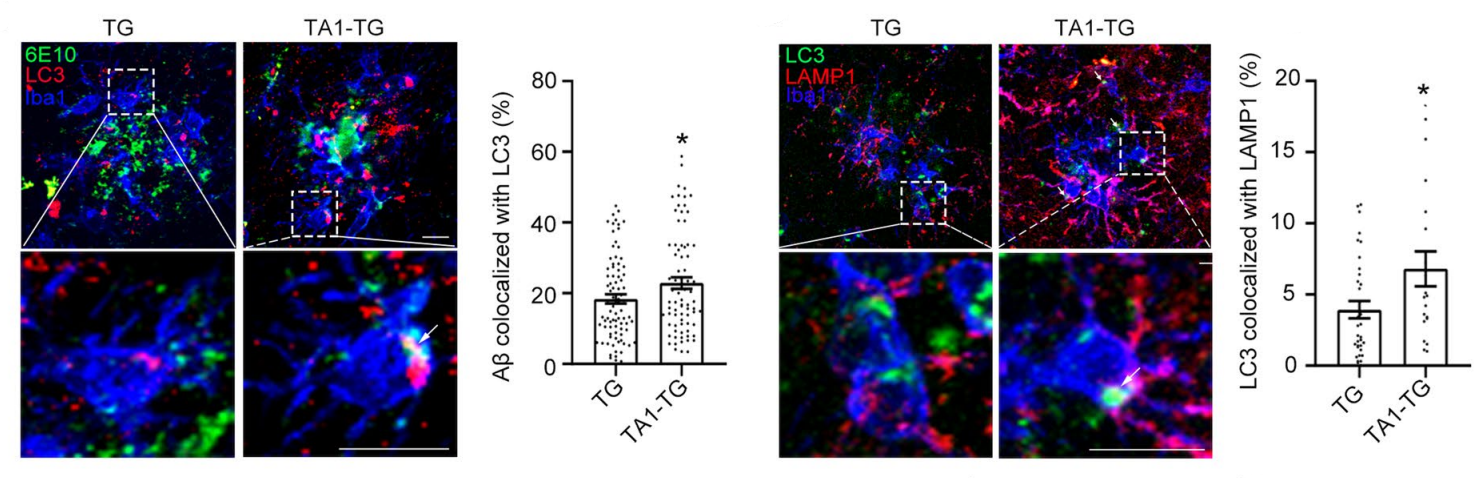
TFEB activator 1 (TA1) (10 mg/kg; p.o.; once daily for 3 months) upregulated the colocalization of Aβ with LC3 as well as the colocalization of LC3 with LAMP1 in PAM.
TFEB activator 1 purchased from MedChemExpress. Usage Cited in: J Neuroinflammation. 2023 Oct 20;20(1):240. [Abstract]
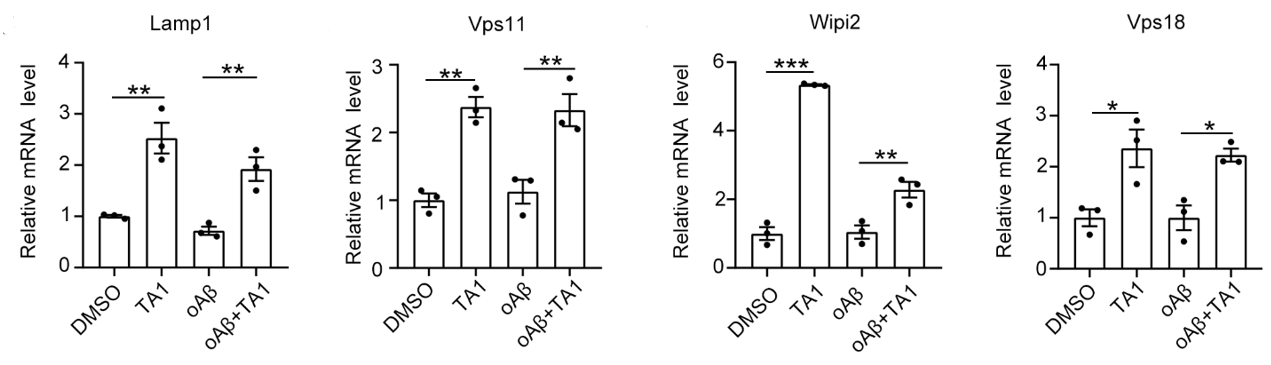
TFEB activator 1 (TA1) (1 μM; 12 h) upregulated the transcription activity of TFEB target genes Lamp1, Vps11, Wipi2, and Vps18 in PAM in vitro.
TFEB activator 1 purchased from MedChemExpress. Usage Cited in: J Neuroinflammation. 2023 Oct 20;20(1):240. [Abstract]
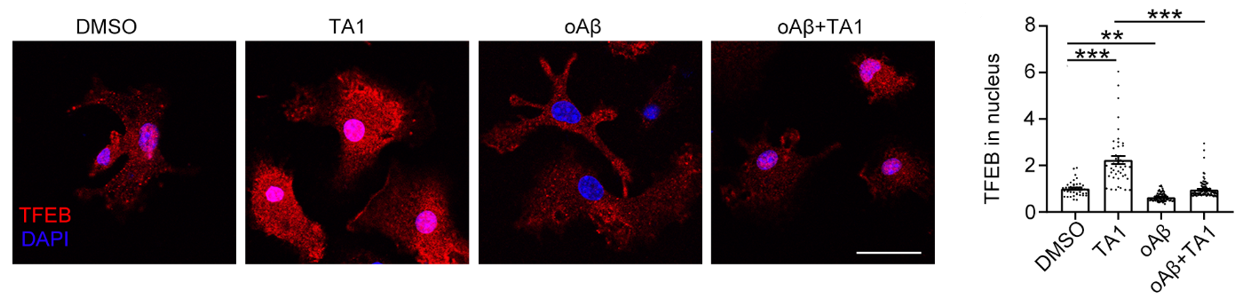
PAMs were fixed and stained with anti-TFEB antibody and DAPI. Nuclear translocation of TFEB was measured by quantifying the intensity of TFEB in DAPI. TFEB activator 1 (TA1) (1 μM; 12 h) upregulated the nuclear levels of TFEB in PAM.
-
-
Alzheimers Res Ther
Intermittent hypoxia training enhances Aβ endocytosis by plaque associated microglia via VPS35-dependent TREM2 recycling in murine Alzheimer's disease. [Abstract]2024 Jun 3;16(1):121. PMID: 38831312 -
Mol Med
REDD1 deficiency alleviates podocyte PANoptosis and restores autophagy in diabetic kidney disease. [Abstract]2026 May 21. PMID: 42168844 -
Aging Cell
TFEB Orchestrates Stress Recovery and Paves the Way for Senescence Induction in Human Dermal Fibroblasts. [Abstract]2025 Jul;24(7):e70083. PMID: 40312996 -
J Ethnopharmacol
2023 Jun 12:309:116365. PMID: 36907478 -
J Agric Food Chem
TFEB Dysfunction Mediates Lysosomal Membrane Permeabilization-Induced Pyroptosis in Deoxynivalenol-Exposed Intestinal Epithelium. [Abstract]2025 Oct 22. PMID: 41122856 -
Cell Mol Life Sci
Acetyl-CoA synthetase 2 alleviates brain injury following cardiac arrest by promoting autophagy in brain microvascular endothelial cells. [Abstract]2025 Apr 17;82(1):160. PMID: 40244361 -
Int Immunopharmacol
Cathepsin B regulated via TFEB and lysosomal membrane permeabilization in adipose tissue macrophages aggravates obesity-related severe acute pancreatitis. [Abstract]2026 Jul 1:180:116695. PMID: 42019387 -
Biochim Biophys Acta Mol Basis Dis
DNMT3B attenuates the development of thoracic aortic aneurysm and dissection by suppressing TFEB-mediated autophagy in vascular smooth muscle cells. [Abstract]2026 Jun 24;1872(7):168331. PMID: 42342163 -
Biochim Biophys Acta Mol Basis Dis
TFEB activator protects against ethanol toxicity-induced cardiac injury by restoring mitophagy and autophagic flux. [Abstract]2025 Mar;1871(3):167668. PMID: 39805395 -
Ren Fail
TXNIP deficiency attenuates renal fibrosis by modulating mTORC1/TFEB-mediated autophagy in diabetic kidney disease. [Abstract]2024 Dec;46(1):2338933. PMID: 38616177 -
Mol Immunol
Compound C1 reduced inflammation and activated autophagy in alveolar macrophages in mice. [Abstract]2025 Mar 25:181:139-147. PMID: 40138784 -


Solvent & Solubility
In Vitro:
DMSO : 125 mg/mL (424.68 mM; Need ultrasonic; Hygroscopic DMSO has a significant impact on the solubility of product, please use newly opened DMSO)
Please refer to the solubility information to select the appropriate solvent. The compound is unstable in solutions, freshly prepared is recommended.
Please refer to the solubility information to select the appropriate solvent. The compound is unstable in solutions, freshly prepared is recommended.
Concentration (start) × Volume (start) = Concentration (final) × Volume (final)
In Vivo:
Select the appropriate dissolution method based on your experimental animal and administration route.
- For the following dissolution methods, please ensure to first prepare a clear stock solution using an In Vitro approach and then sequentially add co-solvents:
- To ensure reliable experimental results, the clarified stock solution can be appropriately stored based on storage conditions. As for the working solution for In Vivo experiments, it is recommended to prepare freshly and use it on the same day.
- The percentages shown for the solvents indicate their volumetric ratio in the final prepared solution. If precipitation or phase separation occurs during preparation, heat and/or sonication can be used to aid dissolution.
For the following dissolution methods, please prepare the working solution directly:
It is recommended to prepare fresh solutions and use them promptly within a short period of time.
The percentages shown for the solvents indicate their volumetric ratio in the final prepared solution. If precipitation or phase separation occurs during preparation, heat and/or sonication can be used to aid dissolution.
Add each solvent one by one: 50% PEG300 50% Saline
Solubility: 4 mg/mL (13.59 mM); Suspended solution; Need ultrasonic
In Vivo Dissolution Calculator
Please enter the basic information of animal experiments:
-
-
-
-
Recommended: Prepare an additional quantity of animals to account for potential losses during experiments.
Please enter your animal formula composition:
-
%DMSO +
Recommended: Keep the proportion of DMSO in working solution below 2% if your animal is weak.
-
%+
-
+%Tween-80 + +
-
%Saline +
The co-solvents required include: DMSO, . All of co-solvents are available by MedChemExpress (MCE). , Tween 80. All of co-solvents are available by MedChemExpress (MCE).
Working solution concentration: 0.22 mg/mL
Method for preparing stock solution: mg drug dissolved in μL DMSO. Stock solution concentration: mg/mL. * The compound is unstable in solutions, freshly prepared is recommended.
1. Take μL DMSO stock solution;
2. Add μL .
μL , mix evenly;
3. Then add μL Tween 80, mix evenly;
4. Then add μL
Please ensure that the stock solution in the first step is dissolved to a clear state, and add co-solvents in sequence. You can use ultrasonic heating (ultrasonic cleaner, recommended frequency 20-40 kHz), vortexing, etc. to assist dissolution.


Purity & Documentation
-
Data Sheet (278 KB)
-
SDS (393 KB)
- English - EN (393 KB)
- Français - FR (393 KB)
- Deutsch - DE (393 KB)
- Norwegian - NO (393 KB)
- Español - ES (393 KB)
- Swedish - SV (393 KB)
- Italian - IT (393 KB)
- Korean - KR (393 KB)
- Portuguese - PT (393 KB)
-
Handling Instructions (2659 KB)
References


Complete Stock Solution Preparation Table
Please refer to the solubility information to select the appropriate solvent. The compound is unstable in solutions, freshly prepared is recommended.
| Optional Solvent | Concentration Solvent Mass | 1 mg | 5 mg | 10 mg | 25 mg |
|---|---|---|---|---|---|
| DMSO | 1 mM | 3.3974 mL | 16.9872 mL | 33.9743 mL | 84.9358 mL |
| 5 mM | 0.6795 mL | 3.3974 mL | 6.7949 mL | 16.9872 mL | |
| 10 mM | 0.3397 mL | 1.6987 mL | 3.3974 mL | 8.4936 mL | |
| 15 mM | 0.2265 mL | 1.1325 mL | 2.2650 mL | 5.6624 mL | |
| 20 mM | 0.1699 mL | 0.8494 mL | 1.6987 mL | 4.2468 mL | |
| 25 mM | 0.1359 mL | 0.6795 mL | 1.3590 mL | 3.3974 mL | |
| 30 mM | 0.1132 mL | 0.5662 mL | 1.1325 mL | 2.8312 mL | |
| 40 mM | 0.0849 mL | 0.4247 mL | 0.8494 mL | 2.1234 mL | |
| 50 mM | 0.0679 mL | 0.3397 mL | 0.6795 mL | 1.6987 mL | |
| 60 mM | 0.0566 mL | 0.2831 mL | 0.5662 mL | 1.4156 mL | |
| 80 mM | 0.0425 mL | 0.2123 mL | 0.4247 mL | 1.0617 mL | |
| 100 mM | 0.0340 mL | 0.1699 mL | 0.3397 mL | 0.8494 mL |


TFEB activator 1 Related Classifications
HY-135825 Related Classifications
 Powered by Bioz