



PF-4618433
Based on 6 publication(s) in Google Scholar
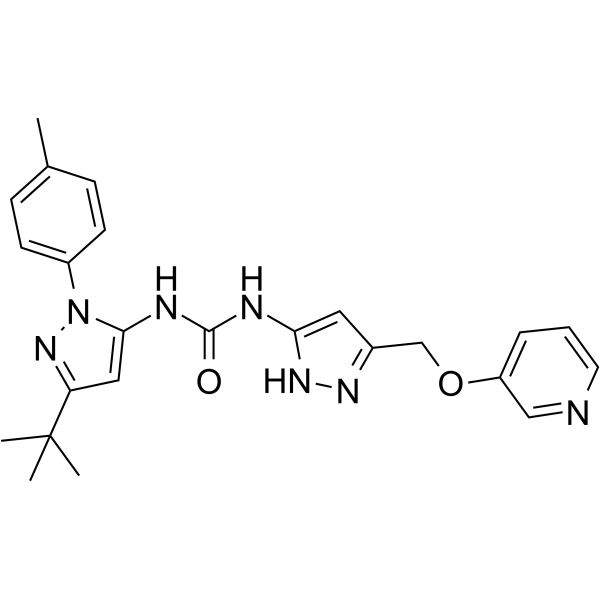
PF-4618433 is a potent and selective PYK2 inhibitor, with an IC50 of 637 nM. PF-4618433 may be suitable for the research of osteoporosis, craniofacial and appendicular skeletal defects and for targeted bone regeneration.
For research use only. We do not sell to patients.
- Purity : 98.0%
- CAS No.: 1166393-85-6
- Formula: C24H27N7O2
- Molecular Weight:445.52
-
Storage:Powder -20°C, 3 years , 4°C, 2 years ; In solvent -80°C, 6 months , -20°C, 1 month

To place orders, for customer services and technical support, please contact: MedChemExpress USA
Tel: 609-228-6898 E-mail: [email protected] [email protected]


-
 Biological Activity
-
Chemical Information
-
Solvent & Solubility
- Protocols
- Purity & Documentation
- References
-
 Help & FAQs


-
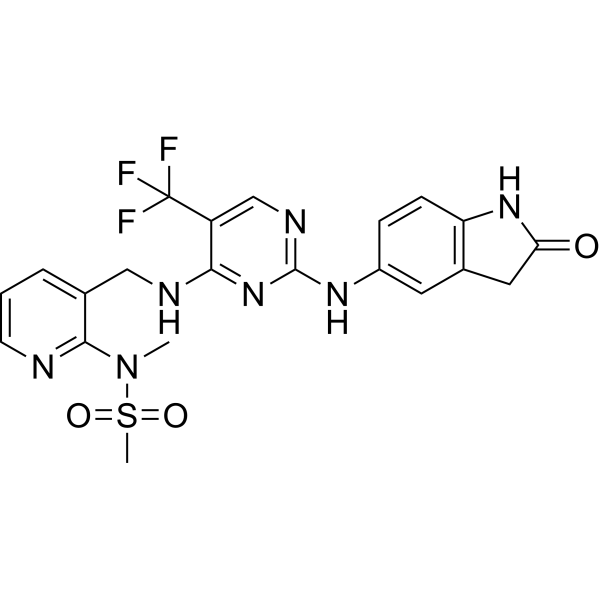
HY-10459
PF-562271FAK/Pyk2 Inhibitor -
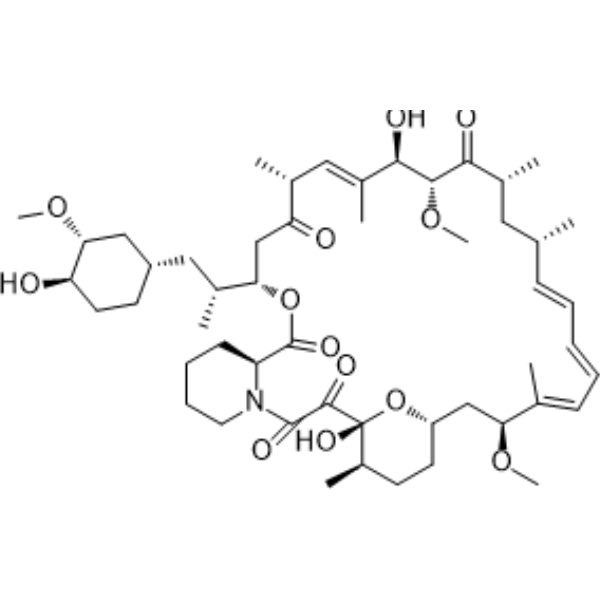
HY-10219
RapamycinmTOR Inhibitor -
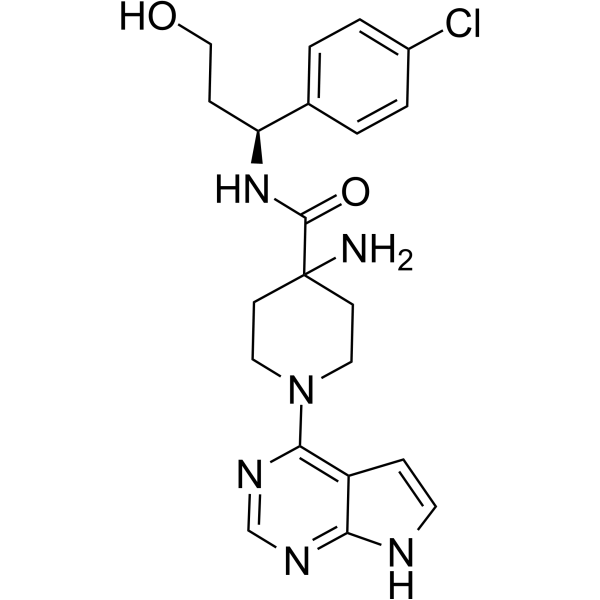
HY-15431
CapivasertibAkt Inhibitor -
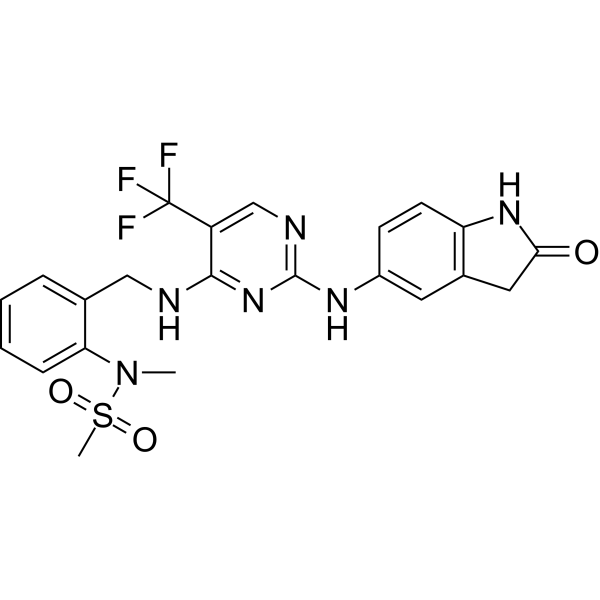
HY-10460
PF-431396Pyk2/FAK Inhibitor -
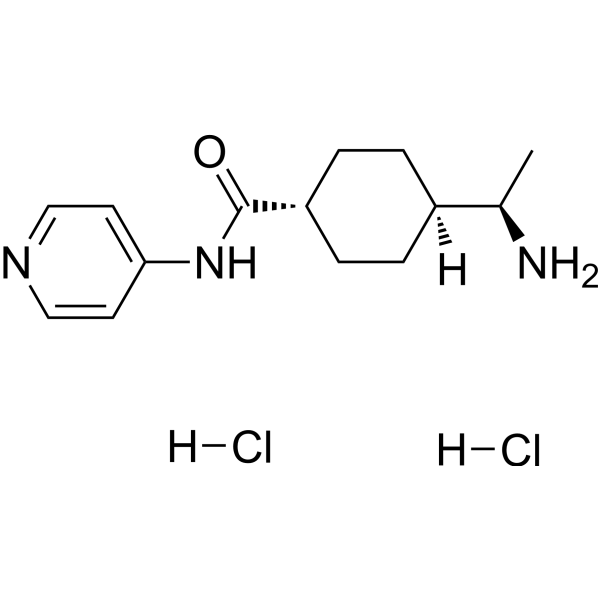
HY-10583
Y-27632 dihydrochlorideROCK Inhibitor -
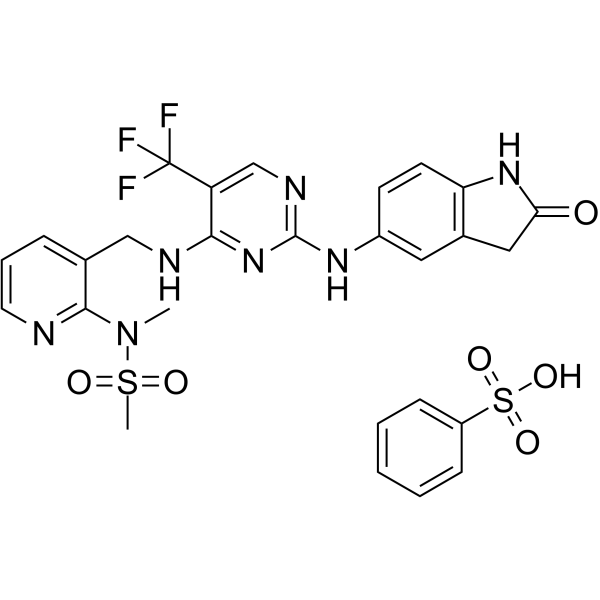
HY-10458
PF-562271 (besylate)FAK/Pyk2 Inhibitor -
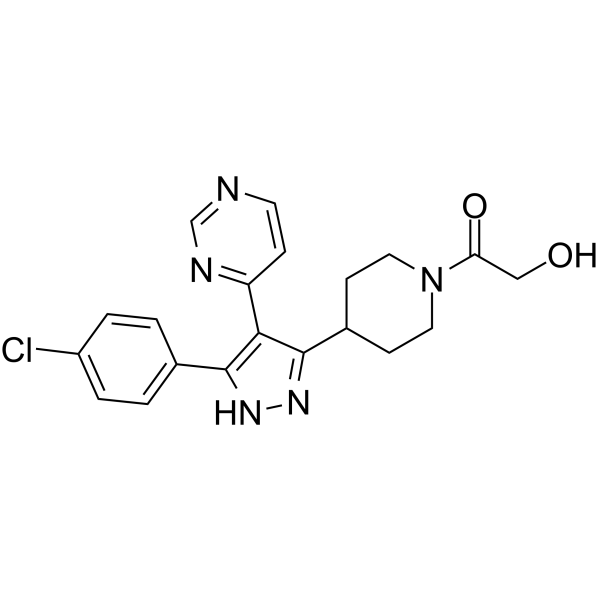
HY-11087
SD 0006p38α Selective Inhibitor -
HY-20403
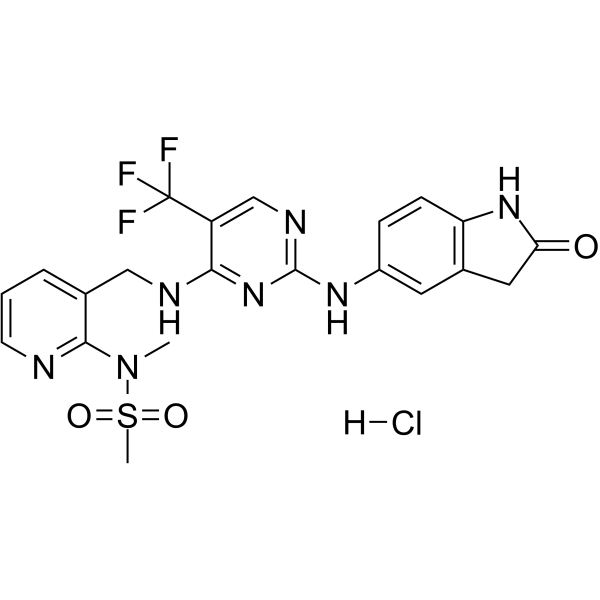
PF-562271 hydrochlorideFAK/Pyk2 Inhibitor -
HY-111424
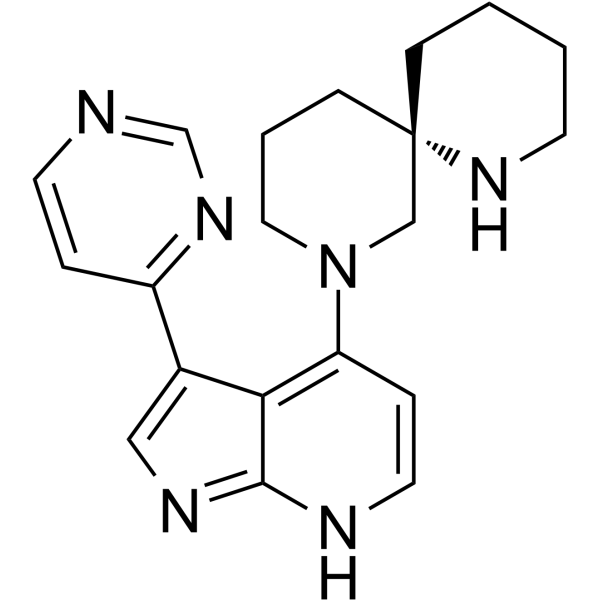
BDP9066MRCK Inhibitor -
HY-134653
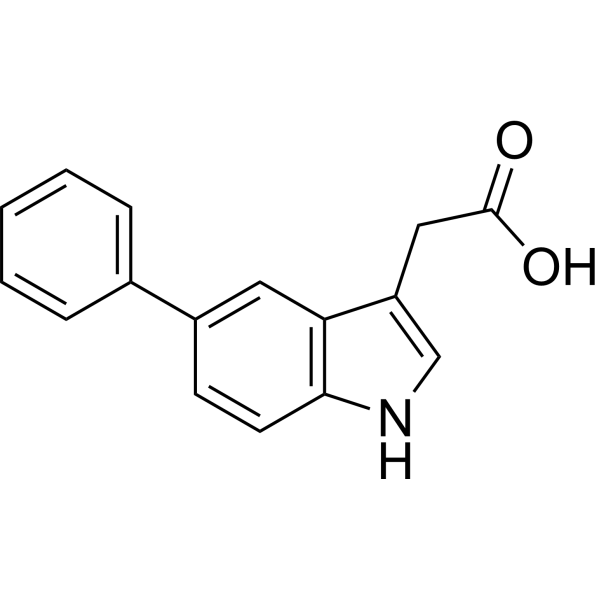
5-Ph-IAAAID2 Ligand -
HY-401485
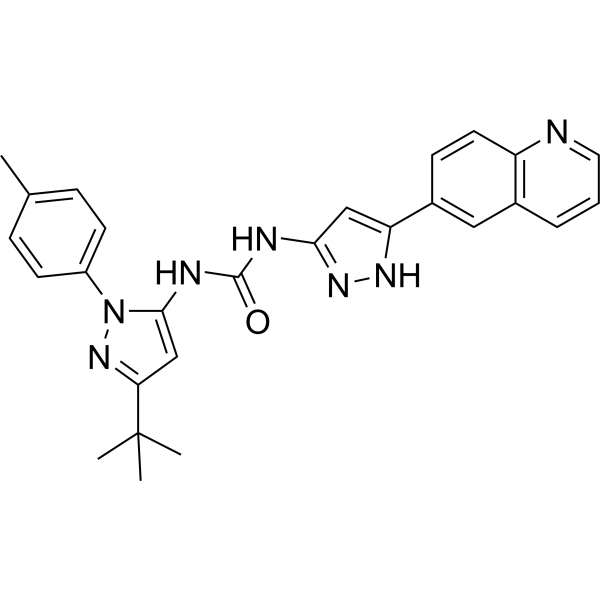
Pyk2-IN-2Pyk2 Inhibitor -
HY-112038A
GSK2983559RIPK2 Inhibitor
Publications Citing Use of MedChemExpress (MCE) PF-4618433
More

Biological Activity
Description
IC50 & Target
IC50: 637 nM (PYK2)[1]
Cellular Effect
|
Cell Line

|
Type | Value | Description | References |
|---|---|---|---|---|
| NIH3T3 | IC50 |
190 nM
Compound: 13l
|
Inhibition of PYK2 in mouse NIH-3T3 cells by LI-COR assay
Inhibition of PYK2 in mouse NIH-3T3 cells by LI-COR assay
|
[PMID: 23153798] |
In Vitro
PF-4618433 (0.1-1.0 μM; 7 days) promotes osteogenesis of hMSC cultures. PF-4618433 increases in both alkaline phosphatase (ALP) activity and mineralization in a dependent manner[1].
PF-4618433 (0.1-0.3 μM; 24 hours) enhances osteoblast proliferation[2].
PF-4618433 (0.0125-0.3 μM; 14 or 21 days) enhances calcium deposition at the concentrations of 0.1 and 0.3 μM[2].
MedChemExpress (MCE) has not independently confirmed the accuracy of these methods. They are for reference only. Further protocols information, click here.
-
Cell Line:Murine bone marrow-derived mesenchymal stem cells (BMSC)
-
Concentration:0.1, 0.3 μM
-
Incubation Time:24 hours
-
Result:Increased cell proliferation activity significantly when compared to the untreated or control group.


Chemical Information
-
CAS No. 1166393-85-6
-
Appearance Solid
-
Molecular Weight 445.52
-
Formula C24H27N7O2
-
Color White to off-white
-
SMILES
O=C(NC1=CC(COC2=CC=CN=C2)=NN1)NC3=CC(C(C)(C)C)=NN3C4=CC=C(C)C=C4
-
Shipping
Room temperature in continental US; may vary elsewhere.
-
Storage
Powder -20°C 3 years 4°C 2 years In solvent -80°C 6 months -20°C 1 month


Publications (6)
-
Journal Impact Factor
-
Most Recent
-
Cell Commun Signal
Integrin αVβ1-activated PYK2 promotes the progression of non-small-cell lung cancer via the STAT3-VGF axis. [Abstract]2024 Jun 6;22(1):313. PMID: 38844957 -
Cell Rep
Architecture of androgen receptor pathways amplifying glucagon-like peptide-1 insulinotropic action in male pancreatic β cells. [Abstract]2023 May 17;42(5):112529. PMID: 37200193 -
J Neural Transm (Vienna)
Pyk2 dysregulation in temporal lobe epilepsy: insights from human resected tissues and pharmacological modulation in a rodent model. [Abstract]2025 Oct 6. PMID: 41051547 -
Cardiovasc Ther
Lycorine Attenuates Cardiac Fibrosis Through the Regulation of PYK2 Expression and Activity. [Abstract]2026;2026(1):e9031925. PMID: 42301000 -
-
Biomed Pharmacother
2024 May:174:116550. PMID: 38593702


Solvent & Solubility
In Vitro:
DMSO : 100 mg/mL (224.46 mM; Need ultrasonic; Hygroscopic DMSO has a significant impact on the solubility of product, please use newly opened DMSO)
Please refer to the solubility information to select the appropriate solvent. Once prepared, please aliquot and store the solution to prevent product inactivation from repeated freeze-thaw cycles.
Storage method and period of stock solution: -80°C, 6 months; -20°C, 1 month. When stored at -80°C, please use it within 6 months. When stored at -20°C, please use it within 1 month.
Please refer to the solubility information to select the appropriate solvent. Once prepared, please aliquot and store the solution to prevent product inactivation from repeated freeze-thaw cycles.
Storage method and period of stock solution: -80°C, 6 months; -20°C, 1 month. When stored at -80°C, please use it within 6 months. When stored at -20°C, please use it within 1 month.
Concentration (start) × Volume (start) = Concentration (final) × Volume (final)
In Vivo:
Select the appropriate dissolution method based on your experimental animal and administration route.
- For the following dissolution methods, please ensure to first prepare a clear stock solution using an In Vitro approach and then sequentially add co-solvents:
- To ensure reliable experimental results, the clarified stock solution can be appropriately stored based on storage conditions. As for the working solution for In Vivo experiments, it is recommended to prepare freshly and use it on the same day.
- The percentages shown for the solvents indicate their volumetric ratio in the final prepared solution. If precipitation or phase separation occurs during preparation, heat and/or sonication can be used to aid dissolution.
Add each solvent one by one: 10% DMSO 40% PEG300 5% Tween-80 45% Saline
Solubility: ≥ 2.5 mg/mL (5.61 mM); Clear solution
This protocol yields a clear solution of ≥ 2.5 mg/mL (saturation unknown).
Taking 1 mL working solution as an example, add 100 μL DMSO stock solution (25.0 mg/mL) to 400 μL PEG300, and mix evenly; then add 50 μL Tween-80 and mix evenly; then add 450 μL Saline to adjust the volume to 1 mL.
Preparation of Saline: Dissolve 0.9 g sodium chloride in ddH₂O and dilute to 100 mL to obtain a clear Saline solution.
Add each solvent one by one: 10% DMSO 90% (20% SBE-β-CD in Saline)
Solubility: ≥ 2.5 mg/mL (5.61 mM); Clear solution
This protocol yields a clear solution of ≥ 2.5 mg/mL (saturation unknown).
Taking 1 mL working solution as an example, add 100 μL DMSO stock solution (25.0 mg/mL) to 900 μL 20% SBE-β-CD in Saline, and mix evenly.
Preparation of 20% SBE-β-CD in Saline (4°C, storage for one week): 2 g SBE-β-CD powder is dissolved in 10 mL Saline, completely dissolve until clear.
In Vivo Dissolution Calculator
Please enter the basic information of animal experiments:
-
-
-
-
Recommended: Prepare an additional quantity of animals to account for potential losses during experiments.
Please enter your animal formula composition:
-
%DMSO +
Recommended: Keep the proportion of DMSO in working solution below 2% if your animal is weak.
-
%+
-
+%Tween-80 + +
-
%Saline +
The co-solvents required include: DMSO, . All of co-solvents are available by MedChemExpress (MCE). , Tween 80. All of co-solvents are available by MedChemExpress (MCE).
Working solution concentration: 0.22 mg/mL
Method for preparing stock solution: mg drug dissolved in μL DMSO. Stock solution concentration: mg/mL.
1. Take μL DMSO stock solution;
2. Add μL .
μL , mix evenly;
3. Then add μL Tween 80, mix evenly;
4. Then add μL
Please ensure that the stock solution in the first step is dissolved to a clear state, and add co-solvents in sequence. You can use ultrasonic heating (ultrasonic cleaner, recommended frequency 20-40 kHz), vortexing, etc. to assist dissolution.

Protocols
-
Cell Cytotoxicity Assay
Cytotoxicity assays are usually based on the assessment of cell membrane damage, which can also be indirectly detected by measuring cell viability. Detection methods include MTT assay, CKK-8 assay, LDH assay and ATP assay, etc.


Purity & Documentation
-
Data Sheet (277 KB)
-
SDS (251 KB)
- English - EN (251 KB)
- Français - FR (251 KB)
- Deutsch - DE (251 KB)
- Norwegian - NO (251 KB)
- Español - ES (251 KB)
- Swedish - SV (251 KB)
- Italian - IT (251 KB)
- Korean - KR (251 KB)
- Portuguese - PT (251 KB)
-
Handling Instructions (2659 KB)
References
[1]. Seungil H, et, al. Structural Characterization of Proline-Rich Tyrosine Kinase 2 (PYK2) Reveals a Unique (DFG-out) Conformation and Enables Inhibitor Design. J Biol Chem. 2009 May 8; 284(19): 13193-201. [Content Brief]
[2]. Sumana P, et, al. A Pyk2 Inhibitor Incorporated Into a PEGDA-gelatin Hydrogel Promotes Osteoblast Activity and Mineral Deposition. Biomed Mater. 2019 Feb 27; 14(2): 025015. [Content Brief]


Complete Stock Solution Preparation Table
Please refer to the solubility information to select the appropriate solvent. Once prepared, please aliquot and store the solution to prevent product inactivation from repeated freeze-thaw cycles.
Storage method and period of stock solution: -80°C, 6 months; -20°C, 1 month. When stored at -80°C, please use it within 6 months. When stored at -20°C, please use it within 1 month.
| Optional Solvent | Concentration Solvent Mass | 1 mg | 5 mg | 10 mg | 25 mg |
|---|---|---|---|---|---|
| DMSO | 1 mM | 2.2446 mL | 11.2228 mL | 22.4457 mL | 56.1142 mL |
| 5 mM | 0.4489 mL | 2.2446 mL | 4.4891 mL | 11.2228 mL | |
| 10 mM | 0.2245 mL | 1.1223 mL | 2.2446 mL | 5.6114 mL | |
| 15 mM | 0.1496 mL | 0.7482 mL | 1.4964 mL | 3.7409 mL | |
| 20 mM | 0.1122 mL | 0.5611 mL | 1.1223 mL | 2.8057 mL | |
| 25 mM | 0.0898 mL | 0.4489 mL | 0.8978 mL | 2.2446 mL | |
| 30 mM | 0.0748 mL | 0.3741 mL | 0.7482 mL | 1.8705 mL | |
| 40 mM | 0.0561 mL | 0.2806 mL | 0.5611 mL | 1.4029 mL | |
| 50 mM | 0.0449 mL | 0.2245 mL | 0.4489 mL | 1.1223 mL | |
| 60 mM | 0.0374 mL | 0.1870 mL | 0.3741 mL | 0.9352 mL | |
| 80 mM | 0.0281 mL | 0.1403 mL | 0.2806 mL | 0.7014 mL | |
| 100 mM | 0.0224 mL | 0.1122 mL | 0.2245 mL | 0.5611 mL |


PF-4618433 Related Classifications
HY-18312 Related Classifications
 Powered by Bioz