



Zoniporide hydrochloride hydrate
Based on 2 publication(s) in Google Scholar
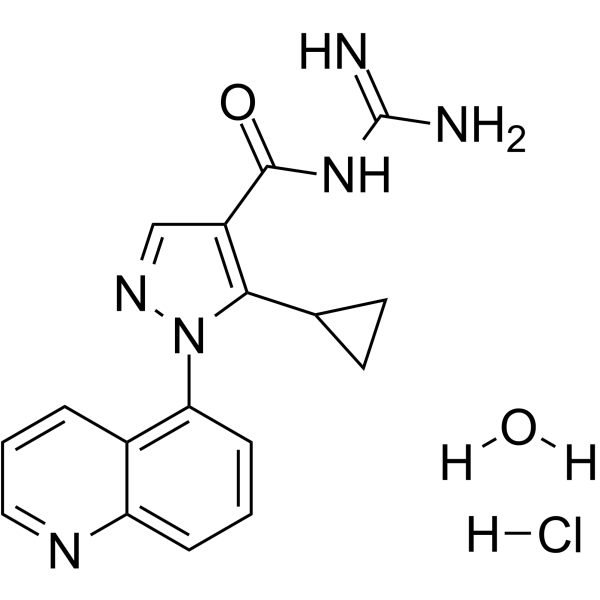
Zoniporide hydrochloride hydrate (CP-597396 hydrochloride hydrate) is a selective Na+/H+ exchanger subtype 1 (NHE1) inhibitor with cardioprotective activity, with IC50 values of 67 nM and 73 nM against rat NHE1. Zoniporide hydrochloride hydrate reduces intracellular Na+ and Ca2+ overload, preserves mitochondrial integrity, activates pro-survival ERK1/2 and STAT3 signaling pathways, reduces necrosis and apoptosis, and decreases neutrophil aggregation. Zoniporide hydrochloride hydrate is applicable to research related to myocardial ischemia-reperfusion injury and heart graft ischemia-reperfusion injury.
For research use only. We do not sell to patients.
- Purity : 99.16%
- CAS No.: 863406-85-3
- Formula: C17H19ClN6O2
- Molecular Weight:374.82
-
Storage:
4°C, sealed storage, away from moisture
* In solvent : -80°C, 6 months; -20°C, 1 month (sealed storage, away from moisture)

To place orders, for customer services and technical support, please contact: MedChemExpress USA
Tel: 609-228-6898 E-mail: [email protected] [email protected]


-
 Biological Activity
-
Chemical Information
-
Solvent & Solubility
- Protocols
- Purity & Documentation
- References
-
 Help & FAQs


-
HY-19693
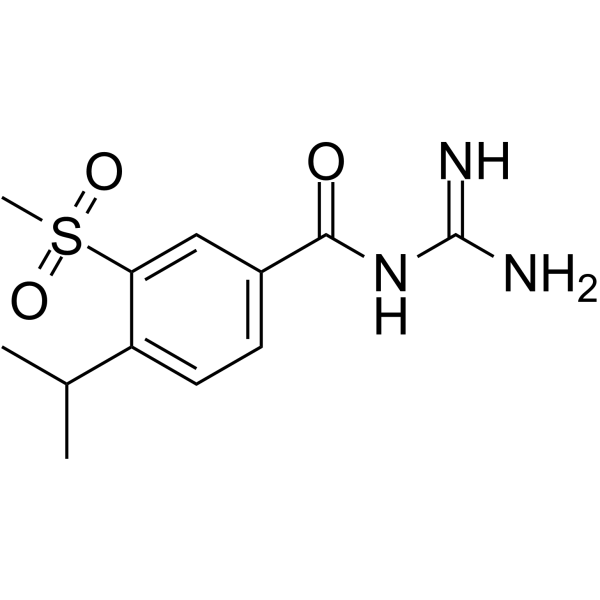
CariporideNa+/H+ Exchange Inhibitor -
HY-106150B
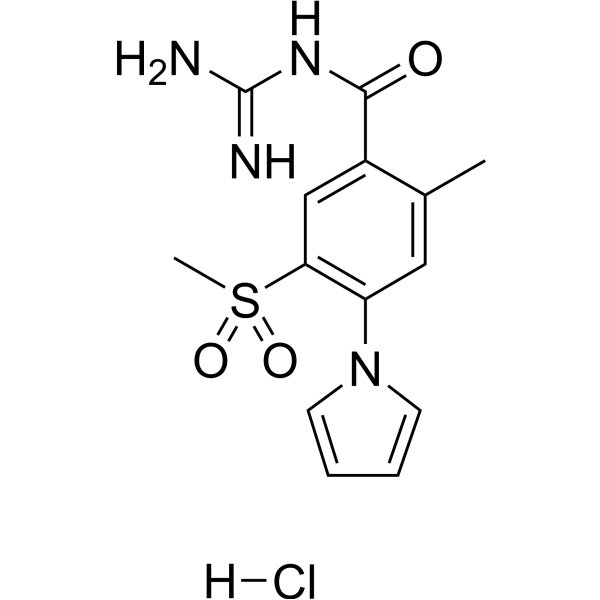
Eniporide hydrochlorideNa+/H+ Exchange Inhibitor -
HY-18071A
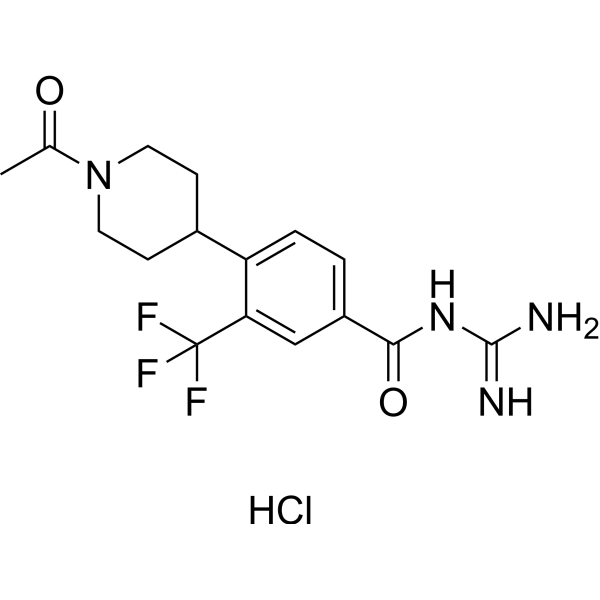
BI-9627 hydrochlorideNHE1 Inhibitor -
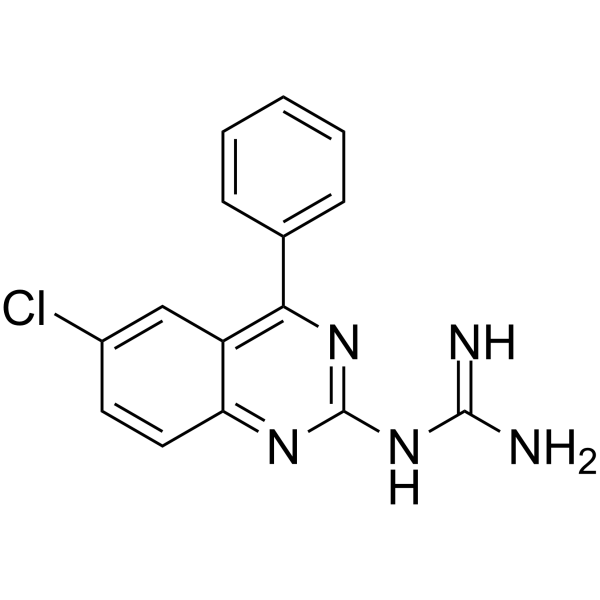
HY-139313
NHE3-IN-2NHE3 Inhibitor -
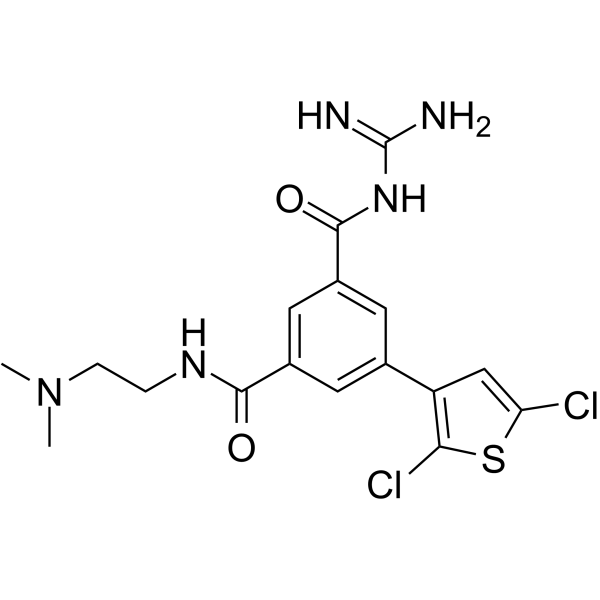
HY-100302
FR183998 free baseNa+/H+-Exchange Inhibitor -
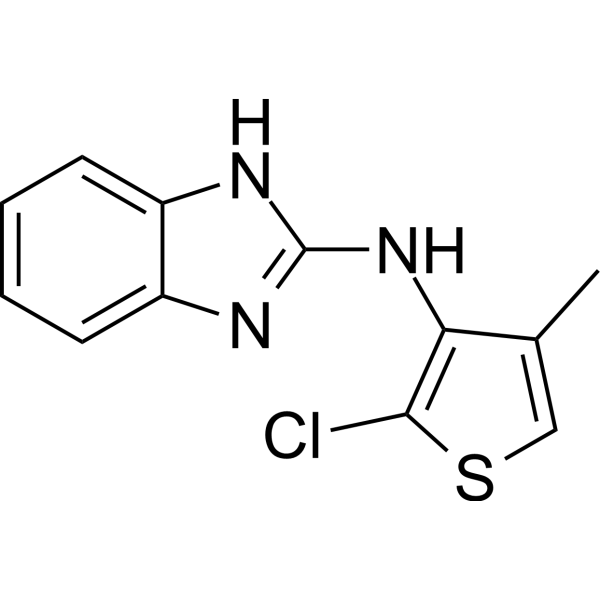
HY-100325
NHE3-IN-1NHE-3 Inhibitor -
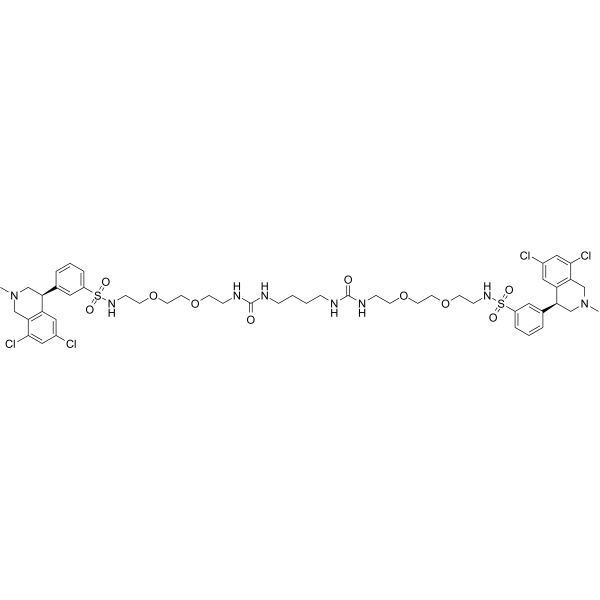
HY-15991
TenapanorNHE3 Inhibitor -

HY-105064
ZoniporideNHE1 Inhibitor -

HY-100302R
FR183998 free base (Standard)Na+/H+-Exchange Inhibitor -
HY-132181
Dimethylamiloride hydrochlorideNHE Inhibitor -

HY-105064DR
Zoniporide hydrochloride hydrate (Standard)Reference Standard -
HY-15991A
Tenapanor hydrochlorideNHE3 Inhibitor
Publications Citing Use of MedChemExpress (MCE) Zoniporide hydrochloride hydrate
More

Biological Activity
Description
|
Rat NHE1 67-73 nM (IC50) |
Human NHE-1 59 nM (IC50) |
ERK1 |
ERK2 |
STAT3 |
In Vitro
Zoniporide (1 nM‑100 μM; 6 min) hydrochloride hydrate (CP-597396hydrochloride hydrate) potently inhibits human NHE-1-mediated 22Na+ uptake in PS120 fibroblast cells with an IC50 of 14 nM[2].
Zoniporide (1 nM‑100 μM; 6 min) hydrochloride hydrate inhibits human NHE-2-mediated 22Na+ uptake in PS120 fibroblast cells with an IC50 of 2.2 μM, showing 157-fold lower potency than for human NHE-1[2].
Zoniporide (1 nM‑100 μM; 6 min) hydrochloride hydrate inhibits rat NHE-3-mediated 22Na+ uptake in PS120 fibroblast cells with an IC50 of 220 μM, showing 15,700-fold lower potency than for human NHE-1[2].
Zoniporide (1 nM‑100 μM) hydrochloride hydrate potently inhibits endogenous NHE-1-mediated swelling in human platelet-rich plasma with an IC50 of 0.059 μM[2].
Zoniporide (compound 3d) hydrochloride hydrate potently and selectively inhibits human NHE-1 (IC50 = 59 nM) in transfected fibroblasts[3].
Zoniporide (0.001-1.0 μM; 8 min at 25°C; 0.01-1.0 μM; 8 min at 37°C) hydrochloride hydrate potently inhibits native NHE1 activity in adult rat ventricular myocytes with an IC50 of 73 nM at 25°C, and retains comparable inhibitory potency at 37°C[4].
Zoniporide (0.001-1.0 μM; 5 min) hydrochloride hydrate potently inhibits native NHE1 activity in adult rat platelets with an IC50 of 67 nM[4].
MedChemExpress (MCE) has not independently confirmed the accuracy of these methods. They are for reference only. Further protocols information, click here.
In Vivo
MedChemExpress (MCE) has not independently confirmed the accuracy of these methods. They are for reference only.
-
Animal Model:Landrace (juvenile, 40-60 kg, mixed gender, orthotopic heart transplantation with donor brain death induced by subdural Foley catheter balloon inflation, ~260 minutes total ischemic time)[5]
-
Dosage:1 mM
-
Administration:Added to Celsior solution for donor cardiac arrest and cold storage
-
Result:Achieved 40% successful cardiopulmonary bypass weaning rate in combination with glyceryl trinitrate; post-transplant left ventricular minute work, cardiac output, and mean arterial pressure remained at less than half the baseline value, and decreased stroke work index by 12% at 3.25 hours post-weaning.
Achieved 80% successful cardiopulmonary bypass weaning rate in combination with erythropoietin and glyceryl trinitrate; post-transplant left ventricular minute work, cardiac output, and mean arterial pressure remained similar to baseline values, and increased stroke work index by 30% at 3.25 hours post-weaning.
Resulted in plasma cardiac troponin I levels of 60.3 μg/L at 1 hour post-reperfusion, 128.8 μg/L at 2 hours post-reperfusion, and 206.2 μg/L at 3 hours post-reperfusion in combination with erythropoietin and glyceryl trinitrate, which were lower than levels in the group receiving zoniporide plus glyceryl trinitrate at all corresponding time points.


Chemical Information
-
CAS No. 863406-85-3
-
Appearance Solid
-
Molecular Weight 374.82
-
Formula C17H19ClN6O2
-
Color White to off-white
-
SMILES
O=C(C1=C(C2CC2)N(C3=C4C=CC=NC4=CC=C3)N=C1)NC(N)=N.[H]Cl.[H]O[H]
-
Synonyms
CP-597396 hydrochloride hydrate
-
Shipping
Room temperature in continental US; may vary elsewhere.
-
Storage
4°C, sealed storage, away from moisture
* In solvent : -80°C, 6 months; -20°C, 1 month (sealed storage, away from moisture)


Publications (2)
-
Journal Impact Factor
-
Most Recent
-
Carbohydr Polym
Slc9a1 plays a vital role in chitosan oligosaccharide transport across the intestinal mucosa of mice. [Abstract]2023 Jan 1:299:120179. PMID: 36876794 -
J Biol Chem
Type 2 diabetic mice enter a state of spontaneous hibernation-like suspended animation following accumulation of uric acid. [Abstract]2021 Oct;297(4):101166. PMID: 34487763


Solvent & Solubility
In Vitro:
H2O : ≥ 100 mg/mL (266.79 mM)
DMSO : 20 mg/mL (53.36 mM; ultrasonic and warming and heat to 60°C; Hygroscopic DMSO has a significant impact on the solubility of product, please use newly opened DMSO)
* "≥" means soluble, but saturation unknown.
Please refer to the solubility information to select the appropriate solvent. Once prepared, please aliquot and store the solution to prevent product inactivation from repeated freeze-thaw cycles.
Storage method and period of stock solution: -80°C, 6 months; -20°C, 1 month (sealed storage, away from moisture). When stored at -80°C, please use it within 6 months. When stored at -20°C, please use it within 1 month.
* Note: If you choose water as the stock solution, please dilute it to the working solution, then filter and sterilize it with a 0.22 μm filter before use.
Please refer to the solubility information to select the appropriate solvent. Once prepared, please aliquot and store the solution to prevent product inactivation from repeated freeze-thaw cycles.
Storage method and period of stock solution: -80°C, 6 months; -20°C, 1 month (sealed storage, away from moisture). When stored at -80°C, please use it within 6 months. When stored at -20°C, please use it within 1 month.
* Note: If you choose water as the stock solution, please dilute it to the working solution, then filter and sterilize it with a 0.22 μm filter before use.
Concentration (start) × Volume (start) = Concentration (final) × Volume (final)
In Vivo:
Select the appropriate dissolution method based on your experimental animal and administration route.
- For the following dissolution methods, please ensure to first prepare a clear stock solution using an In Vitro approach and then sequentially add co-solvents:
- To ensure reliable experimental results, the clarified stock solution can be appropriately stored based on storage conditions. As for the working solution for In Vivo experiments, it is recommended to prepare freshly and use it on the same day.
- The percentages shown for the solvents indicate their volumetric ratio in the final prepared solution. If precipitation or phase separation occurs during preparation, heat and/or sonication can be used to aid dissolution.
Add each solvent one by one: 10% DMSO 40% PEG300 5% Tween-80 45% Saline
Solubility: ≥ 2 mg/mL (5.34 mM); Clear solution
This protocol yields a clear solution of ≥ 2 mg/mL (saturation unknown).
Taking 1 mL working solution as an example, add 100 μL DMSO stock solution (20.0 mg/mL) to 400 μL PEG300, and mix evenly; then add 50 μL Tween-80 and mix evenly; then add 450 μL Saline to adjust the volume to 1 mL.
Preparation of Saline: Dissolve 0.9 g sodium chloride in ddH₂O and dilute to 100 mL to obtain a clear Saline solution.
Add each solvent one by one: 10% DMSO 90% (20% SBE-β-CD in Saline)
Solubility: ≥ 2 mg/mL (5.34 mM); Clear solution
This protocol yields a clear solution of ≥ 2 mg/mL (saturation unknown).
Taking 1 mL working solution as an example, add 100 μL DMSO stock solution (20.0 mg/mL) to 900 μL 20% SBE-β-CD in Saline, and mix evenly.
Preparation of 20% SBE-β-CD in Saline (4°C, storage for one week): 2 g SBE-β-CD powder is dissolved in 10 mL Saline, completely dissolve until clear.
In Vivo Dissolution Calculator
Please enter the basic information of animal experiments:
-
-
-
-
Recommended: Prepare an additional quantity of animals to account for potential losses during experiments.
Working solution concentration: 0.22 mg/mL
This product has good water solubility, please refer to the measured solubility data in water/PBS/Saline for details.

Protocols
-
Apoptosis
Apoptosis, also called programmed cell death, is generally characterized by distinct morphological characteristics.
-
TUNEL staining for apoptotic DNA fragmentation
TUNEL staining detects DNA strand breaks by using terminal deoxynucleotidyl transferase to add labeled nucleotides to exposed 3′-OH DNA termini, generating either microscopic staining in fixed cells or tissue sections, or fluorescence/cytometric signal in cell suspensions. TUNEL positivity reflects DNA fragmentation but should not be interpreted alone as definitive apoptosis, because TUNEL can also label necrotic, autolytic, mechanically damaged, or DNA-repair-associated DNA breaks.
-
Cell Cytotoxicity Assay
Cytotoxicity assays are usually based on the assessment of cell membrane damage, which can also be indirectly detected by measuring cell viability. Detection methods include MTT assay, CKK-8 assay, LDH assay and ATP assay, etc.
-
Annexin V plus membrane-impermeant dye apoptosis staining
Annexin V-based apoptosis assays rely on the detection of phosphatidylserine (PS) externalization from the inner leaflet of the plasma membrane to the outer leaflet, an early biochemical hallmark of apoptosis. Fluorescently labeled Annexin V binds PS in a calcium-dependent manner, enabling identification of early apoptotic cells by flow cytometry or fluorescence microscopy. When combined with a membrane-impermeant DNA-binding dye (e. g. , propidium iodide), this approach allows discrimination between viable (Annexin V−/dye−), early apoptotic (Annexin V+/dye−), and late apoptotic or necrotic (Annexin V+/dye+) cell populations by assessing membrane integrity and PS exposure.
-
Apoptosis Solutions
Apoptosis is a regulated, generally non-lytic cell-death pathway that removes unwanted, damaged, infected, or abnormal cells through coordinated morphological changes, caspase activation, DNA fragmentation, and membrane remodeling. The intrinsic apoptosis pathway is controlled mainly by mitochondrial outer membrane permeabilization, BCL-2 family proteins, cytochrome c release, apoptosome formation, caspase-9 activation, and downstream executioner caspase-3/7 activation. The extrinsic apoptosis pathway is initiated by death receptors such as Fas, TNFR, and TRAIL receptors, which recruit adaptor proteins and activate caspase-8 before engaging executioner caspases or mitochondrial amplification through BID cleavage. Apoptosis is linked to many phenotypes, including cancer cell killing, tissue homeostasis, immune regulation, neurodegeneration, infection response, and treatment-induced cytotoxicity; unresolved questions include how apoptosis interacts with necroptosis, pyroptosis, ferroptos
-
Ca2+ Staining Technique
Ca2+ staining is an experimental technique that utilizes specific fluorescent probes (such as Fluo-4 AM, Fura-2, etc.) to qualitatively or quantitatively detect dynamic changes in intracellular Ca2+ concentrations; this is achieved by monitoring the changes in fluorescent signals generated when these probes bind to free intracellular calcium ions. The underlying principle relies primarily on the presence of chelating groups within the probe's molecular structure that possess high affinity for calcium ions.


Purity & Documentation
-
Data Sheet (300 KB)
-
SDS (252 KB)
- English - EN (252 KB)
- Français - FR (252 KB)
- Deutsch - DE (252 KB)
- Norwegian - NO (252 KB)
- Español - ES (252 KB)
- Swedish - SV (252 KB)
- Italian - IT (252 KB)
- Korean - KR (252 KB)
- Portuguese - PT (252 KB)
-
Handling Instructions (2659 KB)
References
[2]. Marala RB, et al. Zoniporide: a potent and highly selective inhibitor of human Na(+)/H(+) exchanger-1. European journal of pharmacology. 2002 Sep 06;451(1):37-41. [Content Brief]
[3]. Guzman-Perez A, et al. Discovery of zoniporide: a potent and selective sodium-hydrogen exchanger type 1 (NHE-1) inhibitor with high aqueous solubility. Bioorganic & medicinal chemistry letters. 2001 Mar 26;11(6):803-7. [Content Brief]
[5]. Watson AJ, et al. Enhanced preservation of pig cardiac allografts by combining erythropoietin with glyceryl trinitrate and zoniporide. American journal of transplantation : official journal of the American Society of Transplantation and the American Society of Transplant Surgeons. 2013 Jul;13(7):1676-87. [Content Brief]


Complete Stock Solution Preparation Table
Please refer to the solubility information to select the appropriate solvent. Once prepared, please aliquot and store the solution to prevent product inactivation from repeated freeze-thaw cycles.
Storage method and period of stock solution: -80°C, 6 months; -20°C, 1 month (sealed storage, away from moisture). When stored at -80°C, please use it within 6 months. When stored at -20°C, please use it within 1 month.
| Optional Solvent | Concentration Solvent Mass | 1 mg | 5 mg | 10 mg | 25 mg |
|---|---|---|---|---|---|
| DMSO / H2O | 1 mM | 2.6679 mL | 13.3397 mL | 26.6795 mL | 66.6987 mL |
| 5 mM | 0.5336 mL | 2.6679 mL | 5.3359 mL | 13.3397 mL | |
| 10 mM | 0.2668 mL | 1.3340 mL | 2.6679 mL | 6.6699 mL | |
| 15 mM | 0.1779 mL | 0.8893 mL | 1.7786 mL | 4.4466 mL | |
| 20 mM | 0.1334 mL | 0.6670 mL | 1.3340 mL | 3.3349 mL | |
| 25 mM | 0.1067 mL | 0.5336 mL | 1.0672 mL | 2.6679 mL | |
| 30 mM | 0.0889 mL | 0.4447 mL | 0.8893 mL | 2.2233 mL | |
| 40 mM | 0.0667 mL | 0.3335 mL | 0.6670 mL | 1.6675 mL | |
| 50 mM | 0.0534 mL | 0.2668 mL | 0.5336 mL | 1.3340 mL | |
| H2O | 60 mM | 0.0445 mL | 0.2223 mL | 0.4447 mL | 1.1116 mL |
| 80 mM | 0.0333 mL | 0.1667 mL | 0.3335 mL | 0.8337 mL | |
| 100 mM | 0.0267 mL | 0.1334 mL | 0.2668 mL | 0.6670 mL |
* Note: If you choose water as the stock solution, please dilute it to the working solution, then filter and sterilize it with a 0.22 μm filter before use.


Zoniporide hydrochloride hydrate Related Classifications
HY-105064D Related Classifications
 Powered by Bioz
Keywords