



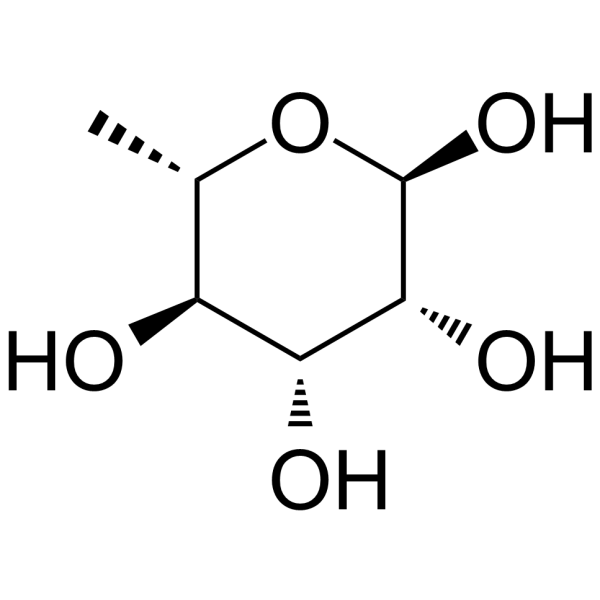
α-L-Rhamnose
α-L-Rhamnose is a neutral sugar present in plants, animals, viruses and bacteria. α-L-Rhamnose is a ligand for α-L-rhamnose-recognizing lectin sites, trigger intracellular signaling pathways. α-L-Rhamnose induces rhaE and rhaA expression as a specific carbon source in Aspergillus nidulans, while glucose inhibits its cellular uptake. α-L-Rhamnose induces rapid and transient increases in intracellular free Ca2+ concentration in normal human dermal fibroblasts.
Para uso exclusivo en investigación. No vendemos a pacientes.
- No. CAS: 6014-42-2
- Fòrmula: C6H12O5
- Peso molecular:164.16
-
Almacenamiento:
Please store the product under the recommended conditions in the Certificate of Analysis.

To place orders, for customer services and technical support, please contact: MedChemExpress USA
Tel: 609-228-6898 E-mail: [email protected] [email protected]


-
 Actividad biológica
-
Chemical Information
- Protocolo
- Pureza y Documentación
- Referencias
-
 Help & FAQs


Ver todos los productos específicos de isoformas Endogenous Metabolite
More

Actividad biológica
Descripciòn
In Vitro
α-L-Rhamnose (10 μg/mL; ~15 minutes) triggers early, transient increases in intracellular free Ca2+ concentration in a subset of normal human dermal fibroblasts (NHDFs)[1].
α-L-Rhamnose (1% w/v; 1-24 h) induces rapid transcriptional upregulation of rhaE and rhaA in both Aspergillus nidulans wild-type and creAd30 derepressed strains, with greater transcript accumulation observed in the creAd30 strain[2].
α-L-Rhamnose (1% w/v; up to 48 h) is consumed by Aspergillus nidulans wild-type and creAd30 derepressed strains over 48 h, inducing extracellular α-L-rhamnosidase activity, while concurrent glucose presence blocks it uptake and enzyme activity in both strains[2].
α-L-Rhamnose (1% w/v; up to 30 h) is consumed by Aspergillus nidulans creAd30 derepressed strain over 30 h, inducing α-L-rhamnosidase activity, while concurrent ethanol presence does not block uptake but still prevents enzyme activity[2].
MedChemExpress (MCE) has not independently confirmed the accuracy of these methods. They are for reference only. Further protocols information, click here.


Chemical Information
-
No. CAS 6014-42-2
-
Peso molecular 164.16
-
Fòrmula C6H12O5
-
SMILES
O[C@H]1[C@@H]([C@@H]([C@H]([C@H](C)O1)O)O)O
-
Structure Classification
-
Initial Source
Aspergillus terreus
-
Envío
Room temperature in continental US; may vary elsewhere.
-
Almacenamiento
Please store the product under the recommended conditions in the Certificate of Analysis.

Protocolo
-
RNA extraction experimental
By lysing cells, releasing RNA, and removing impurities such as proteins and DNA, high-purity RNA products are finally obtained. The commonly used traditional method is the guanidine isothiocyanate/phenol/chloroform method (Trizol), which is suitable for a variety of animal materials including animal tissues, microorganisms, cultured cells, etc., and most plant materials.
-
Ca2+ Staining Technique
Ca2+ staining is an experimental technique that utilizes specific fluorescent probes (such as Fluo-4 AM, Fura-2, etc.) to qualitatively or quantitatively detect dynamic changes in intracellular Ca2+ concentrations; this is achieved by monitoring the changes in fluorescent signals generated when these probes bind to free intracellular calcium ions. The underlying principle relies primarily on the presence of chelating groups within the probe's molecular structure that possess high affinity for calcium ions.


Pureza y Documentación
Referencias

Calculators
Concentration (start) × Volume (start) = Concentration (final) × Volume (final)


α-L-Rhamnose Related Classifications
HY-N5123 Related Classifications
 Powered by Bioz