



trans-C75
Based on 1 publication(s) in Google Scholar
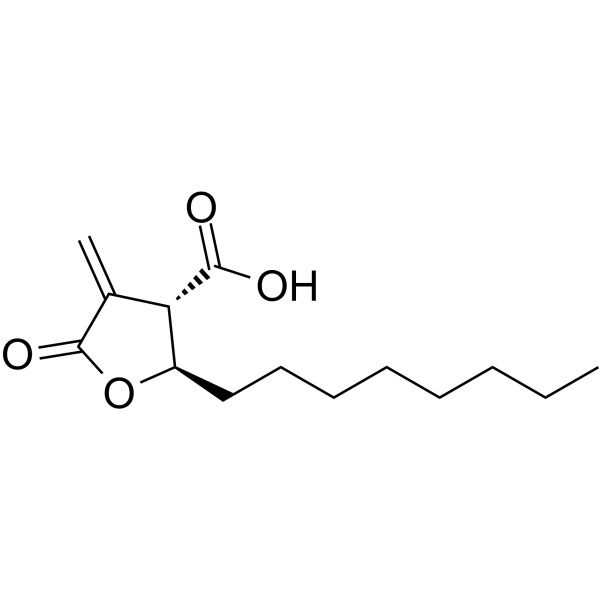
trans-C75 ((±)-C75) is an enantiomer of C75. C75 is a synthetic fatty-acid synthase (FASN) inhibitor.
Nur für Forschungszwecke. Wir verkaufen nicht an Patienten.
- Reinheit : 99.79%
- CAS. Nr.: 191282-48-1
- Formel: C14H22O4
- Molecular Weight:254.33
-
Speicherung:Powder -20°C, 3 years , 4°C, 2 years ; In solvent -80°C, 2 years , -20°C, 1 year

To place orders, for customer services and technical support, please contact: MedChemExpress USA
Tel: 609-228-6898 E-mail: [email protected] [email protected]


-
 Biologische Aktivität
-
Chemical Information
-
Lösungsmittel & Löslichkeit
- Reinheit & Dokumentation
- Verweise
-
 Help & FAQs


-
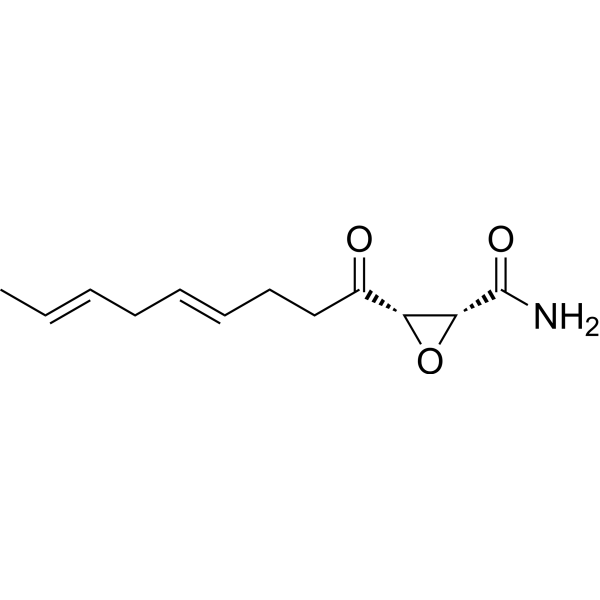
HY-A0210
CeruleninFASN Inhibitor -
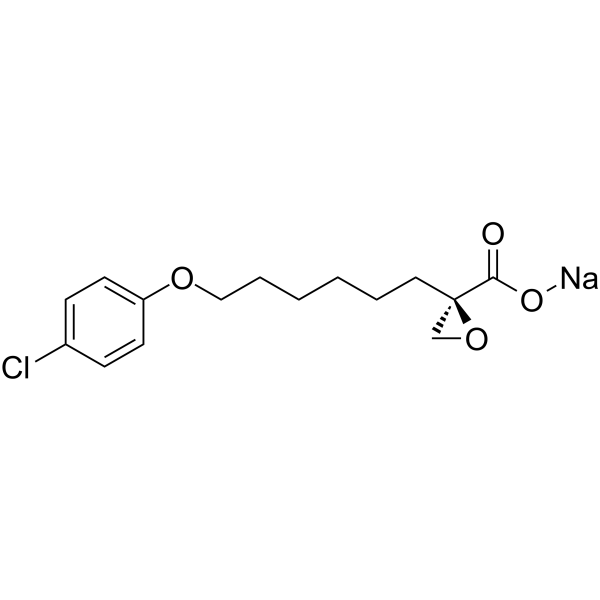
HY-50202A
Etomoxir sodium saltCPT1a Inhibitor -
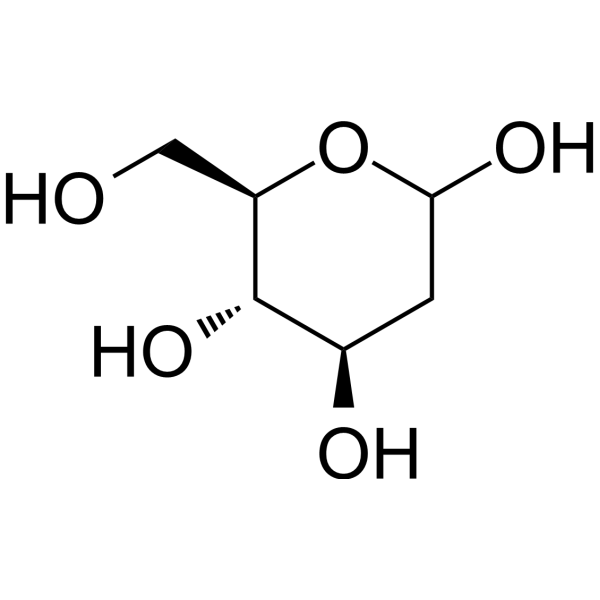
HY-13966
2-Deoxy-D-glucoseGlycolysis Inhibitor -
HY-12364
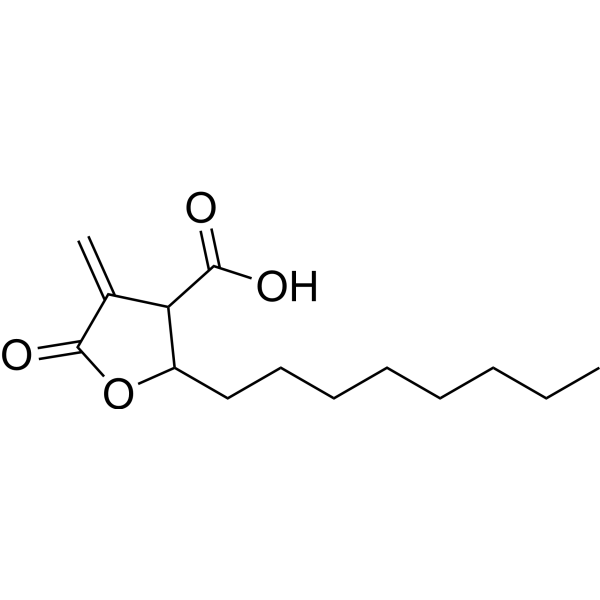
C75Fatty Acid Synthase Inhibitor -
HY-15142
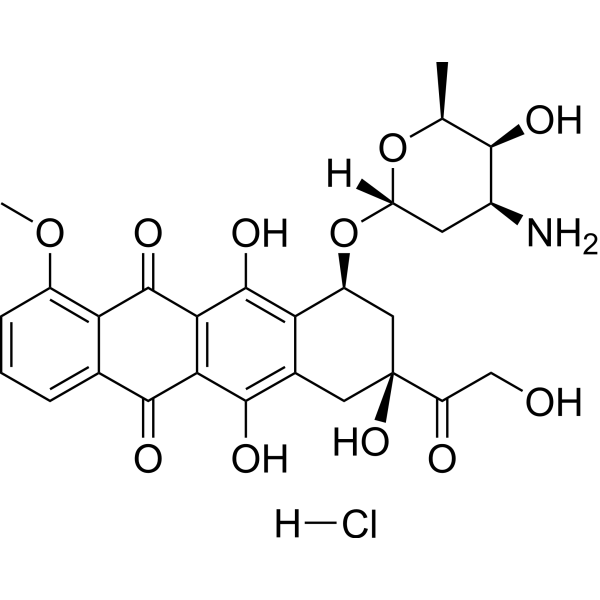
Doxorubicin hydrochlorideTopoisomerase Inhibitor -
HY-112829
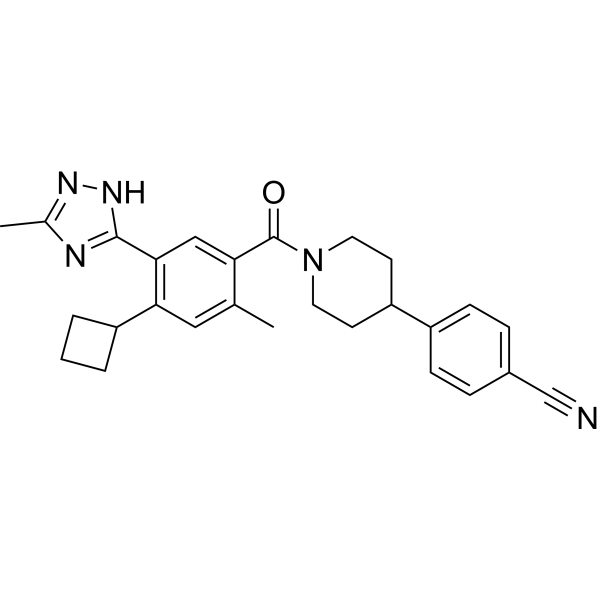
DenifanstatFASN Inhibitor -
HY-120062
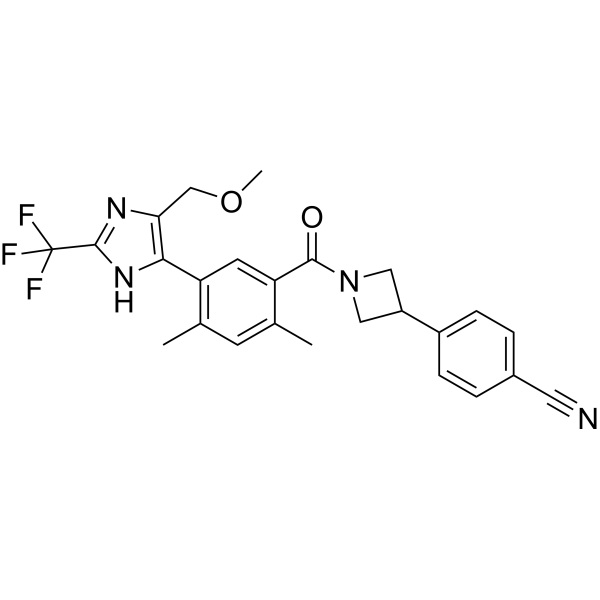
TVB-3664FASN Inhibitor -
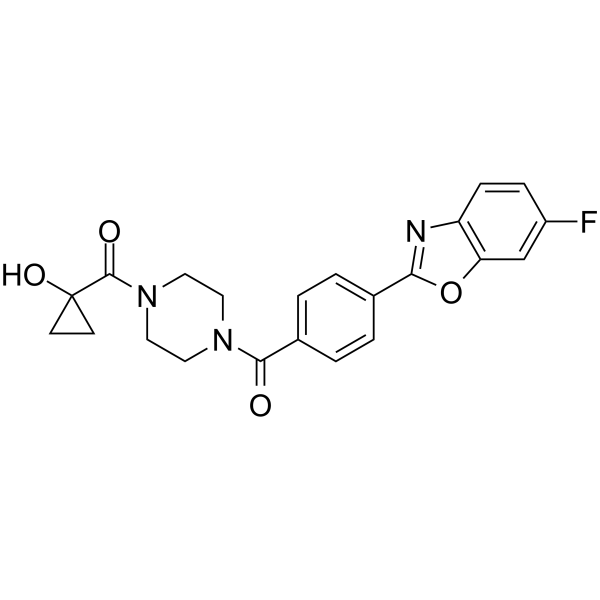
HY-111551
FT113FASN Inhibitor -
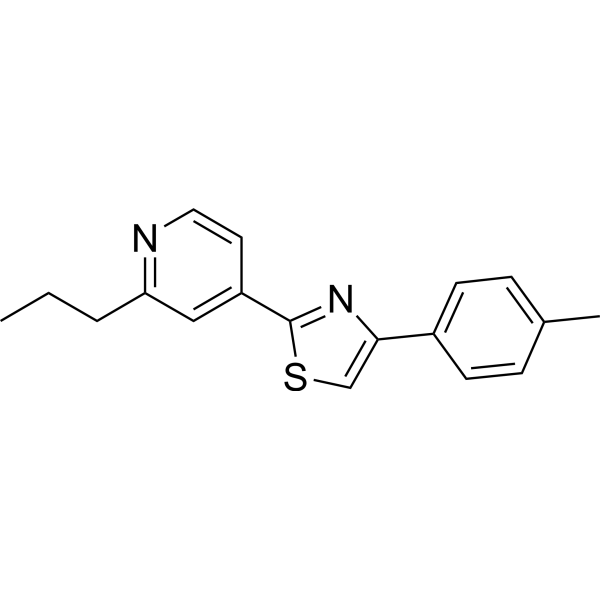
HY-14452
FatostatinSREBP Activation Inhibitor -
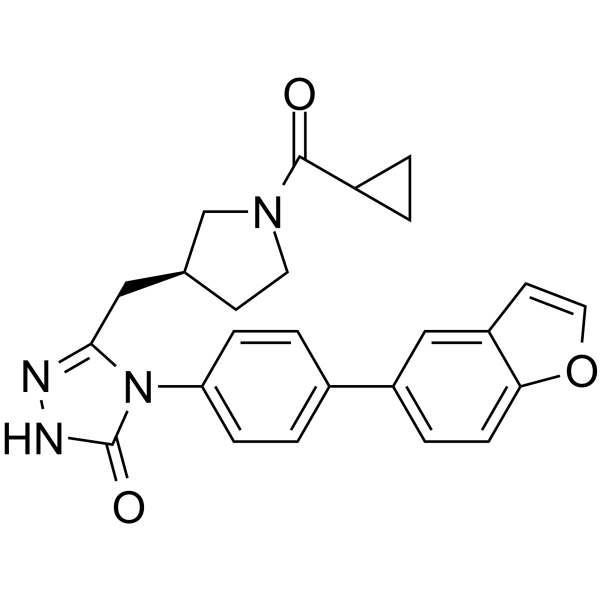
HY-12325
GSK2194069FASN Inhibitor -
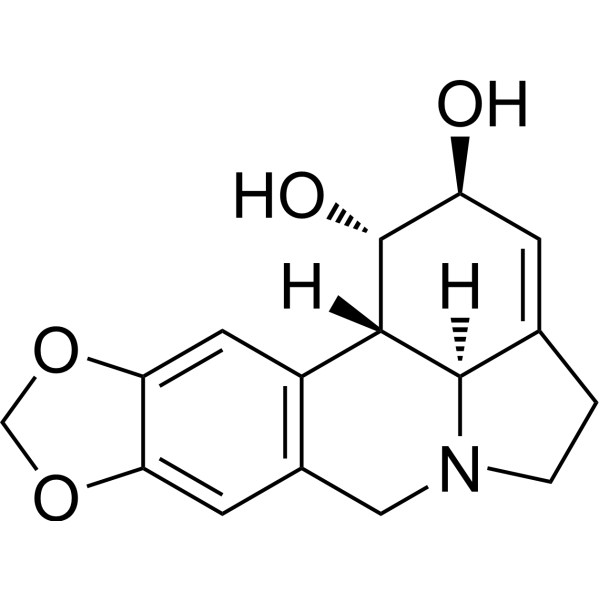
HY-N0288
LycorineSCAP Inhibitor -
HY-13447A
PF429242 dihydrochlorideS1P Inhibitor
Publications Citing Use of MedChemExpress (MCE) trans-C75
More

Biologische Aktivität
Beschreibung
IC50 & Target
IC50: 35 μM (PC3 cell)[1]
Cellular Effect
|
Cell Line

|
Type | Value | Description | References |
|---|---|---|---|---|
| A-375 | IC50 |
32.43 μM
Compound: 9, C75
|
Inhibition of FASN in human A375 cells
Inhibition of FASN in human A375 cells
|
[PMID: 21726077] |
| KB | IC50 |
36.5 μM
Compound: 55, C75
|
Cytotoxicity in human KB cells
Cytotoxicity in human KB cells
|
[PMID: 21504156] |
In Vitro
trans-C75 ((±)-C75) inhibits PC3 cell growht with an IC50 of 35 μM at 24 h. trans-C75 ((±)-C75)(10-50 μM) also reduces the growth of LNCaP spheroids in a concentration-dependent manner with an IC50 of 50 μM[1]. trans-C75 ((±)-C75) inhibits FAS activity and has a cytotoxic effect on tumor cell lines, without affecting food consumption. trans-C75 ((±)-C75) inhibits CPT1 and its administration produces anorexia, suggesting that central inhibition of CPT1 is essential for the anorectic effect of C75. The differential activity of C75 enantiomers may lead to the development of potential new specific drugs for cancer and obesity[2].
MedChemExpress (MCE) has not independently confirmed the accuracy of these methods. They are for reference only.
In Vivo
C75-treated DIO mice has a 50% greater weight loss, and a 32.9% increased production of energy because of fatty acid oxidation. C75 treatment of rodent adipocytes and hepatocytes and human breast cancer cells increases fatty acid oxidation and ATP levels by increasing CPT-1 activity, even in the presence of elevated concentrations of malonyl-CoA[4].
MedChemExpress (MCE) has not independently confirmed the accuracy of these methods. They are for reference only.


Chemical Information
-
CAS. Nr. 191282-48-1
-
Appearance Solid
-
Molecular Weight 254.33
-
Formel C14H22O4
-
Color White to off-white
-
SMILES
O=C([C@@H](C1=C)[C@@H](CCCCCCCC)OC1=O)O
-
Synonyms
(±)-C75
-
Versand
Room temperature in continental US; may vary elsewhere.
-
Speicherung
Powder -20°C 3 years 4°C 2 years In solvent -80°C 2 years -20°C 1 year


Publications (1)
-
Journal Impact Factor
-
Most Recent
-
Nat Commun
Ascites protects against ferroptosis and enables the peritoneal growth of ovarian cancer. [Abstract]2026 May 11;17(1):4190. PMID: 42115216


Lösungsmittel & Löslichkeit
In Vitro:
DMSO : 83.3 mg/mL (327.53 mM; Need ultrasonic and warming; Hygroscopic DMSO has a significant impact on the solubility of product, please use newly opened DMSO)
Please refer to the solubility information to select the appropriate solvent. Once prepared, please aliquot and store the solution to prevent product inactivation from repeated freeze-thaw cycles.
Storage method and period of stock solution: -80°C, 2 years; -20°C, 1 year. When stored at -80°C, please use it within 2 years. When stored at -20°C, please use it within 1 year.
Please refer to the solubility information to select the appropriate solvent. Once prepared, please aliquot and store the solution to prevent product inactivation from repeated freeze-thaw cycles.
Storage method and period of stock solution: -80°C, 2 years; -20°C, 1 year. When stored at -80°C, please use it within 2 years. When stored at -20°C, please use it within 1 year.
Konzentration (Stammlösung) × Volumen (Stammlösung) = Konzentration (Ziellösung) × Volumen (Ziellösung)
In Vivo:
Select the appropriate dissolution method based on your experimental animal and administration route.
- For the following dissolution methods, please ensure to first prepare a clear stock solution using an In Vitro approach and then sequentially add co-solvents:
- To ensure reliable experimental results, the clarified stock solution can be appropriately stored based on storage conditions. As for the working solution for In Vivo experiments, it is recommended to prepare freshly and use it on the same day.
- The percentages shown for the solvents indicate their volumetric ratio in the final prepared solution. If precipitation or phase separation occurs during preparation, heat and/or sonication can be used to aid dissolution.
Add each solvent one by one: 10% DMSO 40% PEG300 5% Tween-80 45% Saline
Solubility: ≥ 2.5 mg/mL (9.83 mM); Suspended solution
This protocol yields a suspended solution of ≥ 2.5 mg/mL (saturation unknown). Suspended solution can be used for oral and intraperitoneal injection.
Taking 1 mL working solution as an example, add 100 μL DMSO stock solution (25.0 mg/mL) to 400 μL PEG300, and mix evenly; then add 50 μL Tween-80 and mix evenly; then add 450 μL Saline to adjust the volume to 1 mL.
Preparation of Saline: Dissolve 0.9 g sodium chloride in ddH₂O and dilute to 100 mL to obtain a clear Saline solution.
Add each solvent one by one: 10% DMSO 90% (20% SBE-β-CD in Saline)
Solubility: ≥ 2.5 mg/mL (9.83 mM); Clear solution
This protocol yields a clear solution of ≥ 2.5 mg/mL (saturation unknown).
Taking 1 mL working solution as an example, add 100 μL DMSO stock solution (25.0 mg/mL) to 900 μL 20% SBE-β-CD in Saline, and mix evenly.
Preparation of 20% SBE-β-CD in Saline (4°C, storage for one week): 2 g SBE-β-CD powder is dissolved in 10 mL Saline, completely dissolve until clear.
In Vivo Dissolution Calculator
Please enter the basic information of animal experiments:
-
-
-
-
Recommended: Prepare an additional quantity of animals to account for potential losses during experiments.
Please enter your animal formula composition:
-
%DMSO +
Recommended: Keep the proportion of DMSO in working solution below 2% if your animal is weak.
-
%+
-
+%Tween-80 + +
-
%Saline +
The co-solvents required include: DMSO, . All of co-solvents are available by MedChemExpress (MCE). , Tween 80. All of co-solvents are available by MedChemExpress (MCE).
Working solution concentration: 0.22 mg/mL
Method for preparing stock solution: mg drug dissolved in μL DMSO. Stock solution concentration: mg/mL.
1. Take μL DMSO stock solution;
2. Add μL .
μL , mix evenly;
3. Then add μL Tween 80, mix evenly;
4. Then add μL
Please ensure that the stock solution in the first step is dissolved to a clear state, and add co-solvents in sequence. You can use ultrasonic heating (ultrasonic cleaner, recommended frequency 20-40 kHz), vortexing, etc. to assist dissolution.


Reinheit & Dokumentation
-
Data Sheet (274 KB)
-
SDS (393 KB)
- English - EN (393 KB)
- Français - FR (393 KB)
- Deutsch - DE (393 KB)
- Norwegian - NO (393 KB)
- Español - ES (393 KB)
- Swedish - SV (393 KB)
- Italian - IT (393 KB)
- Korean - KR (393 KB)
- Portuguese - PT (393 KB)
-
Handling Instructions (2659 KB)
Verweise
[1]. Rae C, et al. Inhibition of Fatty Acid Synthase Sensitizes Prostate Cancer Cells to Radiotherapy. [Content Brief]
[2]. Makowski K, et al. Differential pharmacologic properties of the two C75 enantiomers: (+)-C75 is a strong anorectic drug; (-)-C75 has antitumor activity. Chirality. 2013 May;25(5):281-7. [Content Brief]
[3]. Gao S, et al. Effect of the anorectic fatty acid synthase inhibitor C75 on neuronal activity in the hypothalamus and brainstem. Proc Natl Acad Sci U S A. 2003 May 13;100(10):5628-33. [Content Brief]
[4]. Thupari JN, et al. C75 increases peripheral energy utilization and fatty acid oxidation in diet-induced obesity. Proc Natl Acad Sci U S A. 2002 Jul 9;99(14):9498-502. [Content Brief]


Complete Stock Solution Preparation Table
Please refer to the solubility information to select the appropriate solvent. Once prepared, please aliquot and store the solution to prevent product inactivation from repeated freeze-thaw cycles.
Storage method and period of stock solution: -80°C, 2 years; -20°C, 1 year. When stored at -80°C, please use it within 2 years. When stored at -20°C, please use it within 1 year.
| Optional Solvent | Concentration Solvent Mass | 1 mg | 5 mg | 10 mg | 25 mg |
|---|---|---|---|---|---|
| DMSO | 1 mM | 3.9319 mL | 19.6595 mL | 39.3190 mL | 98.2975 mL |
| 5 mM | 0.7864 mL | 3.9319 mL | 7.8638 mL | 19.6595 mL | |
| 10 mM | 0.3932 mL | 1.9659 mL | 3.9319 mL | 9.8297 mL | |
| 15 mM | 0.2621 mL | 1.3106 mL | 2.6213 mL | 6.5532 mL | |
| 20 mM | 0.1966 mL | 0.9830 mL | 1.9659 mL | 4.9149 mL | |
| 25 mM | 0.1573 mL | 0.7864 mL | 1.5728 mL | 3.9319 mL | |
| 30 mM | 0.1311 mL | 0.6553 mL | 1.3106 mL | 3.2766 mL | |
| 40 mM | 0.0983 mL | 0.4915 mL | 0.9830 mL | 2.4574 mL | |
| 50 mM | 0.0786 mL | 0.3932 mL | 0.7864 mL | 1.9659 mL | |
| 60 mM | 0.0655 mL | 0.3277 mL | 0.6553 mL | 1.6383 mL | |
| 80 mM | 0.0491 mL | 0.2457 mL | 0.4915 mL | 1.2287 mL | |
| 100 mM | 0.0393 mL | 0.1966 mL | 0.3932 mL | 0.9830 mL |


trans-C75 Related Classifications
HY-12364A Related Classifications
 Powered by Bioz