



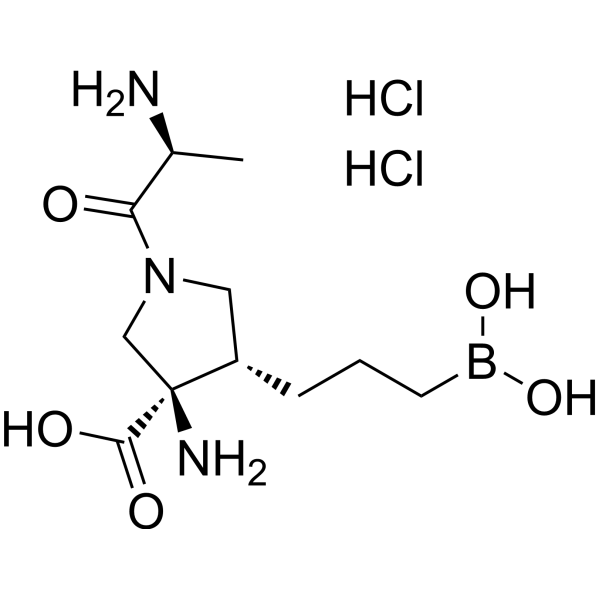
Numidargistat dihydrochloride
Based on 12 publication(s) in Google Scholar
Numidargistat (CB-1158) dihydrochloride is a potent and orally active inhibitor of arginase, with IC50s of 86 nM and 296 nM for recombinant human arginase 1 and recombinant human arginase 2, respectively. Immuno-oncology agent.
For research use only. We do not sell to patients.
- Purity : 98.50%
- Formula: C11H24BCl2N3O5
- Molecular Weight:360.04
-
Storage:
-20°C, stored under nitrogen, away from moisture
* In solvent : -80°C, 6 months; -20°C, 1 month (stored under nitrogen, away from moisture)

To place orders, for customer services and technical support, please contact: MedChemExpress USA
Tel: 609-228-6898 E-mail: [email protected] [email protected]


-
 Biological Activity
-
Chemical Information
-
Solvent & Solubility
- Purity & Documentation
- References
-
 Help & FAQs


Publications Citing Use of MedChemExpress (MCE) Numidargistat dihydrochloride
More- Cancer Cell. 2025 Feb 10;43(2):269-291.e19. [Abstract]
- Cell Death Dis. 2025 Dec 21. [Abstract]
- Cancer Lett. 2023 Jun 28:564:216208. [Abstract]
- Cell Commun Signal. 2023 Sep 18;21(1):236. [Abstract]
- Cancer Immunol Res. 2026 May 4;14(5):875-891. [Abstract]
- J Physiol. 2020 Nov;598(21):4907-4925. [Abstract]
- Res Sq. 2026 Feb 24.
- Patent. US20240307497A1.
- bioRxiv. 2024 Jul 31:2023.09.06.556606. [Abstract]
- The University of Chicago. 2023 Dec.
- Biomed Pharmacother. 2022 Sep:153:113321. [Abstract]
- Research Square Preprint. 2022 Mar.
 Customer Validation & Images

-
Cell Proliferation/Viability Assay
-
RT-PCR
-
Bio/Physico-chemical Assay
-
Cell Imaging/Staining
-
Flow Cytometry


Biological Activity
Description
IC50 & Target
IC50: 86 nM (Arginase 1), 296 nM (Arginase 2)[1]
In Vitro
Numidargistat dihydrochloride is a potent and orally-bioavailable inhibitor of arginase, with IC50s of 86 and 296 nM for recombinant human arginase 1 and 2, respectively. Numidargistat dihydrochloride inhibits native rginase 1 (Arg1) in human granulocyte, erythrocyte, and hepatocyte lysate with IC50s of 178 nM, 116 nM and 158 nM, respectively, and blocks Arg1 in cancer patient plasma (IC50, 122 nM). Numidargistat dihydrochloride also exhibits potent inhibitory activity against arginase in human HepG2, K562 cell lines and primary human hepatocytes with IC50s of 32, 139, 210 μM, respectively. Numidargistat dihydrochloride shows no effect on NOS. In addition, Numidargistat dihydrochloride is not directly cytotoxic to murine cancer cell lines[1].
MedChemExpress (MCE) has not independently confirmed the accuracy of these methods. They are for reference only. .
In Vivo
MedChemExpress (MCE) has not independently confirmed the accuracy of these methods. They are for reference only.


Chemical Information
-
Appearance Solid
-
Molecular Weight 360.04
-
Formula C11H24BCl2N3O5
-
Color White to yellow
-
SMILES
O=C([C@@H](N)C)N1C[C@H](CCCB(O)O)[C@](N)(C(O)=O)C1.Cl.Cl
-
Synonyms
CB-1158 dihydrochloride; INCB01158 dihydrochloride
-
Shipping
Room temperature in continental US; may vary elsewhere.
-
Storage
-20°C, stored under nitrogen, away from moisture
* In solvent : -80°C, 6 months; -20°C, 1 month (stored under nitrogen, away from moisture)


Publications (12)
-
Journal Impact Factor
-
Most Recent
-
Cancer Cell
Adiponectin reduces immune checkpoint inhibitor-induced inflammation without blocking anti-tumor immunity. [Abstract]2025 Feb 10;43(2):269-291.e19. PMID: 39933899 -
Cell Death Dis
Tubule-derived CCN1 drives renal repair via αvβ5-STAT6-ARG1-dependent reprogramming of macrophages. [Abstract]2025 Dec 21. PMID: 41422302
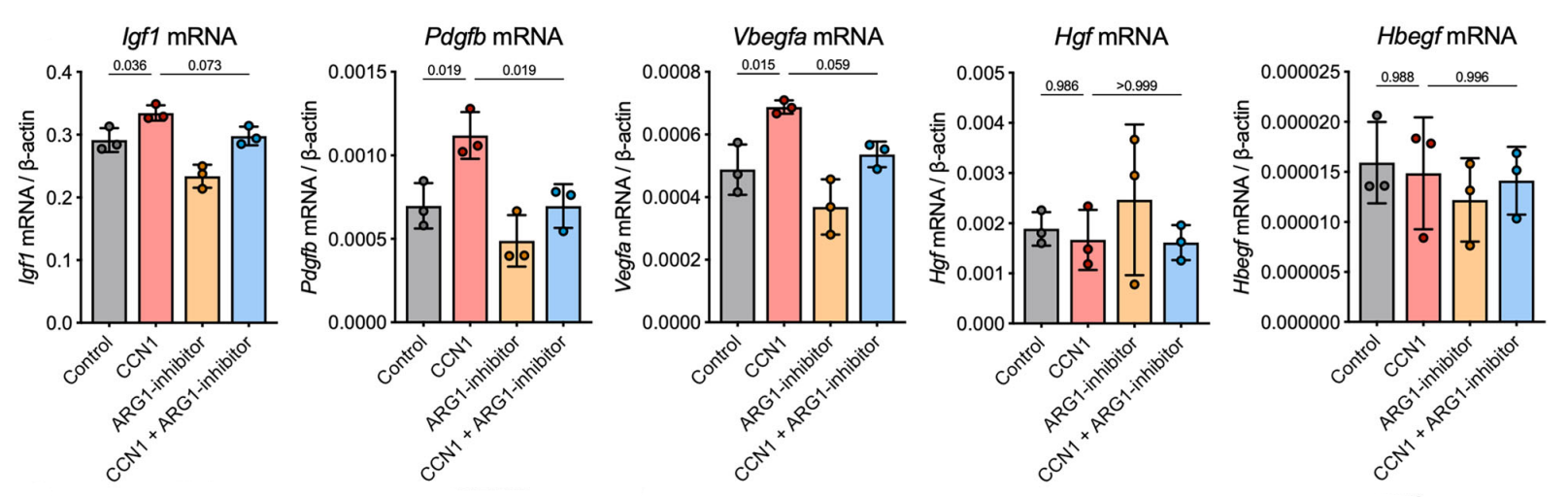
Numidargistat dihydrochloride purchased from MedChemExpress. Usage Cited in: Cell Death Dis. 2025 Dec 21. [Abstract]
Numidargistat (50 μM; 48 h) significantly inhibited the upregulation of mRNA levels of growth factors including Igf1, Pdgfb, and Vegfa that were induced by CCN1 treatment in BMDMs.
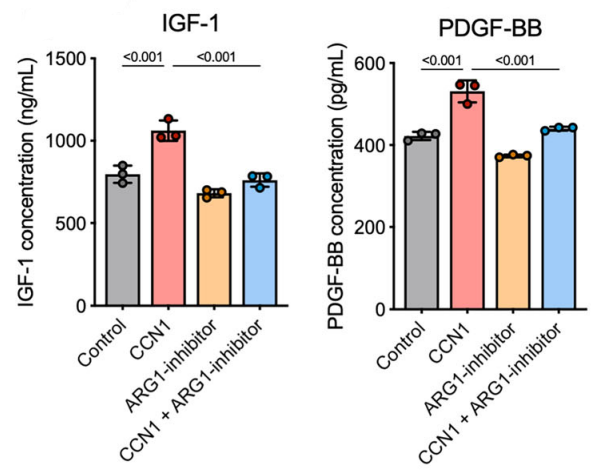
Numidargistat dihydrochloride purchased from MedChemExpress. Usage Cited in: Cell Death Dis. 2025 Dec 21. [Abstract]
Numidargistat (50 μM; 48 h) suppressed the concentration of growth factors IGF-1 and PDGF-BB released from CCN1-treated BMDMs.
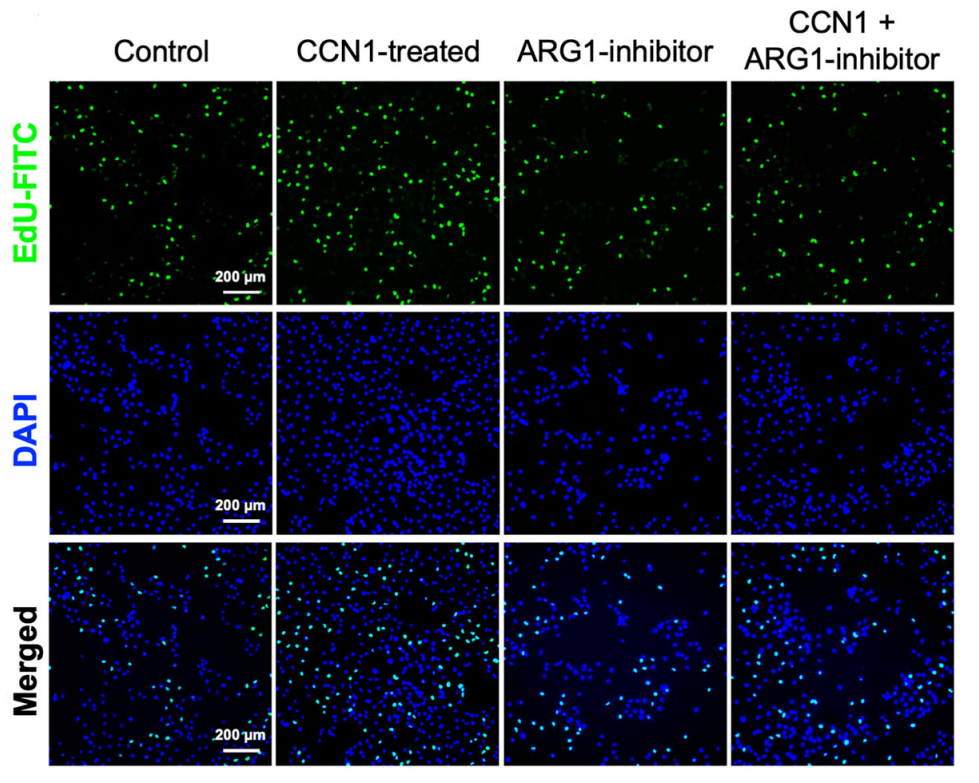
Numidargistat dihydrochloride purchased from MedChemExpress. Usage Cited in: Cell Death Dis. 2025 Dec 21. [Abstract]
Numidargistat (50 μM; 48 h) inhibited CCN1-induced increase in EdU+ proliferating cells in HK-2 cells co-cultured with BMDMs.
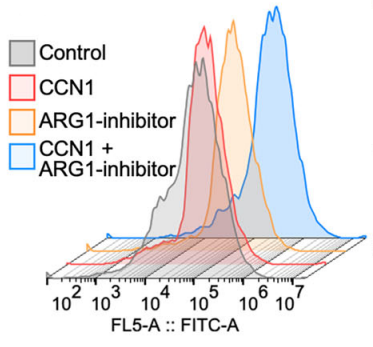
Numidargistat dihydrochloride purchased from MedChemExpress. Usage Cited in: Cell Death Dis. 2025 Dec 21. [Abstract]
Numidargistat (50 μM; 48 h) significantly decreased the proportion of EdU+ HK-2 cells in BMDMs.
-
Cancer Lett
Myeloid-derived suppressor cells deficient in cholesterol biosynthesis promote tumor immune evasion. [Abstract]2023 Jun 28:564:216208. PMID: 37150500 -
Cell Commun Signal
Arginase-1 promotes lens epithelial-to-mesenchymal transition in different models of anterior subcapsular cataract. [Abstract]2023 Sep 18;21(1):236. PMID: 37723490 -
Cancer Immunol Res
CLK1 Promotes Myeloid-Derived Suppressor Cell Trafficking and Reprograms the Tumor Microenvironment by Activating Hippo/YAP Signaling in Colorectal Cancer. [Abstract]2026 May 4;14(5):875-891. PMID: 41686262
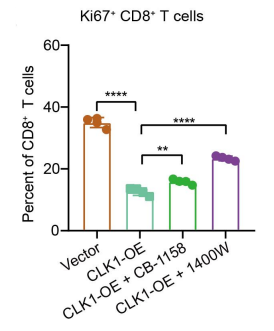
Numidargistat dihydrochloride purchased from MedChemExpress. Usage Cited in: Cancer Immunol Res. 2026 May 4;14(5):875-891. [Abstract]
Numidargistat (CB-1158) (10 µM; 48 h) significantly reversed the immunosuppressive effect on CD8+ T-cell proliferation.
-
J Physiol
Arginase 1 is involved in lacrimal hyposecretion in male NOD mice, a model of Sjögren's syndrome, regardless of dacryoadenitis status. [Abstract]2020 Nov;598(21):4907-4925. PMID: 32780506 -
-
-
bioRxiv
Myeloid-mesenchymal crosstalk drives Arg1-dependent profibrotic metabolism via ornithine in lung fibrosis. [Abstract]2024 Jul 31:2023.09.06.556606. PMID: 39211079 -
-
Biomed Pharmacother
Muscarinic acetylcholine receptors regulate inflammatory responses through arginases 1/2 in zebrafish. [Abstract]2022 Sep:153:113321. PMID: 35759868 -


Solvent & Solubility
In Vitro:
DMSO : 55 mg/mL (152.76 mM; Need ultrasonic; Hygroscopic DMSO has a significant impact on the solubility of product, please use newly opened DMSO)
H2O : 37.78 mg/mL (104.93 mM; Need ultrasonic)
Please refer to the solubility information to select the appropriate solvent. Once prepared, please aliquot and store the solution to prevent product inactivation from repeated freeze-thaw cycles.
Storage method and period of stock solution: -80°C, 6 months; -20°C, 1 month (stored under nitrogen, away from moisture). When stored at -80°C, please use it within 6 months. When stored at -20°C, please use it within 1 month.
* Note: If you choose water as the stock solution, please dilute it to the working solution, then filter and sterilize it with a 0.22 μm filter before use.
Please refer to the solubility information to select the appropriate solvent. Once prepared, please aliquot and store the solution to prevent product inactivation from repeated freeze-thaw cycles.
Storage method and period of stock solution: -80°C, 6 months; -20°C, 1 month (stored under nitrogen, away from moisture). When stored at -80°C, please use it within 6 months. When stored at -20°C, please use it within 1 month.
* Note: If you choose water as the stock solution, please dilute it to the working solution, then filter and sterilize it with a 0.22 μm filter before use.
Concentration (start) × Volume (start) = Concentration (final) × Volume (final)
In Vivo:
Select the appropriate dissolution method based on your experimental animal and administration route.
- For the following dissolution methods, please ensure to first prepare a clear stock solution using an In Vitro approach and then sequentially add co-solvents:
- To ensure reliable experimental results, the clarified stock solution can be appropriately stored based on storage conditions. As for the working solution for In Vivo experiments, it is recommended to prepare freshly and use it on the same day.
- The percentages shown for the solvents indicate their volumetric ratio in the final prepared solution. If precipitation or phase separation occurs during preparation, heat and/or sonication can be used to aid dissolution.
Add each solvent one by one: 10% DMSO 90% (20% SBE-β-CD in Saline)
Solubility: 3.25 mg/mL (9.03 mM); Suspended solution; Need ultrasonic
This protocol yields a suspended solution of 3.25 mg/mL. Suspended solution can be used for oral and intraperitoneal injection.
Taking 1 mL working solution as an example, add 100 μL DMSO stock solution (32.5 mg/mL) to 900 μL 20% SBE-β-CD in Saline, and mix evenly.
Preparation of 20% SBE-β-CD in Saline (4°C, storage for one week): 2 g SBE-β-CD powder is dissolved in 10 mL Saline, completely dissolve until clear.
For the following dissolution methods, please prepare the working solution directly:
It is recommended to prepare fresh solutions and use them promptly within a short period of time.
The percentages shown for the solvents indicate their volumetric ratio in the final prepared solution. If precipitation or phase separation occurs during preparation, heat and/or sonication can be used to aid dissolution.
Add each solvent one by one: PBS
Solubility: 100 mg/mL (277.75 mM); Clear solution; Need ultrasonic
In Vivo Dissolution Calculator
Please enter the basic information of animal experiments:
-
-
-
-
Recommended: Prepare an additional quantity of animals to account for potential losses during experiments.
Working solution concentration: 0.22 mg/mL
This product has good water solubility, please refer to the measured solubility data in water/PBS/Saline for details.


Purity & Documentation
-
Data Sheet (283 KB)
-
SDS (252 KB)
- English - EN (252 KB)
- Français - FR (252 KB)
- Deutsch - DE (252 KB)
- Norwegian - NO (252 KB)
- Español - ES (252 KB)
- Swedish - SV (252 KB)
- Italian - IT (252 KB)
- Korean - KR (252 KB)
- Portuguese - PT (252 KB)
-
Handling Instructions (2659 KB)
References


Complete Stock Solution Preparation Table
Please refer to the solubility information to select the appropriate solvent. Once prepared, please aliquot and store the solution to prevent product inactivation from repeated freeze-thaw cycles.
Storage method and period of stock solution: -80°C, 6 months; -20°C, 1 month (stored under nitrogen, away from moisture). When stored at -80°C, please use it within 6 months. When stored at -20°C, please use it within 1 month.
| Optional Solvent | Concentration Solvent Mass | 1 mg | 5 mg | 10 mg | 25 mg |
|---|---|---|---|---|---|
| H2O / DMSO | 1 mM | 2.7775 mL | 13.8873 mL | 27.7747 mL | 69.4367 mL |
| 5 mM | 0.5555 mL | 2.7775 mL | 5.5549 mL | 13.8873 mL | |
| 10 mM | 0.2777 mL | 1.3887 mL | 2.7775 mL | 6.9437 mL | |
| 15 mM | 0.1852 mL | 0.9258 mL | 1.8516 mL | 4.6291 mL | |
| 20 mM | 0.1389 mL | 0.6944 mL | 1.3887 mL | 3.4718 mL | |
| 25 mM | 0.1111 mL | 0.5555 mL | 1.1110 mL | 2.7775 mL | |
| 30 mM | 0.0926 mL | 0.4629 mL | 0.9258 mL | 2.3146 mL | |
| 40 mM | 0.0694 mL | 0.3472 mL | 0.6944 mL | 1.7359 mL | |
| 50 mM | 0.0555 mL | 0.2777 mL | 0.5555 mL | 1.3887 mL | |
| 60 mM | 0.0463 mL | 0.2315 mL | 0.4629 mL | 1.1573 mL | |
| 80 mM | 0.0347 mL | 0.1736 mL | 0.3472 mL | 0.8680 mL | |
| 100 mM | 0.0278 mL | 0.1389 mL | 0.2777 mL | 0.6944 mL |
* Note: If you choose water as the stock solution, please dilute it to the working solution, then filter and sterilize it with a 0.22 μm filter before use.


Numidargistat dihydrochloride Related Classifications
HY-101979A Related Classifications
 Powered by Bioz