



Hexaconazole

Based on 1 Customer Validation
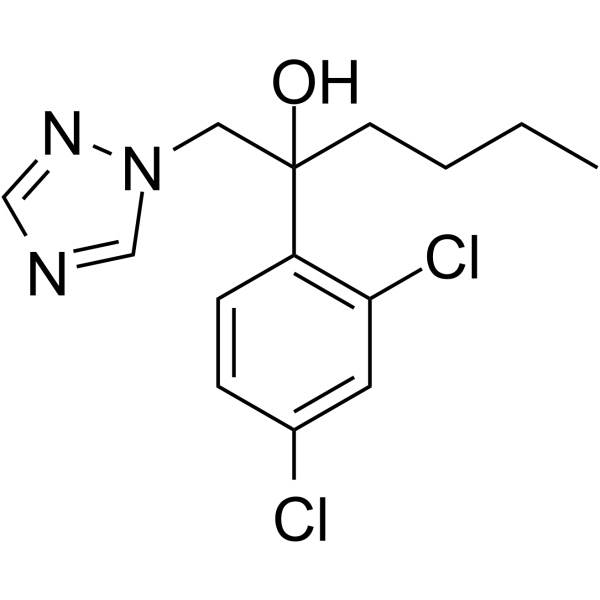
Hexaconazole is a demethylation enzyme inhibitor and a synthetic fungicide that targets many fungi, especially ascomycetes and basidiomycetes, and it can enhance the activity of SOD and peroxidase. Hexaconazole causes endocrine disorders in zebrafish larvae.
Nos produits utilisent uniquement pour la recherche. Nous ne vendons pas aux patients.
- Pureté : 98.11%
- CAS No.: 79983-71-4
- Formule: C14H17Cl2N3O
- Masse moléculaire:314.21
-
Stockage:Powder -20°C, 3 years , 4°C, 2 years ; In solvent -80°C, 2 years , -20°C, 1 year

To place orders, for customer services and technical support, please contact: MedChemExpress USA
Tel: 609-228-6898 E-mail: [email protected] [email protected]


-
 Activité biologique
-
Chemical Information
-
Solvant et solubilité
- Pureté et documentation
- Références
-
 Help & FAQs


-

HY-A0278R
Hexaconazole (Standard)Fungicide -
HY-B0847
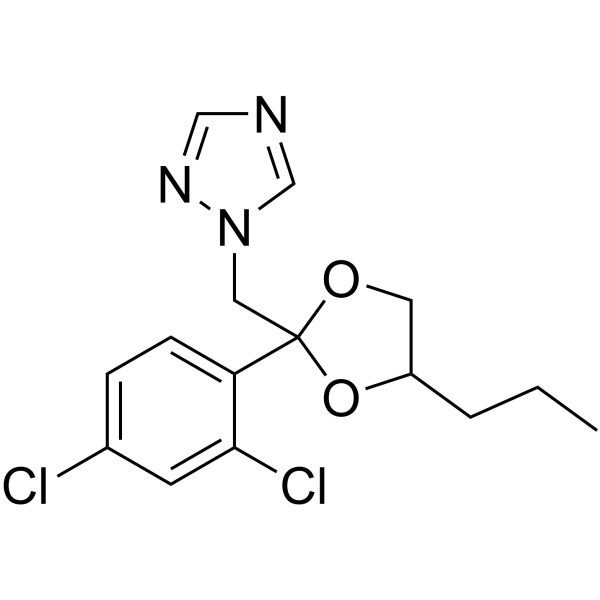
PropiconazoleFungicide -

HY-B0847R
Propiconazole (Standard)Fungicide -
HY-123037
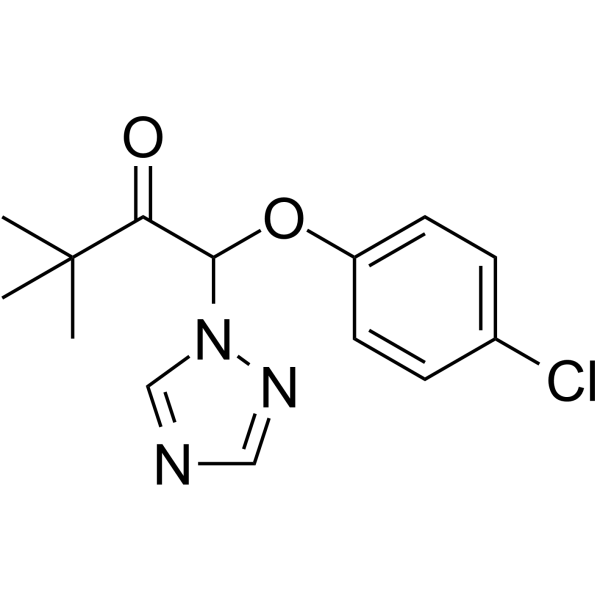
TriadimefonFungicide -
HY-12519
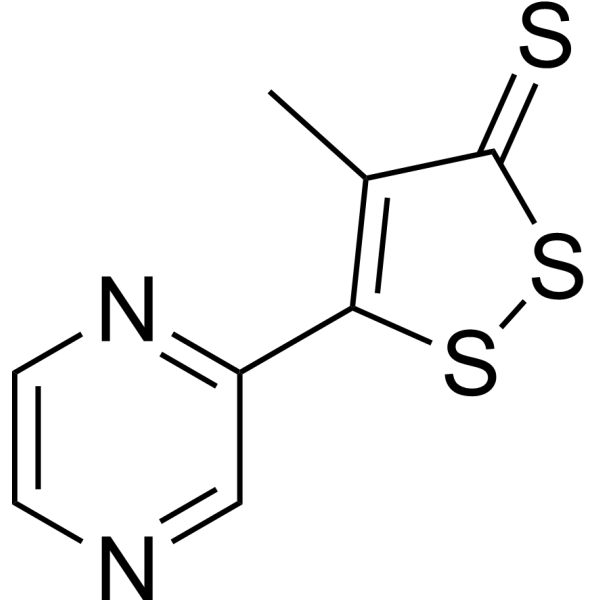
OltiprazHIF-1α Inhibitor -

HY-123037R
Triadimefon (Standard)Standard Of Triadimefon -
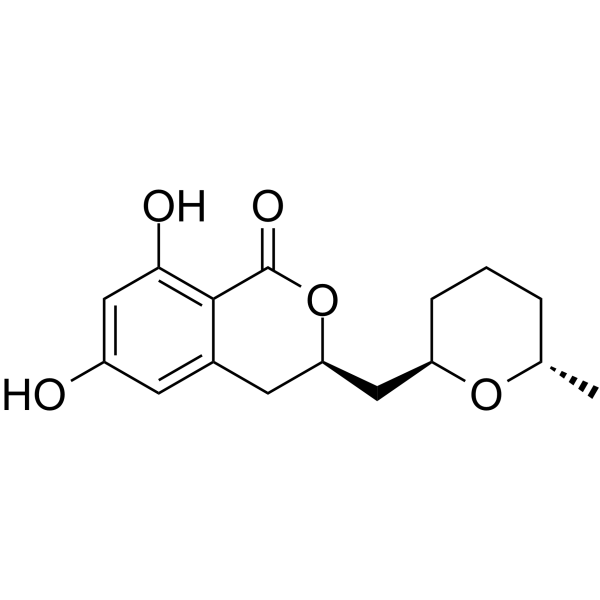
HY-136767
CladosporinFungal Metabolite -
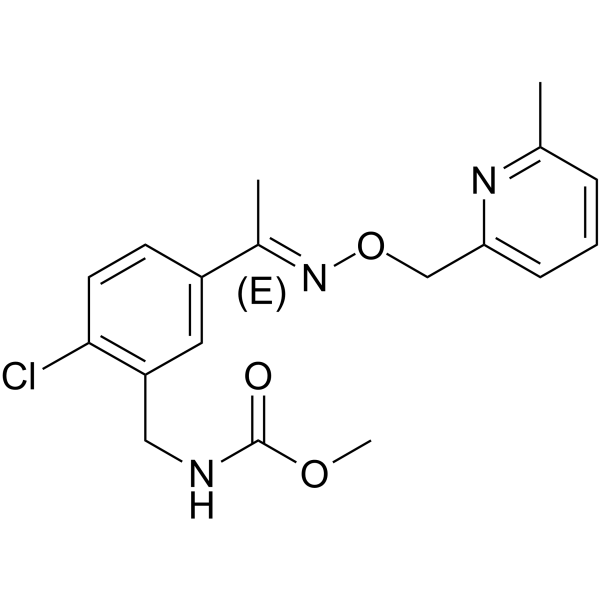
HY-W020043
PyribencarbFungicide Agent -
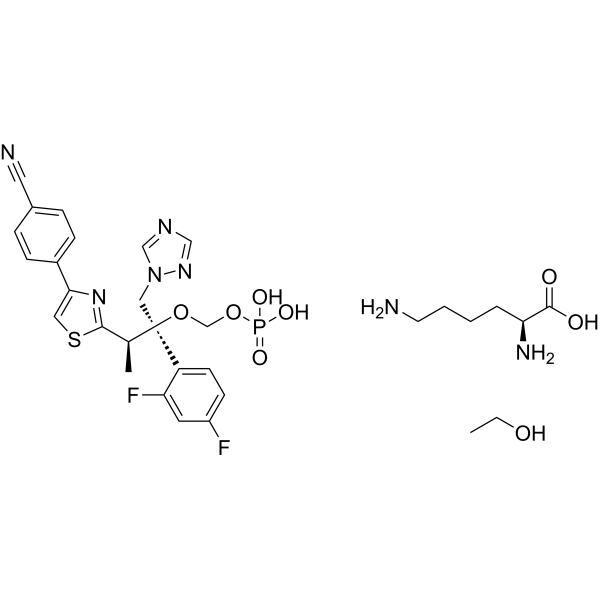
HY-16779B
Fosravuconazole L-lysine ethanolateAntifungal Agent -

HY-W020043R
Pyribencarb (Standard)Fungicide Agent -

HY-12519G
Oltipraz (GMP)HIF-1α Activator -

HY-12519R
Oltipraz (Standard)HIF-1α Inhibitor


Activité biologique
Description
Cellular Effect
|
Cell Line

|
Type | Value | Description | References |
|---|---|---|---|---|
| A549 | EC50 |
>31.3 μg/mL
Compound: 27
|
Toxicity in human A549 cells assessed as reduction in cell viability incubated for 24 hrs by resazurin dye based assay
Toxicity in human A549 cells assessed as reduction in cell viability incubated for 24 hrs by resazurin dye based assay
|
[PMID: 28395217] |
| BEAS-2B | EC50 |
>31.3 μg/mL
Compound: 27
|
Toxicity in human BEAS2B cells assessed as reduction in cell viability incubated for 24 hrs by resazurin dye based assay
Toxicity in human BEAS2B cells assessed as reduction in cell viability incubated for 24 hrs by resazurin dye based assay
|
[PMID: 28395217] |
In Vitro
Hexaconazole has a sensitivity range of 0.06-4.33 μg/mL against Fusarium graminearum, with an average EC50 of 0.78 μg/mL[1].
Hexaconazole-resistant strains of Fusarium graminearum show reduced mycelial growth and pathogenicity, which affects asexual reproduction[1].
Hexaconazole (0.6 μg/mL, 18 h) downregulates the expression of the FgCYP51 gene in sensitive strains of Fusarium graminearum[1].
Hexaconazole prevents the demethylation of lanosterol catalyzed by cytochrome P450 (CYP51), thereby blocking the biosynthesis of ergosterol, leading to damage to the cell membrane[1].
MedChemExpress (MCE) has not independently confirmed the accuracy of these methods. They are for reference only.
-
Cell Line:Fusarium graminearum
-
Concentration:0.6 μg/mL
-
Incubation Time:18 h
-
Result:Down-regulated the expression of FgCYP51 gene.
In Vivo
MedChemExpress (MCE) has not independently confirmed the accuracy of these methods. They are for reference only.
-
Animal Model:Zebrafish embryos [2]
-
Dosage:0.625, 1.25, 2.5 mg/mL; 120 h
-
Administration:Exposure
-
Result:Reduced the level of thyroxine (T4), significantly increased the concentration of triiodothyronine (T3), and induced the homogeneity of corticotropin-releasing hormone (CRH), thyroid-stimulating hormone (TSH), and sodium iodide. Transporter (NIS), thyroid transthyretin (TTR), uridine diphosphate glucosyltransferase (UGT1ab), thyronine deiodinase (Dio1 and Dio2), thyroid hormone receptor (TRα and TRβ) transcription , did not affect thyroglobulin (TG) transcription.


Chemical Information
-
CAS No. 79983-71-4
-
Appearance Solid
-
Masse moléculaire 314.21
-
Formule C14H17Cl2N3O
-
Color White to off-white
-
SMILES
ClC1=CC(Cl)=C(C(CCCC)(O)CN2N=CN=C2)C=C1
-
Synonyms
(-)-Hexaconazol
-
Livraison
Room temperature in continental US; may vary elsewhere.
-
Stockage
Powder -20°C 3 years 4°C 2 years In solvent -80°C 2 years -20°C 1 year


Solvant et solubilité
In Vitro:
DMSO : ≥ 100 mg/mL (318.26 mM; Hygroscopic DMSO has a significant impact on the solubility of product, please use newly opened DMSO)
H2O : < 0.1 mg/mL (insoluble)
* "≥" means soluble, but saturation unknown.
Please refer to the solubility information to select the appropriate solvent. Once prepared, please aliquot and store the solution to prevent product inactivation from repeated freeze-thaw cycles.
Storage method and period of stock solution: -80°C, 2 years; -20°C, 1 year. When stored at -80°C, please use it within 2 years. When stored at -20°C, please use it within 1 year.
Please refer to the solubility information to select the appropriate solvent. Once prepared, please aliquot and store the solution to prevent product inactivation from repeated freeze-thaw cycles.
Storage method and period of stock solution: -80°C, 2 years; -20°C, 1 year. When stored at -80°C, please use it within 2 years. When stored at -20°C, please use it within 1 year.
Concentration (start) × Volume (start) = Concentration (final) × Volume (final)
In Vivo:
Select the appropriate dissolution method based on your experimental animal and administration route.
- For the following dissolution methods, please ensure to first prepare a clear stock solution using an In Vitro approach and then sequentially add co-solvents:
- To ensure reliable experimental results, the clarified stock solution can be appropriately stored based on storage conditions. As for the working solution for In Vivo experiments, it is recommended to prepare freshly and use it on the same day.
- The percentages shown for the solvents indicate their volumetric ratio in the final prepared solution. If precipitation or phase separation occurs during preparation, heat and/or sonication can be used to aid dissolution.
Add each solvent one by one: 10% DMSO 40% PEG300 5% Tween-80 45% Saline
Solubility: ≥ 2.5 mg/mL (7.96 mM); Clear solution
This protocol yields a clear solution of ≥ 2.5 mg/mL (saturation unknown).
Taking 1 mL working solution as an example, add 100 μL DMSO stock solution (25.0 mg/mL) to 400 μL PEG300, and mix evenly; then add 50 μL Tween-80 and mix evenly; then add 450 μL Saline to adjust the volume to 1 mL.
Preparation of Saline: Dissolve 0.9 g sodium chloride in ddH₂O and dilute to 100 mL to obtain a clear Saline solution.
Add each solvent one by one: 10% DMSO 90% (20% SBE-β-CD in Saline)
Solubility: ≥ 2.5 mg/mL (7.96 mM); Clear solution
This protocol yields a clear solution of ≥ 2.5 mg/mL (saturation unknown).
Taking 1 mL working solution as an example, add 100 μL DMSO stock solution (25.0 mg/mL) to 900 μL 20% SBE-β-CD in Saline, and mix evenly.
Preparation of 20% SBE-β-CD in Saline (4°C, storage for one week): 2 g SBE-β-CD powder is dissolved in 10 mL Saline, completely dissolve until clear.
In Vivo Dissolution Calculator
Please enter the basic information of animal experiments:
-
-
-
-
Recommended: Prepare an additional quantity of animals to account for potential losses during experiments.
Please enter your animal formula composition:
-
%DMSO +
Recommended: Keep the proportion of DMSO in working solution below 2% if your animal is weak.
-
%+
-
+%Tween-80 + +
-
%Saline +
The co-solvents required include: DMSO, . All of co-solvents are available by MedChemExpress (MCE). , Tween 80. All of co-solvents are available by MedChemExpress (MCE).
Working solution concentration: 0.22 mg/mL
Method for preparing stock solution: mg drug dissolved in μL DMSO. Stock solution concentration: mg/mL.
1. Take μL DMSO stock solution;
2. Add μL .
μL , mix evenly;
3. Then add μL Tween 80, mix evenly;
4. Then add μL
Please ensure that the stock solution in the first step is dissolved to a clear state, and add co-solvents in sequence. You can use ultrasonic heating (ultrasonic cleaner, recommended frequency 20-40 kHz), vortexing, etc. to assist dissolution.


Pureté et documentation
-
Fiche technique (278 KB)
-
SDS (597 KB)
- English - EN (597 KB)
- Français - FR (597 KB)
- Deutsch - DE (597 KB)
- Norwegian - NO (597 KB)
- Español - ES (597 KB)
- Swedish - SV (597 KB)
- Italian - IT (597 KB)
- Korean - KR (597 KB)
- Portuguese - PT (597 KB)
-
Instruction de manipulation (2659 KB)
Références
[1]. Feng Zhou, et al. Potential Mechanisms of Hexaconazole Resistance in Fusarium graminearum. Plant Dis. 2024 Oct;108(10):3133-3145. [Content Brief]
[2]. Liang Yu, et al. Thyroid endocrine disruption in zebrafish larvae following exposure to hexaconazole and tebuconazole. Aquat Toxicol. 2013 Aug 15:138-139:35-42. [Content Brief]
[3]. Dubey P et al. Comparative analyses of genotoxicity, oxidative stress and antioxidative defence system under exposure of methyl parathion and hexaconazole in barley (Hordeum vulgare L.) Environ Sci Pollut Res Int. 2015 Dec;22(24):19848-59. [Content Brief]
[4]. Wang Y et al. Monitoring tryptophan metabolism after exposure to hexaconazole and the enantioselective metabolism ofhexaconazole in rat hepatocytes in vitro. J Hazard Mater. 2015 Sep 15;295:9-16. [Content Brief]


Complete Stock Solution Preparation Table
Please refer to the solubility information to select the appropriate solvent. Once prepared, please aliquot and store the solution to prevent product inactivation from repeated freeze-thaw cycles.
Storage method and period of stock solution: -80°C, 2 years; -20°C, 1 year. When stored at -80°C, please use it within 2 years. When stored at -20°C, please use it within 1 year.
| Optional Solvent | Concentration Solvent Mass | 1 mg | 5 mg | 10 mg | 25 mg |
|---|---|---|---|---|---|
| DMSO | 1 mM | 3.1826 mL | 15.9129 mL | 31.8258 mL | 79.5646 mL |
| 5 mM | 0.6365 mL | 3.1826 mL | 6.3652 mL | 15.9129 mL | |
| 10 mM | 0.3183 mL | 1.5913 mL | 3.1826 mL | 7.9565 mL | |
| 15 mM | 0.2122 mL | 1.0609 mL | 2.1217 mL | 5.3043 mL | |
| 20 mM | 0.1591 mL | 0.7956 mL | 1.5913 mL | 3.9782 mL | |
| 25 mM | 0.1273 mL | 0.6365 mL | 1.2730 mL | 3.1826 mL | |
| 30 mM | 0.1061 mL | 0.5304 mL | 1.0609 mL | 2.6522 mL | |
| 40 mM | 0.0796 mL | 0.3978 mL | 0.7956 mL | 1.9891 mL | |
| 50 mM | 0.0637 mL | 0.3183 mL | 0.6365 mL | 1.5913 mL | |
| 60 mM | 0.0530 mL | 0.2652 mL | 0.5304 mL | 1.3261 mL | |
| 80 mM | 0.0398 mL | 0.1989 mL | 0.3978 mL | 0.9946 mL | |
| 100 mM | 0.0318 mL | 0.1591 mL | 0.3183 mL | 0.7956 mL |


Hexaconazole Related Classifications
HY-A0278 Related Classifications
 Powered by Bioz