



MLi-2
Based on 17 publication(s) in Google Scholar
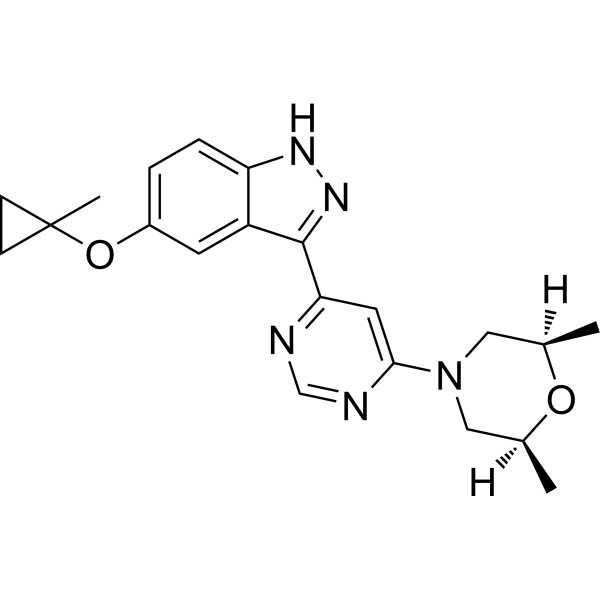
MLi-2, a chemical probe, is an orally active and highly selective LRRK2 inhibitor with an IC50 of 0.76 nM. MLi-2 has the potential for Parkinson’s disease.
Nur für Forschungszwecke. Wir verkaufen nicht an Patienten.
- Reinheit : 99.50%
- CAS. Nr.: 1627091-47-7
- Formel: C21H25N5O2
- Molecular Weight:379.46
-
Speicherung:Powder -20°C, 3 years , 4°C, 2 years ; In solvent -80°C, 2 years , -20°C, 1 year

To place orders, for customer services and technical support, please contact: MedChemExpress USA
Tel: 609-228-6898 E-mail: [email protected] [email protected]


-
 Biologische Aktivität
-
Chemical Information
-
Lösungsmittel & Löslichkeit
- Reinheit & Dokumentation
- Verweise
-
 Help & FAQs


-
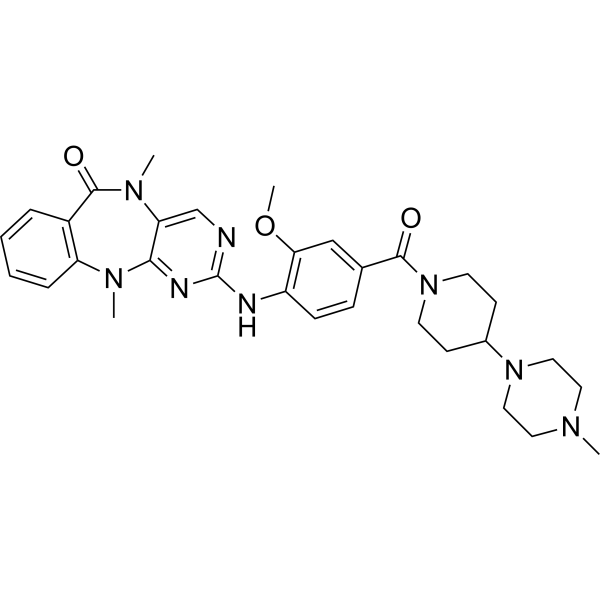
HY-10875
LRRK2-IN-1LRRK2 Inhibitor -
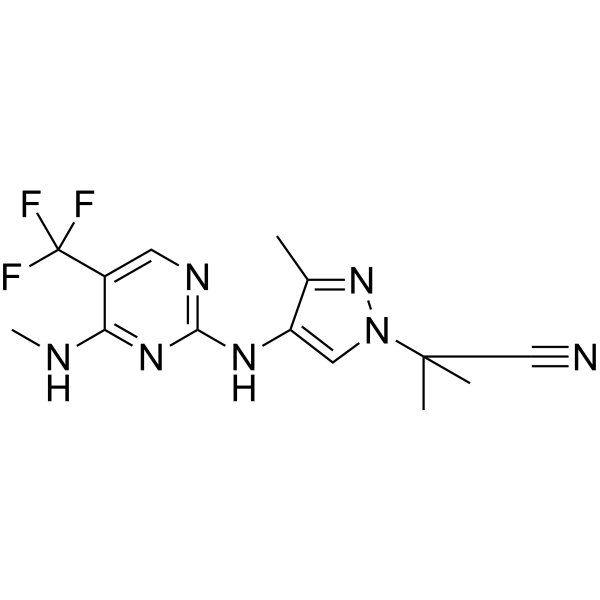
HY-15796
GNE0877LRRK2 Inhibitor -
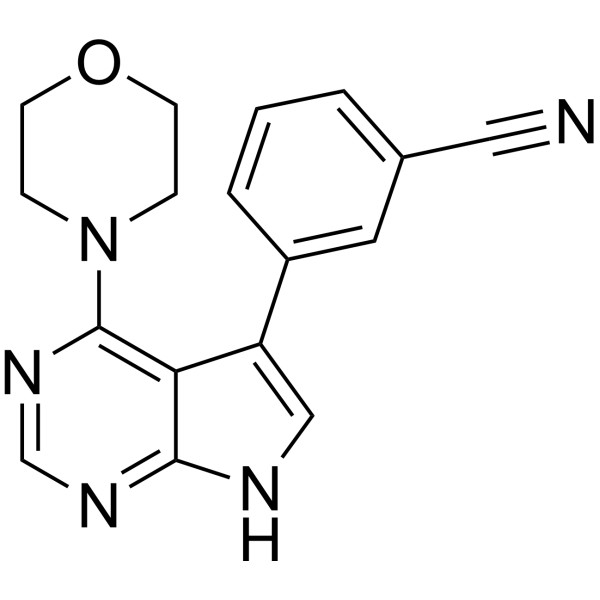
HY-12477
PF-06447475LRRK2 Inhibitor -
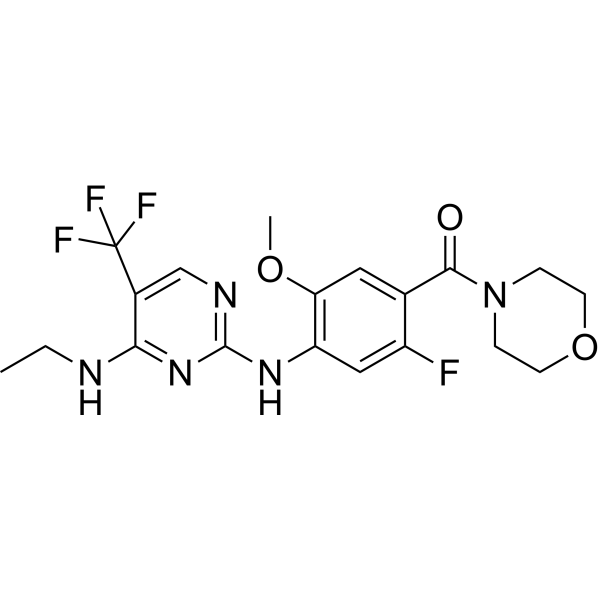
HY-18163
GNE-7915LRRK2 Inhibitor -
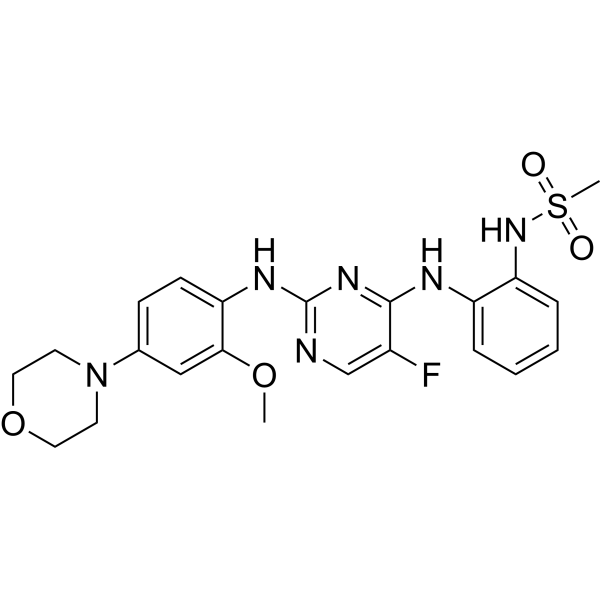
HY-15800A
CZC-25146LRRK2 Inhibitor -
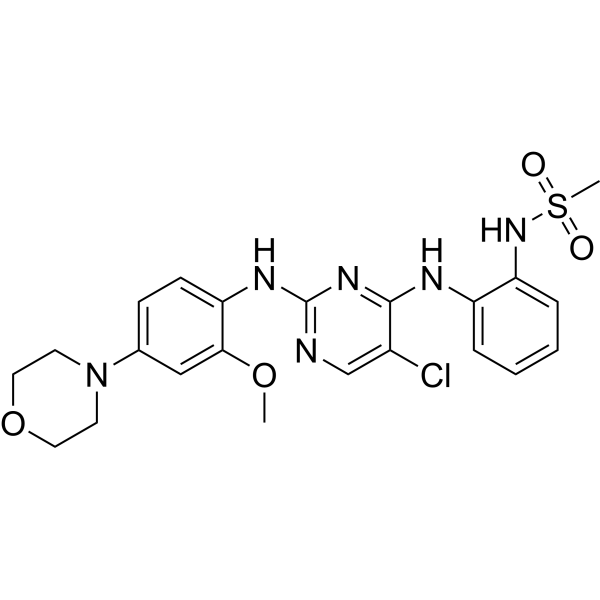
HY-B0792
CZC-54252LRRK2 Inhibitor -
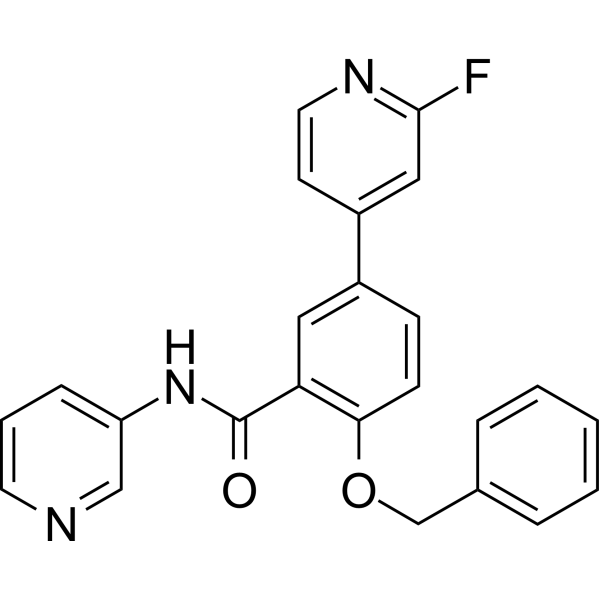
HY-13237
GSK2578215ALRRK2 Inhibitor -
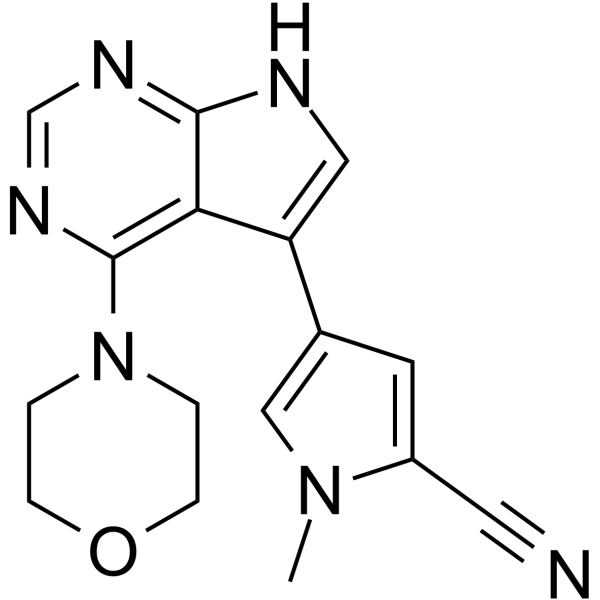
HY-120085
PFE-360LRRK2 Inhibitor -
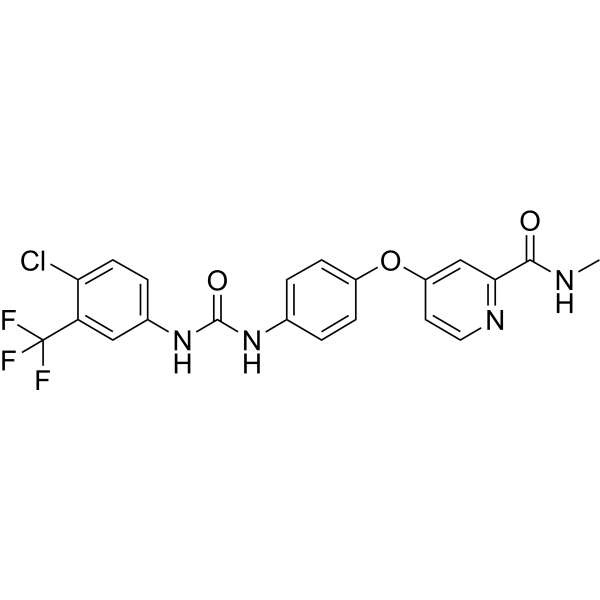
HY-10201
SorafenibMultikinase Inhibitor -
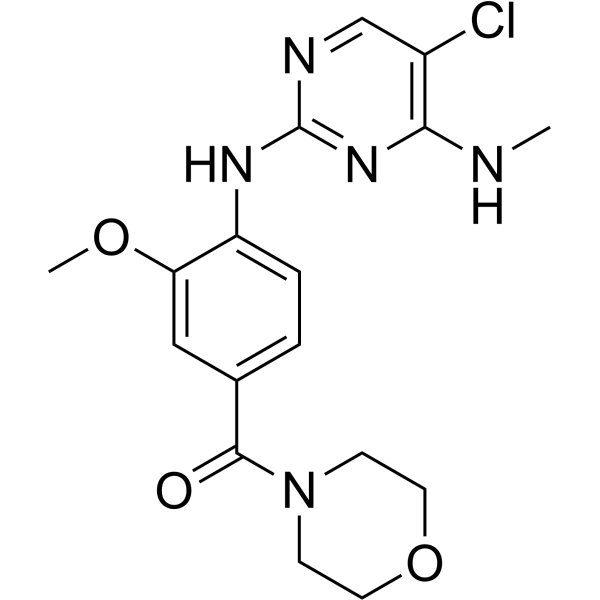
HY-13488
HG-10-102-01LRRK2 Inhibitor -
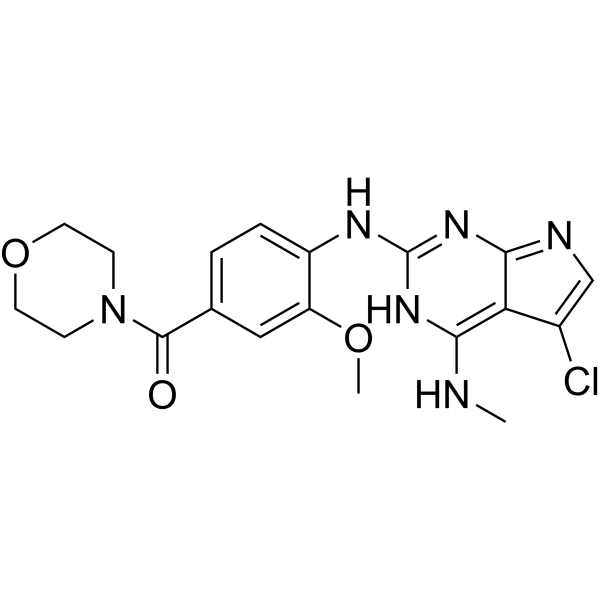
HY-16936
JH-II-127LRRK2 Inhibitor -
HY-14644
ApilimodIL-12/IL-23 Inhibitor
Publications Citing Use of MedChemExpress (MCE) MLi-2
More- Cell Res. 2025 Jan;35(1):23-44. [Abstract]
- Nat Commun. 2026 Feb 28;17(1):3324. [Abstract]
- Nat Commun. 2026 Feb 12;17(1):1214. [Abstract]
- Sci Transl Med. 2022 Jun 8;14(648):eabj2658. [Abstract]
- Cell Death Differ. 2026 May 12. [Abstract]
- Acta Neuropathol. 2023 Aug;146(2):245-261. [Abstract]
- Free Radic Biol Med. 2025 Jan:226:96-108. [Abstract]
- Br J Pharmacol. 2026 Jul 24.
- Front Immunol. 2025 Nov 21:16:1709196. [Abstract]
- J Cell Biol. 2025 Nov 3;224(11):e202404018. [Abstract]
- Stem Cell Reports. 2022 Oct 11;17(10):2349-2364. [Abstract]
- J Neurochem. 2026 Jul;170(7):e70510.
- Exp Neurobiol. 2021 Jun 30;30(3):232-243. [Abstract]
- The University of Alabama at Birmingham. 2026.
- bioRxiv. 2026 Apr 5.
- bioRxiv. 2024 Mar 31.
- bioRxiv. 2024 Apr 3:2024.04.02.587808. [Abstract]
 Customer Validation & Images

-
IF
-
Cell Imaging/Staining
-
IP
-
In Vivo Efficacy Study
-
Flow Cytometry


Biologische Aktivität
Beschreibung
IC50 & Target
IC50: 0.76 nM (LRRK2)[1]
In Vitro
MLi-2 exhibits exceptional potency in a purified LRRK2 kinase assay in vitro( IC50=0.76 nM), a cellular assay monitoring dephosphorylation of LRRK2 pSer935 LRRK2 (IC50=1.4 nM), and a radioligand competition binding assay (IC50=3.4 nM). MLi-2 has greater than 295-fold selectivity for over 300 kinases in addition to a diverse panel of receptors and ion channels[1].
MedChemExpress (MCE) has not independently confirmed the accuracy of these methods. They are for reference only.
In Vivo
MedChemExpress (MCE) has not independently confirmed the accuracy of these methods. They are for reference only.


Chemical Information
-
CAS. Nr. 1627091-47-7
-
Appearance Solid
-
Molecular Weight 379.46
-
Formel C21H25N5O2
-
Color White to off-white
-
SMILES
C[C@@](C1)([H])O[C@](C)([H])CN1C2=CC(C3=NNC4=CC=C(OC5(C)CC5)C=C43)=NC=N2
-
Versand
Room temperature in continental US; may vary elsewhere.
-
Speicherung
Powder -20°C 3 years 4°C 2 years In solvent -80°C 2 years -20°C 1 year


Publications (17)
-
Journal Impact Factor
-
Most Recent
-
Cell Res
Tau is a receptor with low affinity for glucocorticoids and is required for glucocorticoid-induced bone loss. [Abstract]2025 Jan;35(1):23-44. PMID: 39743632 -
Nat Commun
Targeting leucine-rich repeat kinase 2 overcomes resistance to oncolytic herpes simplex virus-based therapies in glioblastoma. [Abstract]2026 Feb 28;17(1):3324. PMID: 41764166 -
Nat Commun
Human iPSC-based Modeling of Pulmonary Fibrosis Reveals p300/CBP Inhibition Suppresses Alveolar Transitional Cell State. [Abstract]2026 Feb 12;17(1):1214. PMID: 41680175 -
Sci Transl Med
Preclinical and clinical evaluation of the LRRK2 inhibitor DNL201 for Parkinson's disease. [Abstract]2022 Jun 8;14(648):eabj2658. PMID: 35675433 -
Cell Death Differ
A neutrophil-intrinsic CKLF1-PKM2 axis drives glycolytic flux for de novo DAG synthesis and pro-inflammatory ROS production. [Abstract]2026 May 12. PMID: 42120940 -
Acta Neuropathol
Mutant LRRK2 exacerbates immune response and neurodegeneration in a chronic model of experimental colitis. [Abstract]2023 Aug;146(2):245-261. PMID: 37289222
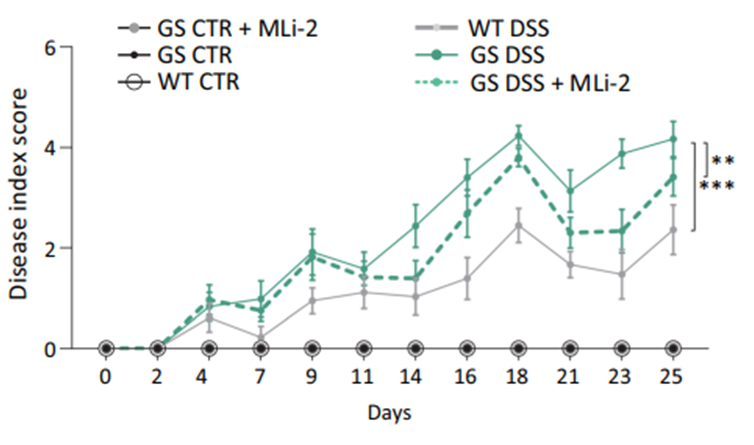
MLi-2 purchased from MedChemExpress. Usage Cited in: Acta Neuropathol. 2023 Aug;146(2):245-261. [Abstract]
Disease index score evaluation in WT and GS mice treated with placebo or MLi-2 (25 mg/kg/d in diet), after DSS administration.
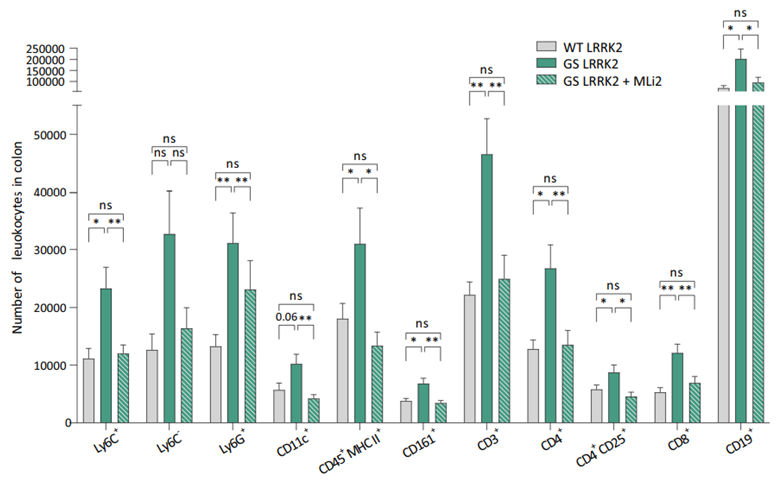
MLi-2 purchased from MedChemExpress. Usage Cited in: Acta Neuropathol. 2023 Aug;146(2):245-261. [Abstract]
Colonic immunophenotyping by fow cytometry of GS mice treated with MLi-2 (25 mg/kg/d in diet) or placebo, as well as WT mice, after DSS administration.
-
Free Radic Biol Med
Activating Sig-1R inhibits microvascular permeability by reducing LRRK2 expression in lipopolysaccharide-induced acute lung injury. [Abstract]2025 Jan:226:96-108. PMID: 39542184 -
-
Front Immunol
Phosphorylation-driven effector switching of Rab7 and Rab12 by the leucine-rich repeat kinase 1 in mast cells. [Abstract]2025 Nov 21:16:1709196. PMID: 41357239 -
J Cell Biol
JIP4 and RILPL1 utilize opposing motor force to dynamically regulate lysosomal tubulation. [Abstract]2025 Nov 3;224(11):e202404018. PMID: 40990465
MLi-2 purchased from MedChemExpress. Usage Cited in: J Cell Biol. 2025 Nov 3;224(11):e202404018. [Abstract]
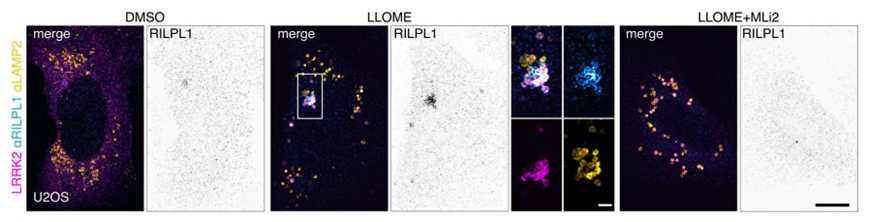
U2OS cells were transfected with HaloTag-LRRK2 for 36 h. Cells were then treated with DMSO, LLOME (1 mM), or LLOME+MLi2 (1 μM, 90 min prior to LLOME incubation) for 2 h before fixation. Cells were then stained for RILPL1 and LAMP2.
MLi-2 purchased from MedChemExpress. Usage Cited in: J Cell Biol. 2025 Nov 3;224(11):e202404018. [Abstract]
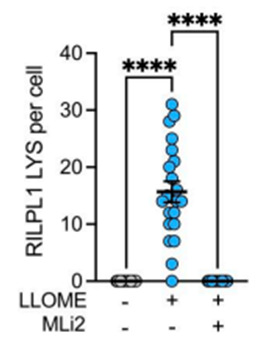
Quantification of the RILPL1 lysosomes per cell in the three different conditions. Cells were then treated with DMSO, LLOME (1 mM), or LLOME+MLi2 (1 μM, 90 min prior to LLOME incubation) for 2 h.
MLi-2 purchased from MedChemExpress. Usage Cited in: J Cell Biol. 2025 Nov 3;224(11):e202404018. [Abstract]
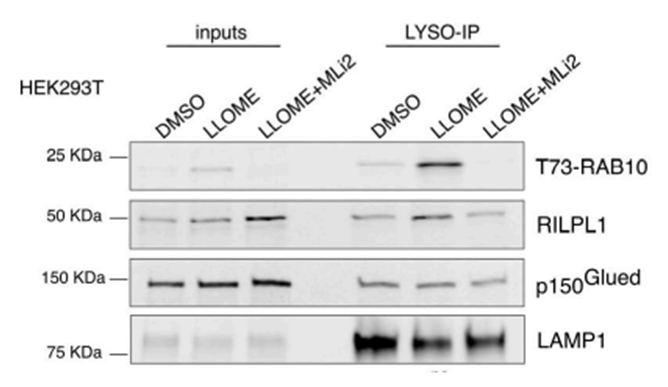
HEK293T cells stably expressing GFP-LRRK2 and TMEM192-3xHA were seeded and treated with DMSO, LLOME (1 mM), or LLOME + MLi2 (1 μM, 90 min prior to LLOME incubation) 24 h later. Lysosomes were purified with anti-HA beads following the LYSO-IP technique. Lysosomes were then lysed, and their content was analyzed via immunoblotting.
-
Stem Cell Reports
High-content phenotyping of Parkinson's disease patient stem cell-derived midbrain dopaminergic neurons using machine learning classification. [Abstract]2022 Oct 11;17(10):2349-2364. PMID: 36179692 -
-
Exp Neurobiol
2021 Jun 30;30(3):232-243. PMID: 34230223 -
-
-
-
bioRxiv
Opposing actions of JIP4 and RILPL1 provide antagonistic motor force to dynamically regulate membrane reformation during lysosomal tubulation/sorting driven by LRRK2. [Abstract]2024 Apr 3:2024.04.02.587808. PMID: 38903076


Lösungsmittel & Löslichkeit
In Vitro:
DMSO : 50 mg/mL (131.77 mM; Need ultrasonic; Hygroscopic DMSO has a significant impact on the solubility of product, please use newly opened DMSO)
Please refer to the solubility information to select the appropriate solvent. Once prepared, please aliquot and store the solution to prevent product inactivation from repeated freeze-thaw cycles.
Storage method and period of stock solution: -80°C, 2 years; -20°C, 1 year. When stored at -80°C, please use it within 2 years. When stored at -20°C, please use it within 1 year.
Please refer to the solubility information to select the appropriate solvent. Once prepared, please aliquot and store the solution to prevent product inactivation from repeated freeze-thaw cycles.
Storage method and period of stock solution: -80°C, 2 years; -20°C, 1 year. When stored at -80°C, please use it within 2 years. When stored at -20°C, please use it within 1 year.
Konzentration (Stammlösung) × Volumen (Stammlösung) = Konzentration (Ziellösung) × Volumen (Ziellösung)
In Vivo:
Select the appropriate dissolution method based on your experimental animal and administration route.
- For the following dissolution methods, please ensure to first prepare a clear stock solution using an In Vitro approach and then sequentially add co-solvents:
- To ensure reliable experimental results, the clarified stock solution can be appropriately stored based on storage conditions. As for the working solution for In Vivo experiments, it is recommended to prepare freshly and use it on the same day.
- The percentages shown for the solvents indicate their volumetric ratio in the final prepared solution. If precipitation or phase separation occurs during preparation, heat and/or sonication can be used to aid dissolution.
Add each solvent one by one: 10% DMSO 40% PEG300 5% Tween-80 45% Saline
Solubility: ≥ 2 mg/mL (5.27 mM); Clear solution
This protocol yields a clear solution of ≥ 2 mg/mL (saturation unknown).
Taking 1 mL working solution as an example, add 100 μL DMSO stock solution (20.0 mg/mL) to 400 μL PEG300, and mix evenly; then add 50 μL Tween-80 and mix evenly; then add 450 μL Saline to adjust the volume to 1 mL.
Preparation of Saline: Dissolve 0.9 g sodium chloride in ddH₂O and dilute to 100 mL to obtain a clear Saline solution.
For the following dissolution methods, please prepare the working solution directly:
It is recommended to prepare fresh solutions and use them promptly within a short period of time.
The percentages shown for the solvents indicate their volumetric ratio in the final prepared solution. If precipitation or phase separation occurs during preparation, heat and/or sonication can be used to aid dissolution.
Add each solvent one by one: 30% SBE-β-CD in Saline
Solubility: 5 mg/mL (13.18 mM); Suspension solution; Need ultrasonic
In Vivo Dissolution Calculator
Please enter the basic information of animal experiments:
-
-
-
-
Recommended: Prepare an additional quantity of animals to account for potential losses during experiments.
Please enter your animal formula composition:
-
%DMSO +
Recommended: Keep the proportion of DMSO in working solution below 2% if your animal is weak.
-
%+
-
+%Tween-80 + +
-
%Saline +
The co-solvents required include: DMSO, . All of co-solvents are available by MedChemExpress (MCE). , Tween 80. All of co-solvents are available by MedChemExpress (MCE).
Working solution concentration: 0.22 mg/mL
Method for preparing stock solution: mg drug dissolved in μL DMSO. Stock solution concentration: mg/mL.
1. Take μL DMSO stock solution;
2. Add μL .
μL , mix evenly;
3. Then add μL Tween 80, mix evenly;
4. Then add μL
Please ensure that the stock solution in the first step is dissolved to a clear state, and add co-solvents in sequence. You can use ultrasonic heating (ultrasonic cleaner, recommended frequency 20-40 kHz), vortexing, etc. to assist dissolution.


Reinheit & Dokumentation
-
Data Sheet (277 KB)
-
SDS (396 KB)
- English - EN (396 KB)
- Français - FR (396 KB)
- Deutsch - DE (396 KB)
- Norwegian - NO (396 KB)
- Español - ES (396 KB)
- Swedish - SV (396 KB)
- Italian - IT (396 KB)
- Korean - KR (396 KB)
- Portuguese - PT (396 KB)
-
Handling Instructions (2659 KB)
Verweise


Complete Stock Solution Preparation Table
Please refer to the solubility information to select the appropriate solvent. Once prepared, please aliquot and store the solution to prevent product inactivation from repeated freeze-thaw cycles.
Storage method and period of stock solution: -80°C, 2 years; -20°C, 1 year. When stored at -80°C, please use it within 2 years. When stored at -20°C, please use it within 1 year.
| Optional Solvent | Concentration Solvent Mass | 1 mg | 5 mg | 10 mg | 25 mg |
|---|---|---|---|---|---|
| DMSO | 1 mM | 2.6353 mL | 13.1766 mL | 26.3532 mL | 65.8831 mL |
| 5 mM | 0.5271 mL | 2.6353 mL | 5.2706 mL | 13.1766 mL | |
| 10 mM | 0.2635 mL | 1.3177 mL | 2.6353 mL | 6.5883 mL | |
| 15 mM | 0.1757 mL | 0.8784 mL | 1.7569 mL | 4.3922 mL | |
| 20 mM | 0.1318 mL | 0.6588 mL | 1.3177 mL | 3.2942 mL | |
| 25 mM | 0.1054 mL | 0.5271 mL | 1.0541 mL | 2.6353 mL | |
| 30 mM | 0.0878 mL | 0.4392 mL | 0.8784 mL | 2.1961 mL | |
| 40 mM | 0.0659 mL | 0.3294 mL | 0.6588 mL | 1.6471 mL | |
| 50 mM | 0.0527 mL | 0.2635 mL | 0.5271 mL | 1.3177 mL | |
| 60 mM | 0.0439 mL | 0.2196 mL | 0.4392 mL | 1.0981 mL | |
| 80 mM | 0.0329 mL | 0.1647 mL | 0.3294 mL | 0.8235 mL | |
| 100 mM | 0.0264 mL | 0.1318 mL | 0.2635 mL | 0.6588 mL |


MLi-2 Related Classifications
HY-100411 Related Classifications
 Powered by Bioz