



Menaquinone-7
Based on 3 publication(s) in Google Scholar
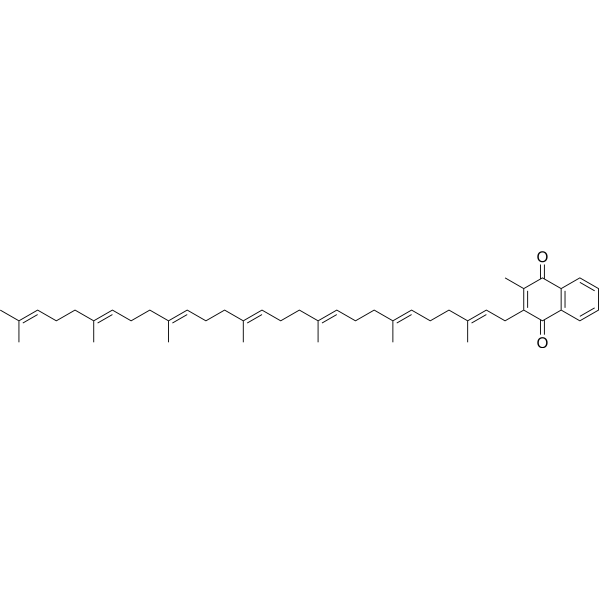
Menaquinone-7 (Vitamin K2-7), belongs to a class of K2-vitamin homologs (orally active), is originally discovered as the anti-hemorrhagic factors. Menaquinone-7 inhibits osteoclast bone resorption in vitro and stimulates bone formation in femoral tissue of aged female rats. Menaquinone-7 has a well-researched potential in the prevention of aging-induced bone degeneration. Menaquinone-7 is also a pharmacological option for activating Gla matrix protein and intervening in the progression of calcific aortic stenosis (CAVS).
For research use only. We do not sell to patients.
- Purity : 98.51%
- CAS No.: 2124-57-4
- Formula: C46H64O2
- Molecular Weight:649.00
-
Storage:Powder -20°C, 3 years , 4°C, 2 years ; In solvent -80°C, 2 years , -20°C, 1 year

To place orders, for customer services and technical support, please contact: MedChemExpress USA
Tel: 609-228-6898 E-mail: [email protected] [email protected]


-
 Biological Activity
-
Chemical Information
-
Solvent & Solubility
- Protocols
- Purity & Documentation
- References
-
 Help & FAQs


-
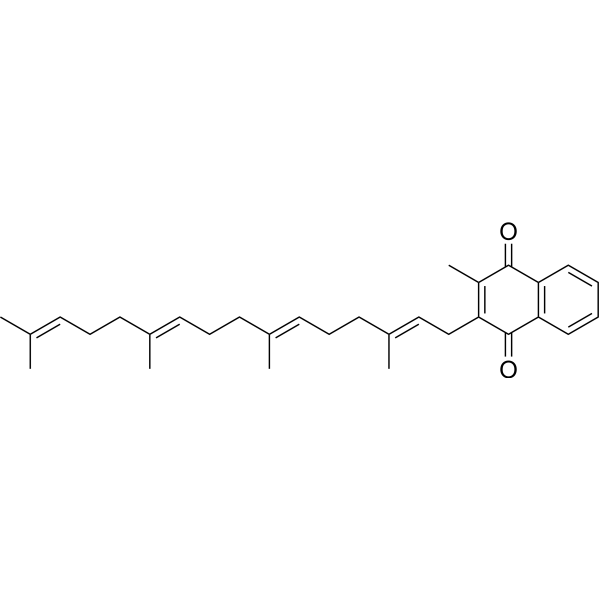
HY-B2156
Menaquinone-4Endogenous Metabolite -
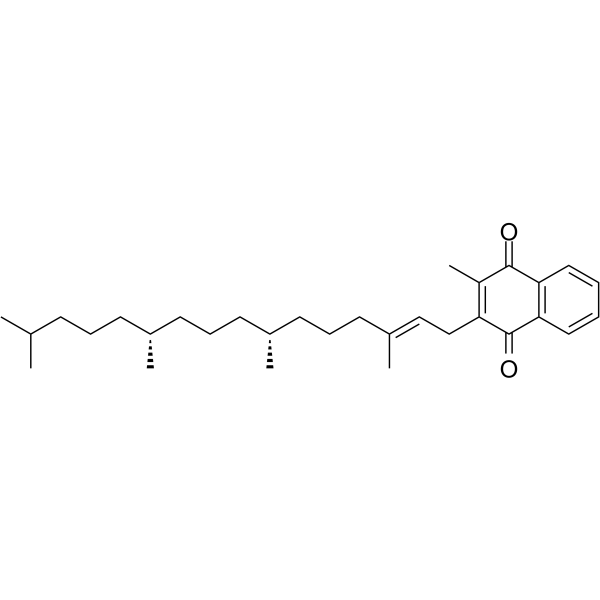
HY-N0684
Vitamin K1Endogenous Metabolite -

HY-B1342
Vitamin A -
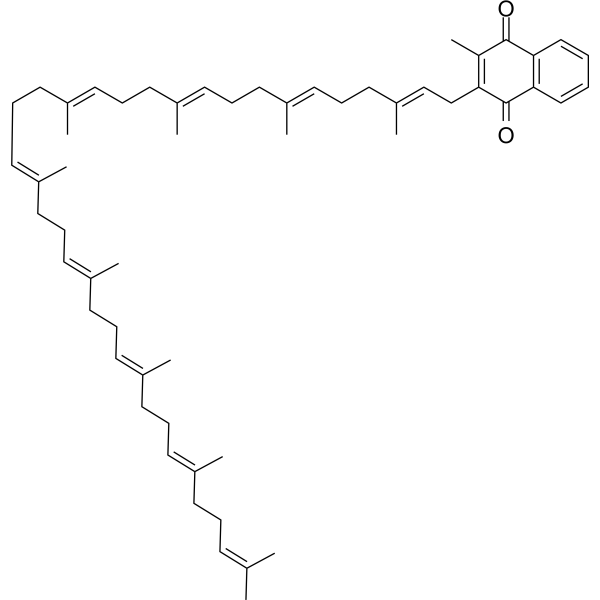
HY-131501
Menaquinone 9Endogenous Metabolite -
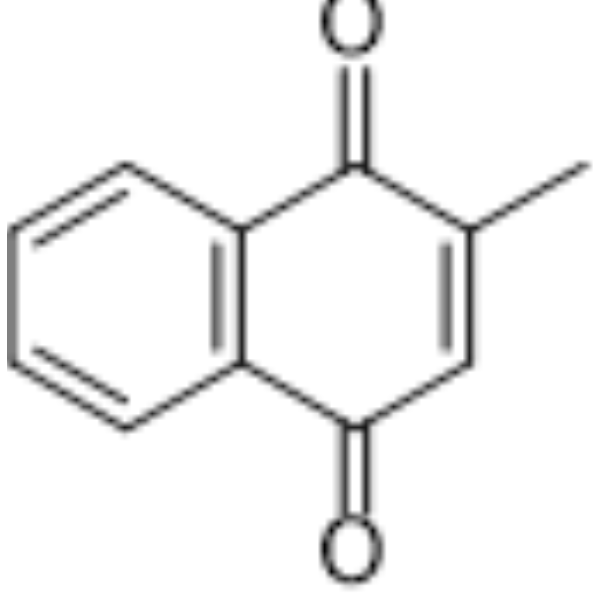
HY-B0332
MenadioneEndogenous Metabolite -
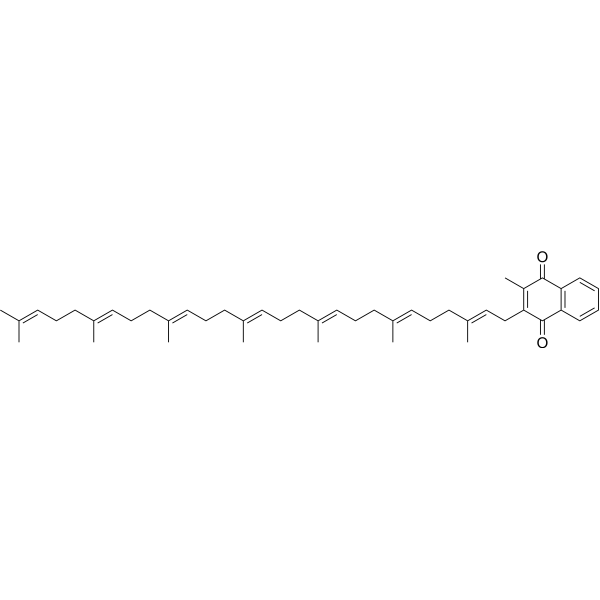
HY-112499R
Menaquinone-7 (Standard) -

HY-B2156R
Menaquinone-4 (Standard)Endogenous Metabolite -
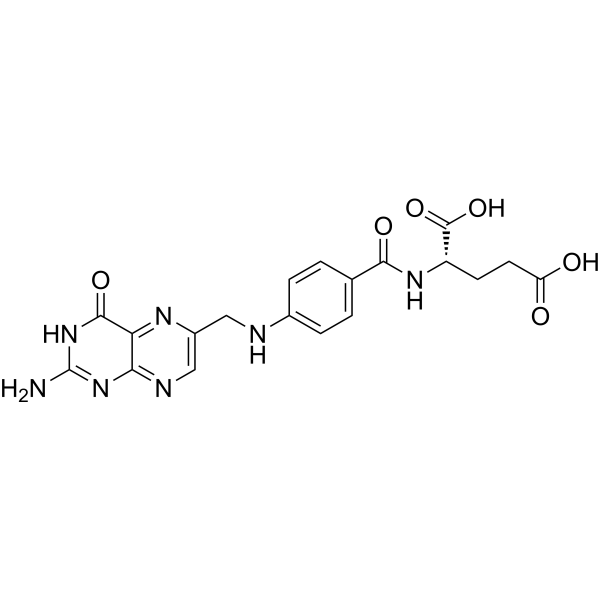
HY-16637
Folic acidB complex -
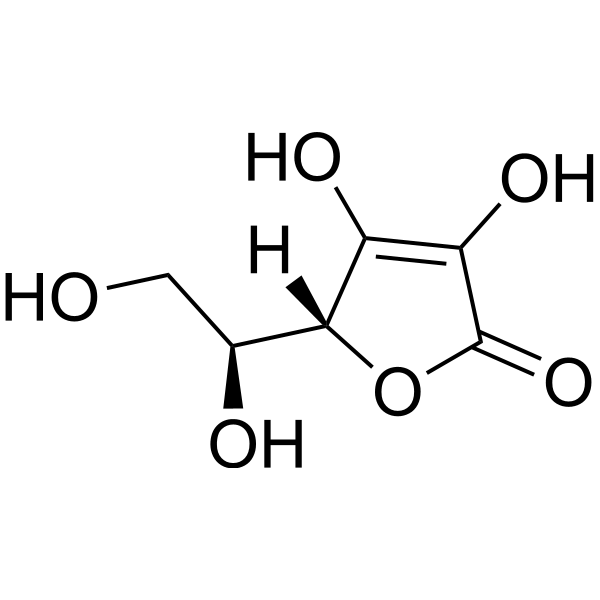
HY-B0166
L-Ascorbic acidAntioxidant -
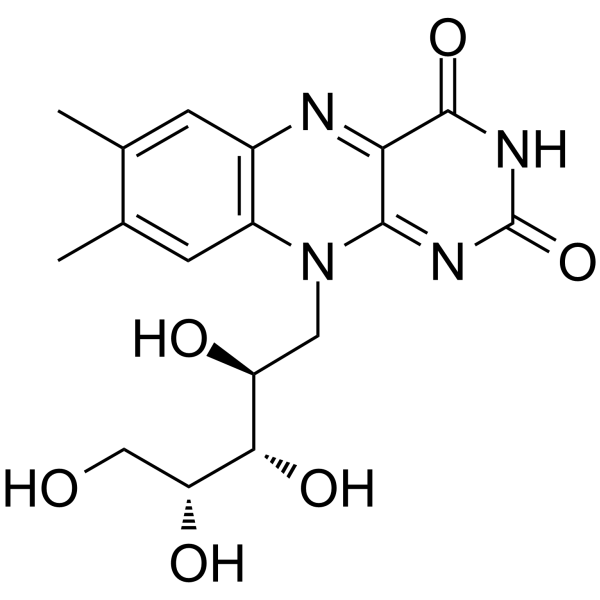
HY-B0456
RiboflavinVitamin B2 -
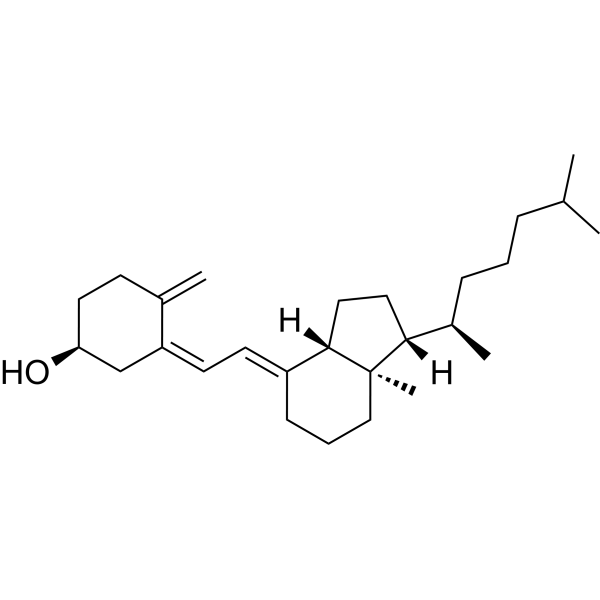
HY-15398
Vitamin D3Vitamin -
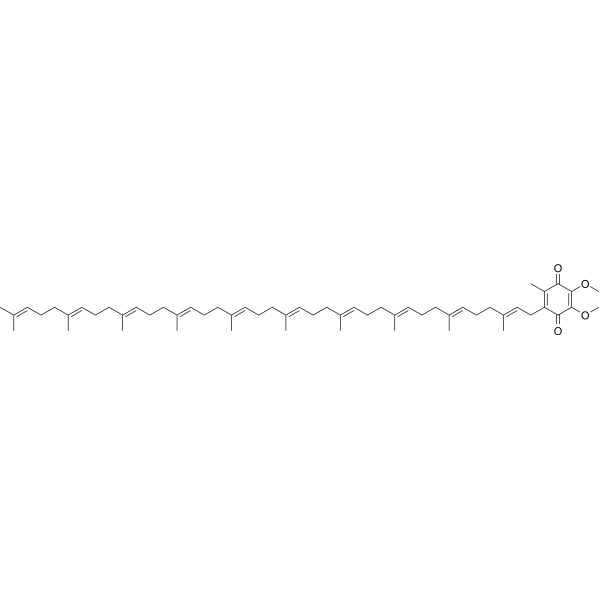
HY-N0111
Coenzyme Q10Antioxidant
Publications Citing Use of MedChemExpress (MCE) Menaquinone-7
More Customer Validation & Images

-
Cell Proliferation/Viability Assay
-
Flow Cytometry
-
WB


Biological Activity
Description
IC50 & Target
|
Smad1 |
In Vitro
Menaquinone-7 (0.01-10 μM; 7 days) inhibits osteoclast-like cell formation in marrow cultures[1].
Menaquinone-7 (10 μM) promotes the expression of tenascin C and increases phosphorylated Smad1 level in MC3T3E1 cells[2].
Menaquinone-7 (1, 10 μM) significantly enhances the anabolic effect on the femoral calcium content in the presence of phytoestrogen genistein (1, 10 μM)[3].
MedChemExpress (MCE) has not independently confirmed the accuracy of these methods. They are for reference only.
-
Cell Line:Marrow cells (from 3-week-old male wistar rats; PTH/PGE2 stimulated)
-
Concentration:0.01-10 µM
-
Incubation Time:7 days
-
Result:Significantly decreased the number of TRACP-positive MNCs stimulated by PTH or PGE2.
In Vivo
MedChemExpress (MCE) has not independently confirmed the accuracy of these methods. They are for reference only.
-
Animal Model:Female Wistar rats (5-week-old; ovariectomized (OVX) rats model)[5].
-
Dosage:18.1 mg/100 g diet
-
Administration:In animal feedings; 24 days
-
Result:Had a preventive effect on OVX-induced bone loss.
Clinical Trial
| NCT Number | Sponsor | Condition | Start Date |
Phase

|
|---|---|---|---|---|
| NCT01329991 | 2011-05 | PHASE1 |


Chemical Information
-
CAS No. 2124-57-4
-
Appearance Solid
-
Molecular Weight 649.00
-
Formula C46H64O2
-
Color Light yellow to yellow
-
SMILES
O=C1C(C/C=C(C)/CC/C=C(C)/CC/C=C(C)/CC/C=C(C)/CC/C=C(C)/CC/C=C(C)/CC/C=C(C)\C)=C(C)C(C2=C1C=CC=C2)=O
-
Synonyms
Vitamin K2-7; Vitamin K2(35); Vitamin MK-7
-
Shipping
Room temperature in continental US; may vary elsewhere.
-
Storage
Powder -20°C 3 years 4°C 2 years In solvent -80°C 2 years -20°C 1 year


Publications (3)
-
Journal Impact Factor
-
Most Recent
-
Int J Antimicrob Agents
2025 Nov 25;67(1):107679. PMID: 41308844 -
J Sci Food Agric
Enhancing menaquinone-7 biosynthesis by optimized fermentation strategies and fed-batch cultivation of food-derived Bacillus subtilis. [Abstract]2025 Aug 30;105(11):5973-5985. PMID: 40411175 -
Biomed Pharmacother
Vitamin K2 ameliorates osteoarthritis by suppressing ferroptosis and extracellular matrix degradation through activation GPX4's dual functions. [Abstract]2024 Jun:175:116697. PMID: 38759289
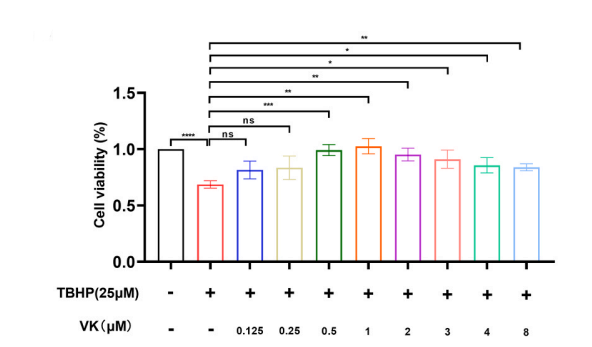
Menaquinone-7 purchased from MedChemExpress. Usage Cited in: Biomed Pharmacother. 2024 Jun:175:116697. [Abstract]
The CCK8 method was used to screen for the working concentration of in vitro Menaquinone-7 (VK).
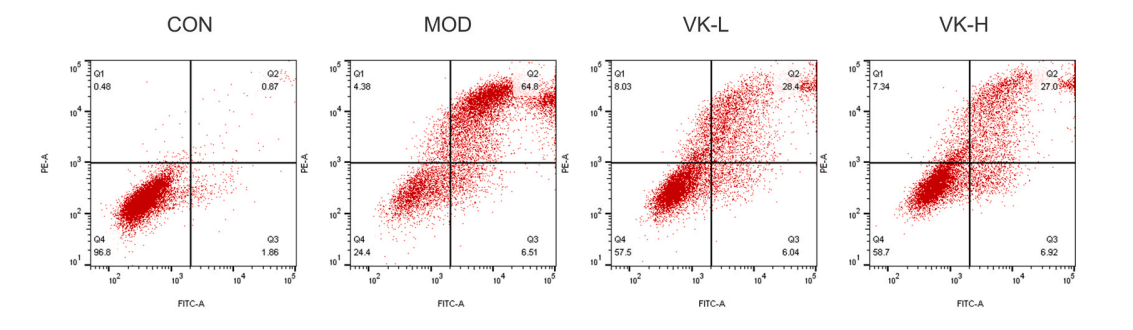
Menaquinone-7 purchased from MedChemExpress. Usage Cited in: Biomed Pharmacother. 2024 Jun:175:116697. [Abstract]
Menaquinone-7 (VK: 0.5/1 μM). Statistical data of apoptosis detected by flow cytometry.
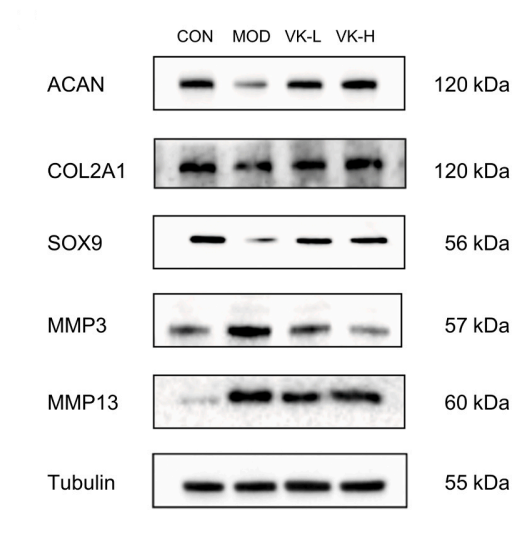
Menaquinone-7 purchased from MedChemExpress. Usage Cited in: Biomed Pharmacother. 2024 Jun:175:116697. [Abstract]
Menaquinone-7 (VK: 0.5/1 μM). WB results for ACAN, COL2A1, SOX9, MMP3, MMP13 and Tubulin.


Solvent & Solubility
In Vitro:
Ethanol : 10 mg/mL (15.41 mM; Need ultrasonic)
DMSO : 5 mg/mL (7.70 mM; Need ultrasonic and warming; Hygroscopic DMSO has a significant impact on the solubility of product, please use newly opened DMSO)
Please refer to the solubility information to select the appropriate solvent. Once prepared, please aliquot and store the solution to prevent product inactivation from repeated freeze-thaw cycles.
Storage method and period of stock solution: -80°C, 2 years; -20°C, 1 year. When stored at -80°C, please use it within 2 years. When stored at -20°C, please use it within 1 year.
Please refer to the solubility information to select the appropriate solvent. Once prepared, please aliquot and store the solution to prevent product inactivation from repeated freeze-thaw cycles.
Storage method and period of stock solution: -80°C, 2 years; -20°C, 1 year. When stored at -80°C, please use it within 2 years. When stored at -20°C, please use it within 1 year.
Concentration (start) × Volume (start) = Concentration (final) × Volume (final)
In Vivo:
Select the appropriate dissolution method based on your experimental animal and administration route.
- For the following dissolution methods, please ensure to first prepare a clear stock solution using an In Vitro approach and then sequentially add co-solvents:
- To ensure reliable experimental results, the clarified stock solution can be appropriately stored based on storage conditions. As for the working solution for In Vivo experiments, it is recommended to prepare freshly and use it on the same day.
- The percentages shown for the solvents indicate their volumetric ratio in the final prepared solution. If precipitation or phase separation occurs during preparation, heat and/or sonication can be used to aid dissolution.
Add each solvent one by one: 10% DMSO 40% PEG300 5% Tween-80 45% Saline
Solubility: 0.54 mg/mL (0.83 mM); Suspended solution; Need ultrasonic
This protocol yields a suspended solution of 0.54 mg/mL. Suspended solution can be used for oral and intraperitoneal injection.
Taking 1 mL working solution as an example, add 100 μL DMSO stock solution (5.4 mg/mL) to 400 μL PEG300, and mix evenly; then add 50 μL Tween-80 and mix evenly; then add 450 μL Saline to adjust the volume to 1 mL.
Preparation of Saline: Dissolve 0.9 g sodium chloride in ddH₂O and dilute to 100 mL to obtain a clear Saline solution.
In Vivo Dissolution Calculator
Please enter the basic information of animal experiments:
-
-
-
-
Recommended: Prepare an additional quantity of animals to account for potential losses during experiments.
Please enter your animal formula composition:
-
%DMSO +
Recommended: Keep the proportion of DMSO in working solution below 2% if your animal is weak.
-
%+
-
+%Tween-80 + +
-
%Saline +
The co-solvents required include: DMSO, . All of co-solvents are available by MedChemExpress (MCE). , Tween 80. All of co-solvents are available by MedChemExpress (MCE).
Working solution concentration: 0.22 mg/mL
Method for preparing stock solution: mg drug dissolved in μL DMSO. Stock solution concentration: mg/mL.
1. Take μL DMSO stock solution;
2. Add μL .
μL , mix evenly;
3. Then add μL Tween 80, mix evenly;
4. Then add μL
Please ensure that the stock solution in the first step is dissolved to a clear state, and add co-solvents in sequence. You can use ultrasonic heating (ultrasonic cleaner, recommended frequency 20-40 kHz), vortexing, etc. to assist dissolution.


Purity & Documentation
-
Data Sheet (272 KB)
-
SDS (396 KB)
- English - EN (396 KB)
- Français - FR (396 KB)
- Deutsch - DE (396 KB)
- Norwegian - NO (396 KB)
- Español - ES (396 KB)
- Swedish - SV (396 KB)
- Italian - IT (396 KB)
- Korean - KR (396 KB)
- Portuguese - PT (396 KB)
-
Handling Instructions (2659 KB)
References
[1]. Yamaguchi M, et al. Inhibitory effect of menaquinone-7 (vitamin K2) on osteoclast-like cell formation and osteoclastic bone resorption in rat bone tissues in vitro. Mol Cell Biochem. 2001 Dec;228(1-2):39-47. [Content Brief]
[2]. Katsuyama H, et al. Menaquinone-7 regulates gene expression in osteoblastic MC3T3E1 cells. Int J Mol Med. 2007 Feb;19(2):279-84. [Content Brief]
[3]. Yamaguchi M, et al. Stimulatory effect of menaquinone-7 on bone formation in elderly female rat femoral tissues in vitro: prevention of bone deterioration with aging. Int J Mol Med. 2002 Dec;10(6):729-33. [Content Brief]
[4]. Peeters FECM, et al. Bicuspid Aortic Valve Stenosis and the Effect of Vitamin K2 on Calcification Using 18F-Sodium Fluoride Positron Emission Tomography/Magnetic Resonance: The BASIK2 Rationale and Trial Design. Nutrients. 2018 Mar 21;10(4):386. [Content Brief]
[5]. Yamaguchi M, Taguchi H, Gao YH, Igarashi A, Tsukamoto Y. Effect of vitamin K2 (menaquinone-7) in fermented soybean (natto) on bone loss in ovariectomized rats. J Bone Miner Metab. 1999;17(1):23-9. [Content Brief]


Complete Stock Solution Preparation Table
Please refer to the solubility information to select the appropriate solvent. Once prepared, please aliquot and store the solution to prevent product inactivation from repeated freeze-thaw cycles.
Storage method and period of stock solution: -80°C, 2 years; -20°C, 1 year. When stored at -80°C, please use it within 2 years. When stored at -20°C, please use it within 1 year.
| Optional Solvent | Concentration Solvent Mass | 1 mg | 5 mg | 10 mg | 25 mg |
|---|---|---|---|---|---|
| DMSO / Ethanol | 1 mM | 1.5408 mL | 7.7042 mL | 15.4083 mL | 38.5208 mL |
| 5 mM | 0.3082 mL | 1.5408 mL | 3.0817 mL | 7.7042 mL | |
| Ethanol | 10 mM | 0.1541 mL | 0.7704 mL | 1.5408 mL | 3.8521 mL |
| 15 mM | 0.1027 mL | 0.5136 mL | 1.0272 mL | 2.5681 mL |


Menaquinone-7 Related Classifications
HY-112499 Related Classifications
 Powered by Bioz