



PLpro inhibitor
Based on 6 publication(s) in Google Scholar
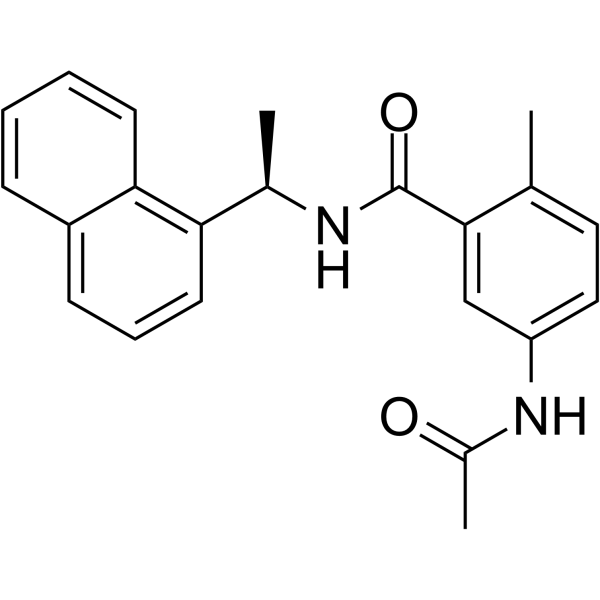
PLpro inhibitor is a potent inhibitor of papain-like protease (PLpro) with an IC50 of 2.6 µM. PLpro inhibitor inhibits SARS-CoV-2 PLpro with an IC50 of 5.0 µM and an EC50 of 21.0 µM.
Nos produits utilisent uniquement pour la recherche. Nous ne vendons pas aux patients.
- Pureté : 99.88%
- CAS No.: 1093070-14-4
- Formule: C22H22N2O2
- Masse moléculaire:346.42
-
Stockage:Powder -20°C, 3 years , 4°C, 2 years ; In solvent -80°C, 2 years , -20°C, 1 year

To place orders, for customer services and technical support, please contact: MedChemExpress USA
Tel: 609-228-6898 E-mail: [email protected] [email protected]


-
 Activité biologique
-
Chemical Information
-
Solvant et solubilité
- Pureté et documentation
- Références
-
 Help & FAQs


-
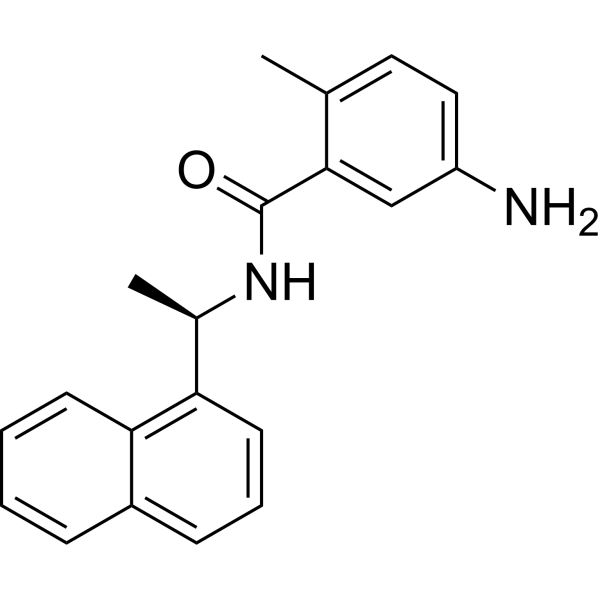
HY-117043
GRL0617PLpro Inhibitor -
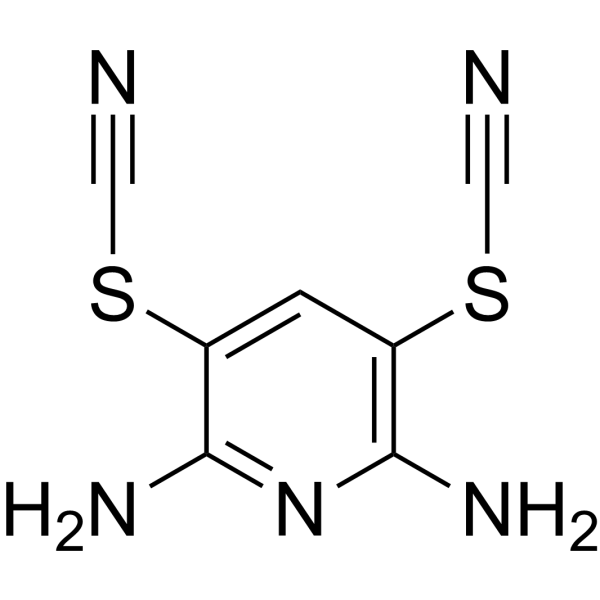
HY-13814
PR-619DUB Inhibitor -
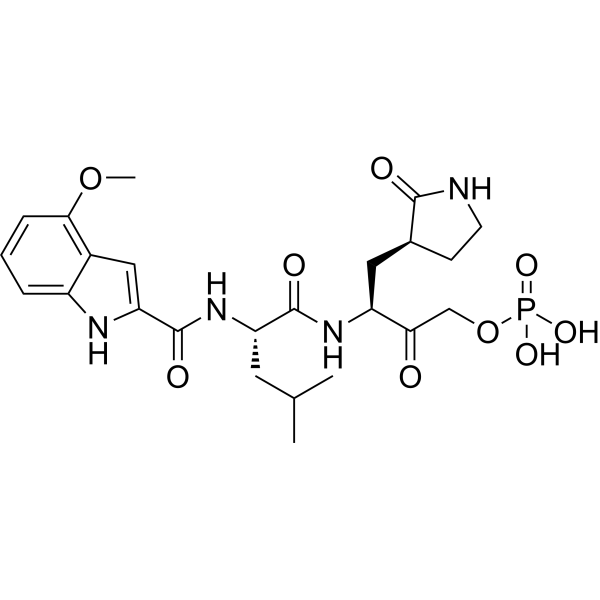
HY-138078
Lufotrelvir3CLpro Protease Inhibitor -
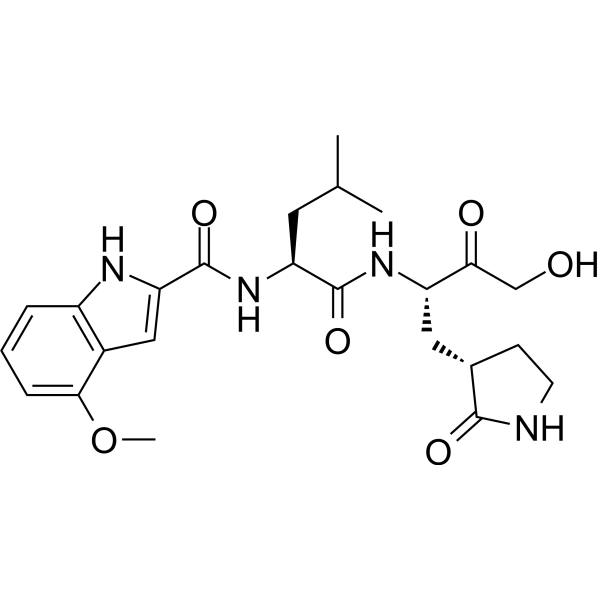
HY-137048
PF-008352313CLpro Inhibitor -
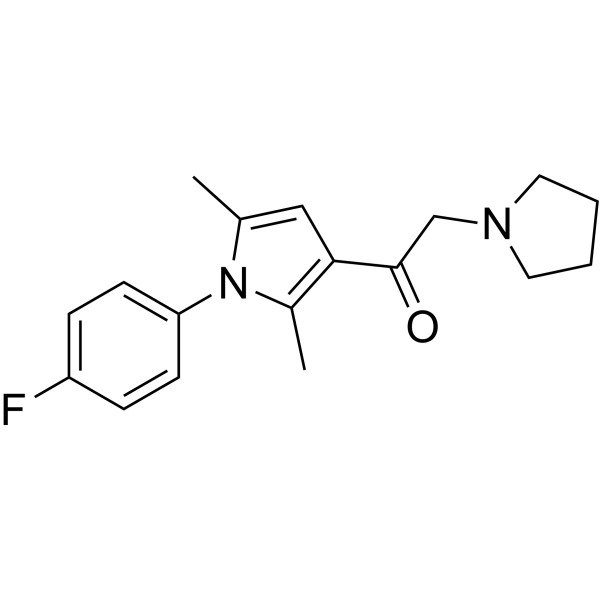
HY-13817
IU1USP14 Inhibitor -
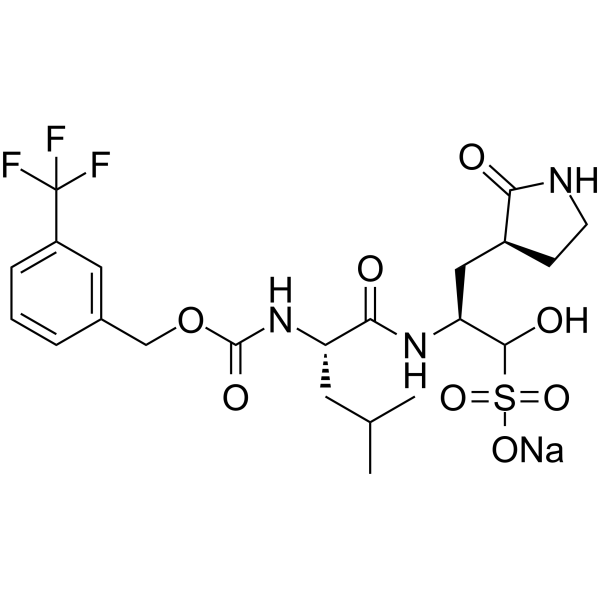
HY-147020
CoronastatAnti-infection Agent -
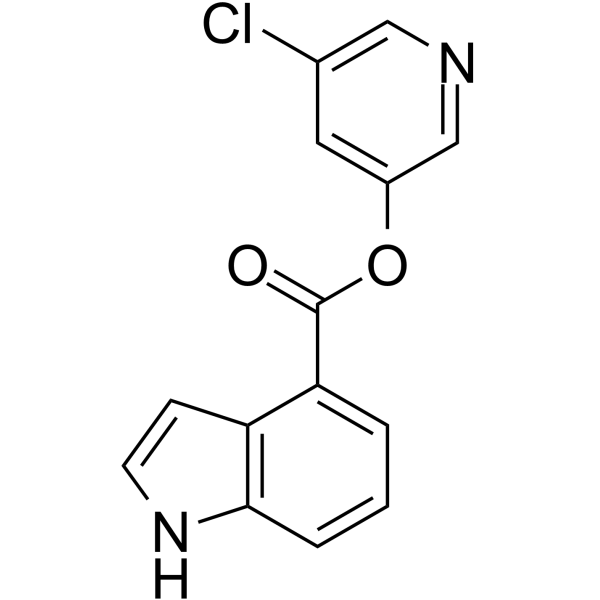
HY-137954
GRL-0496SARS-CoV 3CLpro Inhibitor -
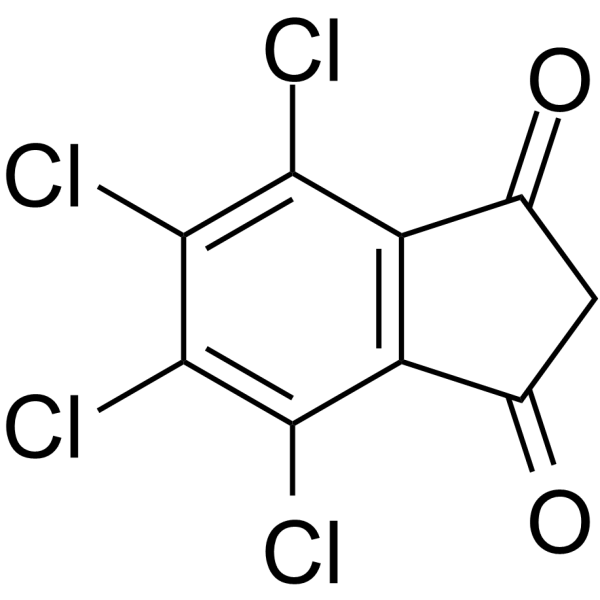
HY-18638
TCIDUCH-L3 Inhibitor -
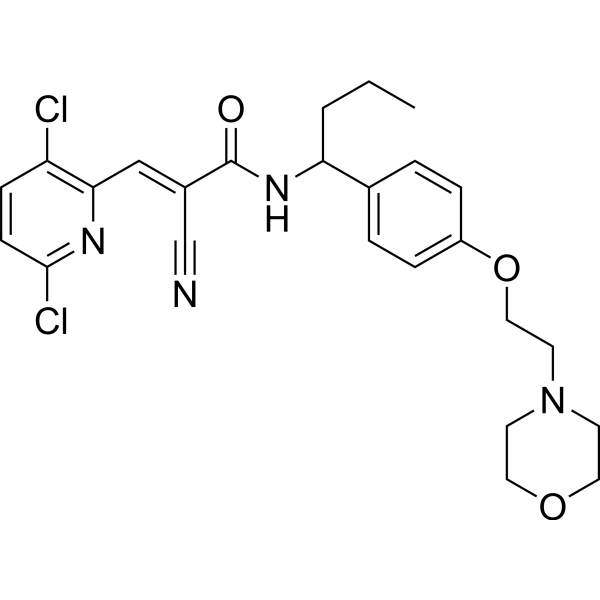
HY-111408
EOAI3402143DUB Inhibitor -
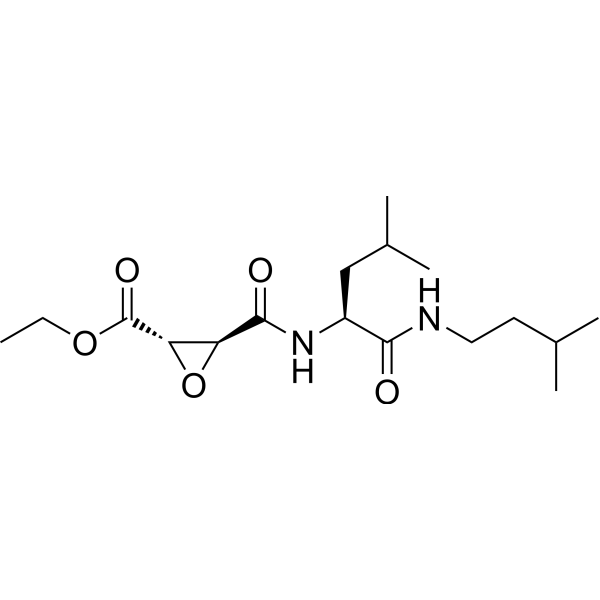
HY-100229
AloxistatinCysteine Protease Inhibitor -
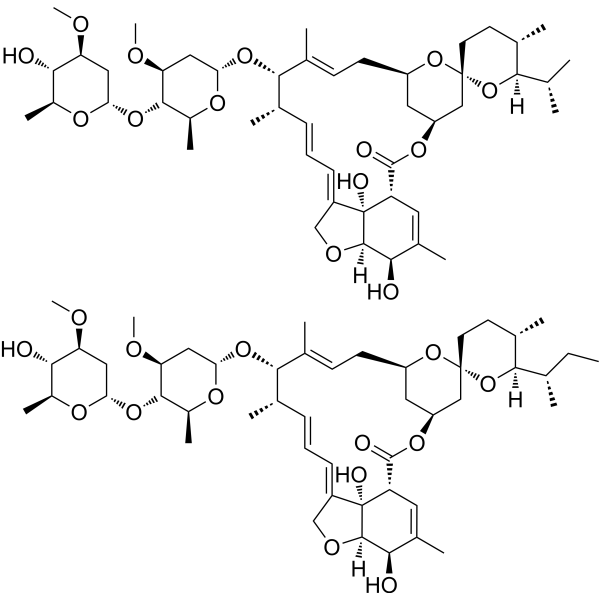
HY-15310
IvermectinAnti-parasite Agent -
HY-15667
P005091USP7 Inhibitor
Publications Citing Use of MedChemExpress (MCE) PLpro inhibitor
More

Activité biologique
Description
IC50 & Target
IC50 : 2.6 µM (Papain-like protease (PLpro))[1]; 5.0 µM (SARS-CoV-2 PLpro)[2]
EC50: 21.0 µM (SARS-CoV-2 PLpro)[2]
Cellular Effect
|
Cell Line

|
Type | Value | Description | References |
|---|---|---|---|---|
| Vero | EC50 |
14.5 μM
Compound: 24
|
Antiviral activity against SARS coronavirus in african green monkey Vero E6 cells assessed as inhibition of replication after 48 hrs
Antiviral activity against SARS coronavirus in african green monkey Vero E6 cells assessed as inhibition of replication after 48 hrs
|
[PMID: 19645480] |
In Vitro
PLpro inhibitor is a potent inhibitor against the papain-like protease (PLpro) from the coronavirus that causes severe acute respiratory syndrome (SARS-CoV). PLpro inhibitor was found to have IC50 value of 2.6 μM. PLpro inhibitor display significant antiviral activity with EC50 values of 13.1 μM, without toxicity up to the highest concentration tested. Notably, the increasing antiviral potency correlates with the in vitro inhibition of PLpro, suggesting that the compounds work directly on the enzyme in cells[1][3].
MedChemExpress (MCE) has not independently confirmed the accuracy of these methods. They are for reference only.


Chemical Information
-
CAS No. 1093070-14-4
-
Appearance Solid
-
Masse moléculaire 346.42
-
Formule C22H22N2O2
-
Color White to off-white
-
SMILES
O=C(C1=CC(NC(C)=O)=CC=C1C)N[C@H](C)C2=C(C=CC=C3)C3=CC=C2
-
Livraison
Room temperature in continental US; may vary elsewhere.
-
Stockage
Powder -20°C 3 years 4°C 2 years In solvent -80°C 2 years -20°C 1 year


Publications (6)
-
Journal Impact Factor
-
Most Recent
-
Nucleic Acids Res
COVID19 Drug Repository: text-mining the literature in search of putative COVID19 therapeutics. [Abstract]2021 Jan 8;49(D1):D1113-D1121. PMID: 33166390 -
Cell Rep
Hepatitis C virus drugs that inhibit SARS-CoV-2 papain-like protease synergize with remdesivir to suppress viral replication in cell culture. [Abstract]2021 May 18;35(7):109133. PMID: 33984267 -
Sci Rep
2021 Mar 8;11(1):5433. PMID: 33686143 -
Virol Sin
2026 Jul 27:S1995-820X(26)00121-5. PMID: 42508733 -
ACS Infect Dis
Characterization and Noncovalent Inhibition of the Deubiquitinase and deISGylase Activity of SARS-CoV-2 Papain-Like Protease. [Abstract]2020 Aug 14;6(8):2099-2109. PMID: 32428392 -


Solvant et solubilité
In Vitro:
DMSO : 100 mg/mL (288.67 mM; Need ultrasonic; Hygroscopic DMSO has a significant impact on the solubility of product, please use newly opened DMSO)
Please refer to the solubility information to select the appropriate solvent. Once prepared, please aliquot and store the solution to prevent product inactivation from repeated freeze-thaw cycles.
Storage method and period of stock solution: -80°C, 2 years; -20°C, 1 year. When stored at -80°C, please use it within 2 years. When stored at -20°C, please use it within 1 year.
Please refer to the solubility information to select the appropriate solvent. Once prepared, please aliquot and store the solution to prevent product inactivation from repeated freeze-thaw cycles.
Storage method and period of stock solution: -80°C, 2 years; -20°C, 1 year. When stored at -80°C, please use it within 2 years. When stored at -20°C, please use it within 1 year.
Concentration (start) × Volume (start) = Concentration (final) × Volume (final)
In Vivo:
Select the appropriate dissolution method based on your experimental animal and administration route.
- For the following dissolution methods, please ensure to first prepare a clear stock solution using an In Vitro approach and then sequentially add co-solvents:
- To ensure reliable experimental results, the clarified stock solution can be appropriately stored based on storage conditions. As for the working solution for In Vivo experiments, it is recommended to prepare freshly and use it on the same day.
- The percentages shown for the solvents indicate their volumetric ratio in the final prepared solution. If precipitation or phase separation occurs during preparation, heat and/or sonication can be used to aid dissolution.
Add each solvent one by one: 10% DMSO 40% PEG300 5% Tween-80 45% Saline
Solubility: ≥ 2.5 mg/mL (7.22 mM); Clear solution
This protocol yields a clear solution of ≥ 2.5 mg/mL (saturation unknown).
Taking 1 mL working solution as an example, add 100 μL DMSO stock solution (25.0 mg/mL) to 400 μL PEG300, and mix evenly; then add 50 μL Tween-80 and mix evenly; then add 450 μL Saline to adjust the volume to 1 mL.
Preparation of Saline: Dissolve 0.9 g sodium chloride in ddH₂O and dilute to 100 mL to obtain a clear Saline solution.
In Vivo Dissolution Calculator
Please enter the basic information of animal experiments:
-
-
-
-
Recommended: Prepare an additional quantity of animals to account for potential losses during experiments.
Please enter your animal formula composition:
-
%DMSO +
Recommended: Keep the proportion of DMSO in working solution below 2% if your animal is weak.
-
%+
-
+%Tween-80 + +
-
%Saline +
The co-solvents required include: DMSO, . All of co-solvents are available by MedChemExpress (MCE). , Tween 80. All of co-solvents are available by MedChemExpress (MCE).
Working solution concentration: 0.22 mg/mL
Method for preparing stock solution: mg drug dissolved in μL DMSO. Stock solution concentration: mg/mL.
1. Take μL DMSO stock solution;
2. Add μL .
μL , mix evenly;
3. Then add μL Tween 80, mix evenly;
4. Then add μL
Please ensure that the stock solution in the first step is dissolved to a clear state, and add co-solvents in sequence. You can use ultrasonic heating (ultrasonic cleaner, recommended frequency 20-40 kHz), vortexing, etc. to assist dissolution.


Pureté et documentation
-
Fiche technique (277 KB)
-
SDS (393 KB)
- English - EN (393 KB)
- Français - FR (393 KB)
- Deutsch - DE (393 KB)
- Norwegian - NO (393 KB)
- Español - ES (393 KB)
- Swedish - SV (393 KB)
- Italian - IT (393 KB)
- Korean - KR (393 KB)
- Portuguese - PT (393 KB)
-
Instruction de manipulation (2659 KB)
Références
[1]. Ratia, K., et al., A noncovalent class of papain-like protease/deubiquitinase inhibitors blocks SARS virus replication. Proc Natl Acad Sci U S A, 2008. 105(42): p. 16119-24. [Content Brief]
[2]. http://www.google.com/patents/WO2010022355A1cl=en
[3]. Brendan T Freitas, et al. Characterization and Noncovalent Inhibition of the Deubiquitinase and deISGylase Activity of SARS-CoV-2 Papain-Like Protease. ACS Infect Dis. 2020 May 19. [Content Brief]


Complete Stock Solution Preparation Table
Please refer to the solubility information to select the appropriate solvent. Once prepared, please aliquot and store the solution to prevent product inactivation from repeated freeze-thaw cycles.
Storage method and period of stock solution: -80°C, 2 years; -20°C, 1 year. When stored at -80°C, please use it within 2 years. When stored at -20°C, please use it within 1 year.
| Optional Solvent | Concentration Solvent Mass | 1 mg | 5 mg | 10 mg | 25 mg |
|---|---|---|---|---|---|
| DMSO | 1 mM | 2.8867 mL | 14.4333 mL | 28.8667 mL | 72.1667 mL |
| 5 mM | 0.5773 mL | 2.8867 mL | 5.7733 mL | 14.4333 mL | |
| 10 mM | 0.2887 mL | 1.4433 mL | 2.8867 mL | 7.2167 mL | |
| 15 mM | 0.1924 mL | 0.9622 mL | 1.9244 mL | 4.8111 mL | |
| 20 mM | 0.1443 mL | 0.7217 mL | 1.4433 mL | 3.6083 mL | |
| 25 mM | 0.1155 mL | 0.5773 mL | 1.1547 mL | 2.8867 mL | |
| 30 mM | 0.0962 mL | 0.4811 mL | 0.9622 mL | 2.4056 mL | |
| 40 mM | 0.0722 mL | 0.3608 mL | 0.7217 mL | 1.8042 mL | |
| 50 mM | 0.0577 mL | 0.2887 mL | 0.5773 mL | 1.4433 mL | |
| 60 mM | 0.0481 mL | 0.2406 mL | 0.4811 mL | 1.2028 mL | |
| 80 mM | 0.0361 mL | 0.1804 mL | 0.3608 mL | 0.9021 mL | |
| 100 mM | 0.0289 mL | 0.1443 mL | 0.2887 mL | 0.7217 mL |


PLpro inhibitor Related Classifications
HY-17542 Related Classifications
 Powered by Bioz