



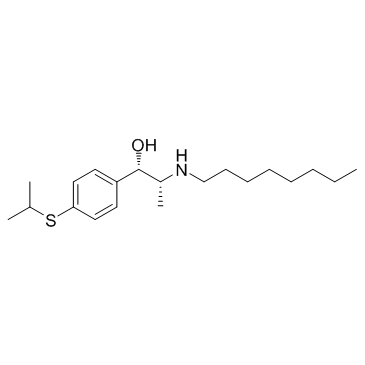
Suloctidil

Based on 1 Customer Validation
Suloctidil is an orally active calcium channel blocker and antifungal agent. Suloctidil antagonizes vasoconstriction induced by norepinephrine, angiotensin and serotonin. Suloctidil inhibits platelet function and exhibits neuroprotective effects. Suloctidil exerts inhibitory effects on Candida albicans biofilm and virulence. Suloctidil can be used in research on vasospasm relief, antithrombosis and superficial candidiasis.
For research use only. We do not sell to patients.
- Purity : 99.9%
- CAS No.: 54767-75-8
- Formula: C20H35NOS
- Molecular Weight:337.56
-
Storage:Powder -20°C, 3 years , 4°C, 2 years ; In solvent -80°C, 2 years , -20°C, 1 year

To place orders, for customer services and technical support, please contact: MedChemExpress USA
Tel: 609-228-6898 E-mail: [email protected] [email protected]


-
 Biological Activity
-
Chemical Information
-
Solvent & Solubility
- Purity & Documentation
- References
-
 Help & FAQs


-
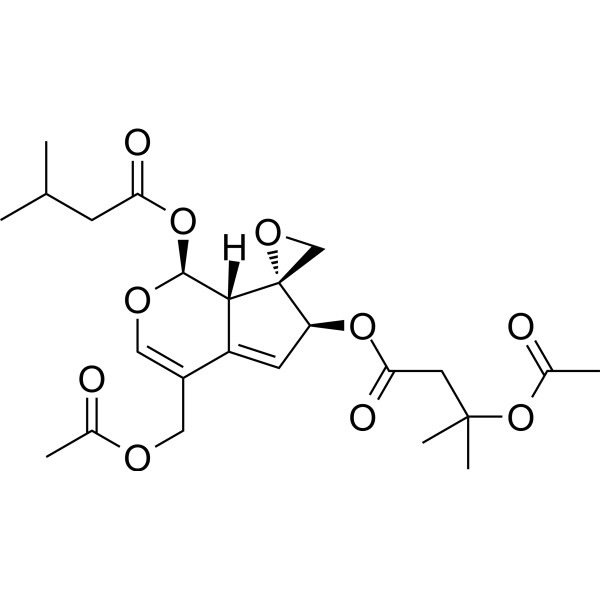
HY-N2070
AcevaltrateNa+/K+ ATPase Inhibitor -
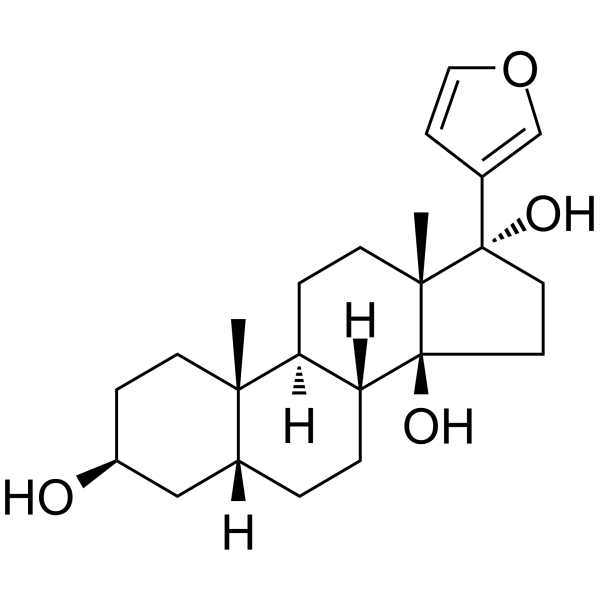
HY-12283
RostafuroxinATP1A1 Antognist -
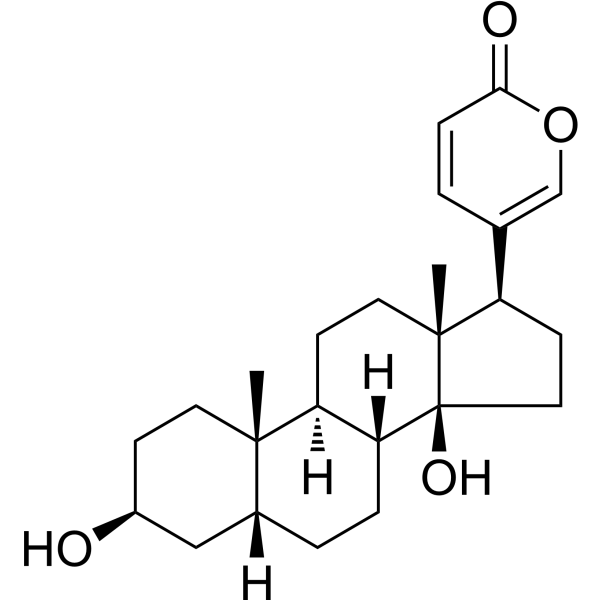
HY-N0877
BufalinNa+/K+ ATPase Inhibitor -
HY-B1357
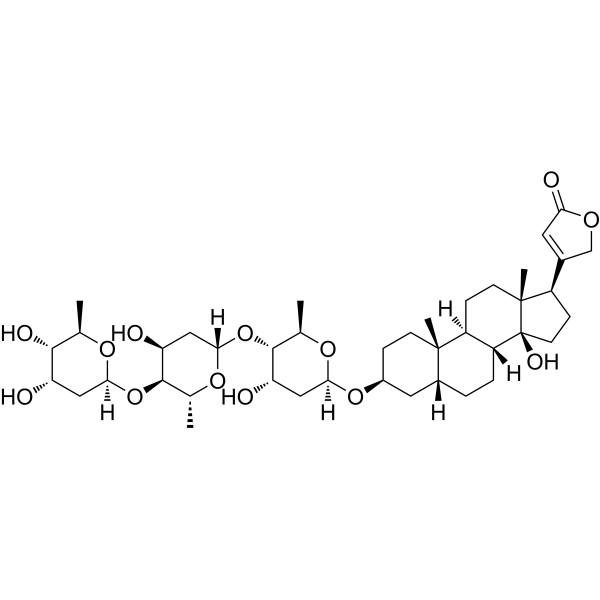
DigitoxinAnti-cancer Agent -
HY-114252
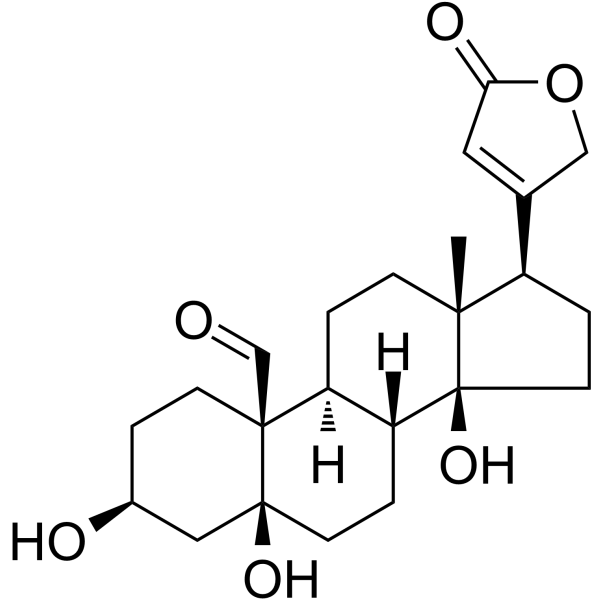
StrophanthidinCardiac Glycoside -

HY-12283R
Rostafuroxin (Standard)ATP1A1 Antognist -
HY-B0137
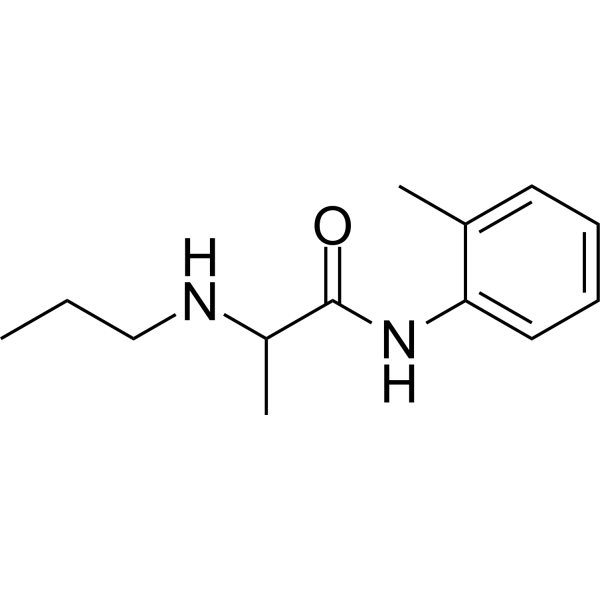
PrilocaineNa, K-ATPase Inhibitor -

HY-N2070R
Acevaltrate (Standard)Na+/K+ ATPase Inhibitor -

HY-B0137R
Prilocaine (Standard)Na, K-ATPase Inhibitor -
HY-15718A
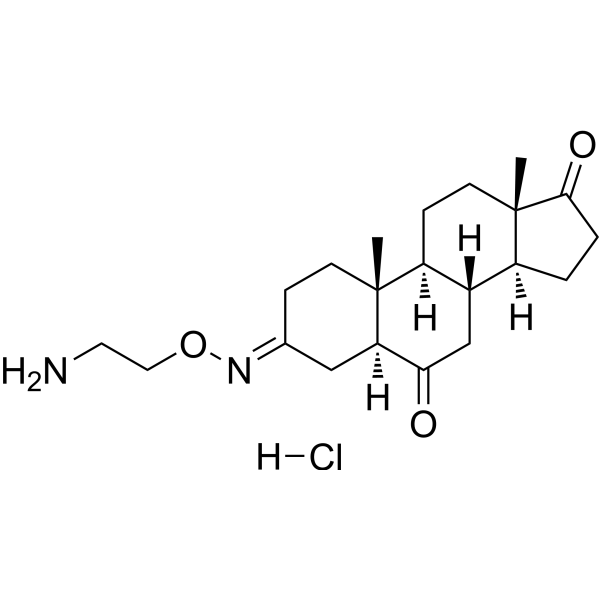
Istaroxime hydrochlorideCalcium Channel Activator -
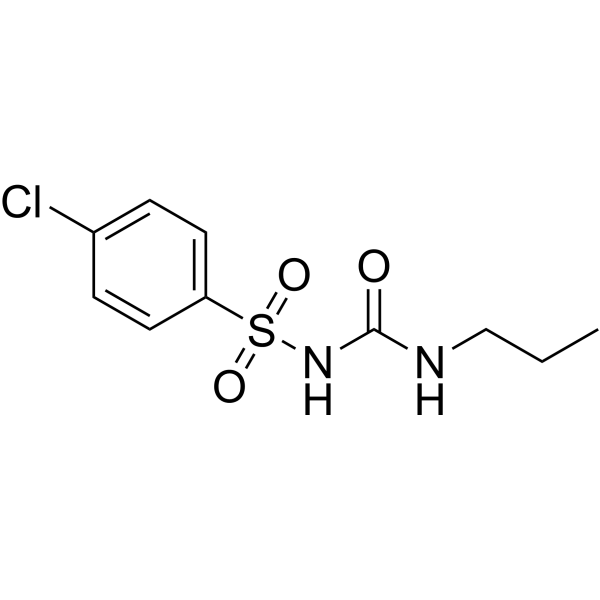
HY-B1429
ChlorpropamideBlood Sugar Reduction -
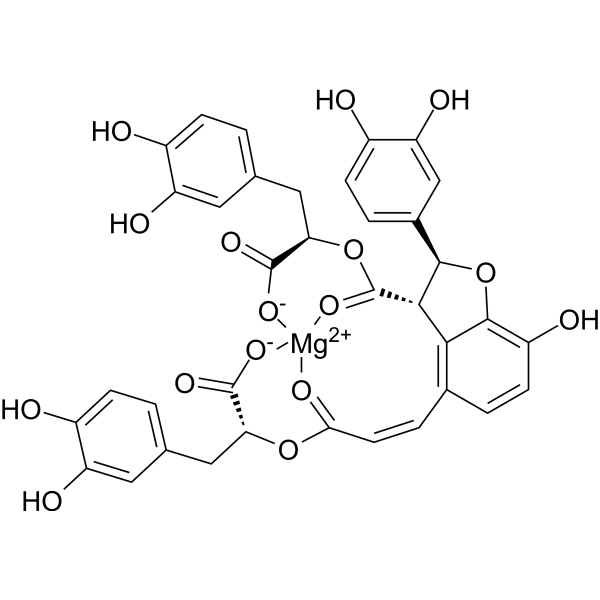
HY-126415
Magnesium Lithospermate BNeuroin ammation Inhibitor
All Calcium Channel Isoforms
More

Biological Activity
Description
In Vitro
Suloctidil (4 μg/mL; 48 h) inhibits 80% of planktonic growth of Candida albicans strains YEM30 and LC3 with an MIC80 of 4 μg/mL after 48 h of incubation[1].
Suloctidil (4-32 μg/mL; 3-24 h) inhibits 80% of biofilm formation in Candida albicans strains YEM30 and LC3 with a BIC80 of 16 μg/mL after 24 h, and exerts concentration-dependent, time-dependent biofilm formation inhibition, with complete inhibition at 16 and 32 μg/mL within 3 h[1].
Suloctidil (32-256 μg/mL; 0.5-24 h) eradicates 80% of preformed biofilms in Candida albicans strains YEM30 and LC3 with a BEC80 of 64 μg/mL after 24 h, and exerts rapid, concentration-dependent eradication activity, achieving a fungicidal endpoint within 0.5 h at 64, 128, and 256 μg/mL[1].
Suloctidil (64 μg/mL; 1-24 h) induces time-dependent morphological damage to preformed Candida albicans YEM30 biofilms, with slight shrinkage at 1 h and severe shriveling and detachment at 24 h[1].
Suloctidil (16 μg/mL; 12 h) completely inhibits yeast-to-hyphal switching in Candida albicans YEM30 when added at the start of culture, partially inhibits switching when added after 2 h, and does not inhibit switching when added after 4 h, following 12 h total incubation[1].
Suloctidil (4 μg/mL; 18 h) downregulates the expression of hypha-specific genes HWP1, ALS3, and ECE1 in Candida albicans YEM30 by 2.8-, 2.3-, and 4.9-fold, respectively, after 18 h of incubation[1].
Suloctidil (0.01-1 μM) non-competitively inhibits norepinephrine-, angiotensin-, and serotonin-induced contractions and competitively inhibits calcium-induced contractions in isolated arteries[3].
MedChemExpress (MCE) has not independently confirmed the accuracy of these methods. They are for reference only.
-
Cell Line:Candida albicans strain YEM30
-
Concentration:4 μg/mL
-
Incubation Time:18 h
-
Result:Reduced the expression of hypha-specific genes HWP1 by 2.8-fold, ALS3 by 2.3-fold, and ECE1 by 4.9-fold compared to untreated controls.
In Vivo
MedChemExpress (MCE) has not independently confirmed the accuracy of these methods. They are for reference only.
-
Animal Model:Kunming mice (female, 7-8 weeks old, 28-32 g, pseudoestrus via subcutaneous estradiol benzoate, intravaginally infected with Candida albicans)[1]
-
Dosage:256 μg/mL
-
Administration:intravaginal; daily; until day 21 post-infection
-
Result:Significantly reduced C.
albicans fungal burden compared to vehicle controls, with statistically significant differences starting at day 5 post-infection, and sustained through day 15 post-infection.
Showed no detectable inflammatory cell infiltration in vaginal tissues at day 5 post-infection, while vehicle-treated mice had large amounts of neutrophil and mononuclear cell infiltration.
Exhibited only mild histologic changes at day 9 post-infection, compared to significant lymphocyte and mononuclear cell infiltration in vehicle-treated mice.
Had less lymphocyte and cellular infiltration in the mucosa propria than vehicle-treated mice at day 15 post-infection.


Chemical Information
-
CAS No. 54767-75-8
-
Appearance Solid
-
Molecular Weight 337.56
-
Formula C20H35NOS
-
Color White to off-white
-
SMILES
O[C@H]([C@H](NCCCCCCCC)C)C1=CC=C(SC(C)C)C=C1
-
Shipping
Room temperature in continental US; may vary elsewhere.
-
Storage
Powder -20°C 3 years 4°C 2 years In solvent -80°C 2 years -20°C 1 year


Solvent & Solubility
In Vitro:
DMSO : ≥ 30 mg/mL (88.87 mM; Hygroscopic DMSO has a significant impact on the solubility of product, please use newly opened DMSO)
* "≥" means soluble, but saturation unknown.
Please refer to the solubility information to select the appropriate solvent. Once prepared, please aliquot and store the solution to prevent product inactivation from repeated freeze-thaw cycles.
Storage method and period of stock solution: -80°C, 2 years; -20°C, 1 year. When stored at -80°C, please use it within 2 years. When stored at -20°C, please use it within 1 year.
Please refer to the solubility information to select the appropriate solvent. Once prepared, please aliquot and store the solution to prevent product inactivation from repeated freeze-thaw cycles.
Storage method and period of stock solution: -80°C, 2 years; -20°C, 1 year. When stored at -80°C, please use it within 2 years. When stored at -20°C, please use it within 1 year.
Concentration (start) × Volume (start) = Concentration (final) × Volume (final)
In Vivo:
Select the appropriate dissolution method based on your experimental animal and administration route.
- For the following dissolution methods, please ensure to first prepare a clear stock solution using an In Vitro approach and then sequentially add co-solvents:
- To ensure reliable experimental results, the clarified stock solution can be appropriately stored based on storage conditions. As for the working solution for In Vivo experiments, it is recommended to prepare freshly and use it on the same day.
- The percentages shown for the solvents indicate their volumetric ratio in the final prepared solution. If precipitation or phase separation occurs during preparation, heat and/or sonication can be used to aid dissolution.
Add each solvent one by one: 10% DMSO 40% PEG300 5% Tween-80 45% Saline
Solubility: 2.5 mg/mL (7.41 mM); Suspended solution; Need ultrasonic
This protocol yields a suspended solution of 2.5 mg/mL. Suspended solution can be used for oral and intraperitoneal injection.
Taking 1 mL working solution as an example, add 100 μL DMSO stock solution (25.0 mg/mL) to 400 μL PEG300, and mix evenly; then add 50 μL Tween-80 and mix evenly; then add 450 μL Saline to adjust the volume to 1 mL.
Preparation of Saline: Dissolve 0.9 g sodium chloride in ddH₂O and dilute to 100 mL to obtain a clear Saline solution.
Add each solvent one by one: 10% DMSO 90% (20% SBE-β-CD in Saline)
Solubility: ≥ 2.5 mg/mL (7.41 mM); Clear solution
This protocol yields a clear solution of ≥ 2.5 mg/mL (saturation unknown).
Taking 1 mL working solution as an example, add 100 μL DMSO stock solution (25.0 mg/mL) to 900 μL 20% SBE-β-CD in Saline, and mix evenly.
Preparation of 20% SBE-β-CD in Saline (4°C, storage for one week): 2 g SBE-β-CD powder is dissolved in 10 mL Saline, completely dissolve until clear.
In Vivo Dissolution Calculator
Please enter the basic information of animal experiments:
-
-
-
-
Recommended: Prepare an additional quantity of animals to account for potential losses during experiments.
Please enter your animal formula composition:
-
%DMSO +
Recommended: Keep the proportion of DMSO in working solution below 2% if your animal is weak.
-
%+
-
+%Tween-80 + +
-
%Saline +
The co-solvents required include: DMSO, . All of co-solvents are available by MedChemExpress (MCE). , Tween 80. All of co-solvents are available by MedChemExpress (MCE).
Working solution concentration: 0.22 mg/mL
Method for preparing stock solution: mg drug dissolved in μL DMSO. Stock solution concentration: mg/mL.
1. Take μL DMSO stock solution;
2. Add μL .
μL , mix evenly;
3. Then add μL Tween 80, mix evenly;
4. Then add μL
Please ensure that the stock solution in the first step is dissolved to a clear state, and add co-solvents in sequence. You can use ultrasonic heating (ultrasonic cleaner, recommended frequency 20-40 kHz), vortexing, etc. to assist dissolution.


Purity & Documentation
-
Data Sheet (273 KB)
-
SDS (393 KB)
- English - EN (393 KB)
- Français - FR (393 KB)
- Deutsch - DE (393 KB)
- Norwegian - NO (393 KB)
- Español - ES (393 KB)
- Swedish - SV (393 KB)
- Italian - IT (393 KB)
- Korean - KR (393 KB)
- Portuguese - PT (393 KB)
-
Handling Instructions (2659 KB)
References
[1].
Zeng B, et al. In vitro and in vivo effects of suloctidil on growth and biofilm formation of the opportunistic fungus Candida albicans. Oncotarget. 2017 Jul 25;8(41):69972-69982.
[Content Brief]
[2]. Nishi H, et al. [Effect of suloctidil in the protection of the cerebral function]. Nihon Yakurigaku Zasshi. 1983 Jul;82(1):37-46. Japanese. [Content Brief]
[3].
Roba J, et al. Antithrombotic activity of suloctidil. Thromb Res Suppl. 1983;4:53-8.
[Content Brief]


Complete Stock Solution Preparation Table
Please refer to the solubility information to select the appropriate solvent. Once prepared, please aliquot and store the solution to prevent product inactivation from repeated freeze-thaw cycles.
Storage method and period of stock solution: -80°C, 2 years; -20°C, 1 year. When stored at -80°C, please use it within 2 years. When stored at -20°C, please use it within 1 year.
| Optional Solvent | Concentration Solvent Mass | 1 mg | 5 mg | 10 mg | 25 mg |
|---|---|---|---|---|---|
| DMSO | 1 mM | 2.9624 mL | 14.8122 mL | 29.6244 mL | 74.0609 mL |
| 5 mM | 0.5925 mL | 2.9624 mL | 5.9249 mL | 14.8122 mL | |
| 10 mM | 0.2962 mL | 1.4812 mL | 2.9624 mL | 7.4061 mL | |
| 15 mM | 0.1975 mL | 0.9875 mL | 1.9750 mL | 4.9374 mL | |
| 20 mM | 0.1481 mL | 0.7406 mL | 1.4812 mL | 3.7030 mL | |
| 25 mM | 0.1185 mL | 0.5925 mL | 1.1850 mL | 2.9624 mL | |
| 30 mM | 0.0987 mL | 0.4937 mL | 0.9875 mL | 2.4687 mL | |
| 40 mM | 0.0741 mL | 0.3703 mL | 0.7406 mL | 1.8515 mL | |
| 50 mM | 0.0592 mL | 0.2962 mL | 0.5925 mL | 1.4812 mL | |
| 60 mM | 0.0494 mL | 0.2469 mL | 0.4937 mL | 1.2343 mL | |
| 80 mM | 0.0370 mL | 0.1852 mL | 0.3703 mL | 0.9258 mL |


Suloctidil Related Classifications
HY-B1237 Related Classifications
 Powered by Bioz