



Isotope-Labeled Compounds
Isotope-labeled compounds are chemical substances in which some atoms in their molecules are replaced by isotope atoms. The range of stable isotope products can cover from gases to complex molecules. Isotope-labeled compounds could provide a site-specific investigation of structures, making molecules easily detectable by mass spectrometry and NMR, and maintaining the physico-chemical properties of the target molecule at the same time.
MCE isotope-labeled compounds are all stable isotope-labeled compounds and are non-radioactive labeled substances. MCE isotope-labeled compounds are unique tools for identifying and understanding biological and chemical processes. Stable isotope-labeled products are now getting more and more popular among scientists. The scope of application is gradually penetrating into various scientific fields, such as life sciences, food and medicine, agriculture, environment, geology, etc. Stable isotope-labeled compounds have a wide range of applications in the Life Science areas, such as Metabolomics, Proteomics, Clinical studies, Deuterium drugs, etc.
All Product Categories
-
Isotope-Labeled Compounds Related Products (11050)
Related Products (11050)

-
Lansoprazole sulfone N-oxide-d4
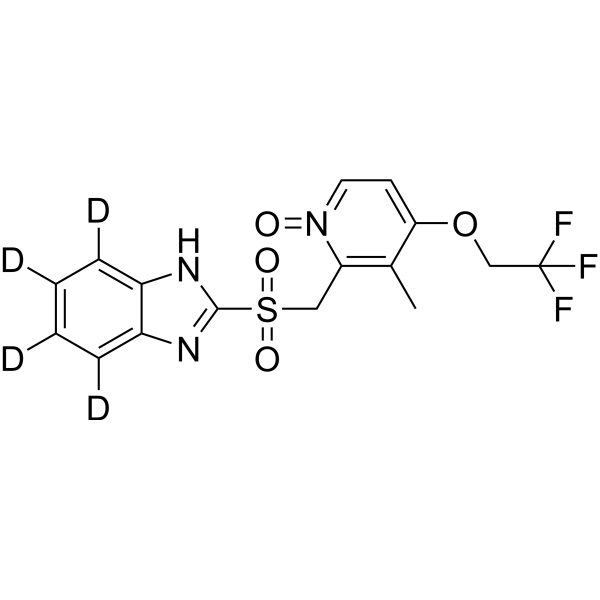 0 ImagesLansoprazole sulfone N-oxide-d4 is the deuterium labeled Lansoprazole sulfone N-oxide.
-
Thiomorpholine 1,1-dioxide-d8
 0 ImagesSynonyms: Thiomorpholine-2,6-dione-d8Thiomorpholine 1,1-dioxide-d8 (Thiomorpholine-2,6-dione-d8) is a deuterium labeled Thiomorpholine 1,1-dioxide.
-
L-Glutathione reduced-15N
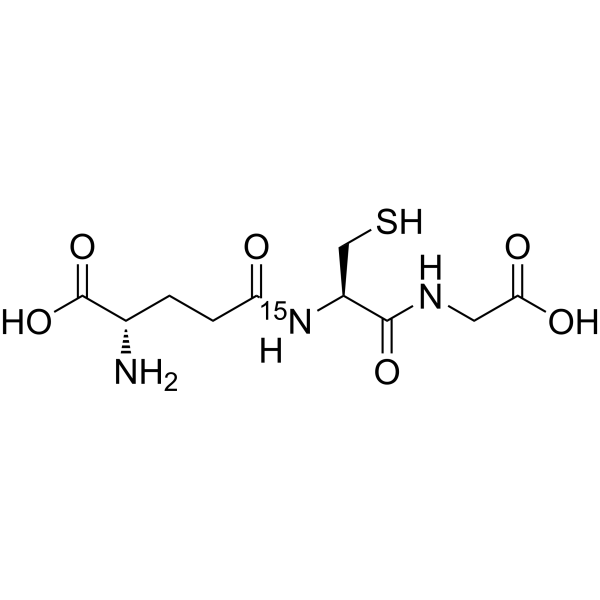 0 ImagesCat. No.: HY-D0187S6Synonyms: GSH-15N; γ-L-Glutamyl-L-cysteinyl-glycine-15NL-Glutathione reduced-15N (GSH-15N; γ-L-Glutamyl-L-cysteinyl-glycine-15N) is 15N-labeled L-Glutathione reduced (HY-D0187). L-Glutathione reduced (GSH; γ-L-Glutamyl-L-cysteinyl-glycine) is an endogenous antioxidant that scavenges oxygen free radicals.
-
Jasmine lactone-d2
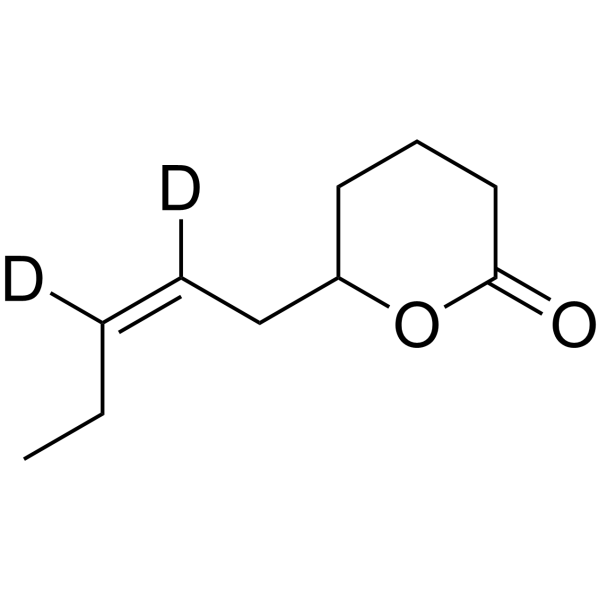 0 ImagesCat. No.: HY-125678SJasmine lactone-d2 is deuterated labeled Jasmine lactone (HY-125678). Jasmine lactone, a volatile substance produced by plants under stress, has a strong odor and is known for its unique jasmine-like floral and fruity scent which is very popular in tea, especially in oolong and black tea. The biosynthesis mechanism of Jasmine lactone in tea is regulated by various stresses, including mechanical damage and low temperature stress. Continuous mechanical damage and low temperature and mechanical damage can enhance the accumulation of Jasmine lactone in tea.
-
Bepridil-d5 hydrochloride
 0 ImagesCat. No.: HY-103315SSynonyms: CERM 1978-d5Bepridil-d5 (hydrochloride) (CERM 1978-d5) is deuterium labeled Bepridil hydrochloride. Bepridil hydrochloride (CERM 1978) is a calcium channel blocker, with antianginal activity.
-
Sotolone-d2
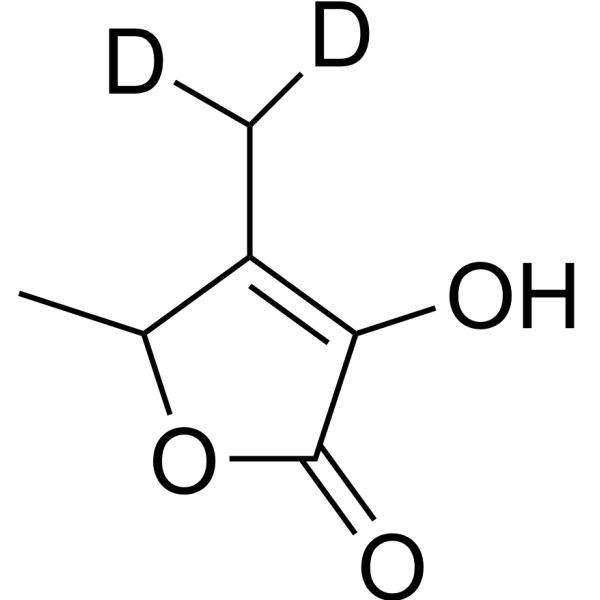 0 ImagesCat. No.: HY-W021008SSynonyms: Dimethylhydroxyfuranone-d2Sotolone-d2 (Dimethylhydroxyfuranone-d2) is deuterated labeled Sotolone. Sotolone is an activator of the human olfactory receptor OR8D1. Sotolone activates the human olfactory receptor OR8D1, with EC50 values of 84.98 μM and 167.2 μM for its S-enantiomer and R-enantiomer, respectively. Sotolone has unique aroma profiles: (R)-sotolone exhibits smoky, burnt, herbal and grassy notes; (S)-sotolone presents sweet, milky, sour and nutty notes. Sotolone also acts as an antifungal agent, showing moderate inhibitory activity against Magnaporthe oryzae in vitro.
-
Thromboxane B2-d9
 0 ImagesCat. No.: HY-113331S1Thromboxane B2-d9 is deuterium labeled Thromboxane B2. Thromboxane B2 is a prostaglandin derivative that is released during anaphylaxis. Thromboxane B2 induces arterial contraction and platelet aggregation.
-
(R)-Norverapamil-d6 hydrochloride
 0 ImagesCat. No.: HY-142165S(R)-Norverapamil-d6 (hydrochloride) is deuterium labeled (R)-Norverapamil.
-
rac-1,2-Dilinoleoyl-3-chloropropanediol-d5
 0 ImagesCat. No.: HY-W766807CAS No.: 2489622-06-0Synonyms: 1,2-Dilinoleoyl-3-chloropropanediol-d5rac-1,2-Dilinoleoyl-3-chloropropanediol-d5 (1,2-Dilinoleoyl-3-chloropropanediol-d5) is deuterium labeled rac-1,2-Dilinoleoyl-3-chloropropanediol.
-
Leflunomide-13C6
 0 ImagesCat. No.: HY-B0083S1Synonyms: HWA486-13C6; RS-34821-13C6; SU101-13C6Leflunomide-13C6 (HWA486-13C6) is 13C labeled Leflunomide. Leflunomide is a pyrimidine synthesis inhibitor, inhibiting dihydroorotate dehydrogenase (DHODH), and acts as a disease-modifying antirheumatic agent.
-
Sodium propionate-13C-1
 0 ImagesCat. No.: HY-B1773AS1CAS No.: 83587-76-2Sodium propionate-13C-1 is the 13C-labeled Propionate sodium (HY-B1773A). Sodium propionate is an orally active short-chain fatty acid. Sodium propionate can be produced by intestinal bacteria from the metabolism of dietary fiber. Sodium propionate increases PPAR-γ, inhibits NF-κB activation, and reduces COX-2 expression and NO production. Sodium propionate also induces Apoptosis and Autophagy. Sodium propionate reduces HSV-1-induced keratitis. Sodium propionate has anticancer effects against glioblastoma. Sodium propionate exhibits neuroprotective, antioxidant, and anti-inflammatory activities. Sodium propionate can be used in the research of spinal cord injury and Alzheimer's disease.
-
Acetaminophen-d5
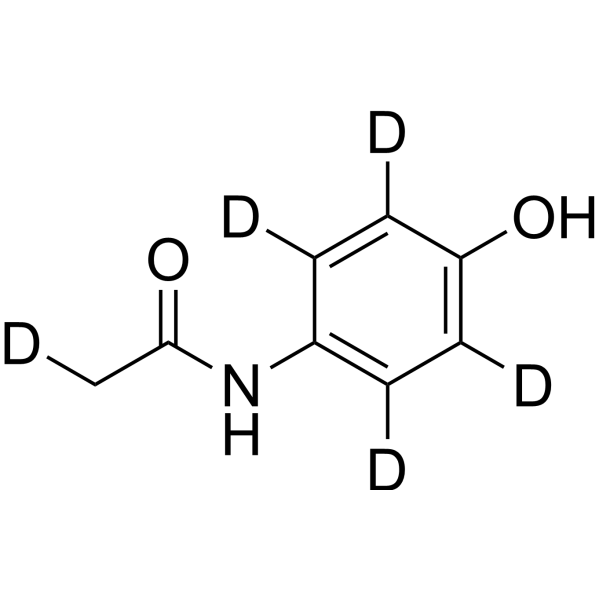 0 ImagesCat. No.: HY-66005S5Synonyms: Paracetamol-d5; 4-Acetamidophenol-d5; 4'-Hydroxyacetanilide-d5Acetaminophen-d5 is deuterated-labeled Acetaminophen (HY-66005). Acetaminophen (Paracetamol) is a selective cyclooxygenase-2 (COX-2) inhibitor with an IC50 of 25.8 μM; is a widely used antipyretic and analgesic agent. Acetaminophen is a potent hepatic N-acetyltransferase 2 (NAT2) inhibitor.
-
N-Desmethyl L-ergothioneine methyl ester-d6
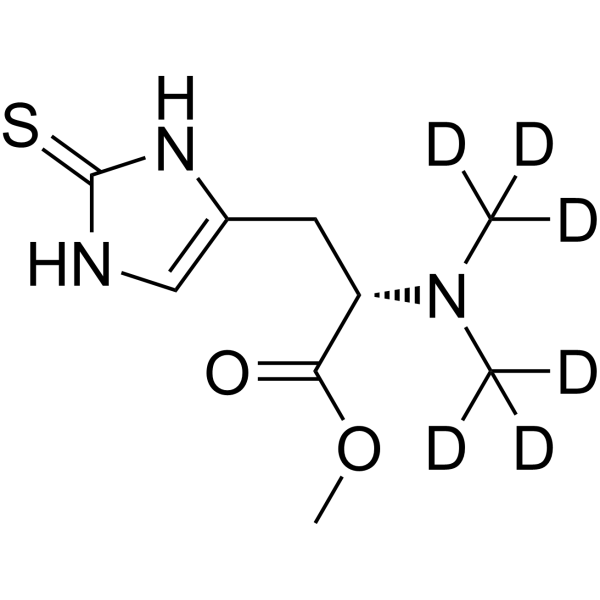 0 ImagesCat. No.: HY-144386SCAS No.: 1795785-97-5N-Desmethyl L-ergothioneine methyl ester-d6 is the deuterium labeled N-Desmethyl L-ergothioneine methyl ester.
-
8-Hydroxy-2'-deoxyguanosine-13C,15N2
 0 ImagesCat. No.: HY-W653916Synonyms: 8-Oxo-2-Deoxyguanosine-13C,15N28-Hydroxy-2'-deoxyguanosine-13C,15N2 is 13C and 15N labeled 8-Hydroxy-2'-deoxyguanosine. 8-Hydroxy-2'-deoxyguanosine is a critical biomarker of oxidative stress and carcinogenesis.
-
(-)-Corey lactone diol-heptyldioxolane-d15
 0 ImagesCat. No.: HY-132319SCAS No.: 1217783-38-4(-)-Corey lactone diol-heptyldioxolane-d15 is the deuterium labeled (-)-Corey lactone diol-heptyldioxolane.
-
Mecamylamine-d3 hydrochloride
 0 ImagesCat. No.: HY-B1395SCAS No.: 1217625-71-2Mecamylamine-d3 hydrochloride is the deuterium labeled Mecamylamine hydrochloride. Mecamylamine hydrochloride is an orally active, nonselective, noncompetitive nAChR antagonist that can treat various neuropsychiatric disorders. Mecamylamine hydrochloride is originally used as a ganglionic blocker in treating hypertension. Mecamylamine hydrochloride can easily crosses the blood-brain barrier.
-
Imipramine-d6
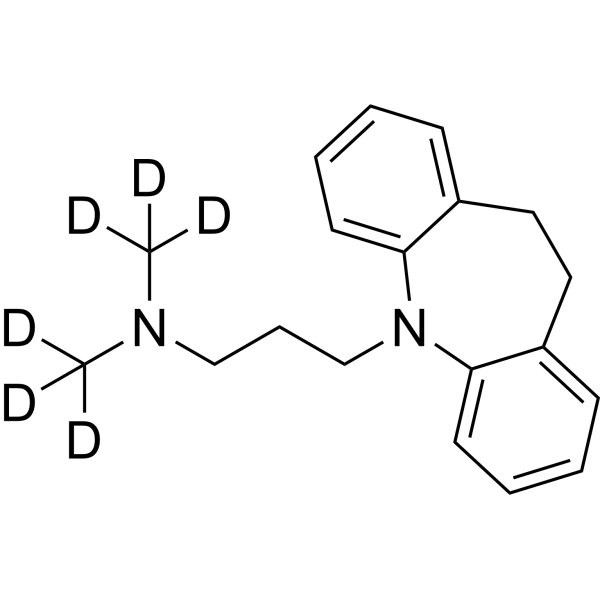 0 ImagesCat. No.: HY-B1490ASCAS No.: 65100-45-0Imipramine-d6 is the deuterium labeled Imipramine hydrochloride. Imipramine is an orally active tertiary amine tricyclic antidepressant. Imipramine is a Fascin1 inhibitor with antitumor activities. Imipramine also inhibits serotonin transporter with an IC50 value of 32 nM. Imipramine stimulates U-87MG glioma cells autophagy and induces HL-60 cell apoptosis. Imipramine shows neuroprotective and immunomodulatory effects.
-
Remdesivir-13C6
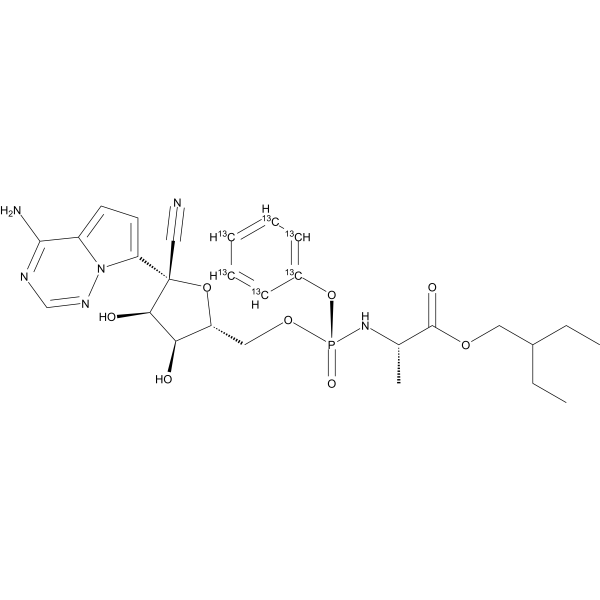 0 ImagesCat. No.: HY-150679SSynonyms: GS-5734-13C6Remdesivir-13C6 is the 13C labeled Remdesivir.
-
Hexadecatetraenoic acid-d5
 0 ImagesCat. No.: HY-116776SCAS No.: 2408811-79-8Hexadecatetraenoic acid-d5 is deuterium labeled Hexadecatetraenoic acid. Hexadecatetraenoic acid is an unsaturated fatty acid that can be isolated from sardine oil.
-
Fmoc-Asp(OtBu)-OH-d3
 0 ImagesCat. No.: HY-Y1169S2Synonyms: 4-tert-Butyl N-(fluoren-9-ylmethoxycarbonyl)-L-aspartate-d3; Fmoc-L-Asp(OtBu)-OH-d3Fmoc-Asp(OtBu)-OH-d3 (4-tert-Butyl N-(fluoren-9-ylmethoxycarbonyl)-L-aspartate-d3) is deuterium labeled Fmoc-Asp(OtBu)-OH. Fmoc-Asp(OtBu)-OH (4-tert-Butyl N-(fluoren-9-ylmethoxycarbonyl)-L-aspartate) is a aspartate derivative containing amine protecting group Fmoc. Fmoc-Asp(OtBu)-OH can be used for peptide synthesis.



