



Tyloxapol
Based on 7 publication(s) in Google Scholar
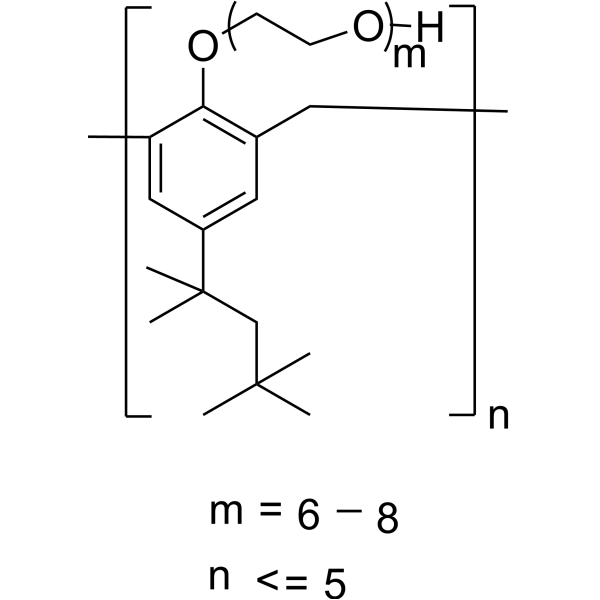
Tyloxapol is a nonionic liquid polymer of the alkyl aryl polyether alcohol type, used as a surface active stabilizer. Tyloxapol is used to induce hyperlipidemia in animals.
Nos produits utilisent uniquement pour la recherche. Nous ne vendons pas aux patients.
- CAS No.: 25301-02-4
- Formule: (C15H21O(C2H4O)m)n
- Masse moléculaire:261.38 (monomer)
-
Stockage:
4°C, protect from light
* In solvent : -80°C, 6 months; -20°C, 1 month (protect from light)

To place orders, for customer services and technical support, please contact: MedChemExpress USA
Tel: 609-228-6898 E-mail: [email protected] [email protected]


-
 Activité biologique
-
Chemical Information
-
Solvant et solubilité
- Pureté et documentation
- Références
-
 Help & FAQs


-
HY-108749
Olive oilAnti-Inflammation Agent -
HY-Y0873
PEG300Neutral Polymer -
HY-Y0873A
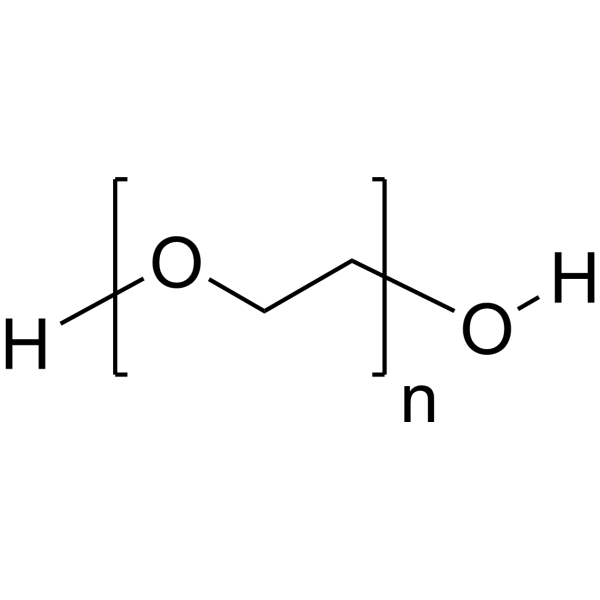
PEG400 -
HY-Y0873J
PEG8000Biochemical reagent -

HY-E0264
Rodent Gnawing BlocksRodent Gnawing Block -
HY-Y0873C
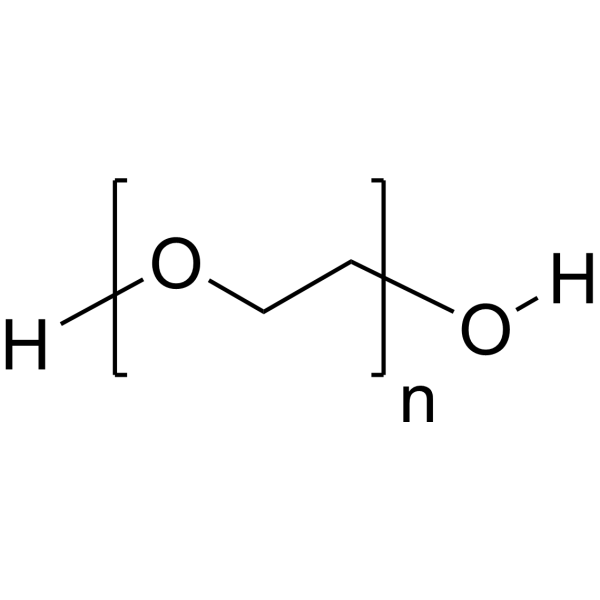
PEG3350Neutral Polymer -
HY-N0322
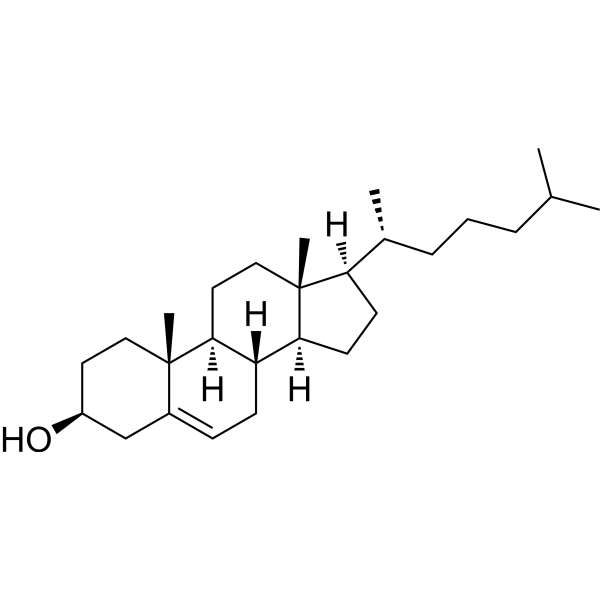
Cholesterol (from animal)ERRα Agonist -
HY-Y0873I
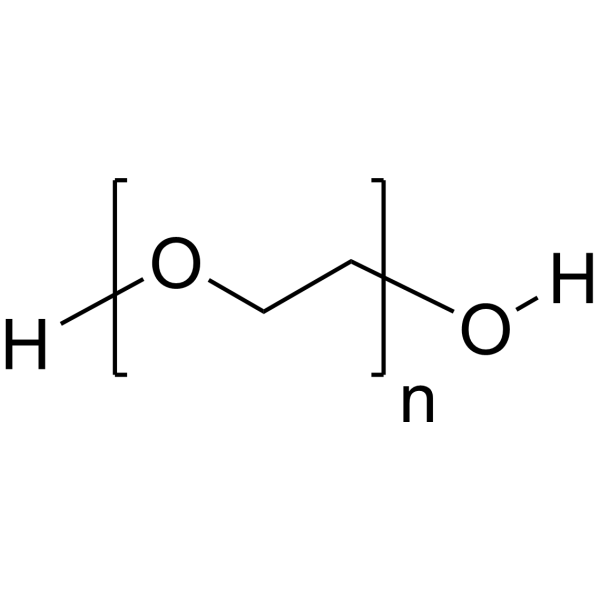
PEG6000Pharmaceutical Excipient -
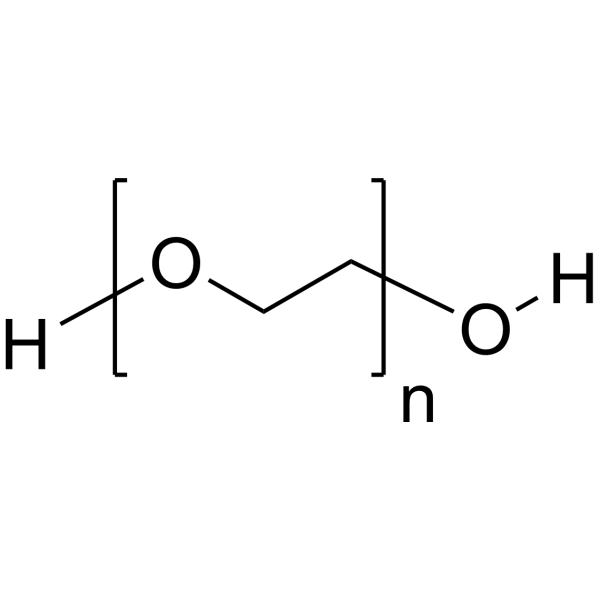
HY-Y0873H
PEG4000Pharmaceutical Excipient -
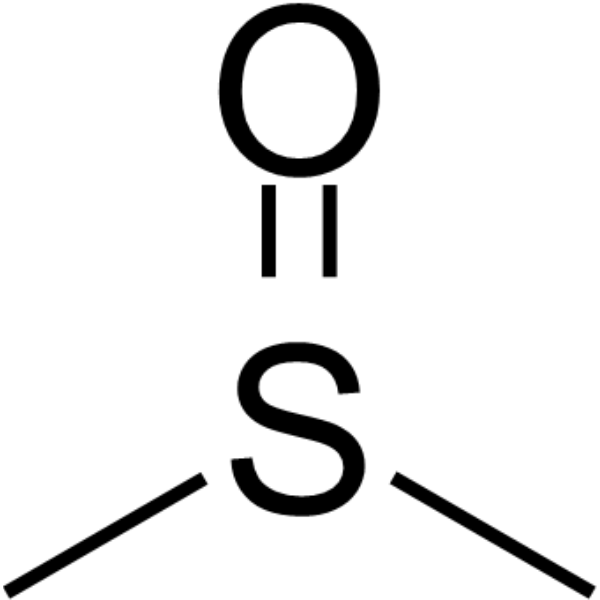
HY-Y0320
Dimethyl sulfoxide, meets analytical specification of Ch.P.Aprotic Solvent -
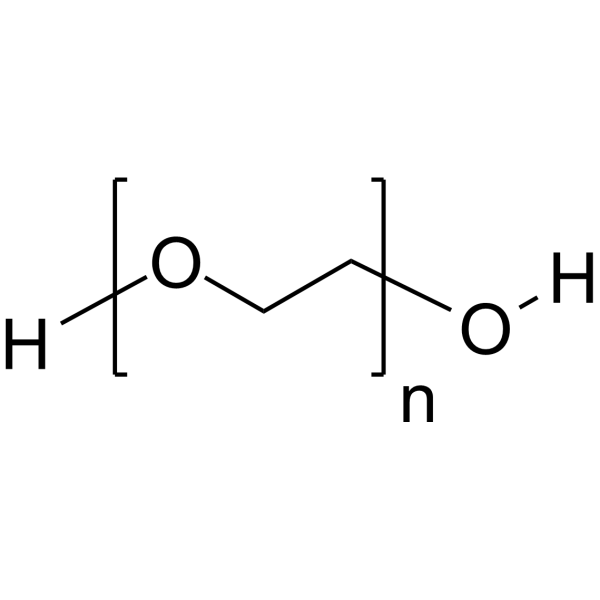
HY-Y0873B
PEG2000Co-solvents -
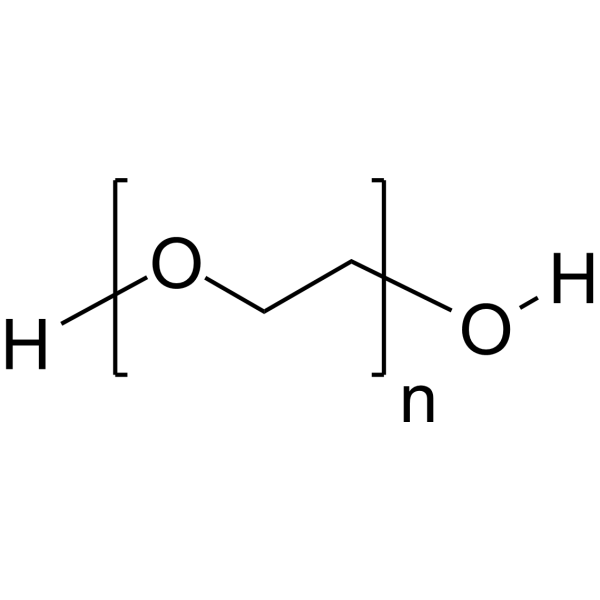
HY-Y0873K
PEG200Solvent
Publications Citing Use of MedChemExpress (MCE) Tyloxapol
More- Nat Microbiol. 2025 Nov;10(11):2949-2965. [Abstract]
- Adv Sci (Weinh). 2026 Jun 16:e16501. [Abstract]
- Acta Pharmacol Sin. 2024 Oct;45(10):2134-2148. [Abstract]
- Commun Biol. 2025 Mar 11;8(1):348. [Abstract]
- Int J Mol Sci. 2024 May 7;25(10):5086. [Abstract]
- Food Sci Nutr. 2024 Sep 10;12(11):8846-8857. [Abstract]
- Oxid Med Cell Longev. 2022 May 24;2022:1889632. [Abstract]
 Customer Validation & Images

-
In Vivo Efficacy Study
-
In Vivo Efficacy Study
-
In Vivo Efficacy Study
-
In Vivo Efficacy Study
-
Bio/Physico-chemical Assay


Activité biologique
Description
In Vitro
Tyloxapol (100 μg/mL) triggers the detachment of HEK293 cells[2].
Tyloxapol induces nuclear fragmentation and the appearance of apoptotic nuclei[2].
Tyloxapol increases the risk of pulmonary haemorrhage, causes cytotoxicity in epithelial and red blood cells, and induces lysis of human Jurkat T-lymphoblasts[2].
MedChemExpress (MCE) has not independently confirmed the accuracy of these methods. They are for reference only.
In Vivo
-
Animal Model:Twenty-one adult male Wistar rats, aged 11–12 weeks weighing 180-200 g[1].
-
Dosage:50 mg/kg.
-
Administration:Injected intraperitoneally, BW, every other day.
-
Result:Caused a significant (P < 0.05) elevation in the levels of TBARS combined with an inhibition of the antioxidant enzymes (GPx, GST, CAT, SOD) in rat plasma, liver, and brain.
Induced DNA fragmentation and inhibited the activities of acetylcholinesterase and mono aminoxidase in the brain.
Induced Disease Models
Please do not refer to only one article to determine the experimental conditions. It is recommended to determine the optimal experimental conditions (animal strain, age, dosage, frequency and cycle, detection time and indicators, etc.) through preliminary experiments before the formal experiment.
Tyloxapol (Triton WR1339, 50 mg/kg) causes significant decreases in the activities of the AChE and MAO enzymes in rat plasma and brain[1].
Tyloxapol leads to significant reduction in the plasma urea, creatinine, and bilirubin[1].
Administration: 400 mg/kg• i.p.• a single dose for 24 h[1].
Rats: Wistar-Imamichi• male• weighing 230-270 g[2].
Administration: 400 mg/kg• i.v. through a tail vein• a single dose for 24 h[2].
Rats: Wistar• male• 11-12 weeks of age• weighing 180-200 g[3].
Administration: 50 mg/kg• i.p.• every other day for 28 days[3].
(2) Tyloxapol was dissolved in phosphate buffer solution (PBS, pH 7.4). Twenty-four hours after administration, blood, liver, kidney, and forebrain tissues samples were collected for the comet assay. Bone marrow samples of from femurs were collected to perform the micronucleus assay[1].
(3) At the end of the 28th day of the experimental period, all animals of each group were anesthetized with ether and sacrificed. Blood samples were collected from anesthetized rats in test tubes containing heparin as an anticoagulant and placed immediately on ice[3].
MedChemExpress (MCE) has not independently confirmed the accuracy of these methods. They are for reference only.
Essai clinique
| NCT Number | Sponsor | Condition | Start Date |
Phase

|
|---|---|---|---|---|
| NCT01329991 | 2011-05 | PHASE1 |


Chemical Information
-
CAS No. 25301-02-4
-
Appearance Liquid (Density: 1.1 g/cm3)
-
Masse moléculaire 261.38 (monomer)
-
Formule (C15H21O(C2H4O)m)n
-
Color Colorless to light yellow
-
SMILES
[H]OCCOC1=C(CC)C=C(C(CC(C)(C)C)(C)C)C=C1C.[6].[=].[<].[5].[8].[n].[m].[_].[=].[m].[n]
-
Livraison
Room temperature in continental US; may vary elsewhere.
-
Stockage
4°C, protect from light
* In solvent : -80°C, 6 months; -20°C, 1 month (protect from light)


Publications (7)
-
Journal Impact Factor
-
Most Recent
-
Nat Microbiol
Mycobacterium tuberculosis-derived linoleic acid increases regulatory T cell function to promote bacterial survival within macrophages. [Abstract]2025 Nov;10(11):2949-2965. PMID: 41073667 -
Adv Sci (Weinh)
Agnuside Stabilizes the Complex I Assembly Factor NDUFAF6 to Reinforce Mitochondrial Efficiency and Thermogenic Responsiveness. [Abstract]2026 Jun 16:e16501. PMID: 42299748 -
Acta Pharmacol Sin
A new mechanism of thyroid hormone receptor β agonists ameliorating nonalcoholic steatohepatitis by inhibiting intestinal lipid absorption via remodeling bile acid profiles. [Abstract]2024 Oct;45(10):2134-2148. PMID: 38789494
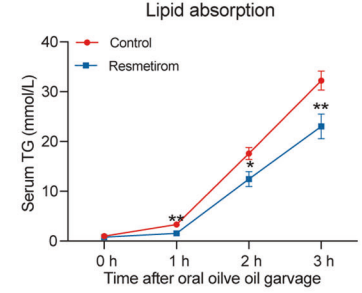
Tyloxapol purchased from MedChemExpress. Usage Cited in: Acta Pharmacol Sin. 2024 Oct;45(10):2134-2148. [Abstract]
Plasma triglyceride levels in mice in the vector control group and the Retemeritol treatment group after gavage administration of olive oil and intraperitoneal injection of Tyloxapol (10% in saline, 500 mg/kg, ip, single dose) (lipid absorption model).
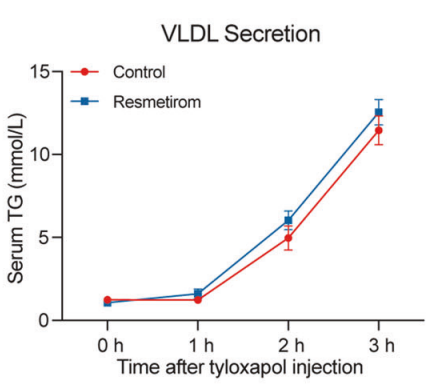
Tyloxapol purchased from MedChemExpress. Usage Cited in: Acta Pharmacol Sin. 2024 Oct;45(10):2134-2148. [Abstract]
Plasma triglyceride levels after intraperitoneal injection of Tyloxapol (10% in saline, 500 mg/kg, ip, single dose) (very low-density lipoprotein secretion model).
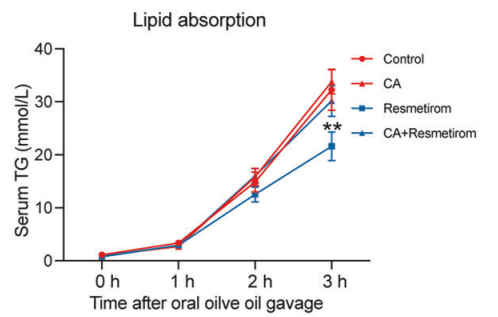
Tyloxapol purchased from MedChemExpress. Usage Cited in: Acta Pharmacol Sin. 2024 Oct;45(10):2134-2148. [Abstract]
Plasma TG after gavage with olive oil and intraperitoneal injection of Tyloxapol (10% in saline, 500 mg/kg, ip, single dose) (lipid absorption) in vehicle, CA, Resmetirom and CA plus Resmetirom-treated normal mice.
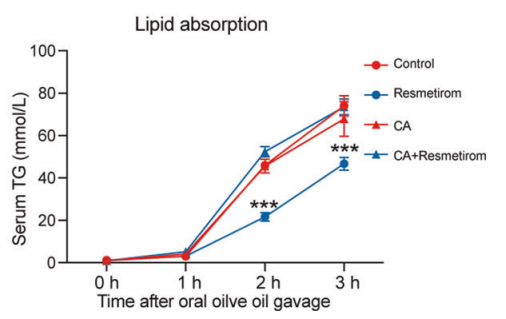
Tyloxapol purchased from MedChemExpress. Usage Cited in: Acta Pharmacol Sin. 2024 Oct;45(10):2134-2148. [Abstract]
Plasma TG after gavage with olive oil and intraperitoneal injection of Tyloxapol (10% in saline, 500 mg/kg, ip, single dose) (lipid absorption) in vehicle, CA, resmetirom and CA plus Resmetirom-treated CDAHFD-fed mice.
-
Commun Biol
2025 Mar 11;8(1):348. PMID: 40069352 -
Int J Mol Sci
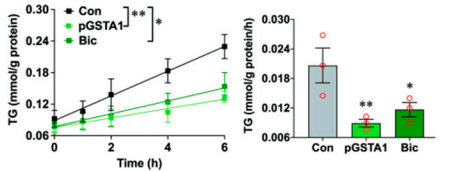
Upregulation of Hepatic Glutathione S-Transferase Alpha 1 Ameliorates Metabolic Dysfunction-Associated Steatosis by Degrading Fatty Acid Binding Protein 1. [Abstract]2024 May 7;25(10):5086. PMID: 38791126
Tyloxapol purchased from MedChemExpress. Usage Cited in: Int J Mol Sci. 2024 May 7;25(10):5086. [Abstract]
L02 cells were transfected with GSTA1 or control plasmids for 36 h and further treated with or without bicyclol for 12 h. Intracellular TG levels were analyzed after induction by OA containing Tyloxapol (200 µM), a lipoprotein lipase inhibitor that can inhibit the breakdown of triglycerides by binding to lipase. Overexpression of GSTA1 or treatment with bicyclol significantly decreased the rate of TG synthesis compared to the control.
-
Food Sci Nutr
Isoxanthohumol improves hepatic lipid metabolism via regulating the AMPK/PPARα and PI3K/AKT signaling pathways in hyperlipidemic mice. [Abstract]2024 Sep 10;12(11):8846-8857. PMID: 39619961 -
Oxid Med Cell Longev
Idol Depletion Protects against Spontaneous Atherosclerosis in a Hamster Model of Familial Hypercholesterolemia. [Abstract]2022 May 24;2022:1889632. PMID: 35656026


Solvant et solubilité
In Vitro:
DMSO : 100 mg/mL (Need ultrasonic; Hygroscopic DMSO has a significant impact on the solubility of product, please use newly opened DMSO)
Ethanol : 100 mg/mL (Need ultrasonic)
H2O : 100 mg/mL (Need ultrasonic)
In Vivo:
Select the appropriate dissolution method based on your experimental animal and administration route.
- For the following dissolution methods, please ensure to first prepare a clear stock solution using an In Vitro approach and then sequentially add co-solvents:
- To ensure reliable experimental results, the clarified stock solution can be appropriately stored based on storage conditions. As for the working solution for In Vivo experiments, it is recommended to prepare freshly and use it on the same day.
- The percentages shown for the solvents indicate their volumetric ratio in the final prepared solution. If precipitation or phase separation occurs during preparation, heat and/or sonication can be used to aid dissolution.
Add each solvent one by one: 10% DMSO 40% PEG300 5% Tween-80 45% Saline
Solubility: ≥ 2.5 mg/mL; Clear solution
This protocol yields a clear solution of ≥ 2.5 mg/mL (saturation unknown).
Taking 1 mL working solution as an example, add 100 μL DMSO stock solution (25.0 mg/mL) to 400 μL PEG300, and mix evenly; then add 50 μL Tween-80 and mix evenly; then add 450 μL Saline to adjust the volume to 1 mL.
Preparation of Saline: Dissolve 0.9 g sodium chloride in ddH₂O and dilute to 100 mL to obtain a clear Saline solution.
Add each solvent one by one: 10% DMSO 90% (20% SBE-β-CD in Saline)
Solubility: ≥ 2.5 mg/mL; Clear solution
This protocol yields a clear solution of ≥ 2.5 mg/mL (saturation unknown).
Taking 1 mL working solution as an example, add 100 μL DMSO stock solution (25.0 mg/mL) to 900 μL 20% SBE-β-CD in Saline, and mix evenly.
Preparation of 20% SBE-β-CD in Saline (4°C, storage for one week): 2 g SBE-β-CD powder is dissolved in 10 mL Saline, completely dissolve until clear.
Add each solvent one by one: 10% EtOH 40% PEG300 5% Tween-80 45% Saline
Solubility: ≥ 2.5 mg/mL; Clear solution
This protocol yields a clear solution of ≥ 2.5 mg/mL (saturation unknown).
Taking 1 mL working solution as an example, add 100 μL EtOH stock solution (25.0 mg/mL) to 400 μL PEG300, and mix evenly; then add 50 μL Tween-80 and mix evenly; then add 450 μL Saline to adjust the volume to 1 mL.
Preparation of Saline: Dissolve 0.9 g sodium chloride in ddH₂O and dilute to 100 mL to obtain a clear Saline solution.
Add each solvent one by one: 10% EtOH 90% (20% SBE-β-CD in Saline)
Solubility: ≥ 2.5 mg/mL; Clear solution
This protocol yields a clear solution of ≥ 2.5 mg/mL (saturation unknown).
Taking 1 mL working solution as an example, add 100 μL EtOH stock solution (25.0 mg/mL) to 900 μL 20% SBE-β-CD in Saline, and mix evenly.
Preparation of 20% SBE-β-CD in Saline (4°C, storage for one week): 2 g SBE-β-CD powder is dissolved in 10 mL Saline, completely dissolve until clear.
Add each solvent one by one: 10% EtOH 90% Corn Oil
Solubility: ≥ 2.5 mg/mL; Clear solution
This protocol yields a clear solution of ≥ 2.5 mg/mL (saturation unknown). If the continuous dosing period exceeds half a month, please choose this protocol carefully.
Taking 1 mL working solution as an example, add 100 μL EtOH stock solution (25.0 mg/mL) to 900 μL Corn oil, and mix evenly.
For the following dissolution methods, please prepare the working solution directly:
It is recommended to prepare fresh solutions and use them promptly within a short period of time.
The percentages shown for the solvents indicate their volumetric ratio in the final prepared solution. If precipitation or phase separation occurs during preparation, heat and/or sonication can be used to aid dissolution.
Add each solvent one by one: PBS
Solubility: 100 mg/mL; Clear solution; Need ultrasonic
In Vivo Dissolution Calculator
Please enter the basic information of animal experiments:
-
-
-
-
Recommended: Prepare an additional quantity of animals to account for potential losses during experiments.
Working solution concentration: 0.22 mg/mL
This product has good water solubility, please refer to the measured solubility data in water/PBS/Saline for details.


Pureté et documentation
-
Fiche technique (282 KB)
-
SDS (394 KB)
- English - EN (394 KB)
- Français - FR (394 KB)
- Deutsch - DE (394 KB)
- Norwegian - NO (394 KB)
- Español - ES (394 KB)
- Swedish - SV (394 KB)
- Italian - IT (394 KB)
- Korean - KR (394 KB)
- Portuguese - PT (394 KB)
-
Instruction de manipulation (2659 KB)
Références
[2]. de Sousa JA, et al. Evaluation of DNA damage in Wistar rat tissues with hyperlipidemia induced by tyloxapol. Exp Mol Pathol. 2017 Aug;103(1):51-55. [Content Brief]
[3]. Julijana Kristl, et al. Surface active stabilizer tyloxapol in colloidal dispersions exerts cytostatic effects and apoptotic dismissal of cells. Toxicol Appl Pharmacol. 2008 Oct 15;232(2):218-25. [Content Brief]
[4]. Kuroda M, et al. Biochim Biophys Acta. 1977 Oct 24;489(1):119-25. [Content Brief]

Calculators
Concentration (start) × Volume (start) = Concentration (final) × Volume (final)


Tyloxapol Related Classifications
HY-B1068 Related Classifications
 Powered by Bioz