



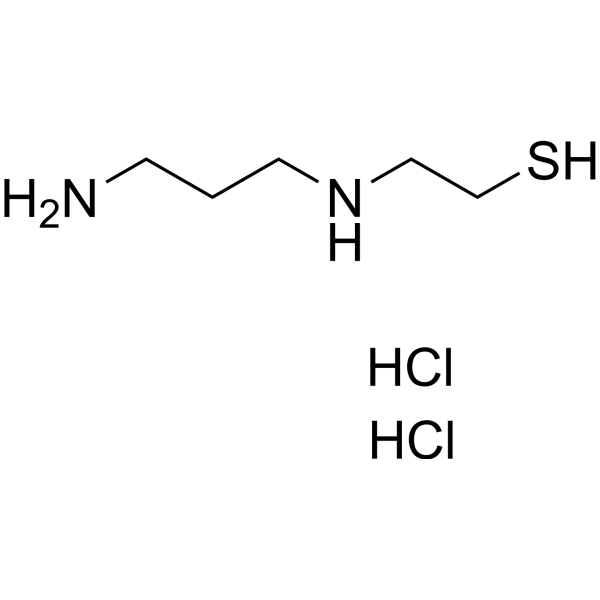
Amifostine thiol dihydrochloride
Based on 1 publication(s) in Google Scholar
Amifostine thiol (WR-1065) dihydrochloride can protect normal tissues from the toxic effects of certain cancer agents and activate p53 through a JNK-dependent signaling pathway.
Nur für Forschungszwecke. Wir verkaufen nicht an Patienten.
- Reinheit : 99.27%
- CAS. Nr.: 14653-77-1
- Formel: C5H16Cl2N2S
- Molecular Weight:207.16
-
Speicherung:
-20°C, sealed storage, away from moisture
* In solvent : -80°C, 6 months; -20°C, 1 month (sealed storage, away from moisture)

To place orders, for customer services and technical support, please contact: MedChemExpress USA
Tel: 609-228-6898 E-mail: [email protected] [email protected]


-
 Biologische Aktivität
-
Chemical Information
-
Lösungsmittel & Löslichkeit
- Protokoll
- Reinheit & Dokumentation
- Verweise
-
 Help & FAQs


-
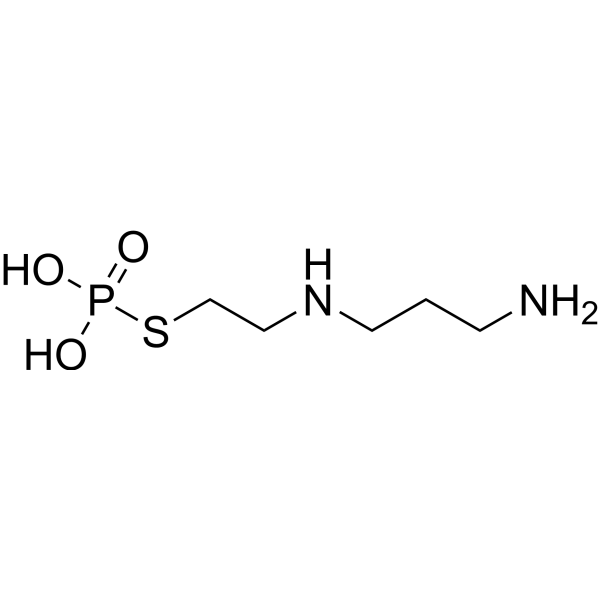
HY-B0639
AmifostineCytoprotective Agent -
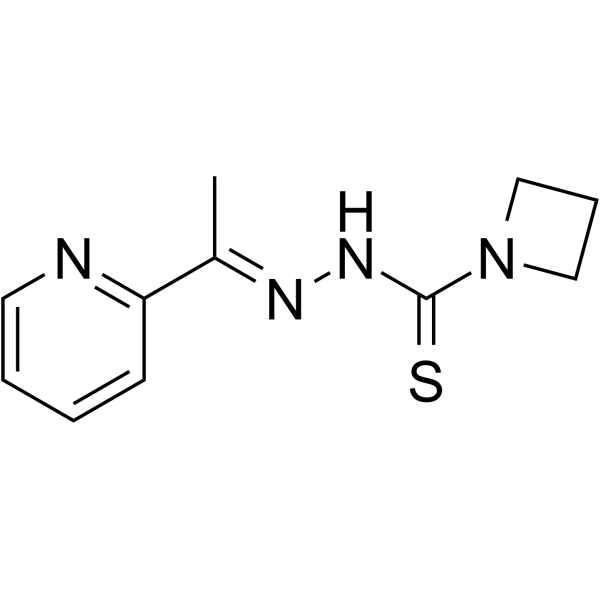
HY-18634
NSC319726MDM-2/p53 p53 Activator -
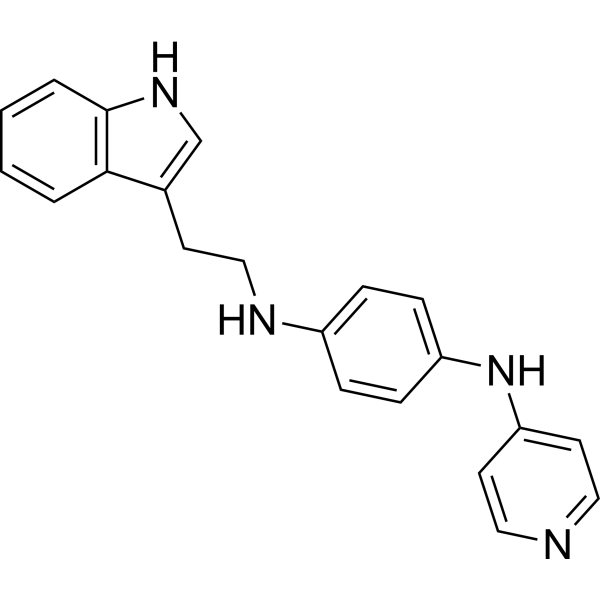
HY-12025
SerdemetanAnticancer Aagent -
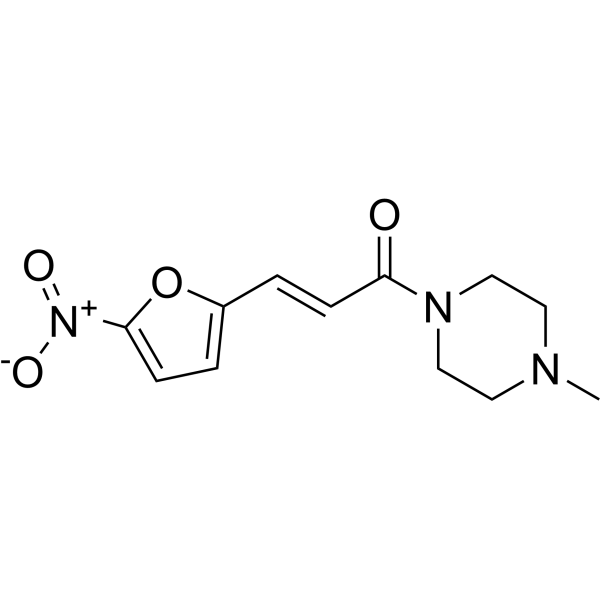
HY-19726
NSC59984MDM-2/p53 p53 Activator -
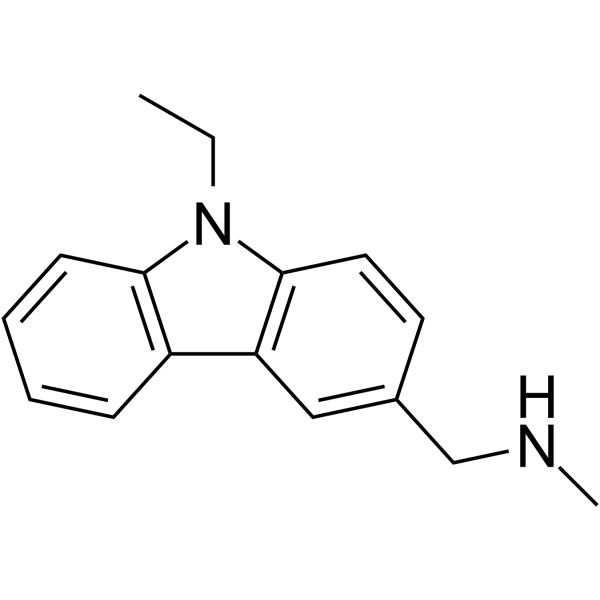
HY-108637
PhiKan 083MDM-2/p53 p53 Activator -
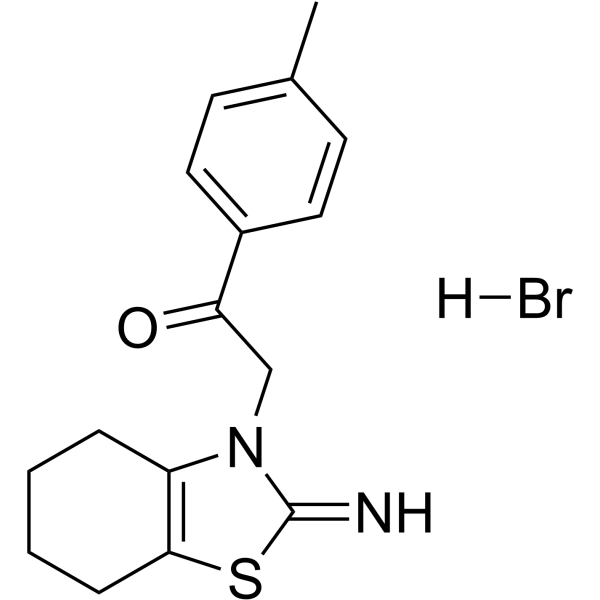
HY-15484
Pifithrin-α hydrobromidep53 Inhibitor -
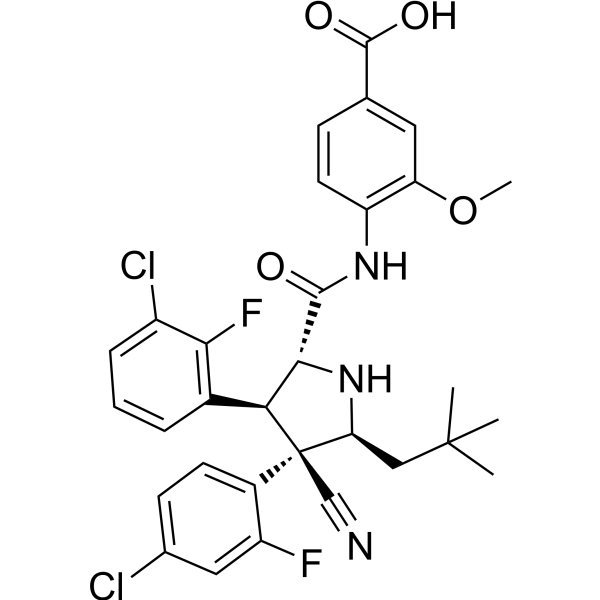
HY-15676
IdasanutlinMDM2 Inhibitor -

HY-103640R
Amifostine thiol dihydrochloride (Standard)p53 Activator -
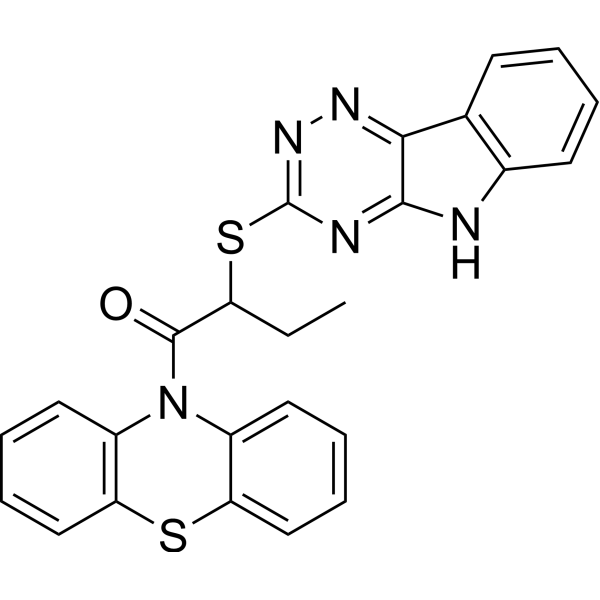
HY-15869
InauhzinSirtuin Inhibitor -
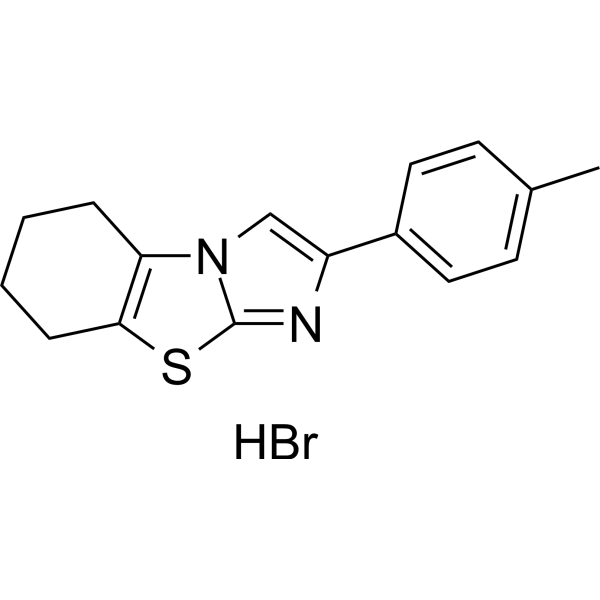
HY-16702A
Pifithrin-β hydrobromideMDM-2/p53 p53 Inhibitor -
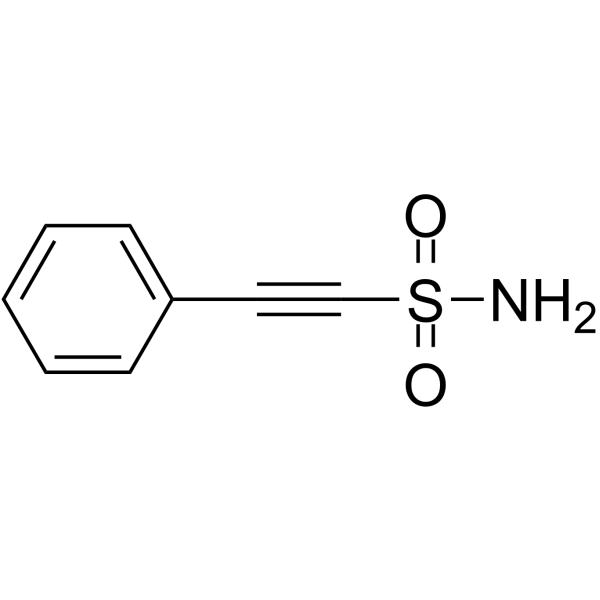
HY-10940
Pifithrin-μp53 and HSP70 Inhibitor -
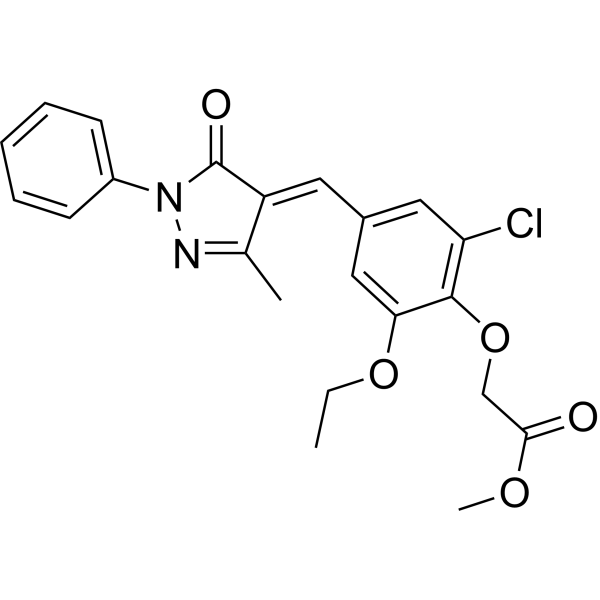
HY-16664
SJ-172550MDM-2/p53 MDM2 Inhibitor
Publications Citing Use of MedChemExpress (MCE) Amifostine thiol dihydrochloride
More

Biologische Aktivität
Beschreibung
IC50 & Target
p53[1]
In Vitro
The DNA-binding activity is increased in a Amifostine thiol dihydrochloride (Amifostine thiol) concentration-dependent manner. Cells treated with 1 mM Amifostine thiol dihydrochloride for 24 h reveal that all of the p53-induced genes analyzed are transactivated following Amifostine thiol dihydrochloride treatment, in a p53-dependent manner. Significantly, treatment with Amifostine thiol dihydrochloride leads to a 3-fold increase in luciferase expression driven by AP-1, and a 5-fold increase when this reporter gene is driven by NF-κB, when these values are normalized to the level of the cotransfected β-galactosidase gene[2].
MedChemExpress (MCE) has not independently confirmed the accuracy of these methods. They are for reference only.
In Vivo
MedChemExpress (MCE) has not independently confirmed the accuracy of these methods. They are for reference only.


Chemical Information
-
CAS. Nr. 14653-77-1
-
Appearance Solid
-
Molecular Weight 207.16
-
Formel C5H16Cl2N2S
-
Color White to off-white
-
SMILES
NCCCNCCS.Cl.Cl
-
Synonyms
WR-1065 dihydrochloride
-
Versand
Room temperature in continental US; may vary elsewhere.
-
Speicherung
-20°C, sealed storage, away from moisture
* In solvent : -80°C, 6 months; -20°C, 1 month (sealed storage, away from moisture)


Publications (1)
-
Journal Impact Factor
-
Most Recent
-
Front Cell Dev Biol
2020 Jul 29:8:703. PMID: 32850823


Lösungsmittel & Löslichkeit
In Vitro:
H2O : ≥ 100 mg/mL (482.72 mM)
DMSO : 17.5 mg/mL (84.48 mM; ultrasonic and warming and heat to 60°C; Hygroscopic DMSO has a significant impact on the solubility of product, please use newly opened DMSO)
* "≥" means soluble, but saturation unknown.
Please refer to the solubility information to select the appropriate solvent. Once prepared, please aliquot and store the solution to prevent product inactivation from repeated freeze-thaw cycles.
Storage method and period of stock solution: -80°C, 6 months; -20°C, 1 month (sealed storage, away from moisture). When stored at -80°C, please use it within 6 months. When stored at -20°C, please use it within 1 month.
* Note: If you choose water as the stock solution, please dilute it to the working solution, then filter and sterilize it with a 0.22 μm filter before use.
Please refer to the solubility information to select the appropriate solvent. Once prepared, please aliquot and store the solution to prevent product inactivation from repeated freeze-thaw cycles.
Storage method and period of stock solution: -80°C, 6 months; -20°C, 1 month (sealed storage, away from moisture). When stored at -80°C, please use it within 6 months. When stored at -20°C, please use it within 1 month.
* Note: If you choose water as the stock solution, please dilute it to the working solution, then filter and sterilize it with a 0.22 μm filter before use.
Konzentration (Stammlösung) × Volumen (Stammlösung) = Konzentration (Ziellösung) × Volumen (Ziellösung)
In Vivo:
Select the appropriate dissolution method based on your experimental animal and administration route.
- For the following dissolution methods, please ensure to first prepare a clear stock solution using an In Vitro approach and then sequentially add co-solvents:
- To ensure reliable experimental results, the clarified stock solution can be appropriately stored based on storage conditions. As for the working solution for In Vivo experiments, it is recommended to prepare freshly and use it on the same day.
- The percentages shown for the solvents indicate their volumetric ratio in the final prepared solution. If precipitation or phase separation occurs during preparation, heat and/or sonication can be used to aid dissolution.
Add each solvent one by one: 10% DMSO 40% PEG300 5% Tween-80 45% Saline
Solubility: ≥ 1.67 mg/mL (8.06 mM); Clear solution
This protocol yields a clear solution of ≥ 1.67 mg/mL (saturation unknown).
Taking 1 mL working solution as an example, add 100 μL DMSO stock solution (16.7 mg/mL) to 400 μL PEG300, and mix evenly; then add 50 μL Tween-80 and mix evenly; then add 450 μL Saline to adjust the volume to 1 mL.
Preparation of Saline: Dissolve 0.9 g sodium chloride in ddH₂O and dilute to 100 mL to obtain a clear Saline solution.
Add each solvent one by one: 10% DMSO 90% (20% SBE-β-CD in Saline)
Solubility: ≥ 1.67 mg/mL (8.06 mM); Clear solution
This protocol yields a clear solution of ≥ 1.67 mg/mL (saturation unknown).
Taking 1 mL working solution as an example, add 100 μL DMSO stock solution (16.7 mg/mL) to 900 μL 20% SBE-β-CD in Saline, and mix evenly.
Preparation of 20% SBE-β-CD in Saline (4°C, storage for one week): 2 g SBE-β-CD powder is dissolved in 10 mL Saline, completely dissolve until clear.
In Vivo Dissolution Calculator
Please enter the basic information of animal experiments:
-
-
-
-
Recommended: Prepare an additional quantity of animals to account for potential losses during experiments.
Working solution concentration: 0.22 mg/mL
This product has good water solubility, please refer to the measured solubility data in water/PBS/Saline for details.

Protokoll
Kinase Assay[2]
For Western analysis, cells are treated with 1 mM WR-1065 dihydrochloride (WR-1065) for 24 h, and subconfluent cultures of cells are harvested and lysed in RIPA buffer supplemented with protease inhibitors. Protein concentrations are determined by a detergent-compatible assay. Western blots are blocked and incubated in antibody in PBS/0.2% Tween 20/5% nonfat dry milk. Blots are incubated with 1 μg/mL antibody for 1 h at room temperature, followed by washing in PBS/0.2% Tween 20 and incubation in peroxidase-conjugated secondary antibody and chemiluminescence detection[2].
MedChemExpress (MCE) has not independently confirmed the accuracy of these methods. They are for reference only.
Cell Assay[2]
To test the effects of paclitaxel in the presence or absence of WR-1065 dihydrochloride (WR-1065) on cell growth, cells are seeded in 96-well tissue culture dishes at 20% confluence and allowed to attach and recover for at least 24 h. Varying combinations of paclitaxel alone or in combination with a 60 min pretreatment with 1 mM WR-1065 dihydrochloride are then added to each well, and the plates are incubated for an additional 48 h or 72 h. The number of surviving cells is determined by staining. The percentage of cells killed by paclitaxel and/or WR-1065 dihydrochloride is calculated as the percentage decrease in sulforhodamine B binding compare with control cells[2].
MedChemExpress (MCE) has not independently confirmed the accuracy of these methods. They are for reference only.
Animal Administration[3]
Seventy two rats are divided randomly into 9 equal groups: 1) Control group receives no injection and is left untreated for the entire period of the experiment as intact animals; 2) Sham operated group is subjected only to surgical procedure; 3) Vehicle (saline)-treated group receives 2 μL saline (intra-SNc); 4) Lesioned group receives 6-hydroxydopamine; 5) Vehicle+6OHDA group receives saline as a vehicle 3 days once daily (2 μL/rat) before 6-OHDA injection; 6 to 8) Rats in these groups are pretreated with intra-SNc injection of WR-1065 dihydrochloride (WR-1065) (20, 40 and 80 μg/2 μL/rat) 3 days before 6-OHDA injection; 9) Non-lesioned animals receive intra-SNc injection of WR-1065 dihydrochloride (80 μg/2 μL/rat) for three days[3].
MedChemExpress (MCE) has not independently confirmed the accuracy of these methods. They are for reference only.


Reinheit & Dokumentation
-
Data Sheet (276 KB)
-
SDS (614 KB)
- English - EN (614 KB)
- Français - FR (614 KB)
- Deutsch - DE (614 KB)
- Norwegian - NO (614 KB)
- Español - ES (614 KB)
- Swedish - SV (614 KB)
- Italian - IT (614 KB)
- Korean - KR (614 KB)
- Portuguese - PT (614 KB)
-
Handling Instructions (2659 KB)
Verweise
[1]. Pluquet O, et al. The cytoprotective aminothiol WR1065 activates p53 through a non-genotoxic signaling pathway involving c-Jun N-terminal kinase. J Biol Chem. 2003 Apr 4;278(14):11879-87. [Content Brief]
[2]. Shen H, et al. Binding of the aminothiol WR-1065 to transcription factors influences cellular response to anticancer drugs. J Pharmacol Exp Ther. 2001 Jun;297(3):1067-73. [Content Brief]
[3]. Afshin Kheradmand, et al. Effect of WR-1065 on 6-hydroxydopamine-induced catalepsy and IL-6 level in rats. Iran J Basic Med Sci. 2016 May; 19(5): 490-496. [Content Brief]


Complete Stock Solution Preparation Table
Please refer to the solubility information to select the appropriate solvent. Once prepared, please aliquot and store the solution to prevent product inactivation from repeated freeze-thaw cycles.
Storage method and period of stock solution: -80°C, 6 months; -20°C, 1 month (sealed storage, away from moisture). When stored at -80°C, please use it within 6 months. When stored at -20°C, please use it within 1 month.
| Optional Solvent | Concentration Solvent Mass | 1 mg | 5 mg | 10 mg | 25 mg |
|---|---|---|---|---|---|
| DMSO / H2O | 1 mM | 4.8272 mL | 24.1359 mL | 48.2719 mL | 120.6797 mL |
| 5 mM | 0.9654 mL | 4.8272 mL | 9.6544 mL | 24.1359 mL | |
| 10 mM | 0.4827 mL | 2.4136 mL | 4.8272 mL | 12.0680 mL | |
| 15 mM | 0.3218 mL | 1.6091 mL | 3.2181 mL | 8.0453 mL | |
| 20 mM | 0.2414 mL | 1.2068 mL | 2.4136 mL | 6.0340 mL | |
| 25 mM | 0.1931 mL | 0.9654 mL | 1.9309 mL | 4.8272 mL | |
| 30 mM | 0.1609 mL | 0.8045 mL | 1.6091 mL | 4.0227 mL | |
| 40 mM | 0.1207 mL | 0.6034 mL | 1.2068 mL | 3.0170 mL | |
| 50 mM | 0.0965 mL | 0.4827 mL | 0.9654 mL | 2.4136 mL | |
| 60 mM | 0.0805 mL | 0.4023 mL | 0.8045 mL | 2.0113 mL | |
| 80 mM | 0.0603 mL | 0.3017 mL | 0.6034 mL | 1.5085 mL | |
| H2O | 100 mM | 0.0483 mL | 0.2414 mL | 0.4827 mL | 1.2068 mL |
* Note: If you choose water as the stock solution, please dilute it to the working solution, then filter and sterilize it with a 0.22 μm filter before use.


Amifostine thiol dihydrochloride Related Classifications
HY-103640 Related Classifications
 Powered by Bioz