



PAK2 Antibody (YA695)
(Synonyms: PAK2; Serine/threonine-protein kinase PAK 2; Gamma-PAK; PAK65; S6/H4 kinase; p21-activated kinase 2; PAK-2; p58)
Based on 1 Customer Validation
PAK2 Antibody (YA695) is a Mouse-derived and non-conjugated IgG1 monoclonal antibody, targeting to PAK2.
-
Host:
Mouse
-
Isotype:
IgG
-
Application:
WB, IHC-F, IHC-P, ICC/IF
-
Reactivity :
Human, Monkey
-
Formulation:
Supplied in 1*PBS (pH 7.3), 50% glycerol and 0.5% BSA. Preservative: 0.02% sodium azide.
-
Conjugation:
Non-conjugated


To place orders, for customer services and technical support, please contact: MedChemExpress USA
Tel: 609-228-6898 E-mail: [email protected] [email protected]





Applications
| Application |
WB

WB: Western Blot
|
IHC-P
IHC-P: Immunohistochemistry-Paraffin
|
IHC-F
IHC-F: Immunohistochemistry-Frozen
|
ICC/IF
ICC/IF: Immunocytochemistry/
Immunofluorescence |
|---|---|---|---|---|
| Dilution Ratio | 1:500-1:1000 | 1:50-1:100 | 1:50-1:100 | 1:50-1:200 |


Product Details
PAK2 Antibody (YA695) is a Mouse-derived and non-conjugated IgG1 monoclonal antibody, targeting to PAK2.
-
Host Mouse

-
Clonality Monoclonal

-
Species ReactivityHuman, Monkey
-
Observed Molecular WeightObserved band size: 61 kDa
Note: Due to possible protein modifications or aggregation, the molecular weight should be confirmed by actual measurement, and the predicted value is for reference only.

-
Calculated Molecular Weight Predicted band size: 58 kDa

Synthetic peptide corresponding tofragment of PAK2.The exact sequence is proprietary to MCE.
Endogenous
affinity purified
Non-conjugated
Unmodified
IgG


Product Properties
-
Appearance
Solution
-
Formulation
Supplied in 1*PBS (pH 7.3), 50% glycerol and 0.5% BSA. Preservative: 0.02% sodium azide.
-
Concentration
Batch-dependent, Please check the COA for the concentration of each lot. Check Lot Concentration
-
Storage & Stability
Stored at -20°C for 1 year. Avoid repeated freeze / thaw cycles.
-
Shipping
Shipping with blue ice.


Verification Images
-
 Western blot analysis was performed on protein extracts (25 μg) from Jurkat (lane 2), Hela (lane 3), SH-SY5Y (lane 4) and K562 (lane 5) using PAK2 antibody. Proteins were transferred onto a 0.45 μm PVDF membrane using the Trans-Blot® Turbo™ system for 13 min. The membrane was then blocked with 5% nonfat milk in TBST (HY-K1025) for 1 h at room temperature. The primary antibody (1:1000) and loading control antibody GAPDH Antibody (HRP) (HY-P80954A) (1:5000) were diluted in 5% nonfat milk in TBST and incubated with the membrane overnight at 4°C. After washing, the membrane of primary antibody was incubated with HRP-conjugated goat anti-rabbit/mouse IgG secondary antibody (HY-P8001/HY-P8004) (1:5000) diluted in 5% nonfat milk in TBST for 1 h at room temperature. Protein bands were visualized using an Ultra High Sensitivity ECL detection kit (HY-K1005).
 -
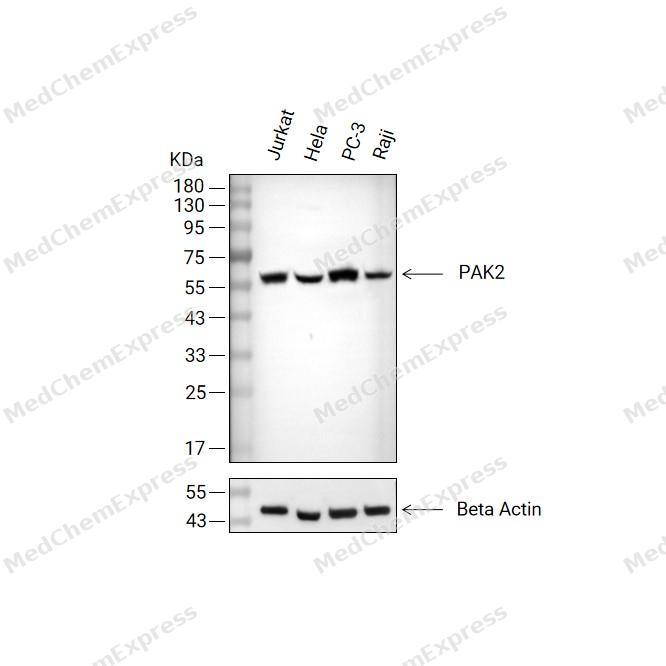 Western blot analysis of extracts from Jurkat(lane 2(20μg) , Hela(lane 3(20μg) ,PC-3(lane 4(20μg)and Raji( lane 5(20μg) using PAK2 Antibody (HY-P80778). Proteins were transferred to a PVDF membrane and blocked with 5% non-fat milk in TBST for 2 hour at room temperature. The primary antibody (1/1000) and Loading control antibody (Beta Actin, HY-P80993,1/10000) was used in 5% non-fat milk in TBST at 4°C overnight. Goat Anti-Mouse IgG-HRP Secondary Antibody (HY-P8004,1/10,000) was used for 1 hour at room temperature.
 -
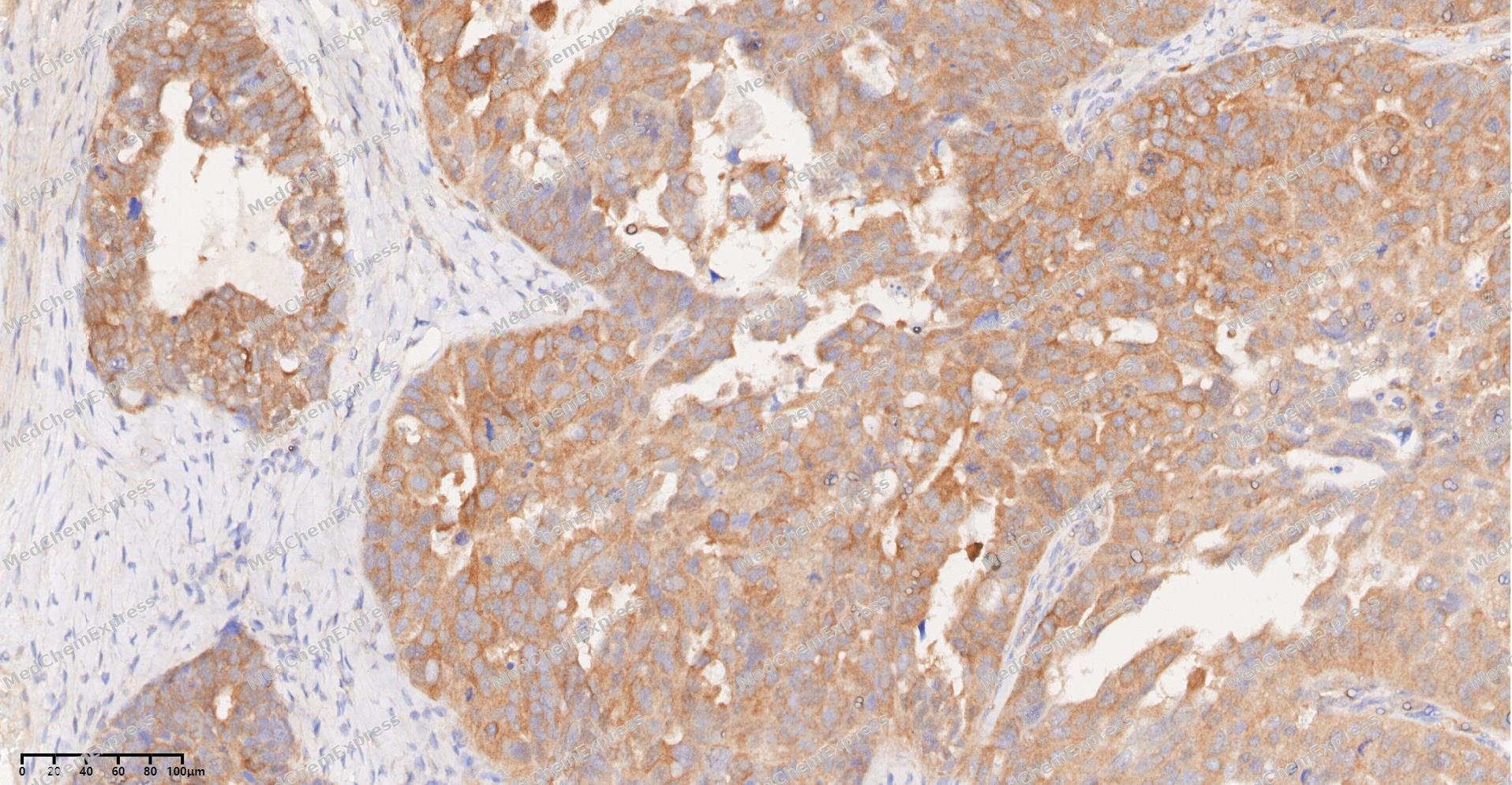 Immunohistochemical analysis of paraffin-embedded human Ovarian Cancer tissue using PAK2 antibody was performed. The section was pretreated using high-temperature and high-pressure mediated EDTA antigen retrieval buffer (pH 9.0), for 5 minutes. The tissues were incubated with primary antibody (HY-P80778, 1:50 dilution) at room temperature for Leave overnight at 4°C. Detection was performed using an HRP conjugated compact polymer system. DAB was used as the chromogen. The tissues were counterstained with hematoxylin and mounted with neutral balsam mounting medium.
 -
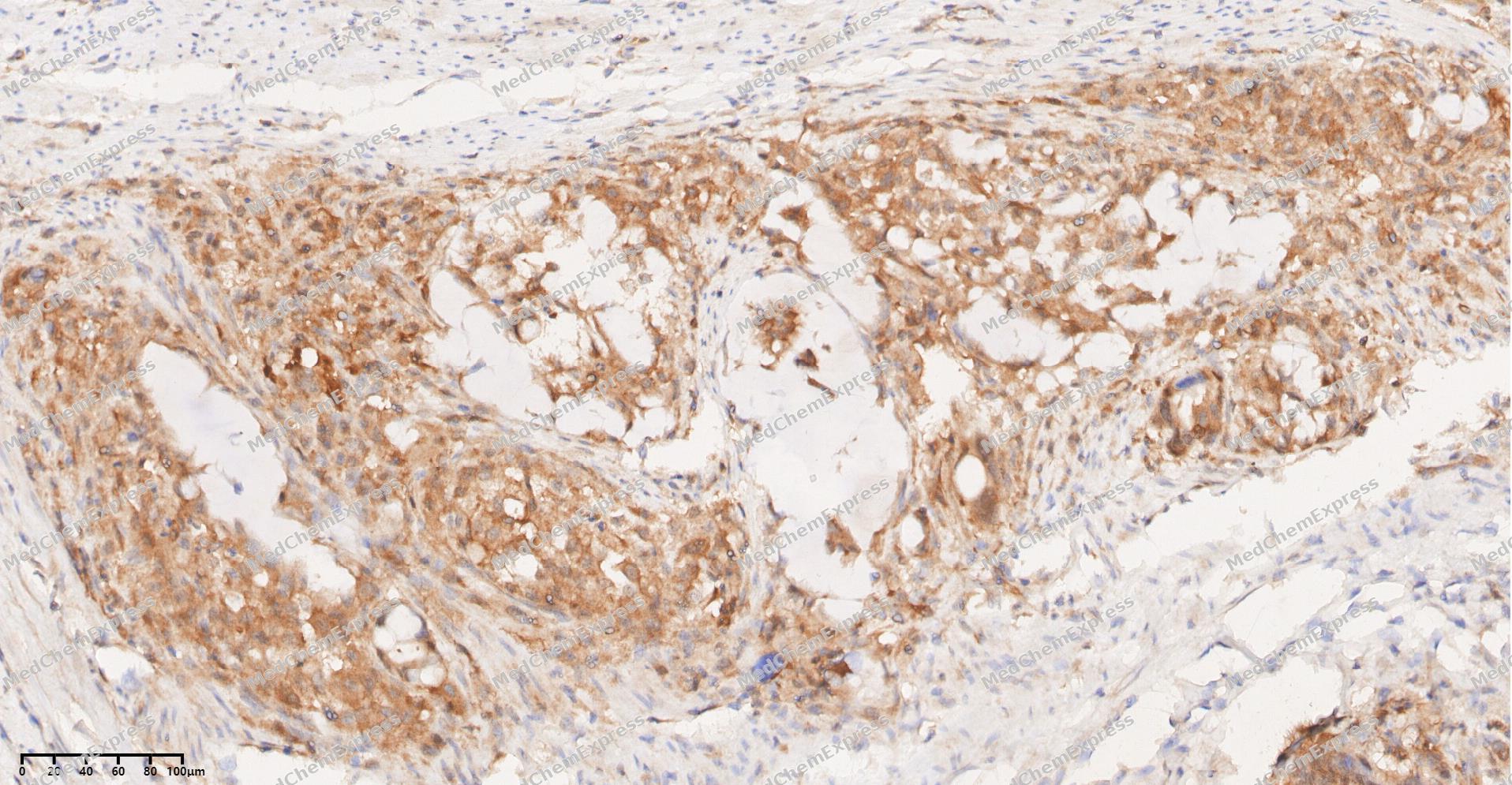 Immunohistochemical analysis of paraffin-embedded human Gastric Cancer tissue using PAK2 antibody was performed. The section was pretreated using high-temperature and high-pressure mediated EDTA antigen retrieval buffer (pH 9.0), for 5 minutes. The tissues were incubated with primary antibody (HY-P80778, 1:50 dilution) at room temperature for Leave overnight at 4°C. Detection was performed using an HRP conjugated compact polymer system. DAB was used as the chromogen. The tissues were counterstained with hematoxylin and mounted with neutral balsam mounting medium.
 -
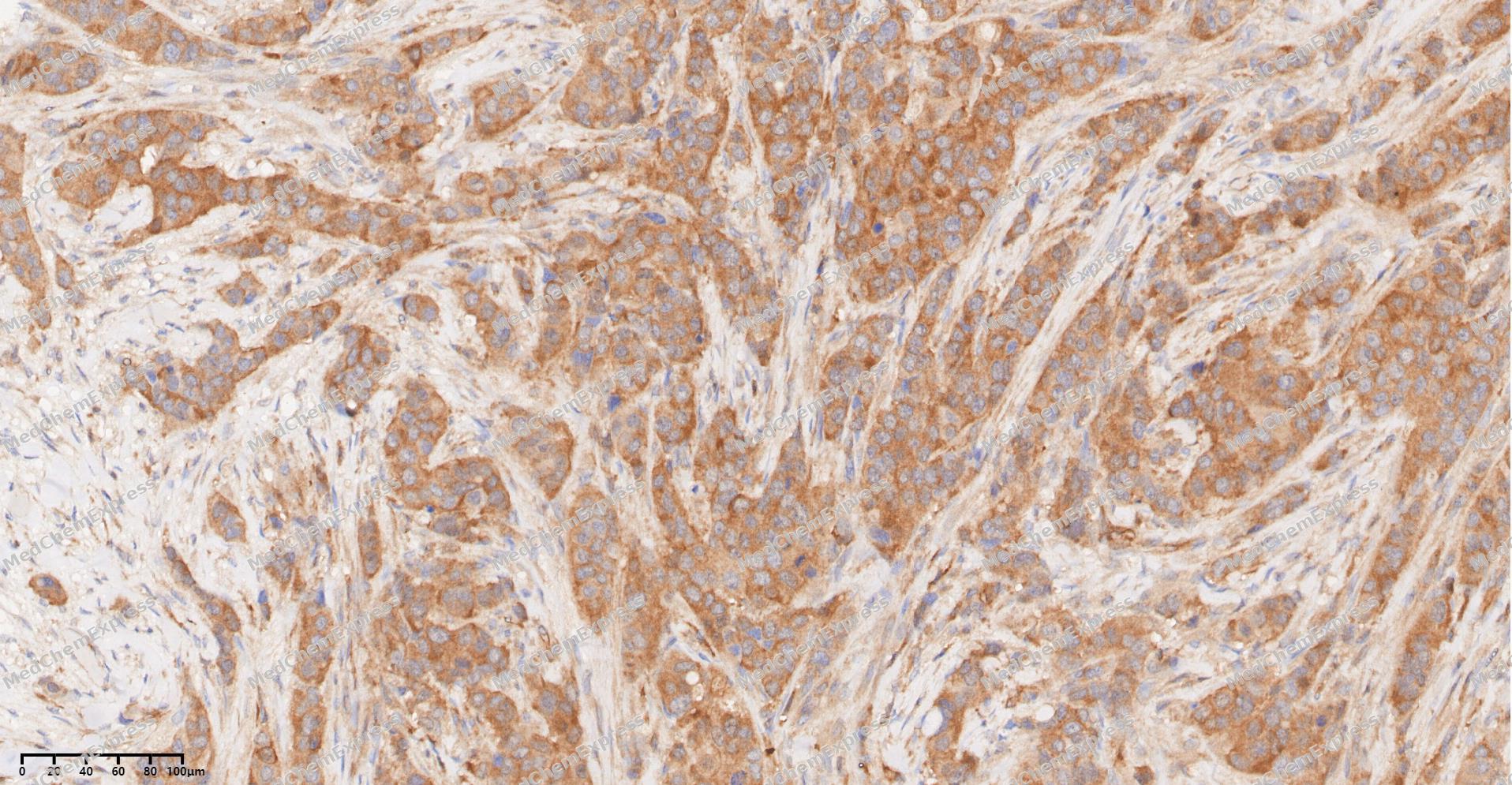 Immunohistochemical analysis of paraffin-embedded human Breast Cancer tissue using PAK2 antibody was performed. The section was pretreated using high-temperature and high-pressure mediated EDTA antigen retrieval buffer (pH 9.0), for 5 minutes. The tissues were incubated with primary antibody (HY-P80778, 1:50 dilution) at room temperature for Leave overnight at 4°C. Detection was performed using an HRP conjugated compact polymer system. DAB was used as the chromogen. The tissues were counterstained with hematoxylin and mounted with neutral balsam mounting medium.
 -
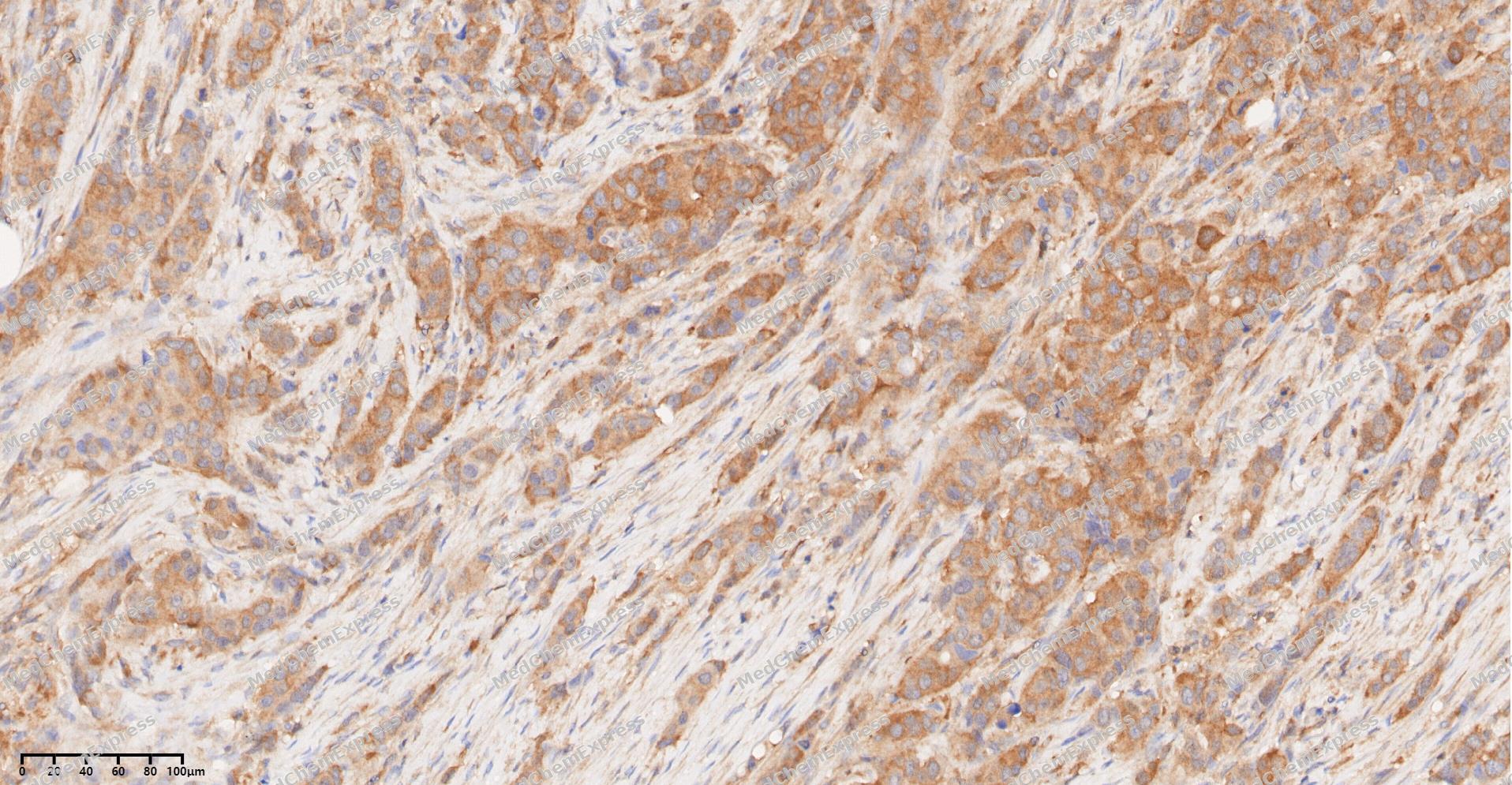 Immunohistochemical analysis of paraffin-embedded human Breast Cancer tissue using PAK2 antibody was performed. The section was pretreated using high-temperature and high-pressure mediated EDTA antigen retrieval buffer (pH 9.0), for 5 minutes. The tissues were incubated with primary antibody (HY-P80778, 1:50 dilution) at room temperature for Leave overnight at 4°C. Detection was performed using an HRP conjugated compact polymer system. DAB was used as the chromogen. The tissues were counterstained with hematoxylin and mounted with neutral balsam mounting medium.
 -
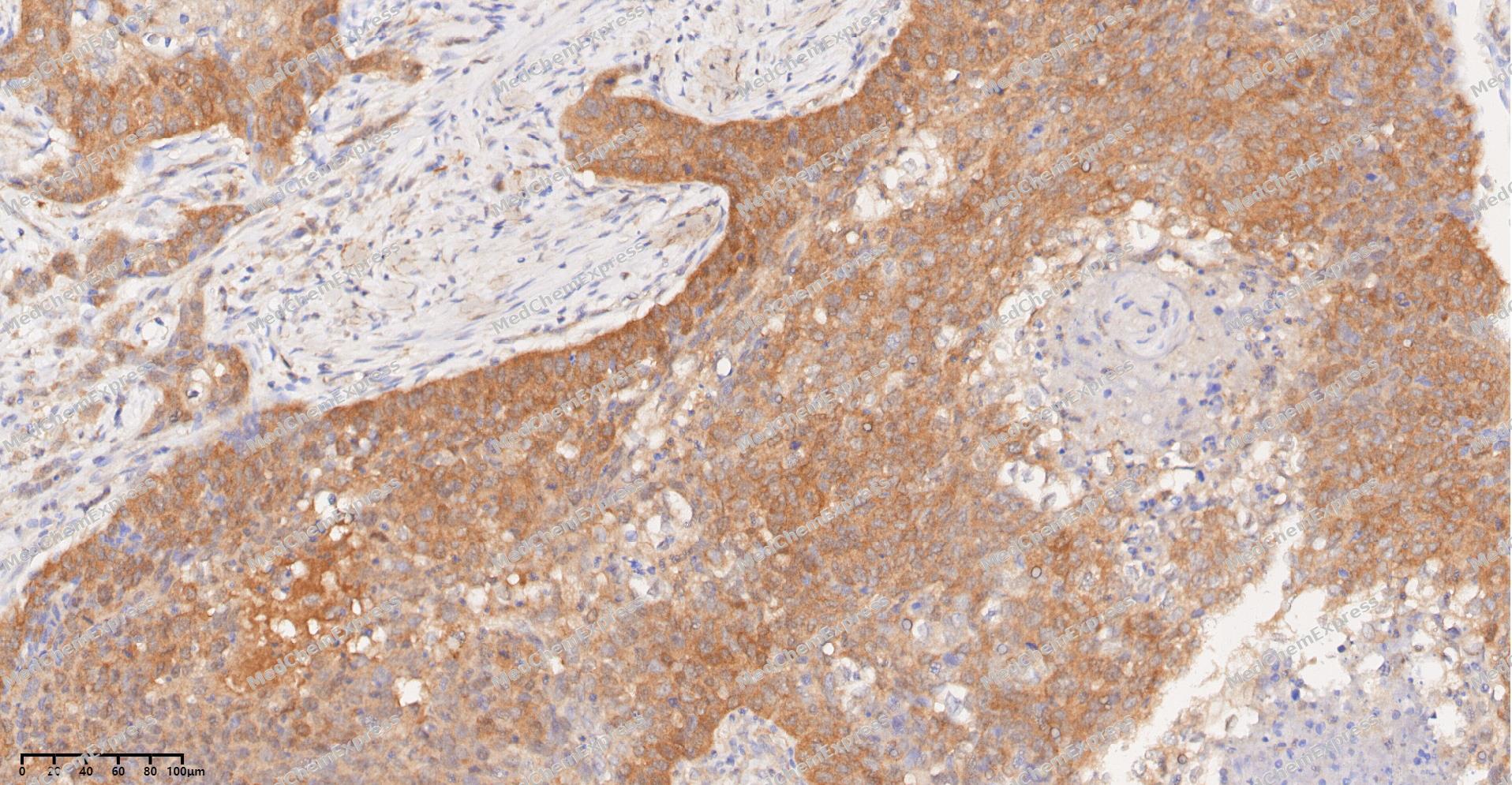 Immunohistochemical analysis of paraffin-embedded human Esophageal Carcinoma tissue using PAK2 antibody was performed. The section was pretreated using high-temperature and high-pressure mediated EDTA antigen retrieval buffer (pH 9.0), for 5 minutes. The tissues were incubated with primary antibody (HY-P80778, 1:50 dilution) at room temperature for Leave overnight at 4°C. Detection was performed using an HRP conjugated compact polymer system. DAB was used as the chromogen. The tissues were counterstained with hematoxylin and mounted with neutral balsam mounting medium.
 -
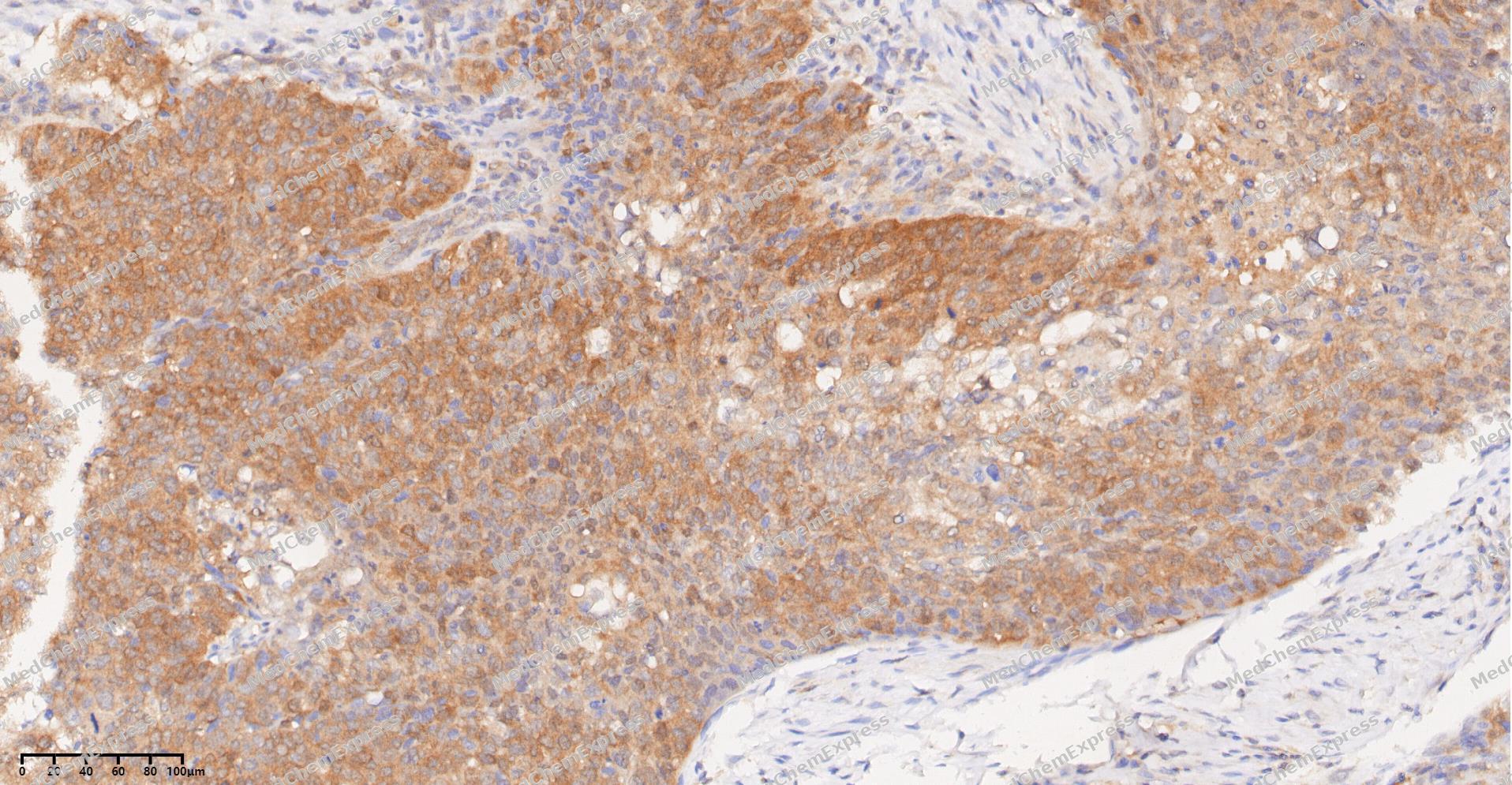 Immunohistochemical analysis of paraffin-embedded human Esophageal Carcinoma tissue using PAK2 antibody was performed. The section was pretreated using high-temperature and high-pressure mediated EDTA antigen retrieval buffer (pH 9.0), for 5 minutes. The tissues were incubated with primary antibody (HY-P80778, 1:50 dilution) at room temperature for Leave overnight at 4°C. Detection was performed using an HRP conjugated compact polymer system. DAB was used as the chromogen. The tissues were counterstained with hematoxylin and mounted with neutral balsam mounting medium.
 -
 Immunocytochemistry analysis of U2OS cells labeling PAK2 with PAK2 Antibody (HY-P80778) at 1/100 dilution. Cells were fixed in 4% paraformaldehyde for 15 minutes at room temperature, permeabilized with 0.1% Triton X-100 in PBS for 15 minutes at room temperature, then blocked with quick block buffer for 10 minutes at room temperature. Cells were then incubated with PAK2 Antibody (HY-P80778) at 1/100 dilution in quick block buffer overnight at 4 ℃. AF488-conjugated Goat Anti-Mouse IgG H&L(HY-P8005, Green) was used as the secondary antibody at 1/1,000 dilution. PBS instead of the primary antibody was used as the secondary antibody only control. The Nuclear counterstain was DAPI (Blue).
 -
 Immunocytochemistry analysis of U2OS cells labeling PAK2 with PAK2 Antibody (HY-P80778) at 1/200 dilution. Cells were fixed in 4% paraformaldehyde for 15 minutes at room temperature, permeabilized with 0.1% Triton X-100 in PBS for 15 minutes at room temperature, then blocked with quick block buffer for 10 minutes at room temperature. Cells were then incubated with PAK2 Antibody (HY-P80778) at 1/200 dilution in quick block buffer overnight at 4 ℃. AF488-conjugated Goat Anti-Mouse IgG H&L(HY-P8005, Green) was used as the secondary antibody at 1/1,000 dilution. PBS instead of the primary antibody was used as the secondary antibody only control. The Nuclear counterstain was DAPI (Blue).


Background
-
Function
PAK2 (p21-activated kinase 2) is a ubiquitously expressed serine/threonine kinase of the group I PAK family that functions as a major downstream effector of the small GTPases CDC42 and RAC1, linking Rho GTPase signaling to cytoskeletal remodeling and nuclear signaling pathways[1][2]. PAK2 activation is mediated through release of autoinhibition within its regulatory domain, followed by autophosphorylation and kinase activation, enabling regulation of cell adhesion, actin dynamics, cell division, apoptosis, and intracellular signal transduction[2]. Mechanistically, PAK2 participates in multiple signaling networks and can modulate transforming growth factor-β (TGF-β) responses by restricting R-Smad phosphorylation and transcriptional activity, highlighting its role in signal integration and cellular homeostasis[3]. In disease-related contexts, aberrant PAK signaling has been associated with cancer progression, cell survival, migration, and cytoskeletal reorganization, making PAK family members important subjects in experimental oncology research[4]. Compared with the closely related isoforms PAK1 and PAK3, PAK2 is distinguished by its ubiquitous expression pattern and its requirement for embryonic development, whereas PAK1 shows more restricted adult tissue expression and PAK3 is predominantly expressed in the brain[2]. Notably, PAK2 is the only PAK family member directly activated by caspase-3-mediated proteolytic cleavage, generating a constitutively active kinase fragment that contributes to apoptotic signaling and cellular stress responses. For experimental applications, small-molecule group I PAK inhibitors such as FRAX597 have been widely used to suppress PAK activity and investigate PAK-dependent signaling mechanisms in tumor and cell biology models[2].
-
Subcellular Localization
Cytoplasm; Nucleus; Nucleus; Cytoplasm, perinuclear region; Membrane; Lipid-anchor
-
Expression
Tissue_specificity:Widely expressed. High expression levels are found in skeletal muscle, ovaries, thymus, and spleen. -
Subunit
Interacts tightly with GTP-bound but not GDP-bound CDC42/p21 and RAC1 (PubMed:20696164). Interacts with SH3MD4 (PubMed:16374509). Interacts with SCRIB (PubMed:18716323). Interacts with ARHGEF7 and GIT1 (PubMed:19273597). PAK-2p34 interacts with ARHGAP10 (PubMed:15471851)
-
SwissProt ID
-
Synonyms
PAK2; Serine/threonine-protein kinase PAK 2; Gamma-PAK; PAK65; S6/H4 kinase; p21-activated kinase 2; PAK-2; p58
-
Research Field
Cell Biology


Documentation
-
Data Sheet (262 KB)
-
SDS (252 KB)
- English - EN (252 KB)
- Français - FR (252 KB)
- Deutsch - DE (252 KB)
- Norwegian - NO (252 KB)
- Español - ES (252 KB)
- Swedish - SV (252 KB)
- Italian - IT (252 KB)
- Korean - KR (252 KB)
- Portuguese - PT (252 KB)
-
User Guide for Antibodies (1077 KB)
References
[1]. PAK2 gene information from NCBI.
[2]. Grebeňová D, et al. PAK1, PAK1Δ15, and PAK2: similarities, differences and mutual interactions. Sci Rep. 2019 Nov 20;9(1):17171. [Content Brief]
[3]. Tanveer R, et al. The endocannabinoid, anandamide, augments Notch-1 signaling in cultured cortical neurons exposed to amyloid-β and in the cortex of aged rats. J Biol Chem. 2012 Oct 5;287(41):34709-21. [Content Brief]
[4]. Baño V, et al. Characterization and Structural Performance in Bending of CLT Panels Made from Small-Diameter Logs of Loblolly/Slash Pine. Materials (Basel). 2018 Nov 30;11(12):2436. [Content Brief]

 Powered by Bioz
