



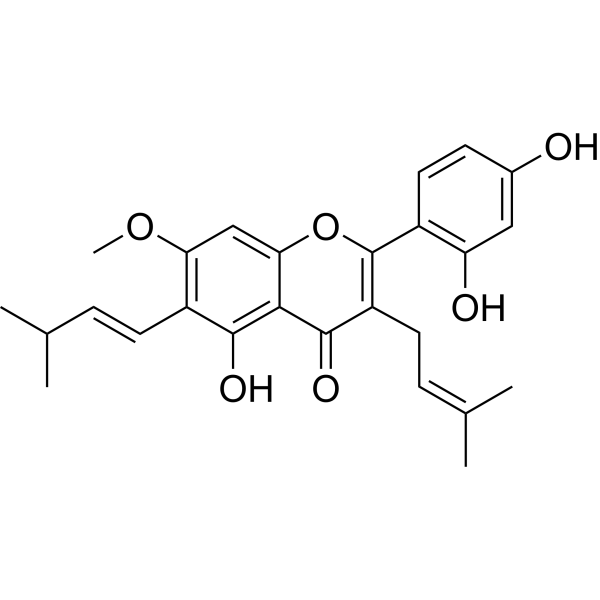
Artocarpin
Artocarpin is an orally active apoptosis inducer. Artocarpin targets NF-κB, Erk1/2, p38 MAPK, AktS473, p53, Akt 1 kinase and Akt 2 kinase. Artocarpin induces reactive oxygen species (ROS) production, mediates p53-dependent and p53-independent apoptotic signaling pathways, induces G1-phase cell cycle arrest, and triggers autophagic cell death. Artocarpin exerts cytotoxic and bactericidal effects on cancer cells, reduces bacterial load, and exhibits anti-inflammatory, analgesic and anti-angiogenic activities.
연구목적의 판매만을 진행합니다. 환자를 대상으로 한 판매는 하지 않습니다.
- CAS No.: 7608-44-8
- 화학식: C26H28O6
- 분자량:436.50
-
보관:
Please store the product under the recommended conditions in the Certificate of Analysis.

To place orders, for customer services and technical support, please contact: MedChemExpress USA
Tel: 609-228-6898 E-mail: [email protected] [email protected]


-
 Biological Activity
-
Chemical Information
- Protocol
- 순도&문서
- References
-
 Help & FAQs




Biological Activity
제품 설명
Cellular Effect
|
Cell Line

|
Type | Value | Description | References |
|---|---|---|---|---|
| 1A9 | ED50 |
3.4 μg/mL
Compound: 6, Artocarpin
|
Cytotoxicity against human 1A9 cells
Cytotoxicity against human 1A9 cells
|
[PMID: 15165133] |
| A549 | ED50 |
3.3 μg/mL
Compound: 6, Artocarpin
|
Cytotoxicity against human A549 cells
Cytotoxicity against human A549 cells
|
[PMID: 15165133] |
| CAKI-1 | ED50 |
4.9 μg/mL
Compound: 6, Artocarpin
|
Cytotoxicity against human Caki1 cells
Cytotoxicity against human Caki1 cells
|
[PMID: 15165133] |
| HCT-8 | ED50 |
3.8 μg/mL
Compound: 6, Artocarpin
|
Cytotoxicity against human HCT8 cells
Cytotoxicity against human HCT8 cells
|
[PMID: 15165133] |
| KB | ED50 |
3.2 μg/mL
Compound: 6, Artocarpin
|
Cytotoxicity against human KB cells
Cytotoxicity against human KB cells
|
[PMID: 15165133] |
| MCF7 | ED50 |
3.3 μg/mL
Compound: 6, Artocarpin
|
Cytotoxicity against human MCF7 cells
Cytotoxicity against human MCF7 cells
|
[PMID: 15165133] |
| MDA-MB-231 | ED50 |
3.8 μg/mL
Compound: 6, Artocarpin
|
Cytotoxicity against human MDA-MB-231 cells
Cytotoxicity against human MDA-MB-231 cells
|
[PMID: 15165133] |
| PC-3 | ED50 |
4.1 μg/mL
Compound: 6, Artocarpin
|
Cytotoxicity against human PC3 cells
Cytotoxicity against human PC3 cells
|
[PMID: 15165133] |
| RAW264.7 | IC50 |
18.7 μM
Compound: 6
|
Inhibition of LPS-induced nitric oxide production in mouse RAW264.7 cells assessed as nitrite accumulation after 20 hrs
Inhibition of LPS-induced nitric oxide production in mouse RAW264.7 cells assessed as nitrite accumulation after 20 hrs
|
[PMID: 16643064] |
| RAW264.7 | IC50 |
45.3 μM
Compound: 6
|
Cytotoxicity against mouse RAW264.7 cells by MTT assay
Cytotoxicity against mouse RAW264.7 cells by MTT assay
|
[PMID: 16643064] |
| SK-MEL-2 | ED50 |
5.4 μg/mL
Compound: 6, Artocarpin
|
Cytotoxicity against human SK-MEL-2 cells
Cytotoxicity against human SK-MEL-2 cells
|
[PMID: 15165133] |
| U-87MG ATCC | ED50 |
3.7 μg/mL
Compound: 6, Artocarpin
|
Cytotoxicity against human U87MG cells
Cytotoxicity against human U87MG cells
|
[PMID: 15165133] |
| Vero | CC50 |
80 μg/mL
Compound: AH-5
|
Cytotoxicity against African green monkey Vero cells after 72 hrs by MTT assay
Cytotoxicity against African green monkey Vero cells after 72 hrs by MTT assay
|
[PMID: 36222797] |
In Vitro
Artocarpin (0-20 μM; 24 h) induces concentration-dependent apoptosis in A549 and H1299 NSCLC cells, as evidenced by increased DNA fragmentation, subG1 phase cell accumulation, and early/late apoptotic cell populations after 24-hour treatment[1].
Artocarpin (0-25 μM; 0-120 min) induces time- and concentration-dependent ROS generation in A549 and H1299 NSCLC cells via a NADPH oxidase (Nox)-dependent pathway, but does not induce ROS in normal human pulmonary epithelial cells (HPAEpiCs)[1].
Artocarpin (10 μM; 0-24 h) induces ROS- and MAPK-dependent activation of the p53 apoptotic pathway, increasing expression of phosphorylated p53, PUMA, cytochrome c, Apaf-1, and cleaved caspase-3 in A549 NSCLC cells over 24 hours[1].
Artocarpin (10 μM; 0-24 h) induces ROS- and Akt-dependent activation of NF-κB, leading to increased expression of c-Myc and Noxa in A549 and H1299 NSCLC cells[1].
Artocarpin (10-20 μM; 48 h, 3-48 h) induces apoptosis and autophagy in DLD1, HCT15, and HT29 human colon adenocarcinoma cells, as evidenced by PARP cleavage and increased LC3B expression at 10 and 20 μM (after 48 h) and time-dependent up-regulation of these markers over 3 to 48 h at 20 μM[2].
Artocarpin (20 μM; 12-48 h) induces G1 phase cell cycle arrest followed by apoptotic cell death in HT29 human colon adenocarcinoma cells when treated at 20 μM for 12, 24, 36, or 48 h[2].
Artocarpin (6.7 μM) potently inhibits melanin biosynthesis in B16 melanoma cells with an IC50 of 6.7 μM, without inducing cytotoxicity and without inhibiting tyrosinase activity[3].
Artocarpin displays weak but relatively broad in vitro cytotoxicity against A549, MCF-7, 1A9, HCT-8, U-87-MG, MDA-MB-231, KB, and KB-VIN human tumor cell lines with ED50 values ranging from 3.2 to 3.8 μg/mL, and shows inactive cytotoxicity against CAKI-1, SK-MEL-2, and PC-3 cell lines[4].
Artocarpin (tested across a concentration range; 20 h with LPS) inhibits nitric oxide production in LPS-activated RAW264.7 mouse macrophage cells with an IC50 of 18.7 μM[5].
Artocarpin (2-20 μg/mL; 5 min-24 h) exerts rapid, concentration-dependent bactericidal activity against S. aureus ATCC 29213, with up to a ~4.8 log10 cfu/mL reduction at 10× MIC within 1 h and no regrowth after 24 h[6].
Artocarpin (10 μg/mL; 24 h) potently clears intracellular S. aureus ATCC 29213 in J774 macrophages, reducing bacterial load by ~3.25 log10 cfu/mL at 5× MIC after 24 h of treatment[6].
Artocarpin (5-10 μg/mL; 30 min-1 h) disrupts the membrane integrity of S. aureus ATCC 29213, causing rapid cellular lysis, reduced intracellular ATP, and increased extracellular ATP at 2.5× and 5× MIC[6].
MedChemExpress (MCE) has not independently confirmed the accuracy of these methods. They are for reference only.
-
Cell Line:A549, H226, H1299 (human non-small cell lung carcinoma cell lines)
-
Concentration:0-10 μM
-
Incubation Time:24 h
-
Result:Inhibited cell proliferation in a concentration-dependent fashion, with IC50 values of 3.1303 μM for A549 cells, 6.4612 μM for H226 cells, and 7.9890 μM for H1299 cells.
-
Cell Line:A549, H1299 (human NSCLC cell lines)
-
Concentration:0-10 μM (DNA fragmentation and cell cycle analysis in A549 cells); 10 μM (cell cycle analysis in H1299 cells); 0-20 μM (Annexin-V-FITC/PI assay in A549 and H1299 cells)
-
Incubation Time:24 h (all assays)
-
Result:Induced concentration-dependent increases in DNA fragmentation and the proportion of cells in the subG1 phase in A549 cells. Reduced the proportion of viable cells and increased the proportion of cells in early apoptosis (Annexin-V-positive/PI-negative) in a concentration-dependent manner in A549 and H1299 cells; concentrations of 15 and 20 μM also significantly increased late apoptosis (Annexin-V-positive/PI-positive).
-
Cell Line:A549, H1299 (human NSCLC cell lines)
-
Concentration:10 μM
-
Incubation Time:0-4 h (phosphorylation time-course); 4 h (inhibitor-pretreated or siRNA-transfected cells)
-
Result:Induced time-dependent phosphorylation of p38 MAPK, ERK1/2, and AktS473 in both cell lines, with significant increases observed within 0.5 h. Reduced artocarpin-induced phosphorylation of p38 and ERK1/2 significantly when cells were pretreated with SB202190, U0126, APO, or NAC; reduced artocarpin-induced phosphorylation of AktS473 significantly when cells were pretreated with LY294002, APO, or NAC. Attenuated artocarpin-induced phosphorylation of p38, ERK1/2, and AktS473 significantly when cells were transfected with p47phox siRNA.
-
Cell Line:DLD1, HCT15, HCT116, HT29, SW480 human colon adenocarcinoma cells; CCD-18Co nonmalignant human colon fibroblast cells
-
Concentration:0-25 μM
-
Incubation Time:48 h
-
Result:Exhibited potent cytotoxicity against human colon cancer cells with IC50 values around 15 μmol/L, while nonmalignant CCD-18Co cells were much less sensitive at similar concentrations.
-
Cell Line:HT29 human colon adenocarcinoma cells
-
Concentration:20 μM
-
Incubation Time:12-48 h
-
Result:Induced a significant G1 phase cell cycle arrest, with a corresponding increase in the sub-G1 phase (apoptotic cells) over time.
-
Cell Line:HT29 human colon adenocarcinoma cells
-
Concentration:20 μM (time-course analysis); 10-20 μM (EGF pre-incubation)
-
Incubation Time:3-48 h (20 μM time-course); 15 min pre-incubation (EGF stimulation)
-
Result:Reduced the phosphorylation of Akt (Ser473) in a time-dependent manner over 3 to 48 h. Inhibited EGF-induced phosphorylation of Akt (Ser473) when used as a pre-treatment at 10 and 20 μM.
In Vivo
Artocarpin (AH-5) (50 mg/kg; i.p.; two doses 3 hours apart) significantly reduces S. aureus ATCC 29213 bacterial load in neutropenic murine thigh tissue by ~0.6 log10 cfu/g[6].
Artocarpin (AH-5) (1%; topical; twice daily; 4 days) significantly reduces S. aureus ATCC 29213 bacterial load in murine skin tissue by ~1.0 log10 cfu/g[6].
Artocarpin (25-100 mg/kg; p.o.) exhibits dose-dependent anti-inflammatory activity in Wistar albino rats, with 100 mg/kg producing comparable inhibition to indomethacin 10 mg/kg in acute edema models and significant granuloma reduction[7].
Artocarpin (25-100 mg/kg; p.o.) exhibits dose-dependent analgesic activity in Swiss albino mice, with 100 mg/kg producing comparable inhibition to diclofenac 10 mg/kg in formalin-induced paw licking and significant writhing reduction in acetic acid-induced writhing[7].
MedChemExpress (MCE) has not independently confirmed the accuracy of these methods. They are for reference only.
-
Animal Model:BALB/cA-nu (nu/nu) (male, 6 weeks old)[1]
-
Dosage:1 mg/kg
-
Administration:daily; 21 days
-
Result:Significantly reduced mean tumor volume compared to vehicle control.
Significantly increased expression of phospho-ERK, phospho-p53, PUMA, Cytochrome C, Apaf-1, cleaved Caspase 3, phospho-Akt473, phospho-p65, c-Myc, and Noxa relative to vehicle control tumors.
Significantly reduced mean tumor volume compared to vehicle control.
Significantly increased expression of phospho-Akt473, phospho-p65, c-Myc, and Noxa relative to vehicle control tumors.
-
Animal Model:Balb/c (male, 5-week-old)[2]
-
Dosage:100 mg/kg
-
Administration:p.o.; daily; 16 weeks
-
Result:Reduced the multiplicity of colonic neoplasms by 56%. Significantly increased mouse survival rate. Substantially inhibited phosphorylated (p)-Akt (Ser 473), p-GSK3β (Ser 9), and p-Bad (Ser136) in colon tissue compared to the untreated disease model group. Showed no obvious systemic toxicity during the study.
-
Animal Model:BALB/c (female, 18-20 g, neutropenic thigh infection model induced by i.p. cyclophosphamide injections 4 days and 1 day pre-infection followed by S. aureus ATCC 29213 injection)[6]
-
Dosage:50 mg/kg
-
Administration:i.p.; two doses 3 hours apart
-
Result:Reduced bacterial load in thigh tissue by ~0.6 log10 cfu/g relative to untreated infected mice.
-
Animal Model:Swiss albino (100-150 g)[7]
-
Dosage:25 mg/kg; 50 mg/kg; 100 mg/kg
-
Administration:p.o.
-
Result:Produced 8.9% to 81.8% inhibition of acetic acid-induced writhing, with 100 mg/kg showing significantly greater inhibition than 25 mg/kg and 50 mg/kg.\nProduced 14.1% to 72.5% inhibition of formalin-induced paw licking, with 100 mg/kg showing significantly greater inhibition than 25 mg/kg and 50 mg/kg and comparable activity to diclofenac 10 mg/kg.
- Mammalian live/dead viability and cytotoxicity staining
- Annexin V plus membrane-impermeant dye apoptosis staining
- ROS/oxidative-stress fluorescent staining
- BrdU Incorporation Assay
- Protocol for Cell Cycle
- Research Protocol for Inflammation-related Diseases
- Cell Viability Determination by MTT Colorimetric Assay
- Detection of Apoptosis
- TUNEL staining for apoptotic DNA fragmentation
- Flow cytometric DNA-content cell-cycle staining
- Cell Cytotoxicity Assay
- Autophagy
- Apoptosis Solutions


Chemical Information
-
CAS No. 7608-44-8
-
분자량 436.50
-
화학식 C26H28O6
-
SMILES
C/C(C)=C\CC1=C(C2=C(C=C(O)C=C2)O)OC3=CC(OC)=C(/C=C/C(C)C)C(O)=C3C1=O
-
Structure Classification
-
Initial Source
-
선적
Room temperature in continental US; may vary elsewhere.
-
보관
Please store the product under the recommended conditions in the Certificate of Analysis.


순도&문서
References
[1]. Tsai MH, et al. Artocarpin, an isoprenyl flavonoid, induces p53-dependent or independent apoptosis via ROS-mediated MAPKs and Akt activation in non-small cell lung cancer cells. Oncotarget. 2017;8(17):28342-28358. [Content Brief]
[2]. Sun G, et al. Chemoprevention of Colorectal Cancer by Artocarpin, a Dietary Phytochemical from Artocarpus heterophyllus. J Agric Food Chem. 2017;65(17):3474-3480. [Content Brief]
[3]. Arung ET, et al. Inhibitory effect of isoprenoid-substituted flavonoids isolated from Artocarpus heterophyllus on melanin biosynthesis. Planta Med. 2006;72(9):847-850. [Content Brief]
[4]. Wang YH, et al. New isoprenylated flavones, artochamins A--E, and cytotoxic principles from Artocarpus chama. J Nat Prod. 2004;67(5):757-761. [Content Brief]
[5]. Han AR, et al. Prenylated flavonoids from the heartwood of Artocarpus communis with inhibitory activity on lipopolysaccharide-induced nitric oxide production. J Nat Prod. 2006;69(4):719-721. [Content Brief]
[6]. Meenu MT, et al. Developing the Natural Prenylflavone Artocarpin from Artocarpus hirsutus as a Potential Lead Targeting Pathogenic, Multidrug-Resistant Staphylococcus aureus, Persisters and Biofilms with No Detectable Resistance. J Nat Prod. 2022 Oct 28;85(10):2413-2423. [Content Brief]

Calculators
Concentration (start) × Volume (start) = Concentration (final) × Volume (final)


Artocarpin Related Classifications
HY-N2902 Related Classifications
 Powered by Bioz