866 Results for "

dysfunction

" in MedChemExpress (MCE) Product Catalog:
Products (866)

866 Results for "dysfunction" in MCE Product Catalog:

314
314 Publications Verification
Cat. No.: HY-13818
CAS No.: 19983-44-9
Purity:  99.58%
Target:  

STAT Apoptosis

Research Areas:  

Inflammation/Immunology Cancer

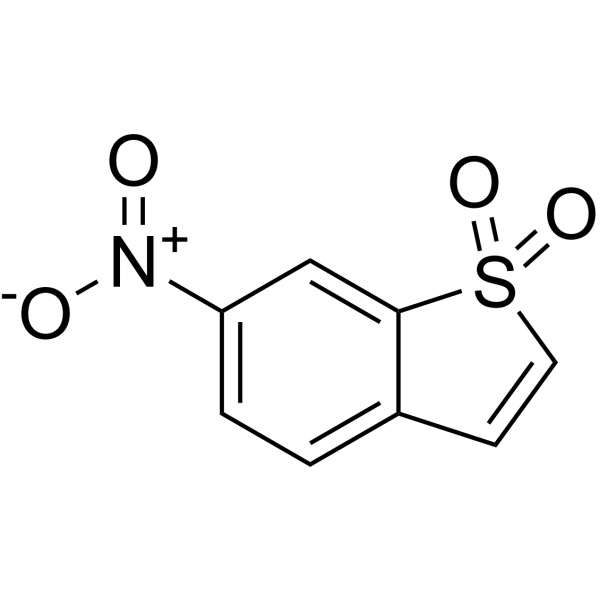
Stattic is a potent STAT3 inhibitor and inhibits STAT3 phosphorylation (at Y705 and S727) . Stattic inhibits the binding of a high affinity phosphopeptide for the SH2 domain of STAT3 . Stattic ameliorates the renal dysfunction in Alport syndrome (AS) mice .
loading...
    loading...
179
179 Cited Publications
Cat. No.: HY-125944
CAS No.: 1569257-94-8
Purity:  98.03%
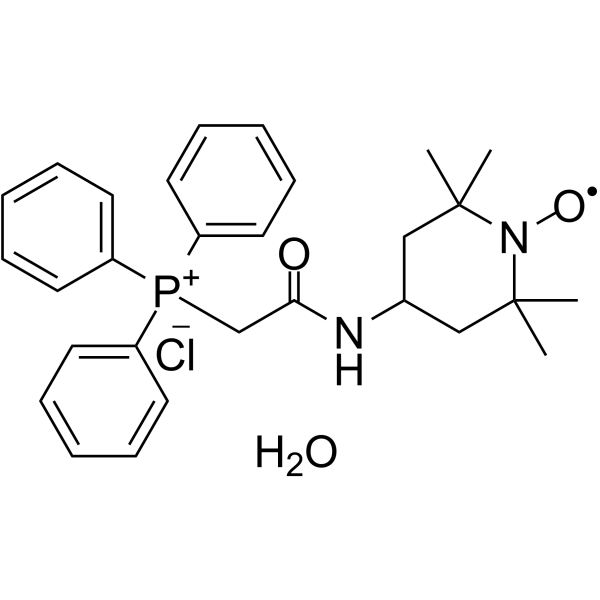
MitoTEMPO hydrate is a mitochondria-targeted antioxidant . MitoTEMPO hydrate induces mitophagy by activating the PINK1/Parkin pathway, inhibits NLRP3 inflammasome activation, restores mitochondrial membrane potential, and improves renal function and podocyte injury. MitoTEMPO hydrate regulates Ca 2+ homeostasis, inhibits Bnip3 overexpression, shortens action potential duration, and exerts antiarrhythmic effects. MitoTEMPO hydrate reverses premature senescence, reduces trabecular bone loss, and decreases cell apoptosis. MitoTEMPO hydrate can be used in studies of chronic kidney disease, age-related cardiac dysfunction, postmenopausal osteoporosis, and ischemic stroke .
loading...
    loading...
179
179 Cited Publications
Cat. No.: HY-112879
CAS No.: 1334850-99-5
Purity:  99.19%
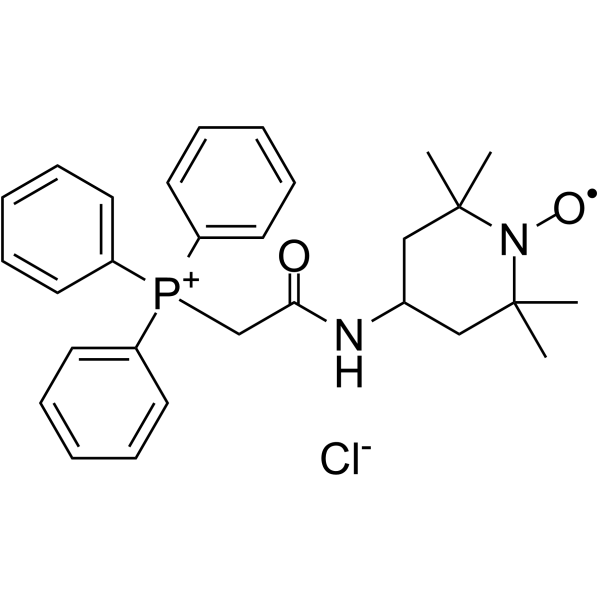
Mito-TEMPO is a mitochondria-targeted antioxidant. Mito-TEMPO induces mitophagy by activating the PINK1/Parkin pathway, inhibits NLRP3 inflammasome activation, restores mitochondrial membrane potential, and improves renal function and podocyte injury. Mito-TEMPO regulates Ca 2+ homeostasis, inhibits Bnip3 overexpression, shortens action potential duration, and exerts antiarrhythmic effects. Mito-TEMPO reverses premature senescence, reduces trabecular bone loss, and decreases cell apoptosis. Mito-TEMPO can be used in studies of chronic kidney disease, age-related cardiac dysfunction, postmenopausal osteoporosis, and ischemic stroke .
loading...
    loading...
58
58 Cited Publications
Cat. No.: HY-B0356
CAS No.: 85721-33-1
Synonyms: Bay-09867
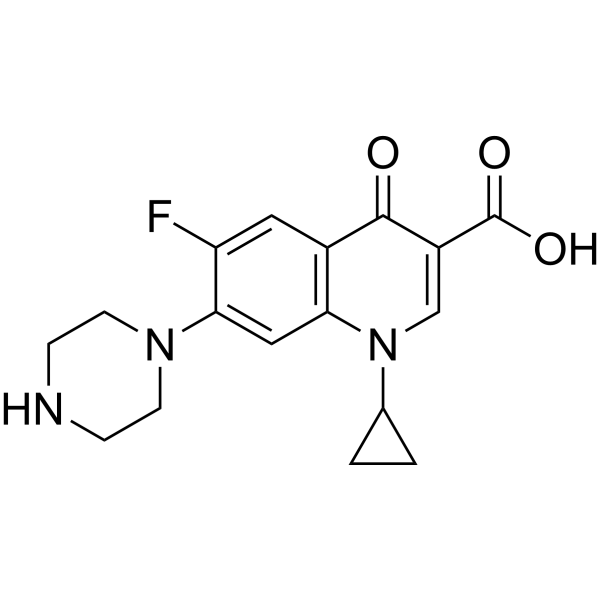
Ciprofloxacin (Bay-09867) is a potent, orally active topoisomerase IV inhibitor. Ciprofloxacin induces mitochondrial DNA and nuclear DNA damage and lead to mitochondrial dysfunction, ROS production. Ciprofloxacin has anti-proliferative activity and induces apoptosis. Ciprofloxacin is a fluoroquinolone antibiotic, exhibiting potent antibacterial activity .
loading...
    loading...
58
58 Cited Publications
Cat. No.: HY-Y1269
CAS No.: 12125-02-9
Ammonium chloride, as a heteropolar compound with pH value regulation, can cause intracellular alkalization and metabolic acidosis thus effecting enzymatic activity and influencing the process of biological system. Ammonium chloride is an autophagy inhibitor. Ammonium chloride is also a lysosome inhibitor .
loading...
    loading...
58
58 Cited Publications
Cat. No.: HY-Y1269C
CAS No.: 12125-02-9
Synonyms: Salmiac, for cell culture
Ammonium chloride, for cell culture (Salmiac, for cell culture) is a reagent that can be used in cell culture to provide a source of nitrogen. Ammonium chloride can be used as a heteropolar compound to regulate pH value, which can cause intracellular alkalination and metabolic acidosis, thus affecting the activity of enzymes and affecting the process of biological systems. Ammonium chloride acts as an autophagy inhibitor.Ammonium chloride is also a lysosome inhibitor.
loading...
    loading...
34
34 Cited Publications
Cat. No.: HY-N0148A
CAS No.: 207671-50-9
Synonyms: Rutoside hydrate; Quercetin 3-O-rutinoside hydrate
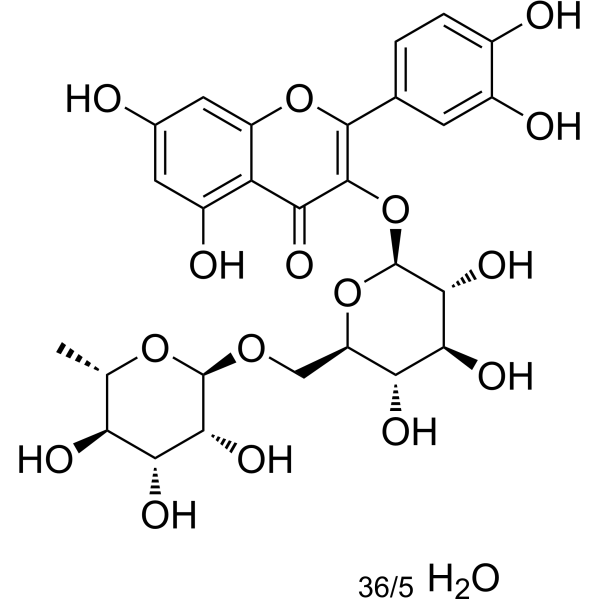
Rutin (Rutoside) hydrate is a flavonoid found in many plants and shows a wide range of biological activities including anti-inflammatory, antidiabetic, antioxidant, neuroprotective, nephroprotective, hepatoprotective and reducing Aβ oligomer activities. Rutin hydrate can cross the blood brain barrier. Rutin hydrate attenuates vancomycin-induced renal tubular cell apoptosis via suppression of apoptosis, mitochondrial dysfunction, and oxidative stress .
loading...
    loading...
34
34 Cited Publications
Cat. No.: HY-N0148
CAS No.: 153-18-4
Synonyms: Rutoside; Quercetin 3-O-rutinoside
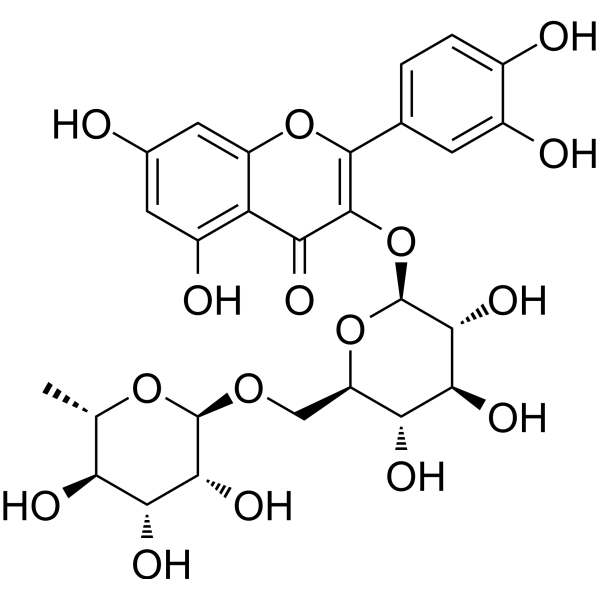
Rutin (Rutoside) is a flavonoid found in many plants and shows a wide range of biological activities including anti-inflammatory, antidiabetic, antioxidant, neuroprotective, nephroprotective, hepatoprotective and reducing Aβ oligomer activities. Rutin is also a CBR1 inhibitor, which can cross the blood brain barrier. Rutin attenuates vancomycin-induced renal tubular cell apoptosis via suppression of apoptosis, mitochondrial dysfunction, and oxidative stress .
loading...
    loading...
31
31 Cited Publications
Cat. No.: HY-13687
CAS No.: 873225-46-8
Purity:  99.88%
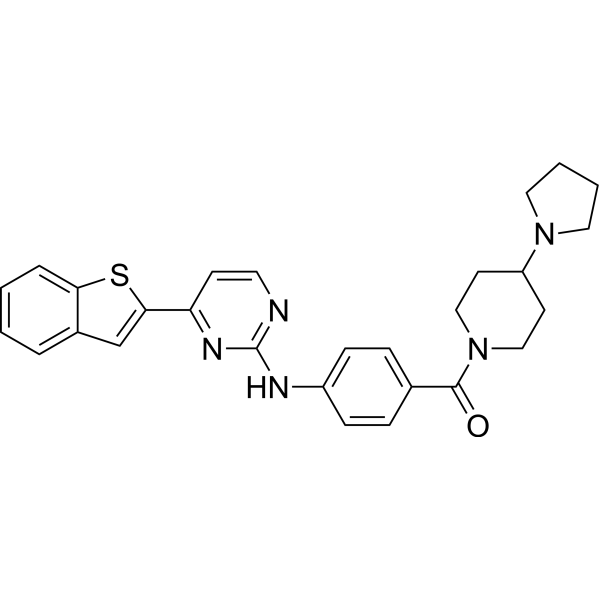
IKK 16 is an orally active IKK inhibitor. IKK 16 shows IC50s of 40 nM, 70 nM, 200 nM, and 50 nM for IKK2, IKK complex, IKK1, and LRRK 2, respectively. IKK 16 is also a pan-PKD inhibitor, inhibiting PKD1, PKD2, and PKD3 with IC50s of 153.9, 115, and 99.7 nM, respectively. IKK 16 is also an ABCB1 inhibitor, interfering with the binding of ABCB1 to its substrates. IKK 16 protects against LPS (HY-D1056)-induced multiple organ dysfunction by reducing the acute inflammatory response induced by endotoxin exposure. IKK 16 can restore renal function and alleviate fibrosis in acute kidney injury. IKK 16 attenuates cardiac dysfunction associated with polymicrobial sepsis in mice with type 2 diabetes mellitus (T2DM) by inhibiting the NF-κB pathway .
loading...
    loading...
31
31 Cited Publications
Cat. No.: HY-13687A
CAS No.: 1186195-62-9
Purity:  99.95%
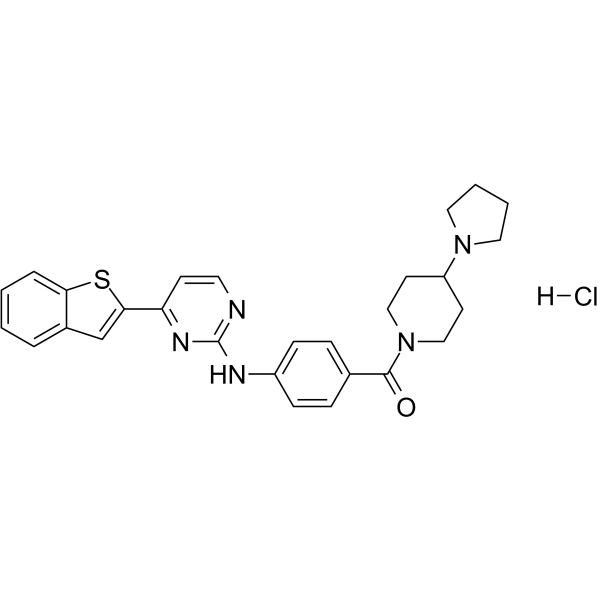
IKK 16 hydrochloride is an orally active IKK inhibitor. IKK 16 hydrochloride shows IC50s of 40 nM, 70 nM, 200 nM, and 50 nM for IKK2, IKK complex, IKK1, and LRRK 2, respectively. IKK 16 hydrochloride is also a pan-PKD inhibitor, inhibiting PKD1, PKD2, and PKD3 with IC50s of 153.9, 115, and 99.7 nM, respectively. IKK 16 hydrochloride is also an ABCB1 inhibitor, interfering with the binding of ABCB1 to its substrates. IKK 16 hydrochloride protects against LPS (HY-D1056)-induced multiple organ dysfunction by reducing the acute inflammatory response induced by endotoxin exposure. IKK 16 hydrochloride can restore renal function and alleviate fibrosis in acute kidney injury. IKK 16 hydrochloride attenuates cardiac dysfunction associated with polymicrobial sepsis in mice with type 2 diabetes mellitus (T2DM) by inhibiting the NF-κB pathway .
loading...
    loading...
29
29 Cited Publications
Cat. No.: HY-18730
CAS No.: 180001-34-7
Synonyms: W1400
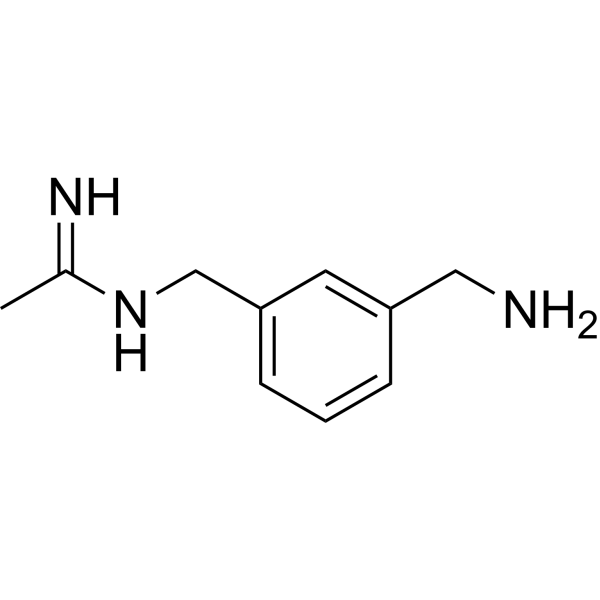
1400W is a slow, tight binding, and highly selective inducible nitric-oxide synthase (iNOS) inhibitor, with a Kd value ≤ 7 nM. 1400W inhibits iNOS induction in microglial cells, and reduces generation of NO, thereby mitigating oxidative stress and neuronal cell apoptosis in the rat cerebral cortex, and improving the spatial memory dysfunction caused by acute hypobaric hypoxia-reoxygenation .
loading...
    loading...
29
29 Cited Publications
Cat. No.: HY-18731
CAS No.: 214358-33-5
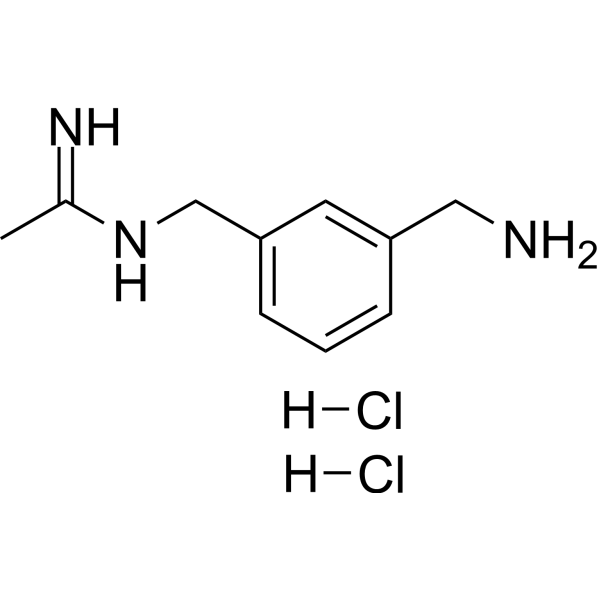
1400W dihydrochloride is the dihydrochloride form of 1400W (HY-18730). 1400W is a slow, tight binding, and highly selective inducible nitric-oxide synthase (iNOS) inhibitor, with a Kd value ≤ 7 nM. 1400W inhibits iNOS induction in microglial cells, and reduces generation of NO, thereby mitigating oxidative stress and neuronal cell apoptosis in the rat cerebral cortex, and improving the spatial memory dysfunction caused by acute hypobaric hypoxia-reoxygenation .
loading...
    loading...
27
27 Cited Publications
Cat. No.: HY-P1363
Synonyms: Amyloid β-peptide (1-42) (human) TFA
Target:  

Amyloid-β

Research Areas:  

Neurological Disease

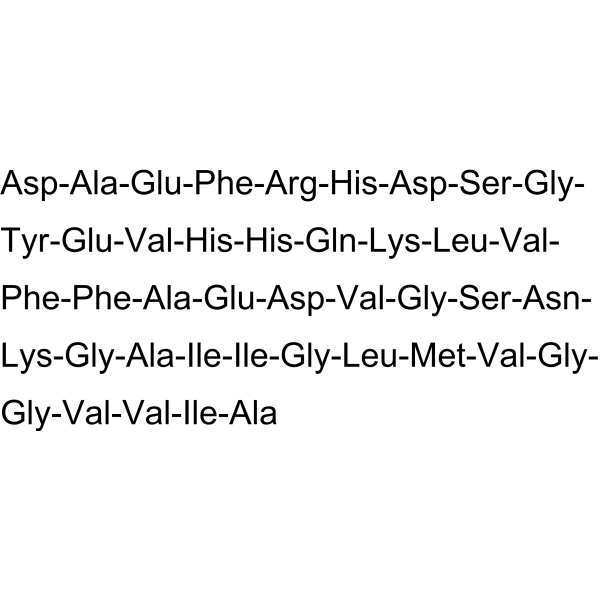
β-Amyloid (1-42) (Amyloid β-peptide (1-42), human TFA, a 42-amino acid peptide that has not been treated with HFIP, is a brain-penetrant amyloid protein fragment, which can be used in research on Alzheimer's disease and Down’s syndrome. β-Amyloid (1-42), human TFA remaining as a monomer exhibits antioxidant and neuroprotective effects. β-Amyloid (1-42), human TFA, after being monomericized by HFIP and dissolved in DMSO to form the stock solution, on the one hand, can form soluble oligomers (AβOs) when incubated at 4 °C, which have synaptic toxicity and neurotoxicity; on the other hand, it can be incubated at 37 °C to form insoluble fibrils, with lower neurotoxicity, and participating in the oxidative damage process. Aβ42 oligomers bind to various neuronal surface receptors (such as PrPc, mGluR5, NMDA receptors, etc.), triggering oxidative stress, calcium homeostasis imbalance, and synaptic toxicity via activating downstream signaling pathways, leading to neuronal dysfunction and death .
loading...
    loading...
27
27 Cited Publications
Cat. No.: HY-P1363A
CAS No.: 107761-42-2
Synonyms: Amyloid β-peptide (1-42) (human)
Target:  

Amyloid-β

Research Areas:  

Neurological Disease

β-Amyloid (1-42) (Amyloid β-peptide (1-42)), human, a 42-amino acid peptide that has not been treated with HFIP, is a brain-penetrant amyloid protein fragment, which can be used in research on Alzheimer's disease and Down’s syndrome. β-Amyloid (1-42), human remaining as a monomer exhibits antioxidant and neuroprotective effects. β-Amyloid (1-42), human, after being monomericized by HFIP and dissolved in DMSO to form the stock solution, on the one hand, can form soluble oligomers (AβOs) when incubated at 4 °C, which have synaptic toxicity and neurotoxicity; on the other hand, it can be incubated at 37 °C to form insoluble fibrils, with lower neurotoxicity, and participating in the oxidative damage process. Aβ42 oligomers bind to various neuronal surface receptors (such as PrPc, mGluR5, NMDA receptors, etc.), triggering oxidative stress, calcium homeostasis imbalance, and synaptic toxicity via activating downstream signaling pathways, leading to neuronal dysfunction and death .
loading...
    loading...
27
27 Cited Publications
Cat. No.: HY-P1363B
CAS No.: 107761-42-2
Target:  

Amyloid-β

Research Areas:  

Neurological Disease

β-Amyloid (1-42), human, HFIP-treated, a 42-amino acid peptide that has been treated with HFIP from β-Amyloid (1-42), human (HY-P1363A), is a brain-penetrant amyloid protein fragment, which can be used in research on Alzheimer's disease and Down’s syndrome. β-Amyloid (1-42), human, HFIP-treated remaining as a monomer exhibits antioxidant and neuroprotective effects. β-Amyloid (1-42), human, HFIP-treated, after being dissolved in DMSO to form the stock solution, on the one hand, can form soluble oligomers (AβOs) when incubated at 4°C, which have synaptic toxicity and neurotoxicity; on the other hand, it can be incubated at 37°C to form insoluble fibrils, with lower neurotoxicity, and participating in the oxidative damage process. Aβ42 oligomers bind to various neuronal surface receptors (such as PrPc, mGluR5, NMDA receptors, etc.), triggering oxidative stress, calcium homeostasis imbalance, and synaptic toxicity via activating downstream signaling pathways, leading to neuronal dysfunction and death .
loading...
    loading...
25
25 Cited Publications
Cat. No.: HY-N0455B
CAS No.: 4320-30-3
Synonyms: (S)-(+)-Arginine (L-glutamate)
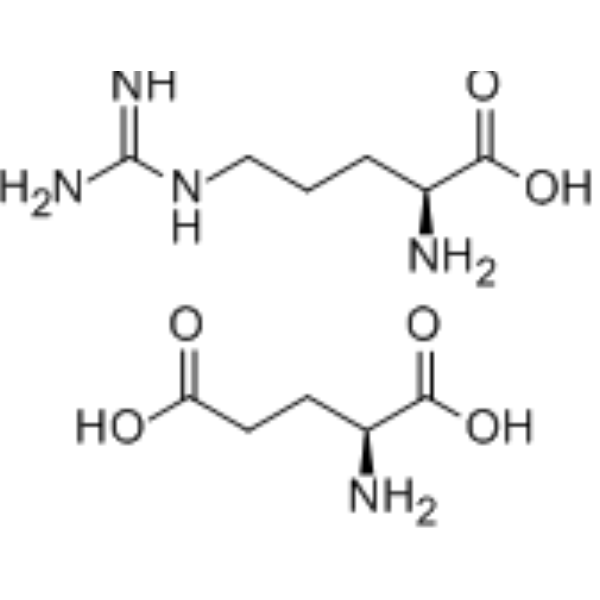
L-Arginine L-glutamate ((S)-(+)-Arginine L-glutamate) is the nitrogen donor for synthesis of nitric oxide. L-Arginine L-glutamate can be used for upper gastrointestinal hypofunction or dysfunction like functional dyspepsia research .
loading...
    loading...
17
17 Cited Publications
Cat. No.: HY-N0035
CAS No.: 7770-78-7
Synonyms: (-)-Arctigenin
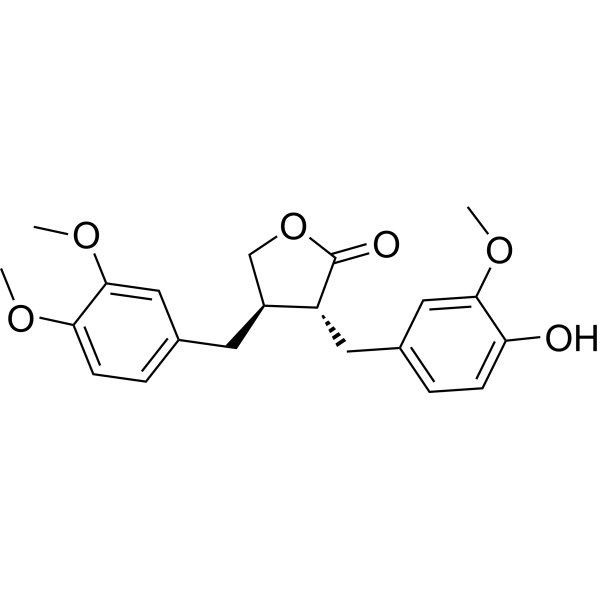
Arctigenin ((-)-Arctigenin), a biologically active lignan, can be used as an antitumor agent. Arctigenin exhibits potent antioxidant, anti-inflammatory and antiviral (influenza A virus) activities. Arctigenin can be used for the research of metabolic disorders, and central nervous system dysfunctions .
loading...
    loading...
13
13 Cited Publications
Cat. No.: HY-B1892
CAS No.: 25953-19-9
Synonyms: Cephazolin
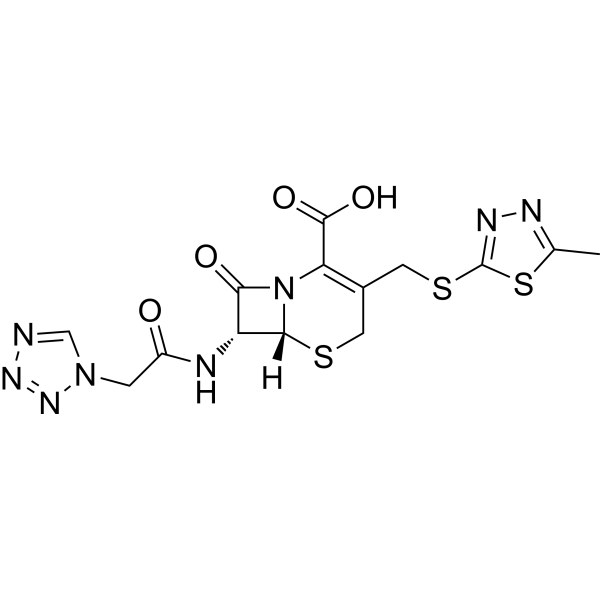
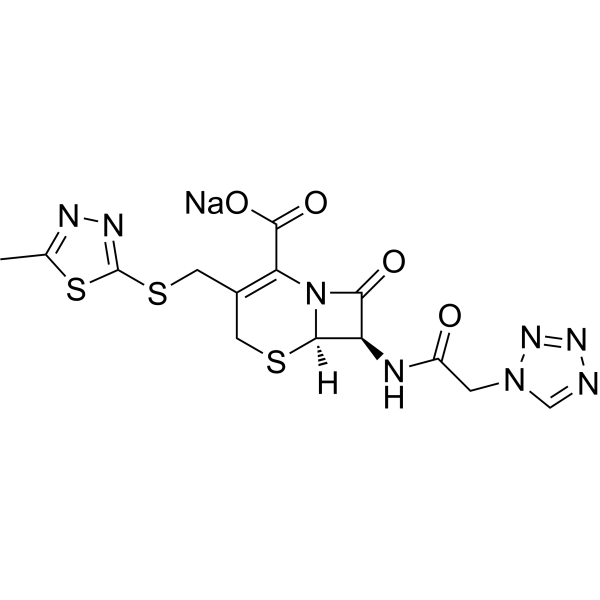
Cefazolin (Cephazolin) is a first-generation cephalosporin antibiotic and can be used in varieties of bacterial infections research . Cefazolin has anti-inflammatory effect and can attenuate post-operative cognitive dysfunction (POCD) .
loading...
    loading...
13
13 Cited Publications
Cat. No.: HY-B1078
CAS No.: 27164-46-1
Synonyms: Cephazolin sodium
Cefazolin sodium is a first-generation cephalosporin antibiotic and can be used in varieties of bacterial infections research . Cefazolin sodium has anti-inflammatory effect and can attenuate post-operative cognitive dysfunction (POCD) .
loading...
    loading...
12
12 Cited Publications
Cat. No.: HY-B0022
CAS No.: 13311-84-7
Synonyms: SCH 13521
Target:  

Androgen Receptor

Research Areas:  

Cancer

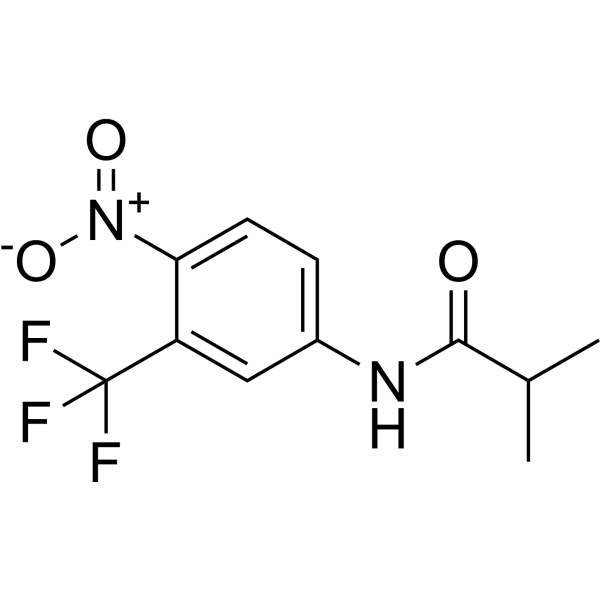
Flutamide is an Androgen Receptor antagonist with Ki=55 nM. Flutamide inhibits prostate cancer progression and has synergistic effects with Docetaxel (HY-B0011). Flutamide also has the potential to protect against hyperthermia-induced multiple organ dysfunction syndrome .
loading...
    loading...

