



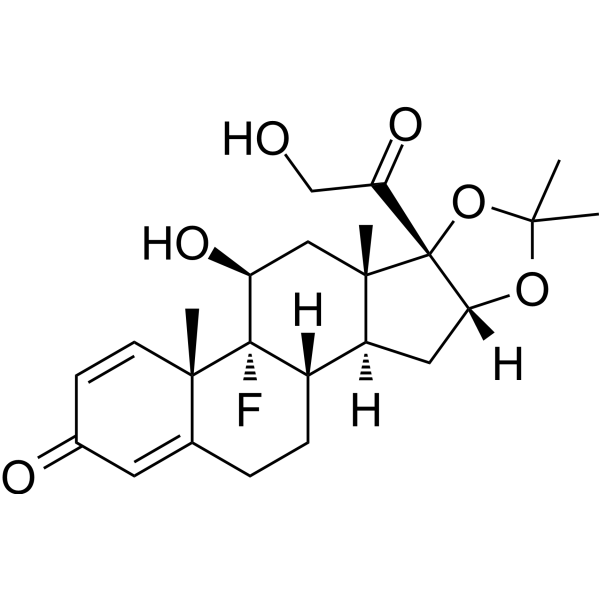
Triamcinolone acetonide
Based on 6 publication(s) in Google Scholar
Triamcinolone acetonide inhibits basic fibroblast growth factor (bFGF) induced proliferation of retinal endothelial cells. Triamcinolone acetonide reduces chondrocyte viability and leads to cartilage destruction. Triamcinolone acetonide activates macrophage with anti-inflammatory characteristics. Triamcinolone acetonide can be used in the study of diseases such as atopic dermatitis.
Nos produits utilisent uniquement pour la recherche. Nous ne vendons pas aux patients.
- Pureté: 99.95%
- CAS No.: 76-25-5
- Formule: C24H31FO6
- Masse moléculaire:434.50
-
Stockage:Powder -20°C, 3 years , 4°C, 2 years ; In solvent -80°C, 6 months , -20°C, 1 month

To place orders, for customer services and technical support, please contact: MedChemExpress USA
Tel: 609-228-6898 E-mail: [email protected] [email protected]


-
 Activité biologique
-
Chemical Information
-
Solvant et solubilité
- Pureté et documentation
- Références
-
 Help & FAQs
-

Immunology/Inflammation Compound Library
HY-L007
-
Protein Tyrosine Kinase Compound Library
HY-L016
-
FDA-Approved Drug Library
HY-L022
-
Anti-Cancer Compound Library
HY-L025
-
Drug Repurposing Compound Library
HY-L035
-
Lipid Compound Library
HY-L043
-
NMPA-Approved Drug Library
HY-L053
-
FDA Approved & Pharmacopeial Drug Library
HY-L066
-
Angiogenesis-Related Compound Library
HY-L088
-
Rare Diseases Drug Library
HY-L102
-
FDA-Approved Anticancer Drug Library
HY-L122
-
Nuclear Receptor Compound Library
HY-L126
-
Non-steroidal Anti-Inflammatory Compound Library
HY-L130
-
Pain-Related Compound Library
HY-L139
-
Off-patent Drug Library
HY-L141
-
Membrane Protein-targeted Compound Library
HY-L149
-
Membrane Receptor-targeted Compound Library
HY-L150
-
Macrophage Related Compound Library
HY-L174
-
Multi-Target Compound Library
HY-L176
-
Bioactive Compound Library Max
HY-L181
-
MCE Bioactive Compound Library
HY-L001V
-
Drug Repurposing Compound Library Plus
HY-L035P
-
FDA-Approved Drug Library Plus
HY-L022P
-
FDA-Approved Drug Library Mini
HY-L022M
-
Bioactive Compound Library
HY-L001
-
Protein Kinase Compound Library
HY-L196
-
Cell Proliferation Compound Library
HY-L201
-
High-Throughput Bioactive Compound Library
HY-L205
-
Animal Drug Library
HY-L218
-
Steroid Hormones Library
HY-L239


Publications Citing Use of MedChemExpress (MCE) Triamcinolone acetonide
More Customer Validation & Images

-
Histological Imaging/Staining
-
Histological Imaging/Staining
-
IF
-
IHC
-
In Vivo Efficacy Study


Activité biologique
|
Cell Line

|
Type | Value | Description | References |
|---|---|---|---|---|
| NIH3T3 | IC50 |
2.5 μM
Compound: 2 ; Triamcinolone acetonide (TA)
|
Inhibition of NIH 3T3 cell growth required to induce 50% of maximum response using antiproliferative assay
Inhibition of NIH 3T3 cell growth required to induce 50% of maximum response using antiproliferative assay
|
[PMID: 11855992] |
Triamcinolone acetonide (0.05-3 mg/mL, 48-60 h) decreases the proliferation of BRECs with increasing concentration[1].
Triamcinolone acetonide (0.04-5 mg/mL, 24 h) reduces chondrocyte viability in both normal and osteoarthritic (OA) chondrocytes in a concentration-dependent manner[2].
Triamcinolone acetonide (0.04-5 mg/mL, 24 h) increases the severity of cartilage structural damage, chondrocyte loss and cluster formation, and proteoglycan loss in OA cartilage[2].
Triamcinolone acetonide (100 nM, 7 days) strongly induces monocyte differentiation towards an M2 and anti-inflammatory macrophage phenotype[3].
MedChemExpress (MCE) has not independently confirmed the accuracy of these methods. They are for reference only.
-
Cell Line:Chondrocyte
-
Concentration:0.04, 0.08, 0.16, 0.31, 0.63, 1.25, 2.5, and 5 mg/ml
-
Incubation Time:24 h
-
Result:Reduced cell viability with the value of IC50 was 2.23 mg/mL in normal chondrocytes and 1.14 mg/mL in OA chondrocytes.
MedChemExpress (MCE) has not independently confirmed the accuracy of these methods. They are for reference only.
-
Animal Model:Severe OA rat model [3]
-
Dosage:1.43 mg/mL
-
Administration:Intraperitoneal injection (i.p.)
-
Result:Decreased body weight during OA induction. Showed more macrophage activation and minimal or no osteophyte formation when injected knee joints.
| NCT Number | Sponsor | Condition | Start Date |
Phase
|
|---|---|---|---|---|
| NCT01329991 | Plexxikon| | 2011-05 | PHASE1 |


Chemical Information
-
CAS No. 76-25-5
-
Appearance Solid
-
Masse moléculaire 434.50
-
Formule C24H31FO6
-
Color White to off-white
-
SMILES
OCC([C@]12[C@@]3([C@@]([C@@]4([H])[C@]([C@H](C3)O)([C@@]5(C(CC4)=CC(C=C5)=O)C)F)([H])C[C@@]1([H])OC(C)(O2)C)C)=O
-
Livraison
Room temperature in continental US; may vary elsewhere.
-
Stockage
Powder -20°C 3 years 4°C 2 years In solvent -80°C 6 months -20°C 1 month


Publications (6)
-
Journal Impact Factor
-
Most Recent
-
Proc Natl Acad Sci U S A
NSUN5/TET2-directed chromatin-associated RNA modification of 5-methylcytosine to 5-hydroxymethylcytosine governs glioma immune evasion. [Abstract]2024 Apr 2;121(14):e2321611121. PMID: 38547058 -
Biochim Biophys Acta Mol Cell Res
Botulinum toxin A prevents hypertrophic scarring by suppressing PARP14/SOCS2-mediated M2 polarization of macrophages. [Abstract]2025 Jun 10:120003. PMID: 40505894
Triamcinolone acetonide purchased from MedChemExpress. Usage Cited in: Biochim Biophys Acta Mol Cell Res. 2025 Jun 10:120003. [Abstract]
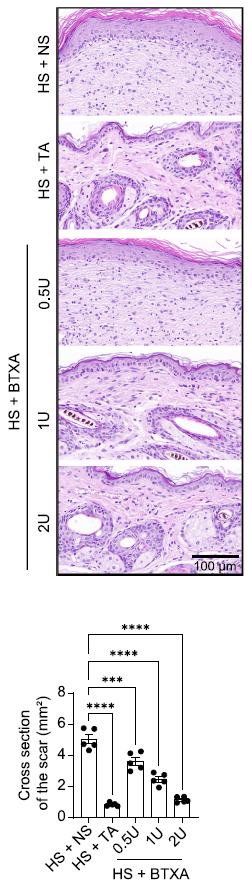
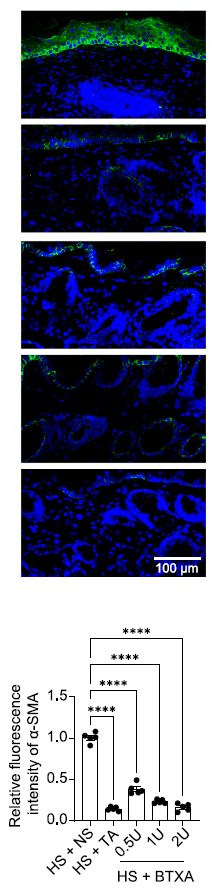
Triamcinolone acetonide (TA) (0.05 mL/g) treatment reduced dermal thickness and epidermal hyperplasia, decreased cell numbers, increased the number of dermal appendages, and significantly decreased the scar cross-sectional area in HS mice.
Triamcinolone acetonide purchased from MedChemExpress. Usage Cited in: Biochim Biophys Acta Mol Cell Res. 2025 Jun 10:120003. [Abstract]
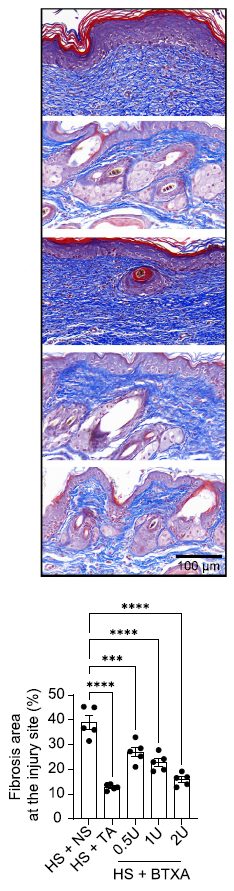
Triamcinolone acetonide (TA) (0.05 mL/g) reduced collagen deposition in the scars and diminished the fibrotic area at the injury site in HS mice.
Triamcinolone acetonide purchased from MedChemExpress. Usage Cited in: Biochim Biophys Acta Mol Cell Res. 2025 Jun 10:120003. [Abstract]
Triamcinolone acetonide (TA) (0.05 mL/g) significantly reduced the relative fluorescence intensity of α-SMA, a marker of myofibroblasts and indicative of collagen matrix contraction ability in the scar tissues of HS mice.
Triamcinolone acetonide purchased from MedChemExpress. Usage Cited in: Biochim Biophys Acta Mol Cell Res. 2025 Jun 10:120003. [Abstract]
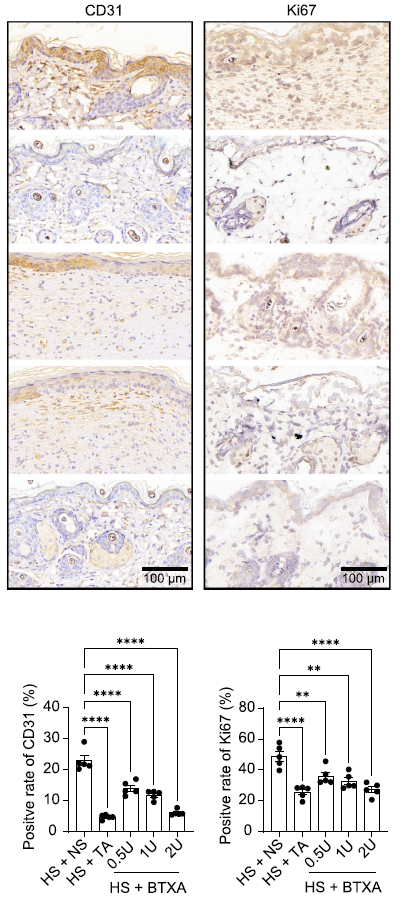
Triamcinolone acetonide (TA) (0.05 mL/g) significantly reduced the levels of CD31 and Ki67, marker proteins of angiogenesis and proliferation, in the scar tissue of HS mice.
-
Drug Test Anal
High-throughput liquid chromatography tandem mass spectrometry assay as initial testing procedure for analysis of total urinary fraction. [Abstract]2021 Feb;13(2):283-298. PMID: 32852861 -
Ghent university
Triamcinolone acetonide purchased from MedChemExpress. Usage Cited in: Ghent university
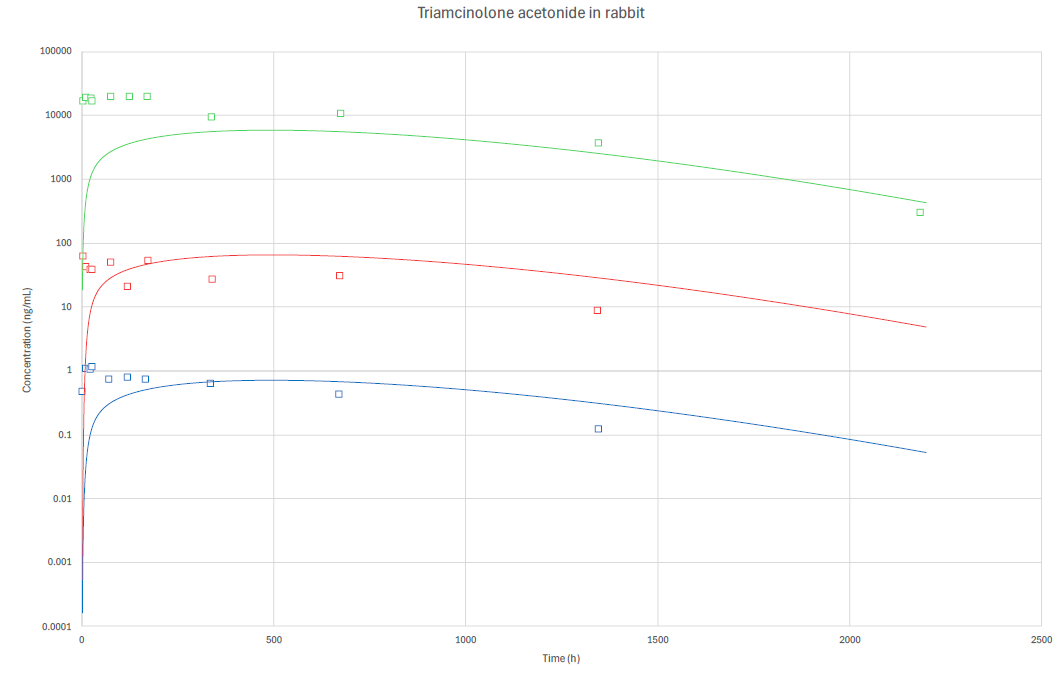
Simulation output of Triamcinolone acetonide (TA) (4 mg; i.v.; 2500 h) ocular rabbit model. Observed (squares) and predicted (solid line) values in VH (green), AH (red), and plasma (blue). Concentrations in ng/mL.
-
-


Solvant et solubilité
DMSO : 50 mg/mL (115.07 mM; Need ultrasonic; Hygroscopic DMSO has a significant impact on the solubility of product, please use newly opened DMSO)
H2O : < 0.1 mg/mL (insoluble)
Please refer to the solubility information to select the appropriate solvent. Once prepared, please aliquot and store the solution to prevent product inactivation from repeated freeze-thaw cycles.
Storage method and period of stock solution: -80°C, 6 months; -20°C, 1 month. When stored at -80°C, please use it within 6 months. When stored at -20°C, please use it within 1 month.
Please refer to the solubility information to select the appropriate solvent. Once prepared, please aliquot and store the solution to prevent product inactivation from repeated freeze-thaw cycles.
Storage method and period of stock solution: -80°C, 6 months; -20°C, 1 month. When stored at -80°C, please use it within 6 months. When stored at -20°C, please use it within 1 month.
Concentration (start) × Volume (start) = Concentration (final) × Volume (final)
Select the appropriate dissolution method based on your experimental animal and administration route.
- For the following dissolution methods, please ensure to first prepare a clear stock solution using an In Vitro approach and then sequentially add co-solvents:
- To ensure reliable experimental results, the clarified stock solution can be appropriately stored based on storage conditions. As for the working solution for In Vivo experiments, it is recommended to prepare freshly and use it on the same day.
- The percentages shown for the solvents indicate their volumetric ratio in the final prepared solution. If precipitation or phase separation occurs during preparation, heat and/or sonication can be used to aid dissolution.
Add each solvent one by one: 10% DMSO 40% PEG300 5% Tween-80 45% Saline
Solubility: ≥ 2.08 mg/mL (4.79 mM); Clear solution
This protocol yields a clear solution of ≥ 2.08 mg/mL (saturation unknown).
Taking 1 mL working solution as an example, add 100 μL DMSO stock solution (20.8 mg/mL) to 400 μL PEG300, and mix evenly; then add 50 μL Tween-80 and mix evenly; then add 450 μL Saline to adjust the volume to 1 mL.
Preparation of Saline: Dissolve 0.9 g sodium chloride in ddH₂O and dilute to 100 mL to obtain a clear Saline solution.
Add each solvent one by one: 10% DMSO 90% (20% SBE-β-CD in Saline)
Solubility: ≥ 2.08 mg/mL (4.79 mM); Clear solution
This protocol yields a clear solution of ≥ 2.08 mg/mL (saturation unknown).
Taking 1 mL working solution as an example, add 100 μL DMSO stock solution (20.8 mg/mL) to 900 μL 20% SBE-β-CD in Saline, and mix evenly.
Preparation of 20% SBE-β-CD in Saline (4°C, storage for one week): 2 g SBE-β-CD powder is dissolved in 10 mL Saline, completely dissolve until clear.
Please enter the basic information of animal experiments:
-
-
-
-
Recommended: Prepare an additional quantity of animals to account for potential losses during experiments.
Please enter your animal formula composition:
-
%DMSO +
Recommended: Keep the proportion of DMSO in working solution below 2% if your animal is weak.
-
%+
-
+%Tween-80 + +
-
%Saline +
The co-solvents required include: DMSO, . All of co-solvents are available by MedChemExpress (MCE). , Tween 80. All of co-solvents are available by MedChemExpress (MCE).
Working solution concentration: 0.22 mg/mL
Method for preparing stock solution: mg drug dissolved in μL DMSO. Stock solution concentration: mg/mL.
1. Take μL DMSO stock solution;
2. Add μL .
μL , mix evenly;
3. Then add μL Tween 80, mix evenly;
4. Then add μL
Please ensure that the stock solution in the first step is dissolved to a clear state, and add co-solvents in sequence. You can use ultrasonic heating (ultrasonic cleaner, recommended frequency 20-40 kHz), vortexing, etc. to assist dissolution.


Pureté et documentation
-
Fiche technique (285 KB)
-
SDS (419 KB)
- English - EN (419 KB)
- Français - FR (419 KB)
- Deutsch - DE (419 KB)
- Norwegian - NO (419 KB)
- Español - ES (419 KB)
- Swedish - SV (419 KB)
- Italian - IT (419 KB)
- Korean - KR (419 KB)
- Portuguese - PT (419 KB)
-
Instruction de manipulation (2659 KB)
Références


Complete Stock Solution Preparation Table
Please refer to the solubility information to select the appropriate solvent. Once prepared, please aliquot and store the solution to prevent product inactivation from repeated freeze-thaw cycles.
Storage method and period of stock solution: -80°C, 6 months; -20°C, 1 month. When stored at -80°C, please use it within 6 months. When stored at -20°C, please use it within 1 month.
| Optional Solvent | Concentration Solvent Mass | 1 mg | 5 mg | 10 mg | 25 mg |
|---|---|---|---|---|---|
| DMSO | 1 mM | 2.3015 mL | 11.5075 mL | 23.0150 mL | 57.5374 mL |
| 5 mM | 0.4603 mL | 2.3015 mL | 4.6030 mL | 11.5075 mL | |
| 10 mM | 0.2301 mL | 1.1507 mL | 2.3015 mL | 5.7537 mL | |
| 15 mM | 0.1534 mL | 0.7672 mL | 1.5343 mL | 3.8358 mL | |
| 20 mM | 0.1151 mL | 0.5754 mL | 1.1507 mL | 2.8769 mL | |
| 25 mM | 0.0921 mL | 0.4603 mL | 0.9206 mL | 2.3015 mL | |
| 30 mM | 0.0767 mL | 0.3836 mL | 0.7672 mL | 1.9179 mL | |
| 40 mM | 0.0575 mL | 0.2877 mL | 0.5754 mL | 1.4384 mL | |
| 50 mM | 0.0460 mL | 0.2301 mL | 0.4603 mL | 1.1507 mL | |
| 60 mM | 0.0384 mL | 0.1918 mL | 0.3836 mL | 0.9590 mL | |
| 80 mM | 0.0288 mL | 0.1438 mL | 0.2877 mL | 0.7192 mL | |
| 100 mM | 0.0230 mL | 0.1151 mL | 0.2301 mL | 0.5754 mL |


Triamcinolone acetonide Related Classifications
HY-B0636 Related Classifications
 Powered by Bioz