
20 Results for "

active reference

" in MedChemExpress (MCE) Product Catalog:
Products (20)

20 Results for "active reference" in MCE Product Catalog:

7
7 Publications Verification
Cat. No.: HY-D0143B
CAS No.: 207671-44-1
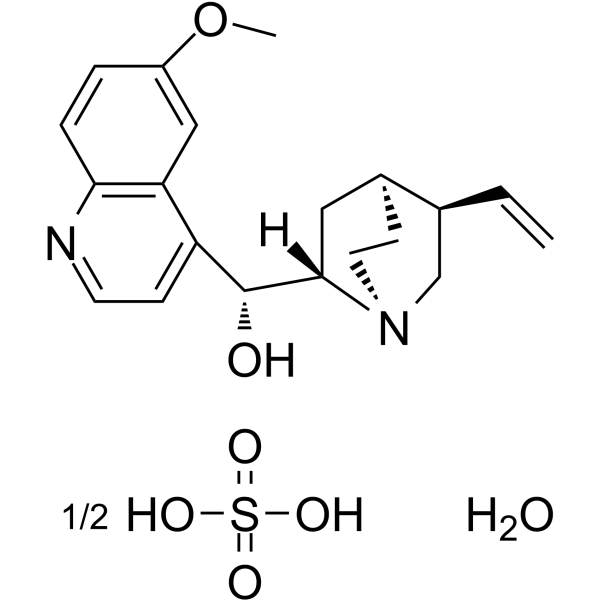
Quinine hemisulfate hydrate is an orally active alkaloid extracted from cinchona bark, possessing various biological activities including antimalarial, antidengue virus (DENV), and anticancer properties. Quinine hemisulfate hydrate acts as a potassium channel inhibitor that suppresses the +100 mV current of MT mSlo3 (KCa5.1) channels induced by voltage pulses, with an IC50 value of 169 μM. Quinine hemisulfate hydrate serves as a fluorescence standard reference substance with fluorescence spectrum calibration and validation activity .
loading...
    loading...
1
1 Cited Publications
Cat. No.: HY-141749B
CAS No.: 144750-42-5
Pureté:  99.50%
Synonyms: CLPM hydrochloride; SR 26334 hydrochloride
Target:  

Drug Metabolite

Domaines de recherche:  

Cardiovascular Disease

Clopidogrel carboxylic acid (CLPM) hydrochloride is an inactive metabolite of the widely used antiplatelet medication clopidogrel, which serves as a reference standard for quantitative analysis of clopidogrel metabolism. Clopidogrel carboxylic acid hydrochloride has been shown to represent approximately 85% of circulating clopidogrel, hydrolyzed from the active form by esterases. Clopidogrel carboxylic acid hydrochloride plays a crucial role in assessing the pharmacokinetics and bioavailability of clopidogrel in various clinical and research settings.
loading...
    loading...
Cat. No.: HY-148676
CAS No.: 2440018-29-9
Pureté:  96.22%
Synonyms: DS-1594a; Menin-MLL inhibitor 26
Domaines de recherche:  

Cancer

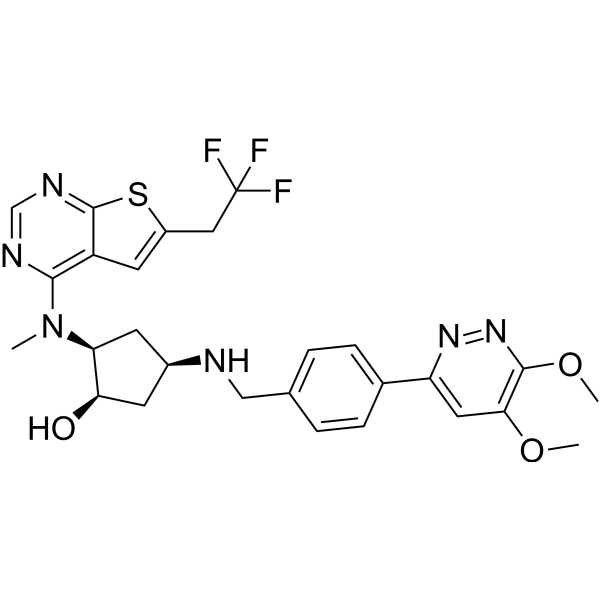
Emilumenib (Menin-MLL inhibitor 26) is an orally active Menin-MLL inhibitor. Emilumenib also is an active reference. Emilumenib can inhibits cell growth. Emilumenib can be used for the research of leukemia .
loading...
    loading...
Cat. No.: HY-148436
CAS No.: 2166376-64-1
Pureté:  98.99%
Domaines de recherche:  

Inflammation/Immunology

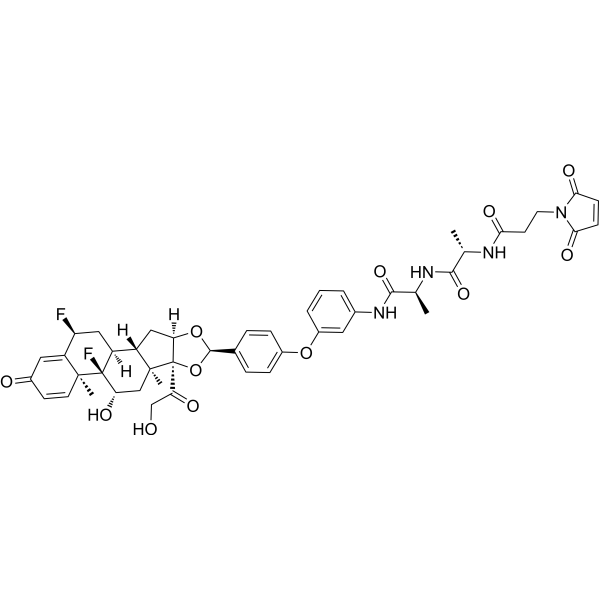
Glucocorticoid receptor agonist-2 Ala-Ala-Mal (compound 79) can be used to synthesize anti-inflammatory ADC molecules. Glucocorticoid receptor agonist-2 is an active reference for ABBV-3373 .
loading...
    loading...
Cat. No.: HY-148435
CAS No.: 2166378-92-1
Pureté:  99.65%
Domaines de recherche:  

Inflammation/Immunology

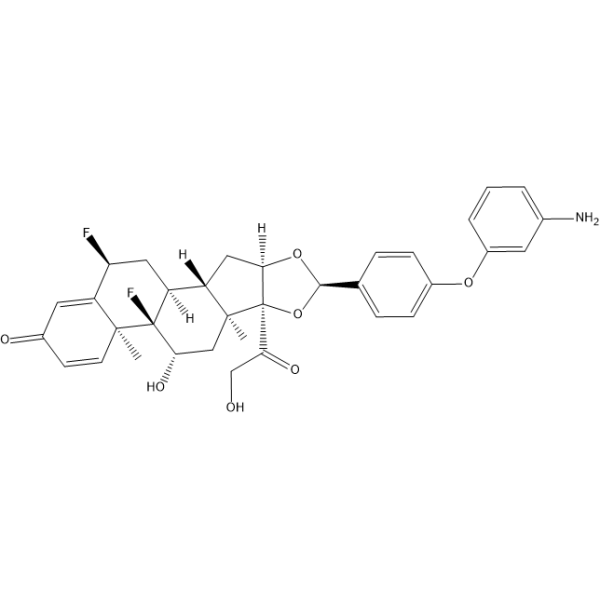
Glucocorticoid receptor agonist-2 (compound 21) is an glucocorticoid receptor agonist with an IC50 value of 6.6 nM. Glucocorticoid receptor agonist-2 can be used to synthesize anti-inflammatory ADC molecules. Glucocorticoid receptor agonist-2 is an active reference of ABBV-3373 .
loading...
    loading...
Cat. No.: HY-Y0344H
CAS No.: 7647-14-5
Synonyms: Halite (Pharmaceutical primary standard, USP)
Sodium chloride, United States Pharmacopeia (USP) Reference Standard is an orally active salt. Sodium chloride, United States Pharmacopeia (USP) Reference Standard induces the expression of ATP1A1. Sodium chloride, for cell culture induces the pro-inflammatory cytokines IL-2, TNFα, IL-9 and several chemokines. Sodium chloride, United States Pharmacopeia (USP) Reference Standard enhances the anti-tumor activities of Digoxin (HY-B1049) against small cell lung cancer. Sodium chloride, United States Pharmacopeia (USP) Reference Standard drives autoimmune disease by the induction of pathogenic Th17 cells .
loading...
    loading...
Cat. No.: HY-W027553R
CAS No.: 62732-44-9
Synonyms: NIK-247 free base (Standard); Amiridine free base (Standard)
Ipidacrine (Standard) is the analytical reference standard of Ipidacrine. This product is used for research and analytical applications. Ipidacrine is orally active and blood-brain-barrier-penetrant AChE and BuChE inhibitors with IC50 values of 1 μM and 1.9 μM, respectively, which is also a partial agonist of M2-cholinergic receptors and a reversible cholinesterase inhibitor. Ipidacrine has a stimulating effect on neuromuscular transmission and excitation along the nerve fibres with a moderately anti-pain effect. Ipidacrine is an aminopyridines and is structurally similar to Tacrine (HY-111338). Ipidacrine is effective in various amnesia models, improves erectile function and inhibits K + and Na +-channels in the neuronal membrane in diabetic rats. Ipidacrine is promising for research of Alzheimer’s disease, ischaemic stroke, idiopathic neuropathy of the facial nerve, diabetes mellitus-induced erectile dysfunction and other deficits in central or peripheral cholinergic deseases .
loading...
    loading...
Cat. No.: HY-N15422
CAS No.: 18432-16-1
Glucoputranjivin (compound 1) is a reference compound that can be used for qualitative and quantitative determinations of active compounds in SO .
loading...
    loading...
Cat. No.: HY-W009686F
CAS No.: 1360812-71-0
Target:  

Fluorescent Dye

Domaines de recherche:  

Others

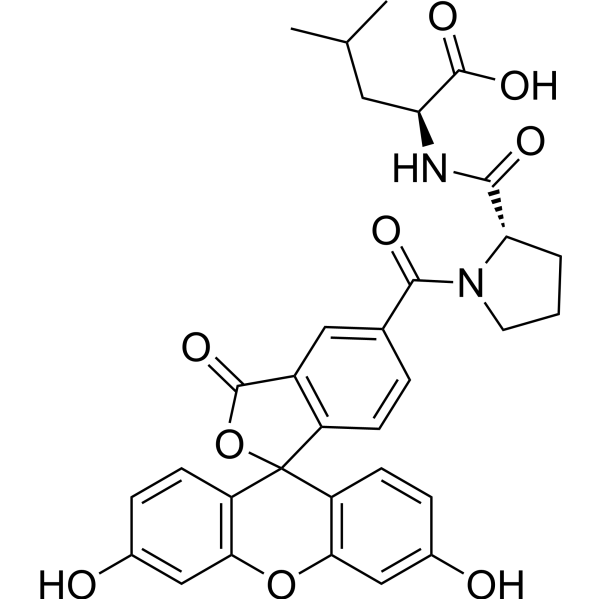
5-FAM-Pro-Leu-OH is a biological active peptide. (Used as MMP fluorescent reference standard)
loading...
    loading...
Cat. No.: HY-B1580B
CAS No.: 4075-81-4
Synonyms: Bioban-C (Pharmaceutical primary standard, USP)
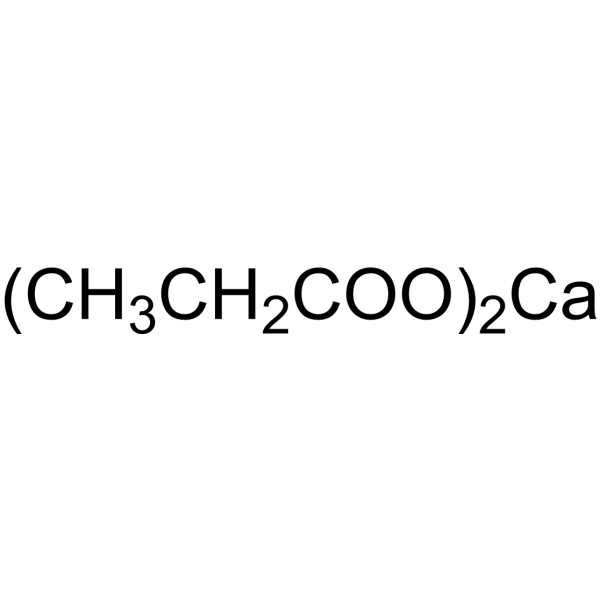
Calcium propionate, United States Pharmacopeia (USP) Reference Standard is an orally active auxiliary agent for preventing milk fever and improving the health of dairy cows. Calcium propionate can be used for research on dairy cow milk fever and subclinical hypocalcemia. Calcium propionate is a reference standard grade of the United States Pharmacopeia (USP) and a primary pharmaceutical standard .
loading...
    loading...
Cat. No.: HY-169374
CAS No.: 1373410-40-2
Domaines de recherche:  

Cancer

Naproxen Gilteritinib is the active reference substance of Gilteritinib (HY-12432). Gilteritinib is the target protein ligand of PROTAC degrader LWY713 (HY-157213) .
loading...
    loading...
Cat. No.: HY-W087988R
CAS No.: 584-02-1
3-Pentanol (Standard) is an analytical reference standard of 3-Pentanol. 3-Pentanol is an active organic compound produced by plants and is a component of insect-released pheromones. 3-Pentanol can trigger plant immunity against microbial pathogens and pests in crops by activating the SA and JA signaling pathways.
loading...
    loading...
Cat. No.: HY-123090
CAS No.: 872506-67-7
Target:  

11β-HSD

Domaines de recherche:  

Metabolic Disease

11β-HSD1-IN-12 is a 11β-HSD1 inhibitor (Example 21 in reference patent). 11β-HSD1 regenerates active glucocorticoids from inactive forms and is important in regulating intracellular glucocorticoid concentration. 11β-HSD1-IN-12 can be used in the research of obesity and metabolic syndrome .
loading...
    loading...
Cat. No.: HY-117660R
CAS No.: 154-21-2
Synonyms: U-10149 (Standard)
Lincomycin (U-10149) (Standard) is the analytical reference standard of Lincomycin (HY-117660). This product is used for research and analytical applications. Lincomycin is an orally active lincosamide antibiotic. Lincomycin binds to the ribosomes of Gram-positive bacteria to inhibit protein synthesis. Lincomycin can inhibit chloroplast translation, disrupt chloroplast integrity, and activate chloroplast-to-nucleus retrograde signaling in Arabidopsis thaliana seedlings. Lincomycin induces alterations in lipid profiles and liver injury, disrupts blood glucose and insulin levels, and increases growth rate in mice.
loading...
    loading...
Cat. No.: HY-B0428BR
CAS No.: 78712-43-3
Synonyms: OKY-046 hydrochloride (Standard)
Ozagrel hydrochloride (Standard) is the analytical reference standard of Ozagrel hydrochloride (HY-B0428B). Ozagrel hydrochloride (OKY-046 hydrochloride) is a high selective and orally active thromboxane A2 (TXA2) synthase inhibitor with an IC50 of 11 nM. Ozagrel hydrochloride exerts anti-platelet aggregation, vasodilation and anti-inflammatory effects by inhibiting the production of TXA2 and increasing the production of prostacyclin (PGI2). Ozagrel hydrochloride can be used for the study of ischemic stroke, asthma and thromboembolic diseases .
loading...
    loading...
Cat. No.: HY-109173R
CAS No.: 1948232-63-0
Synonyms: BAY 1902607 (Standard)
Domaines de recherche:  

Neurological Disease

Filapixant (Standard) is the analytical standard of Filapixant (HY-109173). This product is intended for research and analytical applications. Filapixant is a purinoreceptor antagonist extracted from patent WO2016091776A1, example 348. Filapixant is the active reference substance of Eliapixant .
loading...
    loading...
Cat. No.: HY-182638
CAS No.: 1829530-11-1
Domaines de recherche:  

Neurological Disease

CPL500036 is an orally active, blood-brain barrier permeable phosphodiesterase 10A (PDE10A) inhibitor with IC50 values of 1 nM (Reference 1) and 35 nM (Reference 2). CPL500036 acts as a negative allosteric modulator of the M2 muscarinic receptor with an IC50 of 9.2 μM. CPL500036 alters cyclic nucleotide levels in basal ganglia circuits, inhibits the hydrolysis of cAMP and cGMP, and suppresses hERG potassium channel tail currents. CPL500036 induces catalepsy in rats and reverses injury-induced contralateral forelimb use impairment. CPL500036 can be used in research related to schizophrenia, Parkinson's disease, and levodopa-induced dyskinesia .
loading...
    loading...
Cat. No.: HY-L925
9,376 compounds

Cysteine proteases (CPs), a key enzyme family regulating physiological metabolism and mediating pathological processes (such as abnormal bone resorption, tumour invasion, and pathogen infection), represent a core therapeutic target for developing specific inhibitors in disease intervention. Currently reported CP inhibitors primarily achieve their inhibitory function by precisely binding to CP active pockets (e.g., S1-S4 non-primed regions or S1'-S2' primed regions) and forming covalent/non-covalent interactions with the active site cysteine residues, providing clear structural references for the development of novel inhibitors.

This compound library, designed based on the core strategy of "similarity-based known active structures", contains over 200 cysteine protease inhibitors. Leveraging AI-driven molecular screening technology, it retains the critical pharmacological and shape features of reported CP inhibitors, serving as a specialized tool for efficiently discovering novel cysteine protease inhibitors.

Cat. No.: HY-L262
4,207 compounds

Natural products are small-molecule compounds produced in nature, derived from animals, plants, and microorganisms, including both primary and secondary metabolites. With their structural diversity and favorable biological activities, natural products have long been an important source for drug discovery. Traditional natural product research has often focused on isolating single active components, whereas metabolomics emphasizes a holistic approach—comprehensively detecting all metabolites in a sample and systematically capturing both known and unknown constituents. Consequently, mass spectrometry‑based metabolomics databases have become a key technological support for screening known components and identifying unknown compounds from natural sources.

MCE Mass Spectrometry Natural Product Library contains 4,207 natural products, covering multiple structural classes, including sugars and glycosides, phenylpropanoids, quinones, flavonoids, terpenoids, etc. All compounds have undergone rigorous quality control by LC/MS and other analytical methods, and can serve as high‑purity reference standards for metabolite identification.

Cat. No.: HY-L939
10855 compounds

The rising prevalence of multidrug-resistant and extensively drug-resistant bacteria, combined with emerging resistance mechanisms and the limitations of existing antibacterial drugs, creates an urgent need for novel antibacterial agents. Antibacterial compound libraries serve as key tools to support antibacterial drug screening and development.

This library features structurally diverse compounds, including small-molecule scaffolds and natural product derivatives, and exhibits diverse antibacterial mechanisms of action. For example, these compounds exert antibacterial effects by disrupting bacterial cell structures, interfering with bacterial metabolic processes, and inhibiting nucleic acid synthesis. The derivation of scaffold structures enhances their activity against drug-resistant bacteria and their selectivity against different types of bacteria. This library can be used for the high-throughput screening of novel antibacterial drug candidates and the identification of potent compounds against drug-resistant and multidrug-resistant bacteria. Additionally, it provides a reference for compound structural modification, enabling further in-depth research on the structure-activity relationships(SARs) of antibacterial drugs. It can also be applied to the exploration of bacterial resistance mechanisms and reversal strategies, as well as the discovery of antibacterial molecules that inhibit efflux pumps and restore drug susceptibility.

The library contains 10855 structurally diverse drug-like compounds. Its core compound sources include analogs of known antifungal active moleculeswith a similarity score of ≥ 0.6. MCE has collected more than 1900 antibacterial molecules. All screened compounds conform to lead-like physicochemical properties, providing valuable support for the research and development of novel antibacterial drugs.

  • 1

