



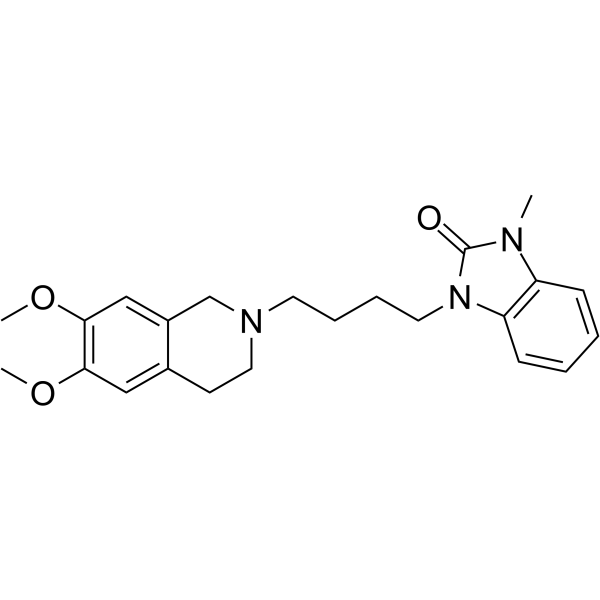
CM398

Based on 1 Customer Validation
CM398 is a highly selective, orally active Sigma-2 receptor ligand with a Ki value of 0.43 nM. CM398 ameliorates age-related macular degeneration. CM398 exerts analgesic effects on visceral pain, inflammatory pain and neuropathic pain. CM398 can be used in research related to age-related macular degeneration, neuropathic pain and inflammatory pain.
For research use only. We do not sell to patients.
- Purity : 99.85%
- CAS No.: 1121931-70-1
- Formula: C23H29N3O3
- Molecular Weight:395.49
-
Storage:Pure form -20°C, 3 years , 4°C, 2 years ; In solvent -80°C, 6 months , -20°C, 1 month

To place orders, for customer services and technical support, please contact: MedChemExpress USA
Tel: 609-228-6898 E-mail: [email protected] [email protected]


-
 Biological Activity
-
Chemical Information
-
Solvent & Solubility
- Protocols
- Purity & Documentation
- References
-
 Help & FAQs


-
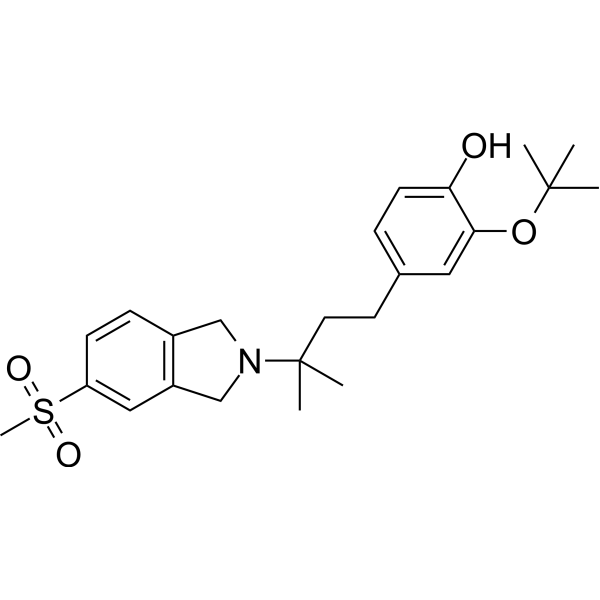
HY-111669
ZervimesineSigma-2 Receptor Antagonist -
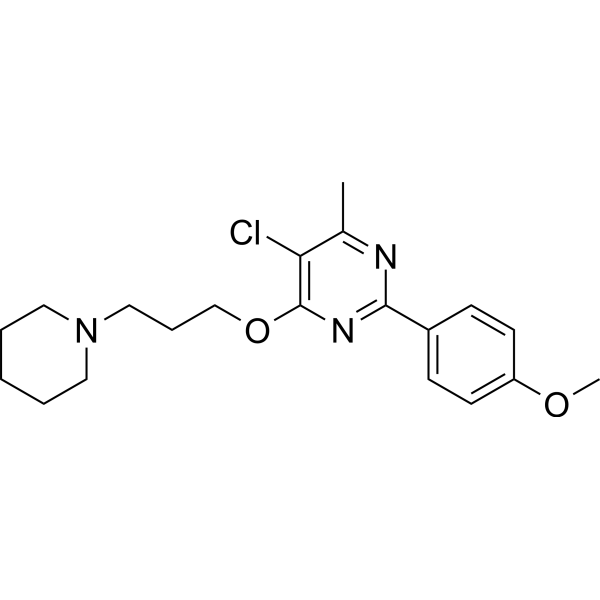
HY-125819
Sigma-1 receptor antagonist 2σ1 R Antagonist -
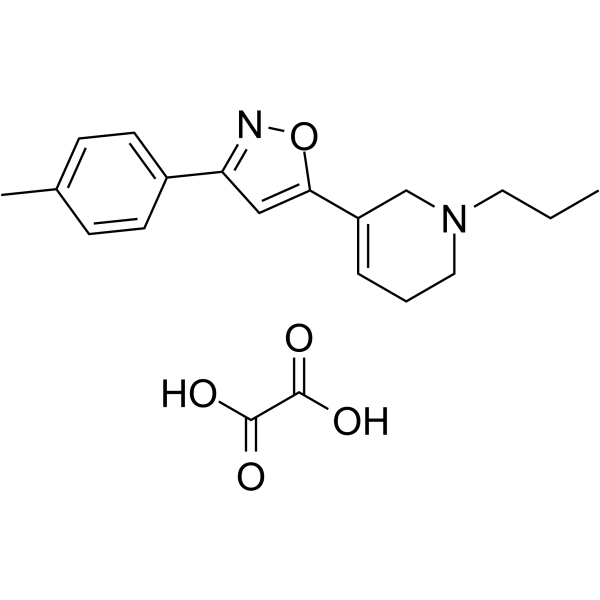
HY-108512A
PD 144418 oxalate -
HY-16996A
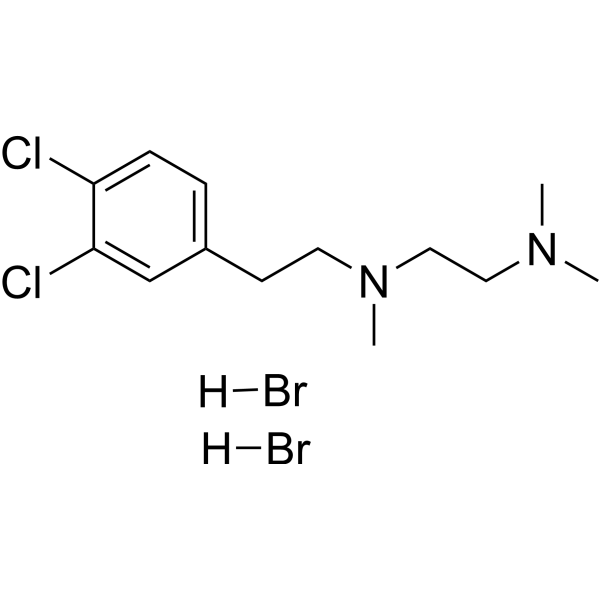
BD-1047 dihydrobromideSigma-1 Receptor Antagonist -
HY-18101A
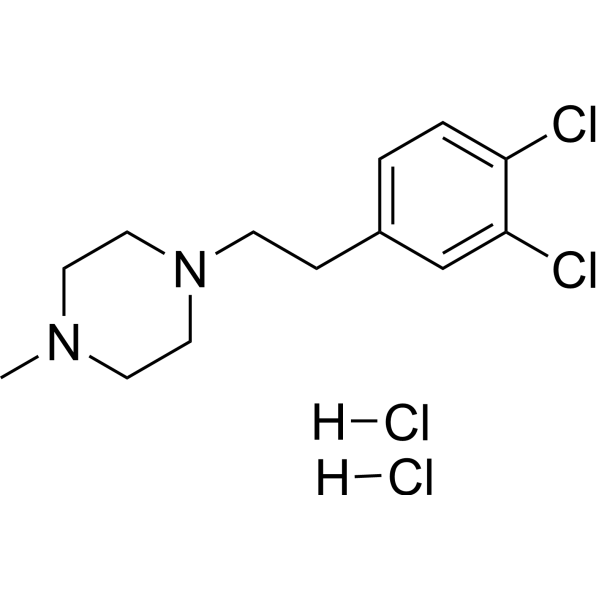
BD-1063 dihydrochlorideσ-1R Antagonist -
HY-13510
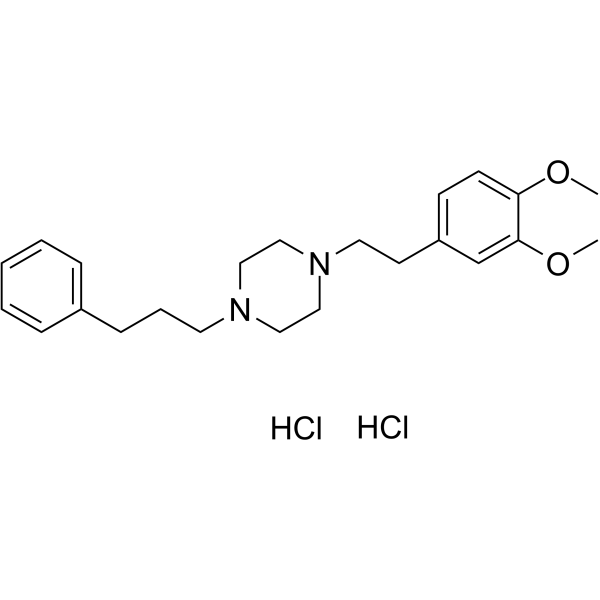
Cutamesine dihydrochlorideσ1R Agonist -
HY-101864
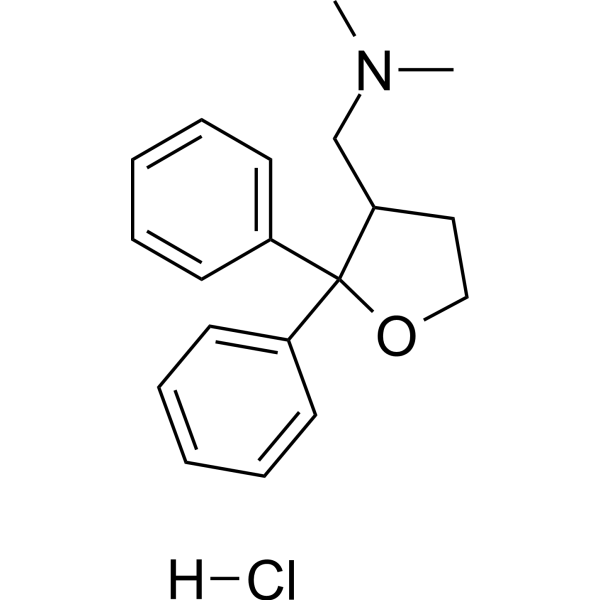
Blarcamesine hydrochlorideSigma-1 Receptor Agonist -
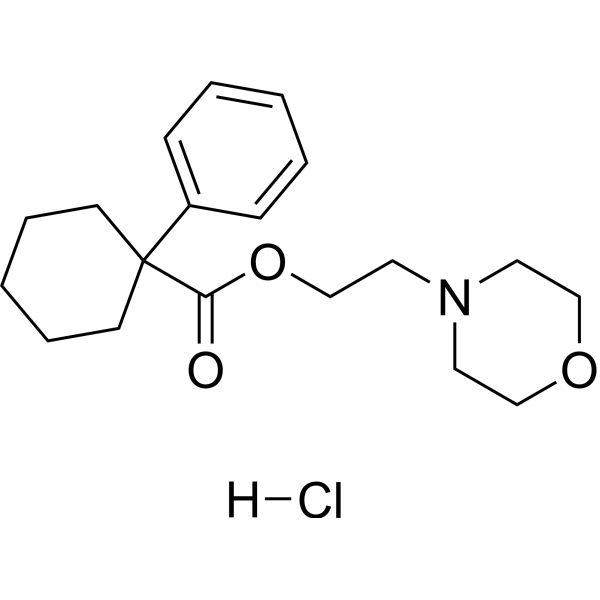
HY-18100A
PRE-084 hydrochlorideS1R Agonist -
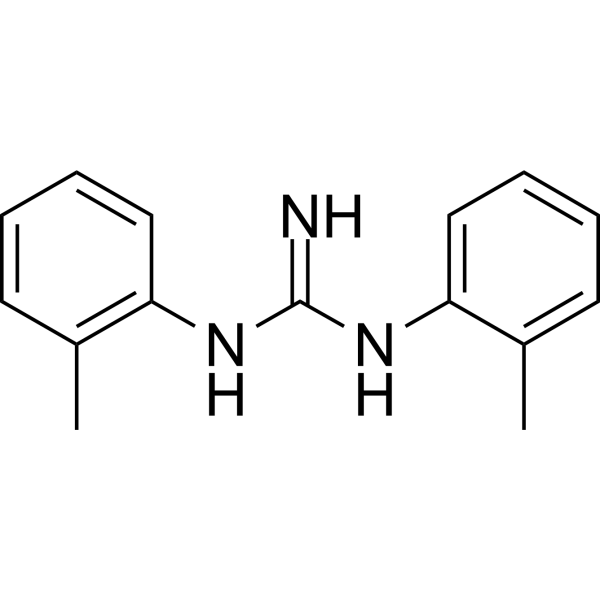
HY-14218
DitolylguanidineSigma Receptor Agonist -
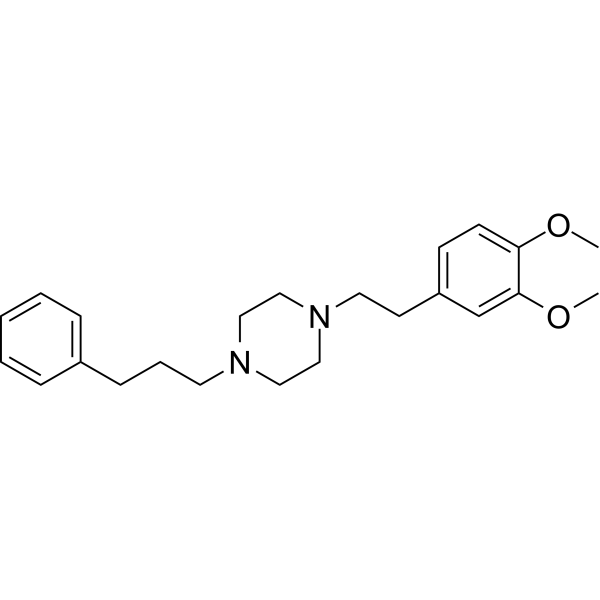
HY-14813
Cutamesineσ1R Agonist -

HY-14218R
Ditolylguanidine (Standard)Sigma Receptor Agonist -
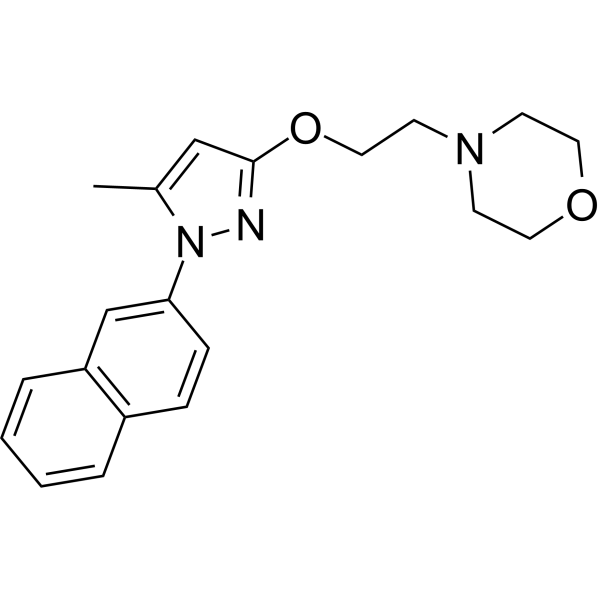
HY-18099
S1RAσ1R Antagonist
All Sigma Receptor Isoforms
More

Biological Activity
Description
IC50 & Target
[1]|
Sigma 2 Receptor 0.43 nM (Ki) |
In Vitro
CM398 protects the retinal pigment epithelial cell line ARPE-19 against paraquat-induced cytotoxic damage[1].
CM398 exhibits highly selective sub-nanomolar binding affinity (Ki = 0.43 nM) for sigma-2 receptors in rat brain homogenates, shows over 1000-fold selectivity over sigma-1 receptors, and has extremely low affinity for most non-sigma neurotransmitter receptors and transporters[3].
CM398 undergoes rapid phase I metabolism in rat liver microsomes, with an elimination half-life of 0.10 h[3].
CM398 (1-10 μM; 30 min) binds highly to rat plasma proteins, with an average binding rate of 93.8%[3].
MedChemExpress (MCE) has not independently confirmed the accuracy of these methods. They are for reference only.
Parmacokinetics
In Vivo
CM398 (3-45 mg/kg; i.p.; single administration) produces dose-dependent analgesic effects in the mouse acetic acid writhing visceral pain model, with an i.p. ED50 of 14.7 mg/kg[2].
CM398 (0.01-30 mg/kg; intraperitoneal injection; single administration) exerts potent, dose-dependent analgesic effects in the mouse formalin inflammatory pain model, with an ED50 of 0.86 mg/kg[2].
CM398 (30 mg/kg; i.p.; single administration) exerts no significant analgesic effect in the acute thermal pain model of mouse tail-flick test at 55°C[2].
CM398 (i.p.; single administration at doses of 10-45 mg/kg) produces time- and dose-dependent anti-allodynic effects in the mouse CCI neuropathic pain model. The efficacy of i.p. doses of 30 mg/kg and 45 mg/kg is comparable to that of gabapentin, and the duration of action is longer than that of CM-304[2].
CM398 (i.p.; single administration, dose range 0.23-23.2 μmol/kg) exerts significant dose-dependent analgesic effects in mouse models of inflammatory pain, with statistically significant reductions in paw-licking duration observed at doses of 2.32 μmol/kg and 23.2 μmol/kg[3].
MedChemExpress (MCE) has not independently confirmed the accuracy of these methods. They are for reference only.
-
Animal Model:Abca4−/−Rdh8−/− (male, 8-10 weeks old, C57BL/6J × 129S1/SvImJ mixed background, illumination-induced retinal damage)[1]
-
Dosage:3 mg/kg
-
Administration:i.p.; single injection
-
Result:Restored outer nuclear layer (ONL) thickness of photoreceptors to near-basal levels compared to vehicle-treated illuminated mice.
Reduced illumination-induced retinal autofluorescent granule accumulation from 589.3 in vehicle-treated mice to fewer than 5.0.
Confirmed protective effect on photoreceptor layers via retinal histology.
-
Animal Model:C57BL/6J (male, 8-12 weeks of age)[2]
-
Dosage:3 mg/kg; 10 mg/kg; 30 mg/kg; 45 mg/kg
-
Administration:i.p.; single dose
-
Result:Attenuated nociception in a dose-dependent manner, with an ED50 of 14.7 mg/kg, i.p.
-
Animal Model:C57BL/6J (male, 8-12 weeks of age)[2]
-
Dosage:0.01 mg/kg; 0.3 mg/kg; 1 mg/kg; 3 mg/kg; 10 mg/kg; 30 mg/kg
-
Administration:i.p.; single dose
-
Result:Produced significant dose-dependent antinociception (F(5,36) = 9.55, p < 0.001), with an ED50 of 0.86 mg/kg, i.p.
Resulted in significantly less paw licking compared to saline controls at doses of 3 mg/kg and 30 mg/kg, i.p. (p ≤ 0.005 or better).
-
Animal Model:CD-1 (male, 8-12 weeks of age)[2]
-
Dosage:10 mg/kg; 30 mg/kg; 45 mg/kg
-
Administration:i.p.; single dose
-
Result:Attenuated mechanical allodynia in a time- and dose-dependent manner (factor: treatment: F(5,231) = 34.98, p < 0.001).
Produced anti-allodynic effects equivalent to gabapentin (50 mg/kg, i.p.) at all time points at doses of 30 mg/kg and 45 mg/kg, i.p. (p > 0.5 and p > 0.7, respectively).
Showed longer-lasting effects than CM-304, with significant differences from vehicle control still present at 80 minutes post-administration for 30 mg/kg (p < 0.03) and 45 mg/kg (p < 0.0001) doses.
-
Animal Model:CD-1 (10-week-old male)[3]
-
Dosage:0.23 μmol/kg; 2.32 μmol/kg; 23.2 μmol/kg
-
Administration:i.p.; single dose
-
Result:Produced significant dose-dependent reductions in summed paw-licking duration compared to vehicle control (F(3, 24) = 7.66, p = 0.0009).


Chemical Information
-
CAS No. 1121931-70-1
-
Appearance Liquid (Density: 1.166 g/cm3)
-
Molecular Weight 395.49
-
Formula C23H29N3O3
-
Color Light yellow to brown
-
SMILES
O=C1N(C)C2=C(N1CCCCN3CC4=CC(OC)=C(C=C4CC3)OC)C=CC=C2
-
Shipping
Room temperature in continental US; may vary elsewhere.
-
Storage
Pure form -20°C 3 years 4°C 2 years In solvent -80°C 6 months -20°C 1 month


Solvent & Solubility
In Vitro:
DMSO : 100 mg/mL (252.85 mM; Need ultrasonic; Hygroscopic DMSO has a significant impact on the solubility of product, please use newly opened DMSO)
Please refer to the solubility information to select the appropriate solvent. Once prepared, please aliquot and store the solution to prevent product inactivation from repeated freeze-thaw cycles.
Storage method and period of stock solution: -80°C, 6 months; -20°C, 1 month. When stored at -80°C, please use it within 6 months. When stored at -20°C, please use it within 1 month.
Please refer to the solubility information to select the appropriate solvent. Once prepared, please aliquot and store the solution to prevent product inactivation from repeated freeze-thaw cycles.
Storage method and period of stock solution: -80°C, 6 months; -20°C, 1 month. When stored at -80°C, please use it within 6 months. When stored at -20°C, please use it within 1 month.
Concentration (start) × Volume (start) = Concentration (final) × Volume (final)
In Vivo:
Select the appropriate dissolution method based on your experimental animal and administration route.
- For the following dissolution methods, please ensure to first prepare a clear stock solution using an In Vitro approach and then sequentially add co-solvents:
- To ensure reliable experimental results, the clarified stock solution can be appropriately stored based on storage conditions. As for the working solution for In Vivo experiments, it is recommended to prepare freshly and use it on the same day.
- The percentages shown for the solvents indicate their volumetric ratio in the final prepared solution. If precipitation or phase separation occurs during preparation, heat and/or sonication can be used to aid dissolution.
Add each solvent one by one: 10% DMSO 40% PEG300 5% Tween-80 45% Saline
Solubility: ≥ 2.5 mg/mL (6.32 mM); Clear solution
This protocol yields a clear solution of ≥ 2.5 mg/mL (saturation unknown).
Taking 1 mL working solution as an example, add 100 μL DMSO stock solution (25.0 mg/mL) to 400 μL PEG300, and mix evenly; then add 50 μL Tween-80 and mix evenly; then add 450 μL Saline to adjust the volume to 1 mL.
Preparation of Saline: Dissolve 0.9 g sodium chloride in ddH₂O and dilute to 100 mL to obtain a clear Saline solution.
Add each solvent one by one: 10% DMSO 90% (20% SBE-β-CD in Saline)
Solubility: ≥ 2.5 mg/mL (6.32 mM); Clear solution
This protocol yields a clear solution of ≥ 2.5 mg/mL (saturation unknown).
Taking 1 mL working solution as an example, add 100 μL DMSO stock solution (25.0 mg/mL) to 900 μL 20% SBE-β-CD in Saline, and mix evenly.
Preparation of 20% SBE-β-CD in Saline (4°C, storage for one week): 2 g SBE-β-CD powder is dissolved in 10 mL Saline, completely dissolve until clear.
In Vivo Dissolution Calculator
Please enter the basic information of animal experiments:
-
-
-
-
Recommended: Prepare an additional quantity of animals to account for potential losses during experiments.
Please enter your animal formula composition:
-
%DMSO +
Recommended: Keep the proportion of DMSO in working solution below 2% if your animal is weak.
-
%+
-
+%Tween-80 + +
-
%Saline +
The co-solvents required include: DMSO, . All of co-solvents are available by MedChemExpress (MCE). , Tween 80. All of co-solvents are available by MedChemExpress (MCE).
Working solution concentration: 0.22 mg/mL
Method for preparing stock solution: mg drug dissolved in μL DMSO. Stock solution concentration: mg/mL.
1. Take μL DMSO stock solution;
2. Add μL .
μL , mix evenly;
3. Then add μL Tween 80, mix evenly;
4. Then add μL
Please ensure that the stock solution in the first step is dissolved to a clear state, and add co-solvents in sequence. You can use ultrasonic heating (ultrasonic cleaner, recommended frequency 20-40 kHz), vortexing, etc. to assist dissolution.


Purity & Documentation
-
Data Sheet (279 KB)
-
SDS (251 KB)
- English - EN (251 KB)
- Français - FR (251 KB)
- Deutsch - DE (251 KB)
- Norwegian - NO (251 KB)
- Español - ES (251 KB)
- Swedish - SV (251 KB)
- Italian - IT (251 KB)
- Korean - KR (251 KB)
- Portuguese - PT (251 KB)
-
Handling Instructions (2659 KB)
References
[1]. Mavlyutov TA, et al. Retinal Photoreceptor Protection in an AMD-Related Mouse Model by Selective Sigma-1 or Sigma-2 Receptor Modulation. Genes (Basel). 2022;13(12):2386. Published 2022 Dec 16. [Content Brief]
[2]. Wilson LL, et al. Characterization of CM-398, a Novel Selective Sigma-2 Receptor Ligand, as a Potential Therapeutic for Neuropathic Pain. Molecules. 2022;27(11):3617. Published 2022 Jun 4. [Content Brief]


Complete Stock Solution Preparation Table
Please refer to the solubility information to select the appropriate solvent. Once prepared, please aliquot and store the solution to prevent product inactivation from repeated freeze-thaw cycles.
Storage method and period of stock solution: -80°C, 6 months; -20°C, 1 month. When stored at -80°C, please use it within 6 months. When stored at -20°C, please use it within 1 month.
| Optional Solvent | Concentration Solvent Mass | 1 mg | 5 mg | 10 mg | 25 mg |
|---|---|---|---|---|---|
| DMSO | 1 mM | 2.5285 mL | 12.6425 mL | 25.2851 mL | 63.2127 mL |
| 5 mM | 0.5057 mL | 2.5285 mL | 5.0570 mL | 12.6425 mL | |
| 10 mM | 0.2529 mL | 1.2643 mL | 2.5285 mL | 6.3213 mL | |
| 15 mM | 0.1686 mL | 0.8428 mL | 1.6857 mL | 4.2142 mL | |
| 20 mM | 0.1264 mL | 0.6321 mL | 1.2643 mL | 3.1606 mL | |
| 25 mM | 0.1011 mL | 0.5057 mL | 1.0114 mL | 2.5285 mL | |
| 30 mM | 0.0843 mL | 0.4214 mL | 0.8428 mL | 2.1071 mL | |
| 40 mM | 0.0632 mL | 0.3161 mL | 0.6321 mL | 1.5803 mL | |
| 50 mM | 0.0506 mL | 0.2529 mL | 0.5057 mL | 1.2643 mL | |
| 60 mM | 0.0421 mL | 0.2107 mL | 0.4214 mL | 1.0535 mL | |
| 80 mM | 0.0316 mL | 0.1580 mL | 0.3161 mL | 0.7902 mL | |
| 100 mM | 0.0253 mL | 0.1264 mL | 0.2529 mL | 0.6321 mL |


CM398 Related Classifications
HY-145628 Related Classifications
 Powered by Bioz