



Vadimezan
Based on 83 publication(s) in Google Scholar
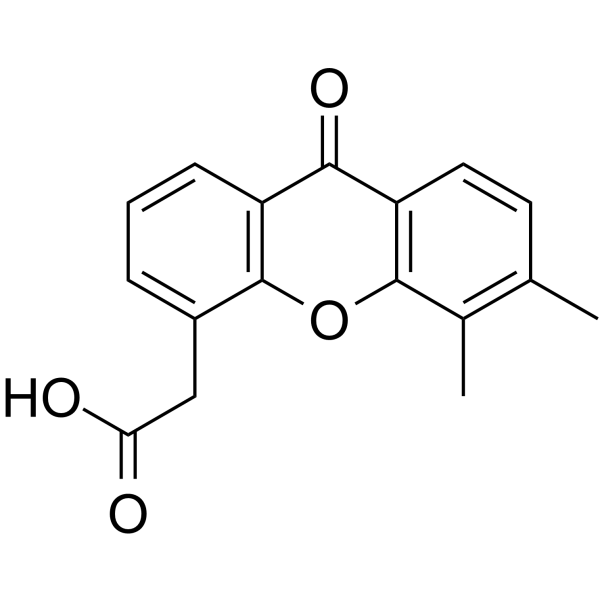
Vadimezan (DMXAA), the tumor vascular disrupting agent (tumor-VDA), is a murine agonist of the stimulator of interferon genes (STING) and also a potent inducer of type I IFNs and other cytokines. Vadimezan is unable to activate human STING. Vadimezan has anti-influenza virus H1N1-PR8 activities.
For research use only. We do not sell to patients.
- Purity : 99.93%
- CAS No.: 117570-53-3
- Formula: C17H14O4
- Molecular Weight:282.29
-
Storage:Powder -20°C, 3 years , 4°C, 2 years ; In solvent -80°C, 1 year , -20°C, 6 months

To place orders, for customer services and technical support, please contact: MedChemExpress USA
Tel: 609-228-6898 E-mail: [email protected] [email protected]


-
 Biological Activity
-
Chemical Information
-
Solvent & Solubility
- Purity & Documentation
- References
-
 Help & FAQs


-
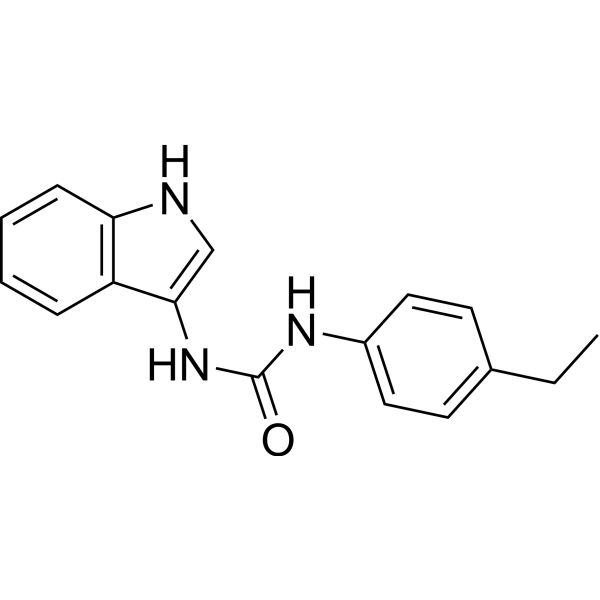
HY-112693
H-151STING Antagonist -
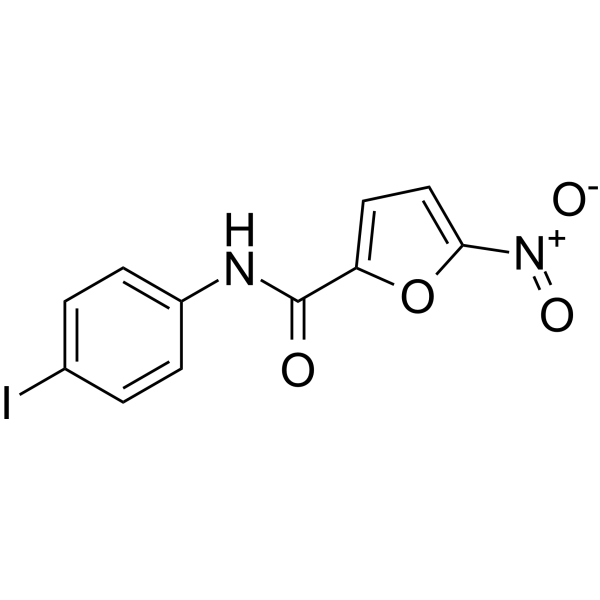
HY-112906
C-176STING Inhibitor -
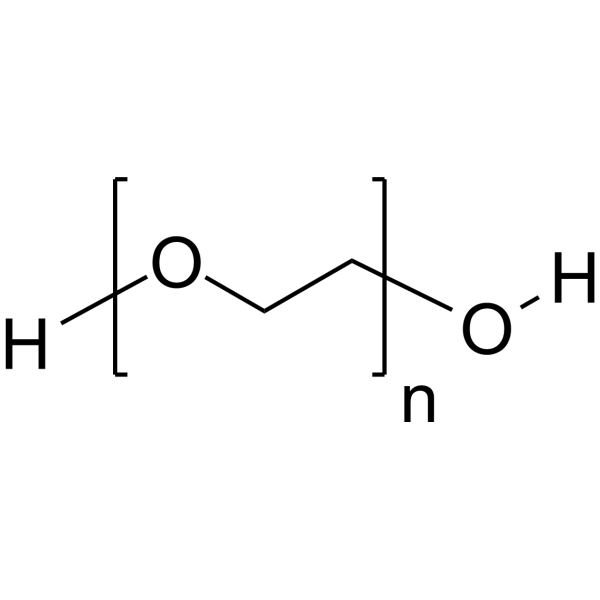
HY-Y0873
PEG300Neutral Polymer -
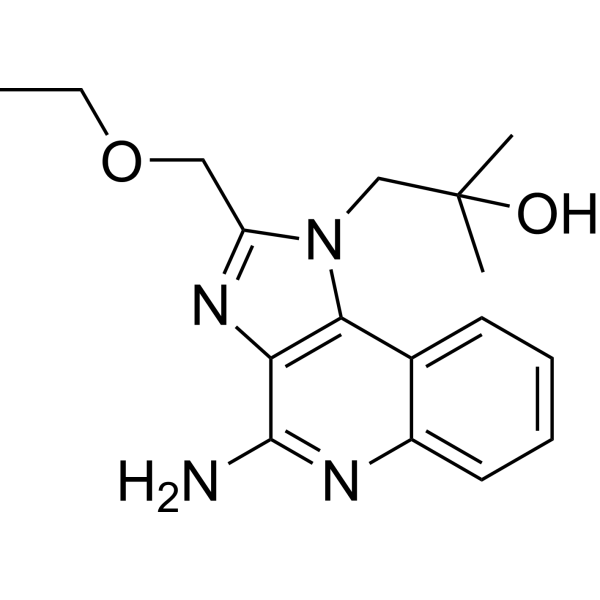
HY-13740
ResiquimodTLR7/8 Agonist -
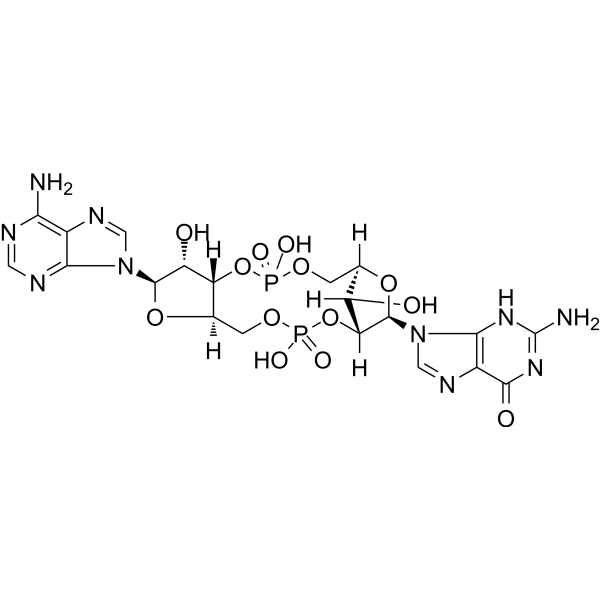
HY-100564
2',3'-cGAMPSTING Agonist -
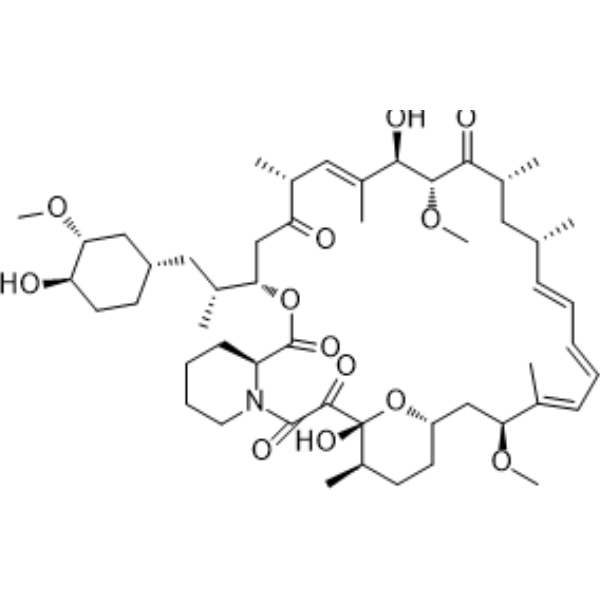
HY-10219
RapamycinmTOR Inhibitor -
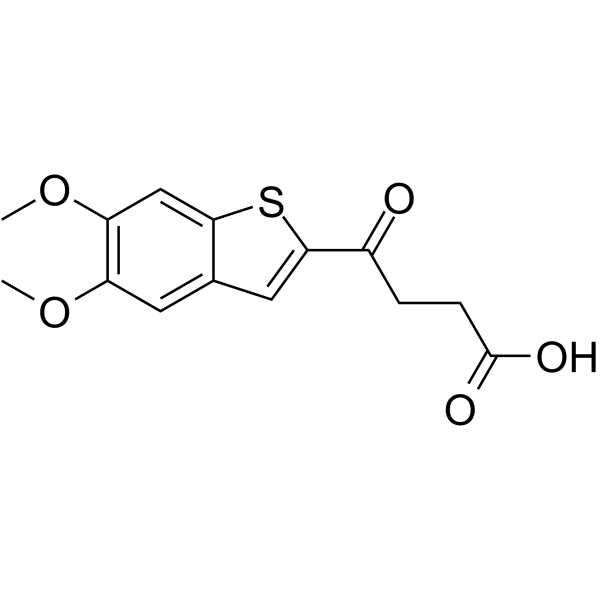
HY-136927
MSA-2STING Agonist -
HY-114180
RU.521cGAS Inhibitor -
HY-B0146
VerteporfinYAP Inhibitor -
HY-15763
ErastinFerroptosis Inducer -
HY-B0215
AcetylcysteineMucolytic Agent -
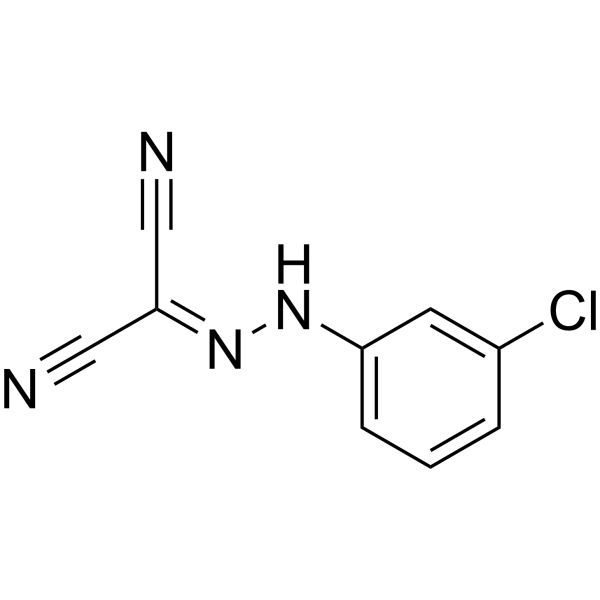
HY-100941
CCCPOXPHOS Uncoupler
Publications Citing Use of MedChemExpress (MCE) Vadimezan
More- Science. 2026 Feb 26;391(6788):eads4405. [Abstract]
- Immunity. 2026 Jul 13:S1074-7613(26)00261-X. [Abstract]
- Immunity. 2025 Apr 23:S1074-7613(25)00165-7. [Abstract]
- Immunity. 2024 Mar 12;57(3):513-527.e6. [Abstract]
- Gastroenterology. 2018 May;154(6):1822-1835.e2. [Abstract]
- Nat Cell Biol. 2025 Aug;27(8):1342-1356. [Abstract]
- Nat Cell Biol. 2023 May;25(5):726-739. [Abstract]
- Clin Mol Hepatol. 2024 Jul;30(3):515-538. [Abstract]
- ACS Nano. 2025 Aug 29. [Abstract]
- ACS Nano. 2025 Mar 4;19(8):8277-8293. [Abstract]
- ACS Nano. 2023 Jan 3. [Abstract]
- Neuron. 2023 Jan 18;111(2):236-255.e7. [Abstract]
- Gut Microbes. 2022 Jan-Dec;14(1):2119055. [Abstract]
- Acta Pharm Sin B. 2026 Apr 24.
- Adv Sci (Weinh). 2025 Apr;12(14):e2417686. [Abstract]
- Cell Rep Med. 2025 May 20;6(5):102135. [Abstract]
- Smart Med. 2026 Jun 4;5(3):e70038. [Abstract]
- Chem Eng J. 2024 Oct 1.
- Cell Death Dis. 2024 Mar 8;15(3):195. [Abstract]
- Cell Death Dis. 2022 Jul 28;13(7):653. [Abstract]
- Cell Death Dis. 2021 Jul 3;12(7):673. [Abstract]
- Cell Death Dis. 2020 Dec 11;11(12):1050. [Abstract]
- J Immunother Cancer. 2025 Nov 19;13(11):e012652. [Abstract]
- Cell Commun Signal. 2025 Feb 19;23(1):99. [Abstract]
- J Neuroinflammation. 2023 Apr 30;20(1):101. [Abstract]
- Chin Herb Med. 2024 Apr 30;16(3):422-434. [Abstract]
- Acta Pharmacol Sin. 2026 Apr 9. [Abstract]
- Cell Death Discov. 2025 Oct 24;11(1):483. [Abstract]
- J Orthop Translat. 2024 Jun 28:47:207-222. [Abstract]
- Sci China Chem. 63,534-545(2020).
- Cancer Immunol Res. 2023 May 3;11(5):583-599. [Abstract]
- Cell Rep. 2026 Mar 30;45(4):117179. [Abstract]
- Cell Rep. 2025 Sep 26;44(10):116350. [Abstract]
- Cell Rep. 2023 Feb 28;42(3):112145. [Abstract]
- Chin Med. 2022 Jan 5;17(1):7. [Abstract]
- Clin Sci. 2023 Mar 31;137(6):435-452. [Abstract]
- Pharmaceutics. 2023 Jun 8;15(6):1685. [Abstract]
- J Ethnopharmacol. 2026 Apr 6:360:121126. [Abstract]
- J Ethnopharmacol. 2025 Jan 10:336:118661. [Abstract]
- Eur J Med Chem. 2023 Mar 15:250:115184. [Abstract]
- CNS Neurosci Ther. 2026 Jan;32(1):e70753. [Abstract]
- Acta Neuropathol Commun. 2024 May 16;12(1):76. [Abstract]
- Biochem Pharmacol. 2022 Apr:198:114975. [Abstract]
- Life Sci. 2024 Jun 1:346:122648. [Abstract]
- Oncogenesis. 2026 Sep 28.
- J Inflamm (Lond). 2025 Nov 24;22(1):50. [Abstract]
- Cell Rep Methods. 2025 Jul 21;5(7):101106. [Abstract]
- Eur J Pharmacol. 2026 Jul 15:1030:179147.
- Int Immunopharmacol. 2026 May 1:176:116468. [Abstract]
- Int Immunopharmacol. 2025 May 27:156:114659. [Abstract]
- Int Immunopharmacol. 2024 Mar 30:130:111641. [Abstract]
- Inflamm Bowel Dis. 2022 Mar 30;28(4):572-585. [Abstract]
- Immunology. 2026 Mar 3. [Abstract]
- Exp Neurol. 2026 May 11;403:115804.
- Exp Neurol. 2024 Dec:382:114987. [Abstract]
- Neuropharmacology. 2026 Aug 15:294:110978. [Abstract]
- Neurochem Res. 2026 Jun 3;51(3):185. [Abstract]
- iScience. 2024 Feb 8;27(3):109173. [Abstract]
- Mol Divers. 2025 Dec 11. [Abstract]
- Biochim Biophys Acta Mol Cell Res. 2024 Dec;1871(8):119852. [Abstract]
- J Biol Chem. 2026 Jan 23;302(3):111204. [Abstract]
- Clin Immunol. 2023 May:250:109300. [Abstract]
- J Biol Chem. 2022 Aug;298(8):102231. [Abstract]
- Bioorg Med Chem. 2026 Jan 16:135:118571. [Abstract]
- Exp Cell Res. 2023 May 17;428(2):113630. [Abstract]
- J Integr Neurosci. 2026 Aug 26;25(8):50217.
- J Cancer Res Clin Oncol. 2025 Jan 25;151(2):48. [Abstract]
- Tissue Cell. 2024 Dec:91:102596. [Abstract]
- Immunobiology. 2023 Feb 8;228(2):152345. [Abstract]
- Hum Cell. 2025 Aug 13;38(5):142. [Abstract]
- Chembiochem. 2023 Feb 14;24(4):e202200680. [Abstract]
- World J Tradit Chin Med. 2025 Oct 28.
- World J Tradit Chin Med. 2025 April 17.
- Biochem Biophys Res Commun. 2024 May 14:708:149814. [Abstract]
- Biochem Biophys Res Commun. 2024 Apr 16:704:149661. [Abstract]
- Biochem Biophys Res Commun. 2023 Aug 6:668:82-89. [Abstract]
- Clin Exp Nephrol. 2024 May;28(5):375-390. [Abstract]
- Res Sq. 2026 Jun 3.
- Res Sq. 2024 Nov 10.
- Biomed Pharmacother. 2024 Jun:175:116794. [Abstract]
- bioRxiv. 2024 Jan 23.
- Research Square Print. October 13th, 2022.
- Research Square Preprint. 2021 May.
 Customer Validation & Images

-
IF
-
WB
-
WB
-
WB


Biological Activity
Description
IC50 & Target
Cellular Effect
|
Cell Line

|
Type | Value | Description | References |
|---|---|---|---|---|
| A549 | IC50 |
>100 μM
Compound: 6, Vadimezan
|
Cytotoxicity against human A549 cells after 48 hrs by MTT assay
Cytotoxicity against human A549 cells after 48 hrs by MTT assay
|
10.1039/C3MD00372H |
| A549 | IC50 |
207.6 μM
Compound: 1, DMXAA, Vadimezan
|
Indirect cytotoxicity against human A549 cells co-cultured with mouse RAW264.7 cells after 24 hrs by MTT assay
Indirect cytotoxicity against human A549 cells co-cultured with mouse RAW264.7 cells after 24 hrs by MTT assay
|
[PMID: 24518295] |
| A549 | IC50 |
345 μM
Compound: 1, DMXAA, Vadimezan
|
Cytotoxicity against human A549 cells after 24 hrs by MTT assay
Cytotoxicity against human A549 cells after 24 hrs by MTT assay
|
[PMID: 24518295] |
| A549 | IC50 |
91 μM
Compound: 1, DMXAA, Vadimezan
|
Indirect cytotoxicity against human A549 cells co-cultured with human PBMC after 24 hrs by MTT assay
Indirect cytotoxicity against human A549 cells co-cultured with human PBMC after 24 hrs by MTT assay
|
[PMID: 24518295] |
| Bel-7402 | IC50 |
>100 μM
Compound: 6, Vadimezan
|
Cytotoxicity against human Bel7402 cells after 48 hrs by MTT assay
Cytotoxicity against human Bel7402 cells after 48 hrs by MTT assay
|
10.1039/C3MD00372H |
| BeWo | IC50 |
>100 μM
Compound: 6, Vadimezan
|
Cytotoxicity against human Bewo cells after 48 hrs by MTT assay
Cytotoxicity against human Bewo cells after 48 hrs by MTT assay
|
10.1039/C3MD00372H |
| BGC-823 | IC50 |
>100 μM
Compound: 6, Vadimezan
|
Cytotoxicity against human BGC823 cells after 48 hrs by MTT assay
Cytotoxicity against human BGC823 cells after 48 hrs by MTT assay
|
10.1039/C3MD00372H |
| BJ | CC50 |
48.9 μM
Compound: 1, DMXAA, Vadimezan
|
Cytotoxicity against human BJ cells after 24 hrs by MTT assay
Cytotoxicity against human BJ cells after 24 hrs by MTT assay
|
[PMID: 24518295] |
| C13 | IC50 |
614.7 μM
Compound: DMXAA
|
In vitro cytotoxicity against C13 tumor cell line
In vitro cytotoxicity against C13 tumor cell line
|
[PMID: 12383019] |
| COLO 320 | IC50 |
39.5 μM
Compound: DMXAA
|
Antiproliferative activity against human COLO320 cells after 48 hrs by CCK8 assay
Antiproliferative activity against human COLO320 cells after 48 hrs by CCK8 assay
|
[PMID: 28376372] |
| H69AR | EC50 |
>100 μM
Compound: 4; DMXAA
|
Agonist activity at STING in human THP1 Dual cells assessed as IRF reporter activation incubated for 20 hrs by quanti-blue SEAP reporter gene assay
Agonist activity at STING in human THP1 Dual cells assessed as IRF reporter activation incubated for 20 hrs by quanti-blue SEAP reporter gene assay
|
[PMID: 35108011] |
| H69AR | EC50 |
>100 μM
Compound: 4; DMXAA
|
Agonist activity at STING in human THP1-Dual cells assessed as NF-kappaB reporter activation incubated for 20 hrs by quanti-blue SEAP reporter gene assay
Agonist activity at STING in human THP1-Dual cells assessed as NF-kappaB reporter activation incubated for 20 hrs by quanti-blue SEAP reporter gene assay
|
[PMID: 35108011] |
| HeLa | IC50 |
>100 μM
Compound: 6, Vadimezan
|
Cytotoxicity against human HeLa cells after 48 hrs by MTT assay
Cytotoxicity against human HeLa cells after 48 hrs by MTT assay
|
10.1039/C3MD00372H |
| HepG2 | IC50 |
100.2 μM
Compound: DMXAA
|
Antiproliferative activity against human HepG2 cells after 48 hrs by CCK8 assay
Antiproliferative activity against human HepG2 cells after 48 hrs by CCK8 assay
|
[PMID: 28376372] |
| HepG2 | IC50 |
100.2 μM
Compound: DMXAA
|
Growth inhibition of human HepG2 cells after 24 hrs by MTT assay
Growth inhibition of human HepG2 cells after 24 hrs by MTT assay
|
[PMID: 29609121] |
| HepG2 | IC50 |
100.2 μM
Compound: DMXAA; D
|
Antiproliferative activity against human HepG2 cells after 24 hrs by MTT assay
Antiproliferative activity against human HepG2 cells after 24 hrs by MTT assay
|
[PMID: 29129511] |
| HepG2 | IC50 |
21.25 μM
Compound: DMXAA; D
|
Antiproliferative activity against human HepG2 cells co-treated with pyranoxanthone at 1:1 molar ratio after 24 hrs by MTT assay
Antiproliferative activity against human HepG2 cells co-treated with pyranoxanthone at 1:1 molar ratio after 24 hrs by MTT assay
|
[PMID: 29129511] |
| HL-60 | IC50 |
>100 μM
Compound: 6, Vadimezan
|
Cytotoxicity against human HL60 cells after 48 hrs by MTT assay
Cytotoxicity against human HL60 cells after 48 hrs by MTT assay
|
10.1039/C3MD00372H |
| HT-29 | IC50 |
269.5 μM
Compound: 1, DMXAA, Vadimezan
|
Cytotoxicity against human HT-29 cells after 24 hrs by MTT assay
Cytotoxicity against human HT-29 cells after 24 hrs by MTT assay
|
[PMID: 24518295] |
| HUVEC | IC50 |
>20 μM
Compound: 6, Vadimezan
|
Cytotoxicity against HUVEC assessed as mitochondrial metabolism after 48 hrs by MTT assay
Cytotoxicity against HUVEC assessed as mitochondrial metabolism after 48 hrs by MTT assay
|
10.1039/C3MD00372H |
| Ishikawa | IC50 |
>100 μM
Compound: 6, Vadimezan
|
Cytotoxicity against human Ishikawa cells after 48 hrs by MTT assay
Cytotoxicity against human Ishikawa cells after 48 hrs by MTT assay
|
10.1039/C3MD00372H |
| K562 | IC50 |
19.14 μM
Compound: DMXAA; D
|
Antiproliferative activity against human K562 cells co-treated with pyranoxanthone at 1:1 molar ratio after 24 hrs by MTT assay
Antiproliferative activity against human K562 cells co-treated with pyranoxanthone at 1:1 molar ratio after 24 hrs by MTT assay
|
[PMID: 29129511] |
| K562 | IC50 |
57.4 μM
Compound: DMXAA
|
Antiproliferative activity against human K562 cells after 48 hrs by CCK8 assay
Antiproliferative activity against human K562 cells after 48 hrs by CCK8 assay
|
[PMID: 28376372] |
| K562 | IC50 |
57.44 μM
Compound: DMXAA; D
|
Antiproliferative activity against human K562 cells after 24 hrs by MTT assay
Antiproliferative activity against human K562 cells after 24 hrs by MTT assay
|
[PMID: 29129511] |
| L02 | IC50 |
<100 μM
Compound: DMXAA
|
Cytotoxicity against human HL-7702 cells after 48 hrs by CCK8 assay
Cytotoxicity against human HL-7702 cells after 48 hrs by CCK8 assay
|
[PMID: 28376372] |
| L02 | IC50 |
<100 μM
Compound: DMXAA
|
Cytotoxicity against human HL-7702 cells after 48 hrs in presence of DMXAA by CCK8 assay
Cytotoxicity against human HL-7702 cells after 48 hrs in presence of DMXAA by CCK8 assay
|
[PMID: 28376372] |
| L02 | IC50 |
101.3 μM
Compound: DMXAA; D
|
Antiproliferative activity against human HL-7702 cells after 24 hrs by MTT assay
Antiproliferative activity against human HL-7702 cells after 24 hrs by MTT assay
|
[PMID: 29129511] |
| MCF7 | IC50 |
>100 μM
Compound: 6, Vadimezan
|
Cytotoxicity against human MCF7 cells after 48 hrs by MTT assay
Cytotoxicity against human MCF7 cells after 48 hrs by MTT assay
|
10.1039/C3MD00372H |
| MCF7 | IC50 |
11.89 μM
Compound: DMXAA; D
|
Antiproliferative activity against human MCF7 cells co-treated with pyranoxanthone at 1:1 molar ratio after 24 hrs by MTT assay
Antiproliferative activity against human MCF7 cells co-treated with pyranoxanthone at 1:1 molar ratio after 24 hrs by MTT assay
|
[PMID: 29129511] |
| MCF7 | IC50 |
54.4 μM
Compound: DMXAA
|
Antiproliferative activity against human MCF7 cells after 48 hrs by CCK8 assay
Antiproliferative activity against human MCF7 cells after 48 hrs by CCK8 assay
|
[PMID: 28376372] |
| MCF7 | IC50 |
54.4 μM
Compound: DMXAA
|
Growth inhibition of human MCF7 cells after 24 hrs by MTT assay
Growth inhibition of human MCF7 cells after 24 hrs by MTT assay
|
[PMID: 29609121] |
| MCF7 | IC50 |
54.41 μM
Compound: DMXAA; D
|
Antiproliferative activity against human MCF7 cells after 24 hrs by MTT assay
Antiproliferative activity against human MCF7 cells after 24 hrs by MTT assay
|
[PMID: 29129511] |
| MDA-MB-231 | IC50 |
12.12 μM
Compound: DMXAA; D
|
Antiproliferative activity against human MDA-MB-231 cells co-treated with pyranoxanthone at 1:1 molar ratio after 24 hrs by MTT assay
Antiproliferative activity against human MDA-MB-231 cells co-treated with pyranoxanthone at 1:1 molar ratio after 24 hrs by MTT assay
|
[PMID: 29129511] |
| MDA-MB-231 | IC50 |
48.4 μM
Compound: DMXAA
|
Antiproliferative activity against human MDA-MB-231 cells after 48 hrs by CCK8 assay
Antiproliferative activity against human MDA-MB-231 cells after 48 hrs by CCK8 assay
|
[PMID: 28376372] |
| MDA-MB-231 | IC50 |
48.42 μM
Compound: DMXAA
|
Growth inhibition of human MDA-MB-231 cells after 24 hrs by MTT assay
Growth inhibition of human MDA-MB-231 cells after 24 hrs by MTT assay
|
[PMID: 29609121] |
| MDA-MB-231 | IC50 |
48.44 μM
Compound: DMXAA; D
|
Antiproliferative activity against human MDA-MB-231 cells after 24 hrs by MTT assay
Antiproliferative activity against human MDA-MB-231 cells after 24 hrs by MTT assay
|
[PMID: 29129511] |
| NIH3T3 | IC50 |
<100 μM
Compound: DMXAA
|
Cytotoxicity against mouse NIH/3T3 cells after 48 hrs by CCK8 assay
Cytotoxicity against mouse NIH/3T3 cells after 48 hrs by CCK8 assay
|
[PMID: 28376372] |
| NIH3T3 | IC50 |
<100 μM
Compound: DMXAA
|
Cytotoxicity against mouse NIH/3T3 cells after 48 hrs in presence of DMXAA by CCK8 assay
Cytotoxicity against mouse NIH/3T3 cells after 48 hrs in presence of DMXAA by CCK8 assay
|
[PMID: 28376372] |
| NIH3T3 | IC50 |
67.8 μM
Compound: DMXAA; D
|
Antiproliferative activity against mouse NIH/3T3 cells after 24 hrs by MTT assay
Antiproliferative activity against mouse NIH/3T3 cells after 24 hrs by MTT assay
|
[PMID: 29129511] |
| SiHa | IC50 |
>100 μM
Compound: 6, Vadimezan
|
Cytotoxicity against human SiHa cells after 48 hrs by MTT assay
Cytotoxicity against human SiHa cells after 48 hrs by MTT assay
|
10.1039/C3MD00372H |
In Vitro
Vadimezan (DMXAA), the vascular disrupting agent, is a murine agonist of the stimulator of interferon genes (STING) and also a potent inducer of type I IFNs and other cytokines. Vadimezan (DMXAA) has no detrimental effect on 344SQ-ELuc cell viability. It is found that Vadimezan-mediated up regulation of the NF-κB pathway as shown by increased p65 phosphorylation in M2 macrophages[1]. Results demonstrate that Vadimezan (DMXAA)-treated cells are protected from VSV-induced cytotoxicity at all MOIs in contrast to medium-pretreated macrophages. Vadimezan (DMXAA) effectively inhibits growth of both strains of influenza, demonstrating the potential of Vadimezan for treatment of drug-resistant strains of human influenza[2].
MedChemExpress (MCE) has not independently confirmed the accuracy of these methods. They are for reference only.
In Vivo
MedChemExpress (MCE) has not independently confirmed the accuracy of these methods. They are for reference only.
Clinical Trial
| NCT Number | Sponsor | Condition | Start Date |
Phase
|
|---|---|---|---|---|
| NCT01329991 | Plexxikon| | 2011-05 | PHASE1 |


Chemical Information
-
CAS No. 117570-53-3
-
Appearance Solid
-
Molecular Weight 282.29
-
Formula C17H14O4
-
Color White to off-white
-
SMILES
O=C(O)CC1=CC=CC(C2=O)=C1OC3=C2C=CC(C)=C3C
-
Synonyms
DMXAA; ASA-404
-
Shipping
Room temperature in continental US; may vary elsewhere.
-
Storage
Powder -20°C 3 years 4°C 2 years In solvent -80°C 1 year -20°C 6 months


Publications (83)
-
Journal Impact Factor
-
Most Recent
-
Science
2026 Feb 26;391(6788):eads4405. PMID: 41747053 -
Immunity
Flavin adenine dinucleotide is an endogenous suppressor for cytosolic DNA and RNA sensors to modulate innate immunity. [Abstract]2026 Jul 13:S1074-7613(26)00261-X. PMID: 42442359 -
Immunity
B cell-derived acetylcholine promotes liver regeneration by regulating Kupffer cell and hepatic CD8+ T cell function. [Abstract]2025 Apr 23:S1074-7613(25)00165-7. PMID: 40286791 -
Immunity
Type 2 cytokine signaling in macrophages protects from cellular senescence and organismal aging. [Abstract]2024 Mar 12;57(3):513-527.e6. PMID: 38262419 -
Gastroenterology
2018 May;154(6):1822-1835.e2. PMID: 29425920
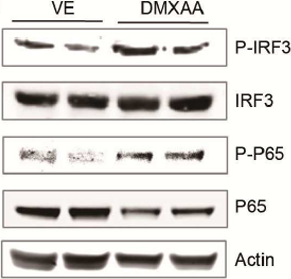
Vadimezan purchased from MedChemExpress. Usage Cited in: Gastroenterology. 2018 May;154(6):1822-1835.e2. [Abstract]
Expression of IRF3, p-IRF3, p65 and p-p65 in whole pancreatic extract of acute pancreatitis (AP) mice shown by western blot.
-
Nat Cell Biol
Evolutionarily conserved role of telomerase reverse transcriptase in programming the microenvironment via regulation of the cGAS-STING pathway. [Abstract]2025 Aug;27(8):1342-1356. PMID: 40770487 -
Nat Cell Biol
SEL1L-HRD1 endoplasmic reticulum-associated degradation controls STING-mediated innate immunity by limiting the size of the activable STING pool. [Abstract]2023 May;25(5):726-739. PMID: 37142791 -
Clin Mol Hepatol
2024 Jul;30(3):515-538. PMID: 38726504 -
ACS Nano
Anti-Triggering Receptor Expressed on Myeloid Cells 2-Conjugated Nanovesicles Loaded Vadimezan Reprogram Tumor-Associated Macrophages to Combat Recurrent Lung Cancer. [Abstract]2025 Aug 29. PMID: 40879116 -
ACS Nano
Universal STING Pathway-Activating Complexes Counteract Viral Immune Evasion and Boost Antiviral Responses. [Abstract]2025 Mar 4;19(8):8277-8293. PMID: 39988898 -
ACS Nano
Sensitizing Tumors to Immune Checkpoint Blockage via STING Agonists Delivered by Tumor-Penetrating Neutrophil Cytopharmaceuticals. [Abstract]2023 Jan 3. PMID: 36595464 -
Neuron
Driving axon regeneration by orchestrating neuronal and non-neuronal innate immune responses via the IFNγ-cGAS-STING axis. [Abstract]2023 Jan 18;111(2):236-255.e7. PMID: 36370710 -
Gut Microbes
Gut microbiota modulate radiotherapy-associated antitumor immune responses against hepatocellular carcinoma Via STING signaling. [Abstract]2022 Jan-Dec;14(1):2119055. PMID: 36093568 -
-
Adv Sci (Weinh)
Carnosic Acid Directly Targets STING C-Terminal Tail to Improve STING-Mediated Inflammatory Diseases. [Abstract]2025 Apr;12(14):e2417686. PMID: 39965124 -
Cell Rep Med
MPXV infection activates cGAS-STING signaling and IFN-I treatment reduces pathogenicity of mpox in CAST/EiJ mice and rhesus macaques. [Abstract]2025 May 20;6(5):102135. PMID: 40398389 -
Smart Med
Magnetic Reprogramming of Macrophages Stimulates Phagocytosis of Breast Cancer Cells via a TRPC1-STING Inflammatory Axis. [Abstract]2026 Jun 4;5(3):e70038. PMID: 42549352 -
-
Cell Death Dis
STING dependent BAX-IRF3 signaling results in apoptosis during late-stage Coxiella burnetii infection. [Abstract]2024 Mar 8;15(3):195. PMID: 38459007 -
Cell Death Dis
The interaction between STING and NCOA4 exacerbates lethal sepsis by orchestrating ferroptosis and inflammatory responses in macrophages. [Abstract]2022 Jul 28;13(7):653. PMID: 35902564 -
Cell Death Dis
Circulating mitochondrial DNA-triggered autophagy dysfunction via STING underlies sepsis-related acute lung injury. [Abstract]2021 Jul 3;12(7):673. PMID: 34218252 -
Cell Death Dis
mtDNA-STING pathway promotes necroptosis-dependent enterocyte injury in intestinal ischemia reperfusion. [Abstract]2020 Dec 11;11(12):1050. PMID: 33311495 -
J Immunother Cancer
2025 Nov 19;13(11):e012652. PMID: 41260904 -
Cell Commun Signal
Intrinsic STING of CD8 + T cells regulates self-metabolic reprogramming and memory to exert anti-tumor effects. [Abstract]2025 Feb 19;23(1):99. PMID: 39972350 -
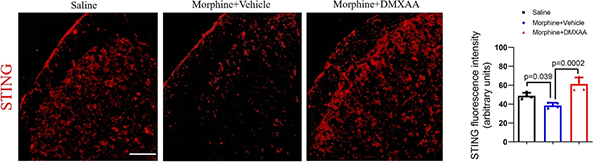
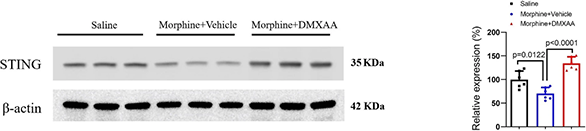
J Neuroinflammation
STING controls opioid-induced itch and chronic itch via spinal tank-binding kinase 1-dependent type I interferon response in mice. [Abstract]2023 Apr 30;20(1):101. PMID: 37122031
Vadimezan purchased from MedChemExpress. Usage Cited in: J Neuroinflammation. 2023 Apr 30;20(1):101. [Abstract]
Vadimezan (DMXAA; 20 mg/kg; i.p.; one dose) inhibits morphine-reduced spinal STING fluorescence intensity in mice.
Vadimezan purchased from MedChemExpress. Usage Cited in: J Neuroinflammation. 2023 Apr 30;20(1):101. [Abstract]
Vadimezan (DMXAA; 20 mg/kg; i.p.; daily; two days) significantly upregulates the morphine-induced decreased expression of STING in the spinal dorsal horn of mice.
-
Chin Herb Med
Amplifying protection against acute lung injury: Targeting both inflammasome and cGAS-STING pathway by Lonicerae Japonicae Flos-Forsythiae Fructus drug pair. [Abstract]2024 Apr 30;16(3):422-434. PMID: 39072201 -
Acta Pharmacol Sin
ADT-OH promotes mitophagy and suppresses the cytosolic mtDNA-cGAS-STING inflammatory cascade in microglia. [Abstract]2026 Apr 9. PMID: 41951774 -
Cell Death Discov
Therapeutic targeting of STING-IL6/STAT3 axis to inhibit osteoclastic niche formation and breast cancer bone metastasis. [Abstract]2025 Oct 24;11(1):483. PMID: 41136375 -
J Orthop Translat
TBK1 pharmacological inhibition mitigates osteoarthritis through attenuating inflammation and cellular senescence in chondrocytes. [Abstract]2024 Jun 28:47:207-222. PMID: 39040492 -
-
Cancer Immunol Res
Discovery of podofilox as a potent cGAMP-STING signaling enhancer with antitumor activity. [Abstract]2023 May 3;11(5):583-599. PMID: 36921097 -
Cell Rep
4-octyl itaconate inhibits cytokine-mediated inflammation via alkylation of TYK2 and JAK1. [Abstract]2026 Mar 30;45(4):117179. PMID: 41915469 -
Cell Rep
Adoptive macrophages suppress glioblastoma growth by reversing immunosuppressive microenvironment through programmed phenotype repolarization. [Abstract]2025 Sep 26;44(10):116350. PMID: 41014558 -
Cell Rep
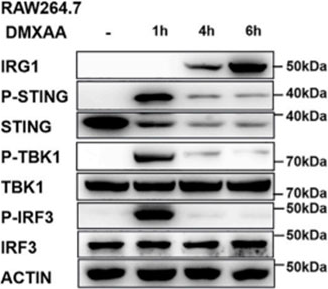
4-octyl itaconate as a metabolite derivative inhibits inflammation via alkylation of STING. [Abstract]2023 Feb 28;42(3):112145. PMID: 36862550
Vadimezan purchased from MedChemExpress. Usage Cited in: Cell Rep. 2023 Feb 28;42(3):112145. [Abstract]
Vadimezan (DMXAA; 50 µM; 4, 6 h) significantly increases the level of IRG1 in RAW264.7 macrophages.
-
Chin Med
Traditional Chinese medicine Lingguizhugan decoction ameliorate HFD-induced hepatic-lipid deposition in mice by inhibiting STING-mediated inflammation in macrophages. [Abstract]2022 Jan 5;17(1):7. PMID: 34983596 -
Clin Sci
Flavonoid Derivative DMXAA Attenuates Cisplatin-induced Acute Kidney Injury Independent of STING Signaling. [Abstract]2023 Mar 31;137(6):435-452. PMID: 36815438 -
Pharmaceutics
Mannose-Coated Reconstituted Lipoprotein Nanoparticles for the Targeting of Tumor-Associated Macrophages: Optimization, Characterization, and In Vitro Evaluation of Effectiveness. [Abstract]2023 Jun 8;15(6):1685. PMID: 37376134 -
J Ethnopharmacol
Puerarin from Pueraria montana var. lobata (Willd.) alleviates hepatic steatosis and inflammation in MAFLD through suppressing STING-IRF3/NF-κB signaling in macrophages. [Abstract]2026 Apr 6:360:121126. PMID: 41478535 -
J Ethnopharmacol
Shuangdan Jiedu Decoction improved LPS-induced acute lung injury by regulating both cGAS-STING pathway and inflammasome. [Abstract]2025 Jan 10:336:118661. PMID: 39159837 -
Eur J Med Chem
Design and syntheses of a bimolecular STING agonist based on the covalent STING antagonist. [Abstract]2023 Mar 15:250:115184. PMID: 36758305 -
CNS Neurosci Ther
Tregs Promote Astrocyte-Neuron Lactate Shuttle via Inhibiting STING Pathway to Improve Neurological Recovery After Ischemic Stroke. [Abstract]2026 Jan;32(1):e70753. PMID: 41552852 -
Acta Neuropathol Commun
Hyperoside mitigates photoreceptor degeneration in part by targeting cGAS and suppressing DNA-induced microglial activation. [Abstract]2024 May 16;12(1):76. PMID: 38755736 -
Biochem Pharmacol
Gelsevirine improves age-related and surgically induced osteoarthritis in mice by reducing STING availability and local inflammation. [Abstract]2022 Apr:198:114975. PMID: 35202579 -
Life Sci
Icariside II alleviates lipopolysaccharide-induced acute lung injury by inhibiting lung epithelial inflammatory and immune responses mediated by neutrophil extracellular traps. [Abstract]2024 Jun 1:346:122648. PMID: 38631668 -
-
J Inflamm (Lond)
Butyrate ameliorates ulcerative colitis through targeting STING-dependent ER stress signaling and limiting CD4+ TRM T cells accumulation. [Abstract]2025 Nov 24;22(1):50. PMID: 41286853 -
Cell Rep Methods
A fluorescent STING ligand sensor for high-throughput screening of compounds that can enhance tumor immunotherapy. [Abstract]2025 Jul 21;5(7):101106. PMID: 40669456 -
-
Int Immunopharmacol
Minimolide F alleviates inflammatory diseases by specifically targeting STING and blocking IRF3 recruitment. [Abstract]2026 May 1:176:116468. PMID: 41819671 -
Int Immunopharmacol
Tanshinone IIA alleviates myocarditis in Trex1-D18N lupus-like mice by inhibiting the interaction between STING and SEC24C. [Abstract]2025 May 27:156:114659. PMID: 40252465 -
Int Immunopharmacol
Perillaldehyde ameliorates lipopolysaccharide-induced acute lung injury via suppressing the cGAS/STING signaling pathway. [Abstract]2024 Mar 30:130:111641. PMID: 38368770 -
Inflamm Bowel Dis
STING-mediated Syk Signaling Attenuates Tumorigenesis of Colitis‑associated Colorectal Cancer Through Enhancing Intestinal Epithelium Pyroptosis. [Abstract]2022 Mar 30;28(4):572-585. PMID: 34473281 -
Immunology
STING Drives Psoriatic Inflammation by Promoting Neutrophil Recruitment and Facilitating NETosis. [Abstract]2026 Mar 3. PMID: 41775627 -
-
Exp Neurol
Neuroprotection of celastrol against postoperative cognitive dysfunction through dampening cGAS-STING signaling. [Abstract]2024 Dec:382:114987. PMID: 39369806 -
Neuropharmacology
Sevoflurane-induced neurotoxicity in neonatal mice is driven by microglial ferroptosis via MSTRG.7388-dependent NCOA4/STING axis. [Abstract]2026 Aug 15:294:110978. PMID: 42009246 -
Neurochem Res
The Myelin-Derived Peptide NSDP1 Suppresses Neuroinflammation and Attenuates Demyelination in Chronic Cuprizone-Fed Mice via Modulation of cGAS-STING Signaling. [Abstract]2026 Jun 3;51(3):185. PMID: 42234285 -
iScience
Serine metabolism is crucial for cGAS-STING signaling and viral defense control in the gut. [Abstract]2024 Feb 8;27(3):109173. PMID: 38496294 -
Mol Divers
2025 Dec 11. PMID: 41379298 -
Biochim Biophys Acta Mol Cell Res
2024 Dec;1871(8):119852. PMID: 39357547 -
J Biol Chem
Cytosolic nucleic acid sensing triggers type I interferon activation via the Hippo kinase LATS1. [Abstract]2026 Jan 23;302(3):111204. PMID: 41581871 -
Clin Immunol
STING contributes to trauma-induced heterotopic ossification through NLRP3-dependent macrophage pyroptosis. [Abstract]2023 May:250:109300. PMID: 36963448 -
J Biol Chem
Bruton's tyrosine kinase phosphorylates scaffolding and RNA-binding protein G3BP1 to induce stress granule aggregation during host sensing of foreign ribonucleic acids. [Abstract]2022 Aug;298(8):102231. PMID: 35798143 -
Bioorg Med Chem
2026 Jan 16:135:118571. PMID: 41564501 -
Exp Cell Res
2023 May 17;428(2):113630. PMID: 37196844 -
-
J Cancer Res Clin Oncol
2025 Jan 25;151(2):48. PMID: 39856464 -
Tissue Cell
Mesenchymal stem cells alleviate autoimmune thyroiditis by modulating macrophage phenotypes and through influencing the STING pathway. [Abstract]2024 Dec:91:102596. PMID: 39490249 -
Immunobiology
STING mediates SU5416/hypoxia-induced pulmonary arterial hypertension in rats by regulating macrophage NLRP3 inflammasome activation. [Abstract]2023 Feb 8;228(2):152345. PMID: 36780836 -
Hum Cell
2025 Aug 13;38(5):142. PMID: 40801965 -
Chembiochem
dSTORM-Based Single-Cell Protein Quantitative Analysis Can Effectively Evaluate the Degradation Ability of PROTACs. [Abstract]2023 Feb 14;24(4):e202200680. PMID: 36564338 -
-
-
Biochem Biophys Res Commun
Feedback activation of CD73-Adenosine axis attenuates the antitumor immunity of STING pathway. [Abstract]2024 May 14:708:149814. PMID: 38531218 -
Biochem Biophys Res Commun
Sequential administration of delta-tocotrienol ameliorates radiation-induced myelosuppression in mice and non-human primates through inducing G-CSF production. [Abstract]2024 Apr 16:704:149661. PMID: 38417343 -
Biochem Biophys Res Commun
High glucose-induced endothelial STING activation inhibits diabetic wound healing through impairment of angiogenesis. [Abstract]2023 Aug 6:668:82-89. PMID: 37245293 -
Clin Exp Nephrol
Cytosolic mtDNA-cGAS-STING axis contributes to sepsis-induced acute kidney injury via activating the NLRP3 inflammasome. [Abstract]2024 May;28(5):375-390. PMID: 38238499 -
-
-
Biomed Pharmacother
Ginsenoside Rb1 mitigates acute catecholamine surge-induced myocardial injuries in part by suppressing STING-mediated macrophage activation. [Abstract]2024 Jun:175:116794. PMID: 38776673 -
-
-


Solvent & Solubility
In Vitro:
DMSO : 10 mg/mL (35.42 mM; ultrasonic and warming and heat to 60°C; Hygroscopic DMSO has a significant impact on the solubility of product, please use newly opened DMSO)
Please refer to the solubility information to select the appropriate solvent. Once prepared, please aliquot and store the solution to prevent product inactivation from repeated freeze-thaw cycles.
Storage method and period of stock solution: -80°C, 1 year; -20°C, 6 months. When stored at -80°C, please use it within 1 year. When stored at -20°C, please use it within 6 months.
Please refer to the solubility information to select the appropriate solvent. Once prepared, please aliquot and store the solution to prevent product inactivation from repeated freeze-thaw cycles.
Storage method and period of stock solution: -80°C, 1 year; -20°C, 6 months. When stored at -80°C, please use it within 1 year. When stored at -20°C, please use it within 6 months.
Concentration (start) × Volume (start) = Concentration (final) × Volume (final)
In Vivo:
Select the appropriate dissolution method based on your experimental animal and administration route.
- For the following dissolution methods, please ensure to first prepare a clear stock solution using an In Vitro approach and then sequentially add co-solvents:
- To ensure reliable experimental results, the clarified stock solution can be appropriately stored based on storage conditions. As for the working solution for In Vivo experiments, it is recommended to prepare freshly and use it on the same day.
- The percentages shown for the solvents indicate their volumetric ratio in the final prepared solution. If precipitation or phase separation occurs during preparation, heat and/or sonication can be used to aid dissolution.
Add each solvent one by one: 10% DMSO 40% PEG300 5% Tween-80 45% Saline
Solubility: ≥ 1 mg/mL (3.54 mM); Clear solution
This protocol yields a clear solution of ≥ 1 mg/mL (saturation unknown).
Taking 1 mL working solution as an example, add 100 μL DMSO stock solution (10.0 mg/mL) to 400 μL PEG300, and mix evenly; then add 50 μL Tween-80 and mix evenly; then add 450 μL Saline to adjust the volume to 1 mL.
Preparation of Saline: Dissolve 0.9 g sodium chloride in ddH₂O and dilute to 100 mL to obtain a clear Saline solution.
For the following dissolution methods, please prepare the working solution directly:
It is recommended to prepare fresh solutions and use them promptly within a short period of time.
The percentages shown for the solvents indicate their volumetric ratio in the final prepared solution. If precipitation or phase separation occurs during preparation, heat and/or sonication can be used to aid dissolution.
Add each solvent one by one: 50% PEG300 50% Saline
Solubility: 5 mg/mL (17.71 mM); Suspended solution; Need ultrasonic
In Vivo Dissolution Calculator
Please enter the basic information of animal experiments:
-
-
-
-
Recommended: Prepare an additional quantity of animals to account for potential losses during experiments.
Please enter your animal formula composition:
-
%DMSO +
Recommended: Keep the proportion of DMSO in working solution below 2% if your animal is weak.
-
%+
-
+%Tween-80 + +
-
%Saline +
The co-solvents required include: DMSO, . All of co-solvents are available by MedChemExpress (MCE). , Tween 80. All of co-solvents are available by MedChemExpress (MCE).
Working solution concentration: 0.22 mg/mL
Method for preparing stock solution: mg drug dissolved in μL DMSO. Stock solution concentration: mg/mL.
1. Take μL DMSO stock solution;
2. Add μL .
μL , mix evenly;
3. Then add μL Tween 80, mix evenly;
4. Then add μL
Please ensure that the stock solution in the first step is dissolved to a clear state, and add co-solvents in sequence. You can use ultrasonic heating (ultrasonic cleaner, recommended frequency 20-40 kHz), vortexing, etc. to assist dissolution.


Purity & Documentation
-
Data Sheet (291 KB)
-
SDS (598 KB)
- English - EN (598 KB)
- Français - FR (598 KB)
- Deutsch - DE (598 KB)
- Norwegian - NO (598 KB)
- Español - ES (598 KB)
- Swedish - SV (598 KB)
- Italian - IT (598 KB)
- Korean - KR (598 KB)
- Portuguese - PT (598 KB)
-
Handling Instructions (2659 KB)
References
[1]. Downey CM, et al. DMXAA causes tumor site-specific vascular disruption in murine non-small cell lung cancer, and like the endogenous non-canonical cyclic dinucleotide STING agonist, 2'3'-cGAMP, induces M2 macrophage repolarization. PLoS One. 2014 Jun 18;9(6):e99988. [Content Brief]
[2]. Shirey KA, et al. The anti-tumor agent, 5,6-dimethylxanthenone-4-acetic acid (DMXAA), induces IFN-beta-mediated antiviral activity in vitro and in vivo. J Leukoc Biol. 2011 Mar;89(3):351-7. [Content Brief]


Complete Stock Solution Preparation Table
Please refer to the solubility information to select the appropriate solvent. Once prepared, please aliquot and store the solution to prevent product inactivation from repeated freeze-thaw cycles.
Storage method and period of stock solution: -80°C, 1 year; -20°C, 6 months. When stored at -80°C, please use it within 1 year. When stored at -20°C, please use it within 6 months.
| Optional Solvent | Concentration Solvent Mass | 1 mg | 5 mg | 10 mg | 25 mg |
|---|---|---|---|---|---|
| DMSO | 1 mM | 3.5425 mL | 17.7123 mL | 35.4246 mL | 88.5614 mL |
| 5 mM | 0.7085 mL | 3.5425 mL | 7.0849 mL | 17.7123 mL | |
| 10 mM | 0.3542 mL | 1.7712 mL | 3.5425 mL | 8.8561 mL | |
| 15 mM | 0.2362 mL | 1.1808 mL | 2.3616 mL | 5.9041 mL | |
| 20 mM | 0.1771 mL | 0.8856 mL | 1.7712 mL | 4.4281 mL | |
| 25 mM | 0.1417 mL | 0.7085 mL | 1.4170 mL | 3.5425 mL | |
| 30 mM | 0.1181 mL | 0.5904 mL | 1.1808 mL | 2.9520 mL |


Vadimezan Related Classifications
HY-10964 Related Classifications
 Powered by Bioz