



Efizonerimod alfa

Based on 1 Customer Validation
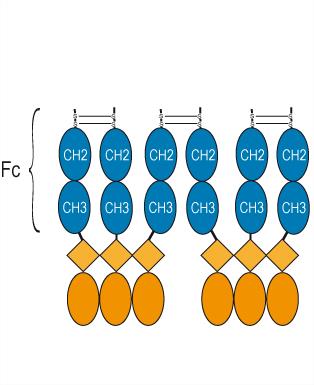
Efizonerimod alfa (MEDI-6383) is a recombinant human OX40L IgG4P Fc fusion protein that assembles into a hexameric structure and exerts potent agonist activity upon binding to OX40. The activity of Efizonerimod alfa is enhanced by Fcγ receptor-mediated aggregation. Efizonerimod alfa binds to OX40 on the surface of activated T cells, induces NF-κB promoter activity in OX40-expressing T cells, and triggers the production of Th1-type cytokines, T cell proliferation, and resistance to regulatory T cell (Treg)-mediated suppression. Efizonerimod alfa enhances the cytolytic activity of tumor-reactive T cells and slows tumor growth in immunodeficient mice. Efizonerimod alfa induces the proliferation of CD4, CD8, and B cells in the peripheral blood of healthy non-human primates. Efizonerimod alfa can be used in the research of advanced solid malignancies and melanoma.
Nos produits utilisent uniquement pour la recherche. Nous ne vendons pas aux patients.
- Pureté : 98.57%
- CAS No.: 1635395-27-5
- Masse moléculaire:273.72 kDa
-
Stockage:
Please store the product under the recommended conditions in the Certificate of Analysis.


To place orders, for customer services and technical support, please contact: MedChemExpress USA
Tel: 609-228-6898 E-mail: [email protected] [email protected]


-
 Activité biologique
-
Chemical Information
- Protocole
- Pureté et documentation
- Références
-
 Help & FAQs


-
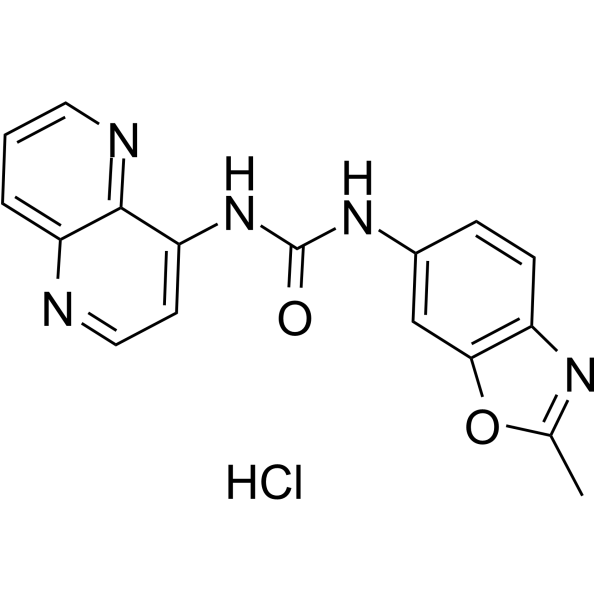
HY-10895
SB-334867OX1 Receptor Antagonist -
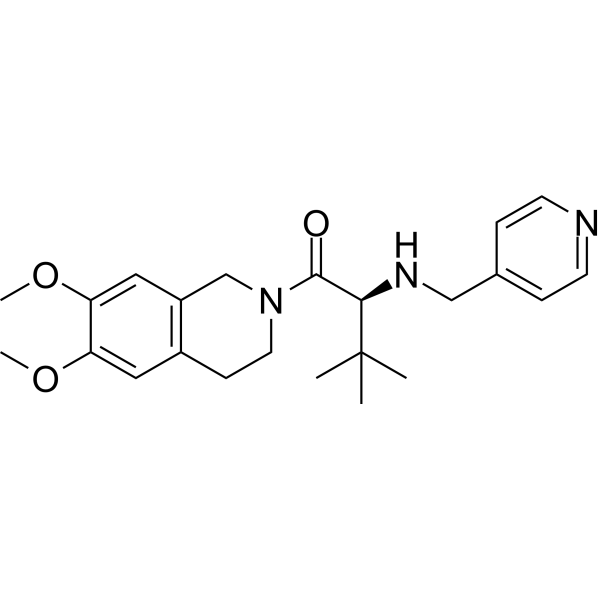
HY-100452
TCS-OX2-29OX2R Antagonist -
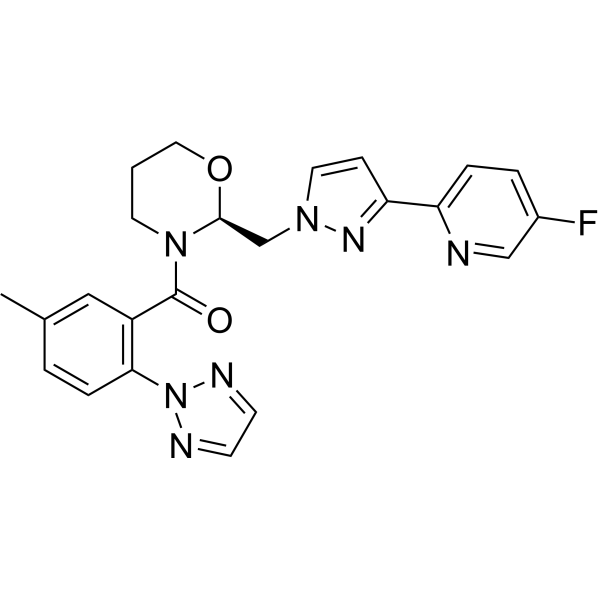
HY-139559
VornorexantOX1R/OX2R Antagonist -
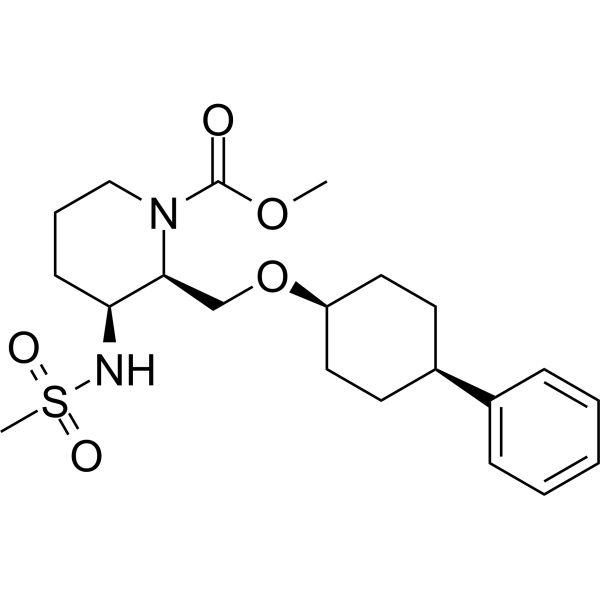
HY-133898
DanavorextonOrexin Receptor Agonist -
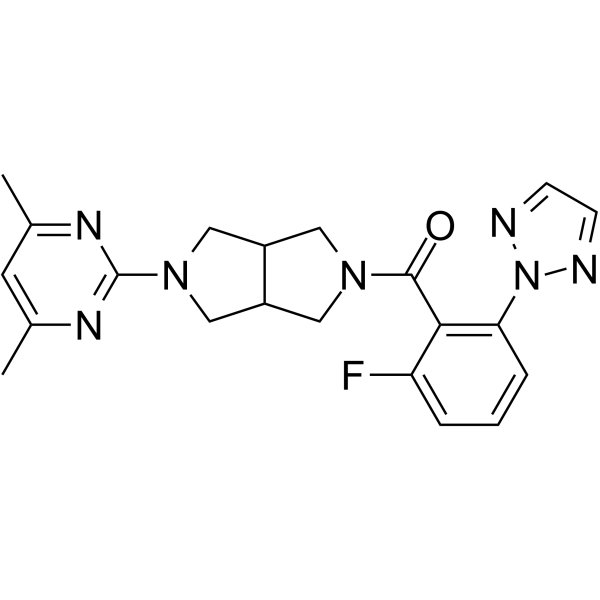
HY-109012
SeltorexantOrexin-2 Receptor Antagonist -
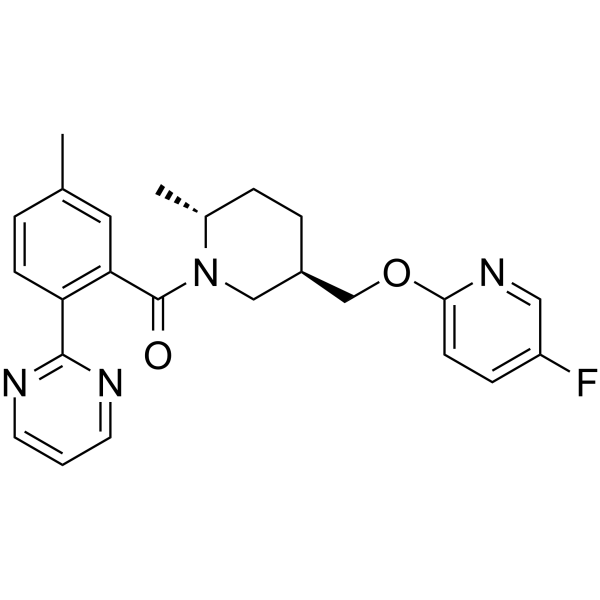
HY-15653
FilorexantOX Receptor Antagonist -
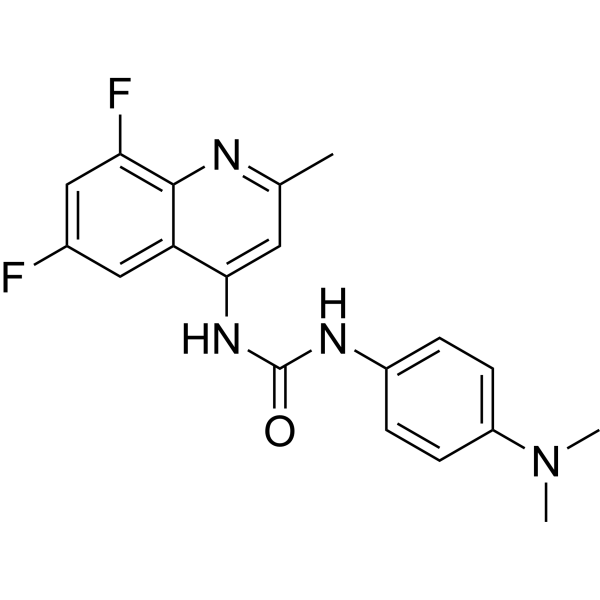
HY-70068
SB-408124OX1 Receptor Antagonist -
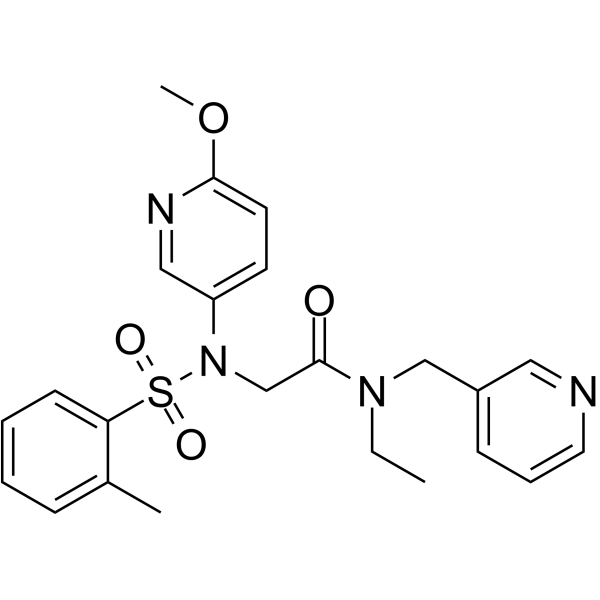
HY-108682
EMPAOX Receptor Antagonist -
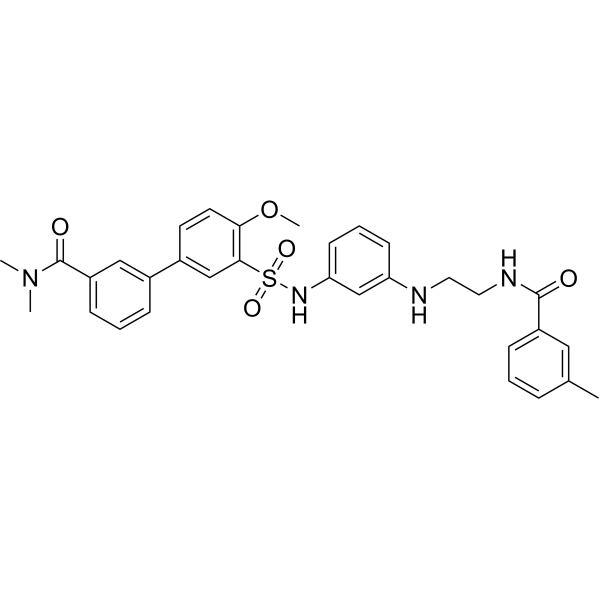
HY-19320
Orexin 2 Receptor AgonistOX2R Agonist -
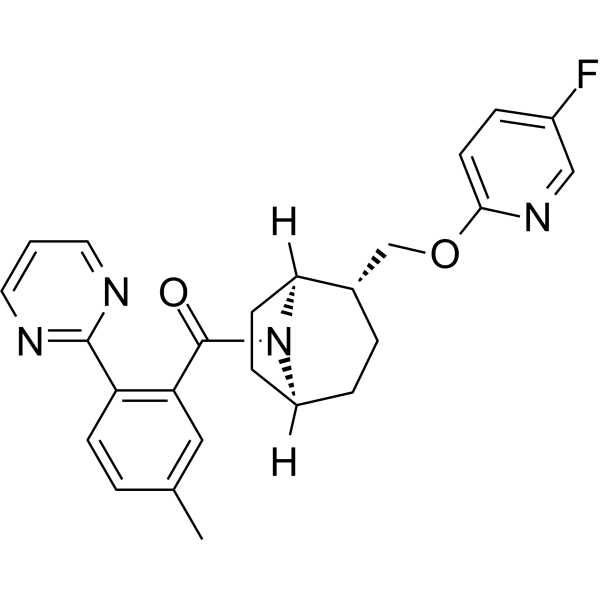
HY-152843
FazamorexantOrexin Receptor Antagonist -
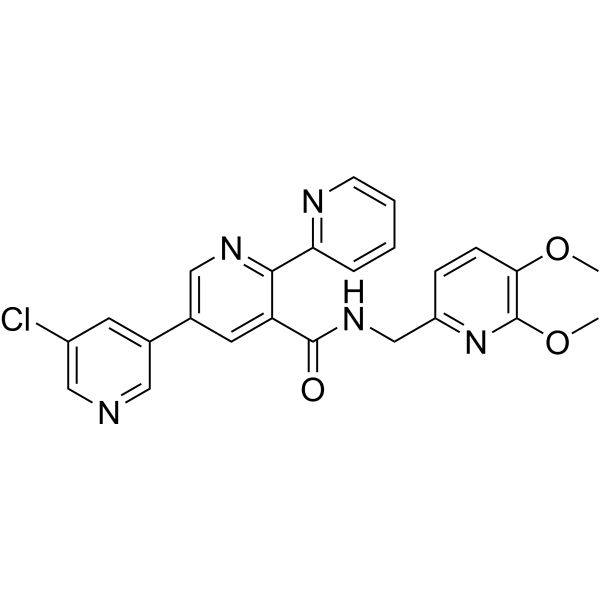
HY-19914
MK-1064OX2R Antagonist -
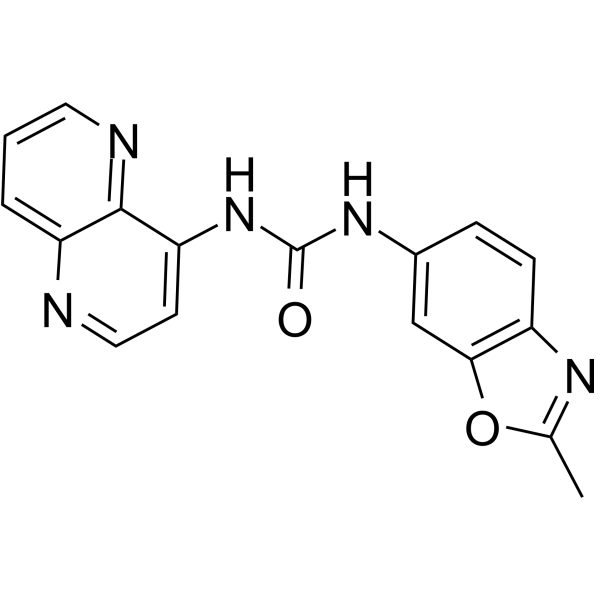
HY-10895A
SB-334867 free baseOX1 Antagonist
Voir tous les produits spécifiques à Isoform Orexin Receptor (OX Receptor)
More

Activité biologique
Description
IC50 & Target
OX40[1]
In Vitro
Efizonerimod alfa (MEDI-6383) potently binds OX40 on activated human, cynomolgus, and rhesus CD4+ T cells with mean apparent Kd values ranging from 1.7 to 24 pM[1].
Efizonerimod alfa (0.01 pM-1 nM; 45 min) induces dose-dependent NF-κB signaling in human OX40-expressing Jurkat T cells, with activity significantly enhanced by FcγR-mediated clustering via CD32A, CD64, CD32B, or primary tumor-derived CD45+ immune cells, but not CD16[1].
Efizonerimod alfa, containing an IgG4P Fc domain, does not induce NK cell-mediated ADCC of OX40-expressing CD4+ T cells or bind complement component C1q[1].
Efizonerimod alfa (0.01 pM-10 nM; 72 h) induces concentration-dependent cytokine release (Th1 and Th2 type) and CD4+ T-cell proliferation in activated primary human CD3+ T cells in a TCR-dependent manner, and upregulates activation markers on both CD4+ and CD8+ T cells[1].
Efizonerimod alfa induces concentration-dependent proliferation of activated primary human CD4+ T cells when clustered by CD32A-expressing HEK293 cells in a TCR-dependent manner[1].
Efizonerimod alfa (0.076-5.0 nM; 5 d) reverses nTreg-mediated suppression of primary human CD4+ effector T cell proliferation and induces concentration-dependent proliferation of primary human CD4+ nTregs, both in monoculture and coculture with Teff cells[1].
MedChemExpress (MCE) has not independently confirmed the accuracy of these methods. They are for reference only.
In Vivo
Efizonerimod alfa (1 mg/kg; i.v.; every other day; 3 doses) induces robust proliferation of central and effector memory CD4 and CD8 T cells, upregulates T-cell activation markers, and stimulates B-cell proliferation in healthy rhesus macaques[1].
MedChemExpress (MCE) has not independently confirmed the accuracy of these methods. They are for reference only.
-
Animal Model:NOD/SCID (5-9 weeks old, female, engrafted with human A375 melanoma cells admixed with allogeneic A375-reactive human CD4 and CD8 T cells)[1]
-
Dosage:0.1 mg/kg, 0.3 mg/kg, 1 mg/kg, 3 mg/kg
-
Administration:2 times per week; 2 weeks
-
Result:Caused statistically significant tumor growth inhibition compared to control fusion protein-treated mice at all tested doses.
Showed no tumor growth inhibition in mice engrafted with A375 cells alone, confirming T-cell dependency of the effect.
-
Animal Model:Macaca mulatta (female, healthy)[1]
-
Dosage:1 mg/kg
-
Administration:i.v.; every other day; 3 doses
-
Result:Increased total memory CD4 T cell Ki67 positivity.
Increased CD4 effector memory T cell Ki67 positivity from 7% to 14% at day 14.
Increased CD8 central memory T cell Ki67 positivity.
Showed no proliferation of naive CD4 and CD8 T cells.
Increased ICOS+ total memory CD4 T cells.
Increased PD-1+ total memory CD4 T cells.
Increased Ki67+ B cells from 10% to 24% at day 17.
Caused initial decreases in circulating CD4 T, CD8 T, and B-cell counts followed by increases in the second week post-treatment.
- Naïve CD4+ T-cell subset differentiation/polarization
- BrdU Incorporation Assay
- Somatic Cell Culture
- CFSE Dye Dilution Proliferation Assay
- Dye-dilution cell tracking and proliferation staining
- Patient-Derived Orthotopic Xenograft (PDOX)
- CCK-8/WST-8 Cell Proliferation Assay
- Protocol for Cell Cycle
- Research Protocol for Inflammation-related Diseases
- Cell Counting-Based Growth Curve Assay
- Colony Formation (Clonogenic) Assay
- Research Protocol for Cancer Immunology
- Cell Viability Determination by MTT Colorimetric Assay
- Dual Luciferin reporter gene assay
- EdU Incorporation Assay (Click Chemistry-Based DNA Synthesis Measurement)
- Ki-67 Immunostaining Proliferation Assay
- PCNA Immunodetection Proliferation Assay
- Protocol for Cell Counting and Cell Density Analysis
- Patient-Derived Xenograft (PDX)
- MTT Cell Proliferation Assay
- Subcutaneous Cell-Line-Derived Xenograft
- Orthotopic Cell-Line Xenograft
Essai clinique
| NCT Number | Sponsor | Condition | Start Date |
Phase

|
|---|---|---|---|---|
| NCT01329991 | 2011-05 | PHASE1 |
Conjugated
Unconjugated
Reconsititution
The product can be reconstituted/diluted with sterile PBS or saline.
Format
-
[IGHG4 Fc (Fragment constant)– [TRAF2 (TNF receptor associated factor 2, TRAP3, RNF117)-TNFSF4 (tumor necrosis factor (TNF)superfamily member 4, OX40 ligand, OX-40L, TAX transcriptionally-activated glycoprotein 1, TXGP1, gp34, CD252)]2]3 (hexamer)
Application
ELISA, FACS, Functional assay


Chemical Information
-
CAS No. 1635395-27-5
-
Appearance Liquid
-
Masse moléculaire 273.72 kDa
-
Color Colorless to light yellow
-
SMILES
[Efizonerimod alfa]
-
Synonyms
MEDI-6383
-
Livraison
Shipping with dry ice.
-
Formulation
Please refer to the lot-specific COA for specific buffer information.
-
Stockage
Please store the product under the recommended conditions in the Certificate of Analysis.


Pureté et documentation
-
Fiche technique (262 KB)
-
SDS (251 KB)
- English - EN (251 KB)
- Français - FR (251 KB)
- Deutsch - DE (251 KB)
- Norwegian - NO (251 KB)
- Español - ES (251 KB)
- Swedish - SV (251 KB)
- Italian - IT (251 KB)
- Korean - KR (251 KB)
- Portuguese - PT (251 KB)
-
Inhibitory Antibodies User Guide (603 KB)
Références

Calculators
Concentration (start) × Volume (start) = Concentration (final) × Volume (final)


Efizonerimod alfa Related Classifications
HY-P99911 Related Classifications
 Powered by Bioz