



Elsubrutinib
Based on 2 publication(s) in Google Scholar
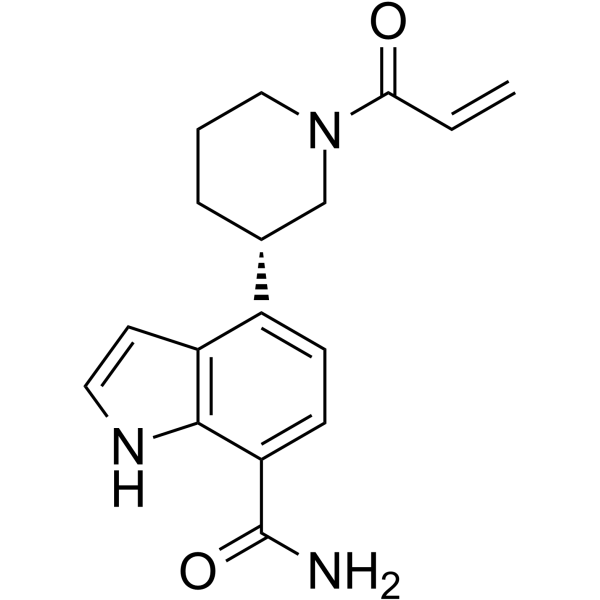
Elsubrutinib (ABBV-105) is an orally active, potent, selective and irreversible Bruton's tyrosine kinase (BTK) inhibitor. The IC50 of Elsubrutinib for BTK catalytic domain is 0.18 μM. Elsubrutinib can be used for the research of inflammatory disease.
Nur für Forschungszwecke. Wir verkaufen nicht an Patienten.
- Reinheit : 98.0%
- CAS. Nr.: 1643570-24-4
- Formel: C17H19N3O2
- Molecular Weight:297.35
-
Speicherung:Powder -20°C, 3 years , 4°C, 2 years ; In solvent -80°C, 6 months , -20°C, 1 month

To place orders, for customer services and technical support, please contact: MedChemExpress USA
Tel: 609-228-6898 E-mail: [email protected] [email protected]


-
 Biologische Aktivität
-
Chemical Information
-
Lösungsmittel & Löslichkeit
- Protokoll
- Reinheit & Dokumentation
- Verweise
-
 Help & FAQs


-
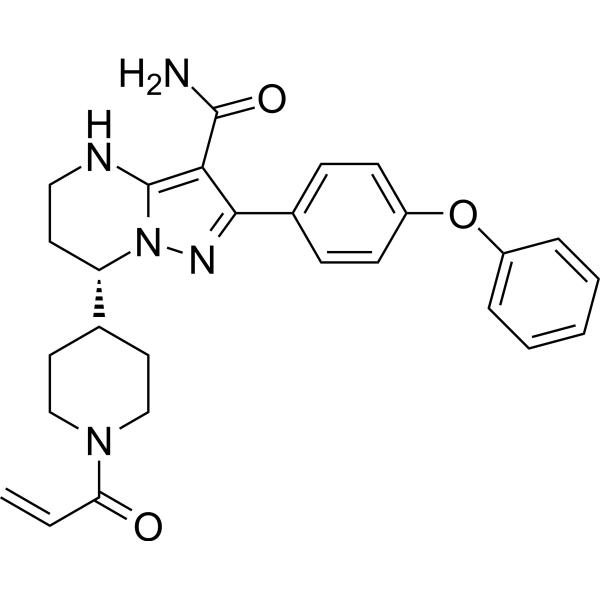
HY-101474A
ZanubrutinibBtk Inhibitor -
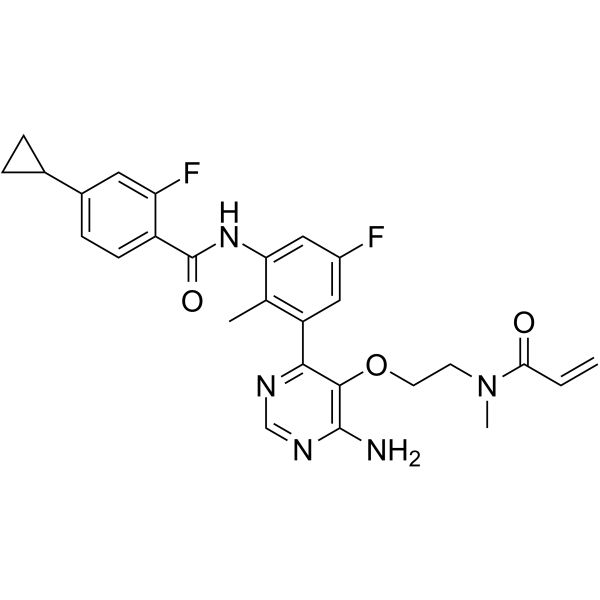
HY-128757
RemibrutinibBTK Inhibitor -
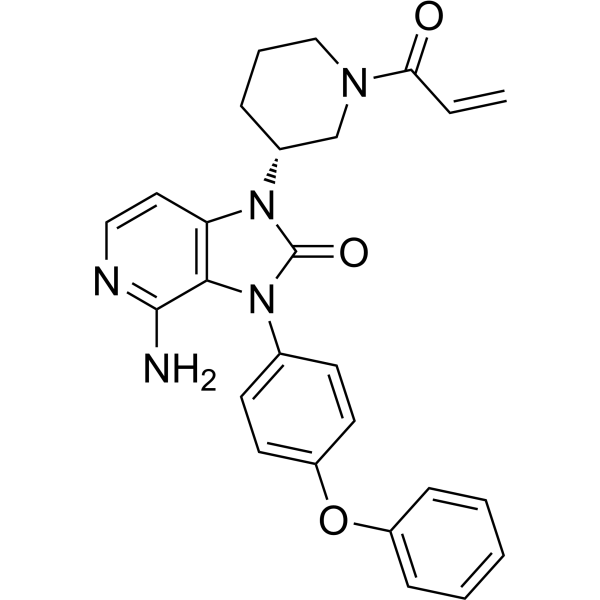
HY-109192
TolebrutinibBTK Inhibitor -
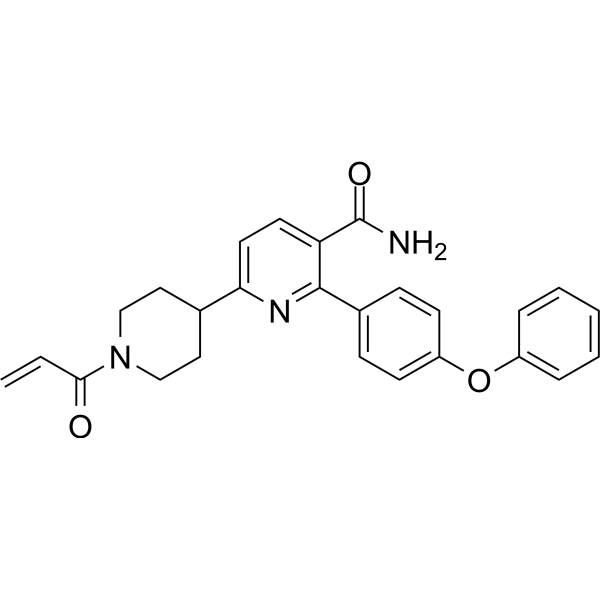
HY-129390
OrelabrutinibBTK Inhibitor -
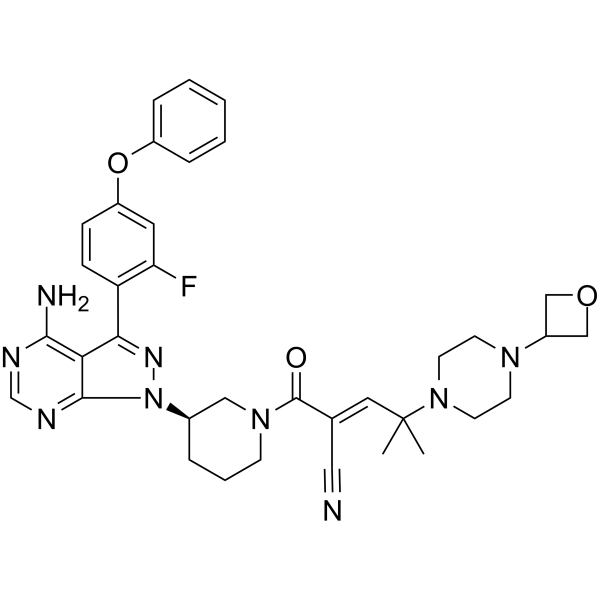
HY-112166
RilzabrutinibBTK Inhibitor -
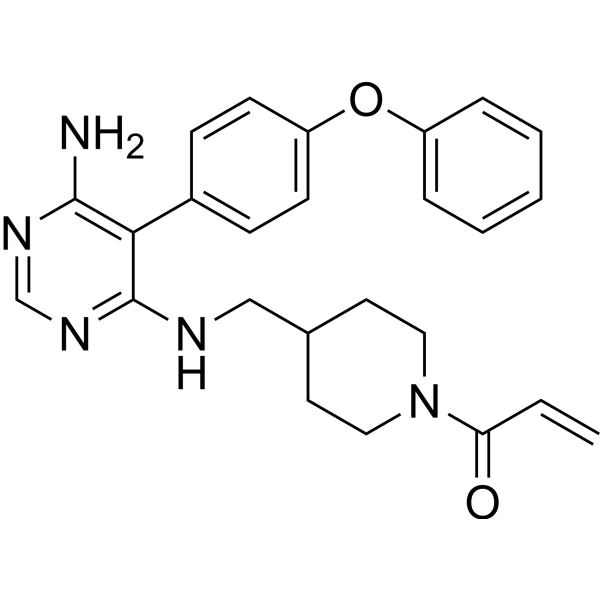
HY-101215
Evobrutinib -
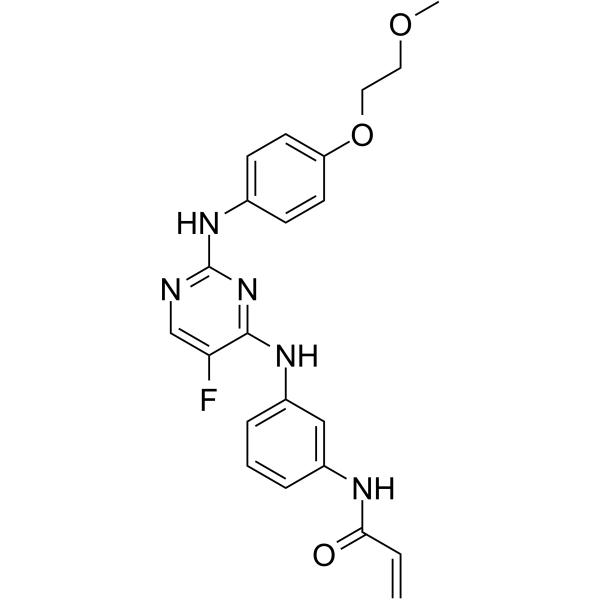
HY-18012
Spebrutinib -
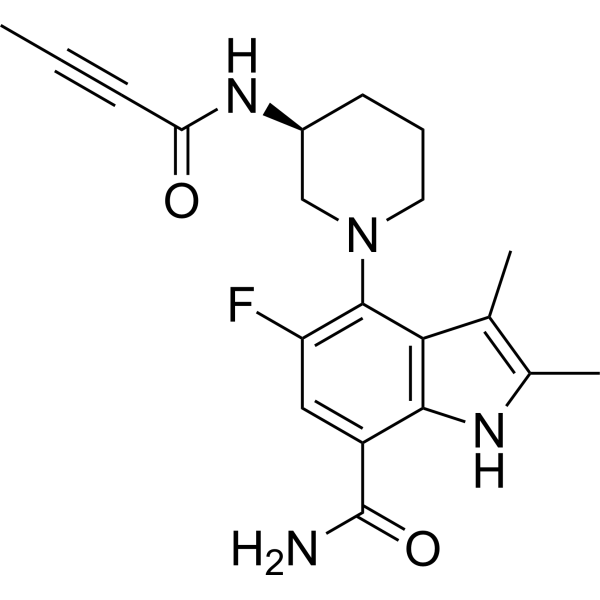
HY-112161
BranebrutinibBTK Inhibitor -
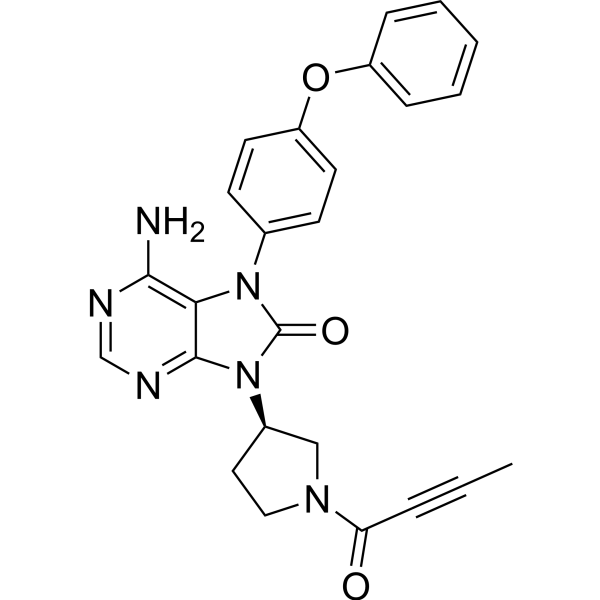
HY-15771
TirabrutinibBTK Inhibitor -
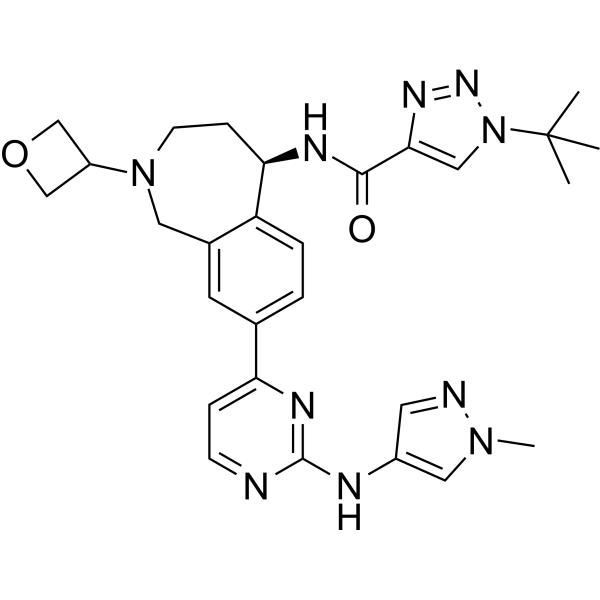
HY-139984
CorubrutinibBTK Inhibitor -
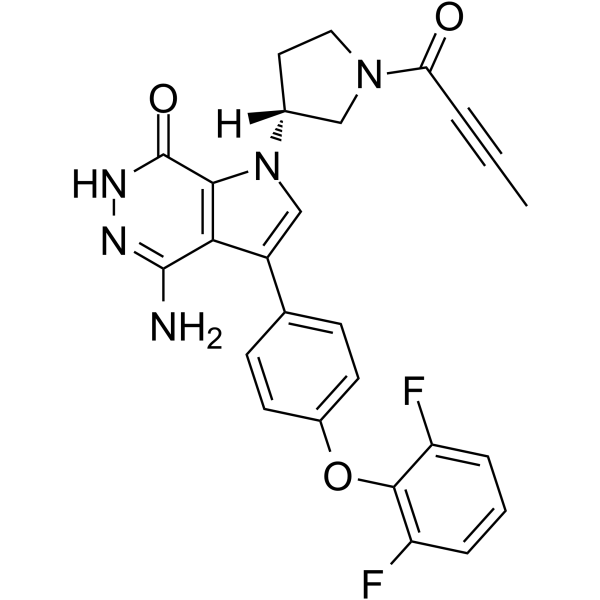
HY-137438
EdralbrutinibBTK Inhibitor -
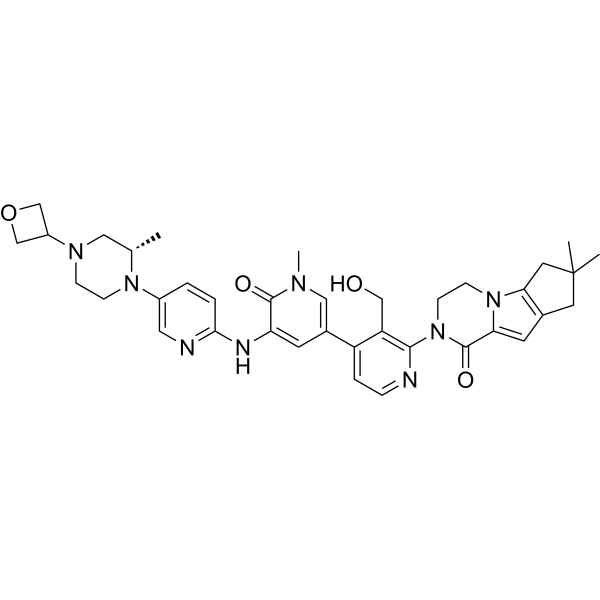
HY-19834
FenebrutinibBtk Inhibitor
Publications Citing Use of MedChemExpress (MCE) Elsubrutinib
More

Biologische Aktivität
Beschreibung
IC50 & Target
IC50: 0.18 μM (BTK)[1]
In Vitro
Elsubrutinib inhibits BTK (C481S) with an IC50 of 2.6 μM, indicating a significant loss in potency upon exchanging the targeted thiol nucleophile with an alcohol, suggesting Cys481 is important in the manner in which Elsubrutinib inhibits BTK. Elsubrutinib irreversibly inhibits BTK enzyme activity and blocks BTK-dependent cellular activation. Elsubrutinib inhibits histamine release from IgE-stimulated basophils and IL-6 release from IgG-stimulated monocytes, which utilize Fce and Fcc receptors respectively. Elsubrutinib inhibits IgM-mediated B cell proliferation, which is dependent on signaling through the BCR. Elsubrutinib also inhibits TNF-release from CpG-DNA stimulated PBMCs, which signals through TLR9, although it does not inhibit the function of TLRs that do not use ITAM motifs, namely, TNF release from PBMCs stimulated either through TLR4 (with LPS) or through TLR7/8 (with R848). Elsubrutinib has significant impacts on IgM-mediated B cell proliferation[1].
MedChemExpress (MCE) has not independently confirmed the accuracy of these methods. They are for reference only.
In Vivo
Elsubrutinib (0.1~10 mg/kg; p.o.) results in dose-dependent inhibition of paw swelling throughout the course of disease and significantly prevents the onset of proteinuria and prolongs survival at the 10 mg/kg QD and BID doses, while lower doses does not significantly inhibit these endpoints[1].
Elsubrutinib demonstrates exposure-dependent inhibition of increases in paw volume. Elsubrutinib significantly inhibits bone volume loss in a dose dependent manner consistent with the observed anti-inflammatory effects[1].
MedChemExpress (MCE) has not independently confirmed the accuracy of these methods. They are for reference only.
-
Animal Model:Female C57/BL6 mice[1]
-
Dosage:10 mg/kg
-
Administration:P.o.
-
Result:Inhibited antibody responses to NP-Ficoll and NP-KLH, but not to NP-LPS or Prevnar-13.
-
Animal Model:Lewis rats[1]
-
Dosage:0.1~10 mg/kg
-
Administration:P.o.
-
Result:Resulted in dose-dependent inhibition of paw swelling throughout the course of disease.
-
Animal Model:NZBWF1 mice[1]
-
Dosage:0.1~10 mg/kg
-
Administration:P.o.
-
Result:Significantly prevented the onset of proteinuria and prolonged survival at the 10 mg/kg QD and BID doses, while lower doses did not significantly inhibit these endpoints.
Clinical Trial
| NCT Number | Sponsor | Condition | Start Date |
Phase

|
|---|---|---|---|---|
| NCT01329991 | 2011-05 | PHASE1 |


Chemical Information
-
CAS. Nr. 1643570-24-4
-
Appearance Solid
-
Molecular Weight 297.35
-
Formel C17H19N3O2
-
Color White to off-white
-
SMILES
O=C(C1=CC=C([C@H]2CN(C(C=C)=O)CCC2)C3=C1NC=C3)N
-
Synonyms
ABBV-105
-
Versand
Room temperature in continental US; may vary elsewhere.
-
Speicherung
Powder -20°C 3 years 4°C 2 years In solvent -80°C 6 months -20°C 1 month


Publications (2)
-
Journal Impact Factor
-
Most Recent
-
ACS Pharmacol Transl Sci
Comprehensive Characterization of Bruton's Tyrosine Kinase Inhibitor Specificity, Potency, and Biological Effects: Insights into Covalent and Noncovalent Mechanistic Signatures. [Abstract]2025 Mar 12;8(4):917-931. PMID: 40242575 -


Lösungsmittel & Löslichkeit
In Vitro:
DMSO : 100 mg/mL (336.30 mM; Need ultrasonic; Hygroscopic DMSO has a significant impact on the solubility of product, please use newly opened DMSO)
Please refer to the solubility information to select the appropriate solvent. Once prepared, please aliquot and store the solution to prevent product inactivation from repeated freeze-thaw cycles.
Storage method and period of stock solution: -80°C, 6 months; -20°C, 1 month. When stored at -80°C, please use it within 6 months. When stored at -20°C, please use it within 1 month.
Please refer to the solubility information to select the appropriate solvent. Once prepared, please aliquot and store the solution to prevent product inactivation from repeated freeze-thaw cycles.
Storage method and period of stock solution: -80°C, 6 months; -20°C, 1 month. When stored at -80°C, please use it within 6 months. When stored at -20°C, please use it within 1 month.
Konzentration (Stammlösung) × Volumen (Stammlösung) = Konzentration (Ziellösung) × Volumen (Ziellösung)
In Vivo:
Select the appropriate dissolution method based on your experimental animal and administration route.
- For the following dissolution methods, please ensure to first prepare a clear stock solution using an In Vitro approach and then sequentially add co-solvents:
- To ensure reliable experimental results, the clarified stock solution can be appropriately stored based on storage conditions. As for the working solution for In Vivo experiments, it is recommended to prepare freshly and use it on the same day.
- The percentages shown for the solvents indicate their volumetric ratio in the final prepared solution. If precipitation or phase separation occurs during preparation, heat and/or sonication can be used to aid dissolution.
Add each solvent one by one: 10% DMSO 40% PEG300 5% Tween-80 45% Saline
Solubility: ≥ 5 mg/mL (16.82 mM); Clear solution
This protocol yields a clear solution of ≥ 5 mg/mL (saturation unknown).
Taking 1 mL working solution as an example, add 100 μL DMSO stock solution (50.0 mg/mL) to 400 μL PEG300, and mix evenly; then add 50 μL Tween-80 and mix evenly; then add 450 μL Saline to adjust the volume to 1 mL.
Preparation of Saline: Dissolve 0.9 g sodium chloride in ddH₂O and dilute to 100 mL to obtain a clear Saline solution.
In Vivo Dissolution Calculator
Please enter the basic information of animal experiments:
-
-
-
-
Recommended: Prepare an additional quantity of animals to account for potential losses during experiments.
Please enter your animal formula composition:
-
%DMSO +
Recommended: Keep the proportion of DMSO in working solution below 2% if your animal is weak.
-
%+
-
+%Tween-80 + +
-
%Saline +
The co-solvents required include: DMSO, . All of co-solvents are available by MedChemExpress (MCE). , Tween 80. All of co-solvents are available by MedChemExpress (MCE).
Working solution concentration: 0.22 mg/mL
Method for preparing stock solution: mg drug dissolved in μL DMSO. Stock solution concentration: mg/mL.
1. Take μL DMSO stock solution;
2. Add μL .
μL , mix evenly;
3. Then add μL Tween 80, mix evenly;
4. Then add μL
Please ensure that the stock solution in the first step is dissolved to a clear state, and add co-solvents in sequence. You can use ultrasonic heating (ultrasonic cleaner, recommended frequency 20-40 kHz), vortexing, etc. to assist dissolution.


Reinheit & Dokumentation
-
Data Sheet (279 KB)
-
SDS (252 KB)
- English - EN (252 KB)
- Français - FR (252 KB)
- Deutsch - DE (252 KB)
- Norwegian - NO (252 KB)
- Español - ES (252 KB)
- Swedish - SV (252 KB)
- Italian - IT (252 KB)
- Korean - KR (252 KB)
- Portuguese - PT (252 KB)
-
Handling Instructions (2659 KB)
Verweise


Complete Stock Solution Preparation Table
Please refer to the solubility information to select the appropriate solvent. Once prepared, please aliquot and store the solution to prevent product inactivation from repeated freeze-thaw cycles.
Storage method and period of stock solution: -80°C, 6 months; -20°C, 1 month. When stored at -80°C, please use it within 6 months. When stored at -20°C, please use it within 1 month.
| Optional Solvent | Concentration Solvent Mass | 1 mg | 5 mg | 10 mg | 25 mg |
|---|---|---|---|---|---|
| DMSO | 1 mM | 3.3630 mL | 16.8152 mL | 33.6304 mL | 84.0760 mL |
| 5 mM | 0.6726 mL | 3.3630 mL | 6.7261 mL | 16.8152 mL | |
| 10 mM | 0.3363 mL | 1.6815 mL | 3.3630 mL | 8.4076 mL | |
| 15 mM | 0.2242 mL | 1.1210 mL | 2.2420 mL | 5.6051 mL | |
| 20 mM | 0.1682 mL | 0.8408 mL | 1.6815 mL | 4.2038 mL | |
| 25 mM | 0.1345 mL | 0.6726 mL | 1.3452 mL | 3.3630 mL | |
| 30 mM | 0.1121 mL | 0.5605 mL | 1.1210 mL | 2.8025 mL | |
| 40 mM | 0.0841 mL | 0.4204 mL | 0.8408 mL | 2.1019 mL | |
| 50 mM | 0.0673 mL | 0.3363 mL | 0.6726 mL | 1.6815 mL | |
| 60 mM | 0.0561 mL | 0.2803 mL | 0.5605 mL | 1.4013 mL | |
| 80 mM | 0.0420 mL | 0.2102 mL | 0.4204 mL | 1.0510 mL | |
| 100 mM | 0.0336 mL | 0.1682 mL | 0.3363 mL | 0.8408 mL |


Elsubrutinib Related Classifications
HY-109143 Related Classifications
 Powered by Bioz