



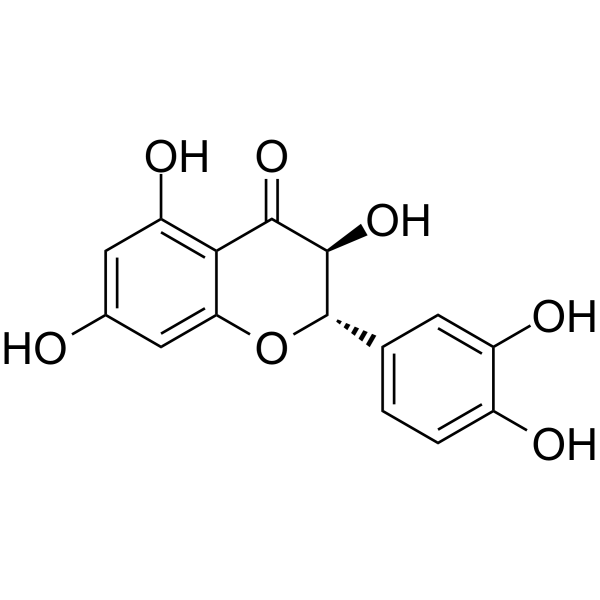
(-)-Taxifolin

Based on 1 Customer Validation
(-)-Taxifolin is the low-activity isomer of Taxifolin. Taxifolin is an orally effective collagenase inhibitor with an IC50 of 193.3 μM. Taxifolin dose-dependently reduces the levels of Smad-2, α-SMA, CTGF, type I collagen, NF-κB and FN in renal tissues, while decreasing serum levels of IL-1β, TNF-α, MDA, Scr and BUN, increasing SOD levels and reversing 27 serum metabolic biomarkers. Taxifolin inhibits the growth of a variety of pathogenic bacteria. Taxifolin can be used in studies related to renal fibrosis.
For research use only. We do not sell to patients.
- Purity: 98.98%
- CAS No.: 111003-33-9
- Formula: C15H12O7
- Molecular Weight:304.25
-
Storage:
-20°C, protect from light
* In solvent : -80°C, 6 months; -20°C, 1 month (protect from light)

To place orders, for customer services and technical support, please contact: MedChemExpress USA
Tel: 609-228-6898 E-mail: [email protected] [email protected]


-
 Biological Activity
-
Chemical Information
- Purity & Documentation
- References
-
 Help & FAQs





Biological Activity
(-)-Taxifolin is the low-activity isomer of Taxifolin. Compared with the common (+)-Taxifolin (HY-N0136), (-)-Taxifolin shows lower or no obvious activity in some systems, which is mainly due to the difference in spatial configuration between the two isomers, leading to distinct interaction modes with target proteins.
MedChemExpress (MCE) has not independently confirmed the accuracy of these methods. They are for reference only.
-
Animal Model:Male SD rats (8 weeks old, 180-200 g) were anesthetized with 5% chloral hydrate, and the left ureter was exposed via laparotomy, doubly ligated with 4-0 silk suture at the upper-middle segment, and then transected between the two ligatures. Penicillin was administered intramuscularly after surgery, and oral administration of the drug was initiated before the surgery and continued daily thereafter[1]
-
Dosage:8 mg/kg; 16 mg/kg
-
Administration:p.o.; daily; 28 days
-
Result:Reduced renal interstitial inflammatory cell infiltration, tubular epithelial cell swelling/degeneration/necrosis, and interstitial fibrosis area, with the 16 mg/kg dose showing greater improvement.
Significantly reduced IL-1β, MDA, Scr, and BUN levels, and increased SOD levels compared to the model group; the 16 mg/kg dose additionally reduced TNF-α levels, while the 8 mg/kg dose had little effect on TNF-α.
Reduced renal tissue levels of TGF-β1, Smad-2, α-SMA, CTGF, collagen type I, NF-κB, and FN in a dose-dependent manner, with the 16 mg/kg dose showing greater reductions for most markers.
Regulated 16 serum metabolites at 8 mg/kg and 27 serum metabolites at 16 mg/kg, shifting the metabolic profile toward the healthy control group in a dose-dependent manner; the 16 mg/kg dose normalized levels of metabolites involved in 8 key pathways, while the 8 mg/kg dose regulated metabolites involved in 5 pathways.


Chemical Information
-
CAS No. 111003-33-9
-
Appearance Solid
-
Molecular Weight 304.25
-
Formula C15H12O7
-
Color White to off-white
-
SMILES
O=C1[C@@H](O)[C@H](C2=CC=C(O)C(O)=C2)OC3=CC(O)=CC(O)=C13
-
Synonyms
(-)-Dihydroquercetin
-
Structure Classification
-
Initial Source
-
Shipping
Room temperature in continental US; may vary elsewhere.
-
Storage
-20°C, protect from light
* In solvent : -80°C, 6 months; -20°C, 1 month (protect from light)


Purity & Documentation
-
Data Sheet (270 KB)
-
SDS (251 KB)
- English - EN (251 KB)
- Français - FR (251 KB)
- Deutsch - DE (251 KB)
- Norwegian - NO (251 KB)
- Español - ES (251 KB)
- Swedish - SV (251 KB)
- Italian - IT (251 KB)
- Korean - KR (251 KB)
- Portuguese - PT (251 KB)
-
Handling Instructions (2659 KB)
References
[1]. Ren L, et al. Dissecting Efficacy and Metabolic Characteristic Mechanism of on Renal Fibrosis by Multivariate Approach and Ultra-Performance Liquid Chromatography Coupled With Mass Spectrometry-Based Metabolomics Strategy. Frontiers in pharmacology. 2020;11:608511. [Content Brief]
[2]. Angelis A, et al. Bio-Guided Isolation of Methanol-Soluble Metabolites of Common Spruce (Picea abies) Bark by-Products and Investigation of Their Dermo-Cosmetic Properties. Molecules (Basel, Switzerland). 2016 Nov 21;21(11):1586. [Content Brief]

Calculators
Concentration (start) × Volume (start) = Concentration (final) × Volume (final)


(-)-Taxifolin Related Classifications
HY-N0136B Related Classifications
 Powered by Bioz