



Iproniazid
Based on 2 publication(s) in Google Scholar
Iproniazid is an orally active, irreversible, non-selective monoamine oxidase (MAO) inhibitor. Iproniazid inhibits MAO activity and enhances Rotenone (HY-B1756)-induced Apoptosis. Iproniazid modulates neurotransmitter levels, affects neuronal function, induces hepatic necrosis, and interferes with the endocrine system. Iproniazid can be used in the research of depression, Parkinson's disease, and hepatotoxicity.
For research use only. We do not sell to patients.
- Purity : 99.91%
- CAS No.: 54-92-2
- Formula: C9H13N3O
- Molecular Weight:179.22
-
Storage:
-20°C, stored under nitrogen
* In solvent : -80°C, 6 months; -20°C, 1 month (stored under nitrogen)

To place orders, for customer services and technical support, please contact: MedChemExpress USA
Tel: 609-228-6898 E-mail: [email protected] [email protected]


-
 Biological Activity
-
Chemical Information
-
Solvent & Solubility
- Protocols
- Purity & Documentation
- References
-
 Help & FAQs


-
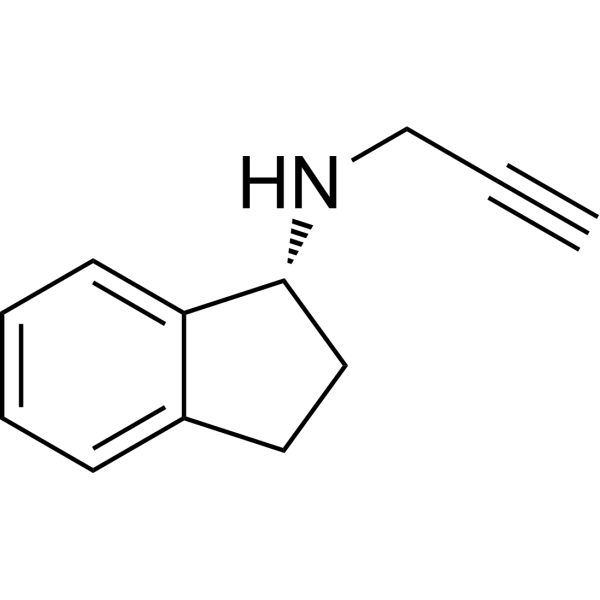
HY-14605A
RasagilineMAO Inhibitor -
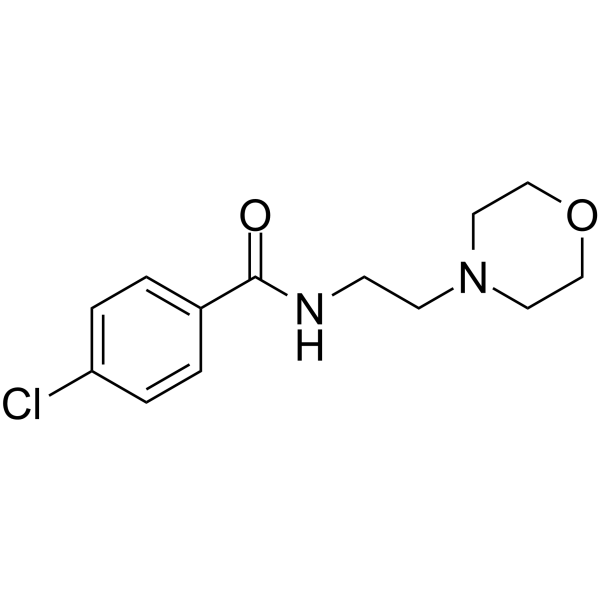
HY-B0534
MoclobemideMAOI Antidepressant -
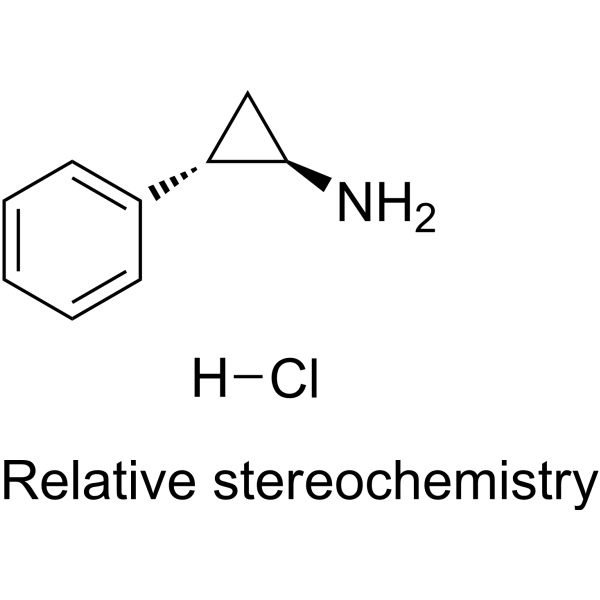
HY-17447A
Tranylcypromine hydrochlorideLSD1/MAO Inhibitor -
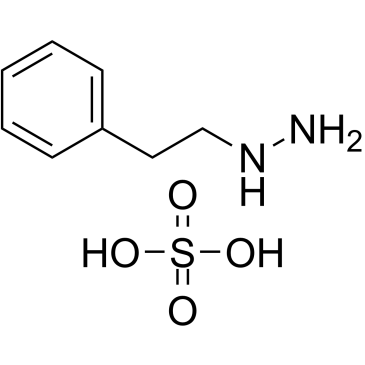
HY-B1018A
Phenelzine sulfateMAO Inhibitor -
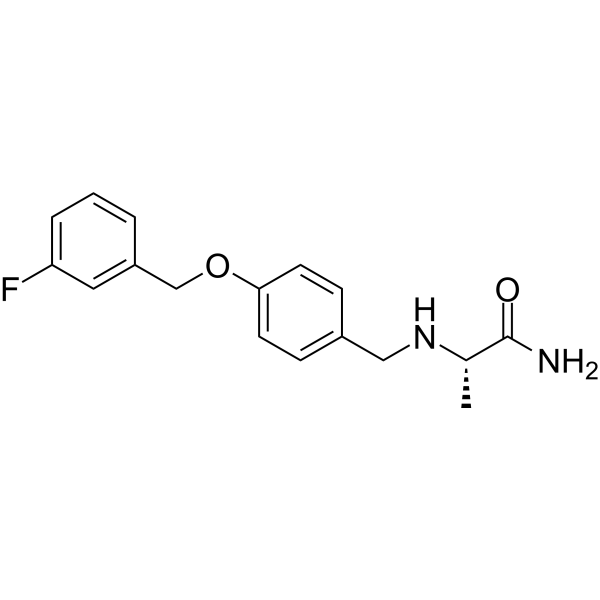
HY-70057
SafinamideMAO-B Inhibitor -
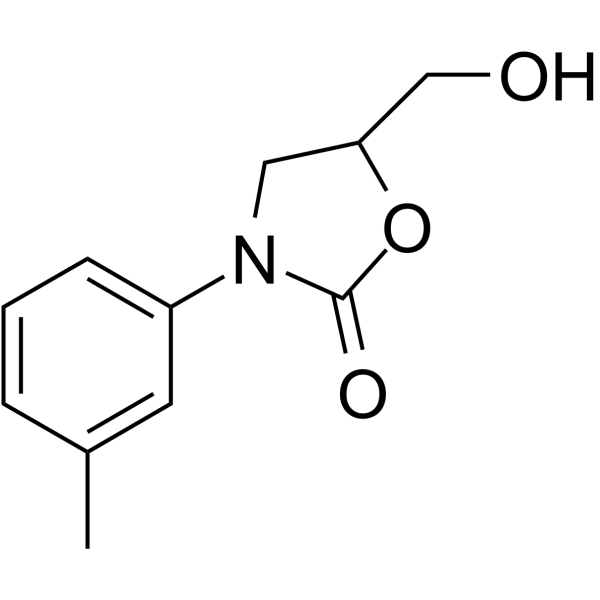
HY-14196
ToloxatoneMAO-A Inhibitor -
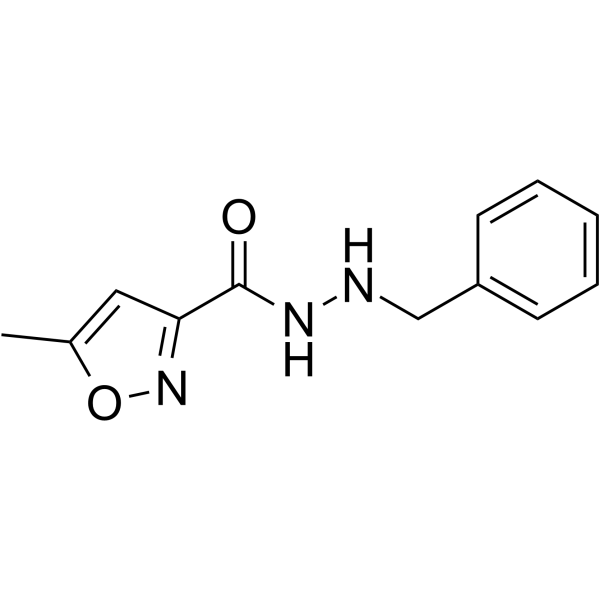
HY-13929
IsocarboxazidMonoamine Oxidase Inhibitor -
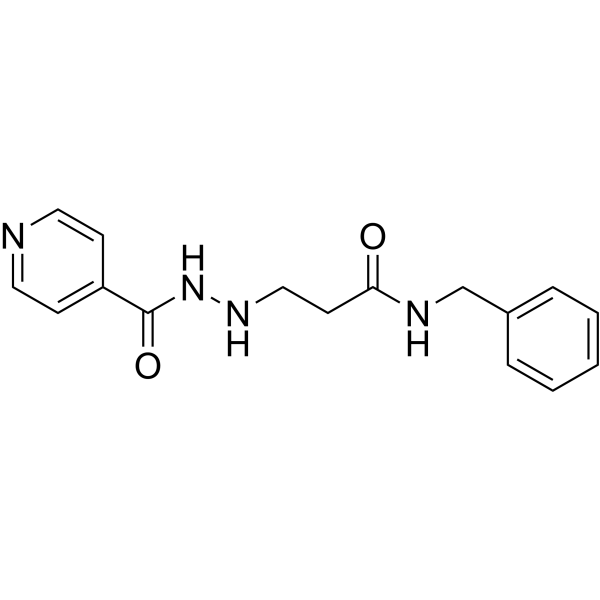
HY-B1199
NialamideMonoamine Oxidase Inhibitor -

HY-B0886AR
Iproniazid (Standard)Standard Of Iproniazid -
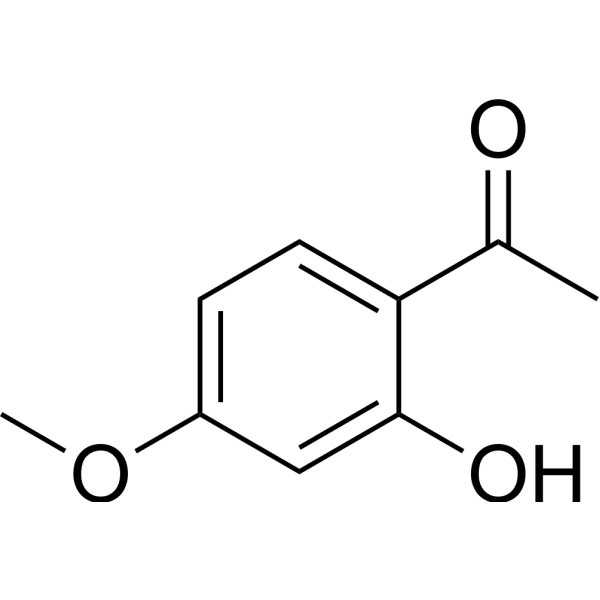
HY-N0159
PaeonolAutophagy Inducer -
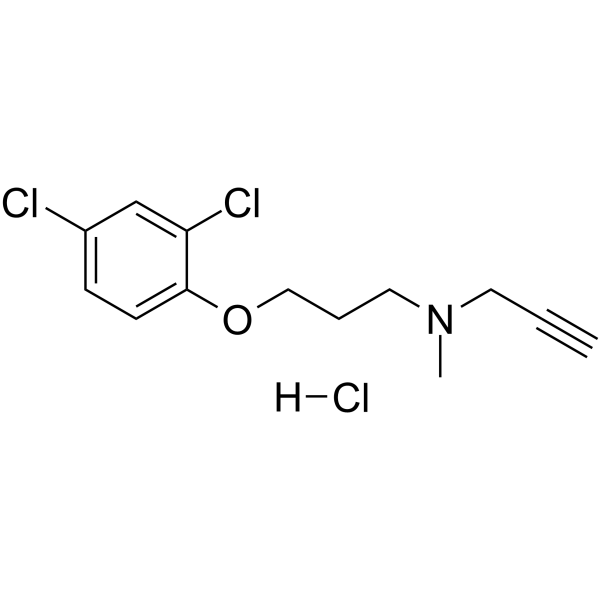
HY-14197A
Clorgyline hydrochlorideMAO-A Inhibitor -
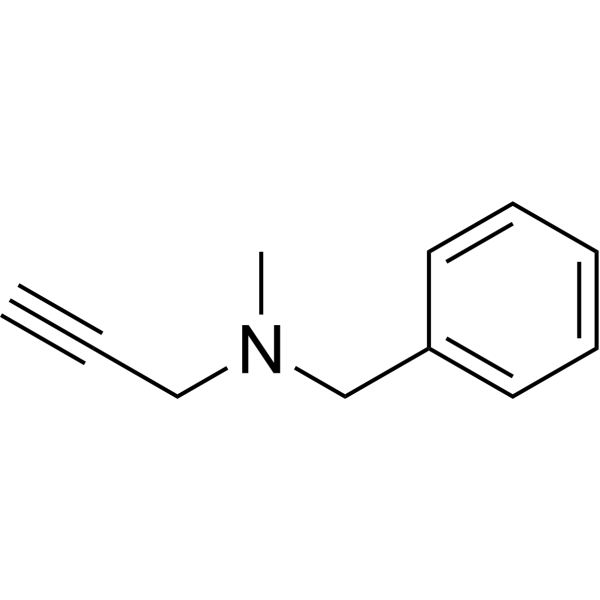
HY-A0091A
PargylineMonoamine Oxidase Inhibitor
Publications Citing Use of MedChemExpress (MCE) Iproniazid
More

Biological Activity
Description
Cellular Effect
|
Cell Line

|
Type | Value | Description | References |
|---|---|---|---|---|
| BTI-TN-5B1-4 | IC50 |
6.56 μM
Compound: iproniazide
|
Inhibition of human recombinant MAOA expressed in BTI-TN-5B1-4 cells assessed as effect on H2O2 production from para-tyramine by fluorimetric method
Inhibition of human recombinant MAOA expressed in BTI-TN-5B1-4 cells assessed as effect on H2O2 production from para-tyramine by fluorimetric method
|
[PMID: 19267475] |
| BTI-TN-5B1-4 | IC50 |
7.54 μM
Compound: iproniazide
|
Inhibition of human recombinant MAOB expressed in BTI-TN-5B1-4 cells assessed as effect on H2O2 production from para-tyramine by fluorimetric method
Inhibition of human recombinant MAOB expressed in BTI-TN-5B1-4 cells assessed as effect on H2O2 production from para-tyramine by fluorimetric method
|
[PMID: 19267475] |
| BTI-TN-5B1-4 | IC50 |
6.56 μM
Compound: Iproniazid
|
Inhibition of human recombinant MAOA expressed in BTI-TN-5B1-4 cells by para-tyramine oxidation assay
Inhibition of human recombinant MAOA expressed in BTI-TN-5B1-4 cells by para-tyramine oxidation assay
|
[PMID: 20045650] |
| BTI-TN-5B1-4 | IC50 |
7.54 μM
Compound: Iproniazid
|
Inhibition of human recombinant MAOB expressed in BTI-TN-5B1-4 cells by para-tyramine oxidation assay
Inhibition of human recombinant MAOB expressed in BTI-TN-5B1-4 cells by para-tyramine oxidation assay
|
[PMID: 20045650] |
| BTI-TN-5B1-4 | IC50 |
6566 nM
Compound: iproniazid
|
Inhibition of human recombinant MAOA expressed in baculovirus infected BTI-TN-5B1-4 insect cells assessed as hydrogen peroxide production from p-tyramine by amplex red assay
Inhibition of human recombinant MAOA expressed in baculovirus infected BTI-TN-5B1-4 insect cells assessed as hydrogen peroxide production from p-tyramine by amplex red assay
|
[PMID: 20579890] |
| BTI-TN-5B1-4 | IC50 |
7547 nM
Compound: iproniazid
|
Inhibition of human recombinant MAOB expressed in baculovirus infected BTI-TN-5B1-4 insect cells assessed as hydrogen peroxide production from p-tyramine by amplex red assay
Inhibition of human recombinant MAOB expressed in baculovirus infected BTI-TN-5B1-4 insect cells assessed as hydrogen peroxide production from p-tyramine by amplex red assay
|
[PMID: 20579890] |
| BTI-TN-5B1-4 | IC50 |
6.56 μM
Compound: iproniazid
|
Inhibition of human recombinant MAOA expressed in baculovirus infected insect BTI-TN-5B1-4 cells assessed as production of hydrogen peroxide from p-tyramine by amplex red assay
Inhibition of human recombinant MAOA expressed in baculovirus infected insect BTI-TN-5B1-4 cells assessed as production of hydrogen peroxide from p-tyramine by amplex red assay
|
[PMID: 20715818] |
| BTI-TN-5B1-4 | IC50 |
7.54 μM
Compound: iproniazid
|
Inhibition of human recombinant MAOB expressed in baculovirus infected insect BTI-TN-5B1-4 cells assessed as production of hydrogen peroxide from p-tyramine by amplex red assay
Inhibition of human recombinant MAOB expressed in baculovirus infected insect BTI-TN-5B1-4 cells assessed as production of hydrogen peroxide from p-tyramine by amplex red assay
|
[PMID: 20715818] |
| BTI-TN-5B1-4 | IC50 |
6.56 μM
Compound: Iproniazide
|
Inhibition of human recombinant MAO-A expressed in BTI-TN-5B1-4 cells assessed as H2O2 production using para-tyramine substrate by fluorimetric method
Inhibition of human recombinant MAO-A expressed in BTI-TN-5B1-4 cells assessed as H2O2 production using para-tyramine substrate by fluorimetric method
|
[PMID: 21316817] |
| BTI-TN-5B1-4 | IC50 |
7.54 μM
Compound: Iproniazide
|
Inhibition of human recombinant MAO-B expressed in BTI-TN-5B1-4 cells assessed as H2O2 production using para-tyramine substrate by fluorimetric method
Inhibition of human recombinant MAO-B expressed in BTI-TN-5B1-4 cells assessed as H2O2 production using para-tyramine substrate by fluorimetric method
|
[PMID: 21316817] |
| BTI-TN-5B1-4 | IC50 |
6.56 μM
Compound: Iproniazid
|
Inhibition of human recombinant MAO-A expressed in baculovirus infected BTI-TN-5B1-4 insect sells assessed as hydrogen peroxide production by fluorimetric method
Inhibition of human recombinant MAO-A expressed in baculovirus infected BTI-TN-5B1-4 insect sells assessed as hydrogen peroxide production by fluorimetric method
|
[PMID: 21405131] |
| BTI-TN-5B1-4 | IC50 |
7.54 μM
Compound: Iproniazid
|
Inhibition of human recombinant MAO-B expressed in baculovirus infected BTI-TN-5B1-4 insect sells assessed as hydrogen peroxide production by fluorimetric method
Inhibition of human recombinant MAO-B expressed in baculovirus infected BTI-TN-5B1-4 insect sells assessed as hydrogen peroxide production by fluorimetric method
|
[PMID: 21405131] |
| BTI-TN-5B1-4 | IC50 |
6.56 μM
Compound: Iproniazid
|
Inhibition of human recombinant MAO-A expressed in baculovirus infected BTI-TN-5B1-4 cells assessed as production of hydrogen peroxide from p-tyramine after 15 mins by microplate fluorescence assay
Inhibition of human recombinant MAO-A expressed in baculovirus infected BTI-TN-5B1-4 cells assessed as production of hydrogen peroxide from p-tyramine after 15 mins by microplate fluorescence assay
|
[PMID: 21872365] |
| BTI-TN-5B1-4 | IC50 |
7.54 μM
Compound: Iproniazid
|
Inhibition of human recombinant MAO-B expressed in baculovirus infected BTI-TN-5B1-4 cells assessed as production of hydrogen peroxide from p-tyramine after 15 mins by microplate fluorescence assay
Inhibition of human recombinant MAO-B expressed in baculovirus infected BTI-TN-5B1-4 cells assessed as production of hydrogen peroxide from p-tyramine after 15 mins by microplate fluorescence assay
|
[PMID: 21872365] |
| BTI-TN-5B1-4 | IC50 |
6.56 μM
Compound: Iproniazid
|
Inhibition of human recombinant MAOA expressed in baculovirus infected BTI-TN-5B1-4 insect cells assessed as hydrogen peroxide production from p-tyramine after 15 mins by amplex red assay
Inhibition of human recombinant MAOA expressed in baculovirus infected BTI-TN-5B1-4 insect cells assessed as hydrogen peroxide production from p-tyramine after 15 mins by amplex red assay
|
[PMID: 22005185] |
| BTI-TN-5B1-4 | IC50 |
7.54 μM
Compound: Iproniazid
|
Inhibition of human recombinant MAOB expressed in baculovirus infected BTI-TN-5B1-4 insect cells assessed as hydrogen peroxide production from p-tyramine after 15 mins by amplex red assay
Inhibition of human recombinant MAOB expressed in baculovirus infected BTI-TN-5B1-4 insect cells assessed as hydrogen peroxide production from p-tyramine after 15 mins by amplex red assay
|
[PMID: 22005185] |
| BTI-TN-5B1-4 | IC50 |
6.56 μM
Compound: Iproniazid
|
Inhibition of human recombinant MAO-A expressed in baculovirus infected BTI-TN-5B1-4 insect cells assessed as inhibition of hydrogen peroxide production from p-tryptamine after 15 mins by fluorimetric method
Inhibition of human recombinant MAO-A expressed in baculovirus infected BTI-TN-5B1-4 insect cells assessed as inhibition of hydrogen peroxide production from p-tryptamine after 15 mins by fluorimetric method
|
[PMID: 22222137] |
| BTI-TN-5B1-4 | IC50 |
7.54 μM
Compound: Iproniazid
|
Inhibition of human recombinant MAO-B expressed in baculovirus infected BTI-TN-5B1-4 insect cells assessed as inhibition of hydrogen peroxide production from p-tryptamine after 15 mins by fluorimetric method
Inhibition of human recombinant MAO-B expressed in baculovirus infected BTI-TN-5B1-4 insect cells assessed as inhibition of hydrogen peroxide production from p-tryptamine after 15 mins by fluorimetric method
|
[PMID: 22222137] |
| BTI-TN-5B1-4 | IC50 |
6.56 μM
Compound: I
|
Inhibition of human MAO-A expressed in baculovirus infected BTI-TN-5B1-4 cells using p-tyramine as substrate incubated for 15 mins prior to substrate addition measured for 15 mins by Amplex red assay
Inhibition of human MAO-A expressed in baculovirus infected BTI-TN-5B1-4 cells using p-tyramine as substrate incubated for 15 mins prior to substrate addition measured for 15 mins by Amplex red assay
|
[PMID: 23153812] |
| BTI-TN-5B1-4 | IC50 |
7.54 μM
Compound: I
|
Inhibition of human MAO-B expressed in baculovirus infected BTI-TN-5B1-4 cells using p-tyramine as substrate incubated for 15 mins prior to substrate addition measured for 15 mins by Amplex red assay
Inhibition of human MAO-B expressed in baculovirus infected BTI-TN-5B1-4 cells using p-tyramine as substrate incubated for 15 mins prior to substrate addition measured for 15 mins by Amplex red assay
|
[PMID: 23153812] |
| BTI-TN-5B1-4 | IC50 |
6.56 μM
Compound: Iproniazid
|
Inhibition of human recombinant microsomal MAO-A expressed in baculovirus infected BTI-TN-5B1-4 cells using p-tyramine as substrate assessed as production of H2O2 incubated for 15 mins followed by substrate addition measured over 15 mins by fluorimetric a
Inhibition of human recombinant microsomal MAO-A expressed in baculovirus infected BTI-TN-5B1-4 cells using p-tyramine as substrate assessed as production of H2O2 incubated for 15 mins followed by substrate addition measured over 15 mins by fluorimetric a
|
[PMID: 23474901] |
| BTI-TN-5B1-4 | IC50 |
7.54 μM
Compound: Iproniazid
|
Inhibition of human recombinant microsomal MAO-B expressed in baculovirus infected BTI-TN-5B1-4 cells using p-tyramine as substrate assessed as production of H2O2 incubated for 15 mins followed by substrate addition measured over 15 mins by fluorimetric a
Inhibition of human recombinant microsomal MAO-B expressed in baculovirus infected BTI-TN-5B1-4 cells using p-tyramine as substrate assessed as production of H2O2 incubated for 15 mins followed by substrate addition measured over 15 mins by fluorimetric a
|
[PMID: 23474901] |
| BTI-TN-5B1-4 | IC50 |
6.56 μM
Compound: Iproniazid
|
Inhibition of human recombinant microsomal MAO-A expressed in baculovirus-infected insect BTI-TN-5B1-4 cells assessed as p-tyramine conversion to H2O2 by fluorescence assay
Inhibition of human recombinant microsomal MAO-A expressed in baculovirus-infected insect BTI-TN-5B1-4 cells assessed as p-tyramine conversion to H2O2 by fluorescence assay
|
[PMID: 23927971] |
| BTI-TN-5B1-4 | IC50 |
7.54 μM
Compound: Iproniazid
|
Inhibition of human recombinant microsomal MAO-B expressed in baculovirus-infected insect BTI-TN-5B1-4 cells assessed as p-tyramine conversion to H2O2 by fluorescence assay
Inhibition of human recombinant microsomal MAO-B expressed in baculovirus-infected insect BTI-TN-5B1-4 cells assessed as p-tyramine conversion to H2O2 by fluorescence assay
|
[PMID: 23927971] |
| BTI-TN-5B1-4 | IC50 |
6.56 μM
Compound: Iproniazid
|
Inhibition of human recombinant MAO-A expressed in baculovirus-infected BTI-TN-5B1-4 cell microsomes assessed as decrease in H2O2 production using p-tyramine as substrate preincubated for 15 mins by Amplex Red reagent based fluorimetric method
Inhibition of human recombinant MAO-A expressed in baculovirus-infected BTI-TN-5B1-4 cell microsomes assessed as decrease in H2O2 production using p-tyramine as substrate preincubated for 15 mins by Amplex Red reagent based fluorimetric method
|
[PMID: 24746464] |
| BTI-TN-5B1-4 | IC50 |
7.54 μM
Compound: Iproniazid
|
Inhibition of human recombinant MAO-B expressed in baculovirus-infected BTI-TN-5B1-4 cell microsomes assessed as decrease in H2O2 production using p-tyramine as substrate preincubated for 15 mins by Amplex Red reagent based fluorimetric method
Inhibition of human recombinant MAO-B expressed in baculovirus-infected BTI-TN-5B1-4 cell microsomes assessed as decrease in H2O2 production using p-tyramine as substrate preincubated for 15 mins by Amplex Red reagent based fluorimetric method
|
[PMID: 24746464] |
| BTI-TN-5B1-4 | IC50 |
6.56 μM
Compound: Iproniazid
|
Inhibition of human recombinant microsomal MAO-A expressed in baculovirus infected BTI-TN-5B1-4 cells using p-tyramine as substrate assessed as reduction in H2O2 production preincubated for 15 mins followed by substrate addition measured for 15 mins Ample
Inhibition of human recombinant microsomal MAO-A expressed in baculovirus infected BTI-TN-5B1-4 cells using p-tyramine as substrate assessed as reduction in H2O2 production preincubated for 15 mins followed by substrate addition measured for 15 mins Ample
|
[PMID: 27135371] |
| BTI-TN-5B1-4 | IC50 |
7.54 μM
Compound: Iproniazid
|
Inhibition of human recombinant microsomal MAO-B expressed in baculovirus infected BTI-TN-5B1-4 cells using p-tyramine as substrate assessed as reduction in H2O2 production preincubated for 15 mins followed by substrate addition measured for 15 mins Ample
Inhibition of human recombinant microsomal MAO-B expressed in baculovirus infected BTI-TN-5B1-4 cells using p-tyramine as substrate assessed as reduction in H2O2 production preincubated for 15 mins followed by substrate addition measured for 15 mins Ample
|
[PMID: 27135371] |
| BTI-TN-5B1-4 | IC50 |
6.56 μM
Compound: I
|
Inhibition of human MAO-A expressed in baculovirus infected BTI-TN-5B1-4 insect cells using p-tyramine as substrate assessed as hydrogen peroxide production by fluorimetric method
Inhibition of human MAO-A expressed in baculovirus infected BTI-TN-5B1-4 insect cells using p-tyramine as substrate assessed as hydrogen peroxide production by fluorimetric method
|
10.1039/C0MD00014K |
| BTI-TN-5B1-4 | IC50 |
7.54 μM
Compound: I
|
Inhibition of human MAO-B expressed in baculovirus infected BTI-TN-5B1-4 insect cells using p-tyramine as substrate assessed as hydrogen peroxide production by fluorimetric method
Inhibition of human MAO-B expressed in baculovirus infected BTI-TN-5B1-4 insect cells using p-tyramine as substrate assessed as hydrogen peroxide production by fluorimetric method
|
10.1039/C0MD00014K |
| Sf21 | IC50 |
>1000 μM
Compound: Iproniazid
|
Inhibition of human BSEP expressed in plasma membrane vesicles of Sf21 cells assessed as inhibition of ATP-dependent [3H]taurocholate uptake
Inhibition of human BSEP expressed in plasma membrane vesicles of Sf21 cells assessed as inhibition of ATP-dependent [3H]taurocholate uptake
|
[PMID: 21965623] |
| Sf21 | IC50 |
>1000 μM
Compound: Iproniazid
|
Inhibition of Sprague-Dawley rat Bsep expressed in plasma membrane vesicles of Sf21 cells assessed as inhibition of ATP-dependent [3H]taurocholate uptake
Inhibition of Sprague-Dawley rat Bsep expressed in plasma membrane vesicles of Sf21 cells assessed as inhibition of ATP-dependent [3H]taurocholate uptake
|
[PMID: 21965623] |
In Vitro
Iproniazid (10 mM; 24 h) increases intracellular dopamine content and accelerates DNA fragmentation induced by 0.1 μM Rotenone (HY-B1756) in SH-SY5Y cells[2].
Iproniazid (100 μM; 10 min) inhibits serotonin metabolism by monoamine oxidase in cultured guinea pig tracheal smooth muscle cells[3].
MedChemExpress (MCE) has not independently confirmed the accuracy of these methods. They are for reference only.
-
Cell Line:human dopaminergic SH-SY5Y cells
-
Concentration:10 mM
-
Incubation Time:24 h
-
Result:Increased intracellular dopamine content and accelerated DNA fragmentation induced by 0.1 μM Rotenone, enhancing Rotenone-induced apoptosis.
In Vivo
Iproniazid (i.p.) causes hepatic necrosis in Sprague-Dawley and Fischer rats[5].
Iproniazid dihydrochloride (53-224 mg/kg; p.o.; daily) retards sexual maturation, lengthens the estrous cycle, and inhibits corpus luteum formation in female rats[6].
MedChemExpress (MCE) has not independently confirmed the accuracy of these methods. They are for reference only.
-
Animal Model:female rats (e.g., initial weight 106-130 g, age 35-45 days) [6]
-
Dosage:53, 200, 205, 224 mg/kg
-
Administration:oral, daily, 30, 40, 61, 67 days
-
Result:Retarded sexual maturation (delayed vagina patency), lengthened estrous cycle.
Inhibited corpus luteum formation, caused hypotrophy of ovarian interstitial tissue and retarded uterine development.


Chemical Information
-
CAS No. 54-92-2
-
Appearance Solid
-
Molecular Weight 179.22
-
Formula C9H13N3O
-
Color White to off-white
-
SMILES
O=C(C1=CC=NC=C1)NNC(C)C
-
Shipping
Room temperature in continental US; may vary elsewhere.
-
Storage
-20°C, stored under nitrogen
* In solvent : -80°C, 6 months; -20°C, 1 month (stored under nitrogen)


Publications (2)
-
Journal Impact Factor
-
Most Recent
-
Nat Commun
Palmitoyltransferase DHHC9 and acyl protein thioesterase APT1 modulate renal fibrosis through regulating β-catenin palmitoylation. [Abstract]2023 Oct 21;14(1):6682. PMID: 37865665 -
Biotechnol Bioeng
An integrated biomimetic array chip for establishment of collagen-based 3D primary human hepatocyte model for prediction of clinical drug-induced liver injury. [Abstract]2021 Dec;118(12):4687-4698. PMID: 34478150


Solvent & Solubility
In Vitro:
DMSO : 100 mg/mL (557.97 mM; Need ultrasonic; Hygroscopic DMSO has a significant impact on the solubility of product, please use newly opened DMSO)
H2O : ≥ 100 mg/mL (557.97 mM)
* "≥" means soluble, but saturation unknown.
Please refer to the solubility information to select the appropriate solvent. Once prepared, please aliquot and store the solution to prevent product inactivation from repeated freeze-thaw cycles.
Storage method and period of stock solution: -80°C, 6 months; -20°C, 1 month (stored under nitrogen). When stored at -80°C, please use it within 6 months. When stored at -20°C, please use it within 1 month.
* Note: If you choose water as the stock solution, please dilute it to the working solution, then filter and sterilize it with a 0.22 μm filter before use.
Please refer to the solubility information to select the appropriate solvent. Once prepared, please aliquot and store the solution to prevent product inactivation from repeated freeze-thaw cycles.
Storage method and period of stock solution: -80°C, 6 months; -20°C, 1 month (stored under nitrogen). When stored at -80°C, please use it within 6 months. When stored at -20°C, please use it within 1 month.
* Note: If you choose water as the stock solution, please dilute it to the working solution, then filter and sterilize it with a 0.22 μm filter before use.
Concentration (start) × Volume (start) = Concentration (final) × Volume (final)
In Vivo:
Select the appropriate dissolution method based on your experimental animal and administration route.
- For the following dissolution methods, please ensure to first prepare a clear stock solution using an In Vitro approach and then sequentially add co-solvents:
- To ensure reliable experimental results, the clarified stock solution can be appropriately stored based on storage conditions. As for the working solution for In Vivo experiments, it is recommended to prepare freshly and use it on the same day.
- The percentages shown for the solvents indicate their volumetric ratio in the final prepared solution. If precipitation or phase separation occurs during preparation, heat and/or sonication can be used to aid dissolution.
Add each solvent one by one: 10% DMSO 40% PEG300 5% Tween-80 45% Saline
Solubility: ≥ 2.5 mg/mL (13.95 mM); Clear solution
This protocol yields a clear solution of ≥ 2.5 mg/mL (saturation unknown).
Taking 1 mL working solution as an example, add 100 μL DMSO stock solution (25.0 mg/mL) to 400 μL PEG300, and mix evenly; then add 50 μL Tween-80 and mix evenly; then add 450 μL Saline to adjust the volume to 1 mL.
Preparation of Saline: Dissolve 0.9 g sodium chloride in ddH₂O and dilute to 100 mL to obtain a clear Saline solution.
Add each solvent one by one: 10% DMSO 90% (20% SBE-β-CD in Saline)
Solubility: ≥ 2.5 mg/mL (13.95 mM); Clear solution
This protocol yields a clear solution of ≥ 2.5 mg/mL (saturation unknown).
Taking 1 mL working solution as an example, add 100 μL DMSO stock solution (25.0 mg/mL) to 900 μL 20% SBE-β-CD in Saline, and mix evenly.
Preparation of 20% SBE-β-CD in Saline (4°C, storage for one week): 2 g SBE-β-CD powder is dissolved in 10 mL Saline, completely dissolve until clear.
In Vivo Dissolution Calculator
Please enter the basic information of animal experiments:
-
-
-
-
Recommended: Prepare an additional quantity of animals to account for potential losses during experiments.
Working solution concentration: 0.22 mg/mL
This product has good water solubility, please refer to the measured solubility data in water/PBS/Saline for details.


Purity & Documentation
-
Data Sheet (277 KB)
-
SDS (396 KB)
- English - EN (396 KB)
- Français - FR (396 KB)
- Deutsch - DE (396 KB)
- Norwegian - NO (396 KB)
- Español - ES (396 KB)
- Swedish - SV (396 KB)
- Italian - IT (396 KB)
- Korean - KR (396 KB)
- Portuguese - PT (396 KB)
-
Handling Instructions (2659 KB)
References
[2]. Watabe M, et al. Mitochondrial complex I inhibitor rotenone-elicited dopamine redistribution from vesicles to cytosol in human dopaminergic SH-SY5Y cells. J Pharmacol Exp Ther. 2007 Nov;323(2):499-507. [Content Brief]
[3]. Dodson AM, et al. Serotonin uptake and metabolism by cultured guinea pig airway smooth muscle cells. Pulm Pharmacol Ther. 2004;17(1):19-25. [Content Brief]
[4]. De Oliveira LF, et al. Effects of 5-hydroxytryptophan, iproniazid and p-chlorophenylalanine on lidocaine seizure threshold of mice. Eur J Pharmacol. 1974 Nov;29(1):5-9. [Content Brief]
[5]. Nelson SD, et al. Hepatotoxicity and metabolism of iproniazid and isopropylhydrazine. J Pharmacol Exp Ther. 1978 Sep;206(3):574-85. [Content Brief]


Complete Stock Solution Preparation Table
Please refer to the solubility information to select the appropriate solvent. Once prepared, please aliquot and store the solution to prevent product inactivation from repeated freeze-thaw cycles.
Storage method and period of stock solution: -80°C, 6 months; -20°C, 1 month (stored under nitrogen). When stored at -80°C, please use it within 6 months. When stored at -20°C, please use it within 1 month.
| Optional Solvent | Concentration Solvent Mass | 1 mg | 5 mg | 10 mg | 25 mg |
|---|---|---|---|---|---|
| DMSO / H2O | 1 mM | 5.5797 mL | 27.8987 mL | 55.7973 mL | 139.4934 mL |
| 5 mM | 1.1159 mL | 5.5797 mL | 11.1595 mL | 27.8987 mL | |
| 10 mM | 0.5580 mL | 2.7899 mL | 5.5797 mL | 13.9493 mL | |
| 15 mM | 0.3720 mL | 1.8599 mL | 3.7198 mL | 9.2996 mL | |
| 20 mM | 0.2790 mL | 1.3949 mL | 2.7899 mL | 6.9747 mL | |
| 25 mM | 0.2232 mL | 1.1159 mL | 2.2319 mL | 5.5797 mL | |
| 30 mM | 0.1860 mL | 0.9300 mL | 1.8599 mL | 4.6498 mL | |
| 40 mM | 0.1395 mL | 0.6975 mL | 1.3949 mL | 3.4873 mL | |
| 50 mM | 0.1116 mL | 0.5580 mL | 1.1159 mL | 2.7899 mL | |
| 60 mM | 0.0930 mL | 0.4650 mL | 0.9300 mL | 2.3249 mL | |
| 80 mM | 0.0697 mL | 0.3487 mL | 0.6975 mL | 1.7437 mL | |
| 100 mM | 0.0558 mL | 0.2790 mL | 0.5580 mL | 1.3949 mL |
* Note: If you choose water as the stock solution, please dilute it to the working solution, then filter and sterilize it with a 0.22 μm filter before use.


Iproniazid Related Classifications
HY-B0886A Related Classifications
 Powered by Bioz