



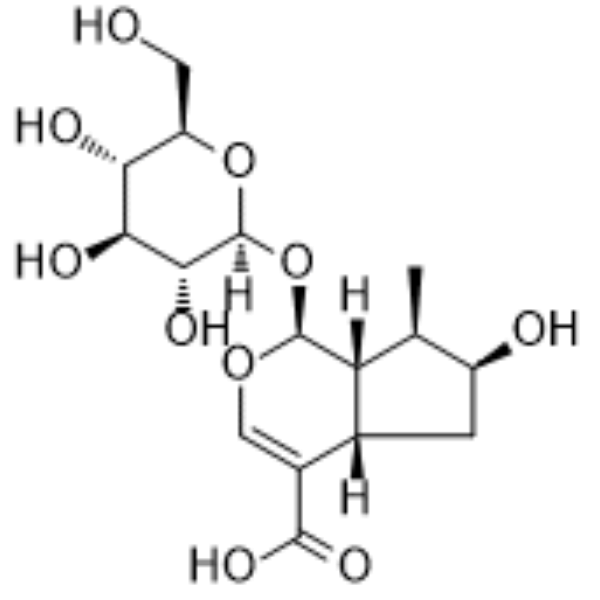
Loganic acid
Based on 1 publication(s) in Google Scholar
Loganic acid is an iridoid isolated from cornelian cherry fruits. Loganic acid inhibits NF-κB signaling pathway, activates Nrf2 signaling pathway, exhibits anti-inflammatory activity. Loganic acid can modulate diet-induced atherosclerosis and redox status. Loganic acid has strong free radical scavenging activity and remarkable cyto-protective effect against heavy metal mediated toxicity. Loganic acid is orally active.
商品は「研究用試薬」です。人や動物の医療用・臨床診断用・食品用の製品ではありません。
研究用途以外に使用した場合、当社は一切の責任を負いかねます。
- 純度 : 99.05%
- CAS 番号: 22255-40-9
- 分子式: C16H24O10
- 分子量:376.36
-
保管条件:
4°C, protect from light
* In solvent : -80°C, 6 months; -20°C, 1 month (protect from light)

To place orders, for customer services and technical support, please contact: MedChemExpress USA
Tel: 609-228-6898 E-mail: [email protected] [email protected]


-
 生物活性
生物活性
-
化学情報
-
溶剤 & 溶解度
- プロトコル
- 純度とドキュメンテーション
- 参考文献
-
 Help & FAQs


-
HY-N0009
GeniposideInfluenza Virus Inhibitor -
HY-18258
Berberine chlorideAntibiotic -
HY-N0290
MangiferinNrf2 Activator -
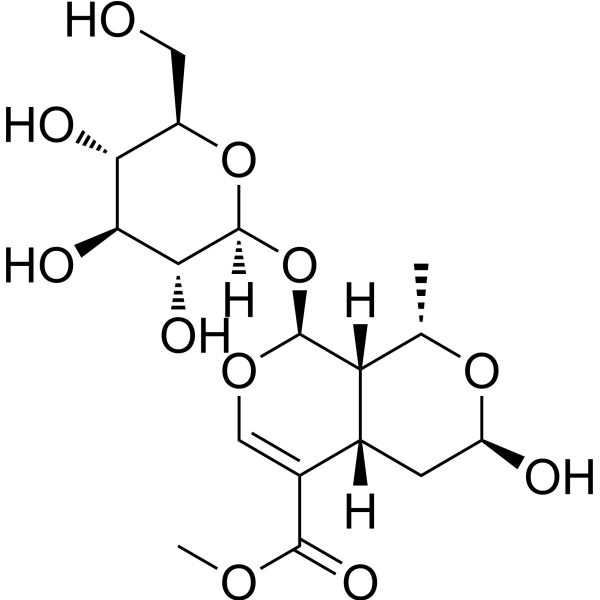
HY-N0532
MorronisidePyroptosis Inhibitor -

HY-N0513R
Loganic acid (Standard)Antioxidant Agent -
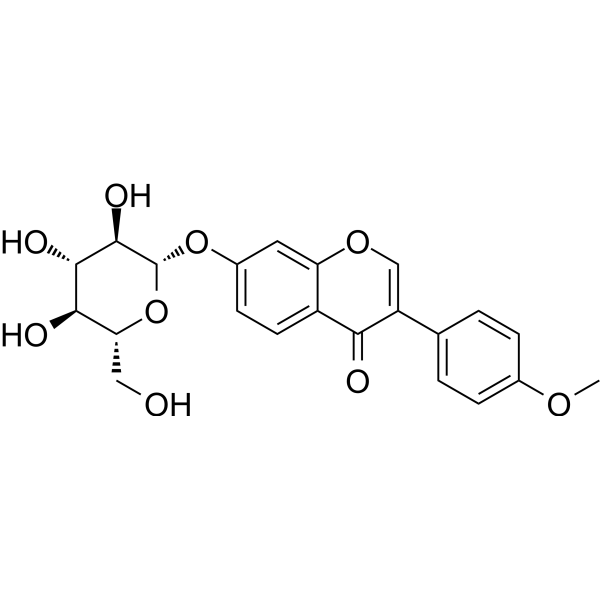
HY-N0270
OnoninIsoflavonoid -
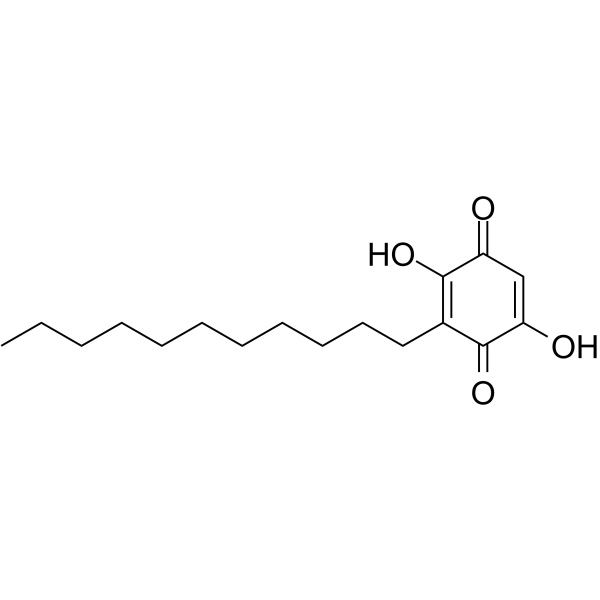
HY-17473
EmbelinXIAP Inhibitor -
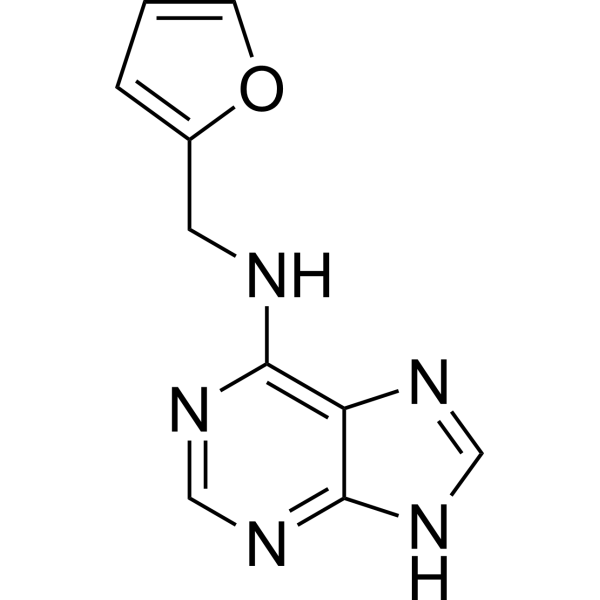
HY-N0160
KinetinPlant Hormone -
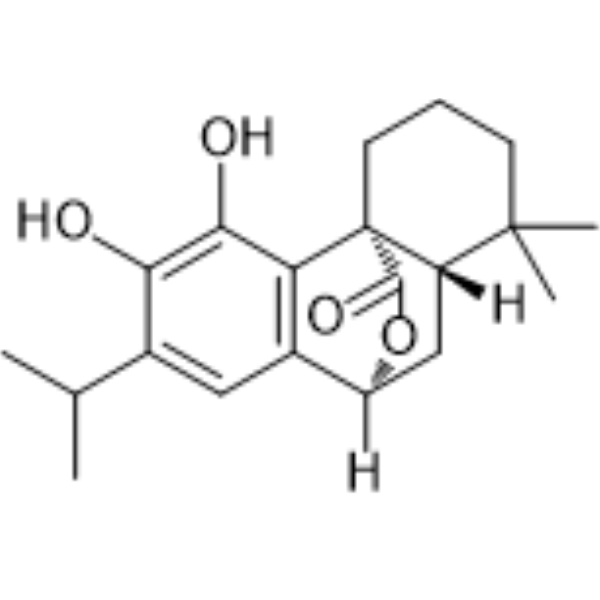
HY-N0643
CarnosolEndogenous Metabolite -
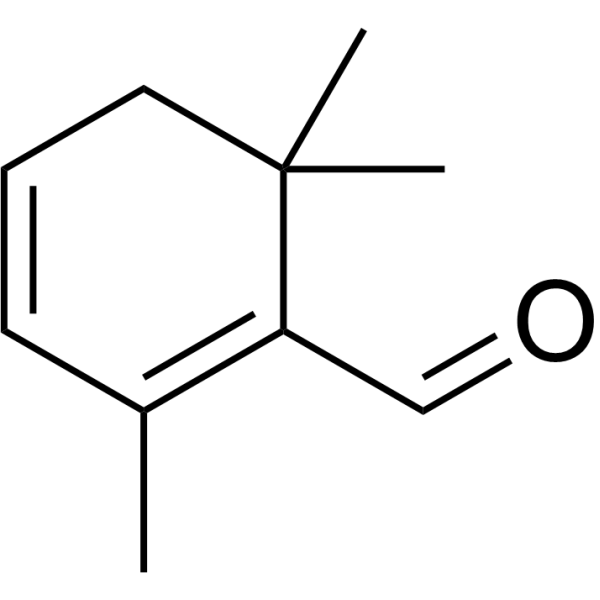
HY-N7560
SafranalPerfume Analogue -
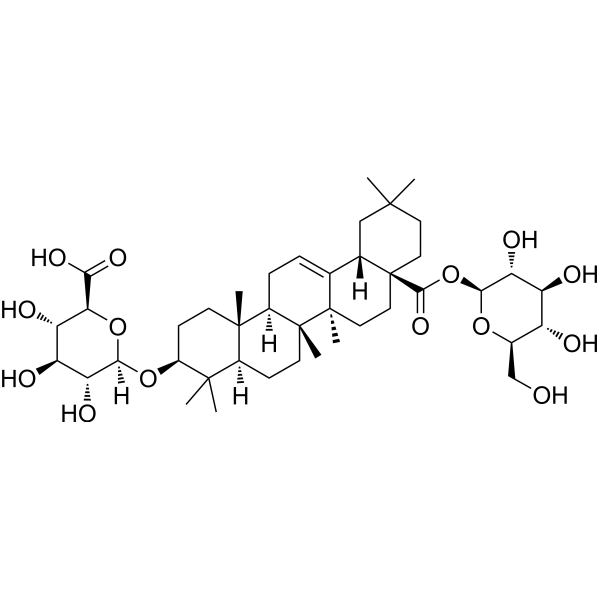
HY-N0818
Chikusetsusaponin IvaAnti-inflammatory Agent -
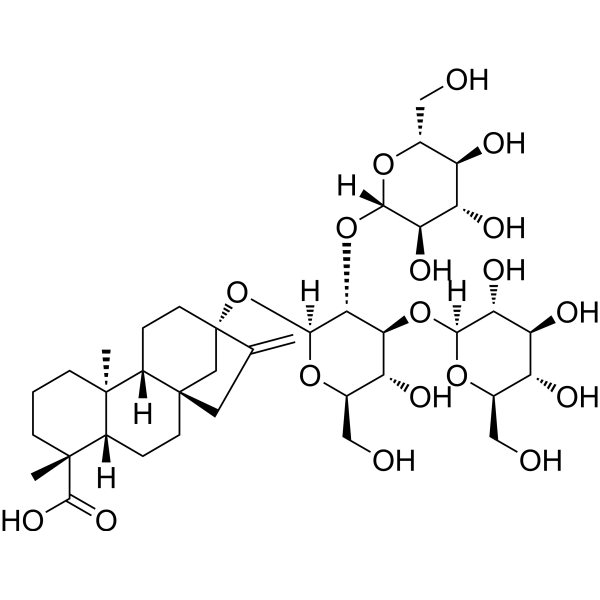
HY-N6808
Rebaudioside BSweetener
MedChemExpress(MCE)の使用を引用している文献 Loganic acid
More

生物活性
製品説明
Cellular Effect
|
Cell Line

|
Type | Value | Description | References |
|---|---|---|---|---|
| Huh-7 | IC50 |
11 μg/mL
Compound: 6, ASB-00012341-005
|
Antiviral activity against HCV infected in human Huh7 cells assessed as inhibition of viral replication after 72 hrs by NS5A staining
Antiviral activity against HCV infected in human Huh7 cells assessed as inhibition of viral replication after 72 hrs by NS5A staining
|
[PMID: 19904996] |
体外実験
Loganic acid exhibits antioxidant activity, scavenges DPPH free radicals, superoxide anion free radicals, and hydroxyl free radicals with IC50s of 149 μg/mL, 632.43 μg/mL and 29.78 μg/mL, respectively[2].
Loganic acid (100 μg/mL, 24 h) prevents heavy metal-induced cytotoxicity in PBMC, inhibits HgCl2-induced ROS generation and lipid peroxidation[2].
Loganic acid (0-50 µM, 5 days) activates alkaline phosphatase (ALP), promotes the osteoblast differentiation and inhibits the osteoclast differentiation[3].
Loganic acid (0-50 µM, 24 h) inhibits NF-κB nuclear translocation, activates Nrf2 translocation, and reduces the expressions of proinflammatory cytokine (IL-1β, IL-6, TNF-α) in LPS (HY-D1056)-stimulated RAW264.7 cell[4].
MedChemExpress (MCE) has not independently confirmed the accuracy of these methods. They are for reference only.
-
Cell Line:PBMC
-
Concentration:100 μg/mL
-
Incubation Time:24 h
-
Result:Improved HgCl2-inhibited cell viability of PBMC.
-
Cell Line:RAW 264.7
-
Concentration:0-50 µM
-
Incubation Time:24 h
-
Result:Inhibited the nuclear translocation of NF-κB.
Activated the nuclear translocation and accumulation of Nrf2.
体内実験
Loganic acid (2-50 mg/kg, po, once daily for 12 weeks) prevents OVX-induced bone loss and increases bone mineral density in OVX-induced osteoporosis mouse model[3].
Loganic acid (15-30 mg/kg, po, once daily for 14 days) ameliorates DSS (HY-116282C)-induced ulcerative colitis in mouse models[4].
MedChemExpress (MCE) has not independently confirmed the accuracy of these methods. They are for reference only.
-
Animal Model:Rabbit hypercholesterolemia models[1]
-
Dosage:20 mg/kg
-
Administration:po, daily for 60 days
-
Result:Reduced the formation of atherosclerotic plaques in the thoracic aorta and abdominal aorta.
Reduced the level of MDA in the liver, increased the levels of GSH.
Improved the activity of glutathione peroxidase (Gpx).
-
Animal Model:OVX-induced osteoporosis mouse model[3]
-
Dosage:2-50 mg/kg
-
Administration:po, once daily for 12 weeks
-
Result:Prevented bone density loss and improved bone structure in OVX mice.
-
Animal Model:DSS (HY-116282C)-induced ulcerative colitis in mouse models[4]
-
Dosage:15-30 mg/kg
-
Administration:po, once daily for 14 days
-
Result:Reduced DSS-induced weight loss, blood in stool.
Prevented colon shortening and splenomegaly.


化学情報
-
CAS 番号 22255-40-9
-
性状 Solid
-
分子量 376.36
-
分子式 C16H24O10
-
Color White to yellow
-
SMILES
O[C@H]([C@@H](O)[C@@H]1O)[C@](O[C@@H]1CO)([H])O[C@H]2[C@@]([C@H]3C)([H])[C@@](C[C@@H]3O)([H])C(C(O)=O)=CO2
-
Structure Classification
-
Initial Source
-
輸送条件
Room temperature in continental US; may vary elsewhere.
-
保管条件
4°C, protect from light
* In solvent : -80°C, 6 months; -20°C, 1 month (protect from light)


Publications (1)
-
Journal Impact Factor
-
Most Recent


溶剤 & 溶解度
体外:
DMSO : 50 mg/mL (132.85 mM; Need ultrasonic; Hygroscopic DMSO has a significant impact on the solubility of product, please use newly opened DMSO)
Please refer to the solubility information to select the appropriate solvent. Once prepared, please aliquot and store the solution to prevent product inactivation from repeated freeze-thaw cycles.
Storage method and period of stock solution: -80°C, 6 months; -20°C, 1 month (protect from light). When stored at -80°C, please use it within 6 months. When stored at -20°C, please use it within 1 month.
Please refer to the solubility information to select the appropriate solvent. Once prepared, please aliquot and store the solution to prevent product inactivation from repeated freeze-thaw cycles.
Storage method and period of stock solution: -80°C, 6 months; -20°C, 1 month (protect from light). When stored at -80°C, please use it within 6 months. When stored at -20°C, please use it within 1 month.
濃度 (開始) × 体積 (開始) = 濃度 (終了) × 体積 (終了)
体内:
Select the appropriate dissolution method based on your experimental animal and administration route.
- For the following dissolution methods, please ensure to first prepare a clear stock solution using an In Vitro approach and then sequentially add co-solvents:
- To ensure reliable experimental results, the clarified stock solution can be appropriately stored based on storage conditions. As for the working solution for In Vivo experiments, it is recommended to prepare freshly and use it on the same day.
- The percentages shown for the solvents indicate their volumetric ratio in the final prepared solution. If precipitation or phase separation occurs during preparation, heat and/or sonication can be used to aid dissolution.
Add each solvent one by one: 10% DMSO 40% PEG300 5% Tween-80 45% Saline
Solubility: ≥ 2.5 mg/mL (6.64 mM); Clear solution
This protocol yields a clear solution of ≥ 2.5 mg/mL (saturation unknown).
Taking 1 mL working solution as an example, add 100 μL DMSO stock solution (25.0 mg/mL) to 400 μL PEG300, and mix evenly; then add 50 μL Tween-80 and mix evenly; then add 450 μL Saline to adjust the volume to 1 mL.
Preparation of Saline: Dissolve 0.9 g sodium chloride in ddH₂O and dilute to 100 mL to obtain a clear Saline solution.
Add each solvent one by one: 10% DMSO 90% (20% SBE-β-CD in Saline)
Solubility: ≥ 2.5 mg/mL (6.64 mM); Clear solution
This protocol yields a clear solution of ≥ 2.5 mg/mL (saturation unknown).
Taking 1 mL working solution as an example, add 100 μL DMSO stock solution (25.0 mg/mL) to 900 μL 20% SBE-β-CD in Saline, and mix evenly.
Preparation of 20% SBE-β-CD in Saline (4°C, storage for one week): 2 g SBE-β-CD powder is dissolved in 10 mL Saline, completely dissolve until clear.
In Vivo Dissolution Calculator
Please enter the basic information of animal experiments:
-
-
-
-
Recommended: Prepare an additional quantity of animals to account for potential losses during experiments.
Please enter your animal formula composition:
-
%DMSO +
Recommended: Keep the proportion of DMSO in working solution below 2% if your animal is weak.
-
%+
-
+%Tween-80 + +
-
%Saline +
The co-solvents required include: DMSO, . All of co-solvents are available by MedChemExpress (MCE). , Tween 80. All of co-solvents are available by MedChemExpress (MCE).
Working solution concentration: 0.22 mg/mL
Method for preparing stock solution: mg drug dissolved in μL DMSO. Stock solution concentration: mg/mL. * In solvent : -80°C, 6 months; -20°C, 1 month (protect from light)
1. Take μL DMSO stock solution;
2. Add μL .
μL , mix evenly;
3. Then add μL Tween 80, mix evenly;
4. Then add μL
Please ensure that the stock solution in the first step is dissolved to a clear state, and add co-solvents in sequence. You can use ultrasonic heating (ultrasonic cleaner, recommended frequency 20-40 kHz), vortexing, etc. to assist dissolution.


純度とドキュメンテーション
-
データシート (285 KB)
-
SDS (396 KB)
- English - EN (396 KB)
- Français - FR (396 KB)
- Deutsch - DE (396 KB)
- Norwegian - NO (396 KB)
- Español - ES (396 KB)
- Swedish - SV (396 KB)
- Italian - IT (396 KB)
- Korean - KR (396 KB)
- Portuguese - PT (396 KB)
-
取扱説明書 (2659 KB)
参考文献
[1]. Sozański T, et al. Loganic acid and anthocyanins from cornelian cherry (Cornus mas L.) fruits modulate diet-induced atherosclerosis and redox status in rabbits. Adv Clin Exp Med. 2018 Nov;27(11):1505-1513. [Content Brief]
[2]. Abirami A, et al. Antioxidant and cytoprotective properties of loganic acid isolated from seeds of Strychnos potatorum L. against heavy metal induced toxicity in PBMC model. Drug Chem Toxicol. 2019 Oct 23:1-11. [Content Brief]
[3]. Park E, et al., Osteoprotective Effects of Loganic Acid on Osteoblastic and Osteoclastic Cells and Osteoporosis-Induced Mice. Int J Mol Sci. 2020 Dec 28;22(1):233. [Content Brief]
[4]. Prakash AN, et al. Loganic acid protects against ulcerative colitis by inhibiting TLR4/NF-κB mediated inflammation and activating the SIRT1/Nrf2 anti-oxidant responses in-vitro and in-vivo. Int Immunopharmacol. 2023 Sep;122:110585. [Content Brief]


Complete Stock Solution Preparation Table
Please refer to the solubility information to select the appropriate solvent. Once prepared, please aliquot and store the solution to prevent product inactivation from repeated freeze-thaw cycles.
Storage method and period of stock solution: -80°C, 6 months; -20°C, 1 month (protect from light). When stored at -80°C, please use it within 6 months. When stored at -20°C, please use it within 1 month.
| Optional Solvent | Concentration Solvent Mass | 1 mg | 5 mg | 10 mg | 25 mg |
|---|---|---|---|---|---|
| DMSO | 1 mM | 2.6570 mL | 13.2852 mL | 26.5703 mL | 66.4258 mL |
| 5 mM | 0.5314 mL | 2.6570 mL | 5.3141 mL | 13.2852 mL | |
| 10 mM | 0.2657 mL | 1.3285 mL | 2.6570 mL | 6.6426 mL | |
| 15 mM | 0.1771 mL | 0.8857 mL | 1.7714 mL | 4.4284 mL | |
| 20 mM | 0.1329 mL | 0.6643 mL | 1.3285 mL | 3.3213 mL | |
| 25 mM | 0.1063 mL | 0.5314 mL | 1.0628 mL | 2.6570 mL | |
| 30 mM | 0.0886 mL | 0.4428 mL | 0.8857 mL | 2.2142 mL | |
| 40 mM | 0.0664 mL | 0.3321 mL | 0.6643 mL | 1.6606 mL | |
| 50 mM | 0.0531 mL | 0.2657 mL | 0.5314 mL | 1.3285 mL | |
| 60 mM | 0.0443 mL | 0.2214 mL | 0.4428 mL | 1.1071 mL | |
| 80 mM | 0.0332 mL | 0.1661 mL | 0.3321 mL | 0.8303 mL | |
| 100 mM | 0.0266 mL | 0.1329 mL | 0.2657 mL | 0.6643 mL |


Loganic acid 関連分類
HY-N0513 関連分類
 Powered by Bioz