



JX06
Based on 7 publication(s) in Google Scholar
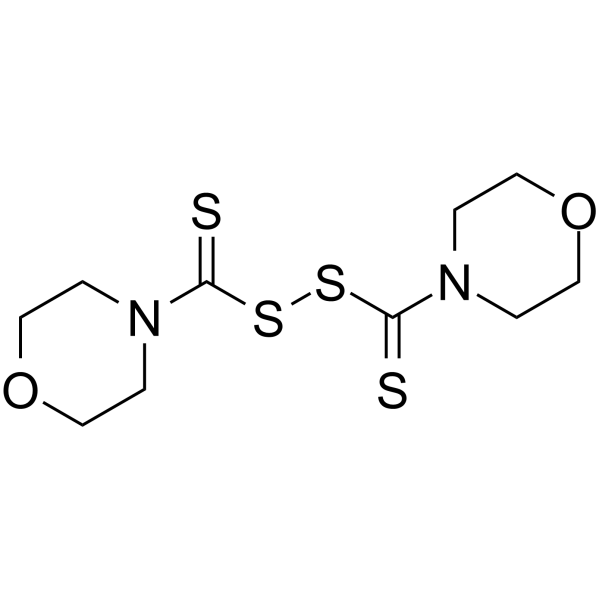
JX06 is a potent, selective and covalent inhibitor of PDK. JX06 inhibits PDK1, PDK2 and PDK3 with IC50s of 49 nM, 101 nM, and 313 nM, respectively. JX06 inhibits PDK1 activity via covalently binding to a cysteine residue in an irreversible manner. JX06 shows significant antitumor activity.
For research use only. We do not sell to patients.
- Purity : 99.78%
- CAS No.: 729-46-4
- Formula: C10H16N2O2S4
- Molecular Weight:324.51
-
Storage:Powder -20°C, 3 years ; In solvent -80°C, 6 months , -20°C, 1 month

To place orders, for customer services and technical support, please contact: MedChemExpress USA
Tel: 609-228-6898 E-mail: [email protected] [email protected]


-
 Biological Activity
-
Chemical Information
-
Solvent & Solubility
- Protocols
- Purity & Documentation
- References
-
 Help & FAQs


-
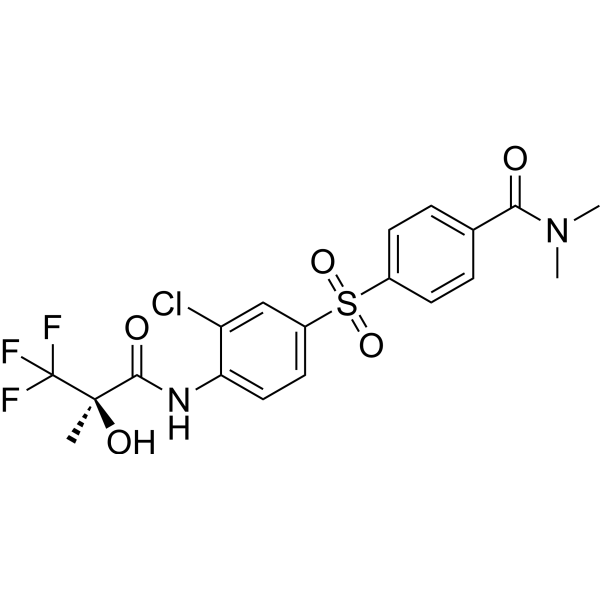
HY-16082
AZD7545PDHK2 Inhibitor -
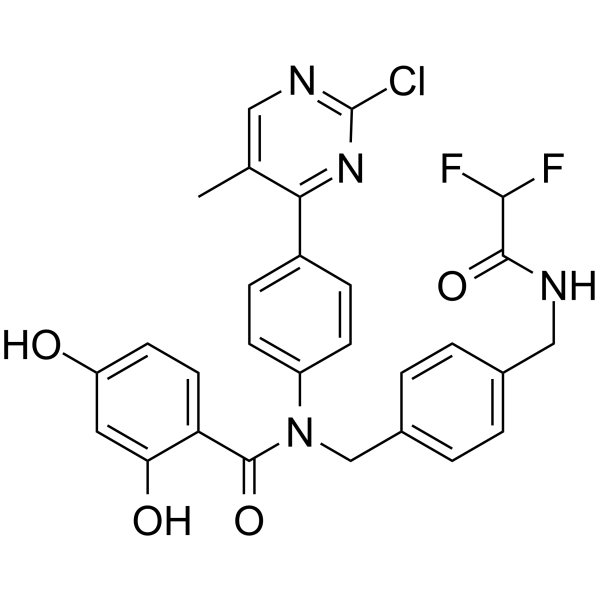
HY-12492
VER-246608 -
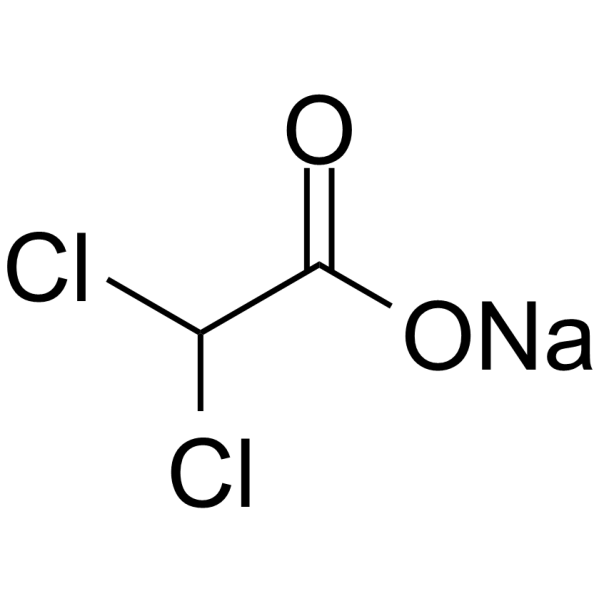
HY-Y0445A
Sodium dichloroacetatePDK Inhibitor -
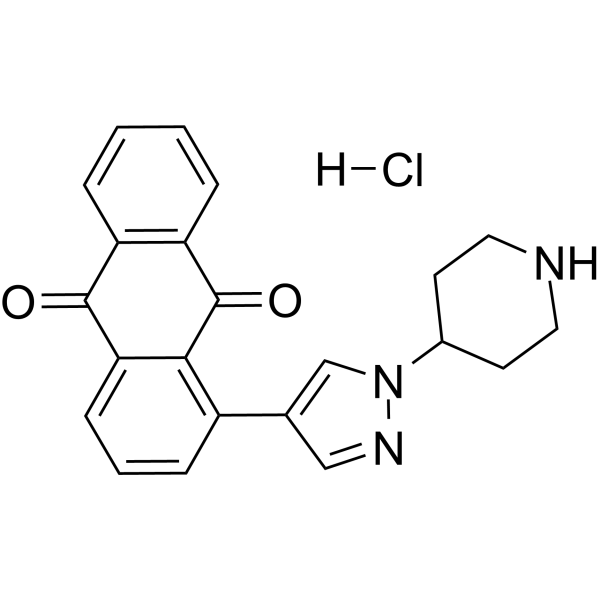
HY-135954A
PDK4-IN-1 hydrochloridePDK4 Inhibitor -
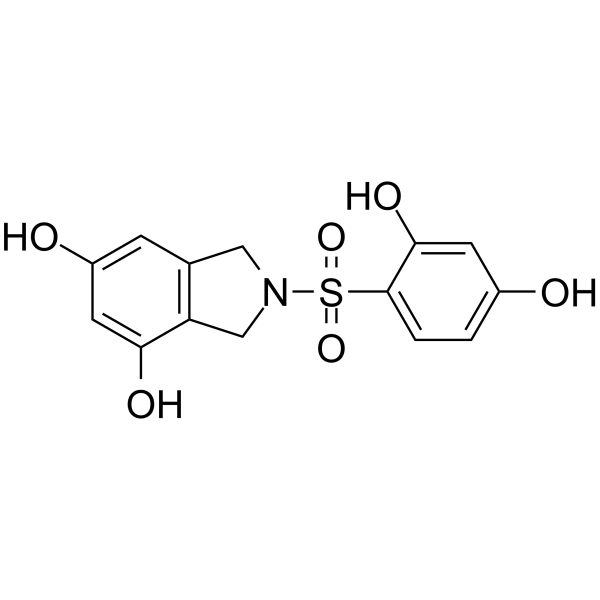
HY-121744
PS10PDK Inhibitor -
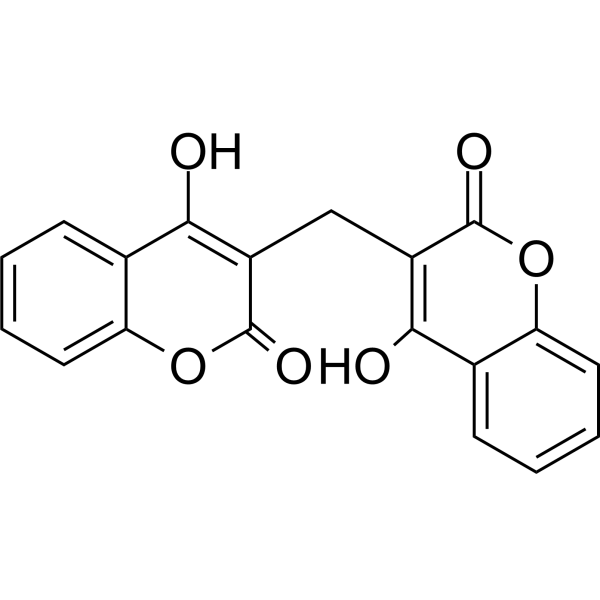
HY-N0645
DicoumarolPDHK Inhibitor -
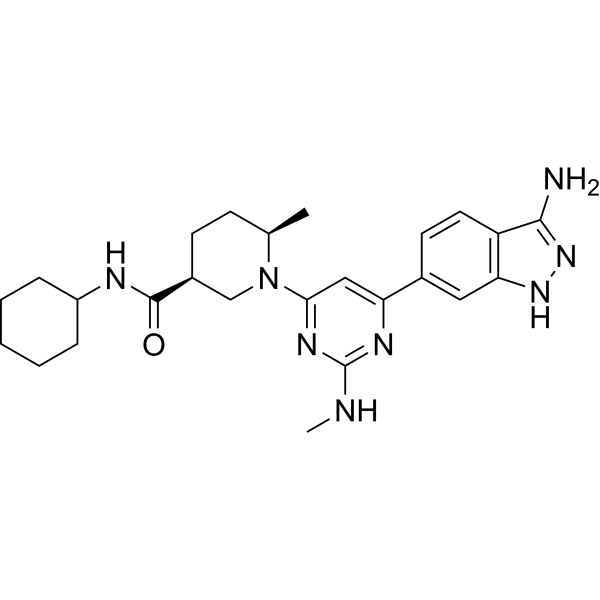
HY-14981
GSK2334470PDK1 Inhibitor -
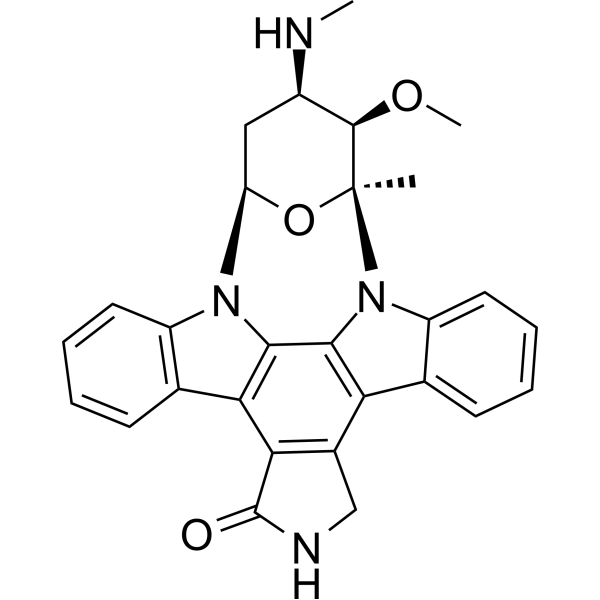
HY-15141
StaurosporinePKC/PKA Inhibitor -
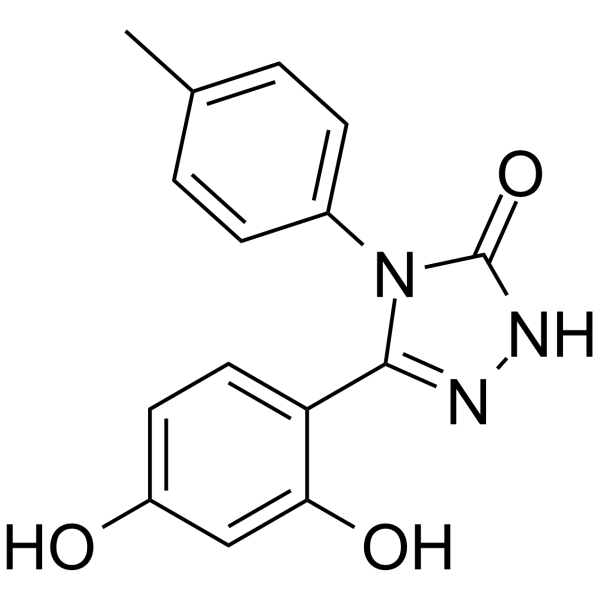
HY-128578
KPLH1130PDK Inhibitor
Publications Citing Use of MedChemExpress (MCE) JX06
More Customer Validation & Images

-
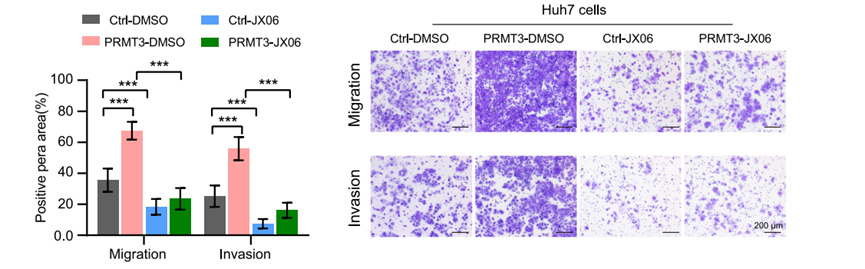
Cell Migration/Invasion Assay
-
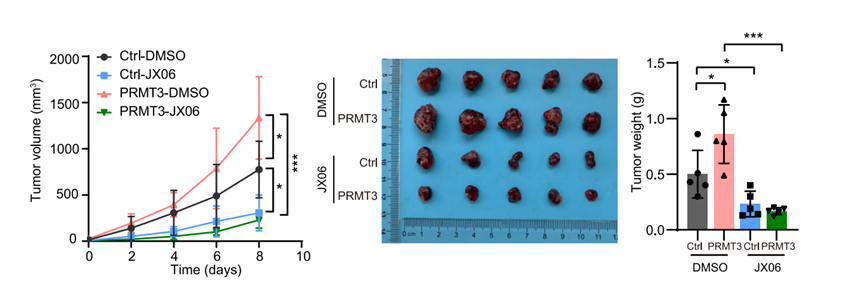
In Vivo Efficacy Study
-
WB
-
RT-PCR
-
IF


Biological Activity
Description
IC50 & Target
IC50: 49 nM (PDK1), 101 nM (PDK2), 313 nM (PDK3)[1]
Cellular Effect
|
Cell Line

|
Type | Value | Description | References |
|---|---|---|---|---|
| A549 | IC50 |
<0.5 μM
Compound: JX06
|
Antiproliferative activity against human A549 cells assessed as reduction in cell viability incubated for 72 hrs by CCK8 assay
Antiproliferative activity against human A549 cells assessed as reduction in cell viability incubated for 72 hrs by CCK8 assay
|
[PMID: 38056298] |
| A549 | IC50 |
0.48 μM
Compound: 16; JX06
|
Antiproliferative activity against human A549 cells after 72 hrs by CCK8 assay
Antiproliferative activity against human A549 cells after 72 hrs by CCK8 assay
|
[PMID: 28230989] |
| Kelly | IC50 |
0.289 μM
Compound: 16; JX06
|
Antiproliferative activity against human Kelly cells after 72 hrs by CCK8 assay
Antiproliferative activity against human Kelly cells after 72 hrs by CCK8 assay
|
[PMID: 28230989] |
| L02 | IC50 |
>10 μM
Compound: 16; JX06
|
Antiproliferative activity against human LO2 cells after 72 hrs by CCK8 assay
Antiproliferative activity against human LO2 cells after 72 hrs by CCK8 assay
|
[PMID: 28230989] |
In Vitro
JX06 barely shows inhibitory activity against PDK4 at a concentration of 10 μM[1].
?
JX06 (1-10 μM; 48 hours) induces cell apoptosis in cancer cells with high ECAR/OCR[1].
?
JX06 (0-0.6 μM; 72 hours) dose-dependently suppresses the growth of A549 cells[1].
?
JX06 (0.1-10 μM; 6-24 hours) inhibits PDHA1 phosphorylation in A549 cells in a time- and dose-dependent manner[1].
?
JX06 (1-10 μM) increases glucose uptake and intracellular ATP level and reduces aerobic glycolysis determined by the lactate production in A549 cells[1].
?
JX06 (1-10 μM; 24 hours) induces ROS generation in cancer cells with high extracellular acidification rate (ECAR)/ oxygen consumption rate (OCR) [1].
MedChemExpress (MCE) has not independently confirmed the accuracy of these methods. They are for reference only.
-
Cell Line:A549, EBC-1, HT-29 and H460 cells
-
Concentration:0, 1, 3, 10 μM
-
Incubation Time:48 hours
-
Result:Induces cell apoptosis in A549 and EBC-1 cells.
-
Cell Line:A549 cells
-
Concentration:0, 0.2, 0.4, 0.6 μM
-
Incubation Time:72 hours
-
Result:Inhibits the viability of A549 cells in a dose dependent manner.
-
Cell Line:A549 cells
-
Concentration:0, 0.1, 0.3, 1, 3, 10 μM
-
Incubation Time:0, 6, 12, 24 hours
-
Result:Decreased PDHA1 phosphorylation at both serine 293 and serine 232 (S293 and S232) in a time- and dose-dependent manner.
In Vivo
MedChemExpress (MCE) has not independently confirmed the accuracy of these methods. They are for reference only.
-
Animal Model:A549 subcutaneous xenograft mice[1]
-
Dosage:40, 80 mg/kg
-
Administration:I.p. injections for 21 days
-
Result:Reduced tumor weights and 67.5% tumor volume at the dose of 80 mg/kg compared with the vehicle control.
Well tolerated at the administration dose.


Chemical Information
-
CAS No. 729-46-4
-
Appearance Solid
-
Molecular Weight 324.51
-
Formula C10H16N2O2S4
-
Color White to off-white
-
SMILES
S=C(N1CCOCC1)SSC(N2CCOCC2)=S
-
Shipping
Room temperature in continental US; may vary elsewhere.
-
Storage
Powder -20°C 3 years In solvent -80°C 6 months -20°C 1 month


Publications (7)
-
Journal Impact Factor
-
Most Recent
-
-
Cell Death Dis
PRMT3 drives PD-L1-mediated immune escape through activating PDHK1-regulated glycolysis in hepatocellular carcinoma. [Abstract]2025 Mar 6;16(1):158. PMID: 40050608
JX06 purchased from MedChemExpress. Usage Cited in: Cell Death Dis. 2025 Mar 6;16(1):158. [Abstract]
Huh7 cells were infected with Lenti-PRMT3 or Lenti-Ctrl and then treated with JX06 (200 nM) or DMSO. The representative images of stained transwell chamber were shown at the right.
JX06 purchased from MedChemExpress. Usage Cited in: Cell Death Dis. 2025 Mar 6;16(1):158. [Abstract]
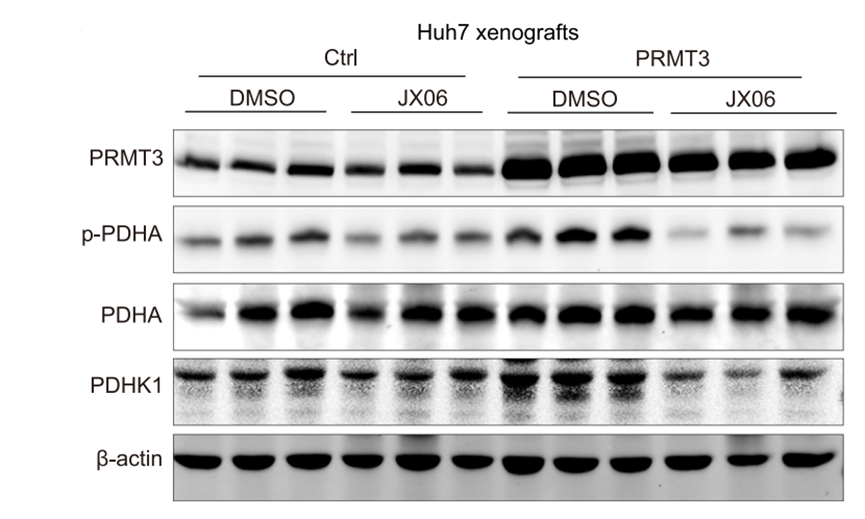
In Huh7 xenograft mouse model, JX06 (30 mg/kg, i.p.) treatment diminished the tumor-promoting effects of PRMT3.
JX06 purchased from MedChemExpress. Usage Cited in: Cell Death Dis. 2025 Mar 6;16(1):158. [Abstract]
Immunoblot analysis of PRMT3, PDHK1, and p-PDHA (phosphorylated PDHA) levels in Huh7 xenografts derived from nude mice treated with JX06 (30 mg/kg, i.p.)
JX06 purchased from MedChemExpress. Usage Cited in: Cell Death Dis. 2025 Mar 6;16(1):158. [Abstract]
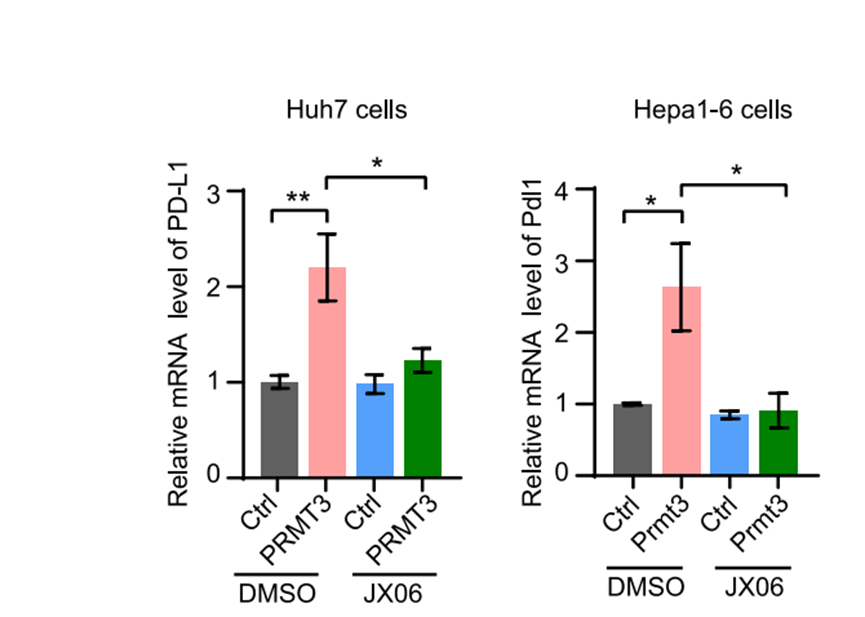
PD-L1 mRNA levels were measured in Huh7 and Hepa1-6 cells with the indicated treatments. Hepatoma cells were infected with Lenti-PRMT3 or Lenti-Ctrl and then treated with JX06 (200 nM).
-
Int J Mol Sci
Mechanical Force Triggers Macrophage Pyroptosis and Sterile Inflammation by Disrupting Cellular Energy Metabolism. [Abstract]2025 Apr 2;26(7):3321. PMID: 40244158
JX06 purchased from MedChemExpress. Usage Cited in: Int J Mol Sci. 2025 Apr 2;26(7):3321. [Abstract]
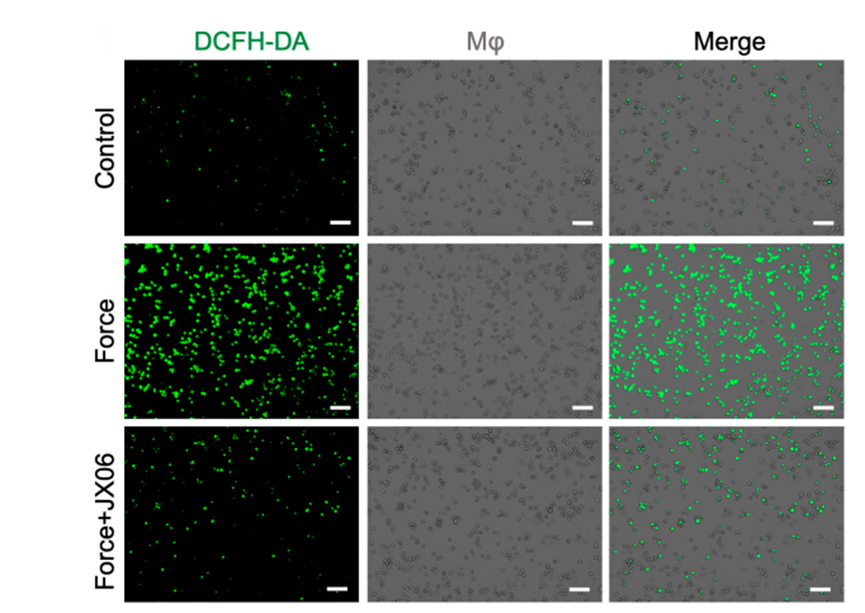
JX06 (10 μM) significantly reduced the levels of total ROS and mitochondrial ROS in force-loaded macrophages.
-
BMC Musculoskelet Disord
Pyruvate Dehydrogenase Kinase 1 inhibition mediated oxidative phosphorylation enhancement in cartilage promotes osteoarthritis progression. [Abstract]2023 Jul 20;24(1):597. PMID: 37474941 -
-
-


Solvent & Solubility
In Vitro:
DMSO : 50 mg/mL (154.08 mM; Need ultrasonic; Hygroscopic DMSO has a significant impact on the solubility of product, please use newly opened DMSO)
Please refer to the solubility information to select the appropriate solvent. Once prepared, please aliquot and store the solution to prevent product inactivation from repeated freeze-thaw cycles.
Storage method and period of stock solution: -80°C, 6 months; -20°C, 1 month. When stored at -80°C, please use it within 6 months. When stored at -20°C, please use it within 1 month.
Please refer to the solubility information to select the appropriate solvent. Once prepared, please aliquot and store the solution to prevent product inactivation from repeated freeze-thaw cycles.
Storage method and period of stock solution: -80°C, 6 months; -20°C, 1 month. When stored at -80°C, please use it within 6 months. When stored at -20°C, please use it within 1 month.
Concentration (start) × Volume (start) = Concentration (final) × Volume (final)
In Vivo:
Select the appropriate dissolution method based on your experimental animal and administration route.
- For the following dissolution methods, please ensure to first prepare a clear stock solution using an In Vitro approach and then sequentially add co-solvents:
- To ensure reliable experimental results, the clarified stock solution can be appropriately stored based on storage conditions. As for the working solution for In Vivo experiments, it is recommended to prepare freshly and use it on the same day.
- The percentages shown for the solvents indicate their volumetric ratio in the final prepared solution. If precipitation or phase separation occurs during preparation, heat and/or sonication can be used to aid dissolution.
Add each solvent one by one: 10% DMSO 40% PEG300 5% Tween-80 45% Saline
Solubility: ≥ 2.5 mg/mL (7.70 mM); Clear solution
This protocol yields a clear solution of ≥ 2.5 mg/mL (saturation unknown).
Taking 1 mL working solution as an example, add 100 μL DMSO stock solution (25.0 mg/mL) to 400 μL PEG300, and mix evenly; then add 50 μL Tween-80 and mix evenly; then add 450 μL Saline to adjust the volume to 1 mL.
Preparation of Saline: Dissolve 0.9 g sodium chloride in ddH₂O and dilute to 100 mL to obtain a clear Saline solution.
Add each solvent one by one: 10% DMSO 90% (20% SBE-β-CD in Saline)
Solubility: 2.5 mg/mL (7.70 mM); Suspended solution; Need ultrasonic
This protocol yields a suspended solution of 2.5 mg/mL. Suspended solution can be used for oral and intraperitoneal injection.
Taking 1 mL working solution as an example, add 100 μL DMSO stock solution (25.0 mg/mL) to 900 μL 20% SBE-β-CD in Saline, and mix evenly.
Preparation of 20% SBE-β-CD in Saline (4°C, storage for one week): 2 g SBE-β-CD powder is dissolved in 10 mL Saline, completely dissolve until clear.
In Vivo Dissolution Calculator
Please enter the basic information of animal experiments:
-
-
-
-
Recommended: Prepare an additional quantity of animals to account for potential losses during experiments.
Please enter your animal formula composition:
-
%DMSO +
Recommended: Keep the proportion of DMSO in working solution below 2% if your animal is weak.
-
%+
-
+%Tween-80 + +
-
%Saline +
The co-solvents required include: DMSO, . All of co-solvents are available by MedChemExpress (MCE). , Tween 80. All of co-solvents are available by MedChemExpress (MCE).
Working solution concentration: 0.22 mg/mL
Method for preparing stock solution: mg drug dissolved in μL DMSO. Stock solution concentration: mg/mL.
1. Take μL DMSO stock solution;
2. Add μL .
μL , mix evenly;
3. Then add μL Tween 80, mix evenly;
4. Then add μL
Please ensure that the stock solution in the first step is dissolved to a clear state, and add co-solvents in sequence. You can use ultrasonic heating (ultrasonic cleaner, recommended frequency 20-40 kHz), vortexing, etc. to assist dissolution.


Purity & Documentation
-
Data Sheet (277 KB)
-
SDS (538 KB)
- English - EN (538 KB)
- Français - FR (538 KB)
- Deutsch - DE (538 KB)
- Norwegian - NO (538 KB)
- Español - ES (538 KB)
- Swedish - SV (538 KB)
- Italian - IT (538 KB)
- Korean - KR (538 KB)
- Portuguese - PT (538 KB)
-
Handling Instructions (2659 KB)
References


Complete Stock Solution Preparation Table
Please refer to the solubility information to select the appropriate solvent. Once prepared, please aliquot and store the solution to prevent product inactivation from repeated freeze-thaw cycles.
Storage method and period of stock solution: -80°C, 6 months; -20°C, 1 month. When stored at -80°C, please use it within 6 months. When stored at -20°C, please use it within 1 month.
| Optional Solvent | Concentration Solvent Mass | 1 mg | 5 mg | 10 mg | 25 mg |
|---|---|---|---|---|---|
| DMSO | 1 mM | 3.0816 mL | 15.4078 mL | 30.8157 mL | 77.0392 mL |
| 5 mM | 0.6163 mL | 3.0816 mL | 6.1631 mL | 15.4078 mL | |
| 10 mM | 0.3082 mL | 1.5408 mL | 3.0816 mL | 7.7039 mL | |
| 15 mM | 0.2054 mL | 1.0272 mL | 2.0544 mL | 5.1359 mL | |
| 20 mM | 0.1541 mL | 0.7704 mL | 1.5408 mL | 3.8520 mL | |
| 25 mM | 0.1233 mL | 0.6163 mL | 1.2326 mL | 3.0816 mL | |
| 30 mM | 0.1027 mL | 0.5136 mL | 1.0272 mL | 2.5680 mL | |
| 40 mM | 0.0770 mL | 0.3852 mL | 0.7704 mL | 1.9260 mL | |
| 50 mM | 0.0616 mL | 0.3082 mL | 0.6163 mL | 1.5408 mL | |
| 60 mM | 0.0514 mL | 0.2568 mL | 0.5136 mL | 1.2840 mL | |
| 80 mM | 0.0385 mL | 0.1926 mL | 0.3852 mL | 0.9630 mL | |
| 100 mM | 0.0308 mL | 0.1541 mL | 0.3082 mL | 0.7704 mL |


JX06 Related Classifications
HY-19564 Related Classifications
 Powered by Bioz