



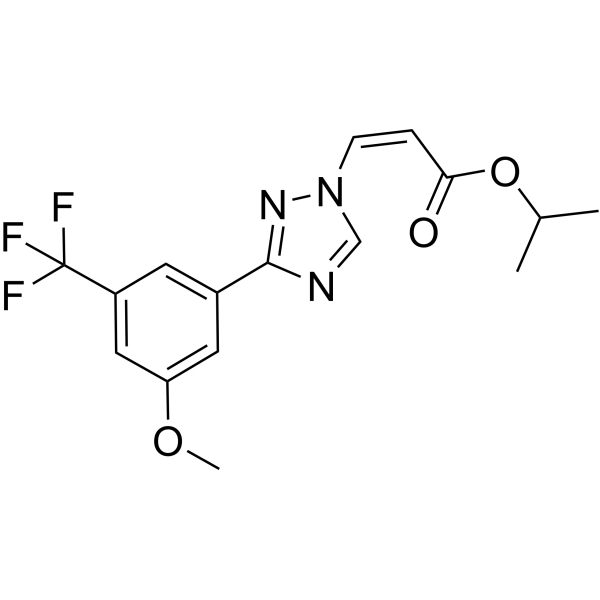
KPT-185
Based on 1 publication(s) in Google Scholar
KPT-185 is an orally bioavailable and selective inhibitor of CRM1 and displays potent antiproliferative properties at submicromolar concentrations (IC50=100-500 nM), induces apoptosis, cell-cycle arrest, and myeloid differentiation in AML cell lines and patient blasts.
For research use only. We do not sell to patients.
- Purity : 99.04%
- CAS No.: 1333151-73-7
- Formula: C16H16F3N3O3
- Molecular Weight:355.31
-
Storage:Powder -20°C, 3 years , 4°C, 2 years ; In solvent -80°C, 2 years , -20°C, 1 year

To place orders, for customer services and technical support, please contact: MedChemExpress USA
Tel: 609-228-6898 E-mail: [email protected] [email protected]


-
 Biological Activity
-
Chemical Information
-
Solvent & Solubility
- Protocols
- Purity & Documentation
- References
-
 Help & FAQs


-
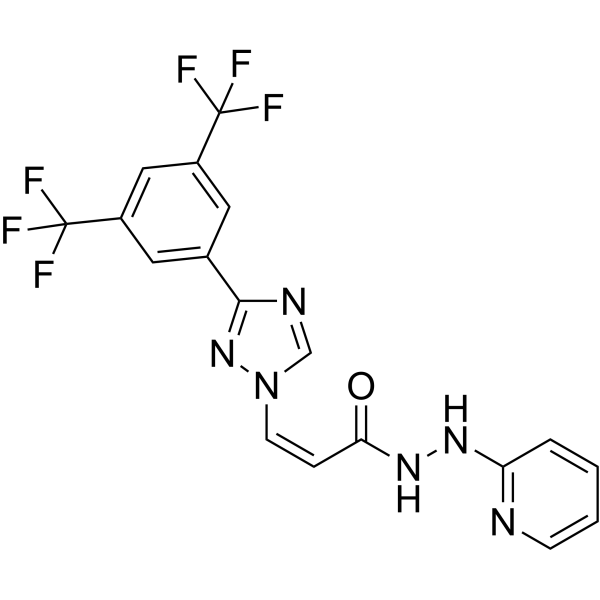
HY-15970
VerdinexorSINE Inhibitor -
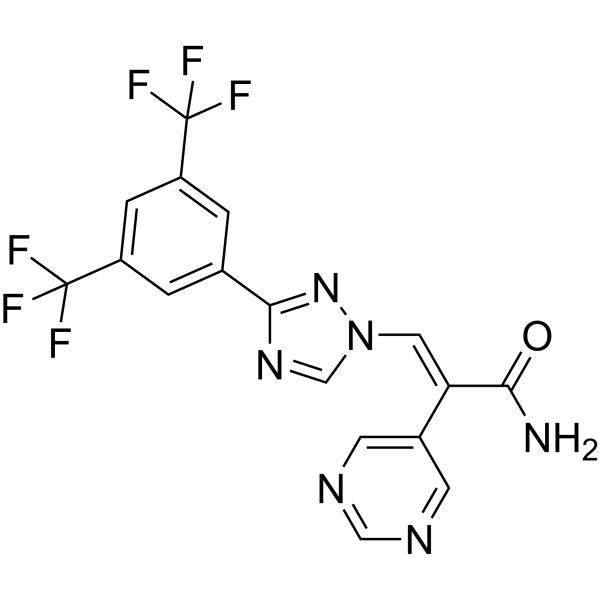
HY-100423
EltanexorXPO1 Inhibitor -
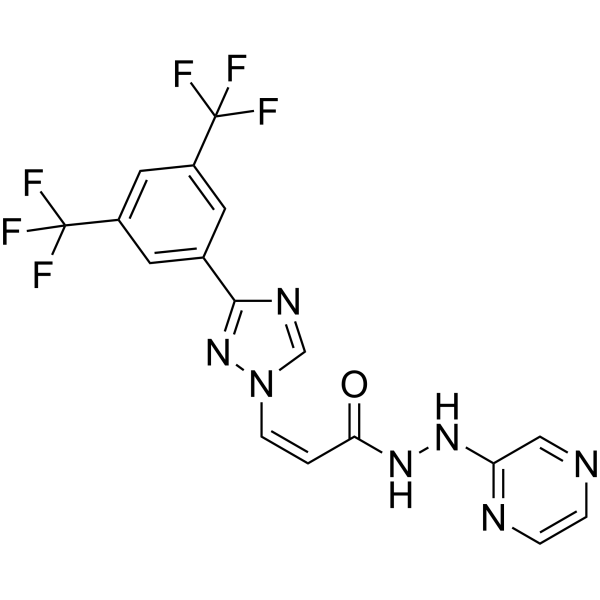
HY-17536
SelinexorCRM1 Inhibitor -
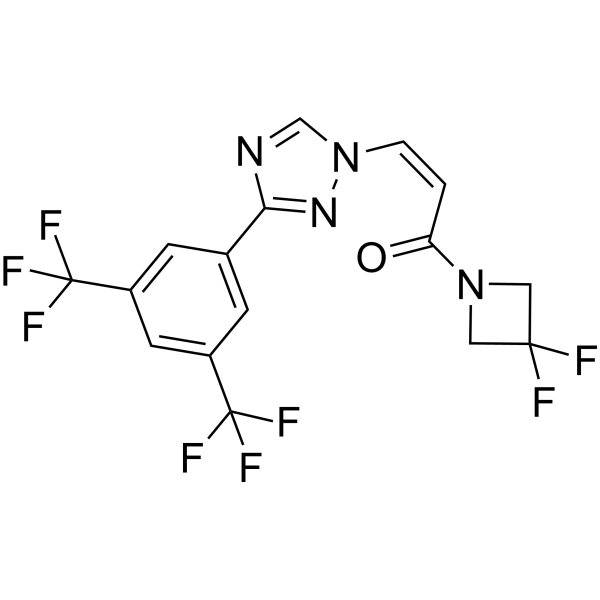
HY-17539
KPT-276XPO1/CRM1 Inhibitor -
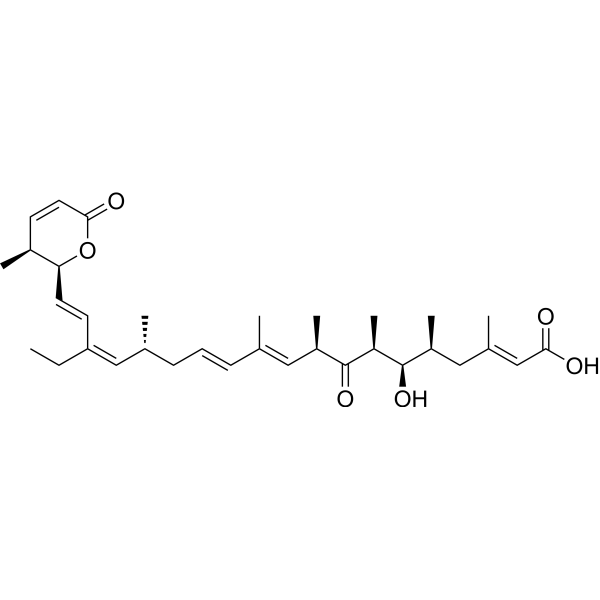
HY-16909
Leptomycin BCRM1/Exportin 1 Inhibitor -
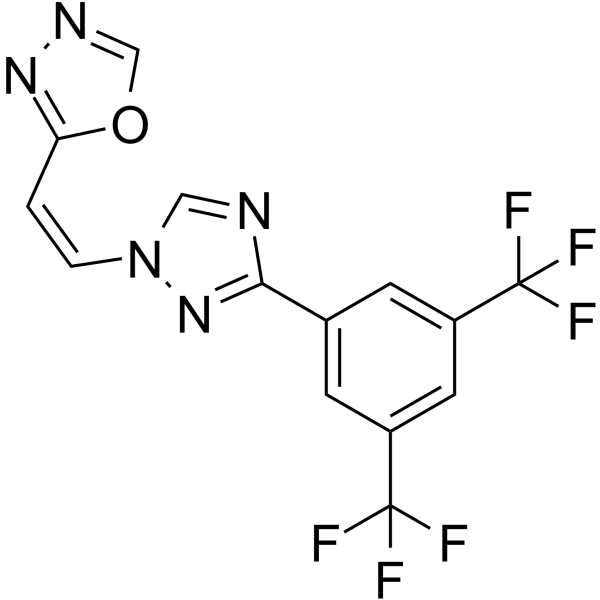
HY-117996
KPT-251CRM1 Inhibitor -
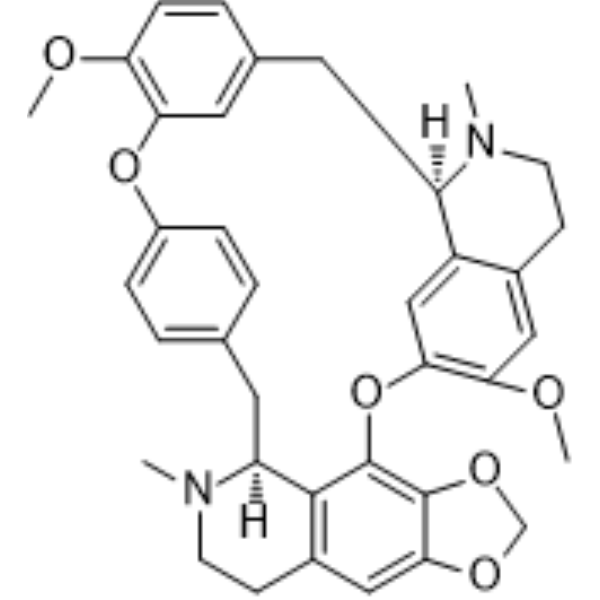
HY-N6972
CepharanthineAnti-infection Agent -
HY-15713
NMS-873VCP/p97 Inhibitor -

HY-17536R
Selinexor (Standard)CRM1 Inhibitor -

HY-108716
Felezonexor -
HY-100423A
Eltanexor Z-isomerKPT-8602 Z-isomer -

HY-17536A
(E)-SelinexorSelinexor Isomer
Publications Citing Use of MedChemExpress (MCE) KPT-185
More

Biological Activity
Description
IC50 & Target
CRM1[1]
Cellular Effect
|
Cell Line

|
Type | Value | Description | References |
|---|---|---|---|---|
| Jurkat | EC50 |
5 nM
Compound: 14; KPT-185
|
Cytotoxicity against human Jurkat cells incubated for 24 hrs by celltiter glo assay
Cytotoxicity against human Jurkat cells incubated for 24 hrs by celltiter glo assay
|
[PMID: 39005064] |
In Vitro
KPT-185 results in a significant decrease in the level of CRM1 protein and a significant accumulation of p53 in the nucleus of MV4-11 and OCI-AML3 cells[1].
KPT-185 (1-1000 nM; 72 hours) dramatically reduces HPB-ALL, Jurkat, CCRF-CEM, MOLT-4, KOPTK1, LOUCY cells growth with IC50s of 16-395 nM[4].
KPT-185 leads to cell cycle arrest in G1 phase in the MOLT-4 cell line[4].
MedChemExpress (MCE) has not independently confirmed the accuracy of these methods. They are for reference only.
-
Cell Line:HPB-ALL, Jurkat, CCRF-CEM, MOLT-4, KOPTK1, LOUCY cells
-
Concentration:1, 10, 100, 1000 nM
-
Incubation Time:72 hours
-
Result:The growth of those lines was dramatically reduced with IC50s of 16–395 nM after 72 h of exposure.


Chemical Information
-
CAS No. 1333151-73-7
-
Appearance Solid
-
Molecular Weight 355.31
-
Formula C16H16F3N3O3
-
Color White to off-white
-
SMILES
O=C(OC(C)C)/C=C\N1N=C(C2=CC(C(F)(F)F)=CC(OC)=C2)N=C1
-
Shipping
Room temperature in continental US; may vary elsewhere.
-
Storage
Powder -20°C 3 years 4°C 2 years In solvent -80°C 2 years -20°C 1 year


Publications (1)
-
Journal Impact Factor
-
Most Recent


Solvent & Solubility
In Vitro:
DMSO : 50 mg/mL (140.72 mM; Need ultrasonic; Hygroscopic DMSO has a significant impact on the solubility of product, please use newly opened DMSO)
Ethanol : 50 mg/mL (140.72 mM; Need ultrasonic)
Please refer to the solubility information to select the appropriate solvent. Once prepared, please aliquot and store the solution to prevent product inactivation from repeated freeze-thaw cycles.
Storage method and period of stock solution: -80°C, 2 years; -20°C, 1 year. When stored at -80°C, please use it within 2 years. When stored at -20°C, please use it within 1 year.
Please refer to the solubility information to select the appropriate solvent. Once prepared, please aliquot and store the solution to prevent product inactivation from repeated freeze-thaw cycles.
Storage method and period of stock solution: -80°C, 2 years; -20°C, 1 year. When stored at -80°C, please use it within 2 years. When stored at -20°C, please use it within 1 year.
Concentration (start) × Volume (start) = Concentration (final) × Volume (final)
In Vivo:
Select the appropriate dissolution method based on your experimental animal and administration route.
- For the following dissolution methods, please ensure to first prepare a clear stock solution using an In Vitro approach and then sequentially add co-solvents:
- To ensure reliable experimental results, the clarified stock solution can be appropriately stored based on storage conditions. As for the working solution for In Vivo experiments, it is recommended to prepare freshly and use it on the same day.
- The percentages shown for the solvents indicate their volumetric ratio in the final prepared solution. If precipitation or phase separation occurs during preparation, heat and/or sonication can be used to aid dissolution.
Add each solvent one by one: 10% DMSO 90% (20% SBE-β-CD in Saline)
Solubility: 2.5 mg/mL (7.04 mM); Suspended solution; Need ultrasonic
This protocol yields a suspended solution of 2.5 mg/mL. Suspended solution can be used for oral and intraperitoneal injection.
Taking 1 mL working solution as an example, add 100 μL DMSO stock solution (25.0 mg/mL) to 900 μL 20% SBE-β-CD in Saline, and mix evenly.
Preparation of 20% SBE-β-CD in Saline (4°C, storage for one week): 2 g SBE-β-CD powder is dissolved in 10 mL Saline, completely dissolve until clear.
Add each solvent one by one: 10% EtOH 40% PEG300 5% Tween-80 45% Saline
Solubility: ≥ 2.5 mg/mL (7.04 mM); Clear solution
This protocol yields a clear solution of ≥ 2.5 mg/mL (saturation unknown).
Taking 1 mL working solution as an example, add 100 μL EtOH stock solution (25.0 mg/mL) to 400 μL PEG300, and mix evenly; then add 50 μL Tween-80 and mix evenly; then add 450 μL Saline to adjust the volume to 1 mL.
Preparation of Saline: Dissolve 0.9 g sodium chloride in ddH₂O and dilute to 100 mL to obtain a clear Saline solution.
In Vivo Dissolution Calculator
Please enter the basic information of animal experiments:
-
-
-
-
Recommended: Prepare an additional quantity of animals to account for potential losses during experiments.
Please enter your animal formula composition:
-
%DMSO +
Recommended: Keep the proportion of DMSO in working solution below 2% if your animal is weak.
-
%+
-
+%Tween-80 + +
-
%Saline +
The co-solvents required include: DMSO, . All of co-solvents are available by MedChemExpress (MCE). , Tween 80. All of co-solvents are available by MedChemExpress (MCE).
Working solution concentration: 0.22 mg/mL
Method for preparing stock solution: mg drug dissolved in μL DMSO. Stock solution concentration: mg/mL.
1. Take μL DMSO stock solution;
2. Add μL .
μL , mix evenly;
3. Then add μL Tween 80, mix evenly;
4. Then add μL
Please ensure that the stock solution in the first step is dissolved to a clear state, and add co-solvents in sequence. You can use ultrasonic heating (ultrasonic cleaner, recommended frequency 20-40 kHz), vortexing, etc. to assist dissolution.


Purity & Documentation
-
Data Sheet (275 KB)
-
SDS (393 KB)
- English - EN (393 KB)
- Français - FR (393 KB)
- Deutsch - DE (393 KB)
- Norwegian - NO (393 KB)
- Español - ES (393 KB)
- Swedish - SV (393 KB)
- Italian - IT (393 KB)
- Korean - KR (393 KB)
- Portuguese - PT (393 KB)
-
Handling Instructions (2659 KB)
References
[1]. Ranganathan P, et al. Preclinical activity of a novel CRM1 inhibitor in acute myeloid leukemia. Blood. 2012 Aug 30;120(9):1765-73. [Content Brief]
[2]. Etchin J, et al. KPT-330 inhibitor of CRM1 (XPO1)-mediated nuclear export has selective anti-leukaemic activityin preclinical models of T-cell acute lymphoblastic leukaemia and acute myeloid leukaemia. Br J Haematol. 2013 Apr;161(1):117-27. [Content Brief]
[3]. Zhang K, et al. Novel selective inhibitors of nuclear export CRM1 antagonists for therapy in mantle cell lymphoma. Exp Hematol. 2013 Jan;41(1):67-78.e4. [Content Brief]
[4]. Salas Fragomeni RA, et al. CRM1 and BRAF inhibition synergize and induce tumor regression in BRAF-mutant melanoma. Mol Cancer Ther. 2013 Jul;12(7):1171-9. [Content Brief]


Complete Stock Solution Preparation Table
Please refer to the solubility information to select the appropriate solvent. Once prepared, please aliquot and store the solution to prevent product inactivation from repeated freeze-thaw cycles.
Storage method and period of stock solution: -80°C, 2 years; -20°C, 1 year. When stored at -80°C, please use it within 2 years. When stored at -20°C, please use it within 1 year.
| Optional Solvent | Concentration Solvent Mass | 1 mg | 5 mg | 10 mg | 25 mg |
|---|---|---|---|---|---|
| DMSO / Ethanol | 1 mM | 2.8144 mL | 14.0722 mL | 28.1444 mL | 70.3611 mL |
| 5 mM | 0.5629 mL | 2.8144 mL | 5.6289 mL | 14.0722 mL | |
| 10 mM | 0.2814 mL | 1.4072 mL | 2.8144 mL | 7.0361 mL | |
| 15 mM | 0.1876 mL | 0.9381 mL | 1.8763 mL | 4.6907 mL | |
| 20 mM | 0.1407 mL | 0.7036 mL | 1.4072 mL | 3.5181 mL | |
| 25 mM | 0.1126 mL | 0.5629 mL | 1.1258 mL | 2.8144 mL | |
| 30 mM | 0.0938 mL | 0.4691 mL | 0.9381 mL | 2.3454 mL | |
| 40 mM | 0.0704 mL | 0.3518 mL | 0.7036 mL | 1.7590 mL | |
| 50 mM | 0.0563 mL | 0.2814 mL | 0.5629 mL | 1.4072 mL | |
| 60 mM | 0.0469 mL | 0.2345 mL | 0.4691 mL | 1.1727 mL | |
| 80 mM | 0.0352 mL | 0.1759 mL | 0.3518 mL | 0.8795 mL | |
| 100 mM | 0.0281 mL | 0.1407 mL | 0.2814 mL | 0.7036 mL |


KPT-185 Related Classifications
HY-15611 Related Classifications
 Powered by Bioz