



Lazertinib (Standard)
Lazertinib (Standard) is the analytical standard of Lazertinib (HY-109061). This product is intended for research and analytical applications. Lazertinib (YH25448) is a potent, selective, CNS-penetrant, orally available and irreversible EGFR tyrosine Kinase inhibitor, exhibiting high selectivity for activating (EGFRm) and T790M resistance mutations. Lazertinib inhibits phosphorylation of EGFR, AKT and ERK, leading to apoptosis and suppression of tumor growth in mouse H1975-luc brain metastasis xenograft models. Lazertinib can be used in the study of non-small cell lung cancer.
Nur für Forschungszwecke. Wir verkaufen nicht an Patienten.
- CAS. Nr.: 1903008-80-9
- Formel: C30H34N8O3
- Molecular Weight:554.64
-
Speicherung:
Please store the product under the recommended conditions in the Certificate of Analysis.


To place orders, for customer services and technical support, please contact: MedChemExpress USA
Tel: 609-228-6898 E-mail: [email protected] [email protected]


-
 Product Information
-
Chemical Information
- Reinheit & Dokumentation
-
 Help & FAQs


-
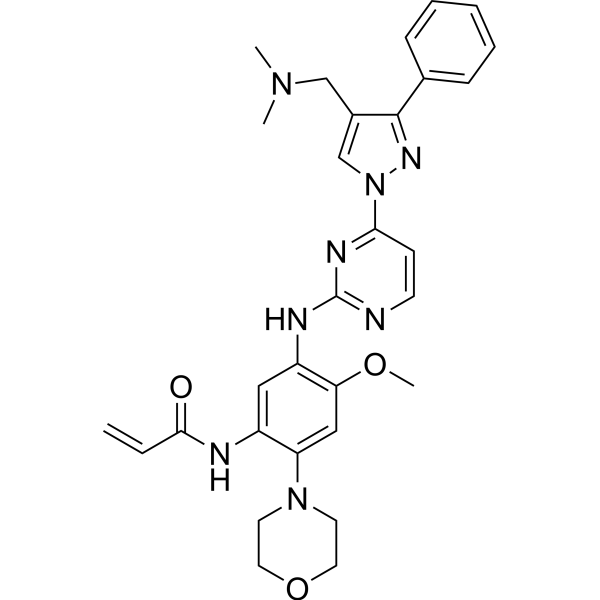
HY-109061
LazertinibEGFR Inhibitor -
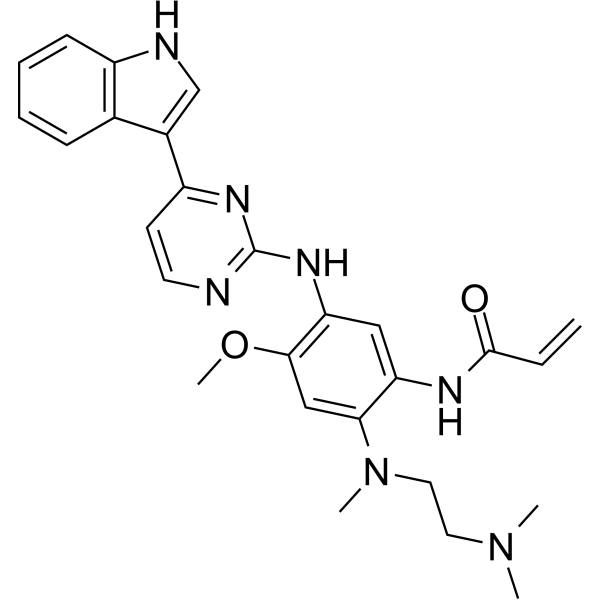
HY-B0793
AZ-5104EGFR Inhibitor -
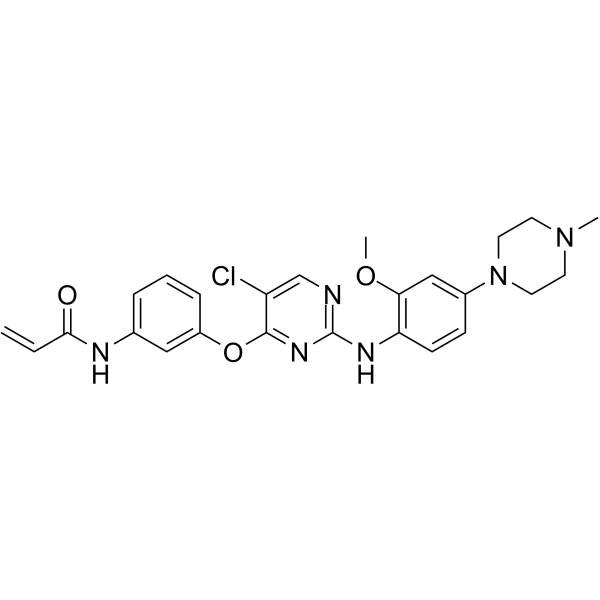
HY-12026
WZ4002 -
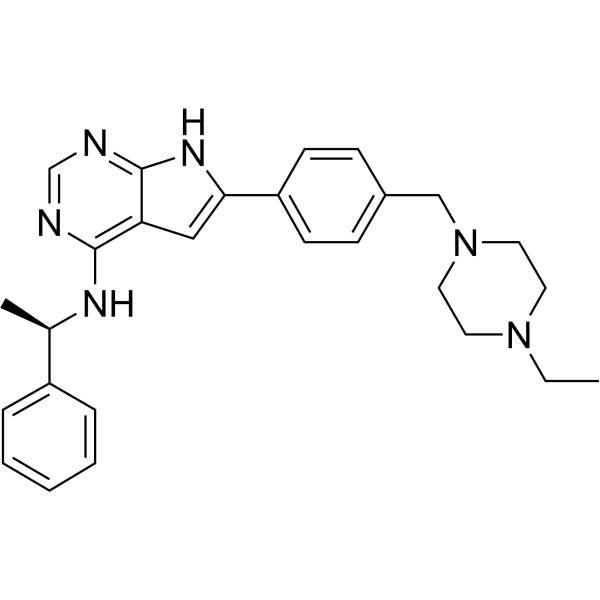
HY-10045
AEE788EGFR/ErbB2 Inhibitor -
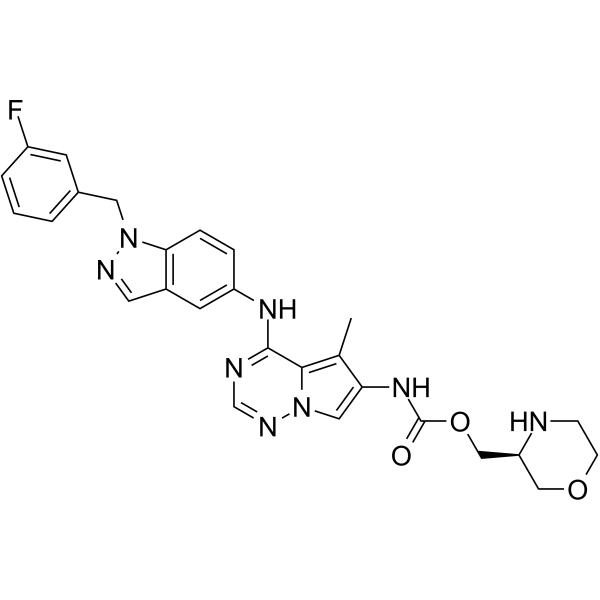
HY-10251
BMS-599626HER1/2 Inhibitor -
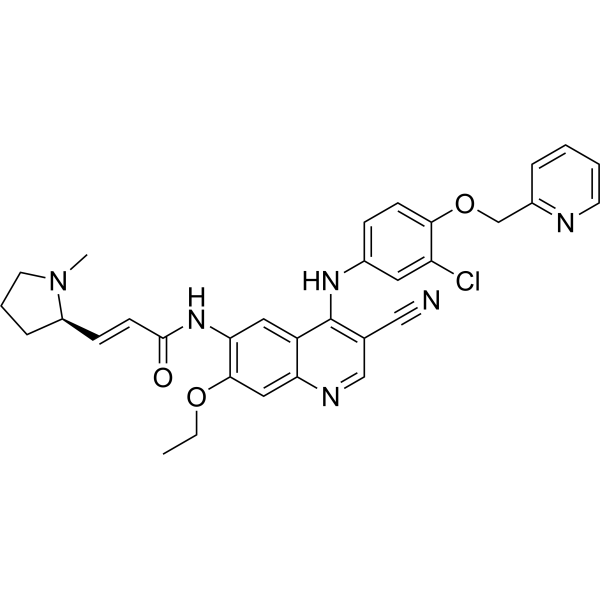
HY-104065
PyrotinibEGFR/HER2 Inhibitor -
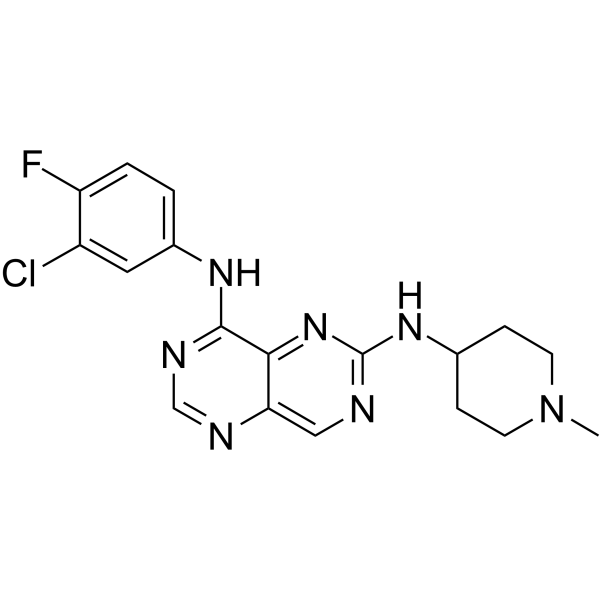
HY-10322
FalnidamolSelective EGFR Inhibitor -
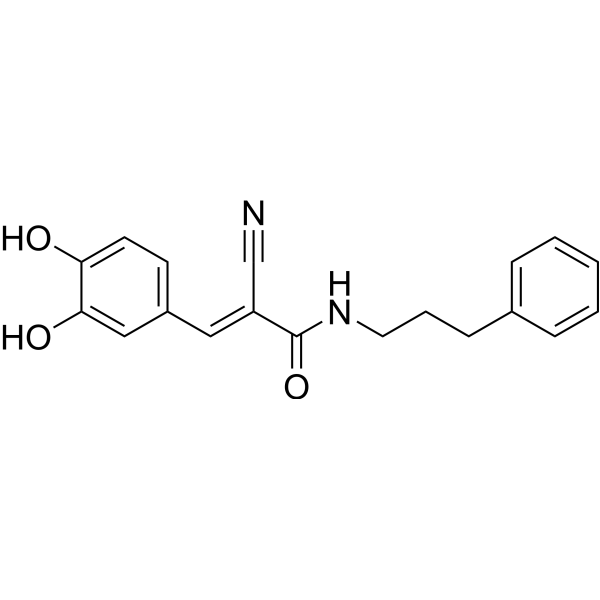
HY-15336
AG 555EGFG Inhibitor -

HY-10045R
AEE788 (Standard)EGFR/ErbB2 Inhibitor -

HY-10322R
Falnidamol (Standard)Selective EGFR Inhibitor -

HY-104065R
Pyrotinib (Standard)Reference Standard


Product Information
Information
Anwendung
The compound is the grade of analytical standard, which is the reference standard supplied assay. It is commonly used in qualitative, quantitative and methodological research experiments in HPLC, GC and MS.


Chemical Information
-
CAS. Nr. 1903008-80-9
-
Molecular Weight 554.64
-
Formel C30H34N8O3
-
SMILES
C=CC(NC1=CC(NC2=NC=CC(N3N=C(C4=CC=CC=C4)C(CN(C)C)=C3)=N2)=C(OC)C=C1N5CCOCC5)=O
-
Synonyms
YH25448 (Standard); GNS-1480 (Standard)
-
Versand
Room temperature in continental US; may vary elsewhere.
-
Speicherung
Please store the product under the recommended conditions in the Certificate of Analysis.


Reinheit & Dokumentation
Verweise
[1]. Oh SY, et al. The potential of lazertinib and amivantamab combination therapy as a treatment strategy for uncommon EGFR-mutated NSCLC. Cell Rep Med. 2025;6(2):101929. [Content Brief]
[2]. Matsui Y, et al. Initial AXL and MCL-1 inhibition contributes to abolishing lazertinib tolerance in EGFR-mutant lung cancer cells. Cancer Sci. 2024;115(10):3333-3345. [Content Brief]
[4]. Kim H, et al. EGFR Tyrosine Kinase Inhibitor Lazertinib Activates a Subset of Mouse Sensory Neurons Via TRPA1. J Pain. 2024;25(5):104435. [Content Brief]

Calculators
Konzentration (Stammlösung) × Volumen (Stammlösung) = Konzentration (Ziellösung) × Volumen (Ziellösung)


Lazertinib (Standard) Related Classifications
HY-109061R Related Classifications
 Powered by Bioz