



Limantrafin
Based on 12 publication(s) in Google Scholar
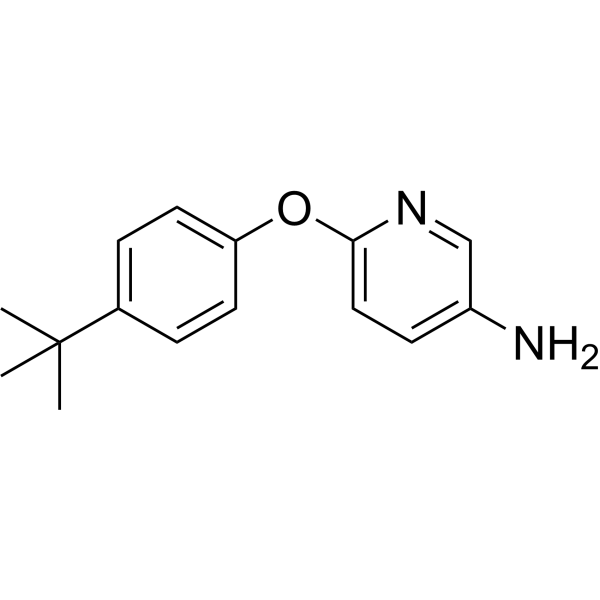
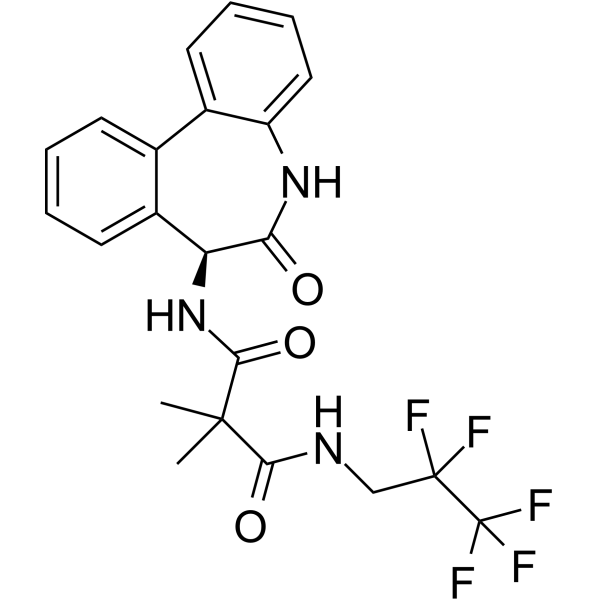
Limantrafin (CB-103) is a first-in-class, orally active protein-protein interaction (PPI) inhibitor of the NOTCH transcriptional activation complex. Limantrafin has anti-tumor activity.
For research use only. We do not sell to patients.
- Purity : 99.97%
- CAS No.: 218457-67-1
- Formula: C15H18N2O
- Molecular Weight:242.32
-
Storage:Powder -20°C, 3 years , 4°C, 2 years ; In solvent -80°C, 2 years , -20°C, 1 year

To place orders, for customer services and technical support, please contact: MedChemExpress USA
Tel: 609-228-6898 E-mail: [email protected] [email protected]


-
 Biological Activity
-
Chemical Information
-
Solvent & Solubility
- Protocols
- Purity & Documentation
- References
-
 Help & FAQs


-
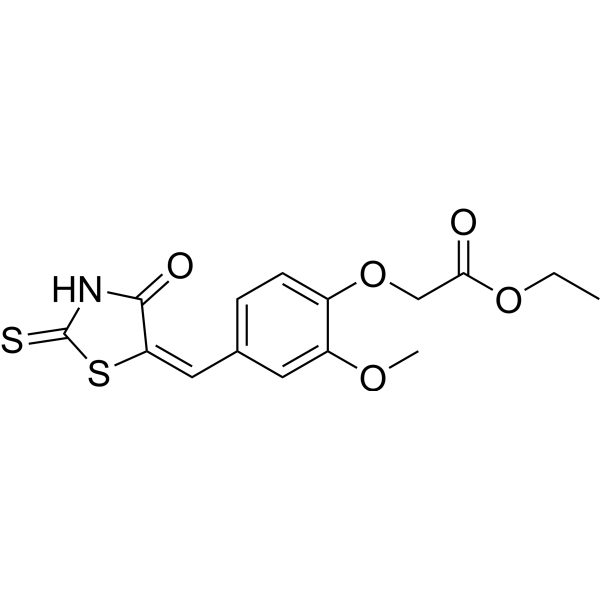
HY-100431
IMR-1Notch Inhibitor -
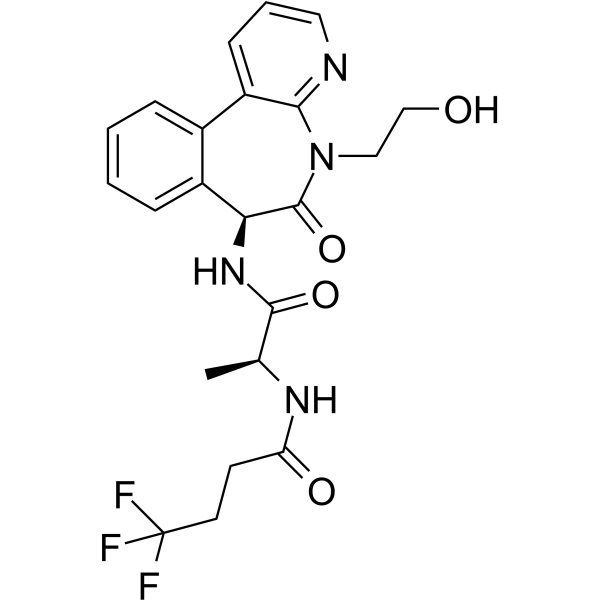
HY-12449
CrenigacestatNotch/γ-secretase Inhibitor -
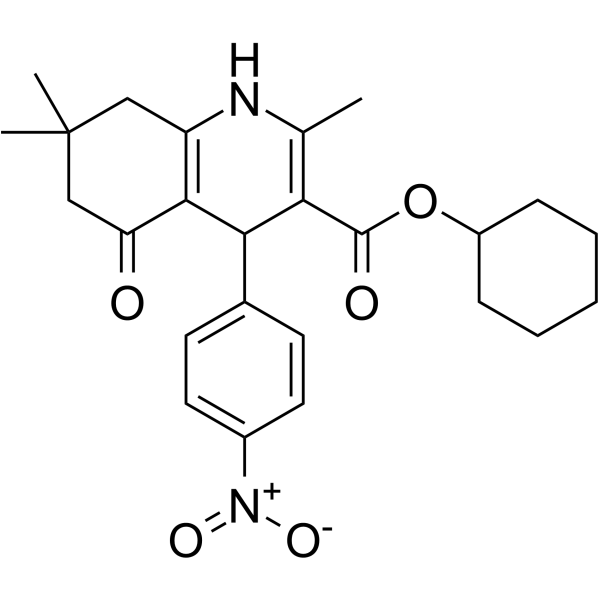
HY-15860
FLI-06Notch Inhibitor -
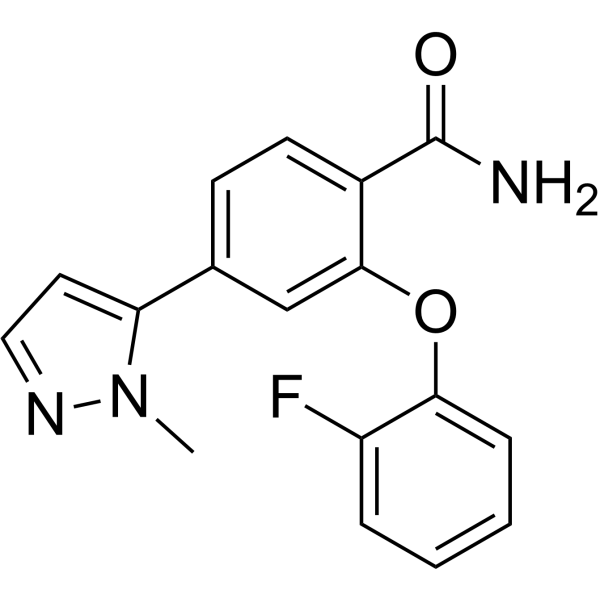
HY-137471
RBPJ Inhibitor-1RBPJ Inhibitor -
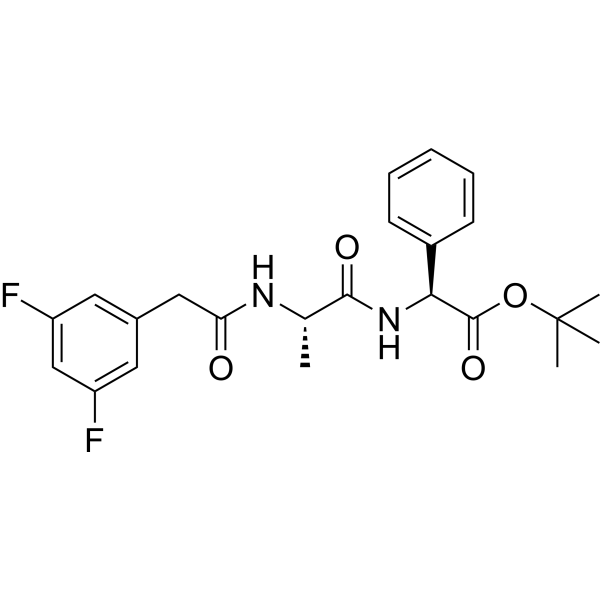
HY-13027
DAPTγ-secretase Inhibitor -
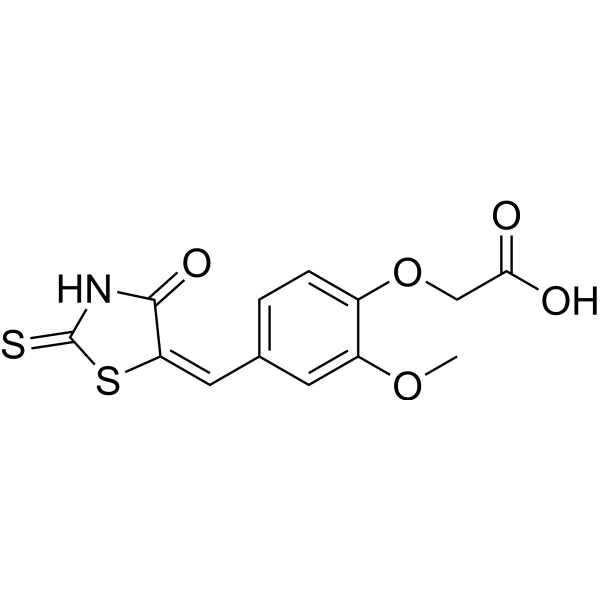
HY-100431A
IMR-1ANotch Inhibitor -
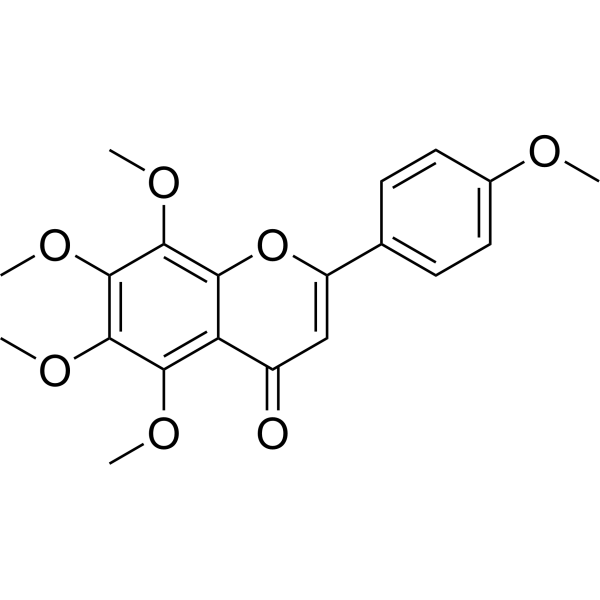
HY-N0133
TangeretinApoptosis Inducer -
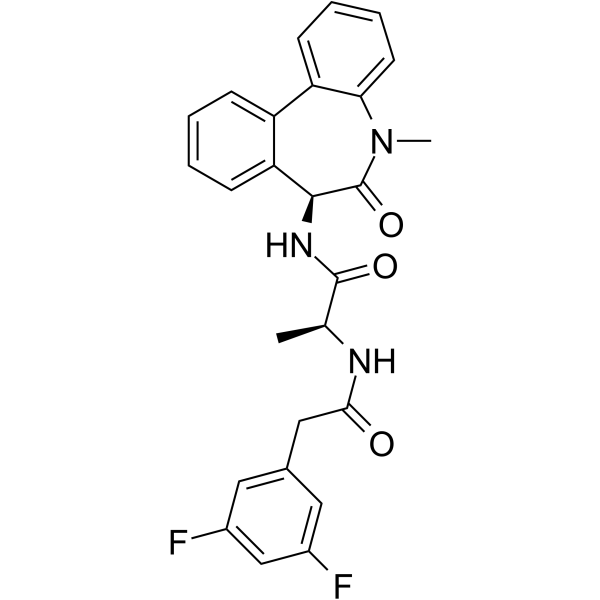
HY-13526
YO-01027γ-secretase Inhibitor -
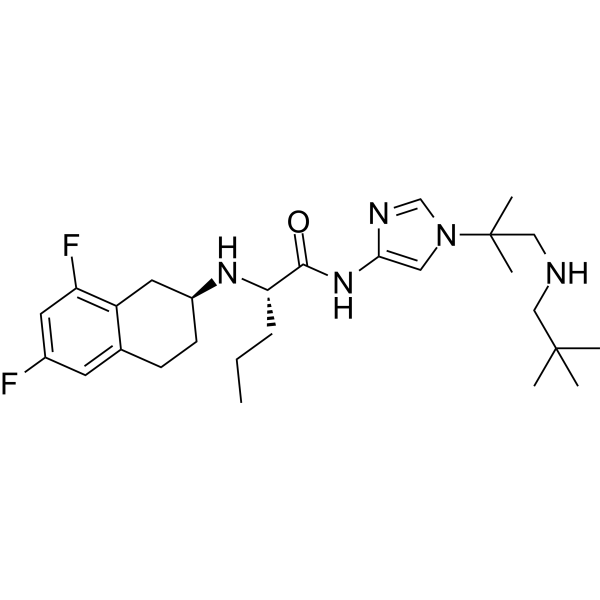
HY-15185
Nirogacestatγ-Secretase Inhibitor -
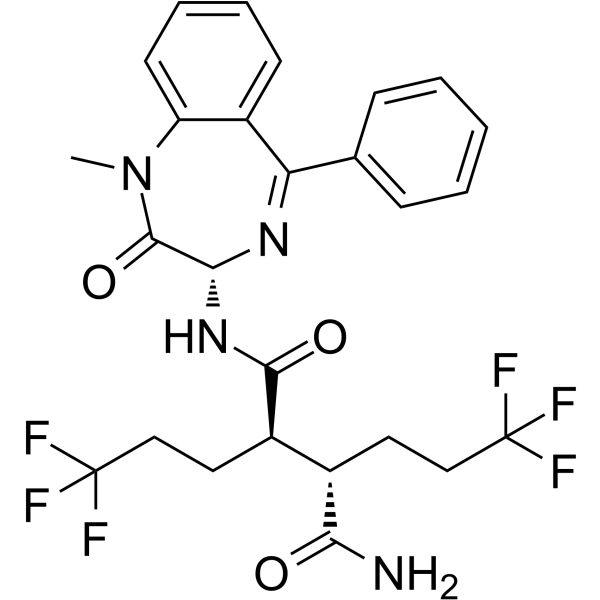
HY-15670
BMS-906024γ-secretase Inhibitor -
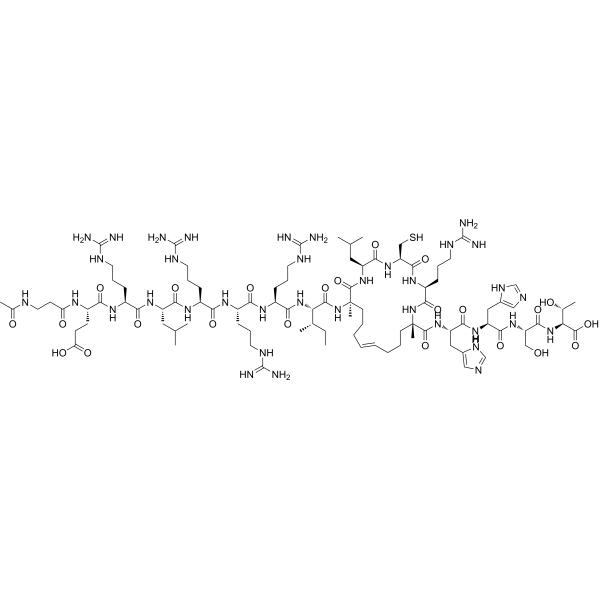
HY-P2203
SAHM1Notch Inhibitor -
HY-11102
RO4929097γ-secretase Inhibitor
Publications Citing Use of MedChemExpress (MCE) Limantrafin
More- Nat Biotechnol. 2023 Jun;41(6):832-844. [Abstract]
- J Immunother Cancer. 2026 Jun 28;14(6):e013127.
- Mater Today Bio. 2026 Jan 6:37:102776. [Abstract]
- Nat Struct Mol Biol. 2024 Sep;31(9):1413-1425. [Abstract]
- Oncogene. 2023 Aug;42(34):2521-2535. [Abstract]
- ACS Biomater Sci Eng. 2026 Jun 8;12(6):3103-3115. [Abstract]
- Reprod Biol Endocrinol. 2026 Jan 28;24(1):30. [Abstract]
- Mol Biol Rep. 2024 Nov 8;51(1):1134. [Abstract]
- University of Zurich. 2025 Feb 04.
- University of Zagreb. 2023 Jul 19.
- Research Square Print. 2022 May.
- Research Square Preprint. 2021 Jun.
 Customer Validation & Images

-
WB
-
RT-PCR
-
WB
-
RT-PCR
-
Cell Proliferation/Viability Assay


Biological Activity
Description
IC50 & Target
notch signaling pathway[1]
In Vitro
Limantrafin acts as a pan-NOTCH inhibitor by targeting NOTCH transcriptional activation complex[2].
Limantrafin can block NOTCH signaling in human T cell acute lymphoblastic leukemia cancer cell lines[2].
Limantrafin exhibits anti-tumor efficacy in GSI resistant T-ALL cell lines[2].
MedChemExpress (MCE) has not independently confirmed the accuracy of these methods. They are for reference only.
-
Cell Line:RPMI 8402, KOPTK1, PANC1, nRas driven melanoma cells
-
Concentration:10 μM
-
Incubation Time:4 days, 6 days
-
Result:Caused a significant reduction in their growth potential.
In Vivo
Limantrafin blocks in vivo growth of PDX models of T-ALL[2].
Limantrafin (25 mg/kg; i.p./p.o.; 2x daily; for 2 weeks) inhibits growth of GSI/Mab resistant triple negative breast cancer[3].
Limantrafin exhibits anti-tumor activity in xenograft models of human T-ALL and mouse mammary tumors[3].
MedChemExpress (MCE) has not independently confirmed the accuracy of these methods. They are for reference only.
-
Animal Model:NSG mice, triple negative breast cancer mouse xenograft model[3]
-
Dosage:25 mg/kg
-
Administration:Oral administration/Intraperitoneal injection; 2x daily; for 2 weeks
-
Result:Inhibited growth of GSI/Mab resistant triple negative breast cancer.
Clinical Trial
| NCT Number | Sponsor | Condition | Start Date |
Phase

|
|---|---|---|---|---|
| NCT01329991 | 2011-05 | PHASE1 |


Chemical Information
-
CAS No. 218457-67-1
-
Appearance Solid
-
Molecular Weight 242.32
-
Formula C15H18N2O
-
SMILES
NC1=CC=C(OC2=CC=C(C(C)(C)C)C=C2)N=C1
-
Synonyms
CB-103
-
Shipping
Room temperature in continental US; may vary elsewhere.
-
Storage
Powder -20°C 3 years 4°C 2 years In solvent -80°C 2 years -20°C 1 year


Publications (12)
-
Journal Impact Factor
-
Most Recent
-
Nat Biotechnol
2023 Jun;41(6):832-844. PMID: 36424487 -
-
Mater Today Bio
A microfluidic model of human dental pulp angiogenesis for preclinical drug and biomaterial testing. [Abstract]2026 Jan 6:37:102776. PMID: 41585433 -
Nat Struct Mol Biol
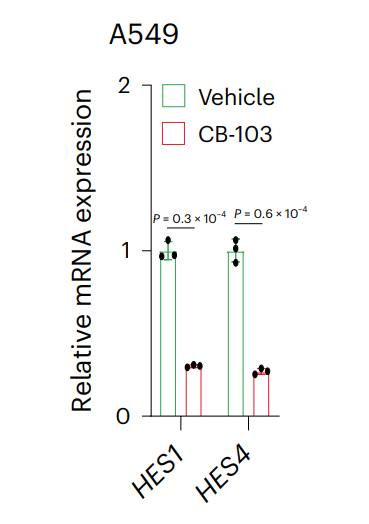
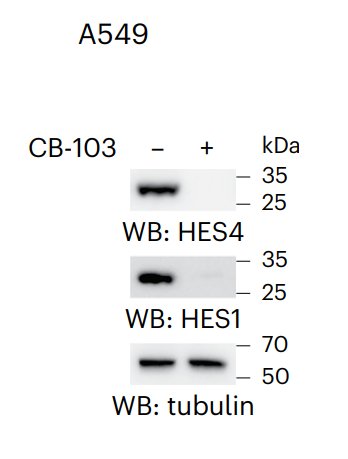
RNAi screens identify HES4 as a regulator of redox balance supporting pyrimidine synthesis and tumor growth. [Abstract]2024 Sep;31(9):1413-1425. PMID: 38769389
Limantrafin purchased from MedChemExpress. Usage Cited in: Nat Struct Mol Biol. 2024 Sep;31(9):1413-1425. [Abstract]
The mRNA levels of HES1 and HES4 in A549 cells treated with or without 10 μM CB-103 (Limantrafin) for 24 hours were measured.
Limantrafin purchased from MedChemExpress. Usage Cited in: Nat Struct Mol Biol. 2024 Sep;31(9):1413-1425. [Abstract]
The protein levels of HES1 and HES4 in A549 cells treated with or without 10 μM CB-103 (Limantrafin) for 24 hours were measured.
-
Oncogene
Notch signaling regulates a metabolic switch through inhibiting PGC-1α and mitochondrial biogenesis in dedifferentiated liposarcoma. [Abstract]2023 Aug;42(34):2521-2535. PMID: 37433985
Limantrafin purchased from MedChemExpress. Usage Cited in: Oncogene. 2023 Aug;42(34):2521-2535. [Abstract]
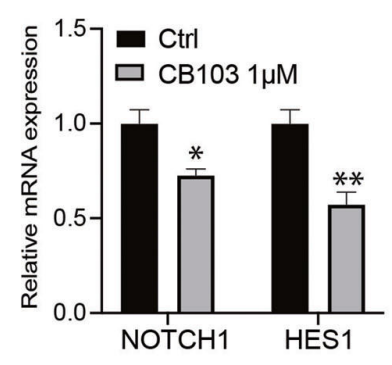
RT-qPCR results showed that CB103 (Limantrafin) inhibited the expression of NOTCH1 and HES1 genes in LPS246 cells.
Limantrafin purchased from MedChemExpress. Usage Cited in: Oncogene. 2023 Aug;42(34):2521-2535. [Abstract]
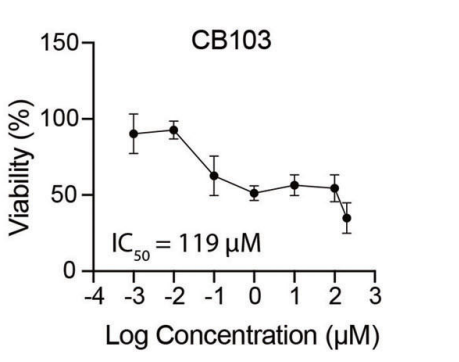
Representative dose-response curves of LPS246 cells to different concentrations of CB103 (Limantrafin) and their corresponding IC50 values.
-
ACS Biomater Sci Eng
2026 Jun 8;12(6):3103-3115. PMID: 42099289 -
Reprod Biol Endocrinol
Low-Intensity pulsed ultrasound reduces ovarian cryopreservation injury through the Notch signaling pathway. [Abstract]2026 Jan 28;24(1):30. PMID: 41593705
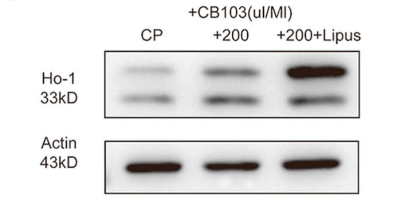
Limantrafin purchased from MedChemExpress. Usage Cited in: Reprod Biol Endocrinol. 2026 Jan 28;24(1):30. [Abstract]
Western blot of the Ho-1 expression in the CP group, the CP + CB103 (Limantrafin) group, and the CP + CB103 + LIPUS group.
-
Mol Biol Rep
2024 Nov 8;51(1):1134. PMID: 39514048 -
-
-
-


Solvent & Solubility
In Vitro:
DMSO : 100 mg/mL (412.68 mM; Need ultrasonic; Hygroscopic DMSO has a significant impact on the solubility of product, please use newly opened DMSO)
Please refer to the solubility information to select the appropriate solvent. Once prepared, please aliquot and store the solution to prevent product inactivation from repeated freeze-thaw cycles.
Storage method and period of stock solution: -80°C, 2 years; -20°C, 1 year. When stored at -80°C, please use it within 2 years. When stored at -20°C, please use it within 1 year.
Please refer to the solubility information to select the appropriate solvent. Once prepared, please aliquot and store the solution to prevent product inactivation from repeated freeze-thaw cycles.
Storage method and period of stock solution: -80°C, 2 years; -20°C, 1 year. When stored at -80°C, please use it within 2 years. When stored at -20°C, please use it within 1 year.
Concentration (start) × Volume (start) = Concentration (final) × Volume (final)
In Vivo:
Select the appropriate dissolution method based on your experimental animal and administration route.
- For the following dissolution methods, please ensure to first prepare a clear stock solution using an In Vitro approach and then sequentially add co-solvents:
- To ensure reliable experimental results, the clarified stock solution can be appropriately stored based on storage conditions. As for the working solution for In Vivo experiments, it is recommended to prepare freshly and use it on the same day.
- The percentages shown for the solvents indicate their volumetric ratio in the final prepared solution. If precipitation or phase separation occurs during preparation, heat and/or sonication can be used to aid dissolution.
Add each solvent one by one: 10% DMSO 90% (20% SBE-β-CD in Saline)
Solubility: ≥ 2.5 mg/mL (10.32 mM); Clear solution
This protocol yields a clear solution of ≥ 2.5 mg/mL (saturation unknown).
Taking 1 mL working solution as an example, add 100 μL DMSO stock solution (25.0 mg/mL) to 900 μL 20% SBE-β-CD in Saline, and mix evenly.
Preparation of 20% SBE-β-CD in Saline (4°C, storage for one week): 2 g SBE-β-CD powder is dissolved in 10 mL Saline, completely dissolve until clear.
Add each solvent one by one: 10% DMSO 40% PEG300 5% Tween-80 45% Saline
Solubility: ≥ 2.08 mg/mL (8.58 mM); Clear solution
This protocol yields a clear solution of ≥ 2.08 mg/mL (saturation unknown).
Taking 1 mL working solution as an example, add 100 μL DMSO stock solution (20.8 mg/mL) to 400 μL PEG300, and mix evenly; then add 50 μL Tween-80 and mix evenly; then add 450 μL Saline to adjust the volume to 1 mL.
Preparation of Saline: Dissolve 0.9 g sodium chloride in ddH₂O and dilute to 100 mL to obtain a clear Saline solution.
In Vivo Dissolution Calculator
Please enter the basic information of animal experiments:
-
-
-
-
Recommended: Prepare an additional quantity of animals to account for potential losses during experiments.
Please enter your animal formula composition:
-
%DMSO +
Recommended: Keep the proportion of DMSO in working solution below 2% if your animal is weak.
-
%+
-
+%Tween-80 + +
-
%Saline +
The co-solvents required include: DMSO, . All of co-solvents are available by MedChemExpress (MCE). , Tween 80. All of co-solvents are available by MedChemExpress (MCE).
Working solution concentration: 0.22 mg/mL
Method for preparing stock solution: mg drug dissolved in μL DMSO. Stock solution concentration: mg/mL.
1. Take μL DMSO stock solution;
2. Add μL .
μL , mix evenly;
3. Then add μL Tween 80, mix evenly;
4. Then add μL
Please ensure that the stock solution in the first step is dissolved to a clear state, and add co-solvents in sequence. You can use ultrasonic heating (ultrasonic cleaner, recommended frequency 20-40 kHz), vortexing, etc. to assist dissolution.


Purity & Documentation
-
Data Sheet (276 KB)
-
SDS (393 KB)
- English - EN (393 KB)
- Français - FR (393 KB)
- Deutsch - DE (393 KB)
- Norwegian - NO (393 KB)
- Español - ES (393 KB)
- Swedish - SV (393 KB)
- Italian - IT (393 KB)
- Korean - KR (393 KB)
- Portuguese - PT (393 KB)
-
Handling Instructions (2659 KB)
References


Complete Stock Solution Preparation Table
Please refer to the solubility information to select the appropriate solvent. Once prepared, please aliquot and store the solution to prevent product inactivation from repeated freeze-thaw cycles.
Storage method and period of stock solution: -80°C, 2 years; -20°C, 1 year. When stored at -80°C, please use it within 2 years. When stored at -20°C, please use it within 1 year.
| Optional Solvent | Concentration Solvent Mass | 1 mg | 5 mg | 10 mg | 25 mg |
|---|---|---|---|---|---|
| DMSO | 1 mM | 4.1268 mL | 20.6339 mL | 41.2677 mL | 103.1694 mL |
| 5 mM | 0.8254 mL | 4.1268 mL | 8.2535 mL | 20.6339 mL | |
| 10 mM | 0.4127 mL | 2.0634 mL | 4.1268 mL | 10.3169 mL | |
| 15 mM | 0.2751 mL | 1.3756 mL | 2.7512 mL | 6.8780 mL | |
| 20 mM | 0.2063 mL | 1.0317 mL | 2.0634 mL | 5.1585 mL | |
| 25 mM | 0.1651 mL | 0.8254 mL | 1.6507 mL | 4.1268 mL | |
| 30 mM | 0.1376 mL | 0.6878 mL | 1.3756 mL | 3.4390 mL | |
| 40 mM | 0.1032 mL | 0.5158 mL | 1.0317 mL | 2.5792 mL | |
| 50 mM | 0.0825 mL | 0.4127 mL | 0.8254 mL | 2.0634 mL | |
| 60 mM | 0.0688 mL | 0.3439 mL | 0.6878 mL | 1.7195 mL | |
| 80 mM | 0.0516 mL | 0.2579 mL | 0.5158 mL | 1.2896 mL | |
| 100 mM | 0.0413 mL | 0.2063 mL | 0.4127 mL | 1.0317 mL |


Limantrafin Related Classifications
HY-135145 Related Classifications
 Powered by Bioz