



HLM006474
Based on 10 publication(s) in Google Scholar
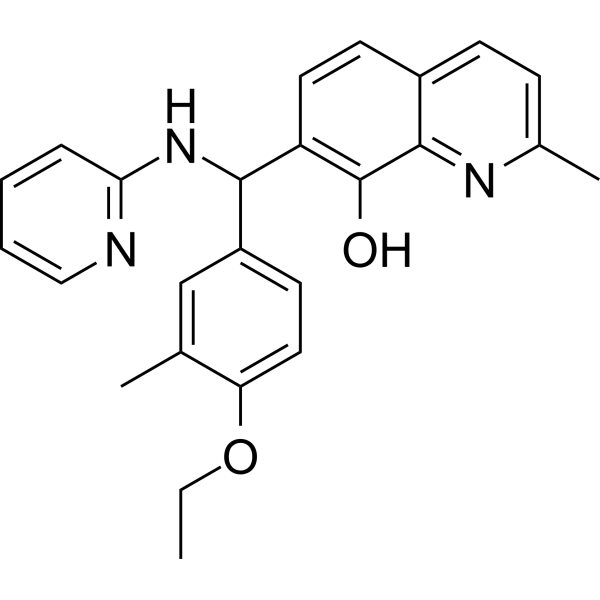
HLM006474 is a pan E2F inhibitor, which inhibits E2F4 DNA-binding with an IC50 of 29.8 μM in A375 cells.
For research use only. We do not sell to patients.
- Purity : 98.44%
- CAS No.: 353519-63-8
- Formula: C25H25N3O2
- Molecular Weight:399.48
-
Storage:Powder -20°C, 3 years , 4°C, 2 years ; In solvent -80°C, 2 years , -20°C, 1 year

To place orders, for customer services and technical support, please contact: MedChemExpress USA
Tel: 609-228-6898 E-mail: [email protected] [email protected]


-
 Biological Activity
-
Chemical Information
-
Solvent & Solubility
- Purity & Documentation
- References
-
 Help & FAQs


-
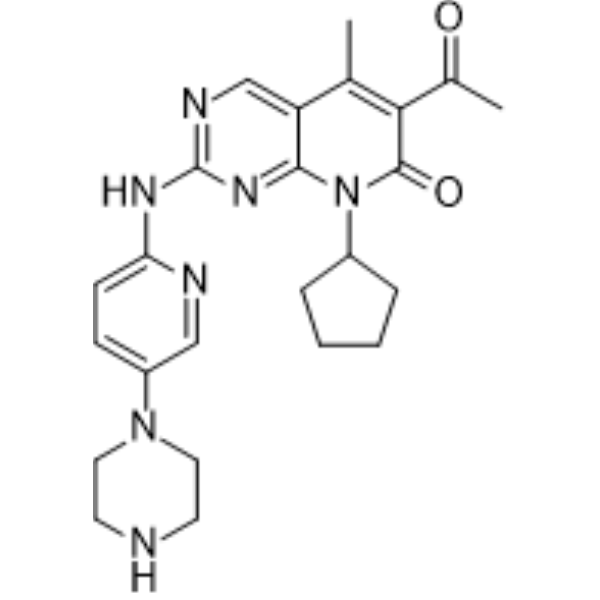
HY-50767
PalbociclibCDK4/6 Inhibitor -
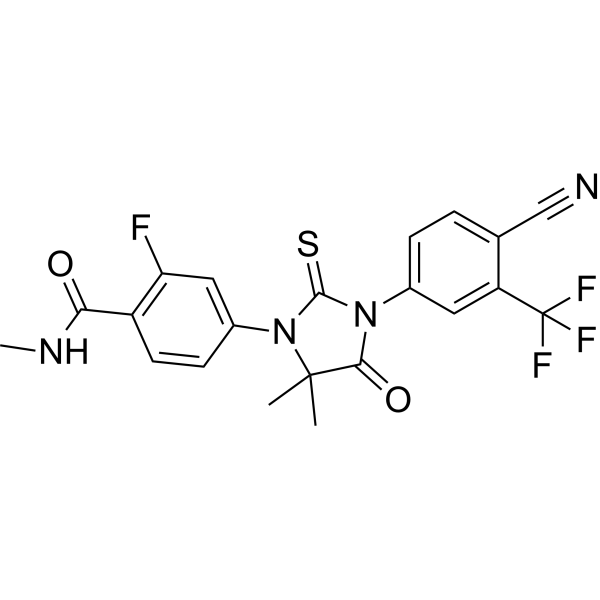
HY-70002
EnzalutamideAndrogen Receptor Antagonist -
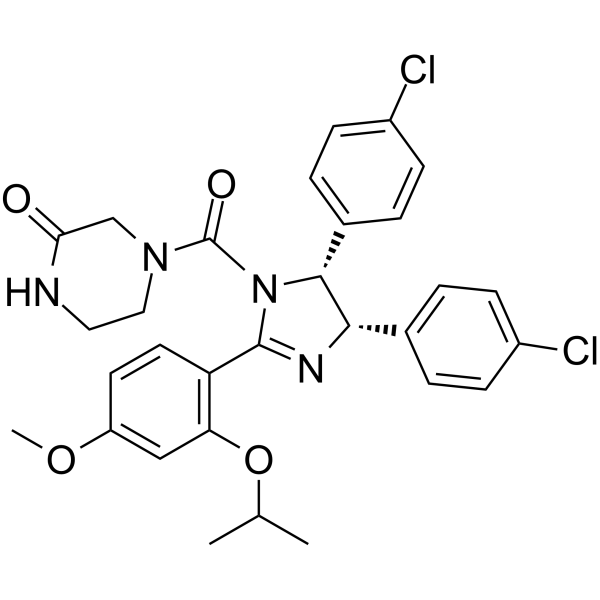
HY-10029
Nutlin-3aMDM2 Antagonist -
HY-100579
Ferrostatin-1Ferroptosis Inhibitor -
HY-B0215
AcetylcysteineMucolytic Agent -
HY-10256
Adezmapimodp38 MAPK Inhibitor -
HY-13966
2-Deoxy-D-glucoseGlycolysis Inhibitor -
HY-15142
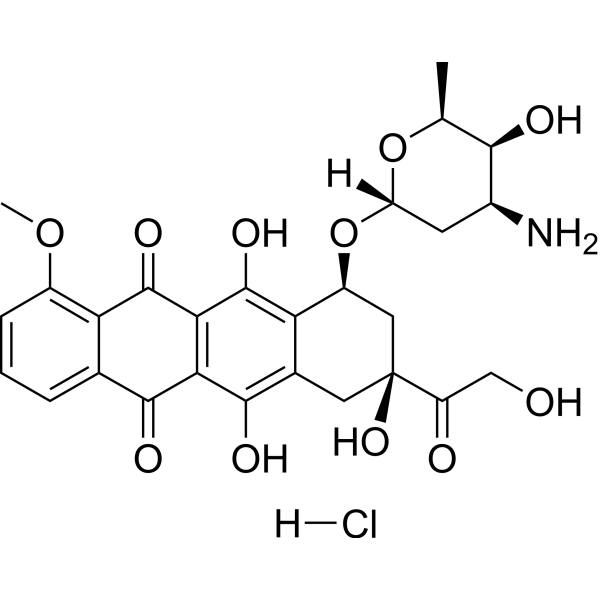
Doxorubicin hydrochlorideTopoisomerase Inhibitor -
HY-B0988
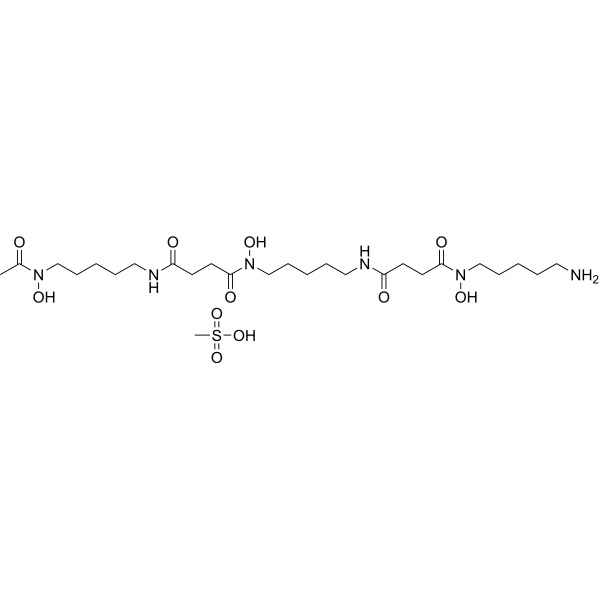
Deferoxamine mesylateIron Chelator -
HY-19323
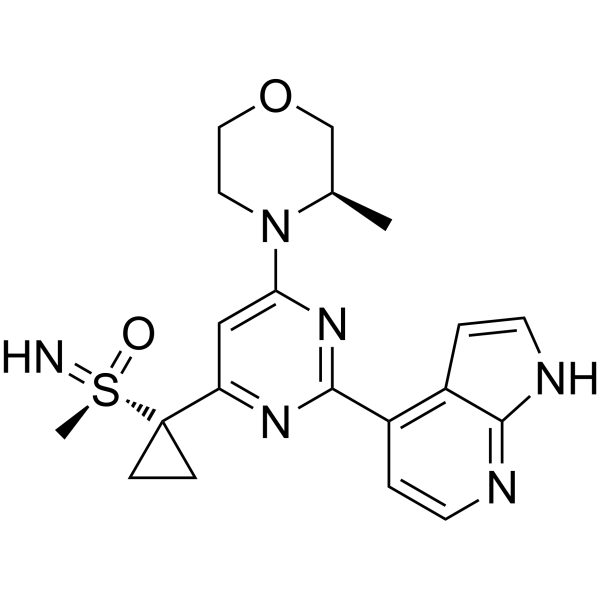
CeralasertibATR Inhibitor -
HY-112005
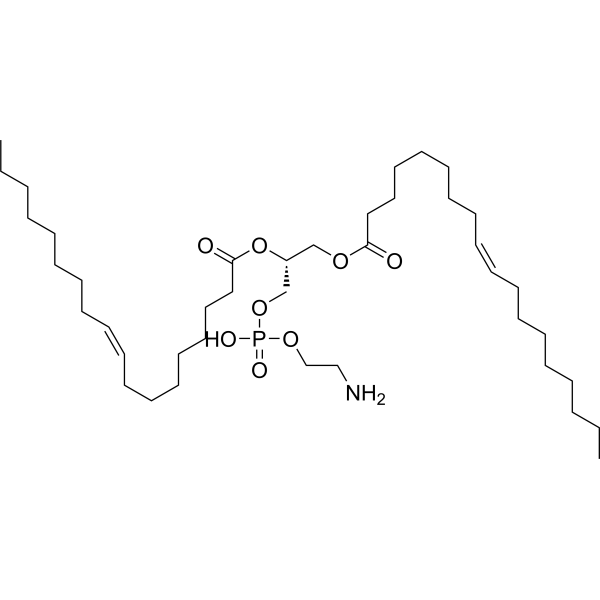
DOPEFerroptosis Inhibitor -
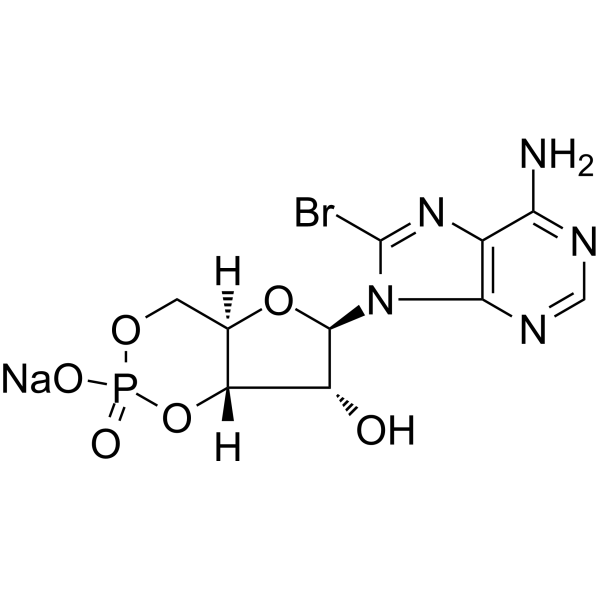
HY-12306
8-Bromo-cAMP sodium saltPKA Activator
Publications Citing Use of MedChemExpress (MCE) HLM006474
More- Cancer Res. 2026 Mar 5. [Abstract]
- Nat Commun. 2025 Mar 6;16(1):2239. [Abstract]
- Adv Sci (Weinh). 2025 Nov 30:e14349. [Abstract]
- Int J Biol Sci. 2024 Sep 16;20(12):4978-4998. [Abstract]
- J Transl Med. 2019 Nov 11;17(1):366. [Abstract]
- J Mol Med (Berl). 2019 Aug;97(8):1183-1193. [Abstract]
- Cell Signal. 2022 Apr:92:110265. [Abstract]
- iScience. 2025 Jan 20;28(2):111853. [Abstract]
- J Gastroenterol Hepatol. 2025 Apr;40(4):1004-1015. [Abstract]
- bioRxiv. 2024 June 27.
 Customer Validation & Images

-
WB

-
In Vivo Efficacy Study

-
WB

-
Cell Proliferation/Viability Assay

-
In Vivo Efficacy Study


Biological Activity
Description
IC50 & Target
IC50: 29.8 µM (E2F4 DNA-binding)[1]
In Vitro
HLM006474 shows little activities against E2F4 DNA-binding in A375 cells at 10 and 20 μM, apparently inhibits E2F4 DNA-binding at 40 μM, and increasingly suppressses the effect at 60 and 80 μM concentrations. HLM006474 (40 μM) inhibits E2F4 activity via suppression of its DNA-binding activity and down regulation of its expression. HLM006474 (40 μM) also significantly induces apoptosis in A375 and 231 cell lines for 24 hours. HLM006474 dramaticly reduces cyclin D3 protein expression, and is a potent inducer of PARP cleavage[1]. HLM006474 reduces the viability of both SCLC and NSCLC lines with IC50 ranging from 15 to 75 μM. HLM006474 (60 μM) increases the expression of several known E2F-regulated genes after short treatments in H292 and H1299 cell lines. HLM006474 (20 μM) weakly synergizes with paclitaxel, but there is antagonism between HLM006474 and cisplatin and gemcitabine in H1299 cells[2]. HLM006474 leads to a decrease in the mRNA levels of MAD2. Furthmore, HLM006474 apparently suppresses the increase of Mad2 protein and pRb-S780 signal but not the level of Skp2 protein in human lung cancer A549 cellss[3].
MedChemExpress (MCE) has not independently confirmed the accuracy of these methods. They are for reference only.


Chemical Information
-
CAS No. 353519-63-8
-
Appearance Solid
-
Molecular Weight 399.48
-
Formula C25H25N3O2
-
Color White to off-white
-
SMILES
OC(C1=NC(C)=CC=C1C=C2)=C2C(NC3=NC=CC=C3)C(C=C4C)=CC=C4OCC
-
Shipping
Room temperature in continental US; may vary elsewhere.
-
Storage
Powder -20°C 3 years 4°C 2 years In solvent -80°C 2 years -20°C 1 year


Publications (10)
-
Journal Impact Factor
-
Most Recent
-
Cancer Res
METTL3 Methylation Induces Decay of Endogenous Retroelement Transcripts to Promote Tumor Immune Evasion. [Abstract]2026 Mar 5. PMID: 41784625
HLM006474 purchased from MedChemExpress. Usage Cited in: Cancer Res. 2026 Mar 5. [Abstract]
IB and RNA dot blot analysis of RNA m6A levels, SETD1A, METTL3, K513me2, and METTL3 expression in LoVo cells treated with different concentrations of HLM006474, and RNA m6A levels in indicated cells were quantified by ELISA.
-
Nat Commun
Oxidative phosphorylation is a key feature of neonatal monocyte immunometabolism promoting myeloid differentiation after birth. [Abstract]2025 Mar 6;16(1):2239. PMID: 40050264
HLM006474 purchased from MedChemExpress. Usage Cited in: Nat Commun. 2025 Mar 6;16(1):2239. [Abstract]
Subcutaneous implantation of CT26 cells into BALB/c mice, with control vehicle, E2F4 inhibitor (HLM006474: 20 mg/kg), anti–PD-1 antibody, or combined treatment . Representative bioluminescent images and tumor bioluminescence intensity at 16 days after cell injection.
-
Adv Sci (Weinh)
Microcystin-LR Triggers Renal Tubular Ferroptosis Through Epigenetic Repression of GPX4: Implications for Environmental Nephrotoxicity. [Abstract]2025 Nov 30:e14349. PMID: 41319283
HLM006474 purchased from MedChemExpress. Usage Cited in: Adv Sci (Weinh). 2025 Nov 30:e14349. [Abstract]
Western blot analysis of GPX4 in HK2 cells treated with MC‐LR (20 µm) in the presence or absence of E2F4 inhibitor HLM006474 (10 µm) for 48h.
-
Int J Biol Sci
Transcription Factor E2F4 Promote Proliferation, Migration, and Invasion of Gastric Cancer Cells by transcriptionally activating DSCC1. [Abstract]2024 Sep 16;20(12):4978-4998. PMID: 39309429
HLM006474 purchased from MedChemExpress. Usage Cited in: Int J Biol Sci. 2024 Sep 16;20(12):4978-4998. [Abstract]
The effect of combination HLM006474 (20 μM) and Palbociclib on the Proliferation, Migration, Invasion and cell cycle in NCI-N87 cells.
HLM006474 purchased from MedChemExpress. Usage Cited in: Int J Biol Sci. 2024 Sep 16;20(12):4978-4998. [Abstract]
Combination treatment of HLM006474 (20 μM) and Palbociclib suppressed the growth of subcutaneous xenograft tumors in nude mice.
-
J Transl Med
HO-1 promotes resistance to an EZH2 inhibitor through the pRB-E2F pathway: correlation with the progression of myelodysplastic syndrome into acute myeloid leukemia. [Abstract]2019 Nov 11;17(1):366. PMID: 31711520 -
J Mol Med (Berl)
2019 Aug;97(8):1183-1193. PMID: 31201471 -
Cell Signal
NCAPD3 promotes prostate cancer progression by up-regulating EZH2 and MALAT1 through STAT3 and E2F1. [Abstract]2022 Apr:92:110265. PMID: 35085770 -
iScience
A human-specific, concerted repression of microcephaly genes contributes to radiation-induced growth defects in cortical organoids. [Abstract]2025 Jan 20;28(2):111853. PMID: 39967878 -
J Gastroenterol Hepatol
Clonorchis sinensis Promotes Intrahepatic Cholangiocarcinoma Progression by Activating FASN-Mediated Fatty Acid Metabolism. [Abstract]2025 Apr;40(4):1004-1015. PMID: 39806791 -


Solvent & Solubility
In Vitro:
DMSO : 16.67 mg/mL (41.73 mM; ultrasonic and warming and heat to 60°C; Hygroscopic DMSO has a significant impact on the solubility of product, please use newly opened DMSO)
Please refer to the solubility information to select the appropriate solvent. Once prepared, please aliquot and store the solution to prevent product inactivation from repeated freeze-thaw cycles.
Storage method and period of stock solution: -80°C, 2 years; -20°C, 1 year. When stored at -80°C, please use it within 2 years. When stored at -20°C, please use it within 1 year.
Please refer to the solubility information to select the appropriate solvent. Once prepared, please aliquot and store the solution to prevent product inactivation from repeated freeze-thaw cycles.
Storage method and period of stock solution: -80°C, 2 years; -20°C, 1 year. When stored at -80°C, please use it within 2 years. When stored at -20°C, please use it within 1 year.
Concentration (start) × Volume (start) = Concentration (final) × Volume (final)
In Vivo:
Select the appropriate dissolution method based on your experimental animal and administration route.
- For the following dissolution methods, please ensure to first prepare a clear stock solution using an In Vitro approach and then sequentially add co-solvents:
- To ensure reliable experimental results, the clarified stock solution can be appropriately stored based on storage conditions. As for the working solution for In Vivo experiments, it is recommended to prepare freshly and use it on the same day.
- The percentages shown for the solvents indicate their volumetric ratio in the final prepared solution. If precipitation or phase separation occurs during preparation, heat and/or sonication can be used to aid dissolution.
Add each solvent one by one: 10% DMSO 40% PEG300 5% Tween-80 45% Saline
Solubility: ≥ 2.5 mg/mL (6.26 mM); Clear solution
This protocol yields a clear solution of ≥ 2.5 mg/mL (saturation unknown).
Taking 1 mL working solution as an example, add 100 μL DMSO stock solution (25.0 mg/mL) to 400 μL PEG300, and mix evenly; then add 50 μL Tween-80 and mix evenly; then add 450 μL Saline to adjust the volume to 1 mL.
Preparation of Saline: Dissolve 0.9 g sodium chloride in ddH₂O and dilute to 100 mL to obtain a clear Saline solution.
Add each solvent one by one: 10% DMSO 90% (20% SBE-β-CD in Saline)
Solubility: 2.5 mg/mL (6.26 mM); Suspended solution; Need ultrasonic
This protocol yields a suspended solution of 2.5 mg/mL. Suspended solution can be used for oral and intraperitoneal injection.
Taking 1 mL working solution as an example, add 100 μL DMSO stock solution (25.0 mg/mL) to 900 μL 20% SBE-β-CD in Saline, and mix evenly.
Preparation of 20% SBE-β-CD in Saline (4°C, storage for one week): 2 g SBE-β-CD powder is dissolved in 10 mL Saline, completely dissolve until clear.
In Vivo Dissolution Calculator
Please enter the basic information of animal experiments:
-
-
-
-
Recommended: Prepare an additional quantity of animals to account for potential losses during experiments.
Please enter your animal formula composition:
-
%DMSO +
Recommended: Keep the proportion of DMSO in working solution below 2% if your animal is weak.
-
%+
-
+%Tween-80 + +
-
%Saline +
The co-solvents required include: DMSO, . All of co-solvents are available by MedChemExpress (MCE). , Tween 80. All of co-solvents are available by MedChemExpress (MCE).
Working solution concentration: 0.22 mg/mL
Method for preparing stock solution: mg drug dissolved in μL DMSO. Stock solution concentration: mg/mL.
1. Take μL DMSO stock solution;
2. Add μL .
μL , mix evenly;
3. Then add μL Tween 80, mix evenly;
4. Then add μL
Please ensure that the stock solution in the first step is dissolved to a clear state, and add co-solvents in sequence. You can use ultrasonic heating (ultrasonic cleaner, recommended frequency 20-40 kHz), vortexing, etc. to assist dissolution.


Purity & Documentation
-
Data Sheet (279 KB)
-
SDS (392 KB)
- English - EN (392 KB)
- Français - FR (392 KB)
- Deutsch - DE (392 KB)
- Norwegian - NO (392 KB)
- Español - ES (392 KB)
- Swedish - SV (392 KB)
- Italian - IT (392 KB)
- Korean - KR (392 KB)
- Portuguese - PT (392 KB)
-
Handling Instructions (2659 KB)
References


Complete Stock Solution Preparation Table
Please refer to the solubility information to select the appropriate solvent. Once prepared, please aliquot and store the solution to prevent product inactivation from repeated freeze-thaw cycles.
Storage method and period of stock solution: -80°C, 2 years; -20°C, 1 year. When stored at -80°C, please use it within 2 years. When stored at -20°C, please use it within 1 year.
| Optional Solvent | Concentration Solvent Mass | 1 mg | 5 mg | 10 mg | 25 mg |
|---|---|---|---|---|---|
| DMSO | 1 mM | 2.5033 mL | 12.5163 mL | 25.0325 mL | 62.5814 mL |
| 5 mM | 0.5007 mL | 2.5033 mL | 5.0065 mL | 12.5163 mL | |
| 10 mM | 0.2503 mL | 1.2516 mL | 2.5033 mL | 6.2581 mL | |
| 15 mM | 0.1669 mL | 0.8344 mL | 1.6688 mL | 4.1721 mL | |
| 20 mM | 0.1252 mL | 0.6258 mL | 1.2516 mL | 3.1291 mL | |
| 25 mM | 0.1001 mL | 0.5007 mL | 1.0013 mL | 2.5033 mL | |
| 30 mM | 0.0834 mL | 0.4172 mL | 0.8344 mL | 2.0860 mL | |
| 40 mM | 0.0626 mL | 0.3129 mL | 0.6258 mL | 1.5645 mL |


HLM006474 Related Classifications
HY-16667 Related Classifications
 Powered by Bioz