



Xylose
Based on 5 publication(s) in Google Scholar
Xylose (D-(+)-Xylose) is a natural pentose sugar that is catalyzed by xylose isomerase to form xylulose, which is a key step in the anaerobic ethanol fermentation of Xylose. Xylose can be used by microorganisms to produce fuels, chemicals, and bulk industrial enzymes. Xylose provides the substances and energy for cells, as a carbon source for the biosynthesis of high-value chemicals and biofuel. Xylose can be used to fully explore lignocellulose resources and provide a new direction for microbia fermentation.
For research use only. We do not sell to patients.
- Assay : 99.51%
- CAS No.: 58-86-6
- Formula: C5H10O5
- Molecular Weight:150.13
-
Storage:Powder -20°C, 3 years , 4°C, 2 years ; In solvent -80°C, 2 years , -20°C, 1 year

To place orders, for customer services and technical support, please contact: MedChemExpress USA
Tel: 609-228-6898 E-mail: [email protected] [email protected]


-
 Biological Activity
-
Chemical Information
-
Solvent & Solubility
- Purity & Documentation
- References
-
 Help & FAQs


-
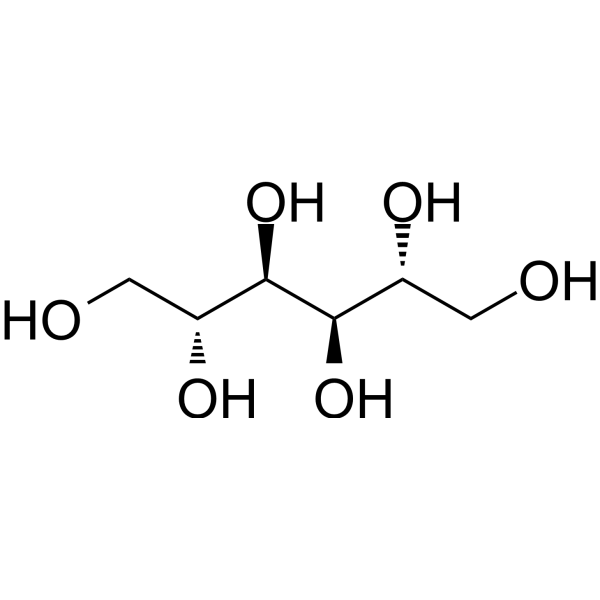
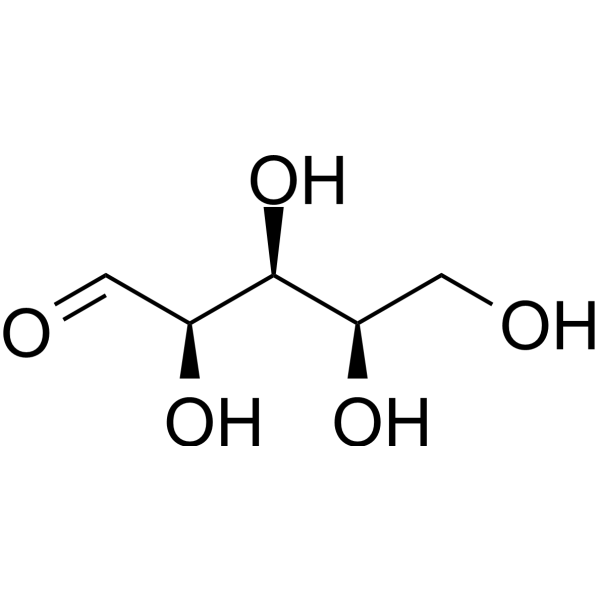
HY-N0378
D-MannitolResistant Sugar/Osmotic Diuretics -
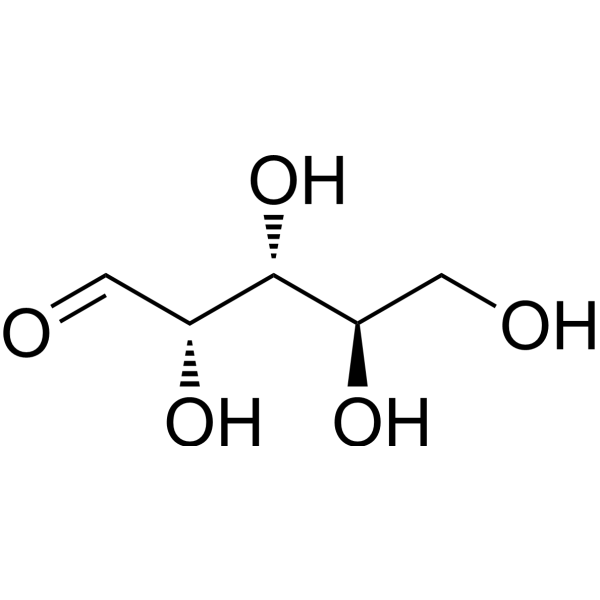
HY-N0059
D-ArabinoseAnti-parasite Agent -
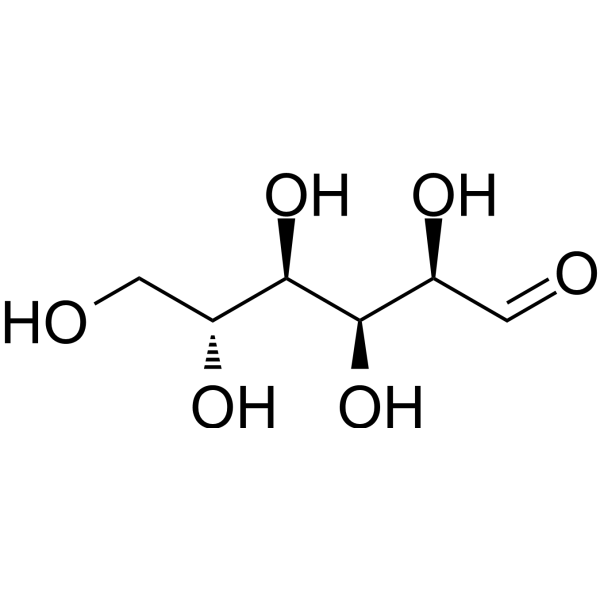
HY-B0389
D-GlucoseMonosaccharide -
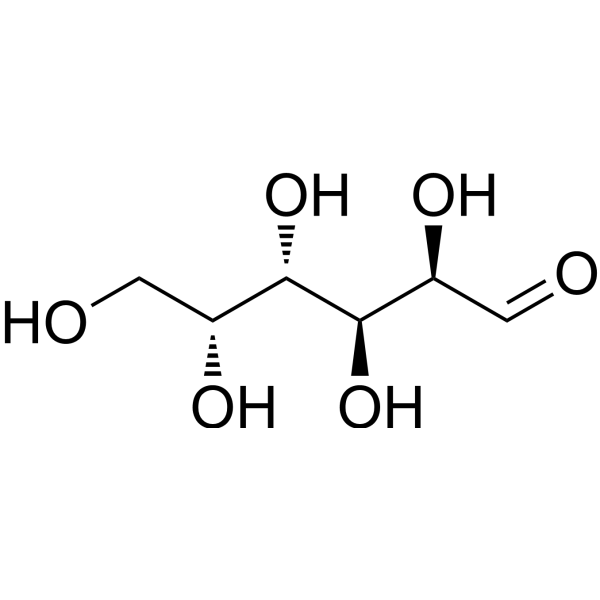
HY-N0210
D-GalactoseEndogenous Metabolite -
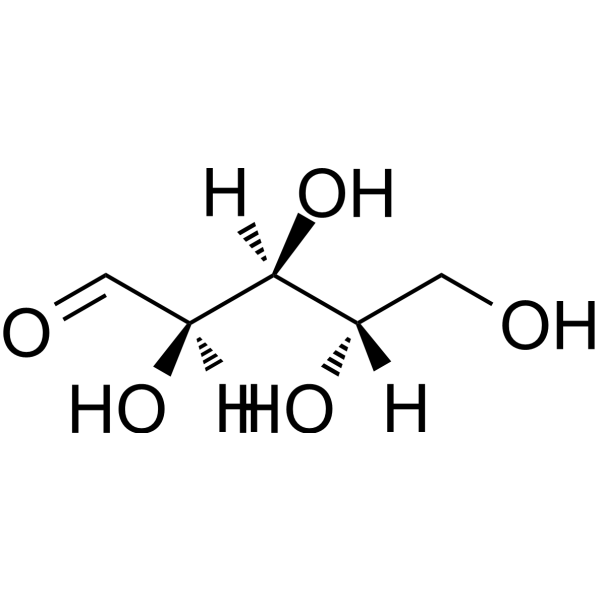
HY-W015611
L-(+)-Arabinose -
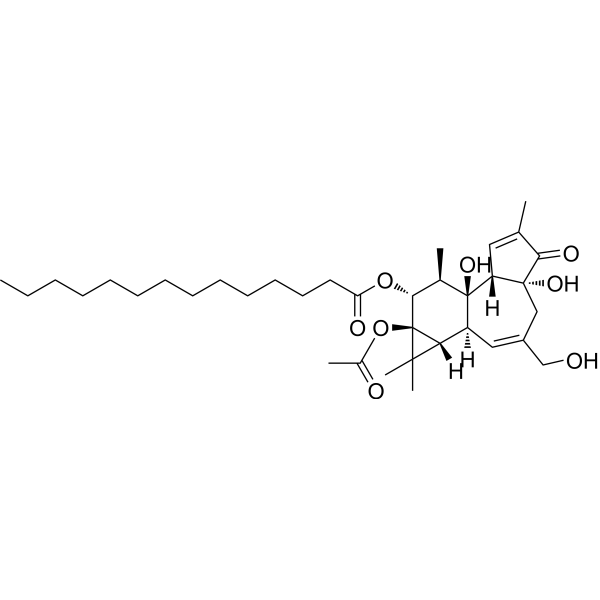
HY-18739
Phorbol 12-myristate 13-acetatePKC Activator -
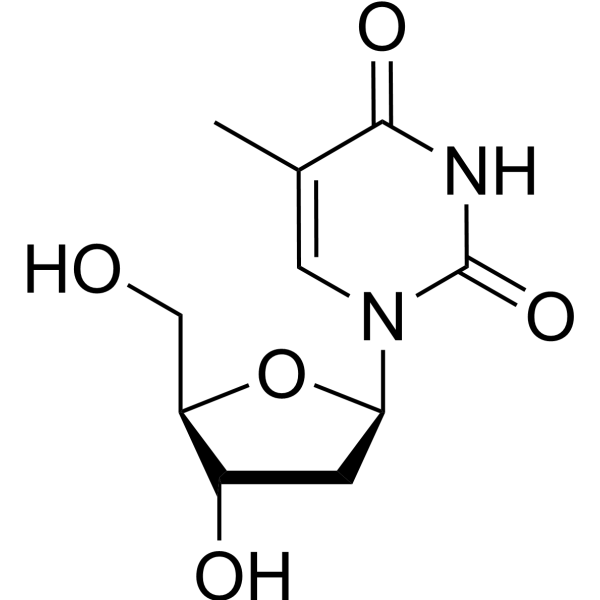
HY-N1150
ThymidineDNA Synthesis Inhibitor -
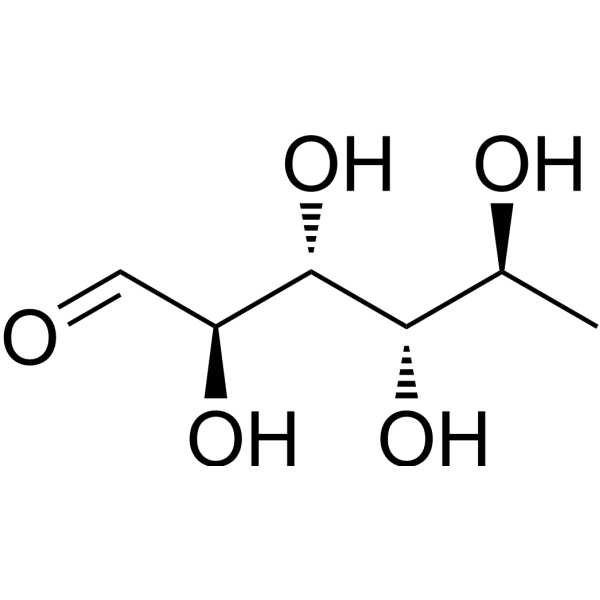
HY-N1420
RhamnoseMonosaccharide -
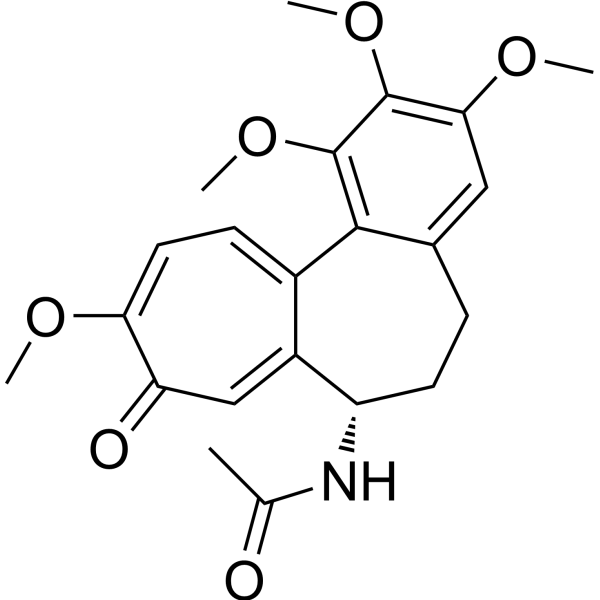
HY-16569
ColchicineTubulin Inhibitor -
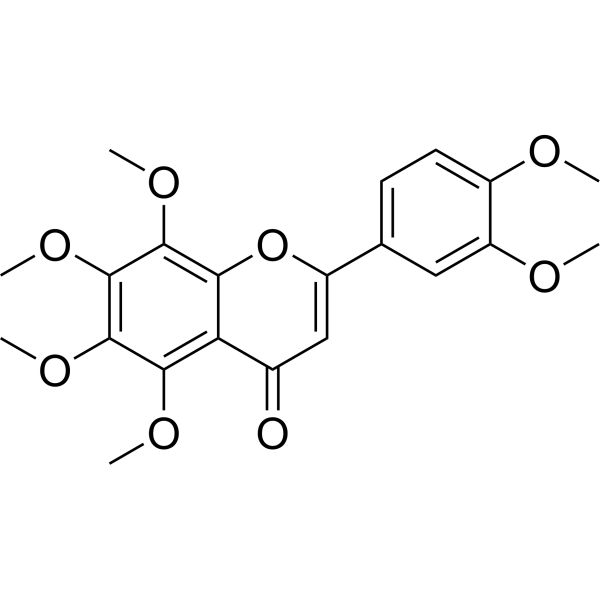
HY-N0155
NobiletinROR Agonist -

HY-N0537R
Xylose (Standard)Standard of Xylose -
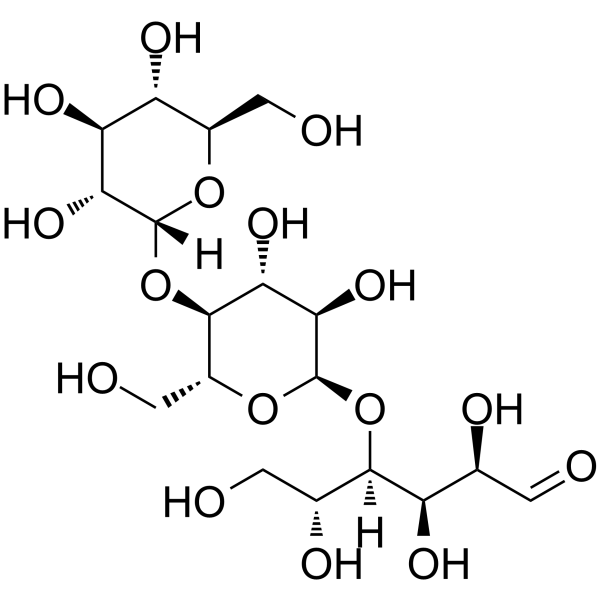
HY-113011
MaltotrioseMaltose Operon Inducer
Publications Citing Use of MedChemExpress (MCE) Xylose
MoreAll Endogenous Metabolite Isoforms
More

Biological Activity
Description
IC50 & Target
|
Human Endogenous Metabolite |
In Vitro
Xylose (0-90 g/L, 0-48 h) utilization is improved by rapid growth of K. pneumoniae HR521 LDH[1].
Xylose (0-90 g/L, 0-72 h) utilization ratio is 99.1% at 48 hours when the initial acetic acid concentration is 4.5 g/L, and this ratio exceeded 99% at 72 hours when the initial acetic acid concentration is over 2.5 g/L in K. pneumonia[1].
Xylose is converted into xylulose by different enzymes in various microorganisms. In bacteria isomerization of Xylose to xylulose is catalyzed by Xylose isomerase (Xl), whereas yeast and mycelial fungi need a two-step pathway employing D-Xylose reductase (XR) and xylitol dehydrogenase (XDH) [4].
MedChemExpress (MCE) has not independently confirmed the accuracy of these methods. They are for reference only.
Clinical Trial
| NCT Number | Sponsor | Condition | Start Date |
Phase

|
|---|---|---|---|---|
| NCT01329991 | Plexxikon| | 2011-05 | PHASE1 |


Chemical Information
-
CAS No. 58-86-6
-
Appearance Solid
-
Molecular Weight 150.13
-
Formula C5H10O5
-
Color White to off-white
-
SMILES
O=C[C@@H]([C@H]([C@@H](CO)O)O)O
-
Synonyms
D-(+)-Xylose; (+)-Xylose; Wood sugar
-
Structure Classification
-
Initial Source
-
Shipping
Room temperature in continental US; may vary elsewhere.
-
Storage
Powder -20°C 3 years 4°C 2 years In solvent -80°C 2 years -20°C 1 year


Publications (5)
-
Journal Impact Factor
-
Most Recent
-
Nature
2025 Jul;643(8070):192-200. PMID: 39695227 -
Exploration
A Bioorthogonal and Programmable Bacterial Delivery System for Spatiotemporally Targeted Therapy of Solid Tumors. [Abstract]2025 Dec 18;5(6):20240396. PMID: 41476656 -
Sci Adv
Imaging of Escherichia coli K5 and glycosaminoglycan precursors via targeted metabolic labeling of capsular polysaccharides in bacteria. [Abstract]2023 Feb 17;9(7):eade4770. PMID: 36800421 -
ACS Appl Mater Interfaces
Glucose Oxidase-Instructed Fluorescence Amplification Strategy for Intracellular Glucose Detection. [Abstract]2019 Mar 20;11(11):10554-10558. PMID: 30807088 -
BMC Microbiol
Klebsiella pneumoniae under xylose pressure: the growth adaptation, antimicrobial susceptibility, global proteomics analysis and role of XylA and XylB proteins. [Abstract]2025 Apr 29;25(1):257. PMID: 40301709


Solvent & Solubility
In Vitro:
H2O : ≥ 50 mg/mL (333.04 mM)
DMSO : 50 mg/mL (333.04 mM; Need ultrasonic; Hygroscopic DMSO has a significant impact on the solubility of product, please use newly opened DMSO)
* "≥" means soluble, but saturation unknown.
Please refer to the solubility information to select the appropriate solvent. Once prepared, please aliquot and store the solution to prevent product inactivation from repeated freeze-thaw cycles.
Storage method and period of stock solution: -80°C, 2 years; -20°C, 1 year. When stored at -80°C, please use it within 2 years. When stored at -20°C, please use it within 1 year.
* Note: If you choose water as the stock solution, please dilute it to the working solution, then filter and sterilize it with a 0.22 μm filter before use.
Please refer to the solubility information to select the appropriate solvent. Once prepared, please aliquot and store the solution to prevent product inactivation from repeated freeze-thaw cycles.
Storage method and period of stock solution: -80°C, 2 years; -20°C, 1 year. When stored at -80°C, please use it within 2 years. When stored at -20°C, please use it within 1 year.
* Note: If you choose water as the stock solution, please dilute it to the working solution, then filter and sterilize it with a 0.22 μm filter before use.
Concentration (start) × Volume (start) = Concentration (final) × Volume (final)
In Vivo:
Select the appropriate dissolution method based on your experimental animal and administration route.
- For the following dissolution methods, please ensure to first prepare a clear stock solution using an In Vitro approach and then sequentially add co-solvents:
- To ensure reliable experimental results, the clarified stock solution can be appropriately stored based on storage conditions. As for the working solution for In Vivo experiments, it is recommended to prepare freshly and use it on the same day.
- The percentages shown for the solvents indicate their volumetric ratio in the final prepared solution. If precipitation or phase separation occurs during preparation, heat and/or sonication can be used to aid dissolution.
Add each solvent one by one: 10% DMSO 40% PEG300 5% Tween-80 45% Saline
Solubility: ≥ 2.5 mg/mL (16.65 mM); Clear solution
This protocol yields a clear solution of ≥ 2.5 mg/mL (saturation unknown).
Taking 1 mL working solution as an example, add 100 μL DMSO stock solution (25.0 mg/mL) to 400 μL PEG300, and mix evenly; then add 50 μL Tween-80 and mix evenly; then add 450 μL Saline to adjust the volume to 1 mL.
Preparation of Saline: Dissolve 0.9 g sodium chloride in ddH₂O and dilute to 100 mL to obtain a clear Saline solution.
Add each solvent one by one: 10% DMSO 90% (20% SBE-β-CD in Saline)
Solubility: ≥ 2.5 mg/mL (16.65 mM); Clear solution
This protocol yields a clear solution of ≥ 2.5 mg/mL (saturation unknown).
Taking 1 mL working solution as an example, add 100 μL DMSO stock solution (25.0 mg/mL) to 900 μL 20% SBE-β-CD in Saline, and mix evenly.
Preparation of 20% SBE-β-CD in Saline (4°C, storage for one week): 2 g SBE-β-CD powder is dissolved in 10 mL Saline, completely dissolve until clear.
For the following dissolution methods, please prepare the working solution directly:
It is recommended to prepare fresh solutions and use them promptly within a short period of time.
The percentages shown for the solvents indicate their volumetric ratio in the final prepared solution. If precipitation or phase separation occurs during preparation, heat and/or sonication can be used to aid dissolution.
Add each solvent one by one: PBS
Solubility: 100 mg/mL (666.09 mM); Clear solution; Need ultrasonic
In Vivo Dissolution Calculator
Please enter the basic information of animal experiments:
-
-
-
-
Recommended: Prepare an additional quantity of animals to account for potential losses during experiments.
Working solution concentration: 0.22 mg/mL
This product has good water solubility, please refer to the measured solubility data in water/PBS/Saline for details.


Purity & Documentation
-
Data Sheet (275 KB)
-
SDS (396 KB)
- English - EN (396 KB)
- Français - FR (396 KB)
- Deutsch - DE (396 KB)
- Norwegian - NO (396 KB)
- Español - ES (396 KB)
- Swedish - SV (396 KB)
- Italian - IT (396 KB)
- Korean - KR (396 KB)
- Portuguese - PT (396 KB)
-
Handling Instructions (2659 KB)
References
[1]. Wang XX, et al. The implementation of high fermentative 2,3-butanediol production from xylose by simultaneous additions of yeast extract, Na2EDTA, and acetic acid. N Biotechnol. 2015 Aug 3. [Content Brief]
[2]. Bingyin Peng, et al. Bacterial xylose isomerases from the mammal gut Bacteroidetes cluster function in Saccharomyces cerevisiae for effective xylose fermentation. Microbial Cell Factories May, 2015, 14:70. [Content Brief]
[3]. Pengfei Li, et al. Construction of efficient xylose utilizing Pichia pastoris for industrial enzyme production. Microbial Cell Factories February 2015, 14:22. [Content Brief]
[4]. Zhao Z, et al. Biochemical routes for uptake and conversion of xylose by microorganisms. Biotechnol Biofuels. 2020 Feb 1;13:21. [Content Brief]


Complete Stock Solution Preparation Table
Please refer to the solubility information to select the appropriate solvent. Once prepared, please aliquot and store the solution to prevent product inactivation from repeated freeze-thaw cycles.
Storage method and period of stock solution: -80°C, 2 years; -20°C, 1 year. When stored at -80°C, please use it within 2 years. When stored at -20°C, please use it within 1 year.
| Optional Solvent | Concentration Solvent Mass | 1 mg | 5 mg | 10 mg | 25 mg |
|---|---|---|---|---|---|
| H2O / DMSO | 1 mM | 6.6609 mL | 33.3045 mL | 66.6089 mL | 166.5223 mL |
| 5 mM | 1.3322 mL | 6.6609 mL | 13.3218 mL | 33.3045 mL | |
| 10 mM | 0.6661 mL | 3.3304 mL | 6.6609 mL | 16.6522 mL | |
| 15 mM | 0.4441 mL | 2.2203 mL | 4.4406 mL | 11.1015 mL | |
| 20 mM | 0.3330 mL | 1.6652 mL | 3.3304 mL | 8.3261 mL | |
| 25 mM | 0.2664 mL | 1.3322 mL | 2.6644 mL | 6.6609 mL | |
| 30 mM | 0.2220 mL | 1.1101 mL | 2.2203 mL | 5.5507 mL | |
| 40 mM | 0.1665 mL | 0.8326 mL | 1.6652 mL | 4.1631 mL | |
| 50 mM | 0.1332 mL | 0.6661 mL | 1.3322 mL | 3.3304 mL | |
| 60 mM | 0.1110 mL | 0.5551 mL | 1.1101 mL | 2.7754 mL | |
| 80 mM | 0.0833 mL | 0.4163 mL | 0.8326 mL | 2.0815 mL | |
| 100 mM | 0.0666 mL | 0.3330 mL | 0.6661 mL | 1.6652 mL |
* Note: If you choose water as the stock solution, please dilute it to the working solution, then filter and sterilize it with a 0.22 μm filter before use.


Xylose Related Classifications
HY-N0537 Related Classifications
 Powered by Bioz