



OGT 2115
Based on 6 publication(s) in Google Scholar
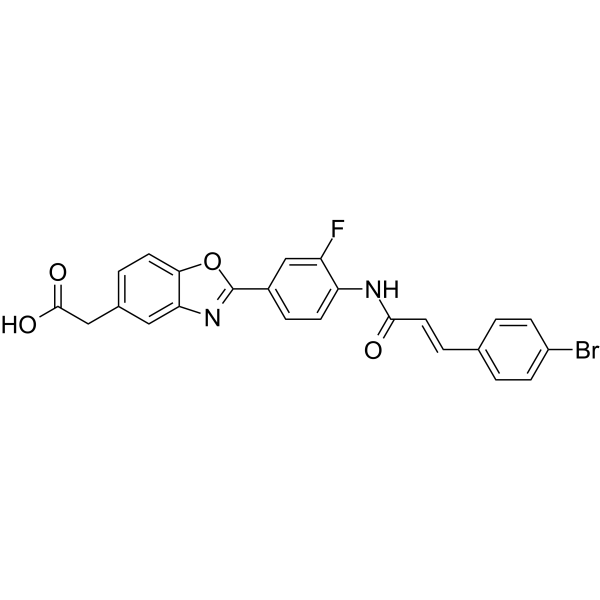
OGT 2115 is a potent, cell-permeable and orally active heparanase inhibitor with an IC50 of 0.4 μM. OGT 2115 has anti-angiogenic properties (IC50 of 1 μM). OGT 2115 also inhibits heparan sulfate degradation activity.
연구목적의 판매만을 진행합니다. 환자를 대상으로 한 판매는 하지 않습니다.
- Purity : 99.58%
- CAS No.: 853929-59-6
- 화학식: C24H16BrFN2O4
- 분자량:495.30
-
보관:Powder -20°C, 3 years , 4°C, 2 years ; In solvent -80°C, 2 years , -20°C, 1 year

To place orders, for customer services and technical support, please contact: MedChemExpress USA
Tel: 609-228-6898 E-mail: [email protected] [email protected]


-
 Biological Activity
-
Chemical Information
-
용액&용해도
- 순도&문서
- References
-
 Help & FAQs


-
HY-101916
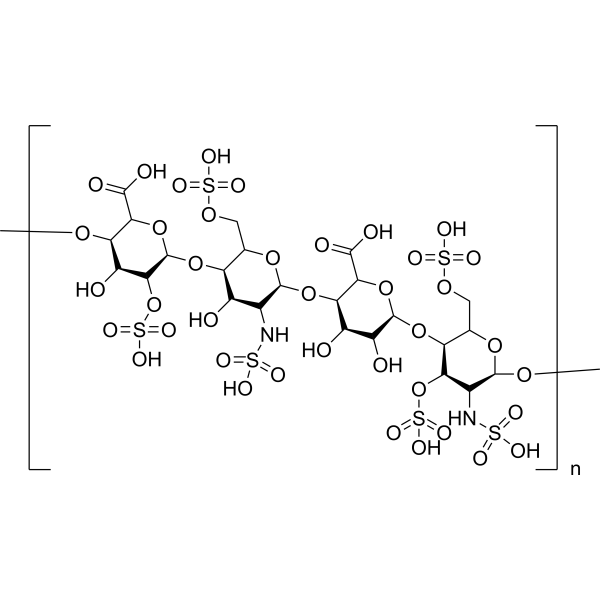
Heparan SulfateLinear Polysaccharide -
HY-18739
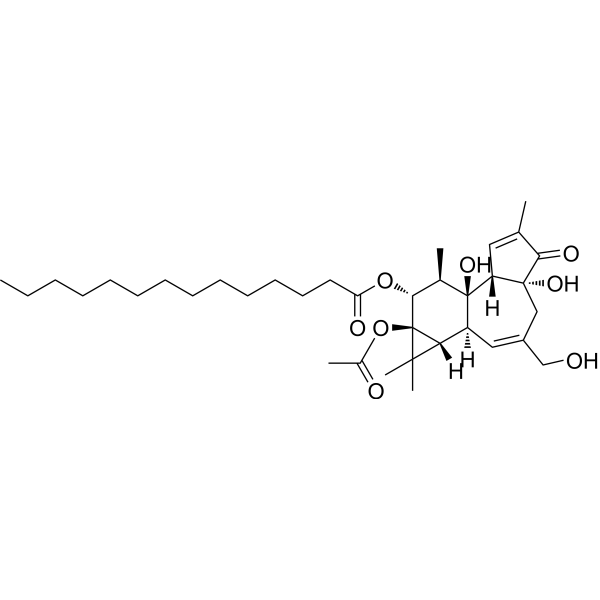
Phorbol 12-myristate 13-acetatePKC Activator -
HY-50895
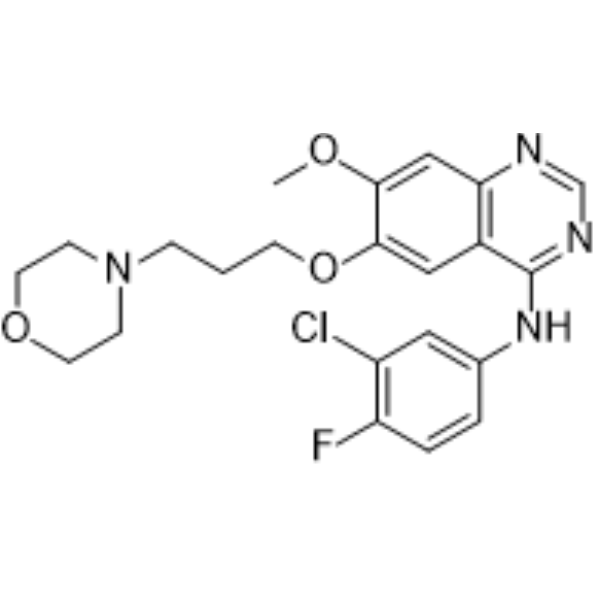
GefitinibEGFR Inhibitor -
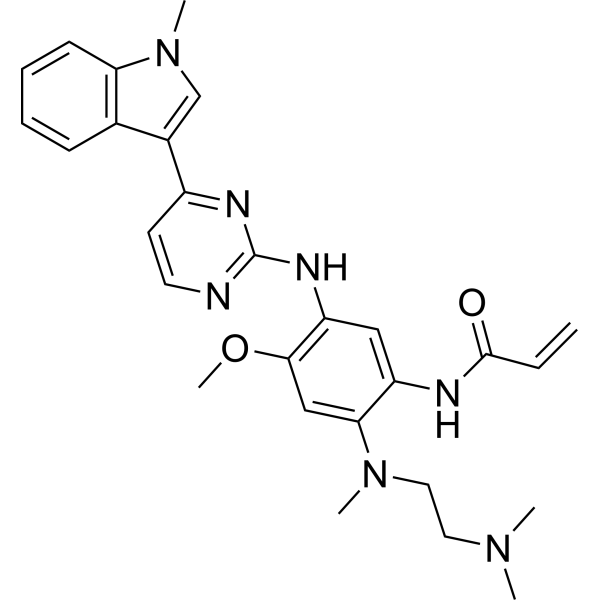
HY-15772
OsimertinibMutant-Selective EGFR Inhibitor -

HY-Y1891
Tween 80 -
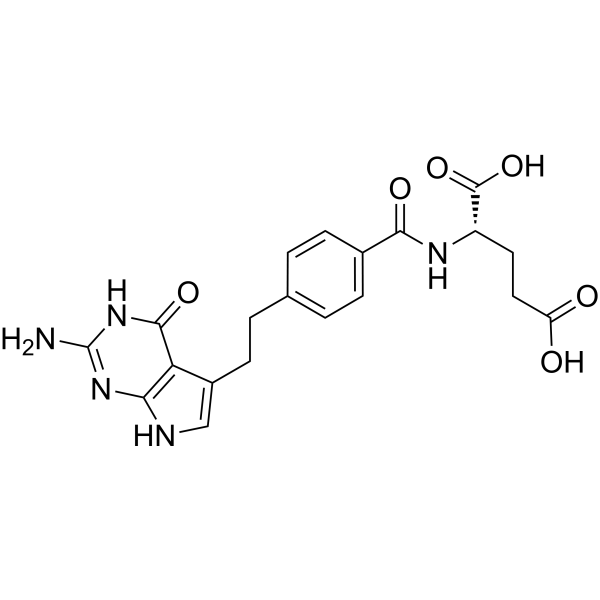
HY-10820
Pemetrexed -
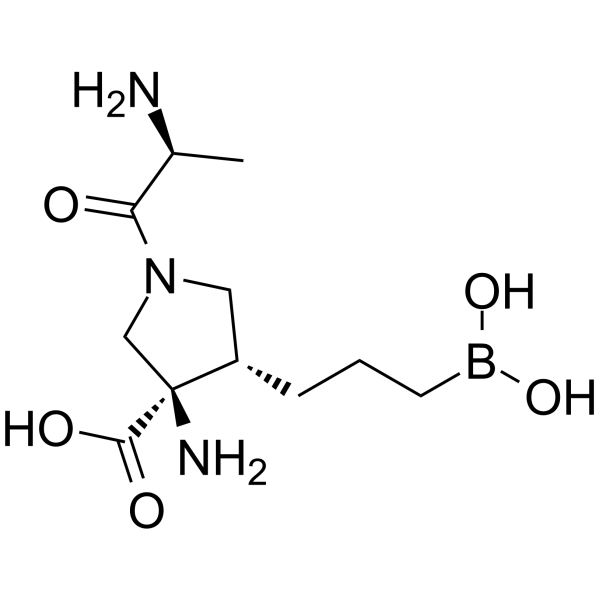
HY-101979
NumidargistatArginase Inhibitor -
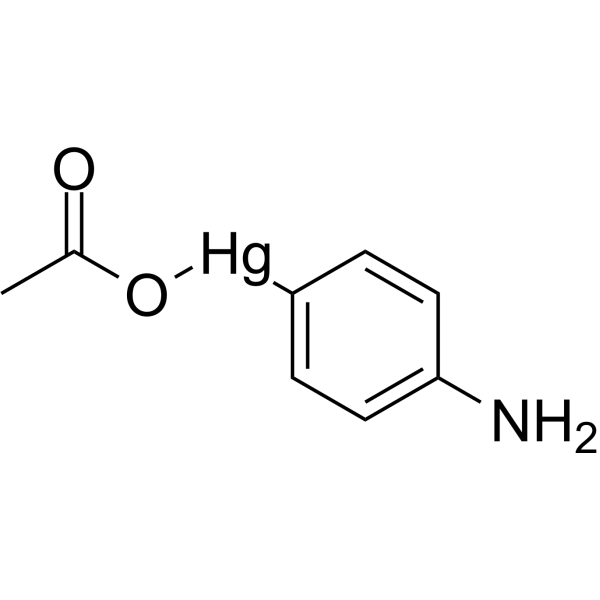
HY-148905
p-Aminophenylmercuric acetateMatrix Metalloproteinases Activator -
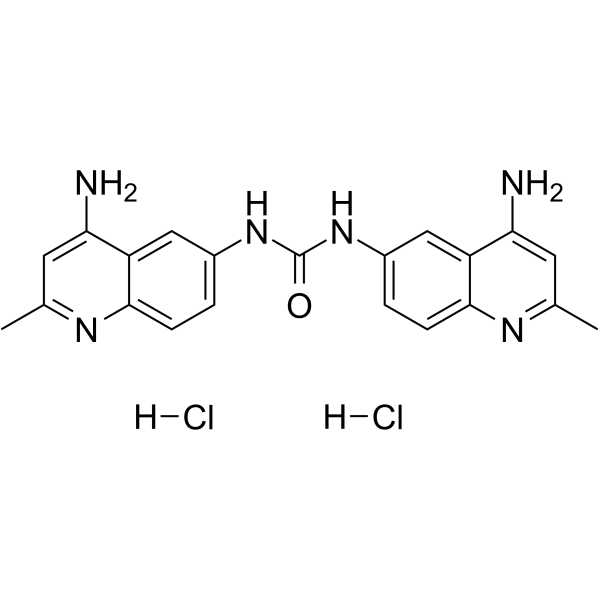
HY-122704A
Surfen dihydrochlorideHS Antagonist -
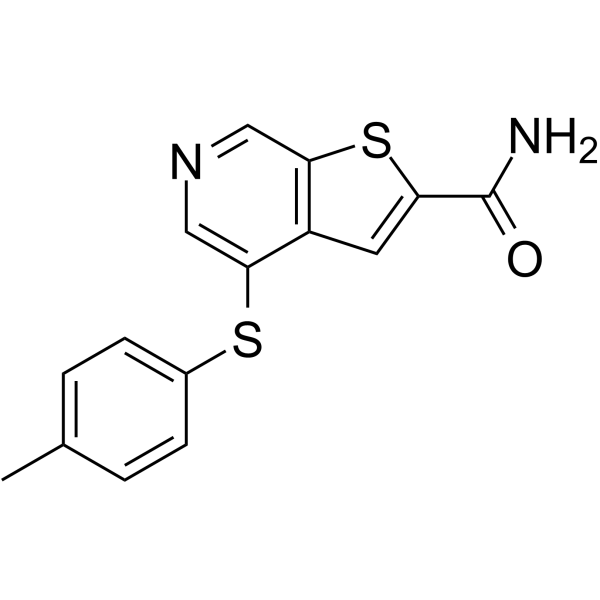
HY-100226
A-205804E-selectin/ICAM-1 Inhibitor -

HY-100898R
OGT 2115 (Standard)Heparanase Inhibitor -
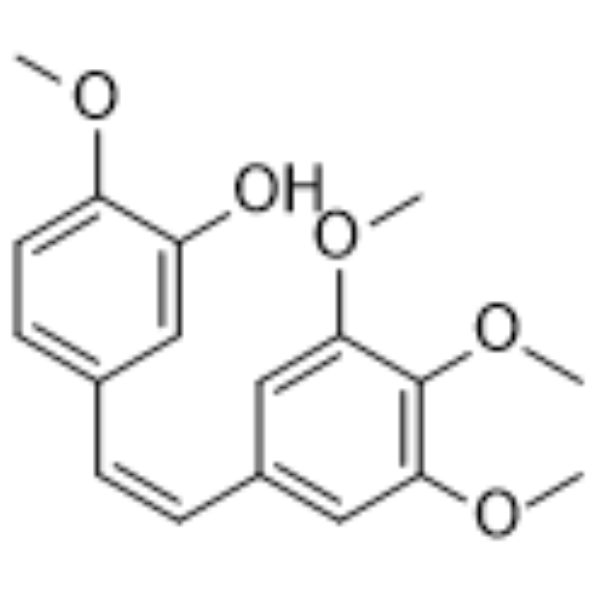
HY-N2146
Combretastatin A4Microtubule Inhibitor
Publications Citing Use of MedChemExpress (MCE) OGT 2115
More Customer Validation & Images

-
IHC

-
Cell Proliferation/Viability Assay


Biological Activity
제품 설명
IC50 & Target
IC50: 0.4 μM (Heparanase)[1]
Cellular Effect
|
Cell Line

|
Type | Value | Description | References |
|---|---|---|---|---|
| Fibroblast | IC50 |
0.4 μM
Compound: 21
|
Inhibition of human heparanase assessed as reduction in basic fibroblast growth factor binding incubated for 2 hrs by microplate reader assay
Inhibition of human heparanase assessed as reduction in basic fibroblast growth factor binding incubated for 2 hrs by microplate reader assay
|
[PMID: 27240275] |
In Vitro
Heparanase InhibitorOGT 2115 can suppress metastasis induced by endoplasmic reticulum (ER) stress in breast cancer cells, although not significantly. However, compared with the control group, the number and rate of migrated cells are significantly reduced following the exposure of the cells to Tunicamycin + OGT 2115. OGT 2115 significantly inhibits the invasion and migration induced by Adriamycin. Furthermore, the MTT assay results show that OGT 2115 does not decrease the anti-proliferative effect of Adriamycin[2].
MedChemExpress (MCE) has not independently confirmed the accuracy of these methods. They are for reference only.
In Vivo


Chemical Information
-
CAS No. 853929-59-6
-
Appearance Solid
-
분자량 495.30
-
화학식 C24H16BrFN2O4
-
Color White to yellow
-
SMILES
O=C(O)CC1=CC=C(OC(C2=CC=C(NC(/C=C/C3=CC=C(Br)C=C3)=O)C(F)=C2)=N4)C4=C1
-
선적
Room temperature in continental US; may vary elsewhere.
-
보관
Powder -20°C 3 years 4°C 2 years In solvent -80°C 2 years -20°C 1 year


Publications (6)
-
Journal Impact Factor
-
Most Recent
-
-
Sci Adv
2023 Apr 28;9(17):eadf3977. PMID: 37115924 -
Immunol Lett
Heparanase inhibition mitigates bleomycin-induced pulmonary fibrosis in mice by reducing M2 macrophage polarization. [Abstract]2025 Aug:274:107006. PMID: 40180131 -
Technol Cancer Res Treat
Analysis of Expression Pattern and Prognostic Value of the Heparanase in Breast Cancer Through CD274/CTLA-4 Immune Checkpoint Proteins. [Abstract]2024 Jan-Dec:23:15330338241281285. PMID: 39248214
OGT 2115 purchased from MedChemExpress. Usage Cited in: Technol Cancer Res Treat. 2024 Jan-Dec:23:15330338241281285. [Abstract]
OGT 2115 (50 μM). Relationship between PSE gene expression, immune checkpoint proteins, and pro-inflammatory cytokine expression in breast cancer. Immunohistochemical staining for CD274, CTLA-4, and TNF-α.
-
Oncol Lett
Heparanase inhibitor OGT 2115 induces prostate cancer cell apoptosis via the downregulation of MCL‑1. [Abstract]2024 Jan 5;27(2):83. PMID: 38249815
OGT 2115 purchased from MedChemExpress. Usage Cited in: Oncol Lett. 2024 Jan 5;27(2):83. [Abstract]
The inhibitory effect of OGT 2115 on the viability of PC-3 and DU-145 prostate cancer cells was detected by the MTT assay.
-


용액&용해도
In Vitro:
DMSO : 10 mg/mL (20.19 mM; Need ultrasonic; Hygroscopic DMSO has a significant impact on the solubility of product, please use newly opened DMSO)
Please refer to the solubility information to select the appropriate solvent. Once prepared, please aliquot and store the solution to prevent product inactivation from repeated freeze-thaw cycles.
Storage method and period of stock solution: -80°C, 2 years; -20°C, 1 year. When stored at -80°C, please use it within 2 years. When stored at -20°C, please use it within 1 year.
Please refer to the solubility information to select the appropriate solvent. Once prepared, please aliquot and store the solution to prevent product inactivation from repeated freeze-thaw cycles.
Storage method and period of stock solution: -80°C, 2 years; -20°C, 1 year. When stored at -80°C, please use it within 2 years. When stored at -20°C, please use it within 1 year.
Concentration (start) × Volume (start) = Concentration (final) × Volume (final)
In Vivo:
Select the appropriate dissolution method based on your experimental animal and administration route.
- For the following dissolution methods, please ensure to first prepare a clear stock solution using an In Vitro approach and then sequentially add co-solvents:
- To ensure reliable experimental results, the clarified stock solution can be appropriately stored based on storage conditions. As for the working solution for In Vivo experiments, it is recommended to prepare freshly and use it on the same day.
- The percentages shown for the solvents indicate their volumetric ratio in the final prepared solution. If precipitation or phase separation occurs during preparation, heat and/or sonication can be used to aid dissolution.
For the following dissolution methods, please prepare the working solution directly:
It is recommended to prepare fresh solutions and use them promptly within a short period of time.
The percentages shown for the solvents indicate their volumetric ratio in the final prepared solution. If precipitation or phase separation occurs during preparation, heat and/or sonication can be used to aid dissolution.
Add each solvent one by one: 0.5% CMC-Na/saline water
Solubility: 10 mg/mL (20.19 mM); Suspended solution; Need ultrasonic
In Vivo Dissolution Calculator
Please enter the basic information of animal experiments:
-
-
-
-
Recommended: Prepare an additional quantity of animals to account for potential losses during experiments.
Please enter your animal formula composition:
-
%DMSO +
Recommended: Keep the proportion of DMSO in working solution below 2% if your animal is weak.
-
%+
-
+%Tween-80 + +
-
%Saline +
The co-solvents required include: DMSO, . All of co-solvents are available by MedChemExpress (MCE). , Tween 80. All of co-solvents are available by MedChemExpress (MCE).
Working solution concentration: 0.22 mg/mL
Method for preparing stock solution: mg drug dissolved in μL DMSO. Stock solution concentration: mg/mL.
1. Take μL DMSO stock solution;
2. Add μL .
μL , mix evenly;
3. Then add μL Tween 80, mix evenly;
4. Then add μL
Please ensure that the stock solution in the first step is dissolved to a clear state, and add co-solvents in sequence. You can use ultrasonic heating (ultrasonic cleaner, recommended frequency 20-40 kHz), vortexing, etc. to assist dissolution.


순도&문서
-
Data Sheet (271 KB)
-
SDS (254 KB)
- English - EN (254 KB)
- Français - FR (254 KB)
- Deutsch - DE (254 KB)
- Norwegian - NO (254 KB)
- Español - ES (254 KB)
- Swedish - SV (254 KB)
- Italian - IT (254 KB)
- Korean - KR (254 KB)
- Portuguese - PT (254 KB)
-
Handling Instructions (2659 KB)
References
[1]. [1]Courtney SM, et al. Furanyl-1,3-thiazol-2-yl and benzoxazol-5-yl acetic acid derivatives: novel classes of heparanase inhibitor. Bioorg Med Chem Lett. 2005 May 2;15(9):2295-9. [Content Brief]
[2]. Li Y, et al. Suppression of endoplasmic reticulum stress-induced invasion and migration of breast cancer cells through the downregulation of heparanase. Int J Mol Med. 2013 May;31(5):1234-42. [Content Brief]


Complete Stock Solution Preparation Table
Please refer to the solubility information to select the appropriate solvent. Once prepared, please aliquot and store the solution to prevent product inactivation from repeated freeze-thaw cycles.
Storage method and period of stock solution: -80°C, 2 years; -20°C, 1 year. When stored at -80°C, please use it within 2 years. When stored at -20°C, please use it within 1 year.
| Optional Solvent | Concentration Solvent Mass | 1 mg | 5 mg | 10 mg | 25 mg |
|---|---|---|---|---|---|
| DMSO | 1 mM | 2.0190 mL | 10.0949 mL | 20.1898 mL | 50.4745 mL |
| 5 mM | 0.4038 mL | 2.0190 mL | 4.0380 mL | 10.0949 mL | |
| 10 mM | 0.2019 mL | 1.0095 mL | 2.0190 mL | 5.0474 mL | |
| 15 mM | 0.1346 mL | 0.6730 mL | 1.3460 mL | 3.3650 mL | |
| 20 mM | 0.1009 mL | 0.5047 mL | 1.0095 mL | 2.5237 mL |


OGT 2115 Related Classifications
HY-100898 Related Classifications
 Powered by Bioz